

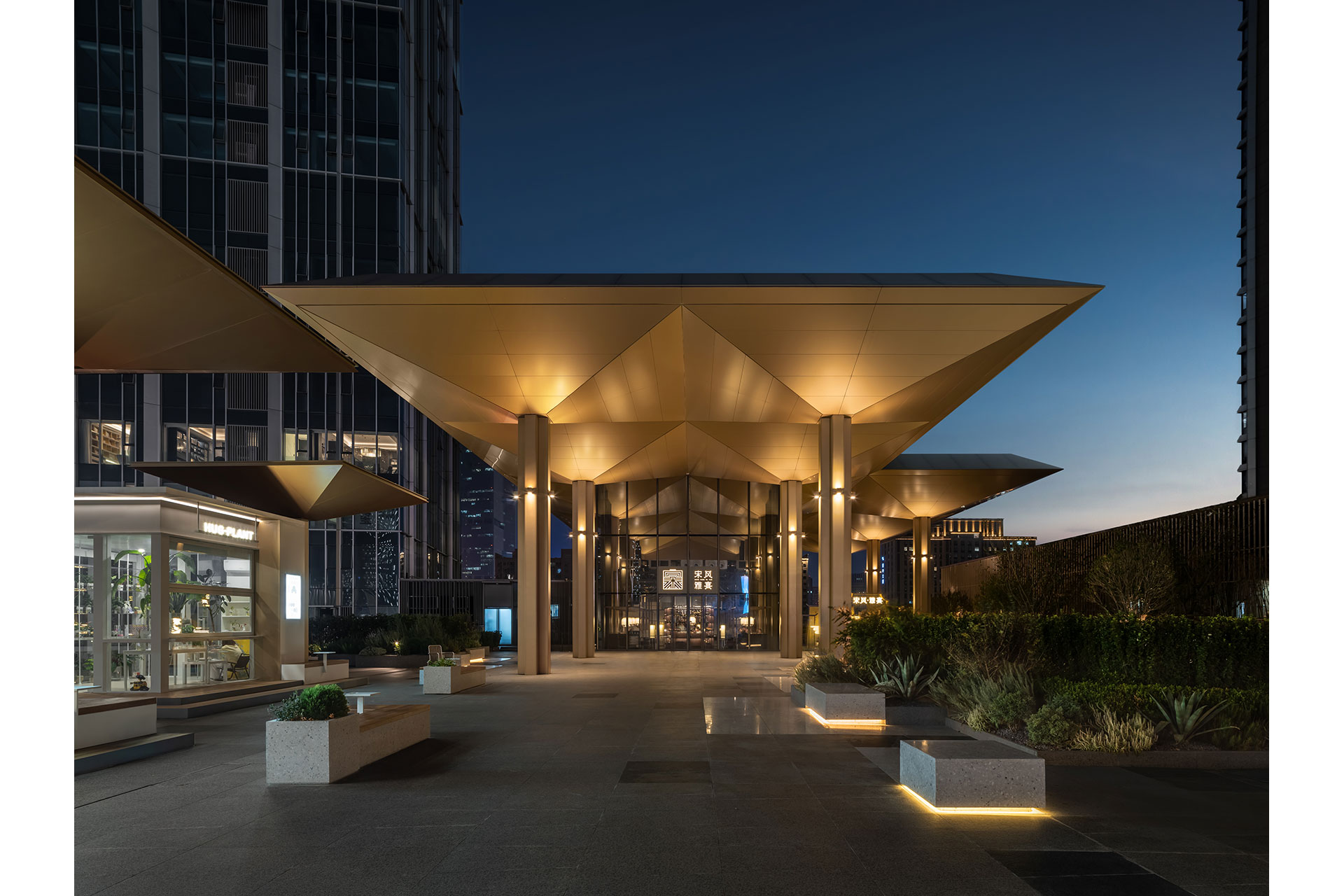
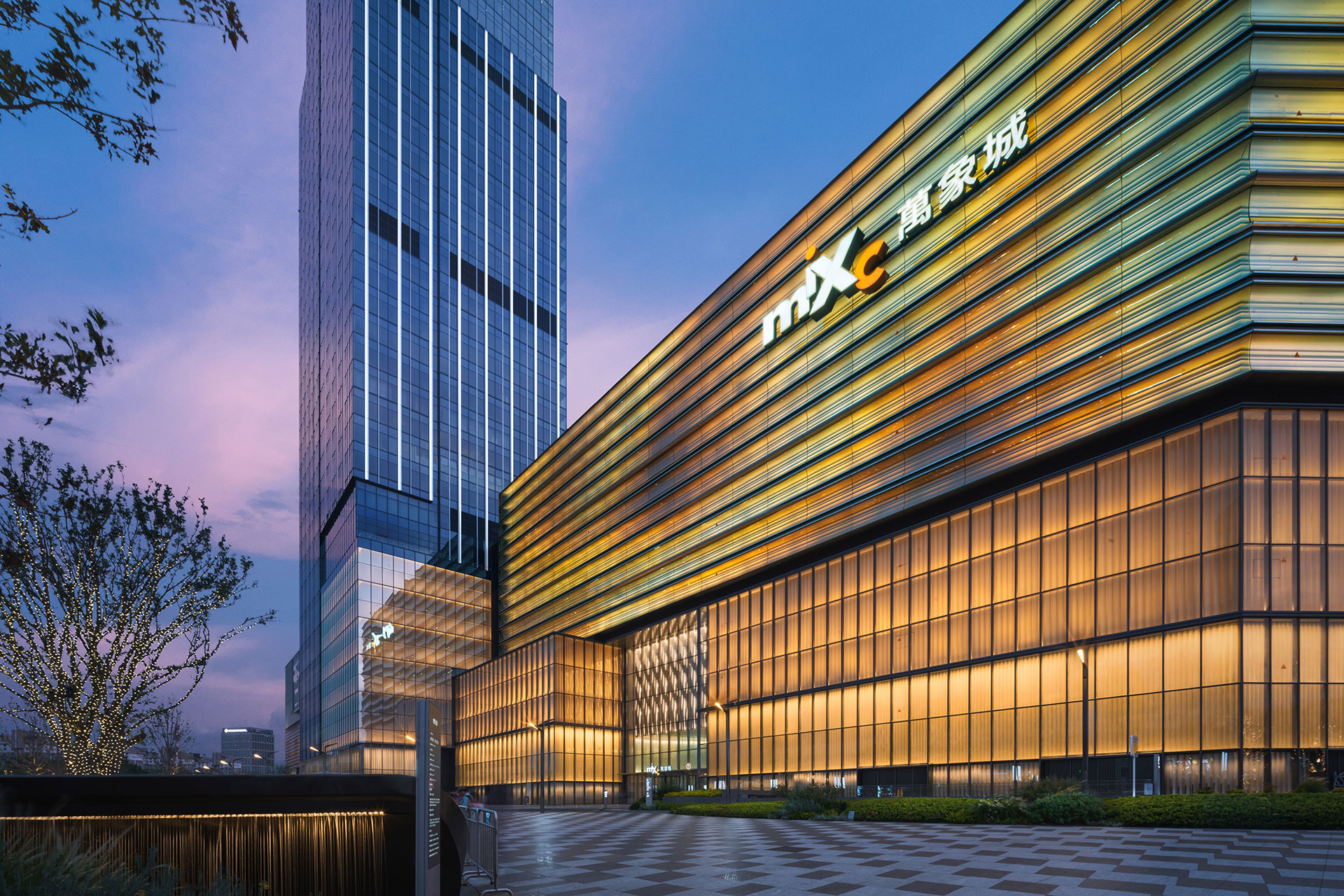
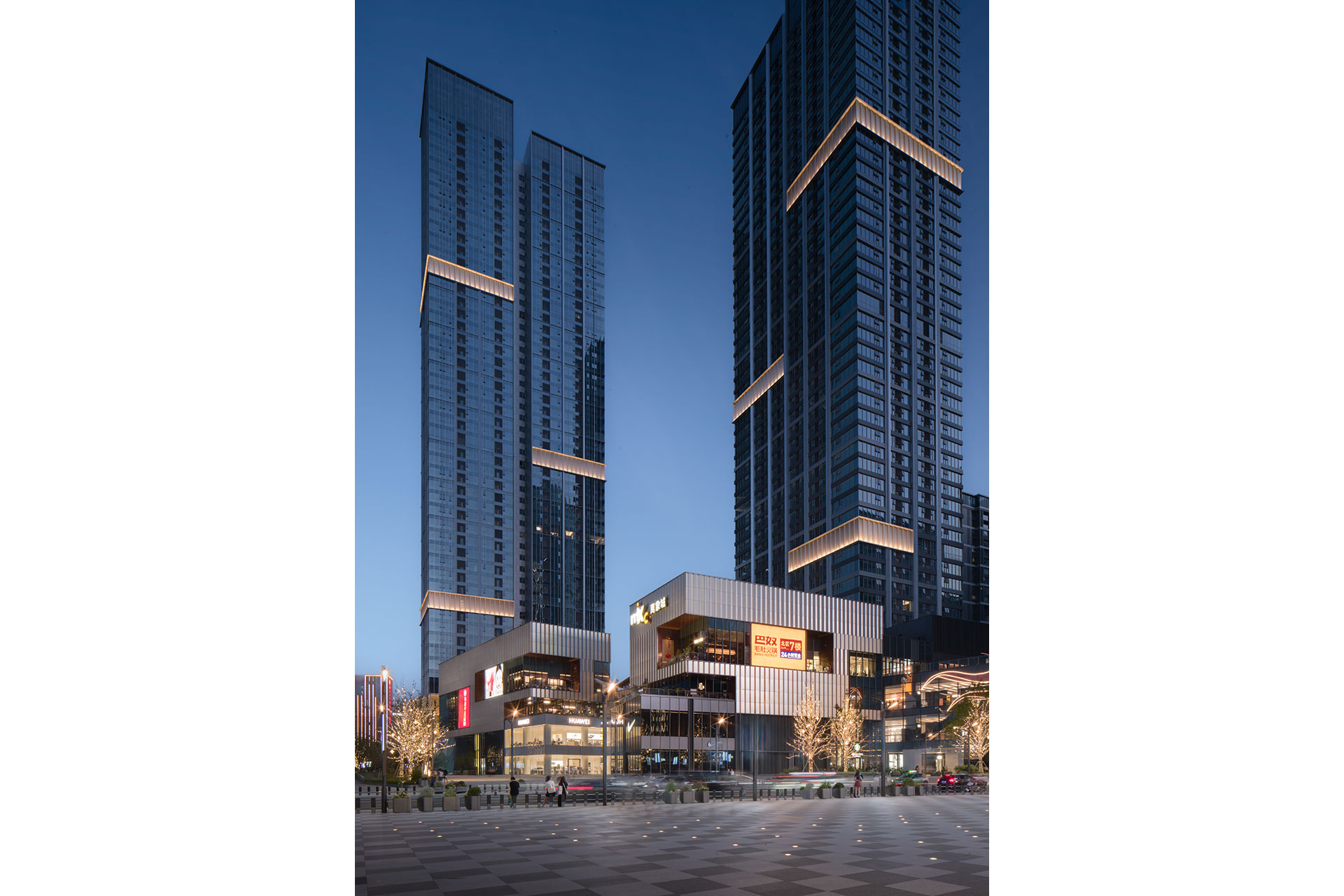
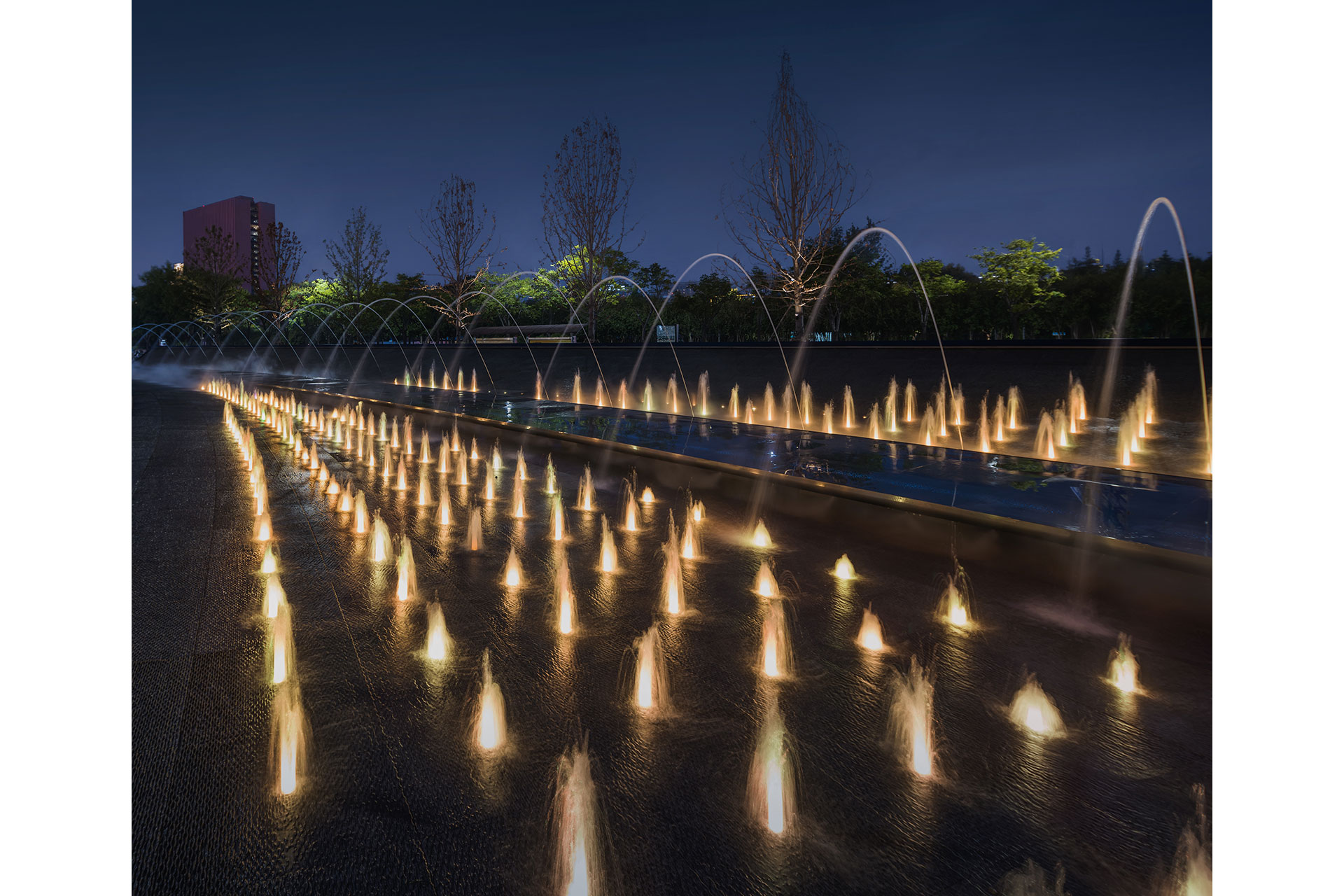
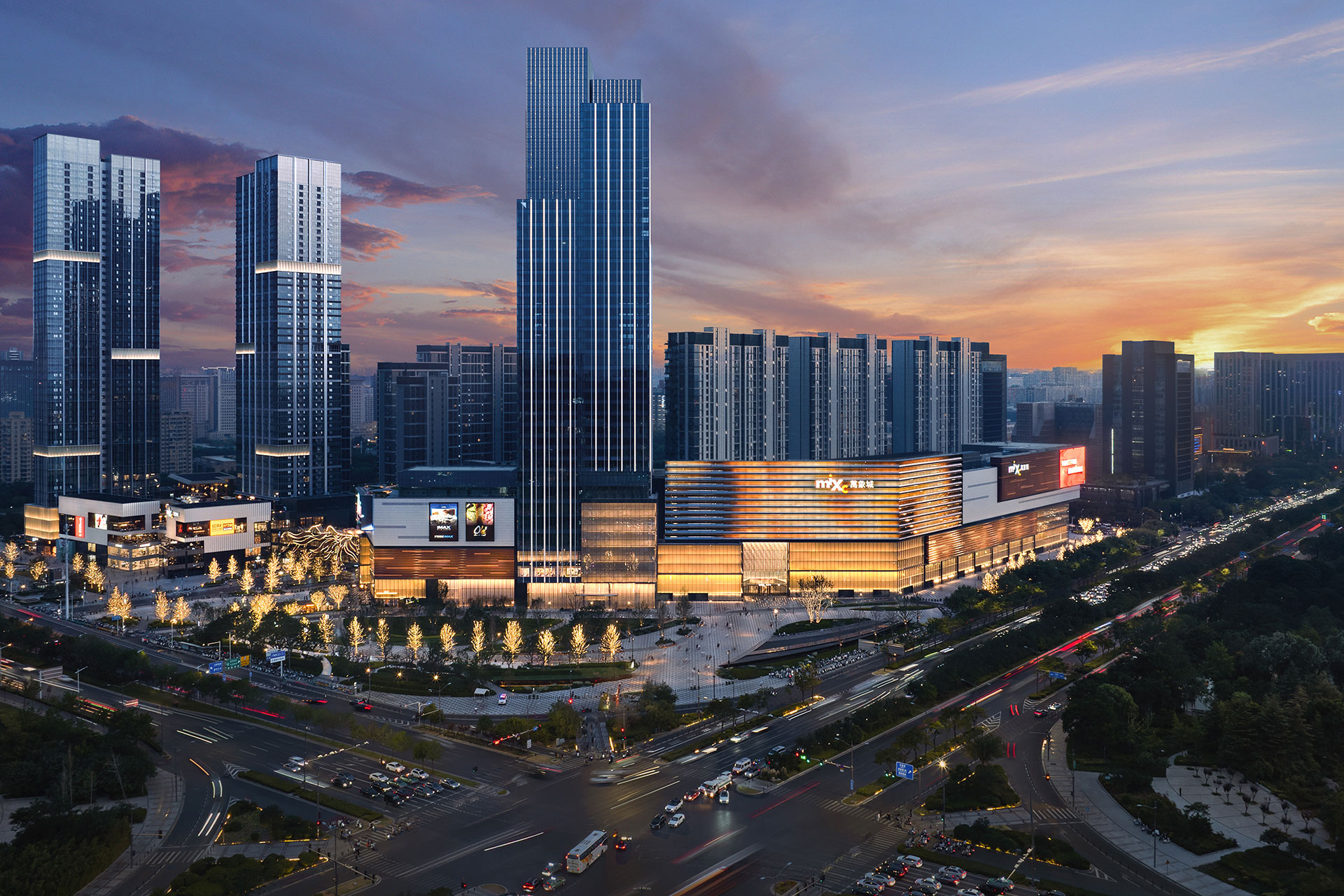
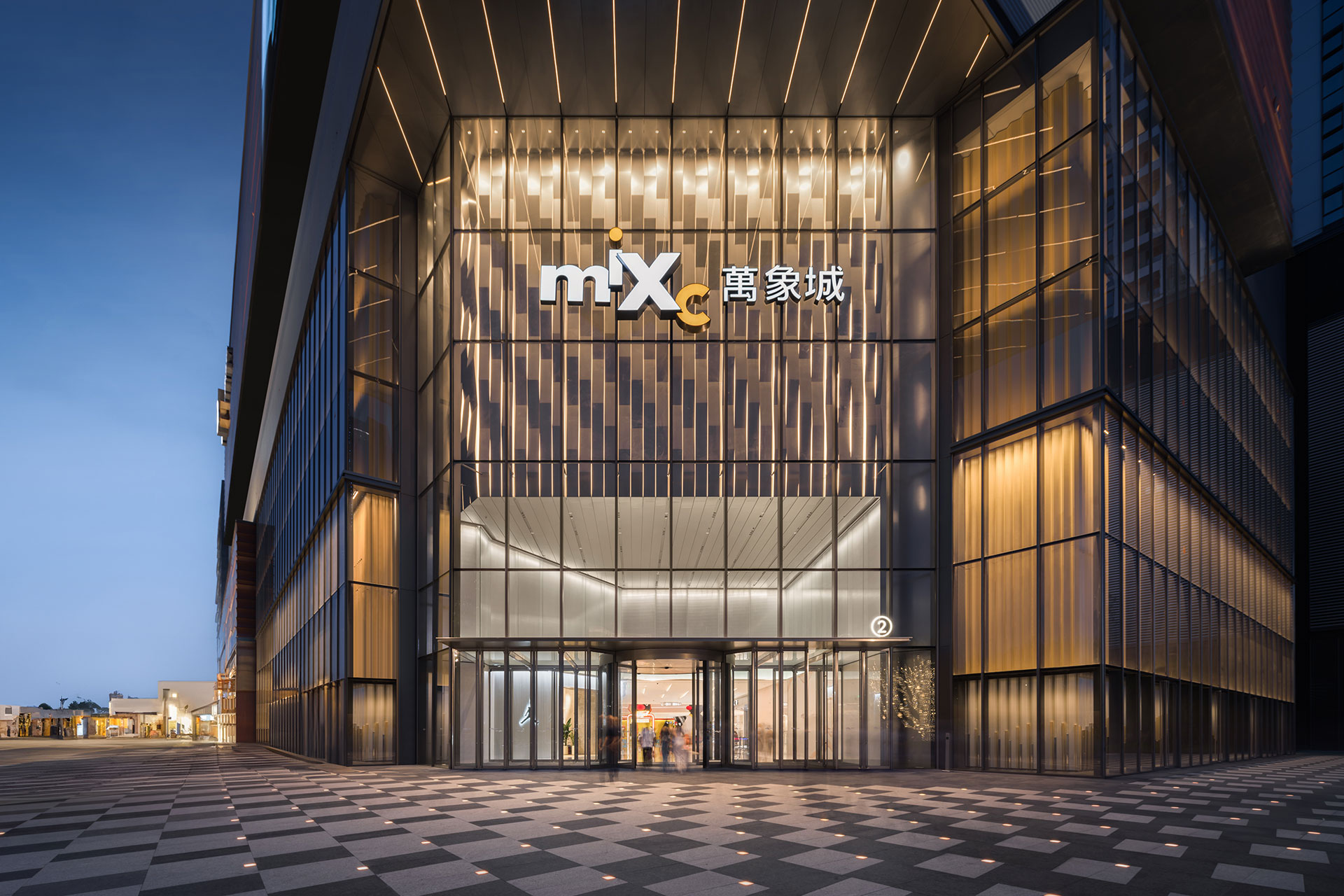
The exterior lighting transforms the building into a layered nocturnal landscape where light, material and atmosphere merge into a single perceptual field. The concept draws from the idea of “Flowing Water · Drifting Clouds,” which is interpreted not through literal representation but through gradients, chromatic softness and quiet rhythmic movement across the façade.
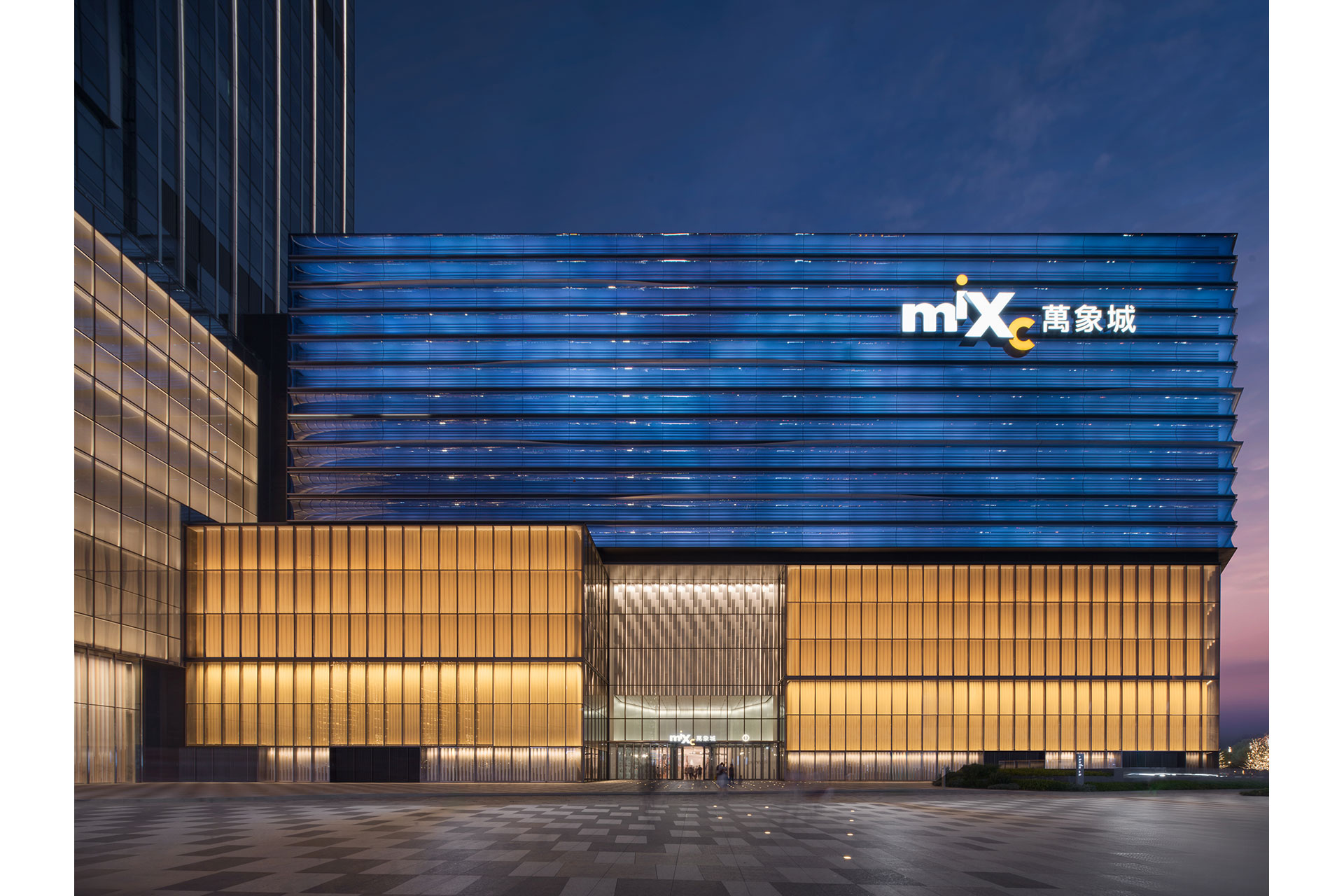
On the upper volume, horizontal glass fins form a stratified surface that receives light as if it were a series of drifting dusk clouds. Concealed luminaires introduce subtle blue tonal shifts that travel gently along the façade. The effect is neither static nor overly expressive; instead, it creates a slow horizontal drift, a calm atmospheric pulse that changes as visitors move across the plaza. The façade begins to feel weightless, suspended between sky and reflection, its layered luminance echoing the motion of clouds passing over water.
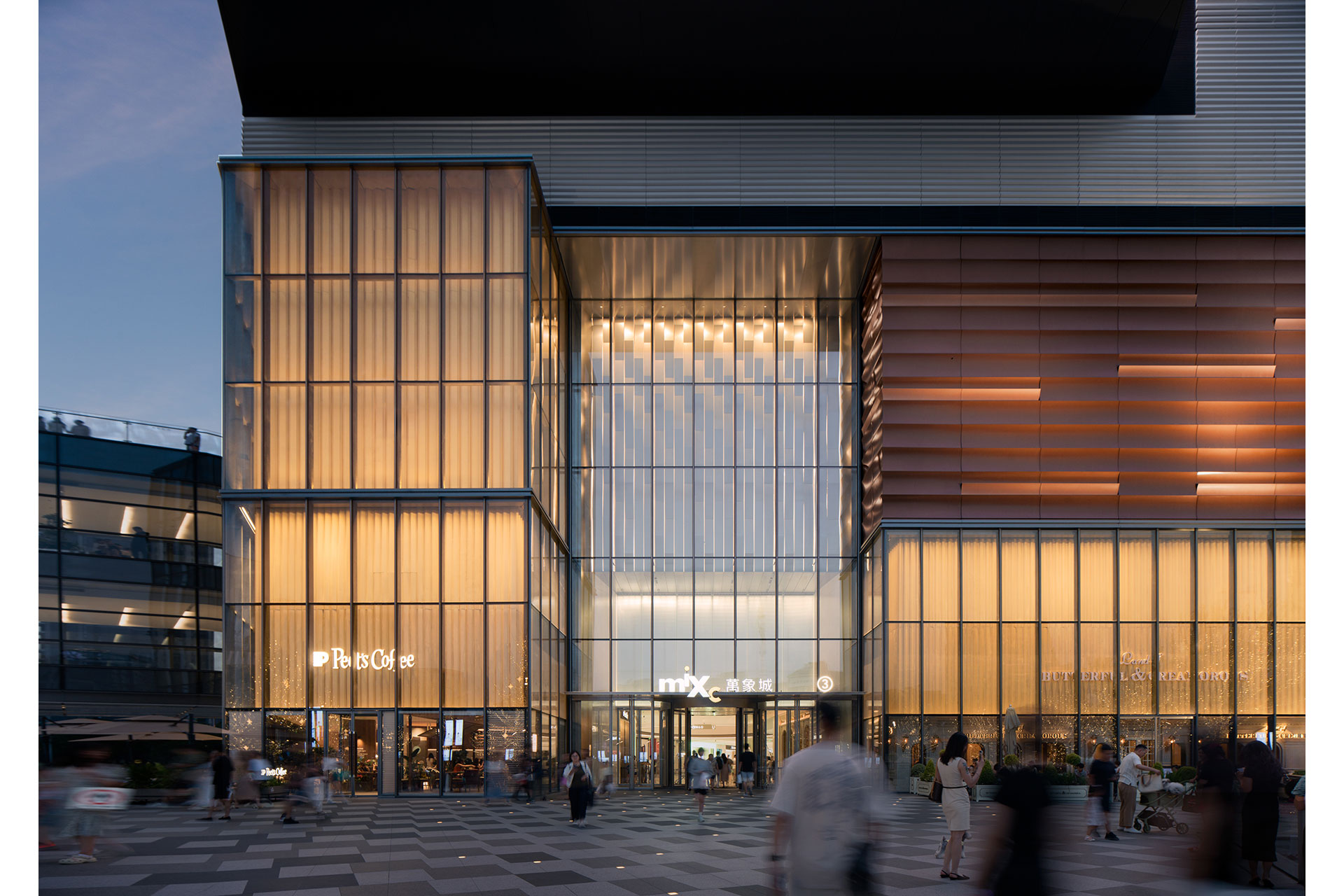
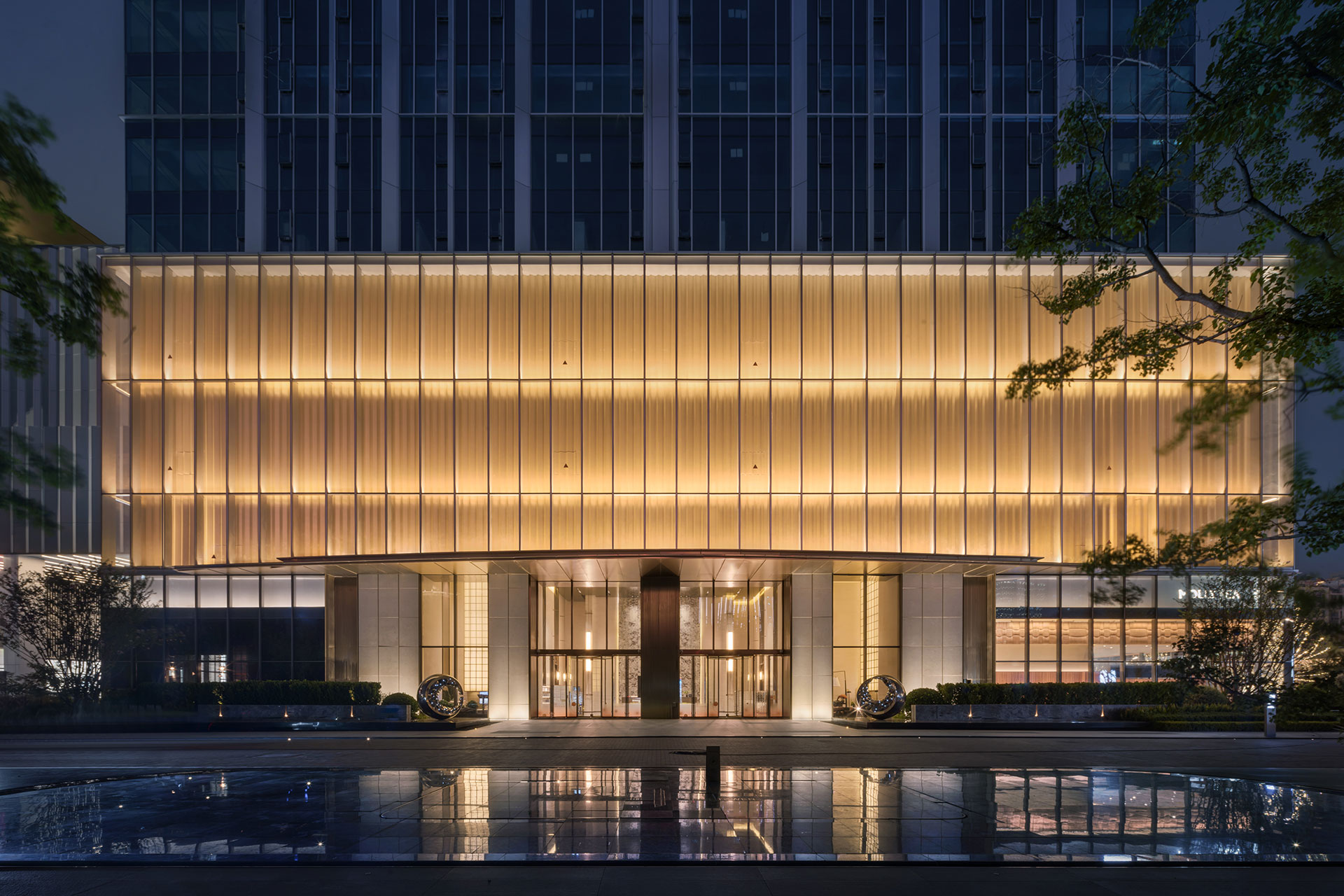
Beneath this cooler upper massing, the warm luminous volumes composed of ribbed glass behave like grounded lanterns. Their vertical textures diffuse light into a soft gradient that recalls the glow of flowing water at sunset. Together, the warm lower band and cool upper strata establish a chromatic duality that becomes the emotional and visual identity of the building’s nighttime presence. The relationship between the two is not based on contrast but on complementarity, forming a balanced, meditative composition.
Light is integrated directly into the architectural elements rather than applied as surface decoration. The horizontal fins capture grazing light and release it in delicate waves, producing a shimmering optical rhythm. Deep profiles allow shadows and highlights to coexist, enriching the façade’s dimensionality without relying on intensity. The lighting avoids spectacle, operating instead within a disciplined palette of soft movement and calibrated glow.
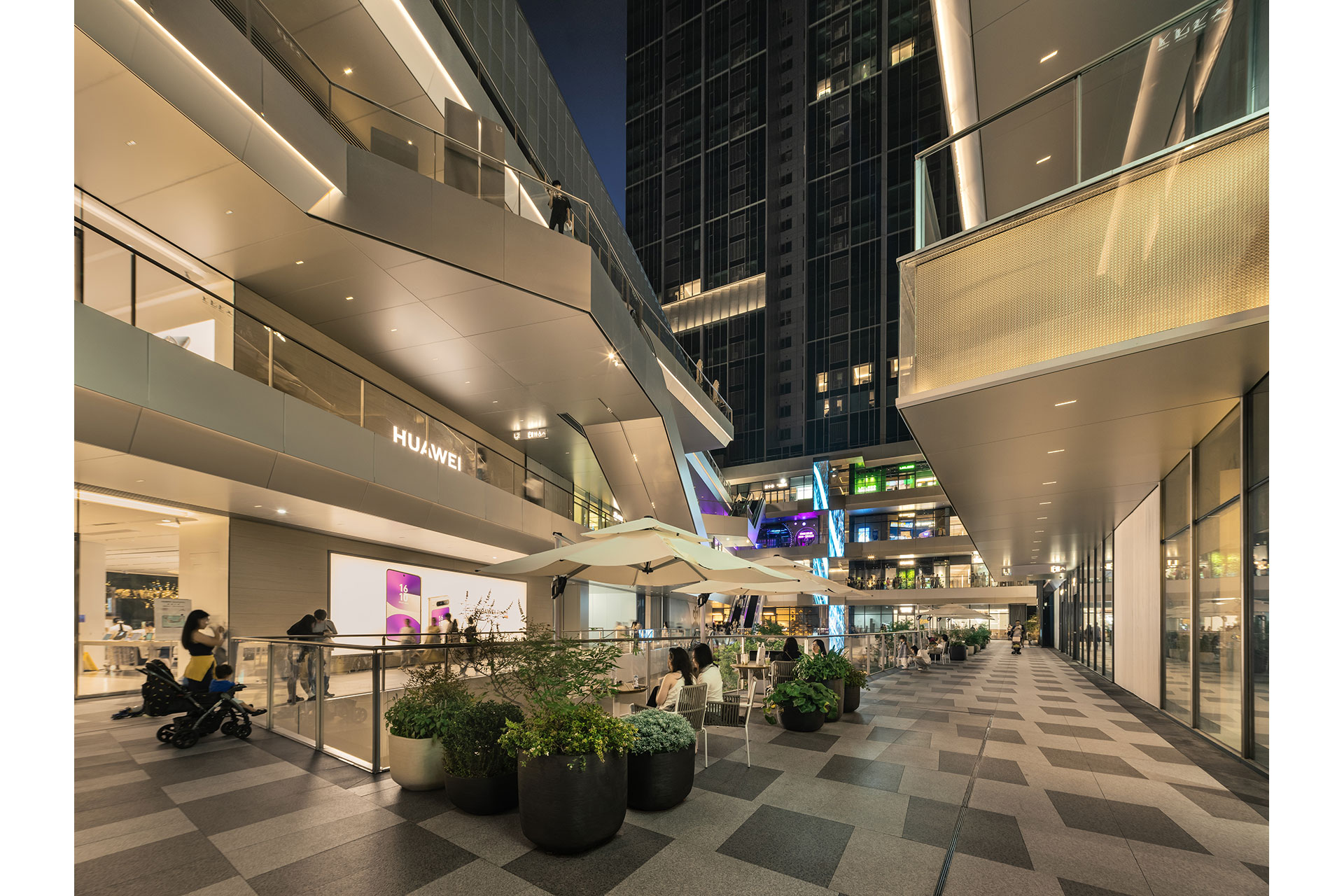
At pedestrian level, light constructs an approachable and social urban threshold. The retail street is illuminated not by high brightness but by distributed warmth that gathers people into a continuous public promenade. Linearity guides circulation without dictating it, and reflective materials multiply the sense of spatial depth. Here, light expresses density, comfort and community rather than visual dominance.
The result is an exterior lighting system that elevates the building from a commercial mass into a poetic nighttime landmark. By using illumination to evoke natural rhythm, atmospheric calmness and cultural memory, the project redefines how a large-scale urban façade can communicate presence and emotion. Light becomes the medium through which architecture breathes, drifts and resonates within the nighttime city.