

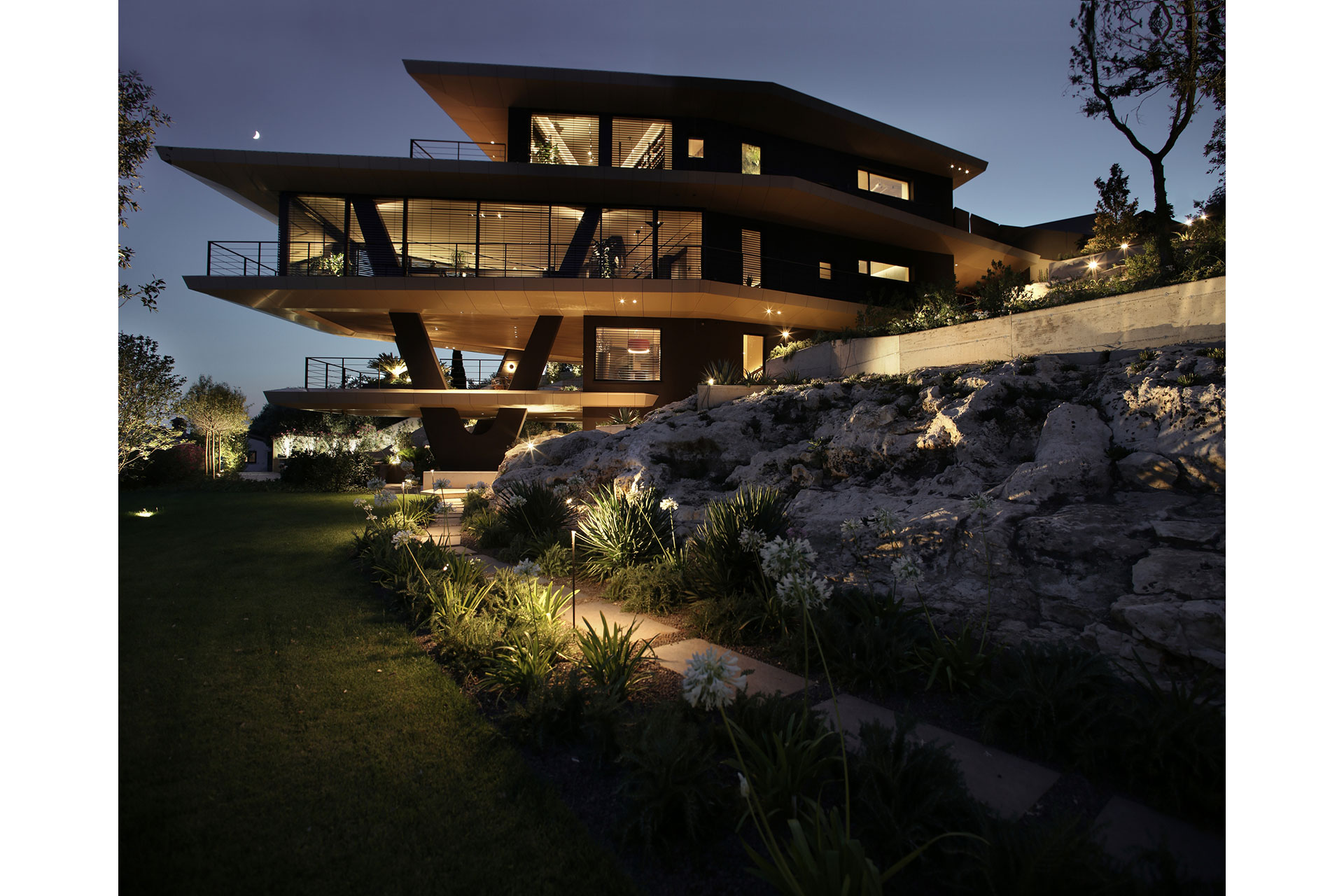
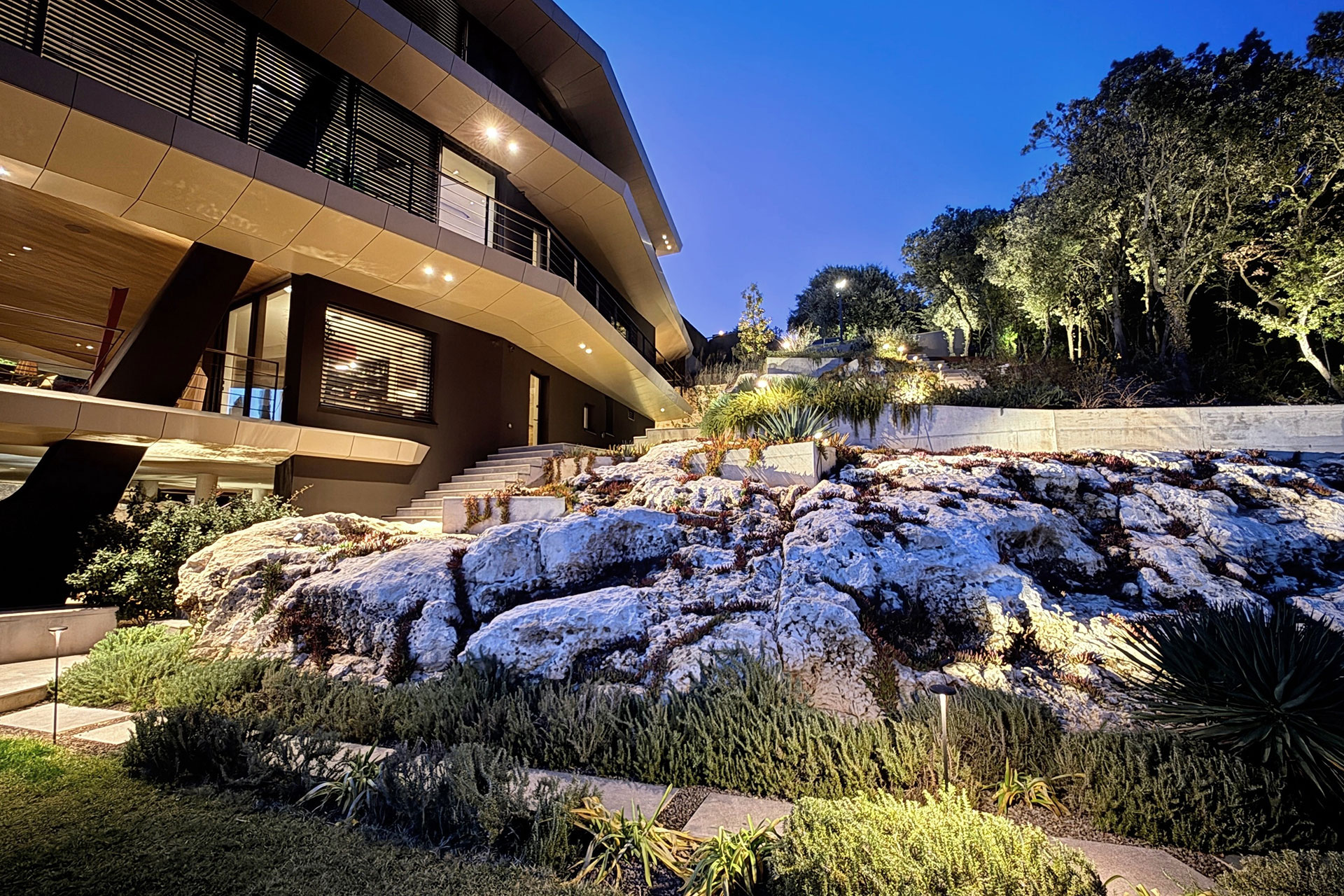
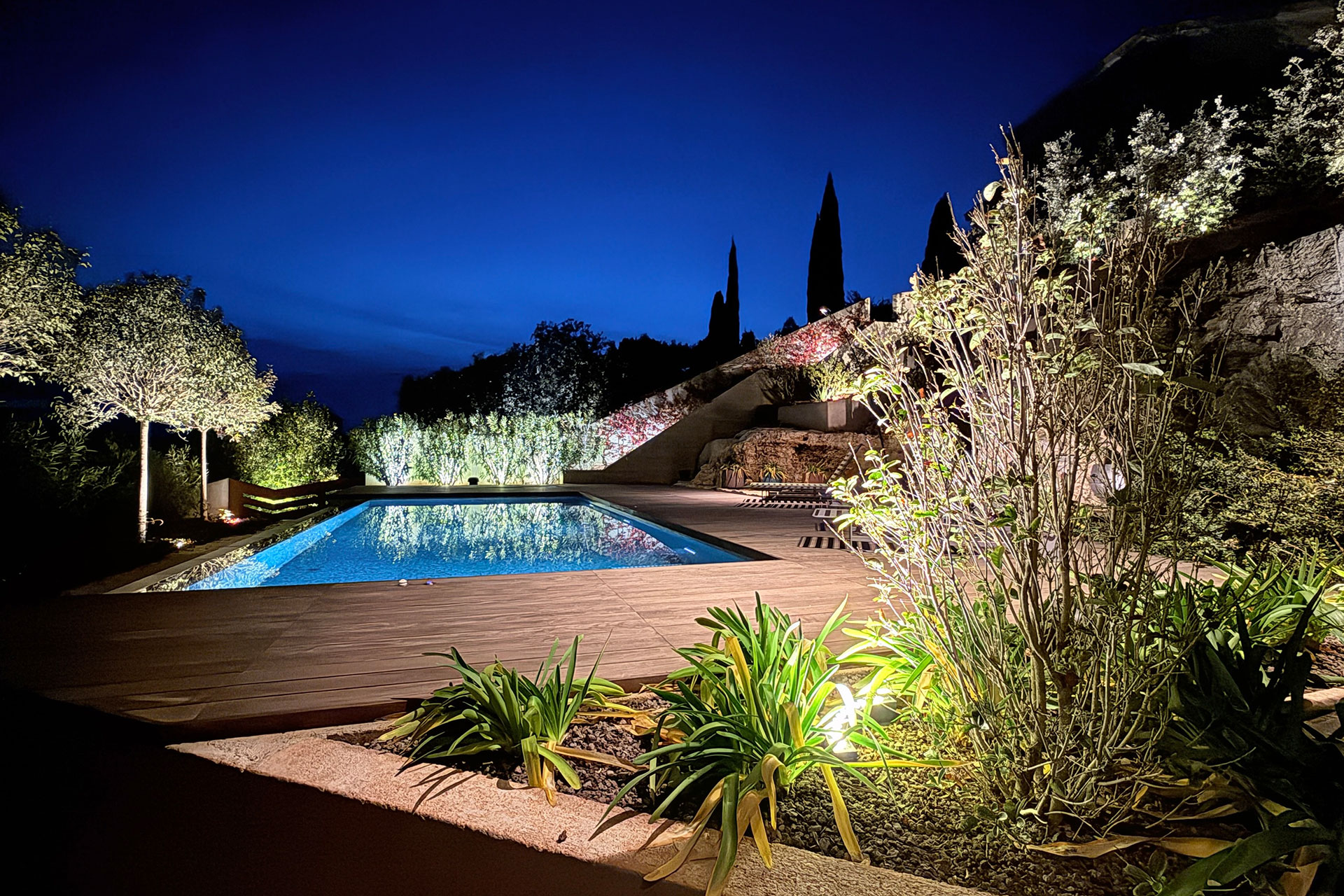
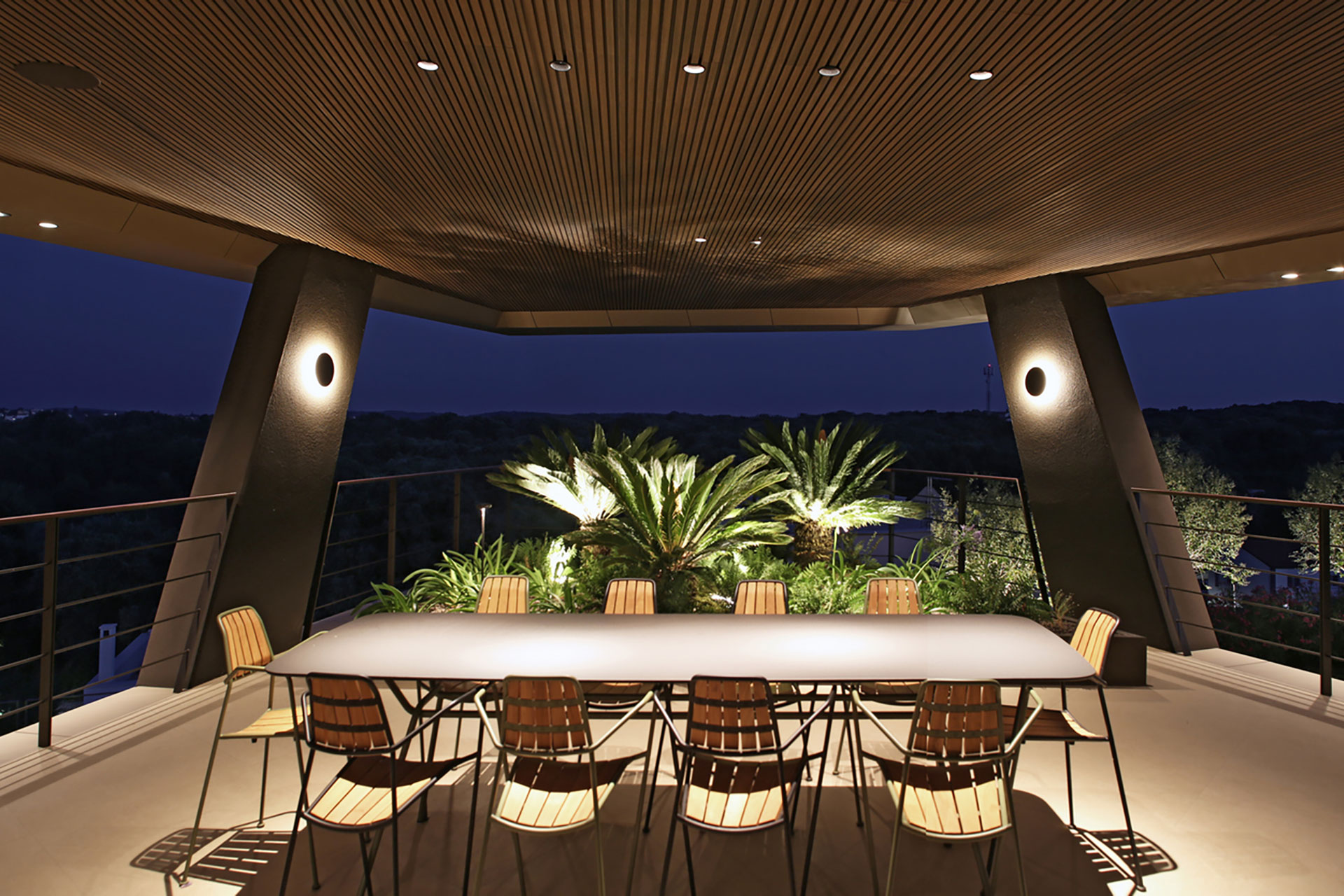
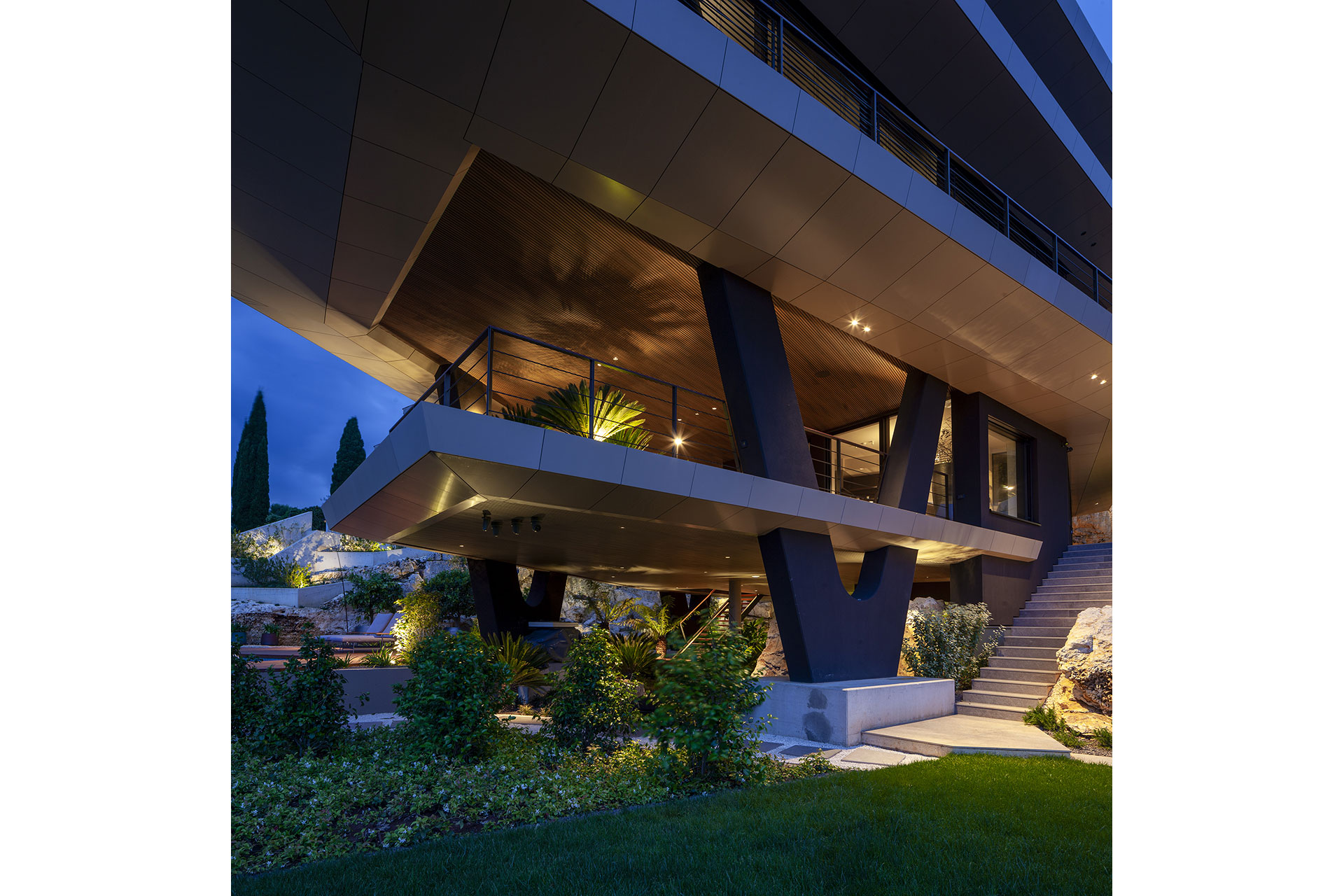
X36 is the unique project, situated on Adriatic coast where contemporary architecture meets 2000 years of hidden history and light becomes the crucial ingredient that turns this residential landscape into a quiet theatre at night.
What began as a contemporary residential project changed the moment excavation for the foundations revealed an unexpected truth: the site was a Roman quarry, once used to cut stone for sarcophagi. Until that moment, its existence was unknown. Work stopped immediately when the heritage agency intervened, and the plot was formally declared a protected archaeological site. The architecture had to respond not with compromise, but with respect.
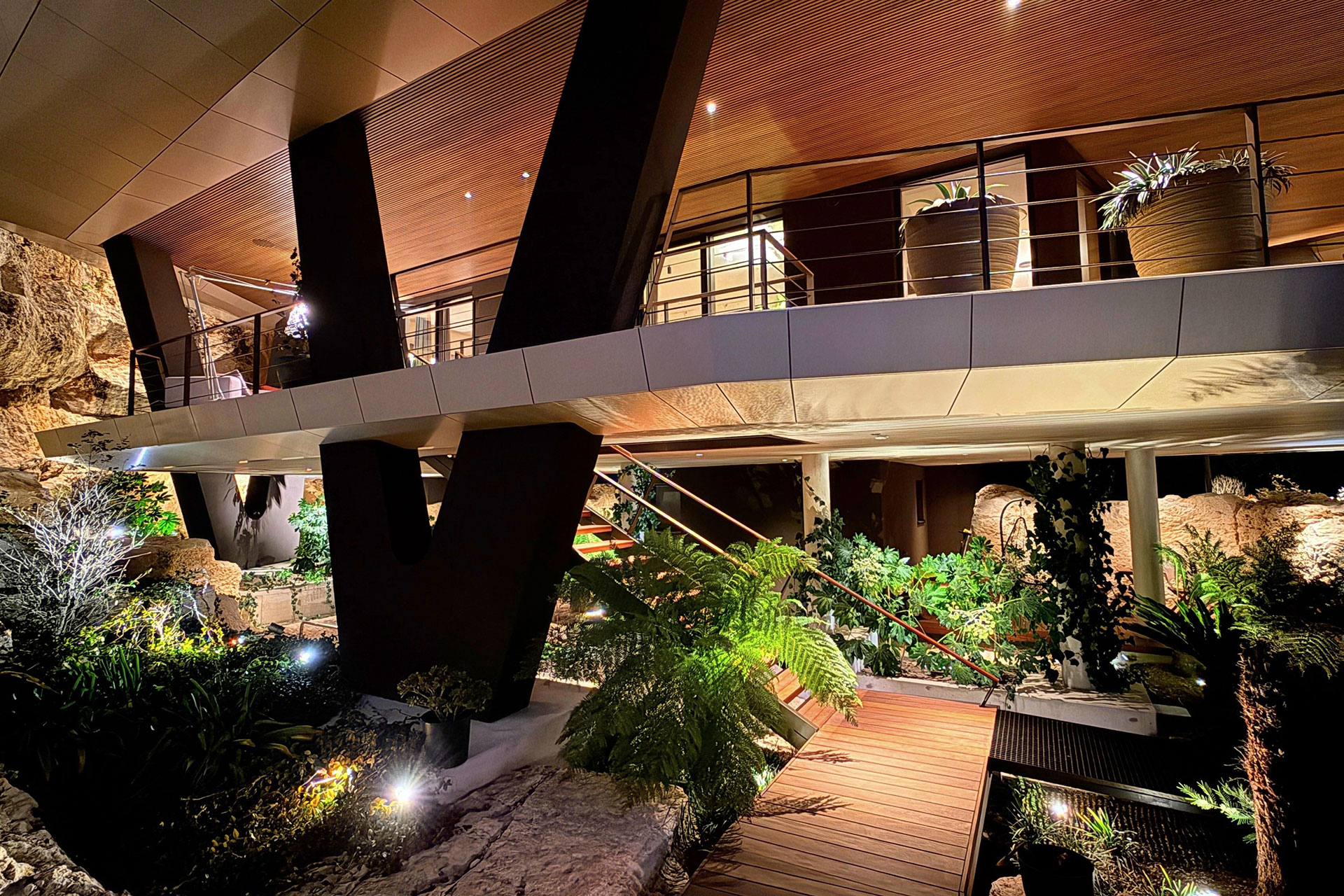
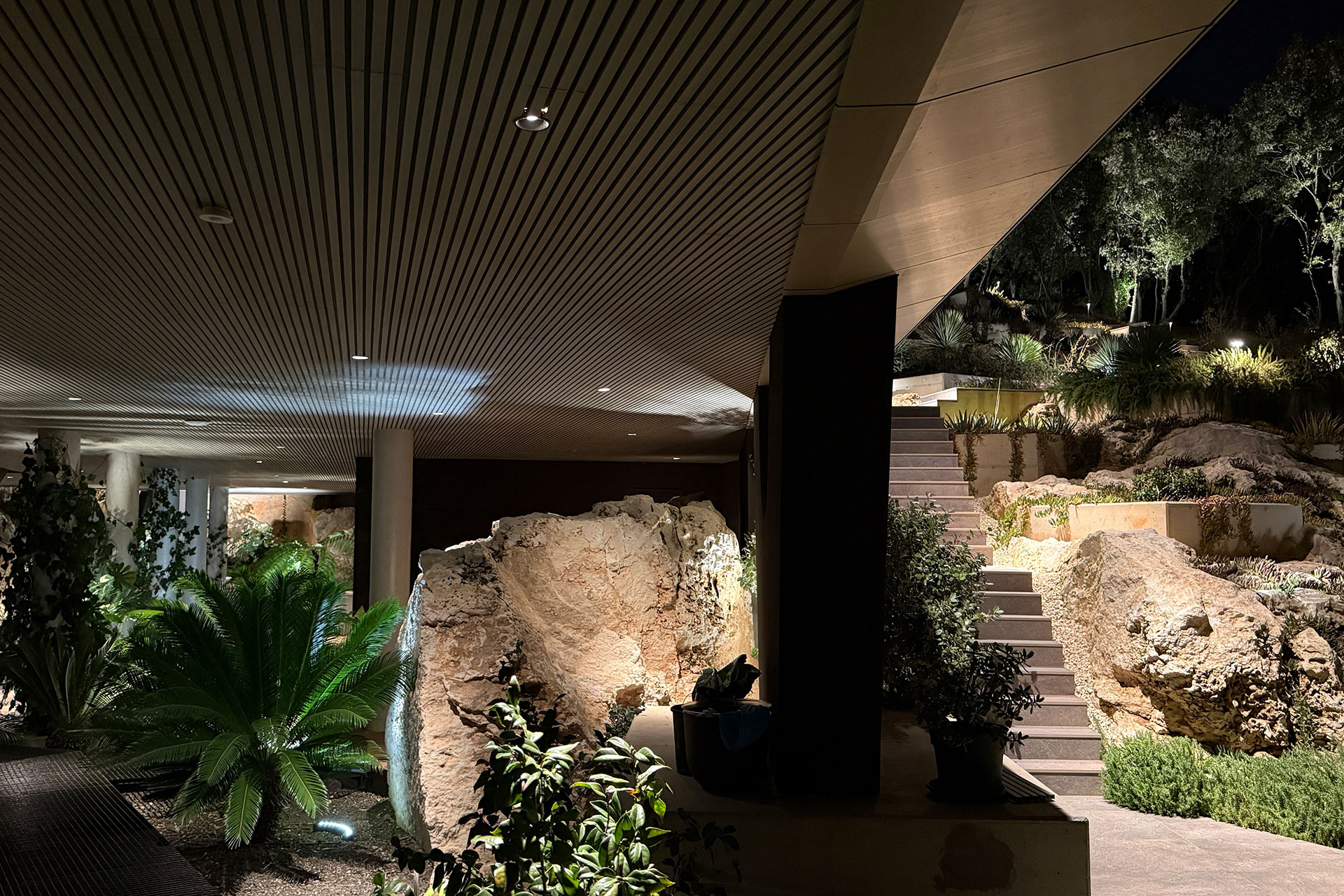
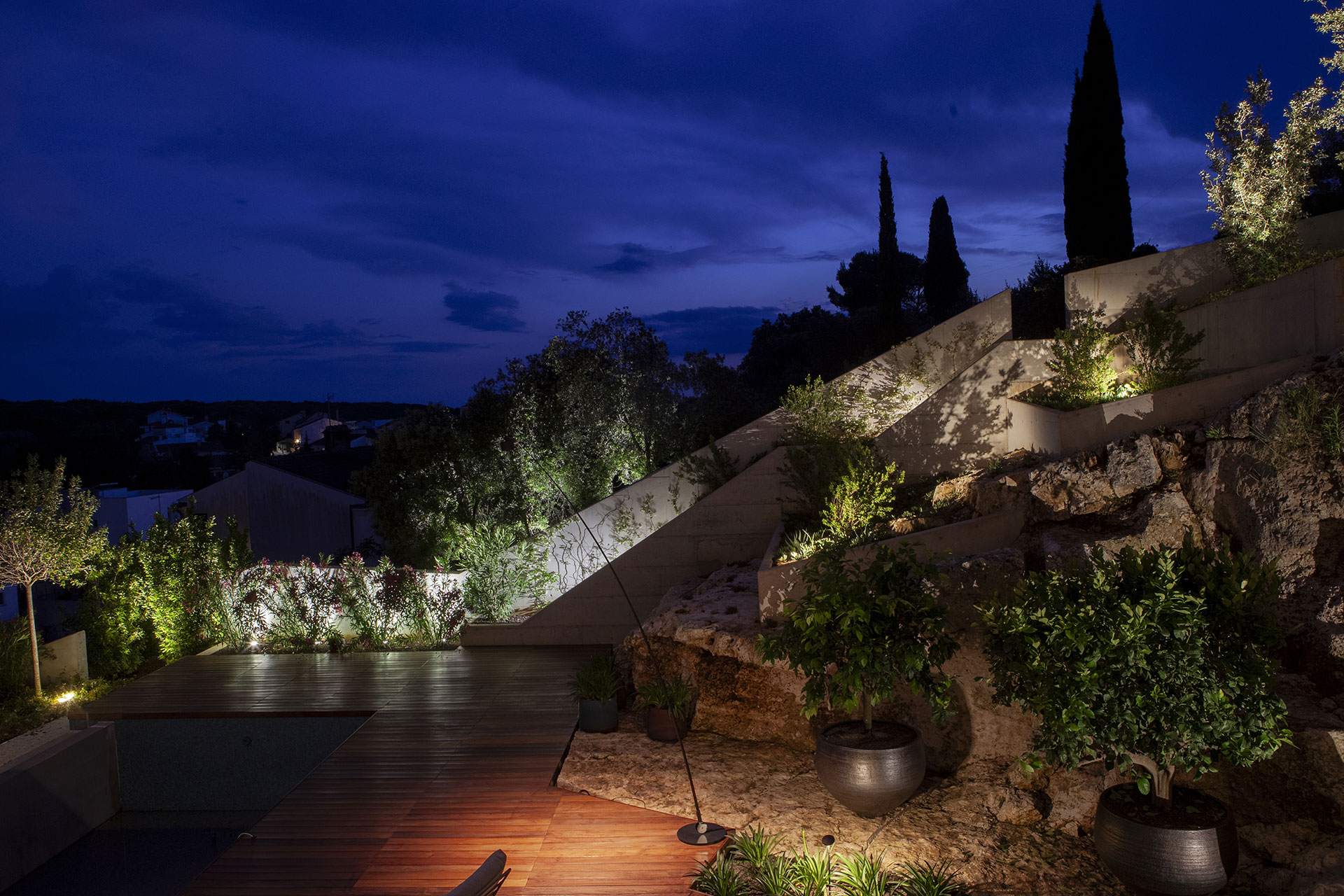
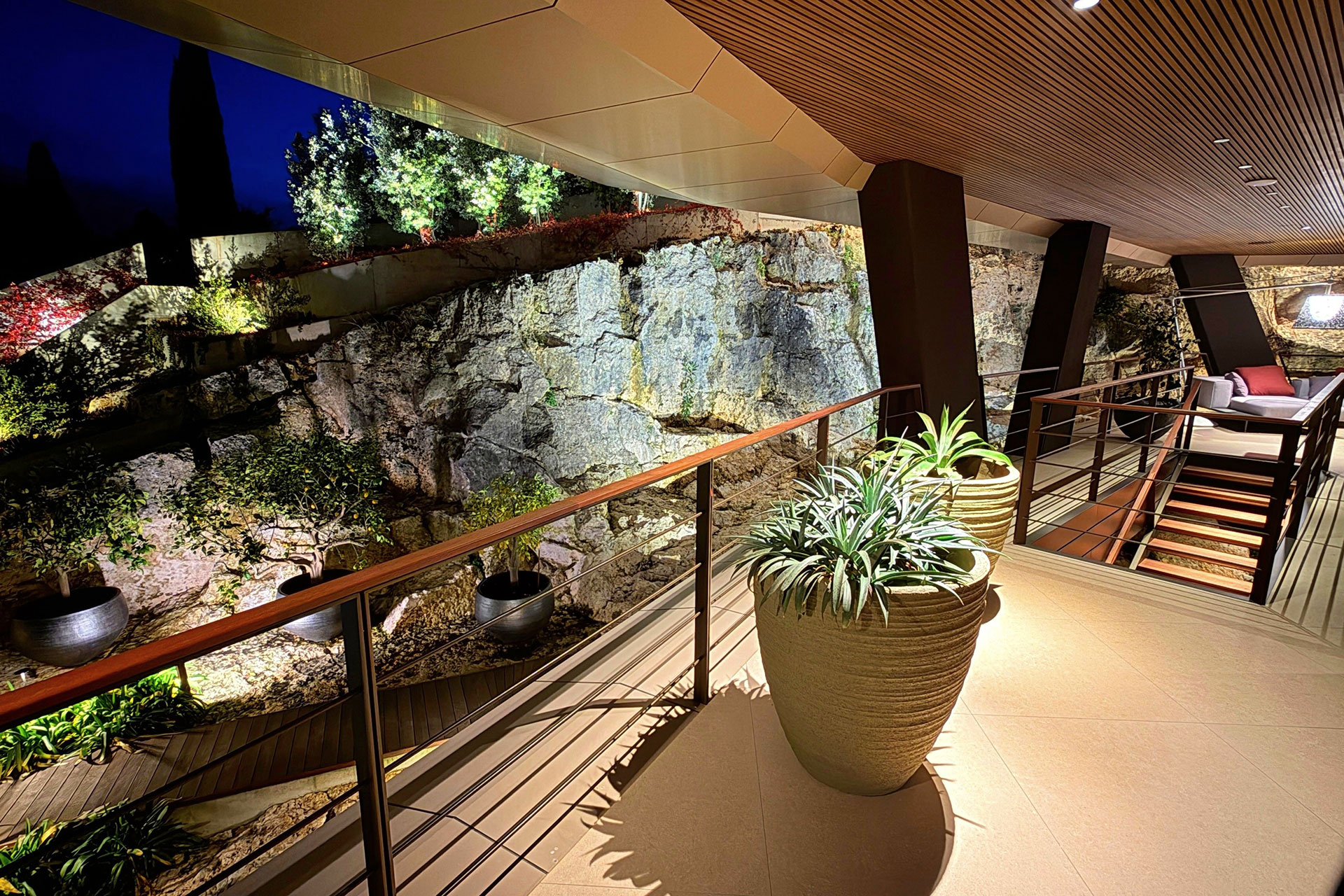
The solution was to redesign the house and lift it above the archaeology, allowing the Roman ground to remain intact and legible. Only after this careful rethinking was the permit granted. The landscape then became the project’s second act: a sculpted terrain of stone terraces, formed from the site’s own material language, and softened by dense, layered planting. Over time, greenery and quarry-stone settle into a quiet alliance subtle in daylight, deeply atmospheric after dusk.
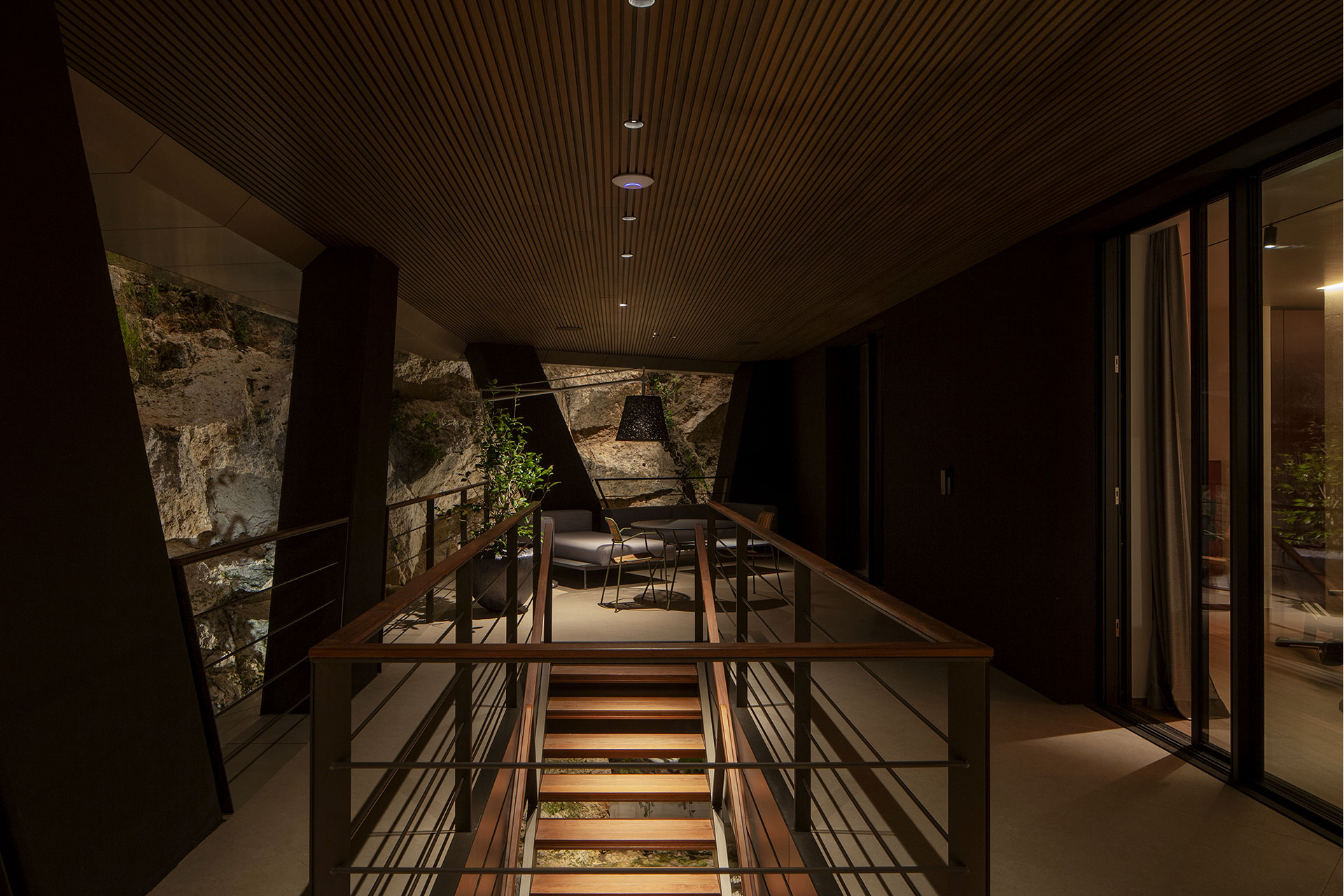
Lighting was crucial across the entire property, not as decoration, but as the final layer of spatial choreography. From the living room, from every terrace, and around the pool, the landscape is always present seen in long views and experienced up close. Yet the design intent was clear: almost no visible light sources. The fixtures do not compete with the place; the place remains the protagonist.
Light is delivered as a carefully edited sequence: paths and terraces are readable and safe, but never overstated; vegetation is revealed selectively, allowing seasonal change to become part of the night composition; and the Roman-cut stone its edges, scars, and textures emerges with depth rather than brightness. The scene is dramatic yet balanced, composed more by gradients than by glare.
Here, shadow is not the absence of design, it is an active material. Darkness protects the archaeology, preserves the serenity of the home, and gives the illuminated stone and planting their full weight. The result is a landscape where the history underfoot is honoured, the present-day architecture is supported, and the night environment feels inevitable: light where it’s needed, and darkness where it belongs.