

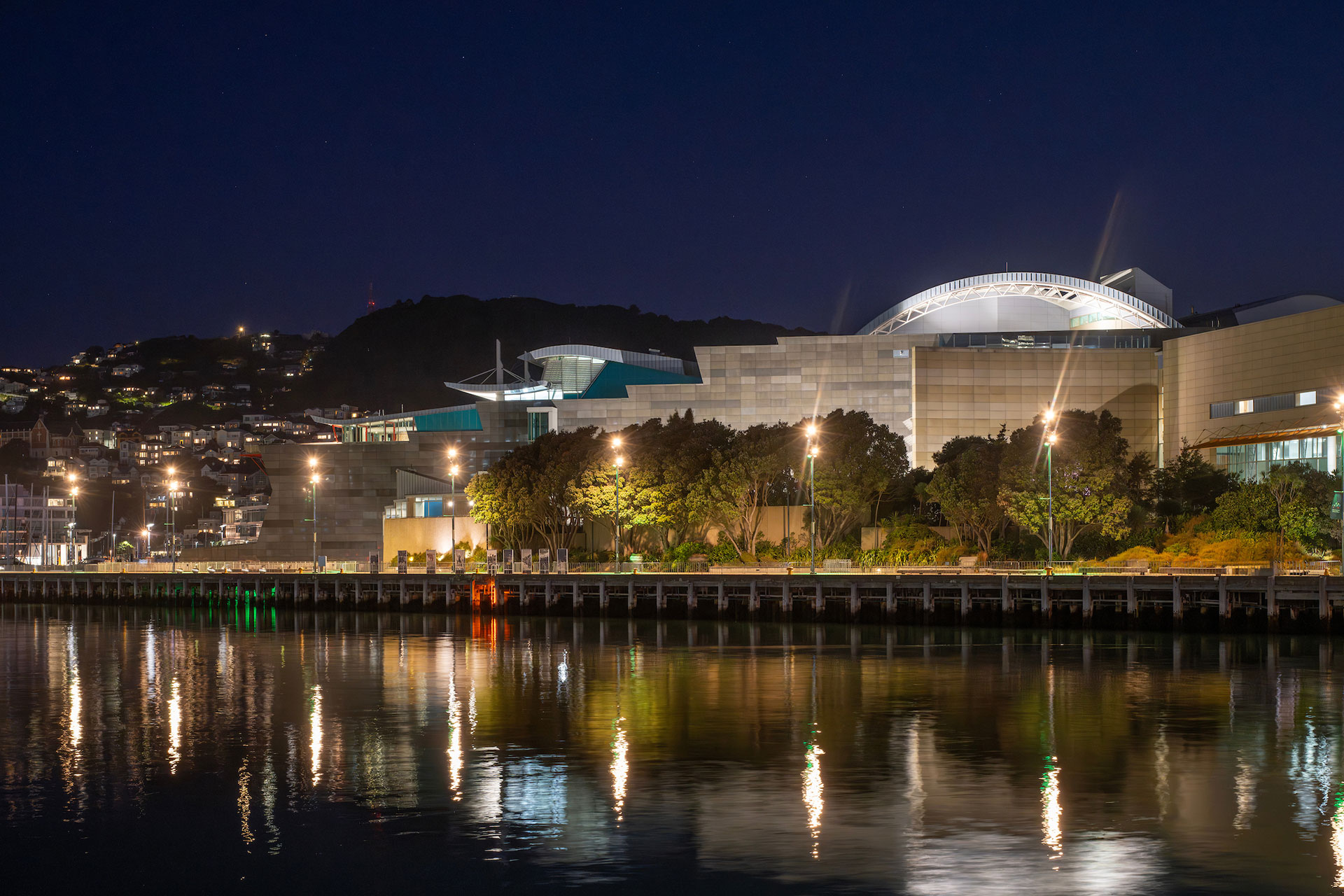
The Wellington Waterfront Promenade is the civic spine connecting Queens Wharf, Te Papa, Taranaki Street Wharf and the wider city. It accommodates pedestrians, cyclists, mobility users and service vehicles, and functions as a major public event destination throughout the year.
S&T Lighting was engaged by Wellington City Council to develop and implement a coordinated lighting strategy to improve safety, amenity and adaptability across Tug Wharf, Taranaki Street Wharf and Te Papa Promenade.
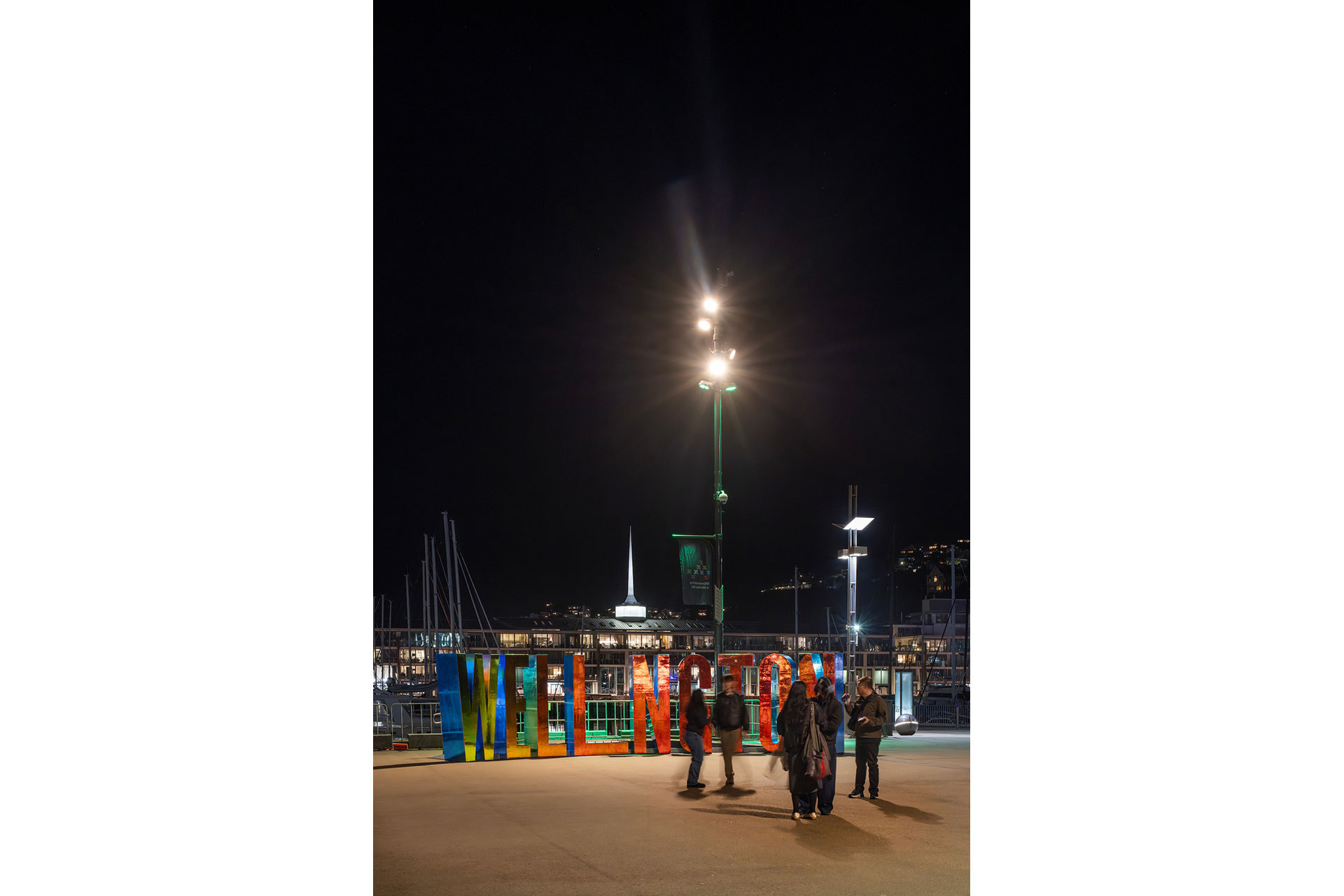
The project introduces 9 metre and 12 metre SMART poles equipped with high performance projector luminaires, establishing a cohesive and adaptable lighting and technology solution across these open public spaces.
Wellington City Council sought to significantly improve both the perception and reality of safety along the Waterfront at night. A primary objective was enabling facial recognition at 15 metres and clearly defining wharf edges and hazards in accordance with AS/NZS 1158.3.1 subcategory PA1.
Beyond compliance, the lighting was required to provide a warm and visually comfortable environment, support events and multifunctional use, integrate respectfully within the heritage waterfront setting, enable SMART remote lighting and power control and maintain strong daytime presence.
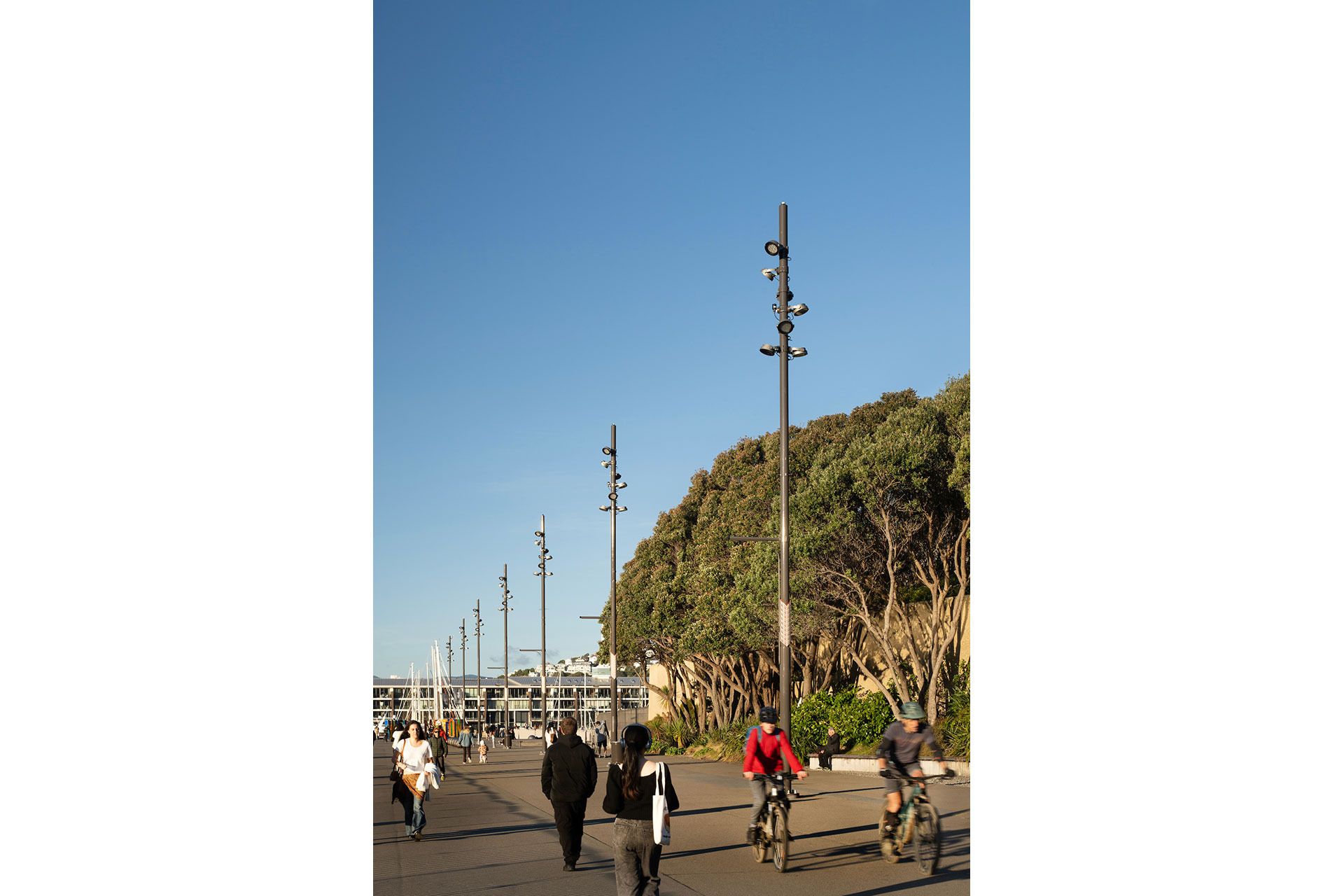
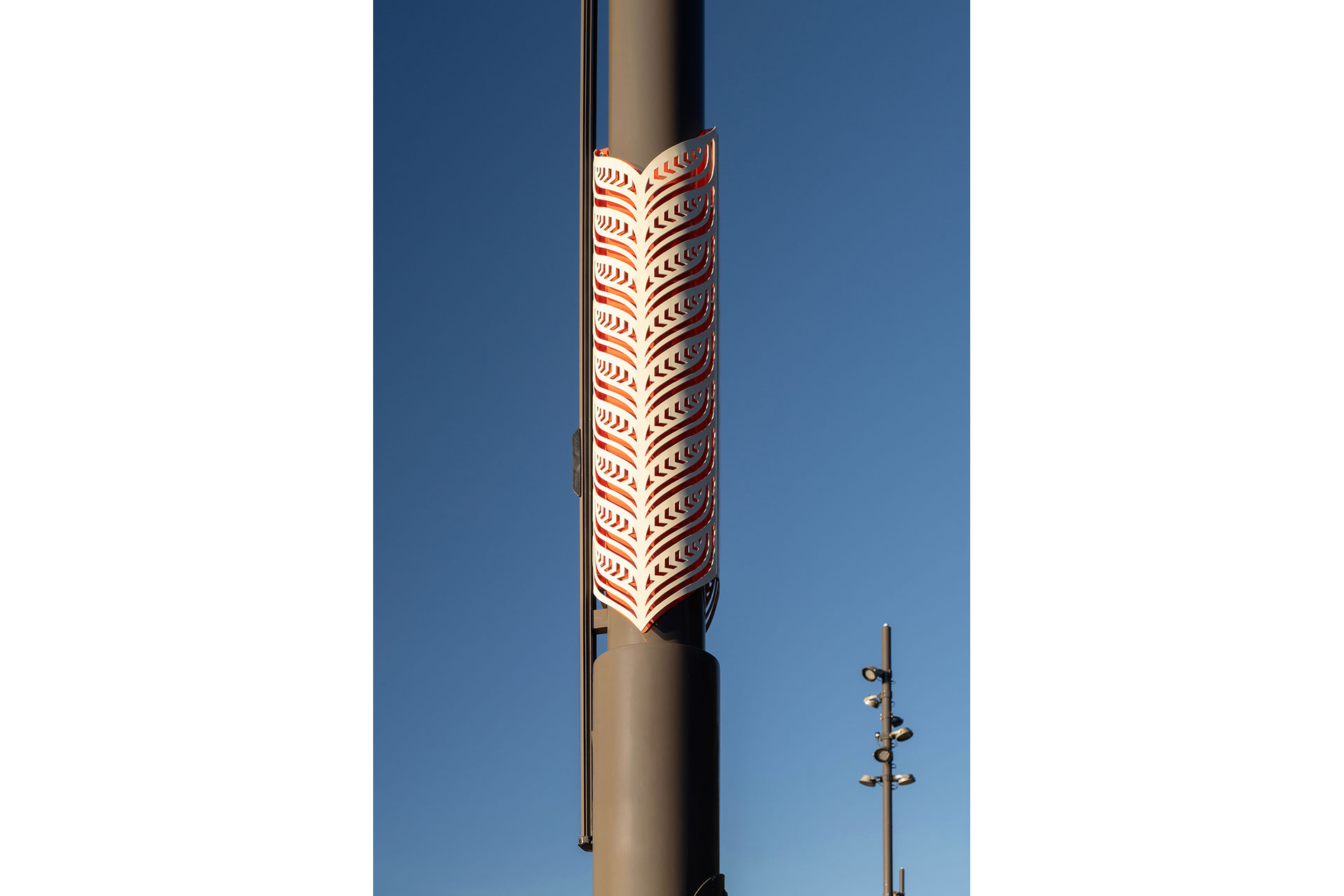
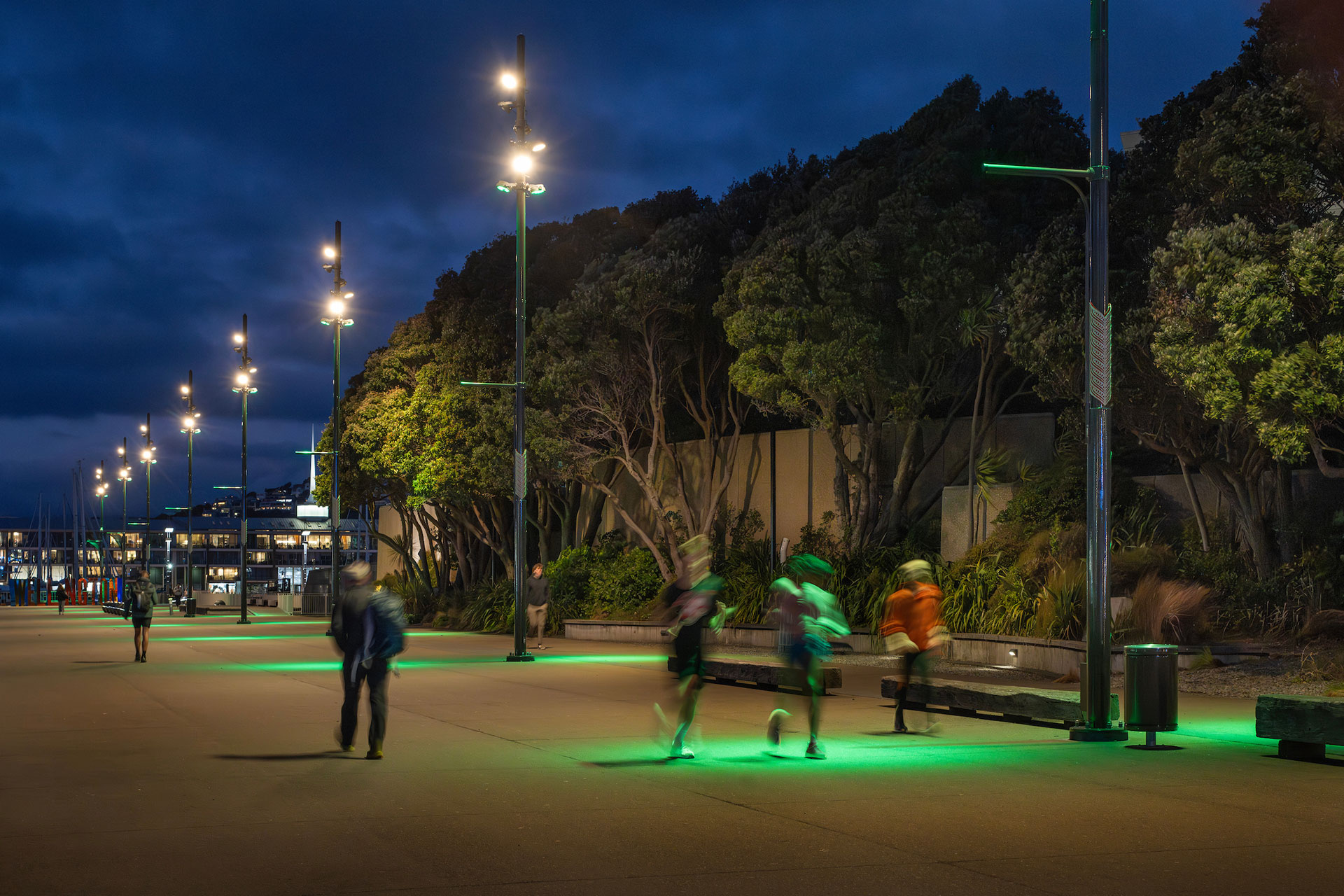
A stepped SMART pole was developed to consolidate lighting, power and data infrastructure within a single vertical element. Projector luminaires are arranged in a cascading spiral configuration, forming a consistent sculptural identity while delivering 360-degree coverage.
Urban design constraints required poles to run along a single inland alignment. Pole heights were therefore increased to 12 metres, enabling light to reach the wharf edge while maintaining projector tilt angles at or below 40 degrees to control glare and upward light.
The lighting composition draws on Richard Kelly’s principles of ambient luminescence, focal glow and play of brilliants. Soft ambient illumination supports safe circulation, focal accents highlight civic features, and luminous projector lenses introduce visual depth and energy.
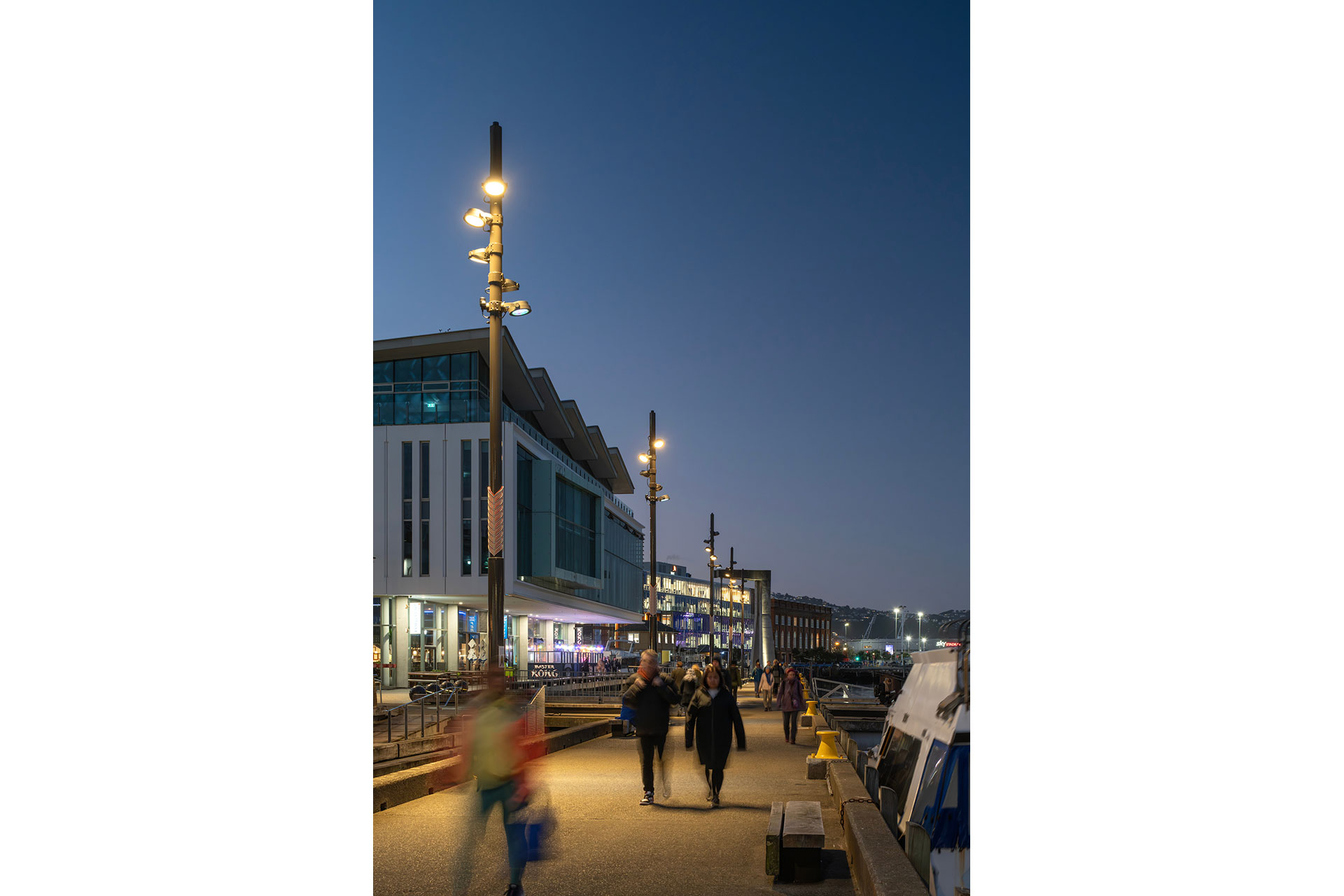
Faces are clearly recognisable, edges are defined and previously dark zones have been activated without creating flat or over lit conditions.
Each pole integrates lighting circuits, event power outlets, data infrastructure and Casambi wireless control. Three independent networks manage white lighting, RGBW lighting and event power.
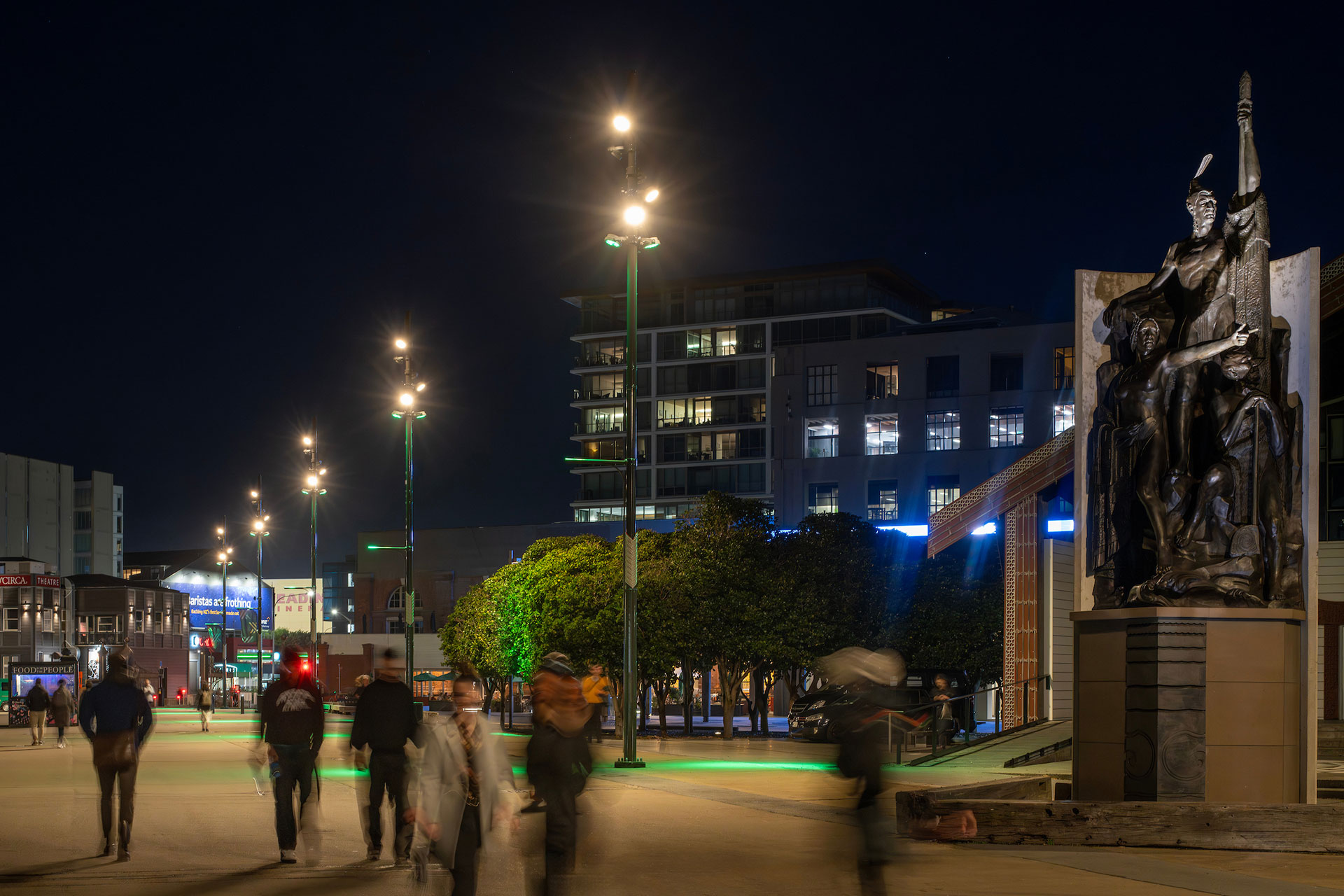
Under normal operation the system achieves PA1 compliance at approximately 40% output, with capacity to increase levels during events or emergency scenarios. RGBW luminaires enable civic colour theming while maintaining public safety.
Meeting lighting performance at reduced output delivers significant energy savings. Taller poles and full coverage reduce the number of luminaires required across expansive wharf areas.
Marine grade finishes and standardised optics support durability and long-term maintenance in the coastal environment. Removed infrastructure was recycled through approved processes.
The completed lighting network has transformed the Waterfront into a safe, flexible and vibrant nighttime public space that can be tuned for events. Visibility is consistent, edges are legible and multifunctional areas are activated. The project demonstrates how rigorous landscape lighting design can enhance safety, support identity and extend the city’s social life into the night while respecting its waterfront character.