

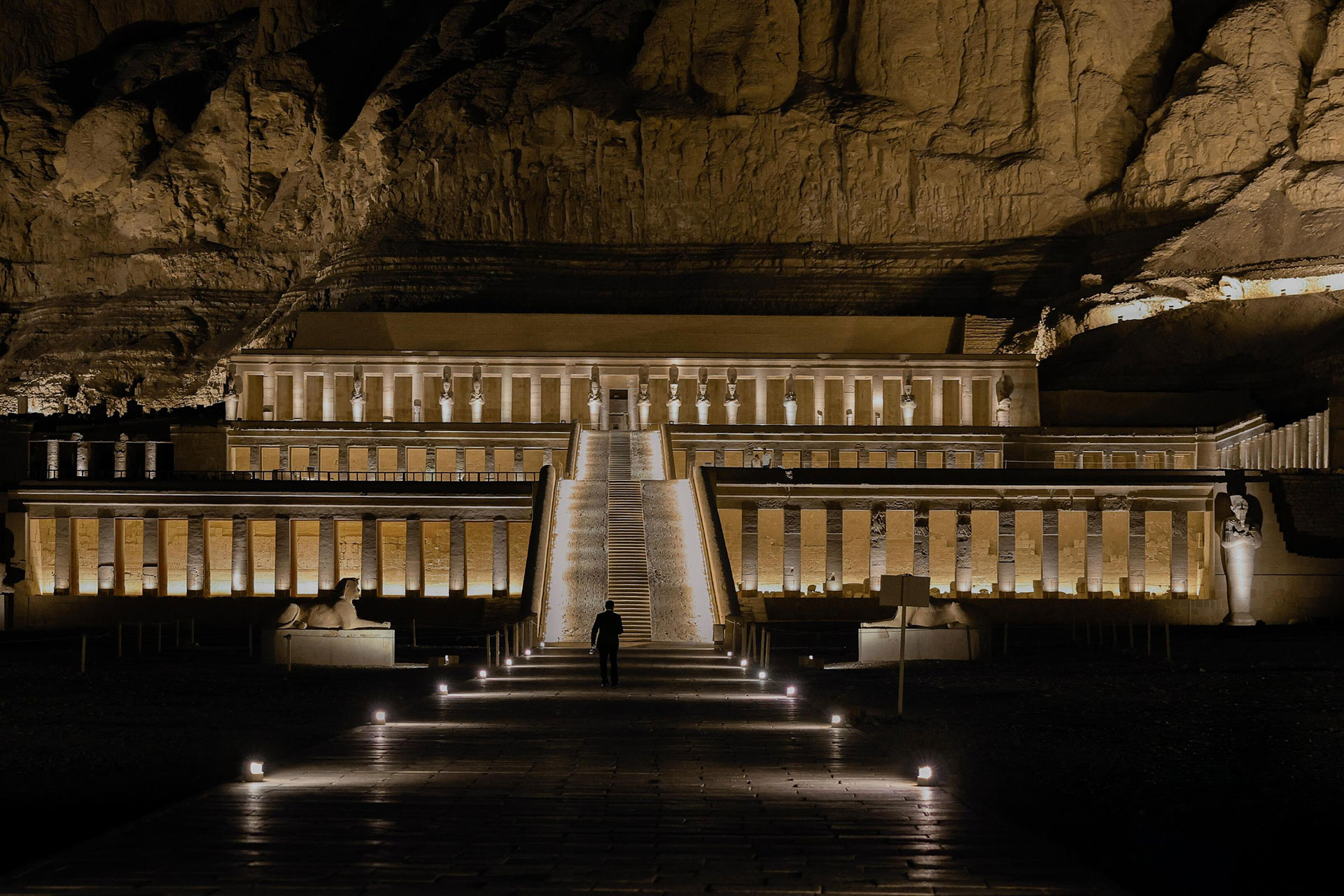
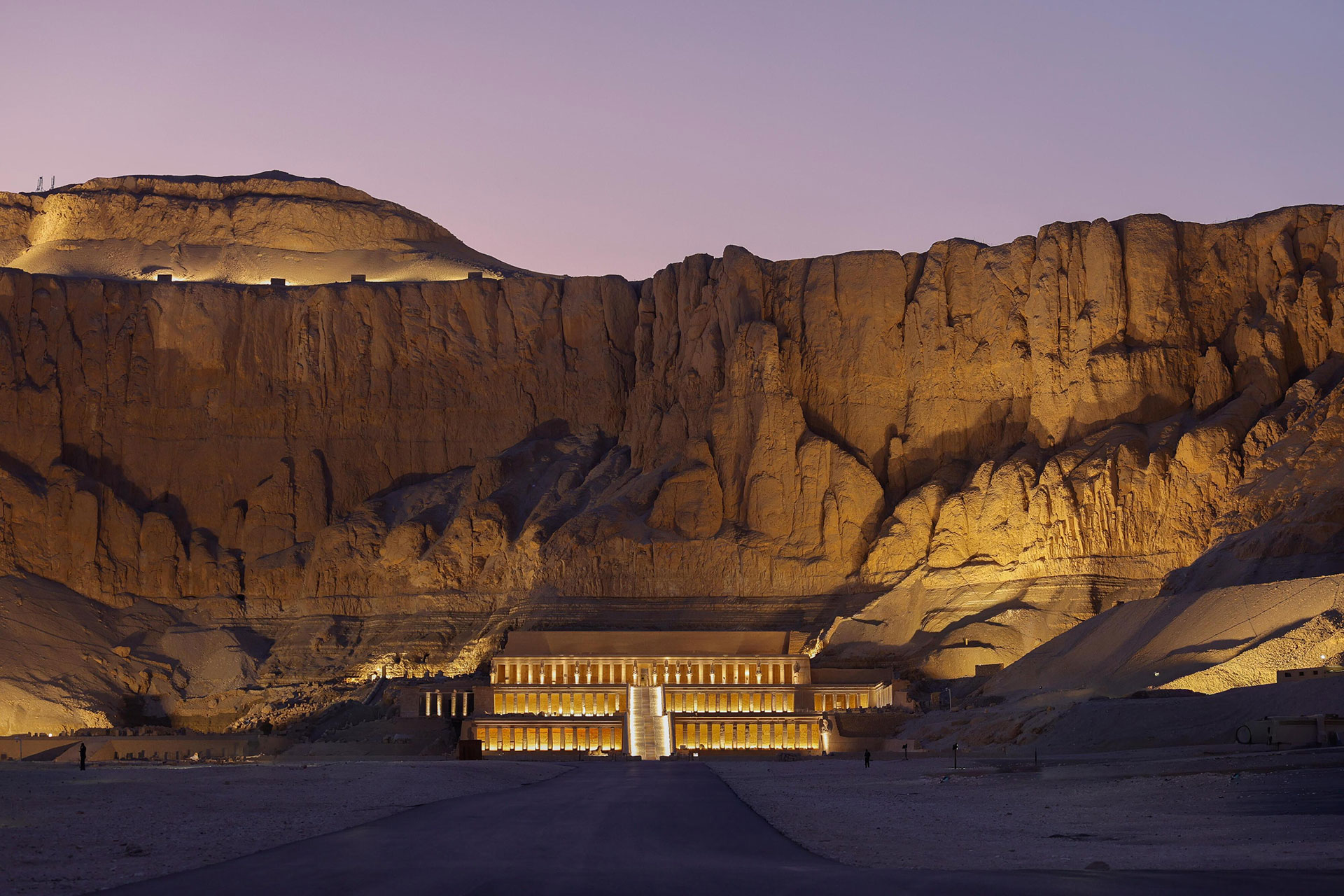
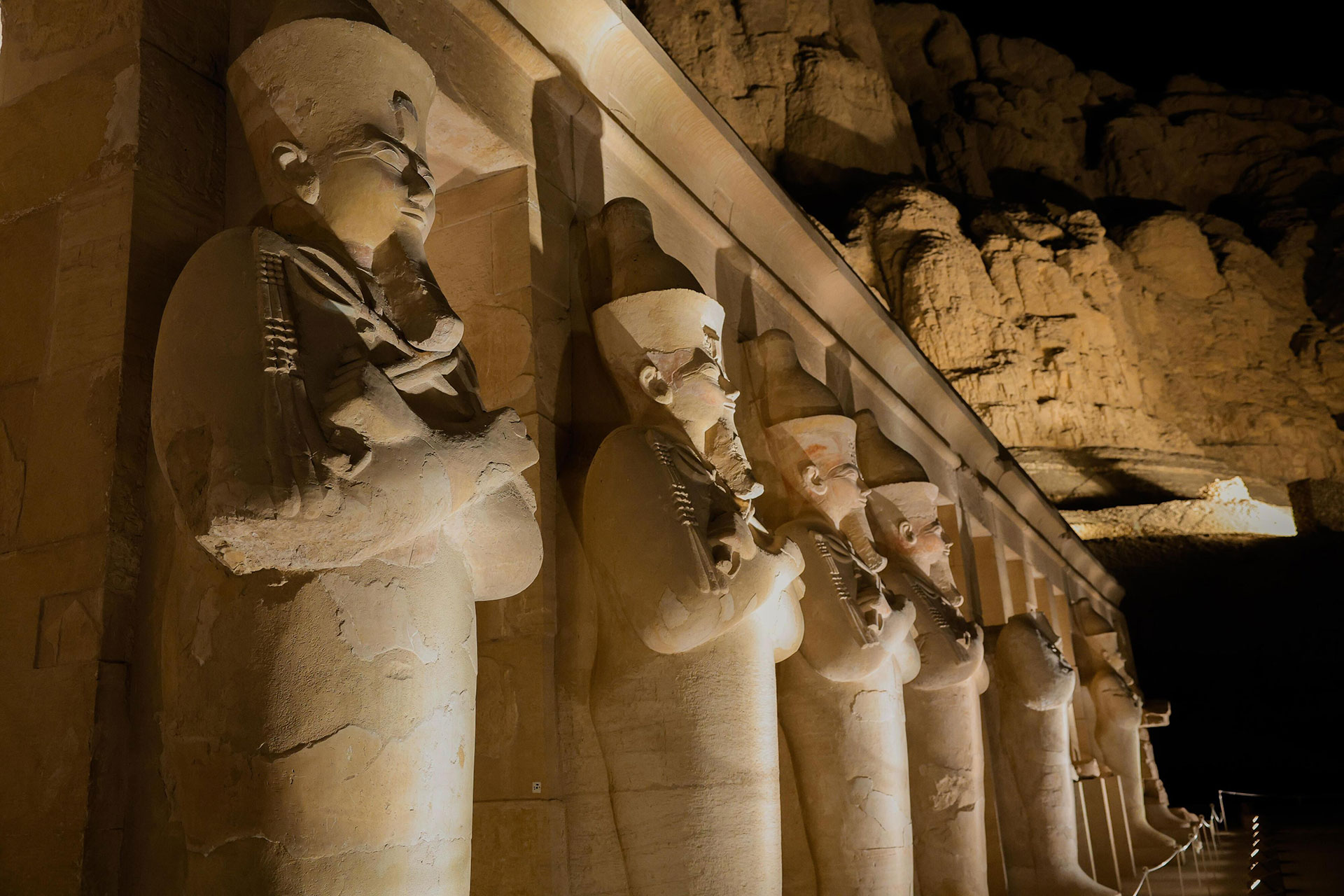
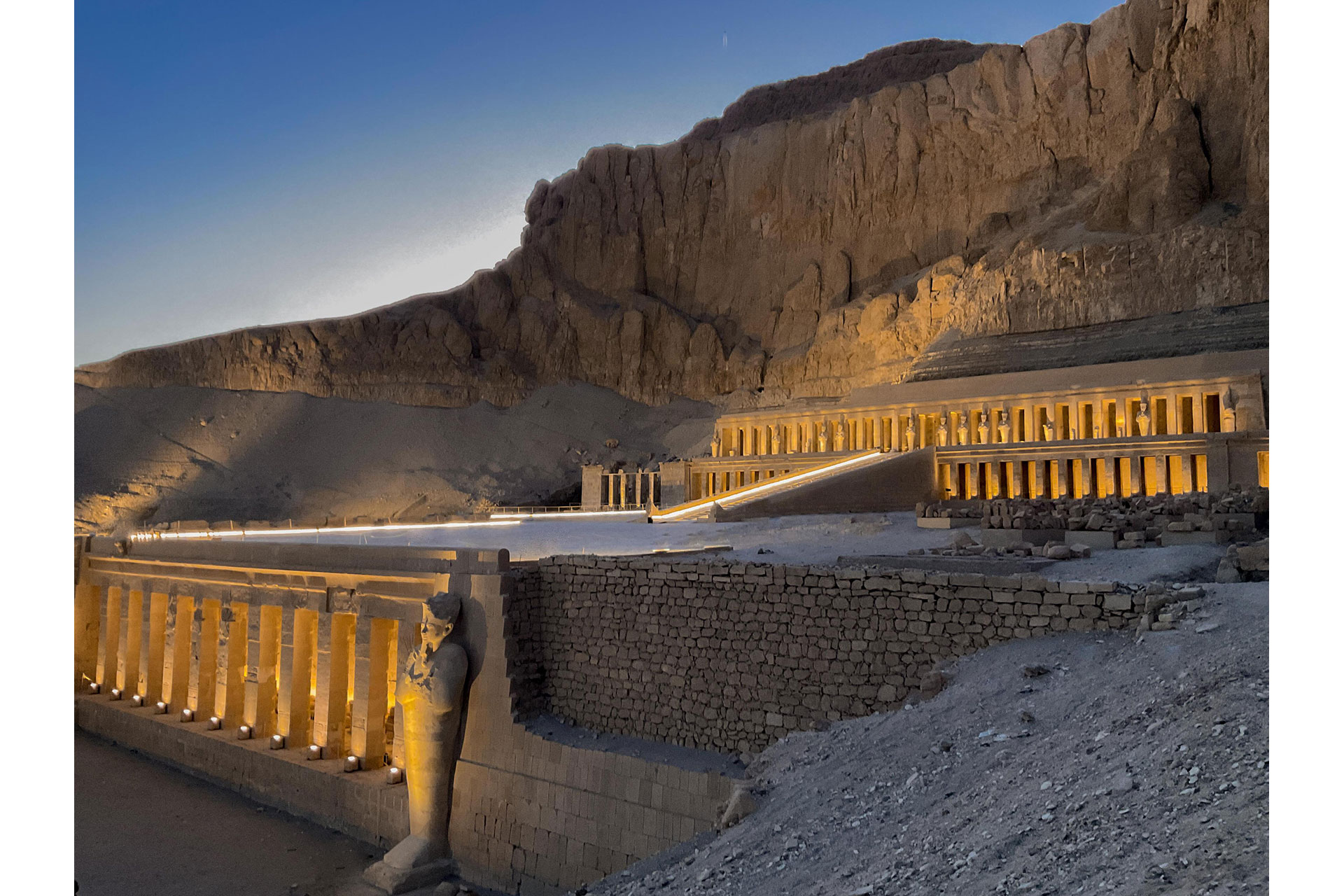
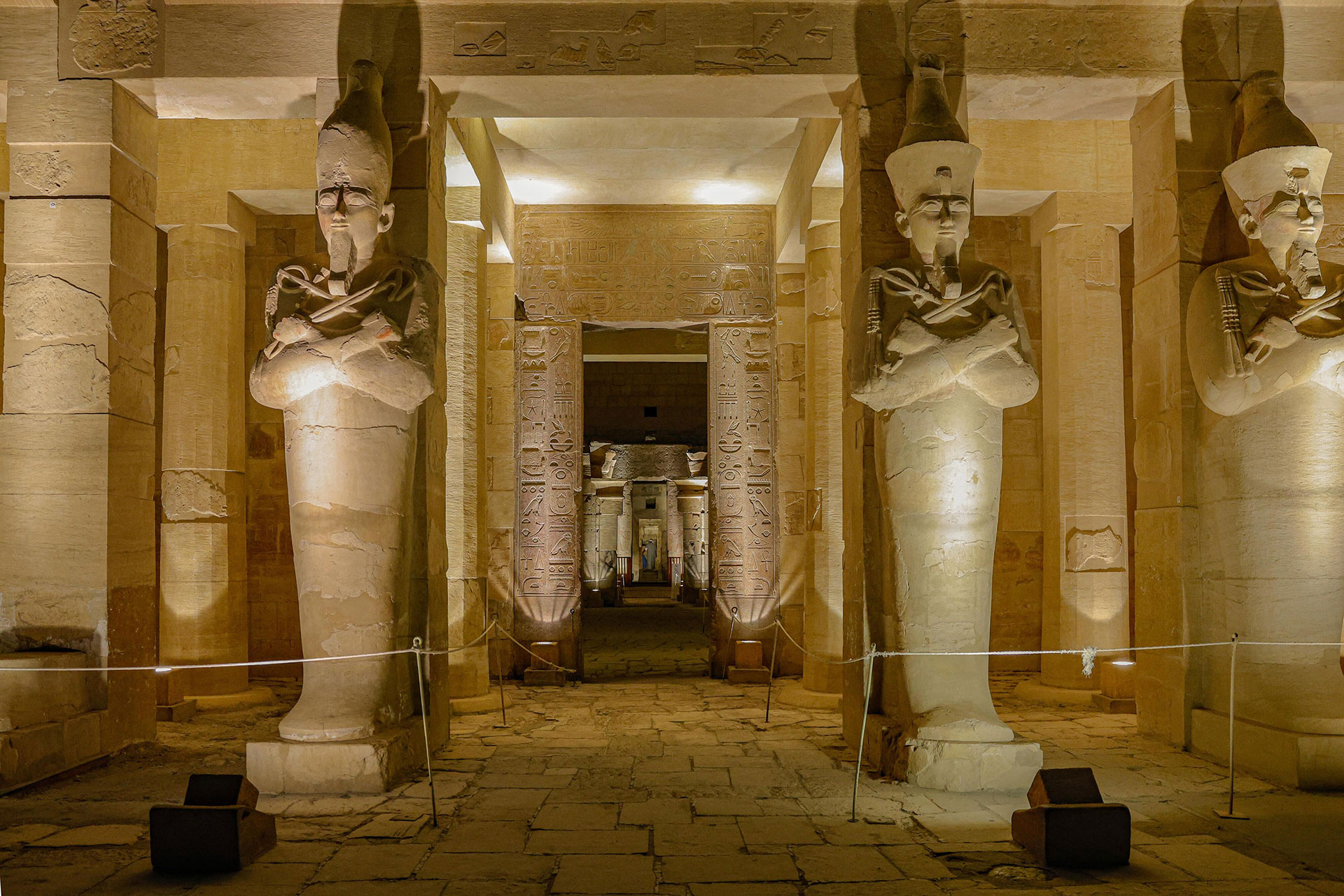
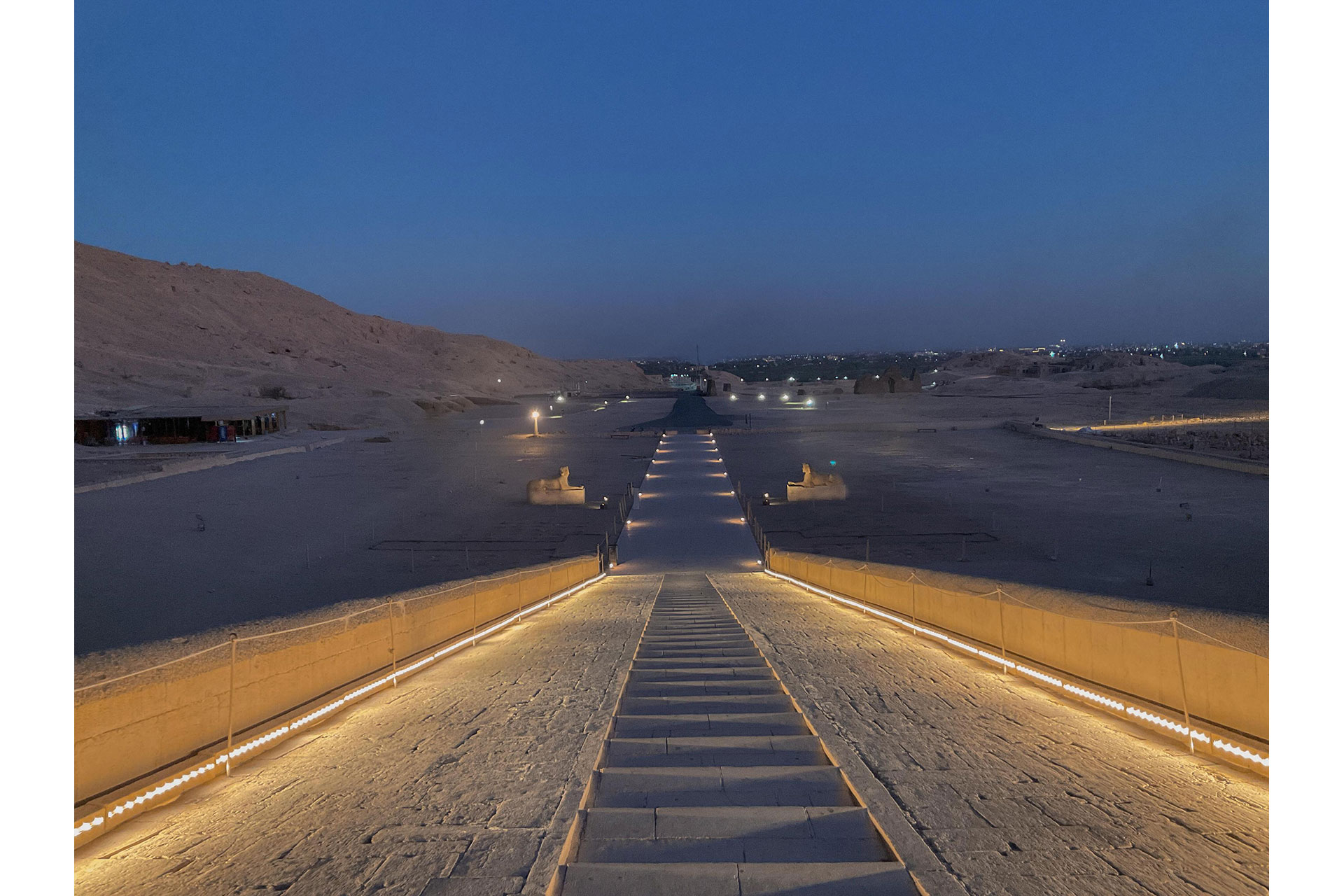
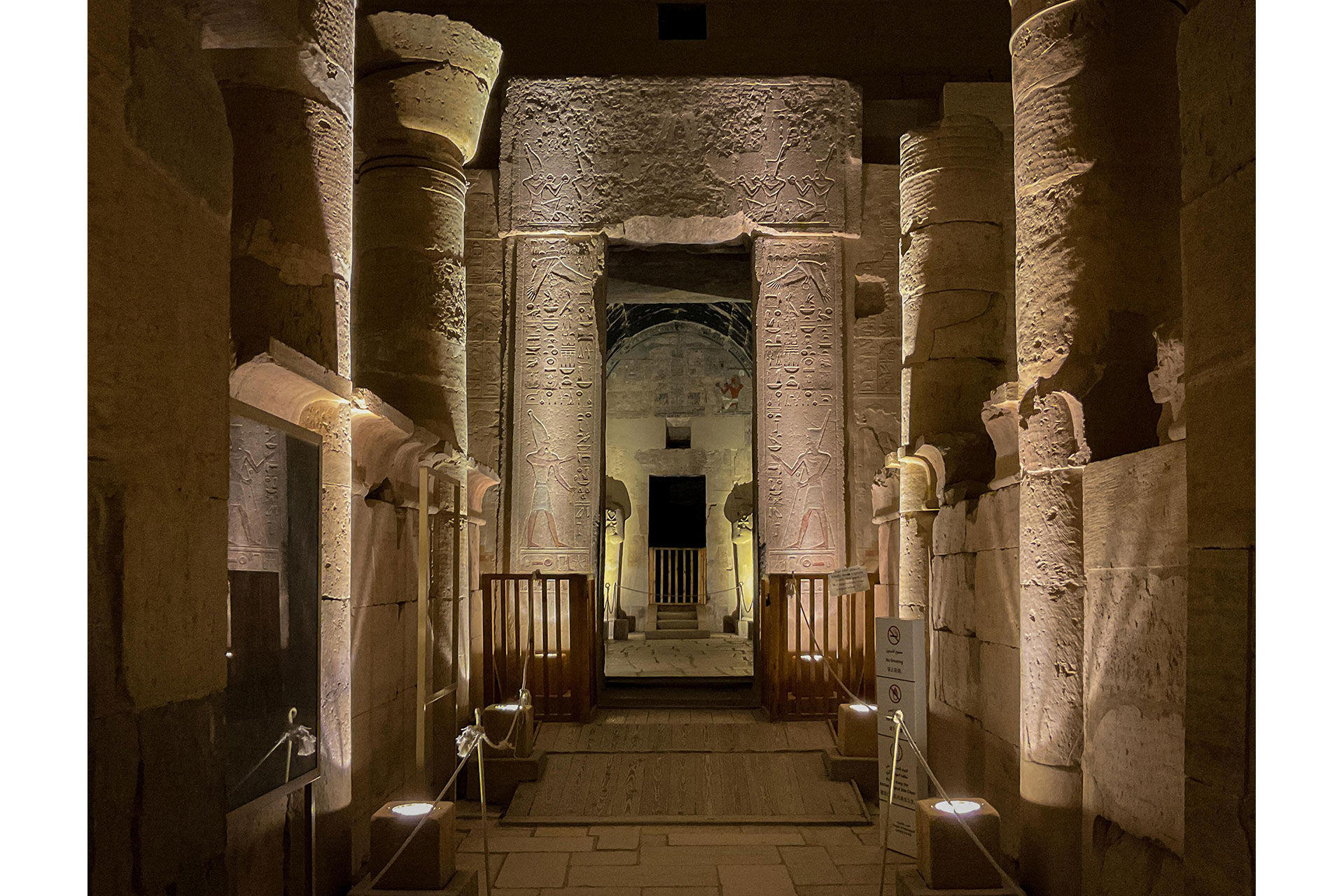
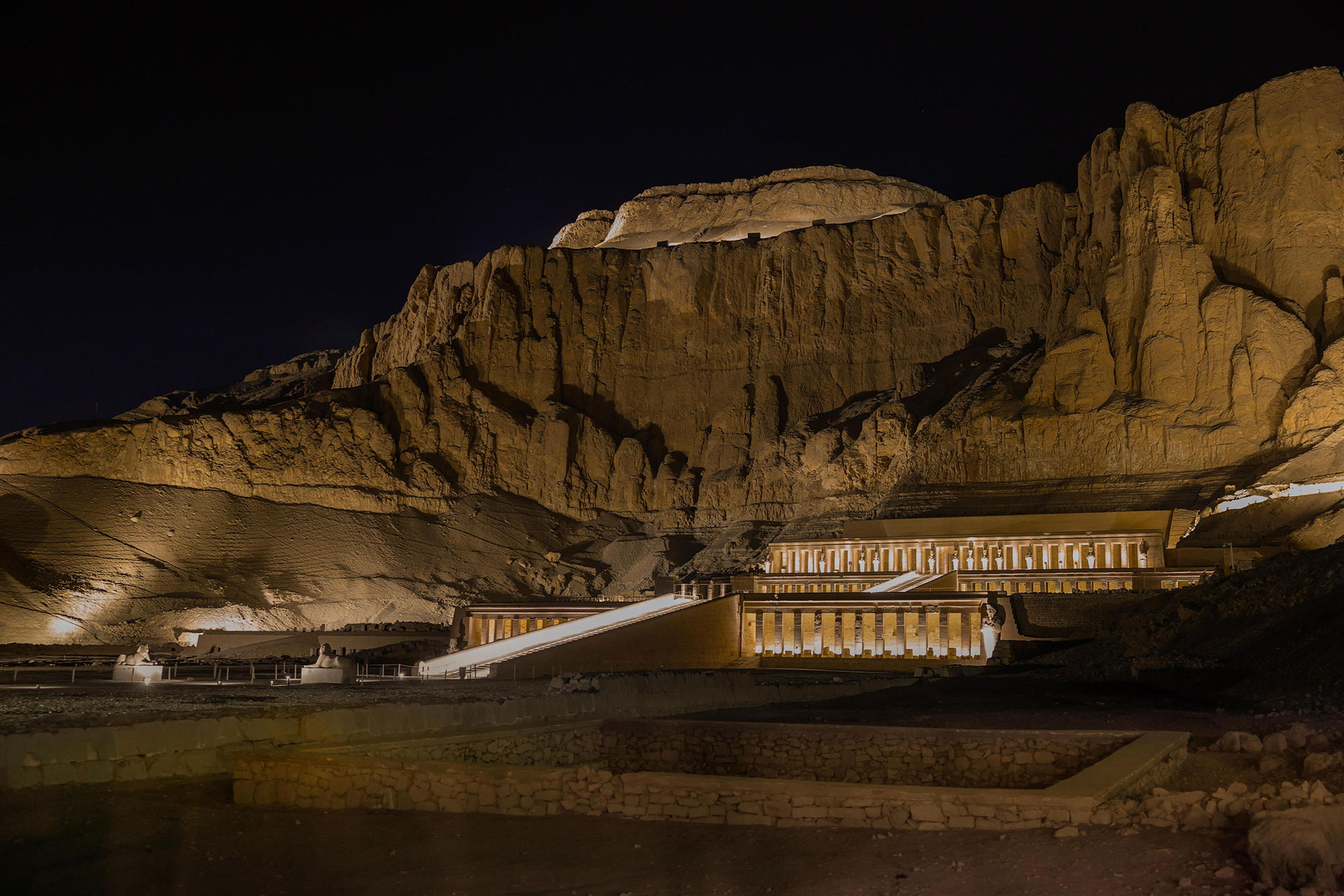
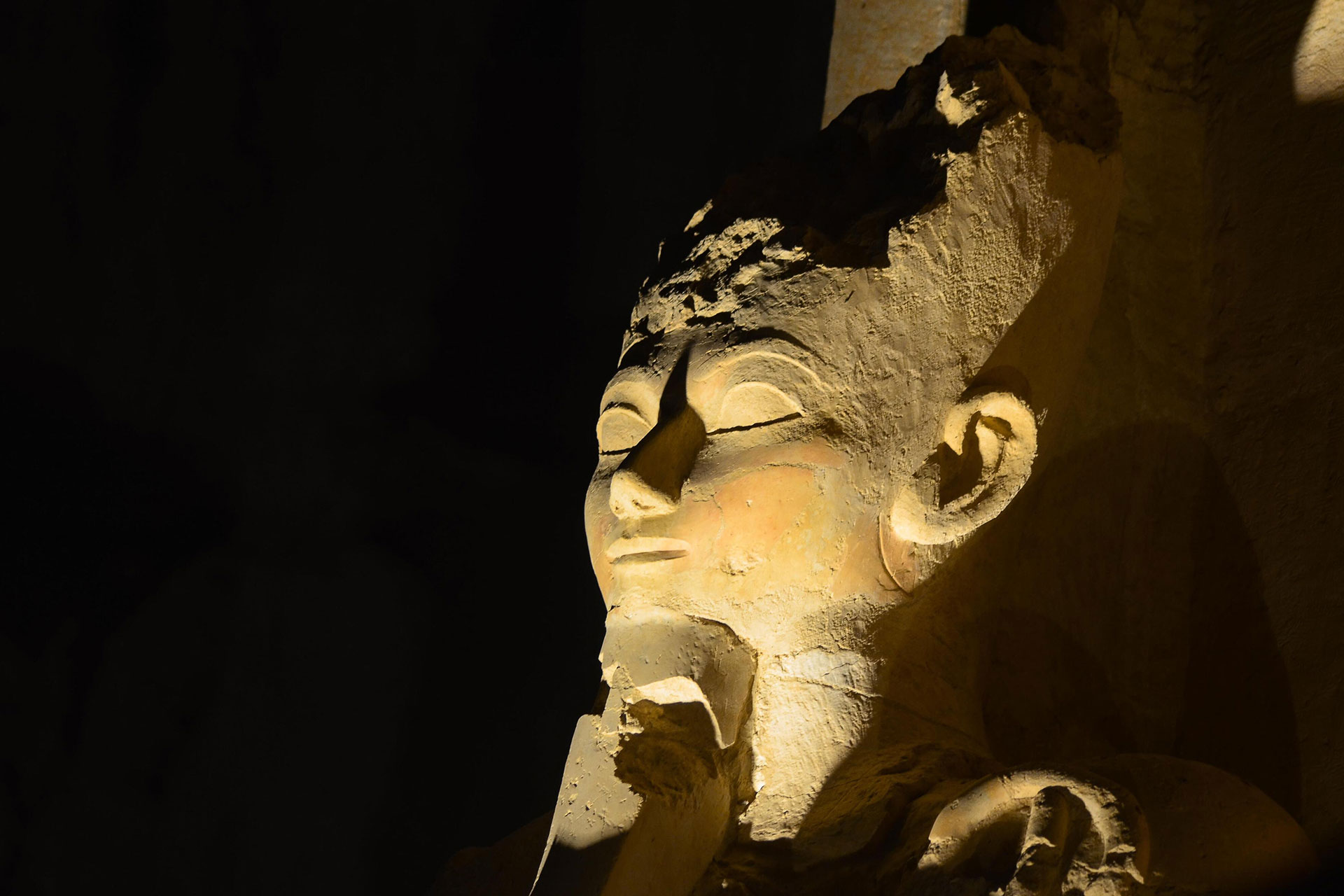
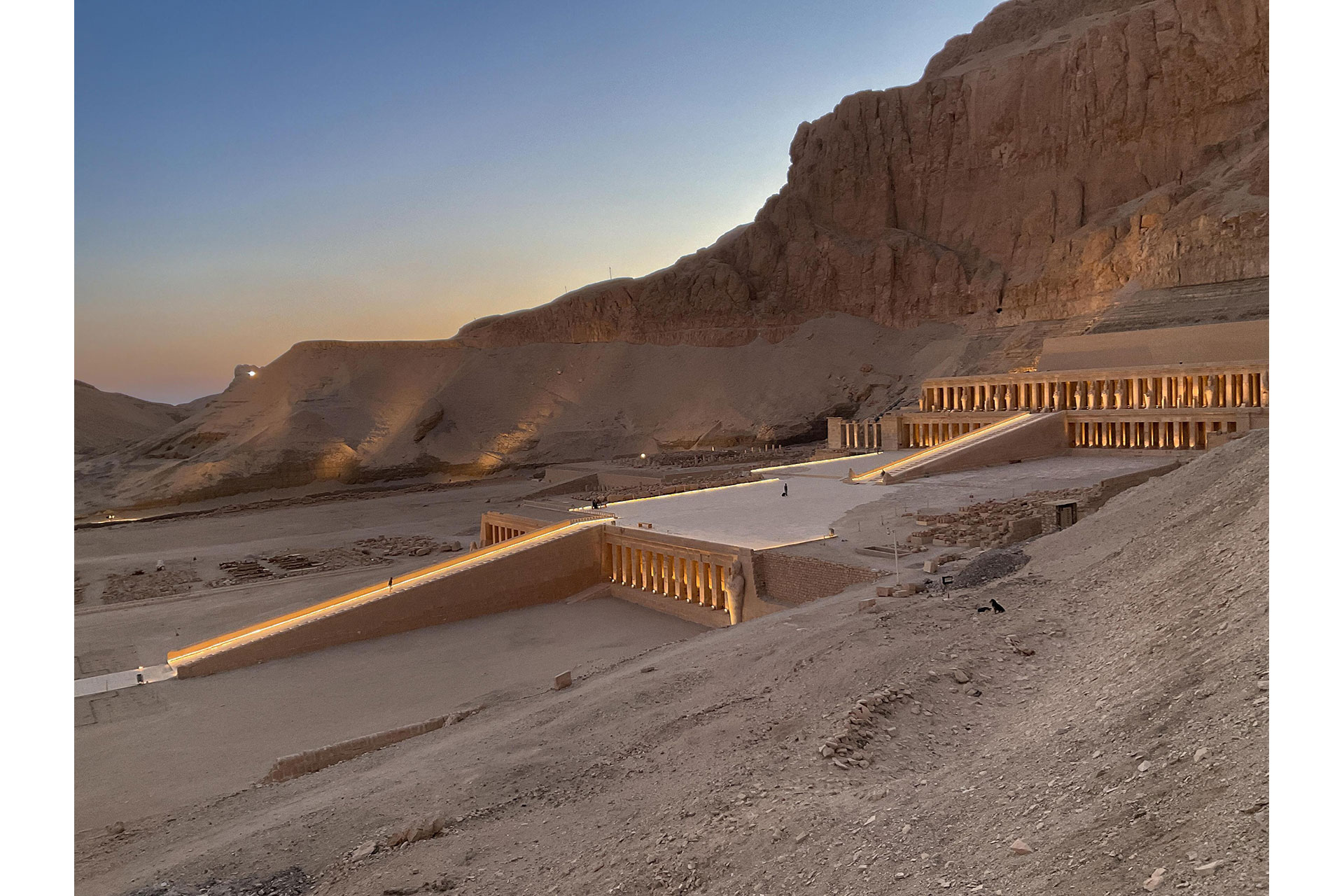
The “Queen Hatshepsut” project honors and reveals the funerary temple of Egypt’s only female Pharaoh through light. Inspired by its solar alignment, ascending terraces, and carved reliefs, the design reinforces the temple’s monumental geometry and sacred order, symbolizing rebirth and eternity. Layers of grazing light and shadow articulate hierarchies and textures with restraint and dignity, allowing the architecture to speak with clarity and reverence, evoking the Queen’s enduring legacy and her legitime role as a Pharaoh.
At Deir el-Bahari, where the sacred cliffs guard the Valley of the Kings, Queen-Pharaoh Hatshepsut and her architect Senenmut (XVIII Dinasty – 1500 B.C.) conceived a temple proclaiming her divine ascent. The lighting design retraces that procession from earth to eternity—ramps as luminous ascents, terraces as monumental stages, statues as silent presences, sanctuaries as sacred stillness—enhancing the solemnity and permanence of the site.
To preserve the monument, 600 bespoke Aswan sandstone bases—hand-sculpted by Egyptian artisans—anchor fixtures by gravity, avoiding any drilling into ancient floors. Handcrafted fiberglass housings imitate sandstone, discreetly concealing and protecting equipment and cabling from sun, sand, and impacts. A concealed metallic frame absorbs visitor shocks, ensuring stability and durability without compromising the integrity of the heritage fabric. Custom LED systems incorporate super-elliptical and asymmetric optics with tailored diode spacing for precise uniformity and optimized energy management through Casambi control.
Developed in close collaboration with archaeologists between 2010 and 2025, the project restores visibility to Hatshepsut’s enduring legacy, reaffirming her presence within one of the world’s earliest large-scale architectural compositions.