

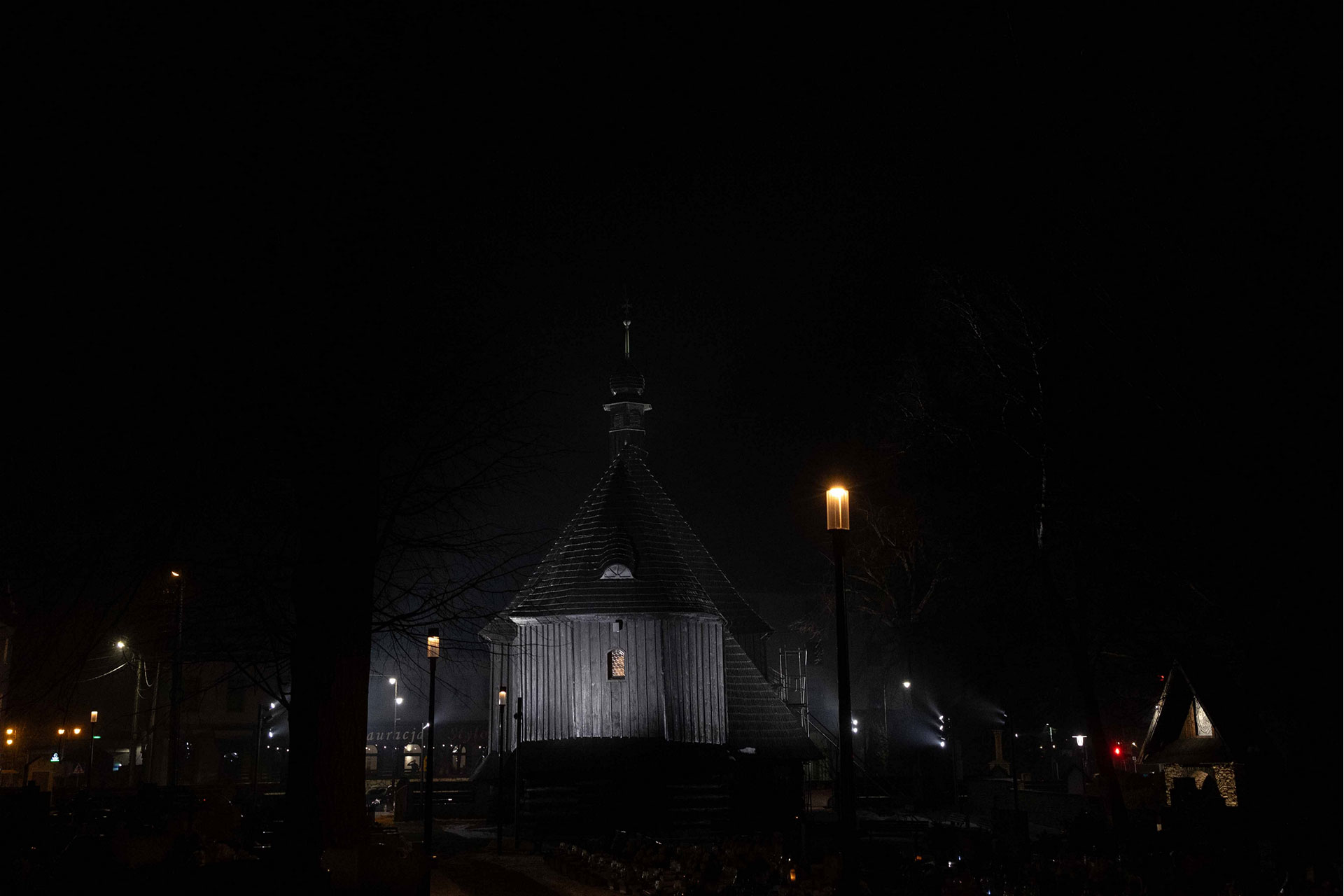
The small town of Bieruń is one of the oldest towns in Silesia. The town has a rich, multicultural history – Polish, Czech, German, Austrian, and Jewish influences have combined here throughout the centuries. The Sanctuary of St. Valentine is one of the city’s most important places of worship and a symbol of local identity. For centuries, devotion to St. Valentine has developed here, with the saint venerated as the patron of the sick—especially those suffering from epilepsy—and, in later tradition, also as the patron of lovers. The annual feast on February 14 is a key religious and social event that attracts pilgrims from all over the region. Multiple fires in the church—from the 17th to 20th century—have shaped the narrative of this shrine as a place “reborn from the ashes”, reinforcing the residents’ faith in the patron’s protection.
Fire – a destructive but also life-giving force – was the only source of light until the invention of electricity. For many centuries, it was the glow of the flame that filled the interiors of homes and shrines in the evenings. The candle, an essential part of the liturgy and an object that accompanies people from birth to their deathbed, has rich meaning in almost every religion – symbolizing the presence of God, the light that dispels the darkness of sin, and faith. Its flame signifies the soul ascending to God, and its burning wax signifies sacrifice, the passing of life, and spiritual work.
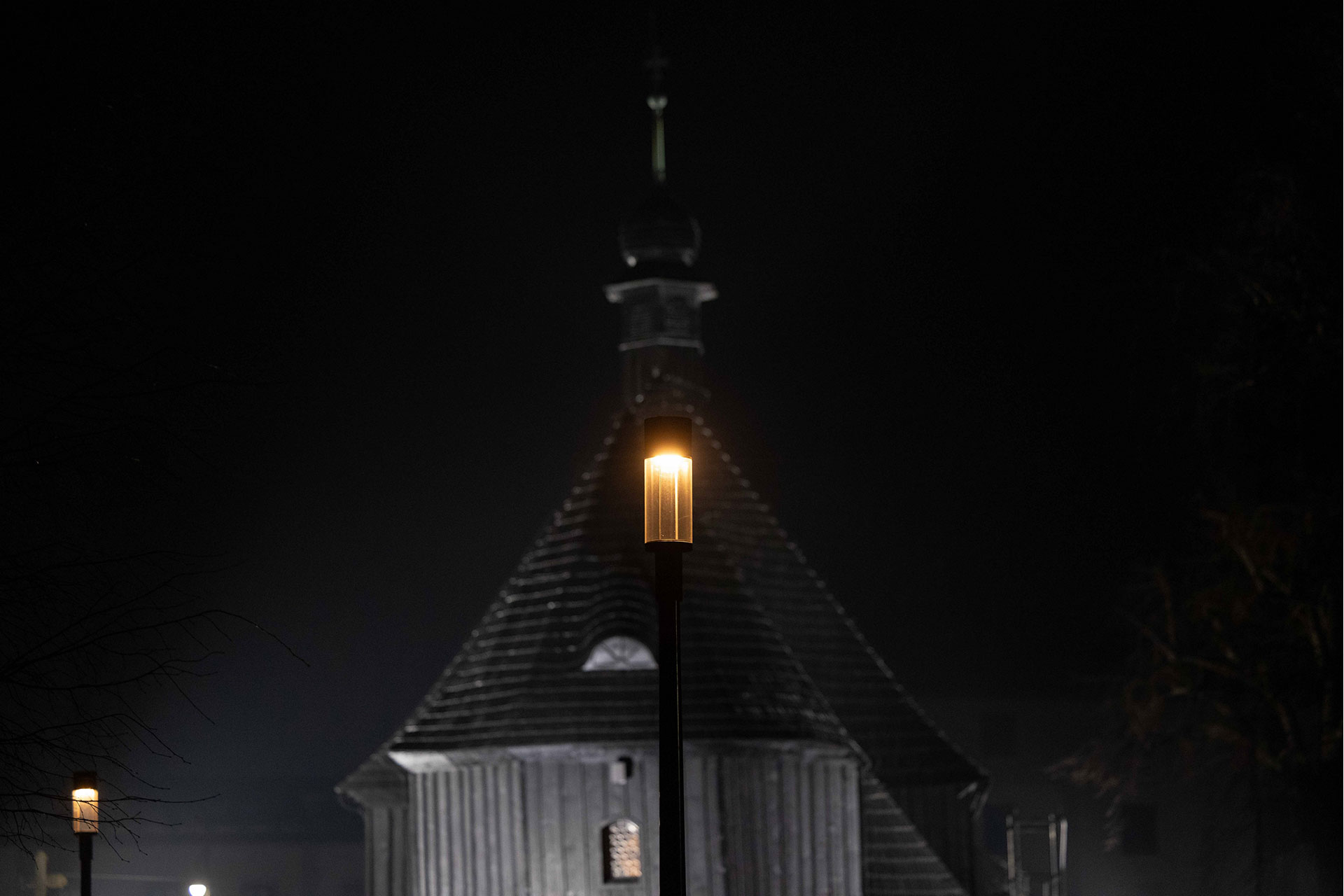
The illumination project is based on the motif of the candle and the idea of being reborn from the ashes. For the cemetery, luminaires have been designed that relate in form and colour temperature (CCT2200 K) to candles. Their task is not only to illuminate the space, but to create a calm, uplifting atmosphere.
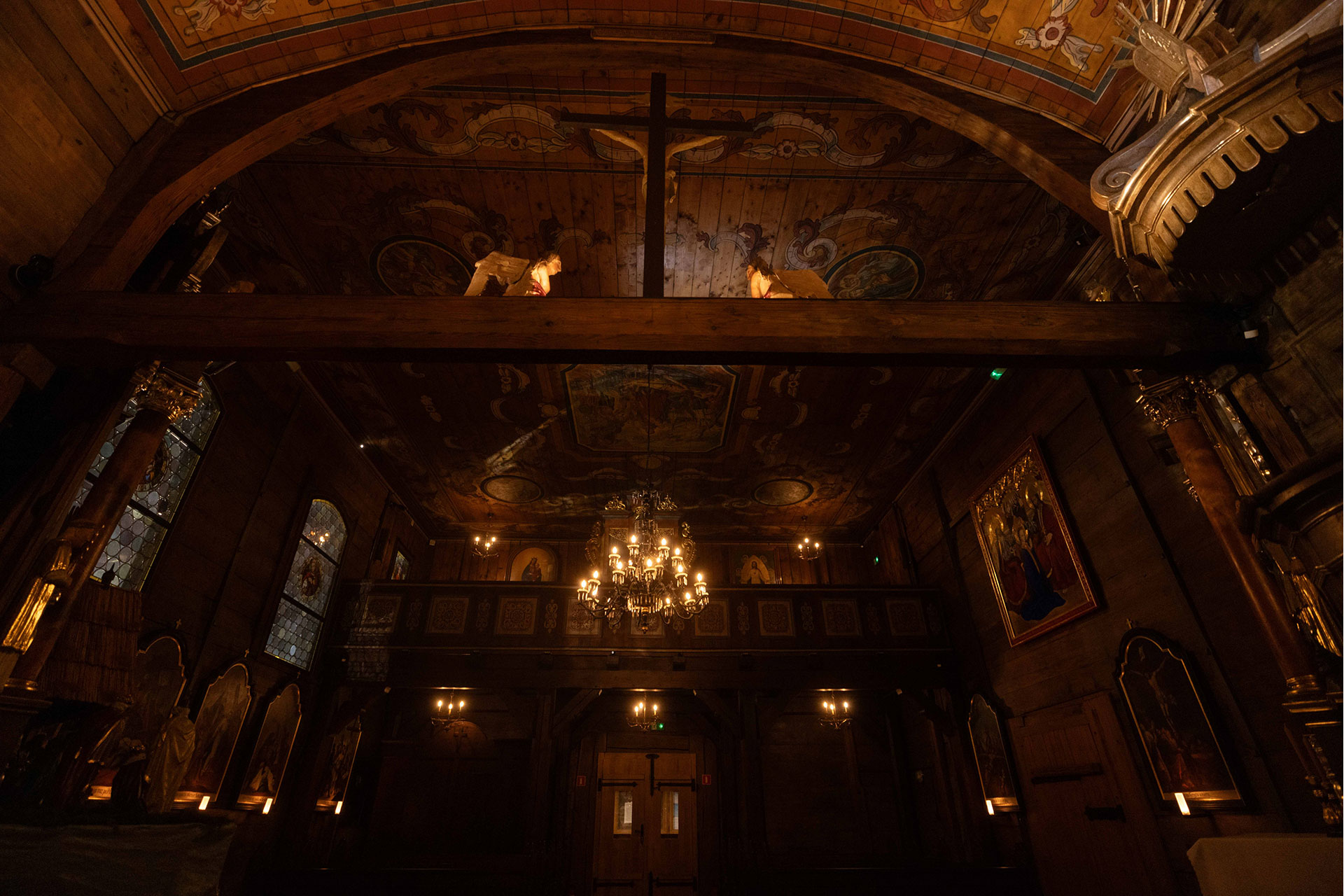
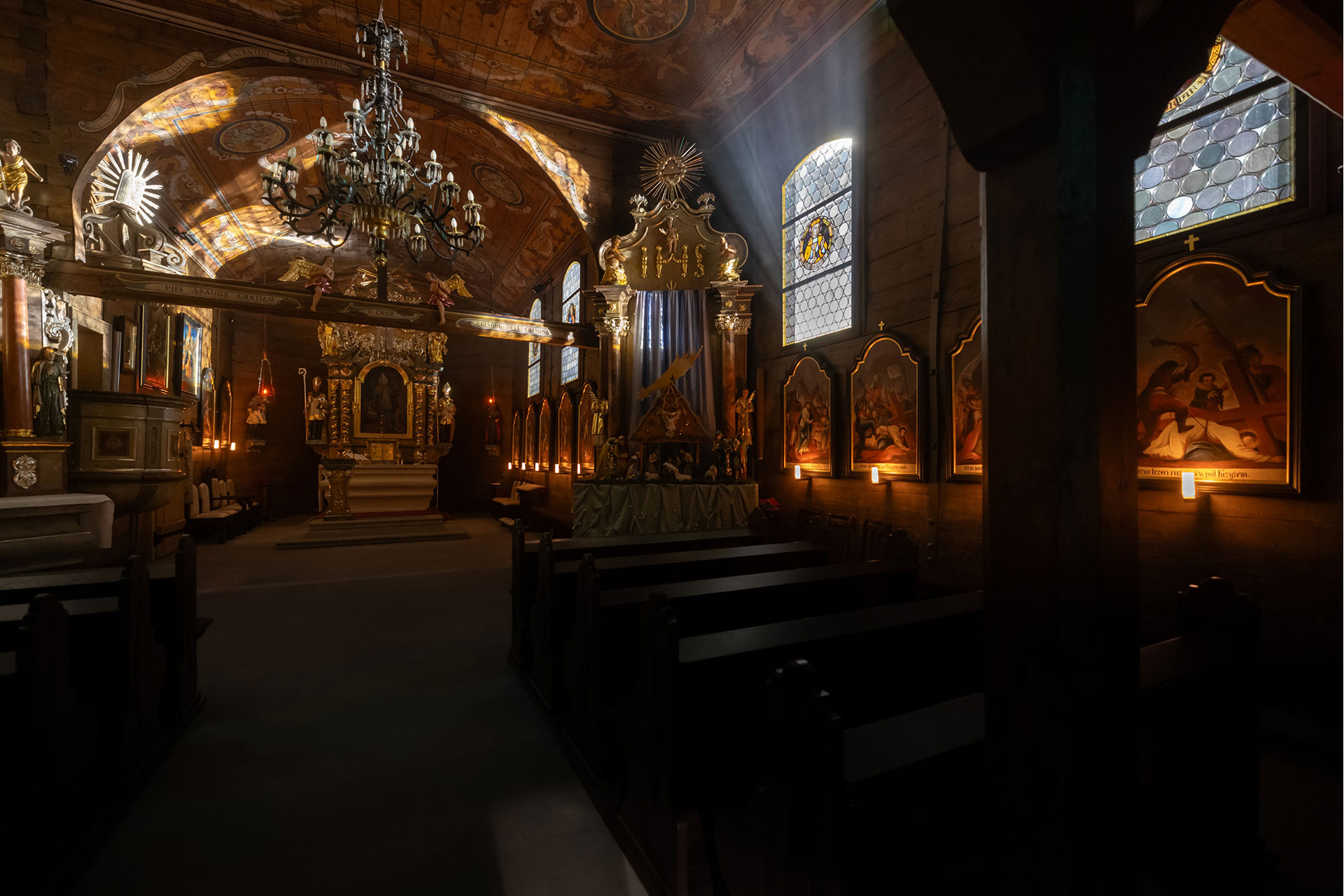
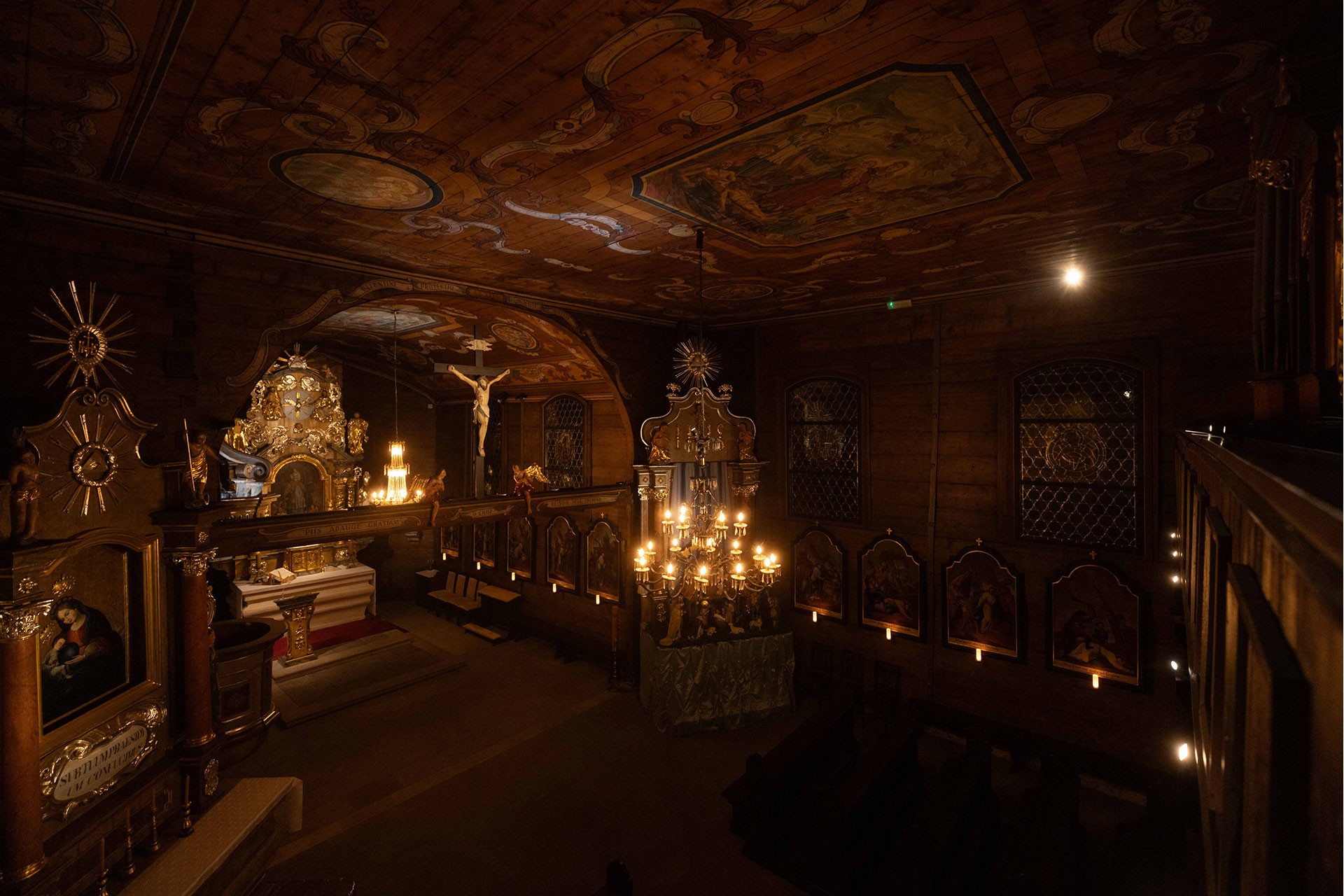
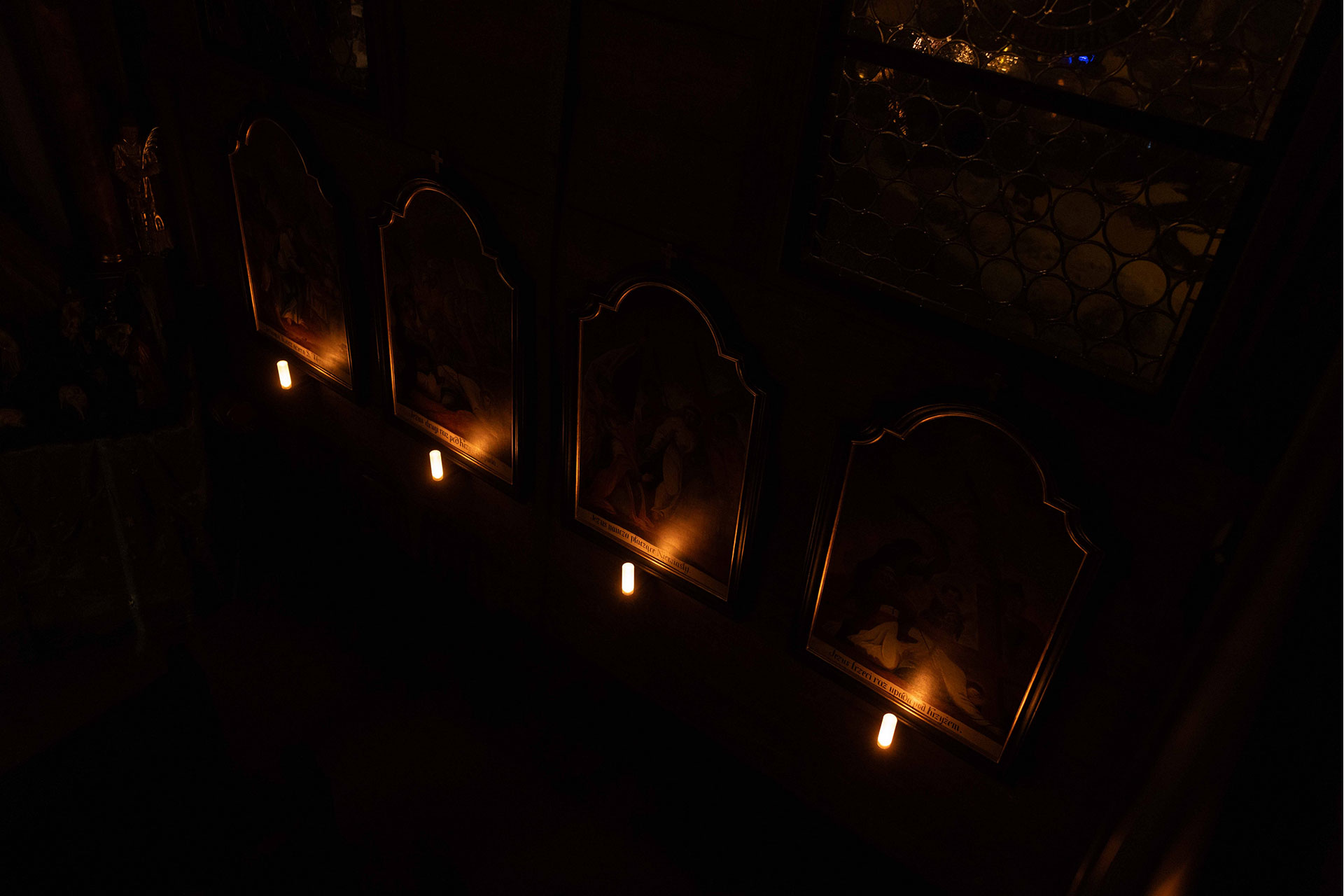
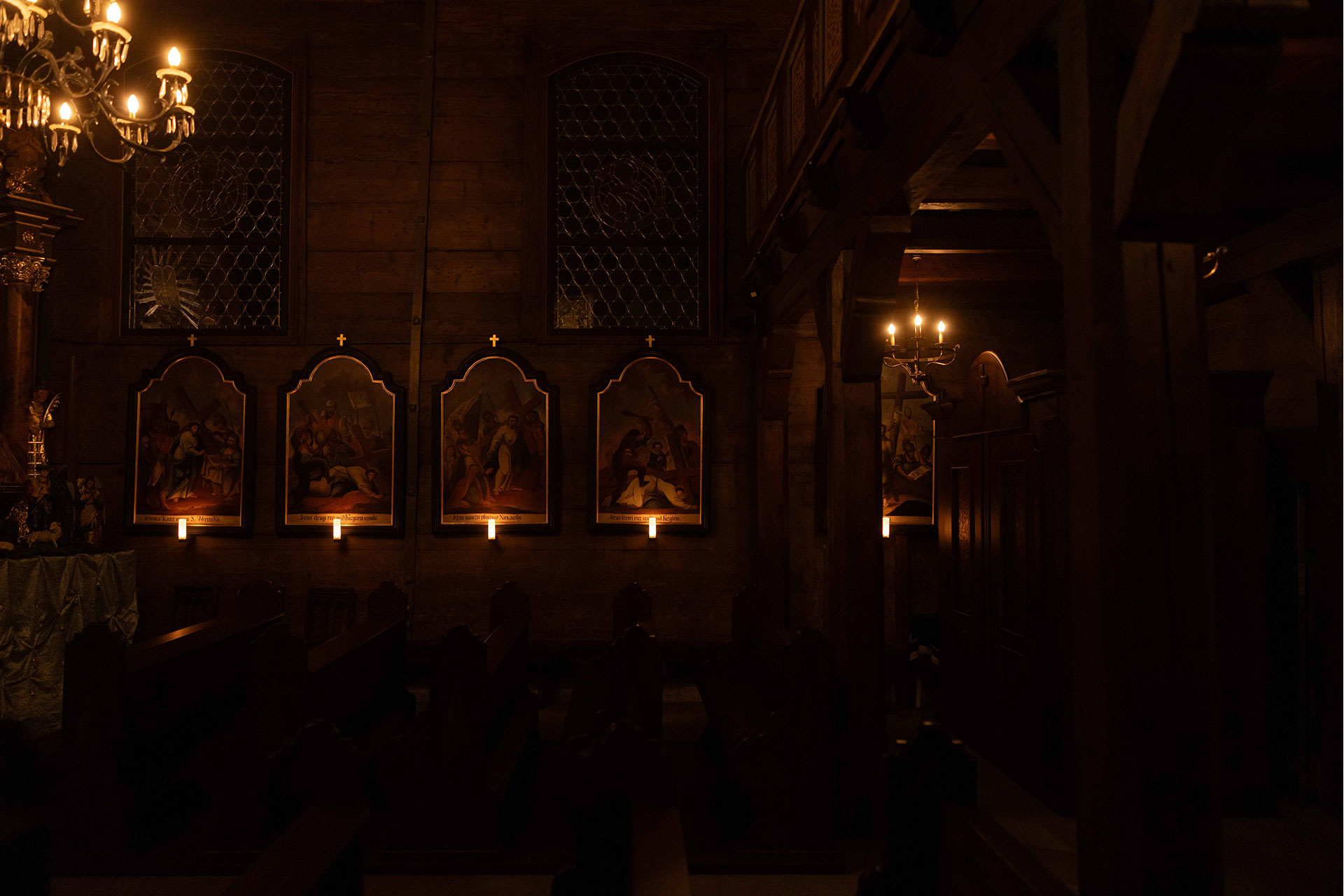
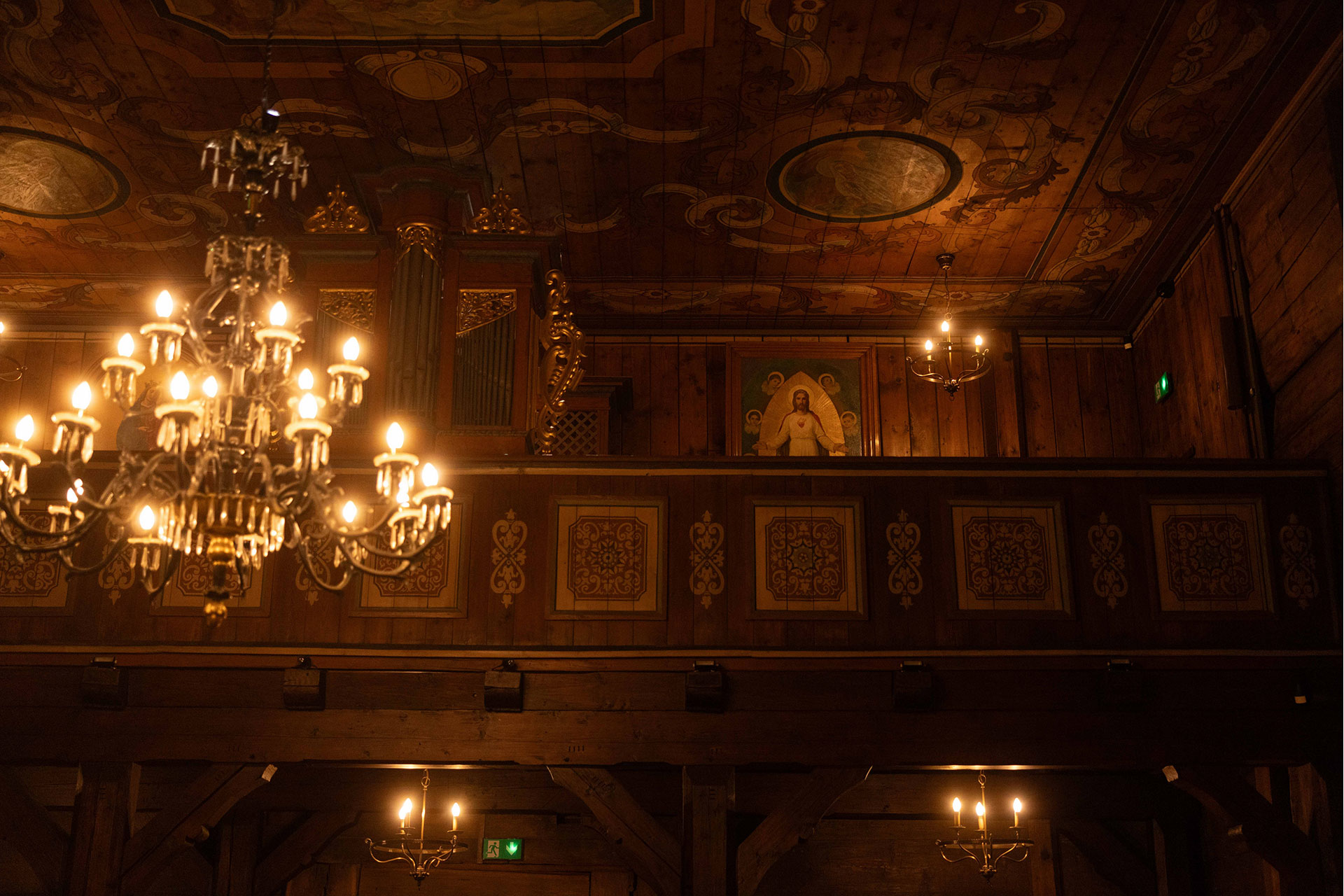
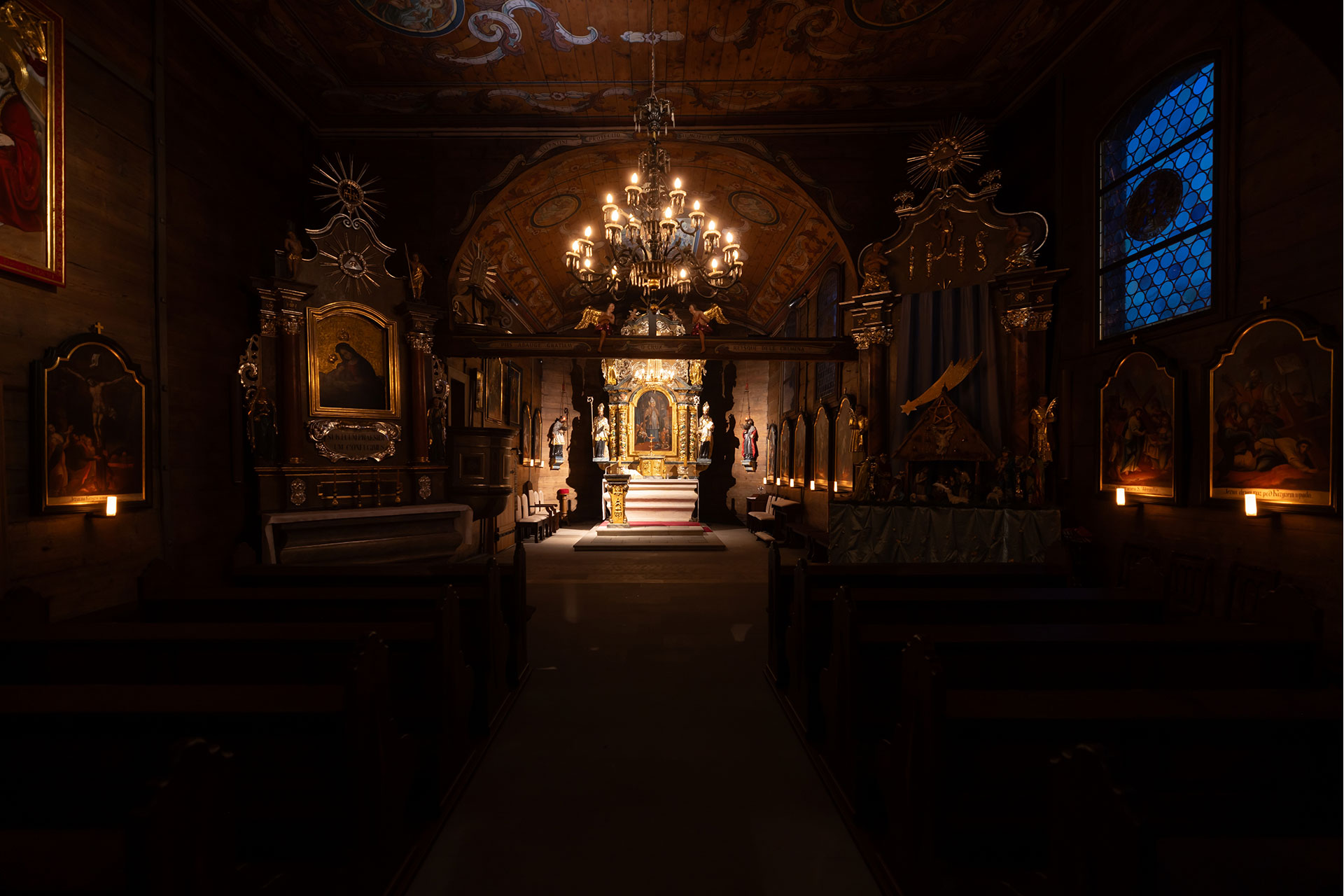
Inside the Sanctuary, in front of each Station of the Cross, lighting fixtures evoking a candle have been designed especially for the building. They emit a warm light (CCT2200K), shining only on the lower part of the image. A museum-like approach to lighting the Stations of the Cross was deliberately avoided, leaving parts of them in semi-darkness, which creates an atmosphere of concentration and contemplation and refers to the atmosphere of the 17th-century interior.
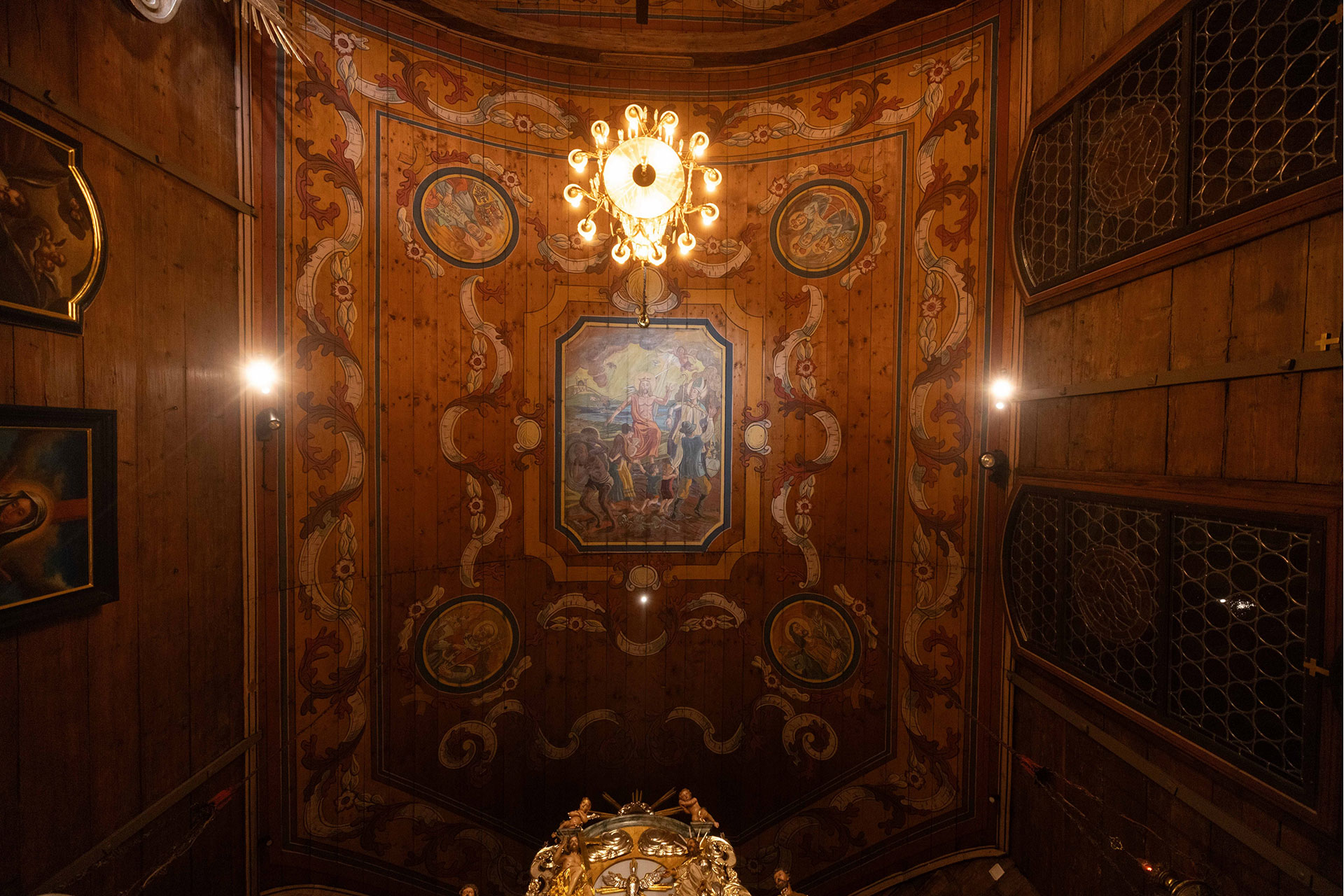
The candle motif is repeated in the chandeliers of the nave and chancel. Cold light (CCT5000K) radiates from above the pulpit, illuminating the paintings on the ceilings and emphasizing the celestial nature of their subject matter. Its presence helps to bring out the warm light of the candles.
The light scenes transform the interior, which is used once for contemplation, once to listen to a concert, at other times to celebrate mass or a festive service. The scenes with the interior almost completely extinguished, when the only source of illumination is the intense streams of light from the church’s exterior, are particularly symbolic. They highlight the beauty of the stained-glass windows and paint startling, multicoloured images on the ceiling.