

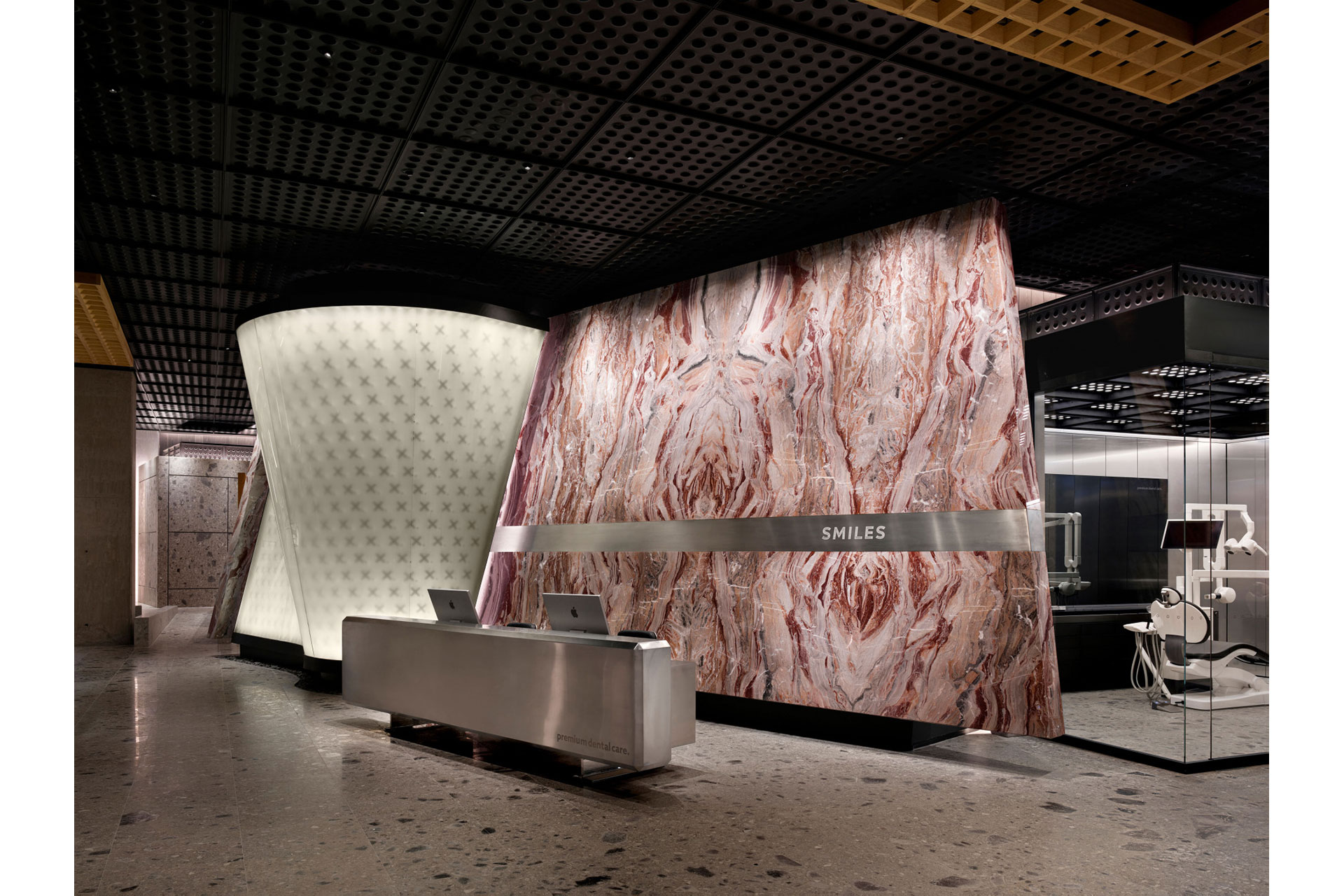
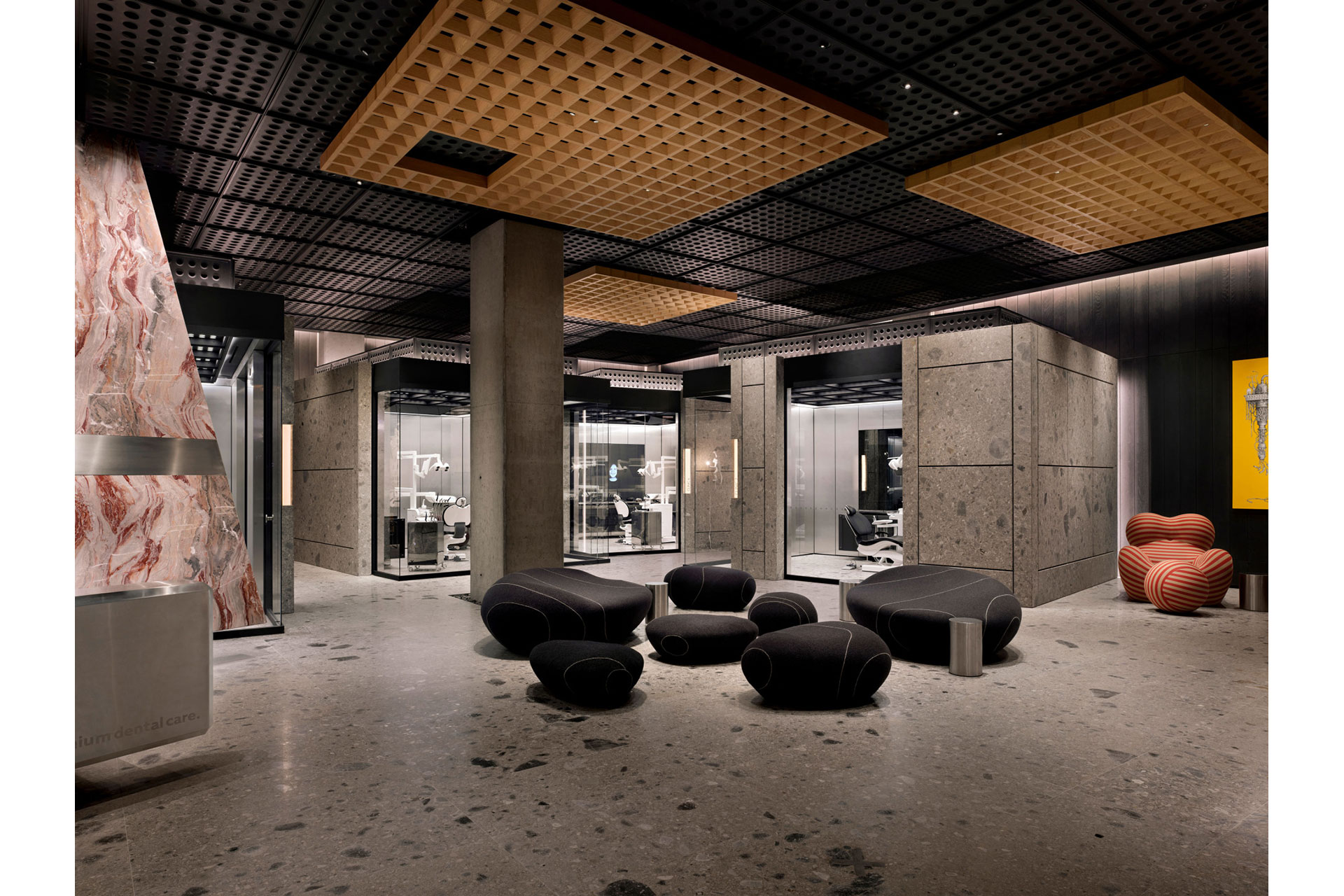
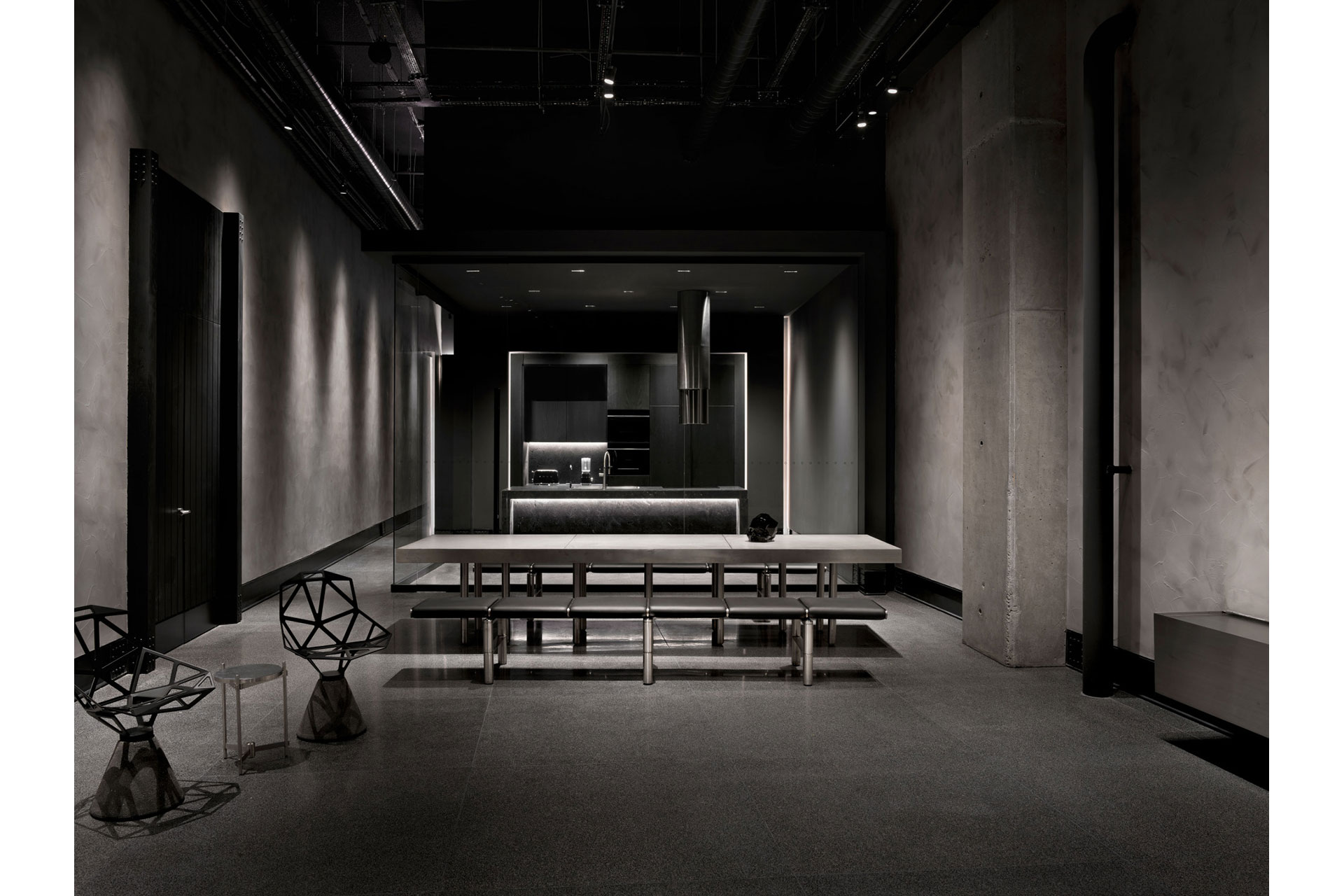
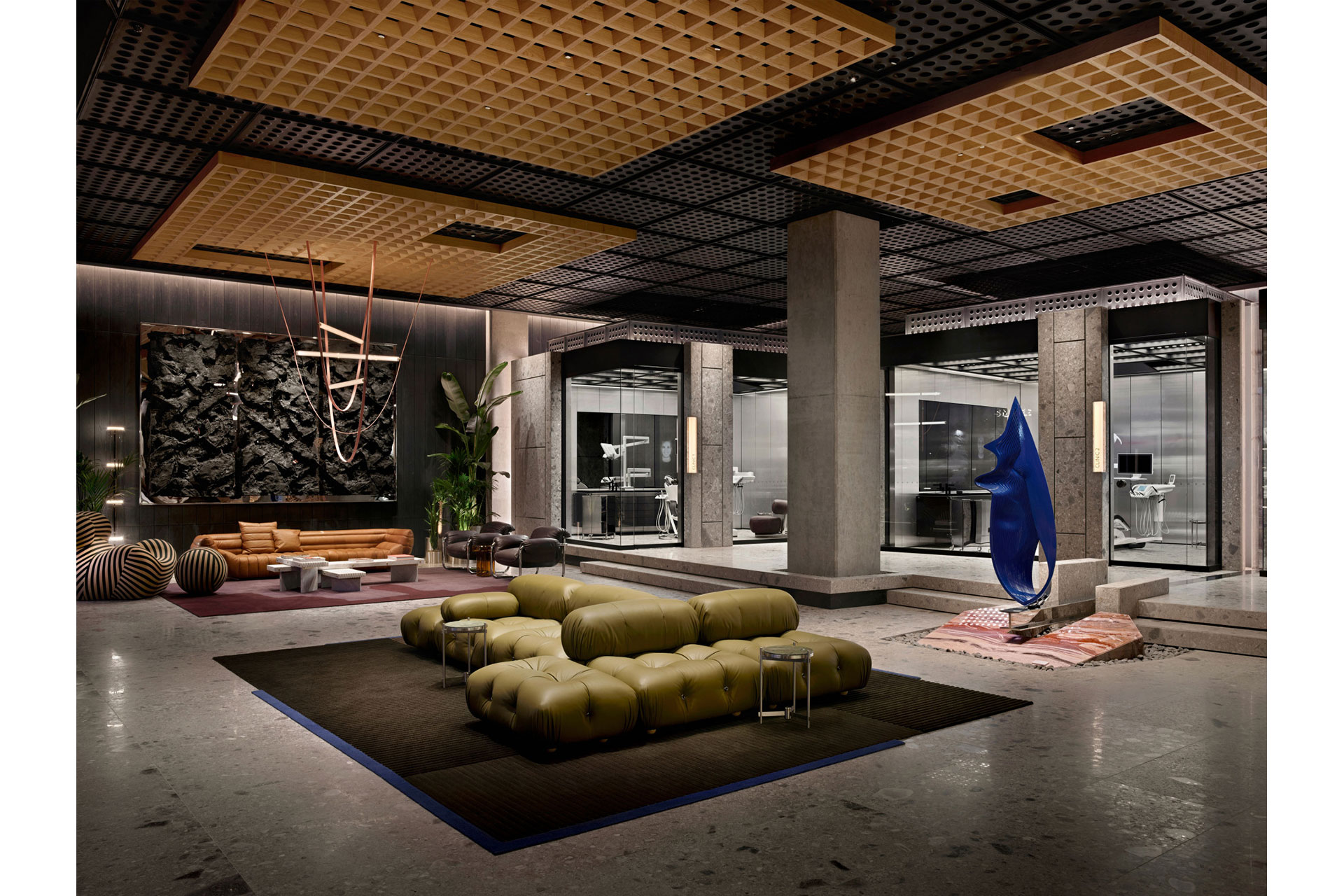
Smiles redefines the dental clinic not only as a cultural and spatial statement, but as a nuanced choreography of light. The lighting design plays a pivotal role in transforming the environment from a traditionally sterile healthcare setting into a multi-layered experiential space where art, hospitality, and wellbeing intersect. The concept positioned light as an architectural material—one that shapes atmosphere, guides movement, and supports the emotional journey of patients and staff.
At the heart of the project is the ambition to create a space that feels alive. Light is conceived as a shifting presence: soft, diffused, and comforting in some zones; bold, sculptural, and iconic in others. This carefully orchestrated spectrum ensures that the spatial narrative evolves seamlessly from reception to treatment, mirroring the project’s dual identity as a clinic and a cultural hub.
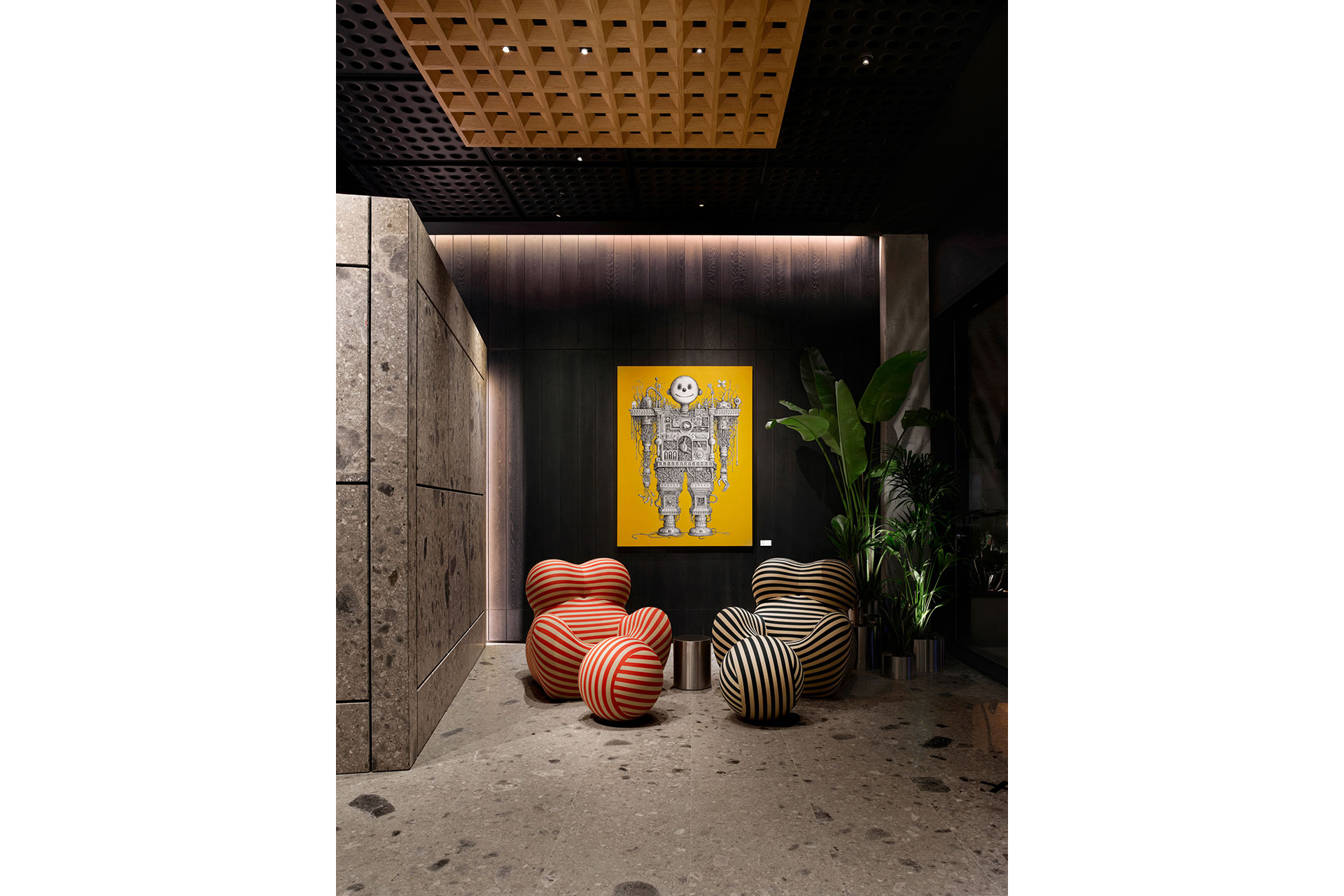
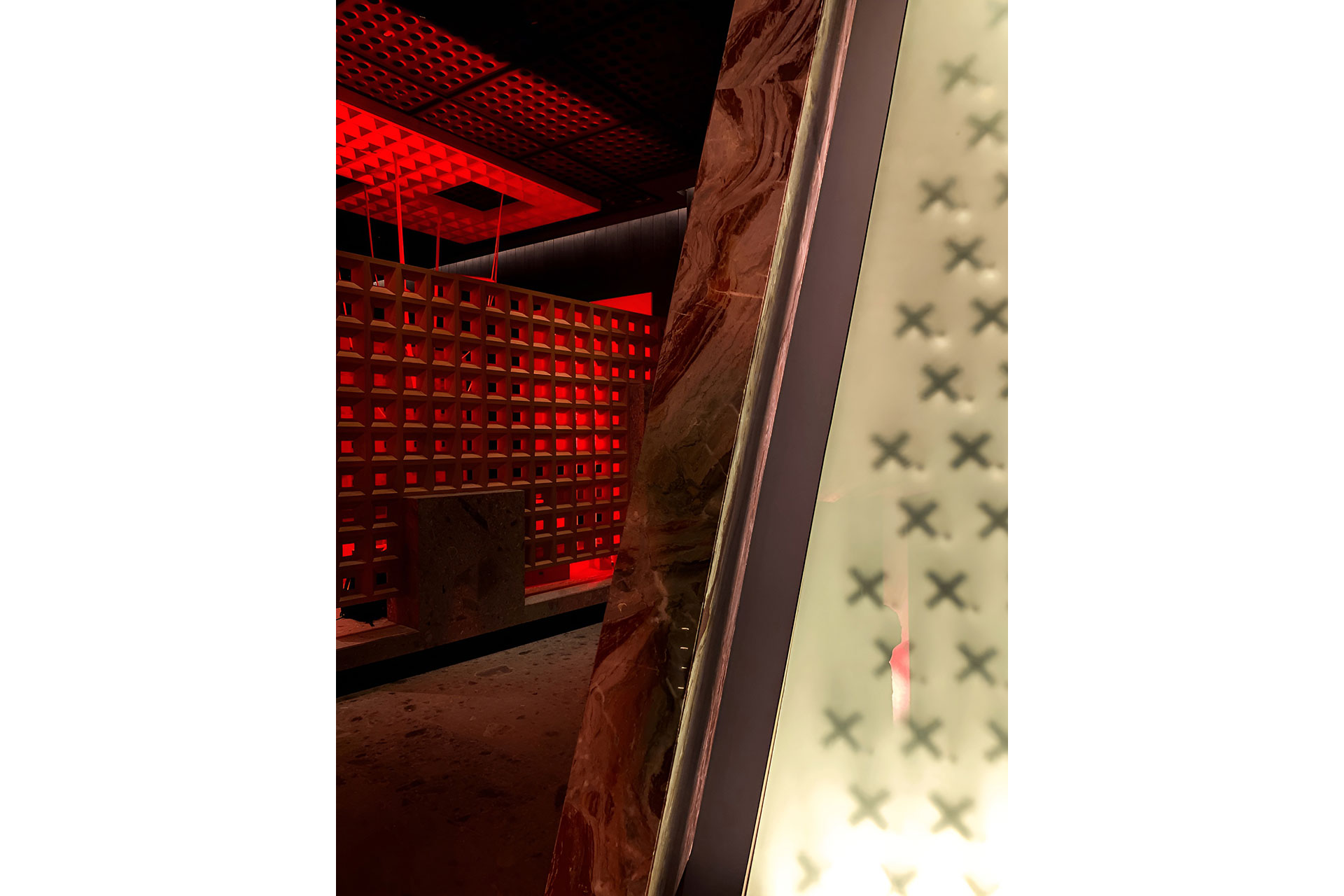
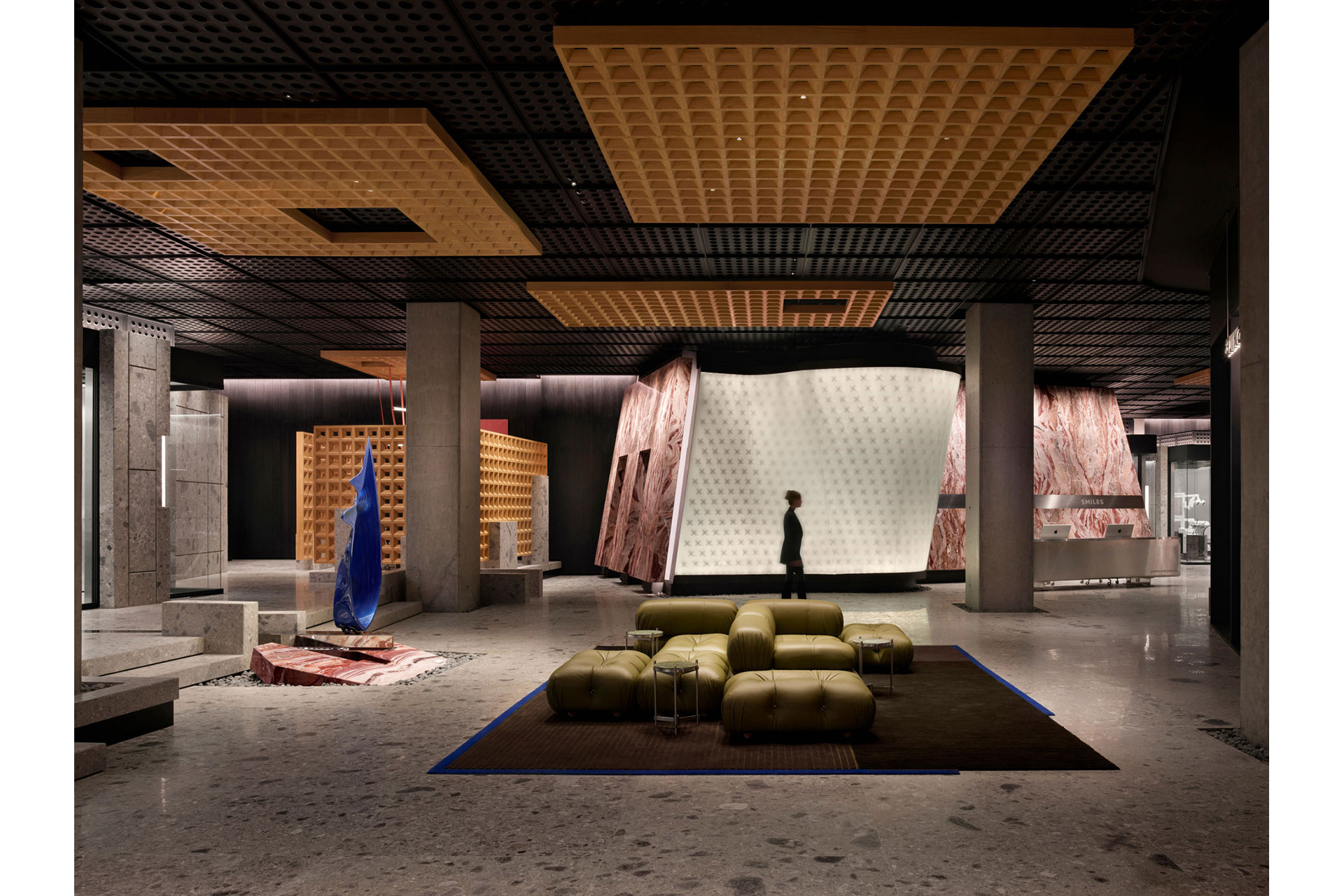
The lighting strategy begins at the ceiling, where perforated metal grids and sculptural waffle modules create a dynamic field of light and shadow. These textured planes act as ambient emitters, dispersing warm, uniform illumination that calms the user upon entry. Rather than relying on harsh downlighting, the design prioritizes indirect and reflected light to reduce glare, enhance comfort, and emphasize material richness.
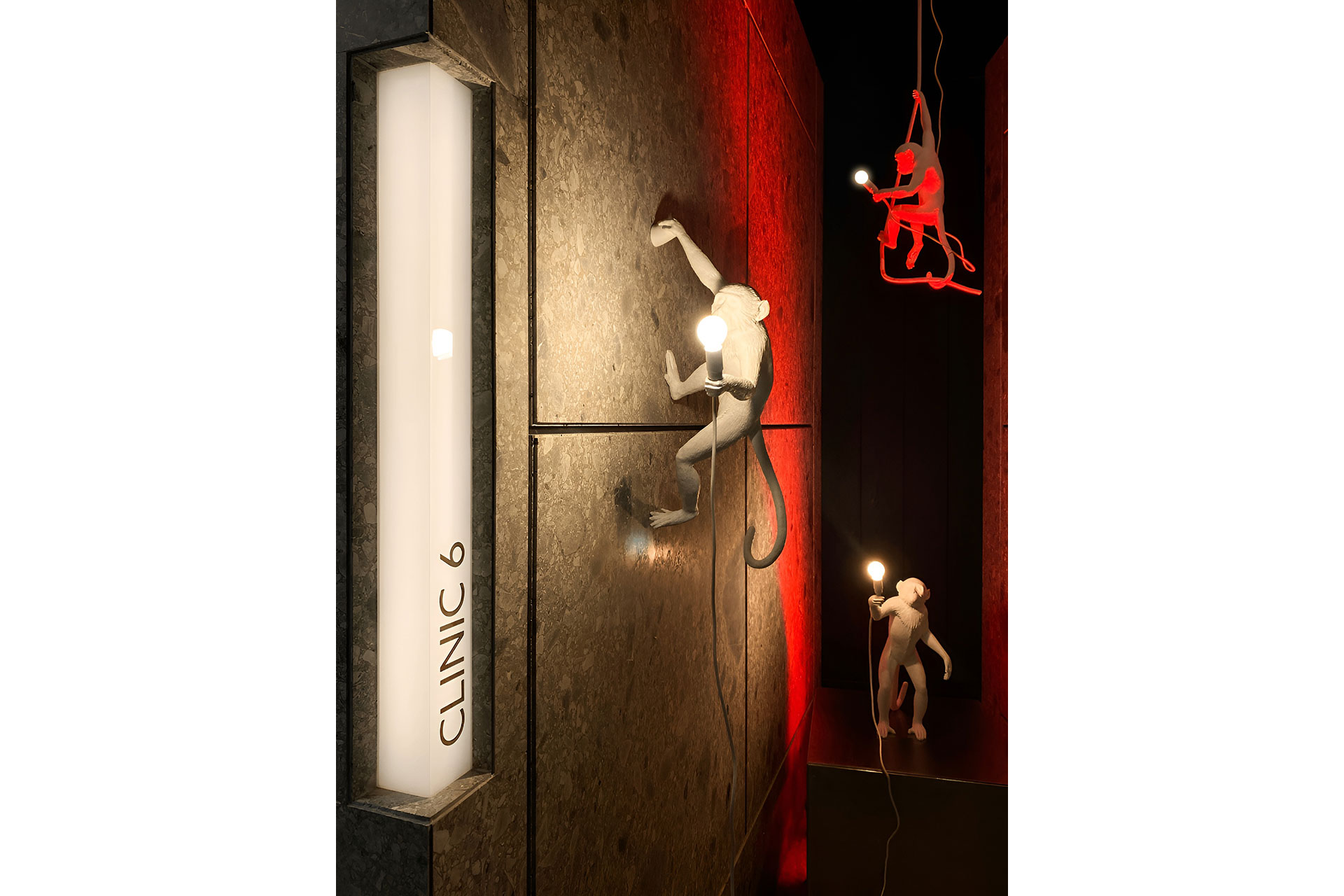
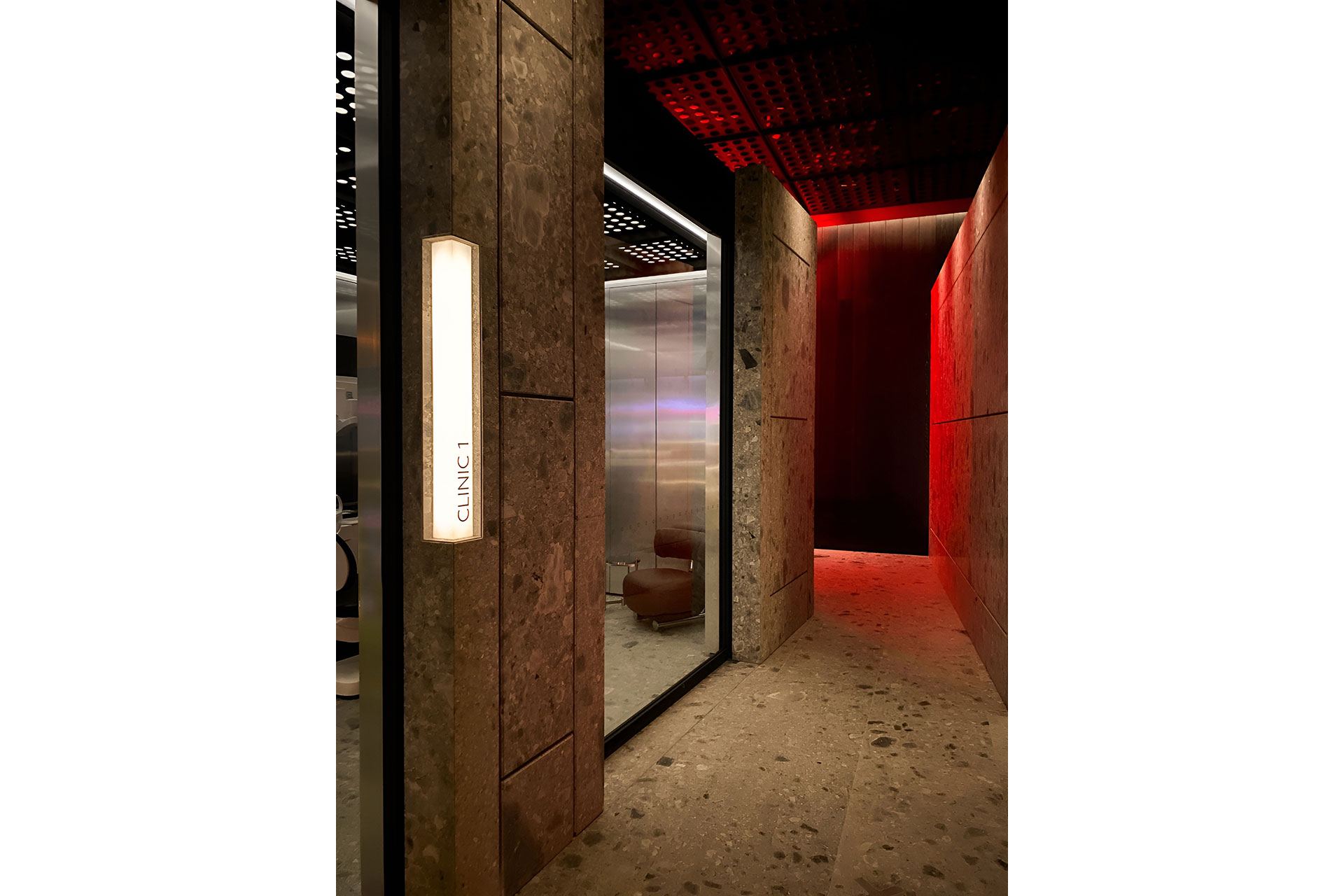
The monolithic stone blocks—integral to the architectural language—are animated through grazing and concealed lighting techniques. Low-angle washes underline their geological depth, highlighting veining, texture, and mass. The iconic red stone volume at the entrance is illuminated asymmetrically, reinforcing its sculptural tilt and generating a visual tension between weight and levity. In contrast, the curved luminous wall introduces a soft, diffused glow that balances the surrounding solidity with visual lightness.
Lighting also celebrates the clinic’s growing art collection. Sculptures and installations are illuminated with precise accent lighting, carefully tuned to preserve color fidelity and create a gallery-like environment. Light becomes a silent mediator between viewer and artwork, offering moments of contemplation in a space typically associated with anxiety.
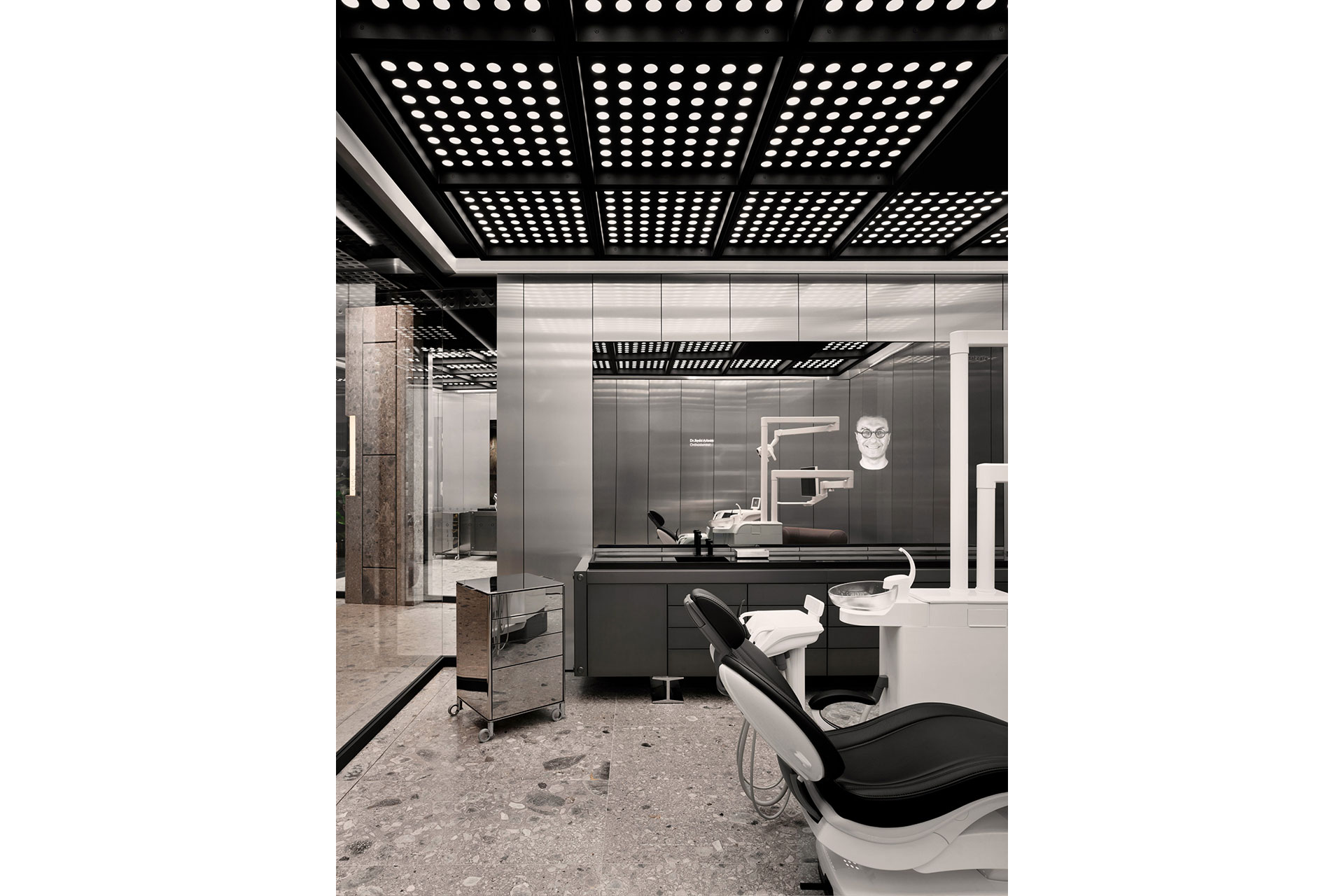
The treatment rooms introduce a different vocabulary—clinical precision without clinical coldness. A ceiling of circular, evenly distributed lights creates a bright, shadow-controlled working environment for medical procedures. These fittings are calibrated for high color rendering and optimal contrast to support dental accuracy, while glass partitions allow natural visual continuity from the public areas. Subtle reflections and the soft glow from adjacent spaces contribute to a sense of openness rarely found in healthcare environments.
Transitions between the clinic and the staff-focused campus were crafted with a hospitality mindset. Warm linear lighting, integrated into architectural details, guides circulation while softening spatial thresholds. The lighting here supports the project’s belief that wellbeing extends beyond patients to the team who inhabit the space daily.
Moreover, carefully hidden rgbw luminaires, together with lighting scenarios can create a whole different environment for exclusive events.
Through its layered and emotive approach, the lighting design at Smiles demonstrates how illumination could become an immersive cultural experience. Light not only enhances function— but together with good design, it shapes identity, fosters emotional comfort, and transforms a dental clinic into a living, evolving environment.