

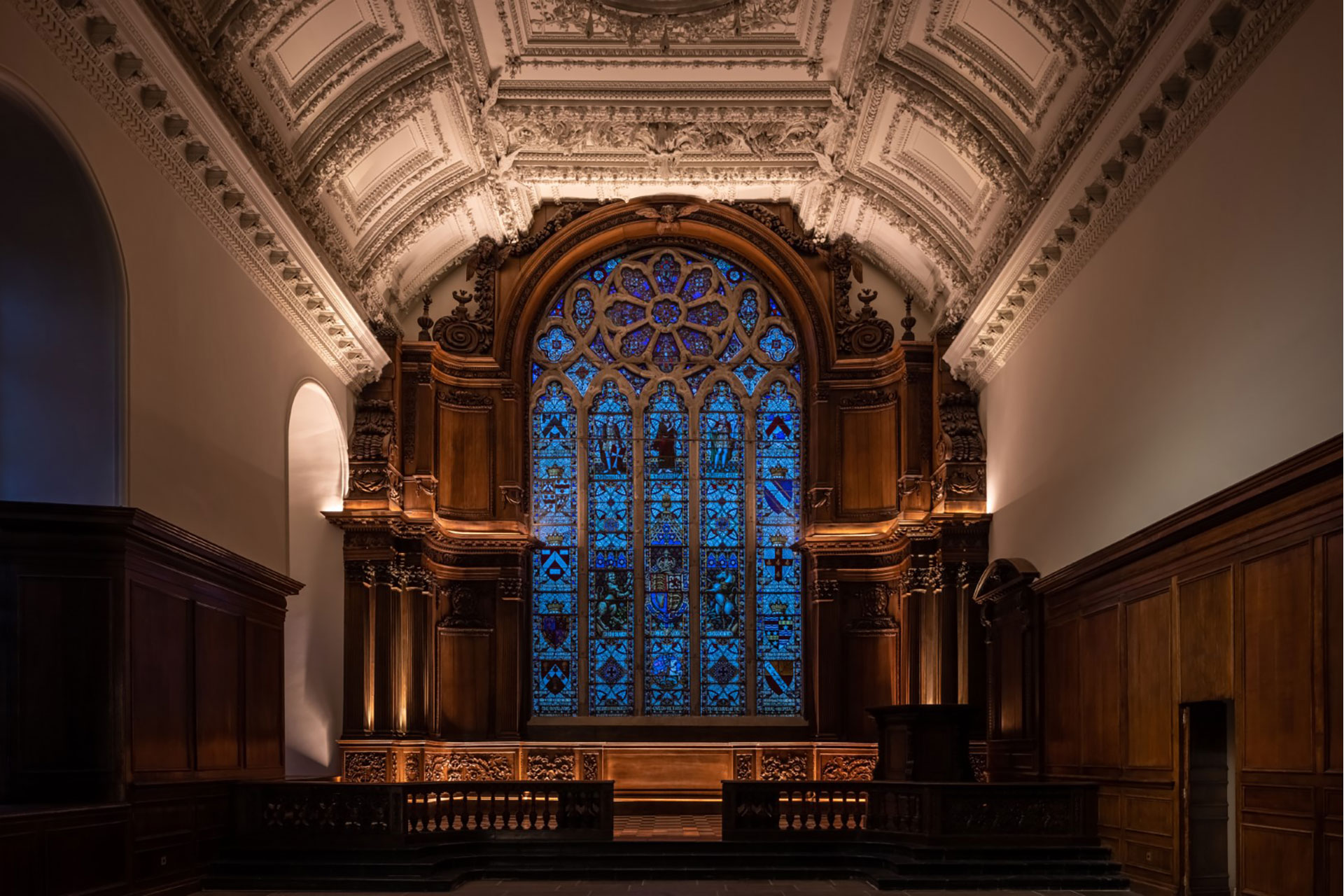
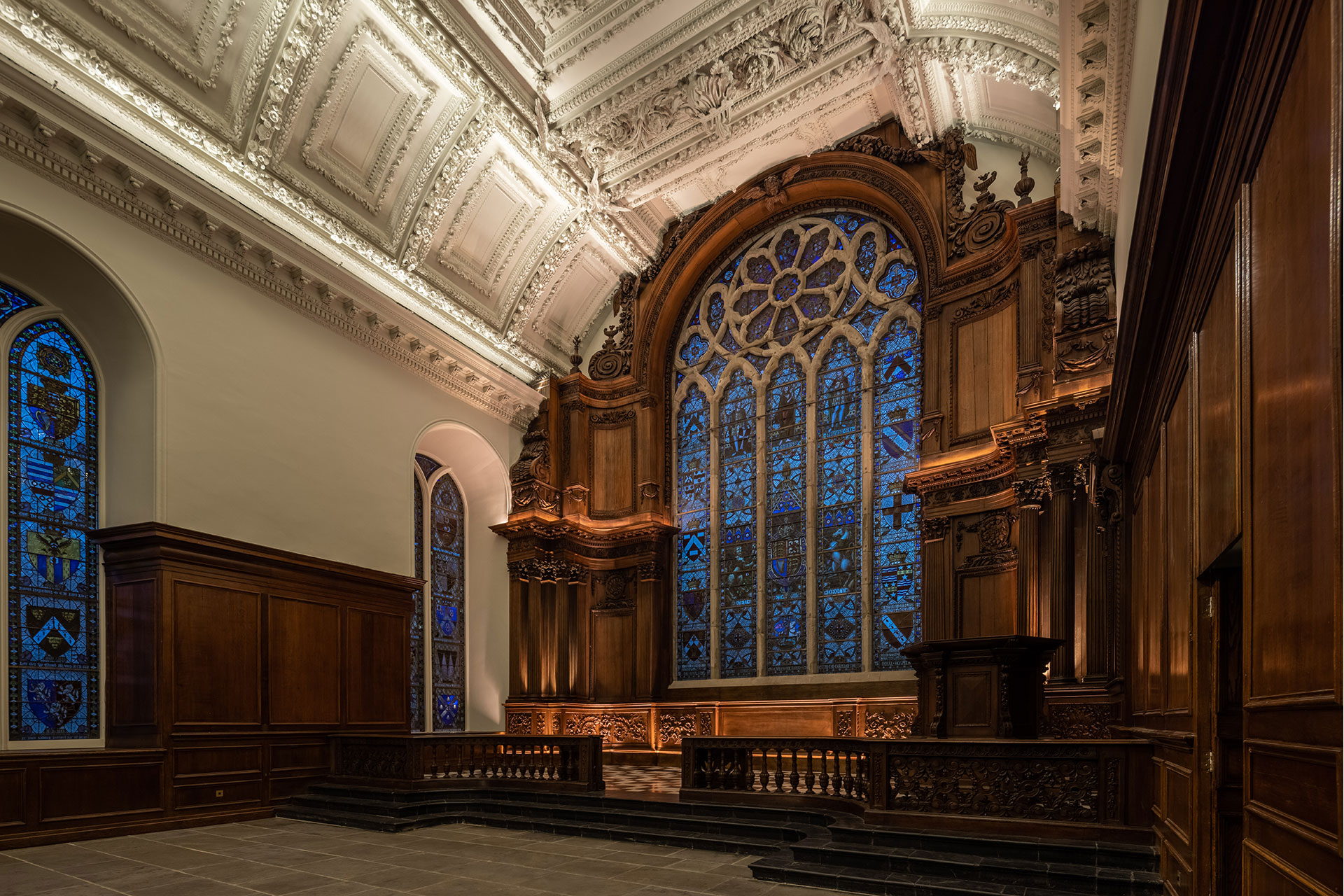
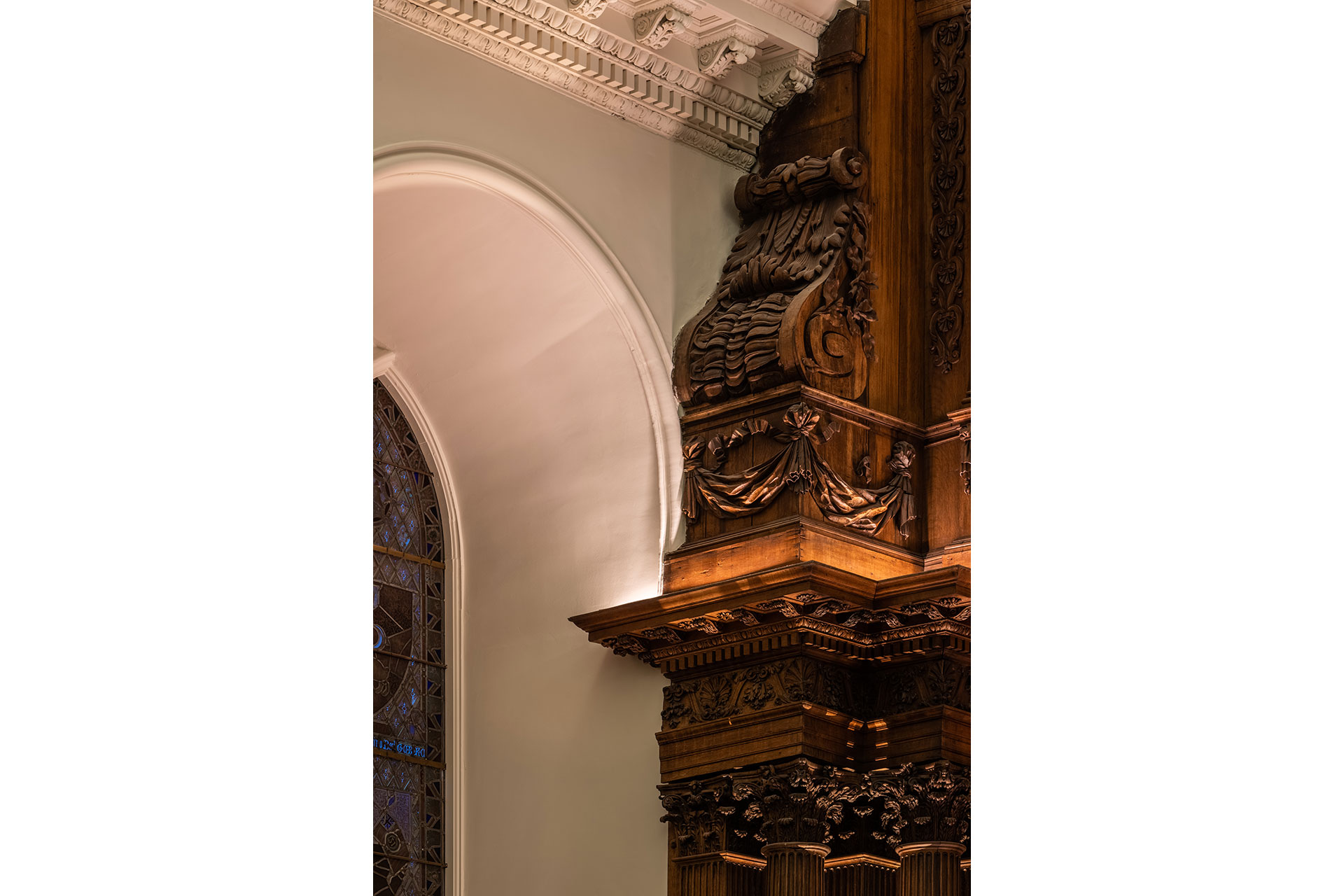
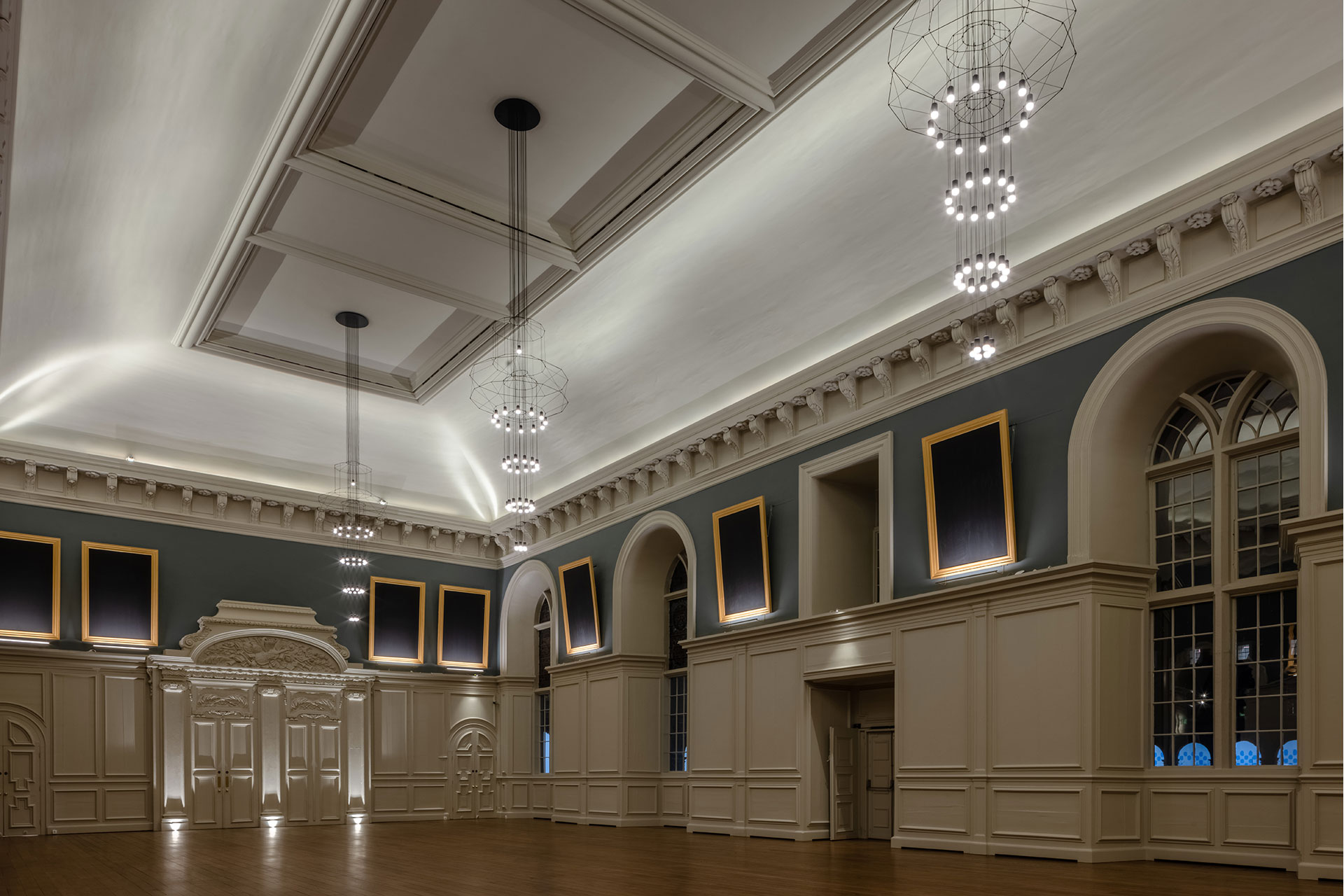
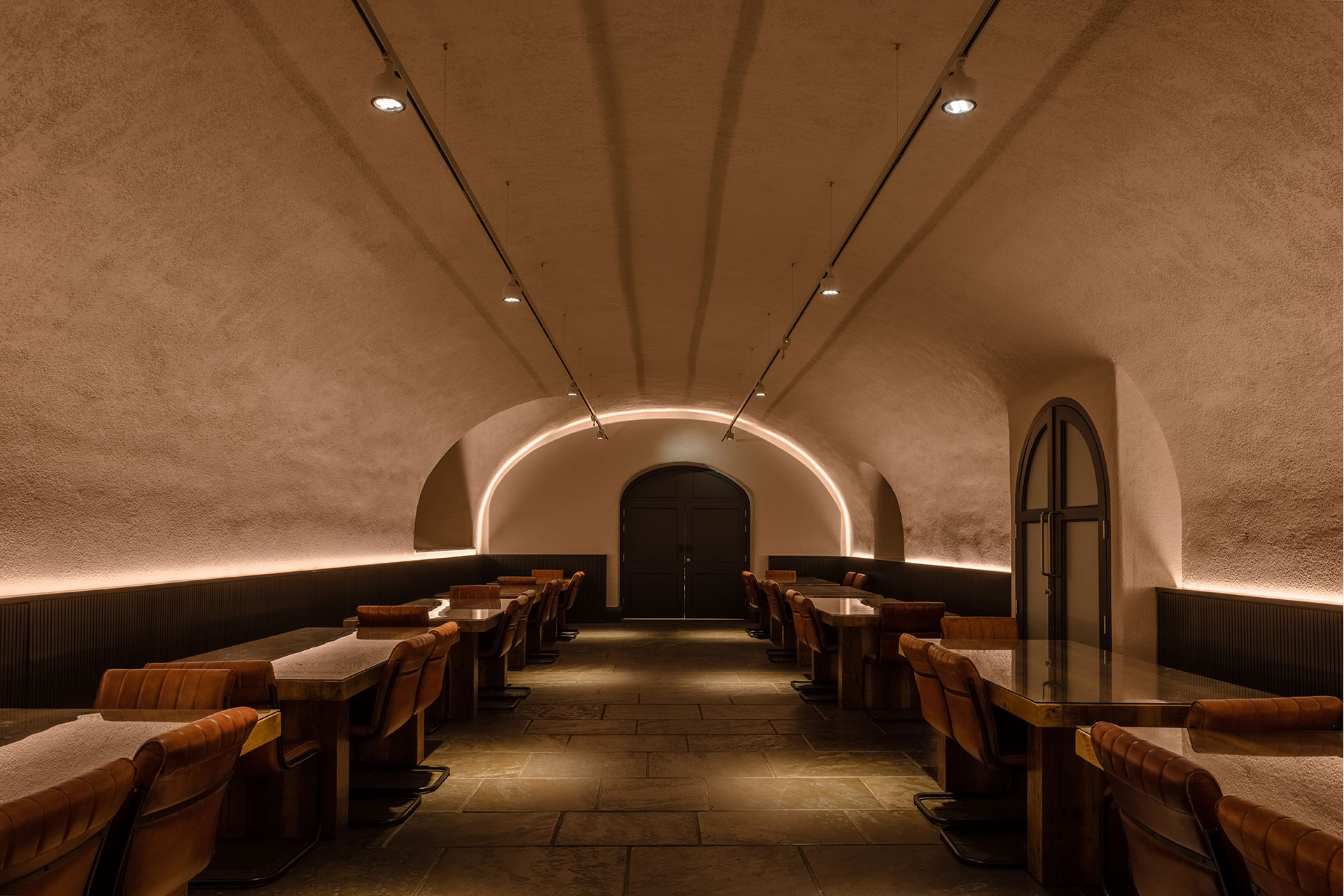
The lighting design for Royal Hospital Kilmainham embraced the challenge of illuminating one of Ireland’s most important 17th-century heritage sites with reverence and innovation. Across the Chapel, Great Hall and vaulted cellar, the scheme enhances architectural qualities while offering flexibility for tours and events.
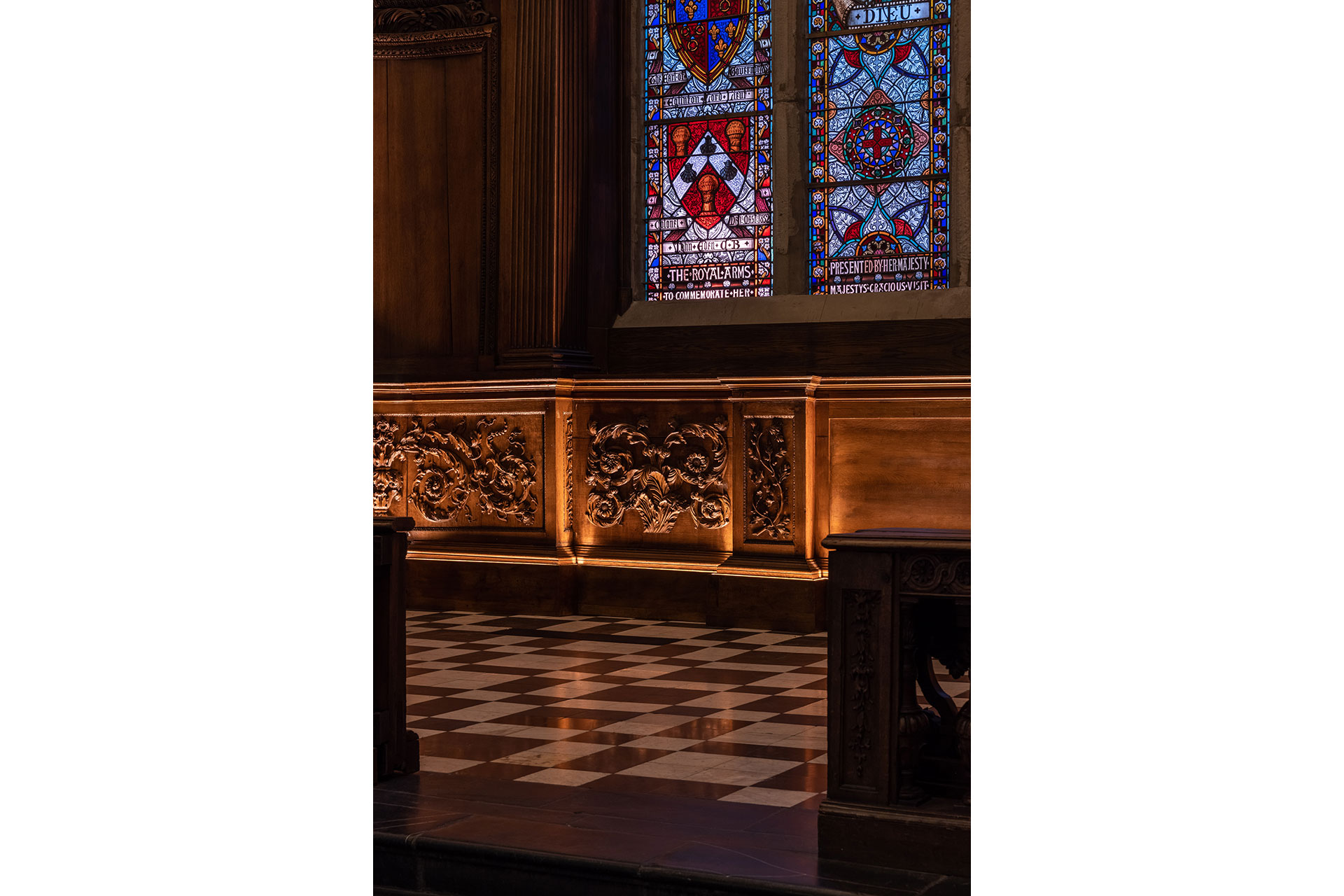
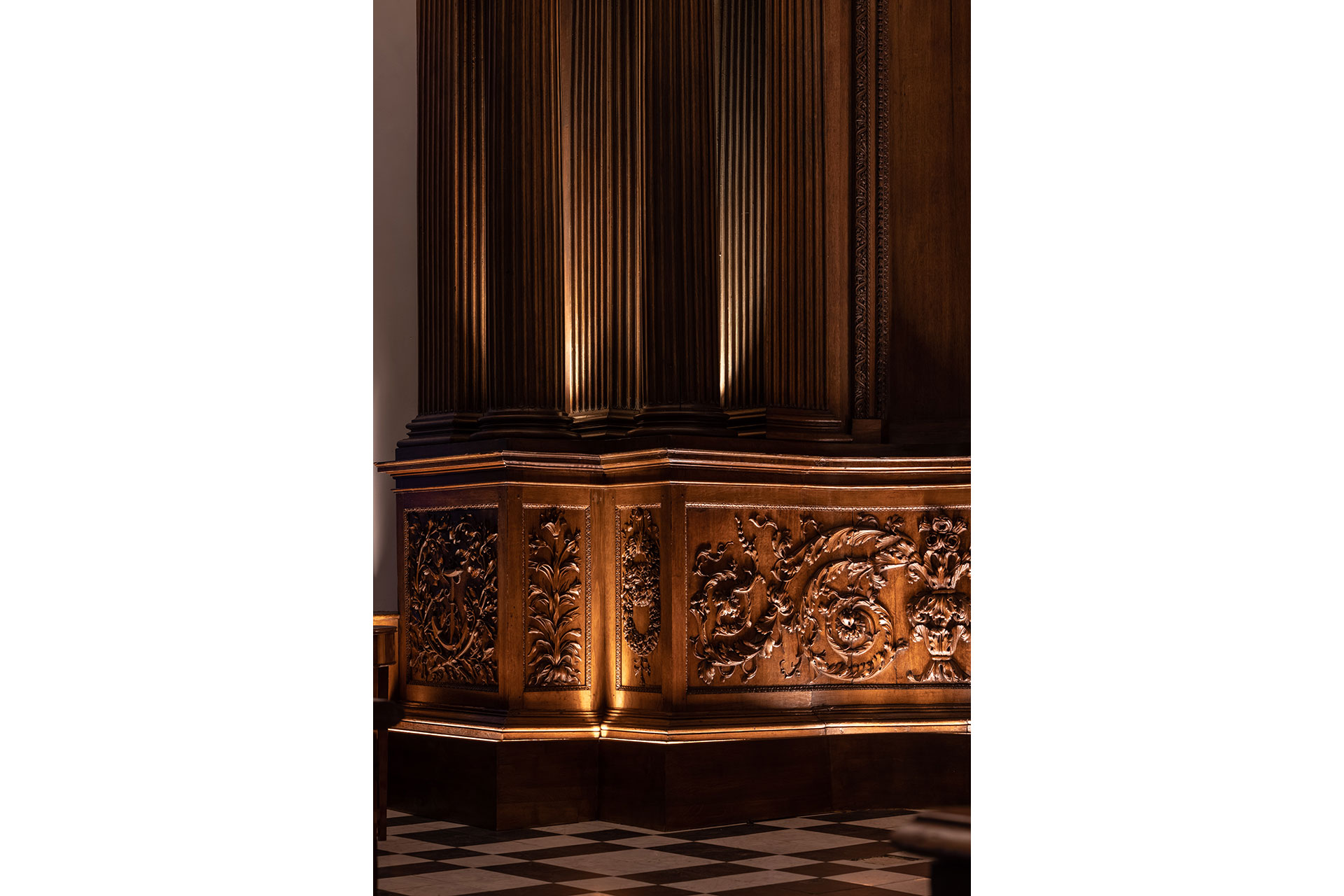
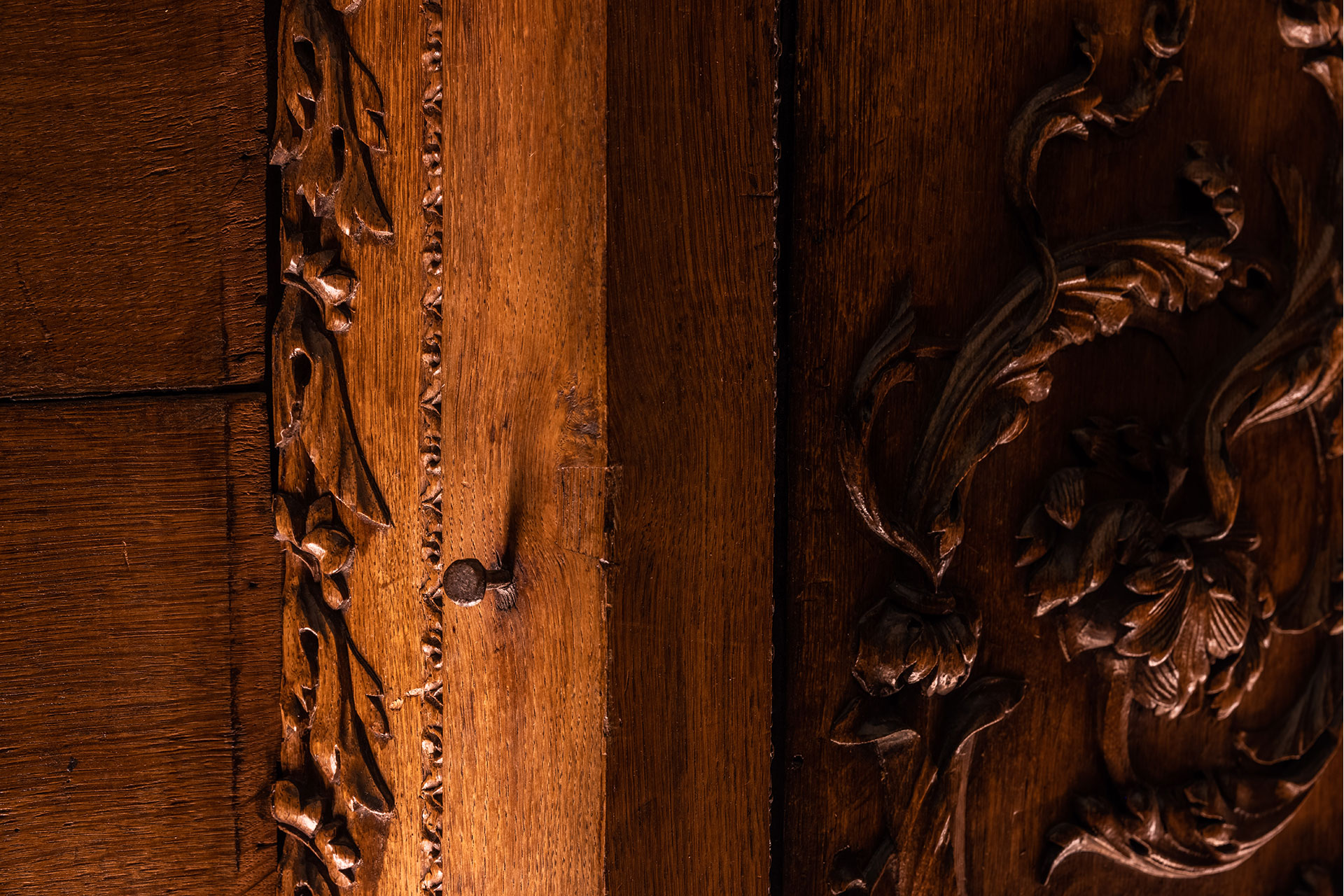
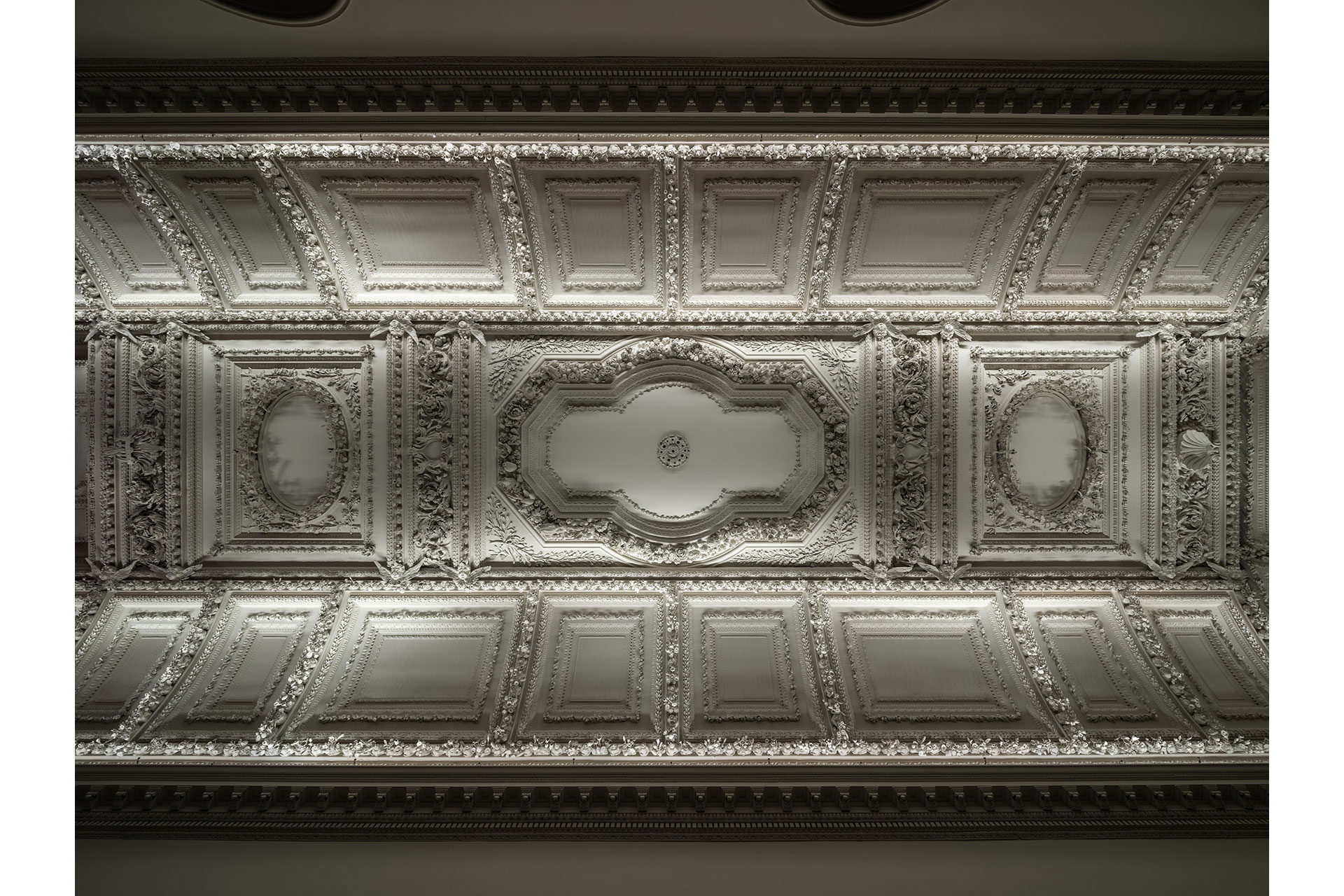
Modern lighting was discreetly integrated into the historic fabric, with fittings concealed in cornices, joinery and mouldings. Bespoke details, developed with conservation specialists, highlight the hand-carved timber, ornate plasterwork and historic artworks. Extensive mock-ups were used to test materials, angles & colour temperature, ensuring a precise balance of light and shadow to bring carvings and ceilings to life. Warm 2400K tones recall candlelight at the altar, while 2700K high-CRI sources reveal artwork and plaster ceilings. Hidden uplighting adds drama and three-dimensionality to the papier-mâché ceiling.
Fittings are individually controllable, dimmable and filtered for efficiency. Scene setting provides curated modes for tours & events, while staff can operate controls intuitively. Low-UV LED minimise heat and protect fragile finishes, ensuring the lighting not only illuminates but also conserves.
Sustainability was central to the lighting design for the Royal Hospital Kilmainham. High-efficiency LED sources were selected to minimise energy use, with dimming and scene-setting reducing consumption further during low-occupancy periods. All fittings are long-life and serviceable, allowing LED engines and drivers to be replaced without discarding housings, reducing material waste and supporting circular economy principles. Low-UV, low-heat outputs protect fragile timber, plaster and artworks, ensuring conservation as well as illumination. Existing cable routes and infrastructure were reused wherever possible to reduce intervention in historic fabric and avoid unnecessary material use. By combining efficiency, longevity and protection, the design lowers carbon footprint while ensuring the building’s heritage continues to be experienced and preserved for generations.
Ultimately, the design reveals heritage craft with subtlety and respect, creating spaces that are at once reverent, dramatic and alive with new purpose.