

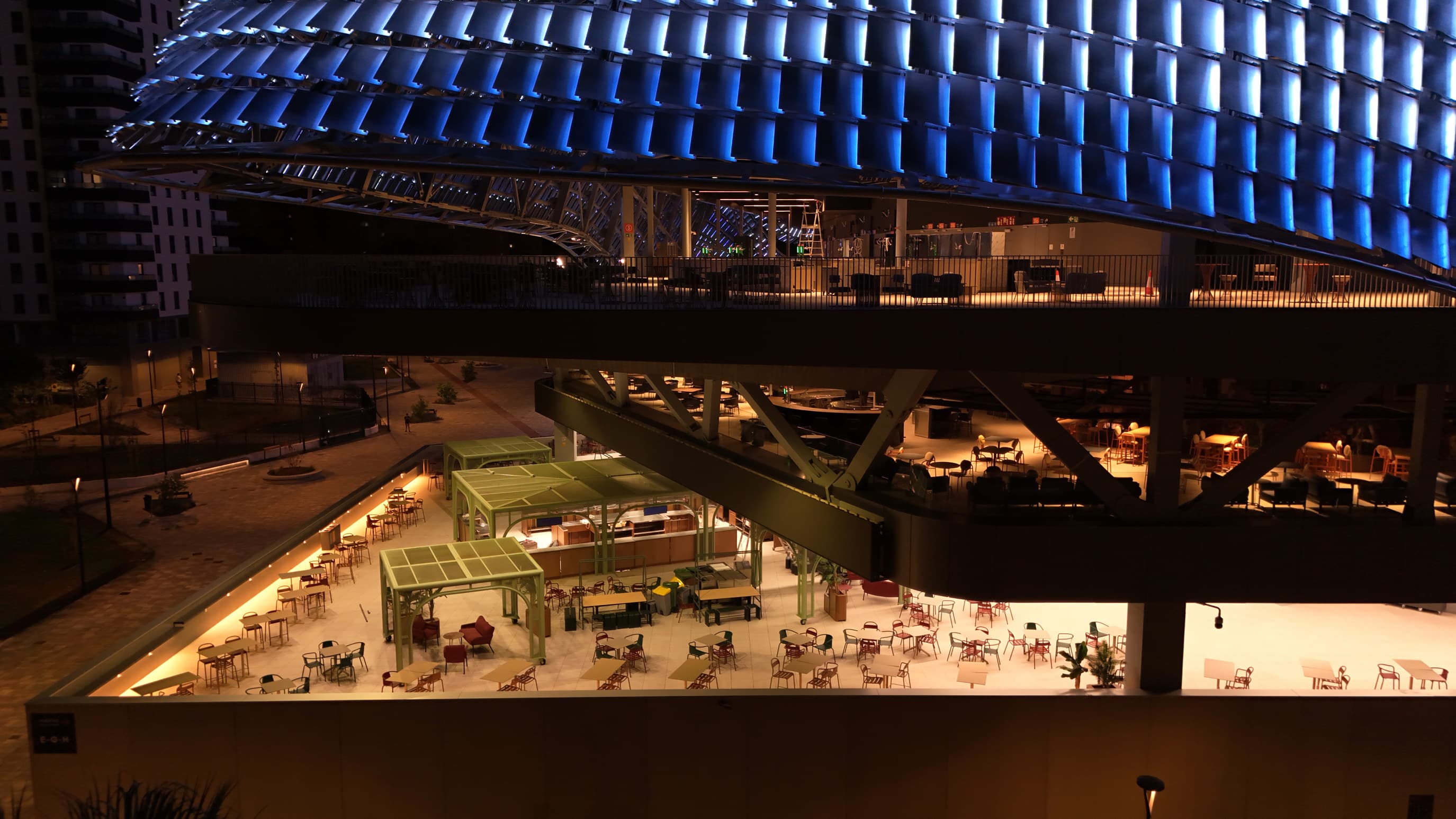

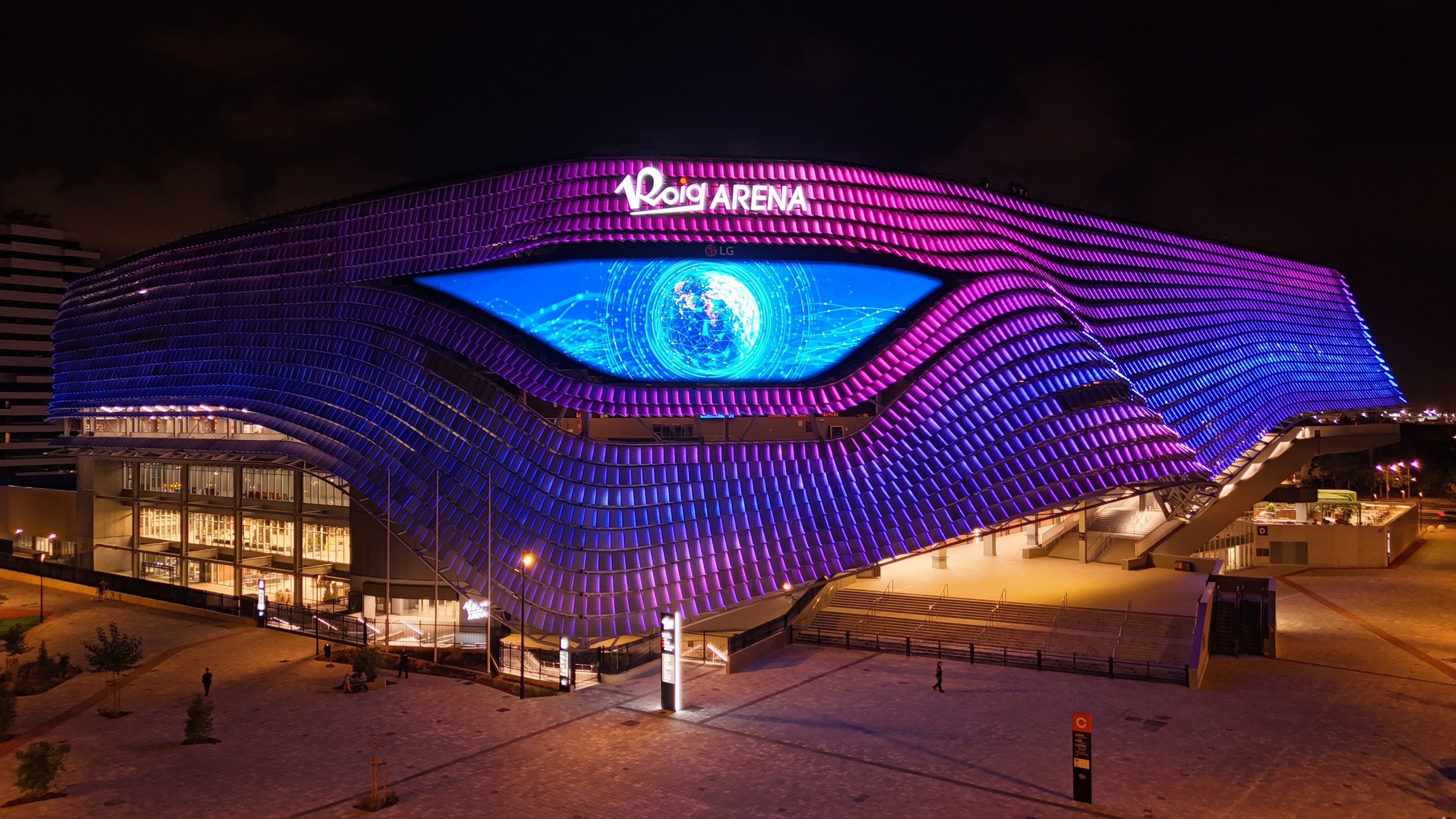
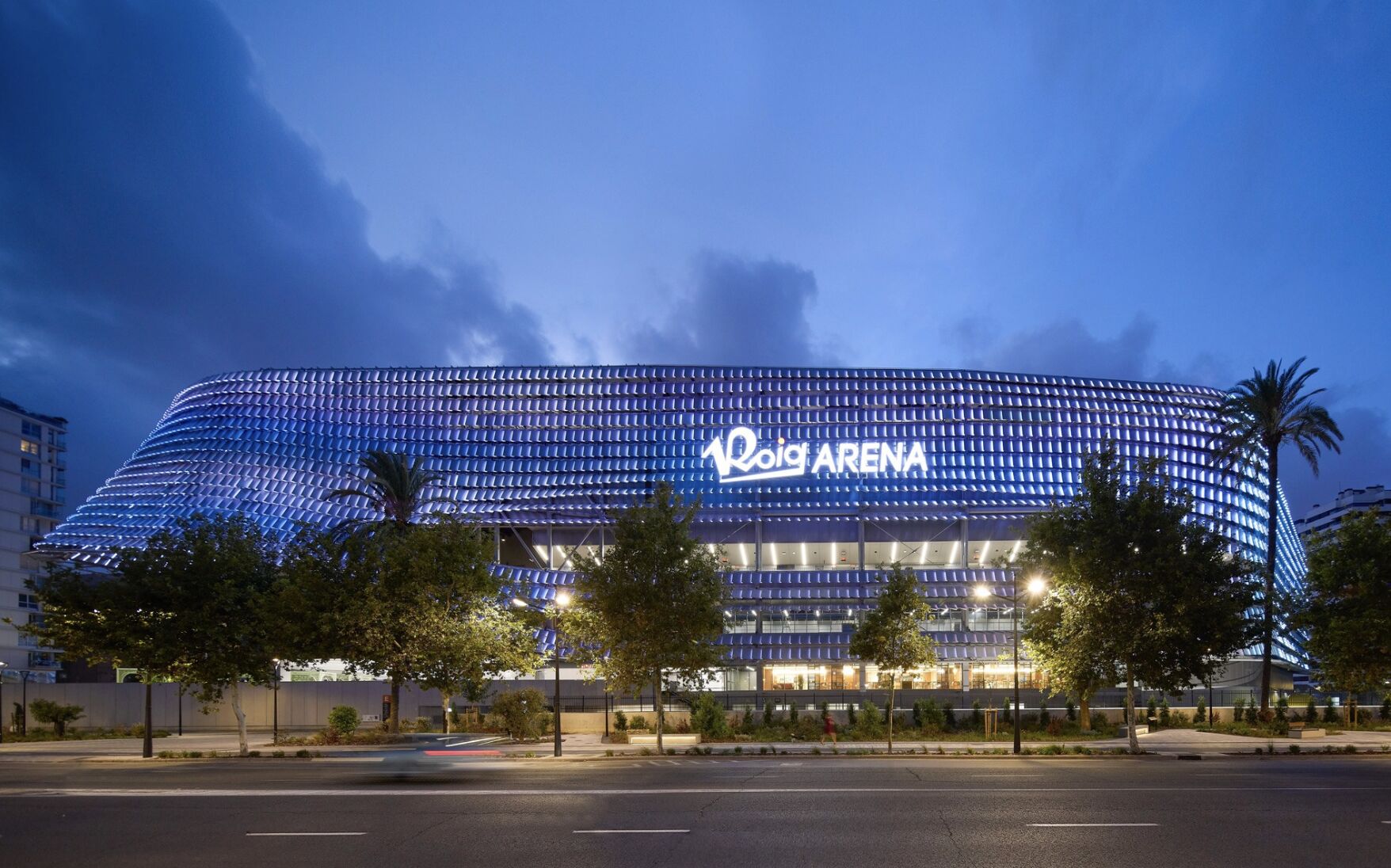
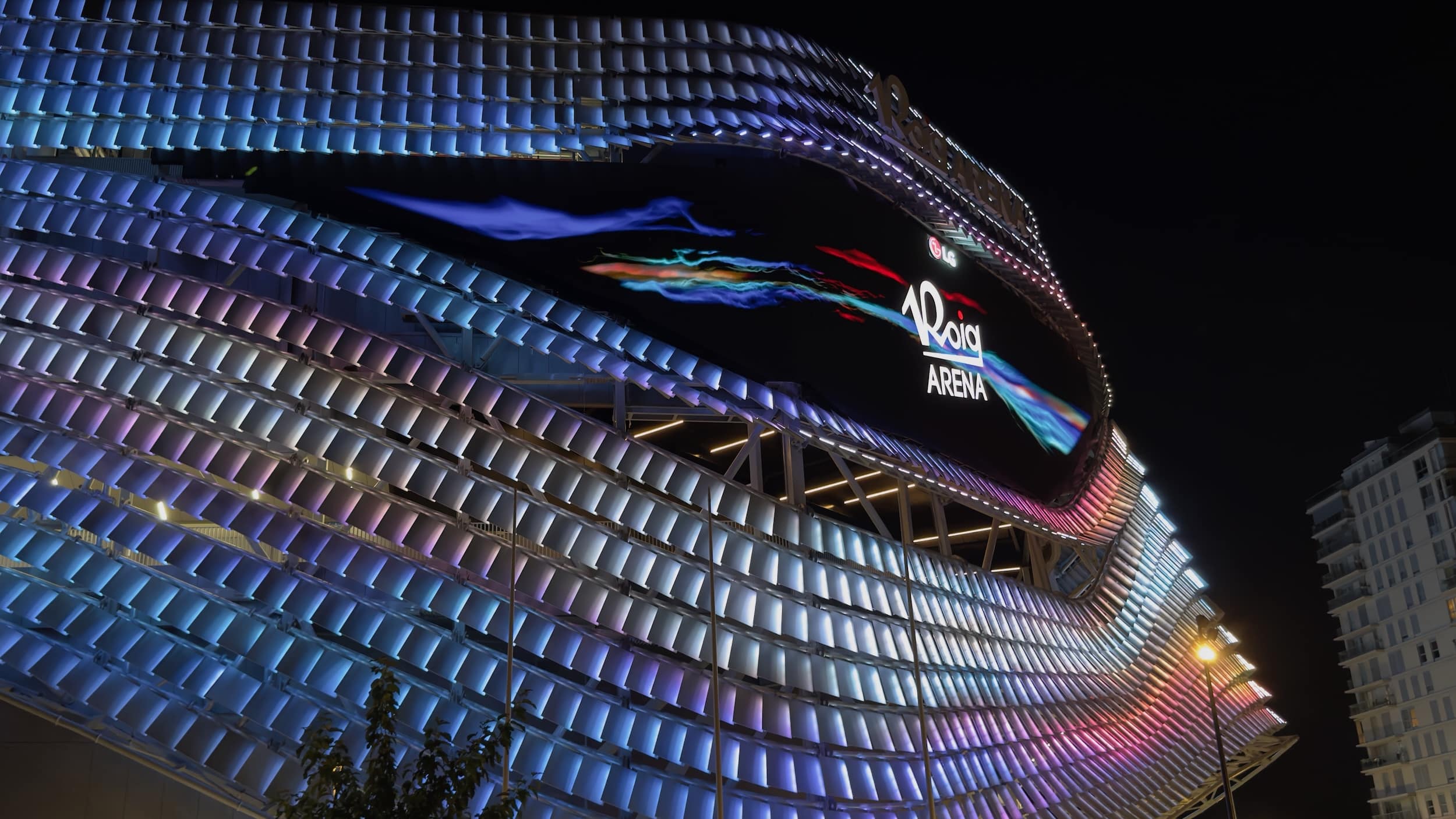
The Roig Arena media façade in Valencia is not simply an architectural lighting installation, it is an experiential infrastructure. Where traditional façade lighting has been viewed as an ongoing operational cost, the Roig Arena scheme, transforms every light into a potential revenue stream. Through giant-scale ambient branding for sponsors, interactive fan activations, and artist-specific concert experiences, the façade becomes an engine for new experiential, artistic and commercial opportunities.
This shift is made possible by integrating an unprecedented data ecosystem with over 300 m² of high-definition video screens and 28,000 native LED video luminaires, all orchestrated by the same real-time control system. Content can flow seamlessly from HD screen to façade, maintaining 60 fps fluidity and excellent color reproduction with no perceptual difference. The result is a unified, city-scale media canvas that is equally powerful during the day or night.
At the heart of this system are rich, real-time data streams that make the façade feel alive, organic, and relevant. The project integrates:
By creatively combining these datasets with generative content engines, the system produces visual outputs that appear both organic and dynamic, while being extremely easy to operate. Operators and sponsors gain access to a rich library of responsive visual behaviours—from subtle ambient branding woven into the architectural skin to spectacular, event-specific content triggered live.
The commercial implications are transformative. Sponsors can commission ambient branding campaigns at civic scale, embedding their identity into the cultural heartbeat of the city in ways impossible with static signage. Sports organizations benefit from interactive fan activations, enhancing loyalty and engagement while creating new premium packages. Concert promoters and artists gain a platform for artist-specific experiences, where visuals on the façade track the performer’s movement in real time, extending the concert beyond the bowl and into the public realm.
From a technical perspective, the scheme demonstrates extraordinary efficiency. By using a single platform to orchestrate all visual systems, operational complexity is reduced while flexibility is maximized. The system adapts automatically to context—scaling intensity to ambient light conditions, balancing content across LED luminaires and video surfaces, and delivering continuous performance without interruption.
In the end, the Roig Arena media façade is not just a design feature but a business model for experience economy, a city-scale, data-driven, real-time communication platform. It showcases how architectural lighting, when fused with sensing, AI, and media, can redefine arenas as living, responsive, and revenue-generating landmarks.