

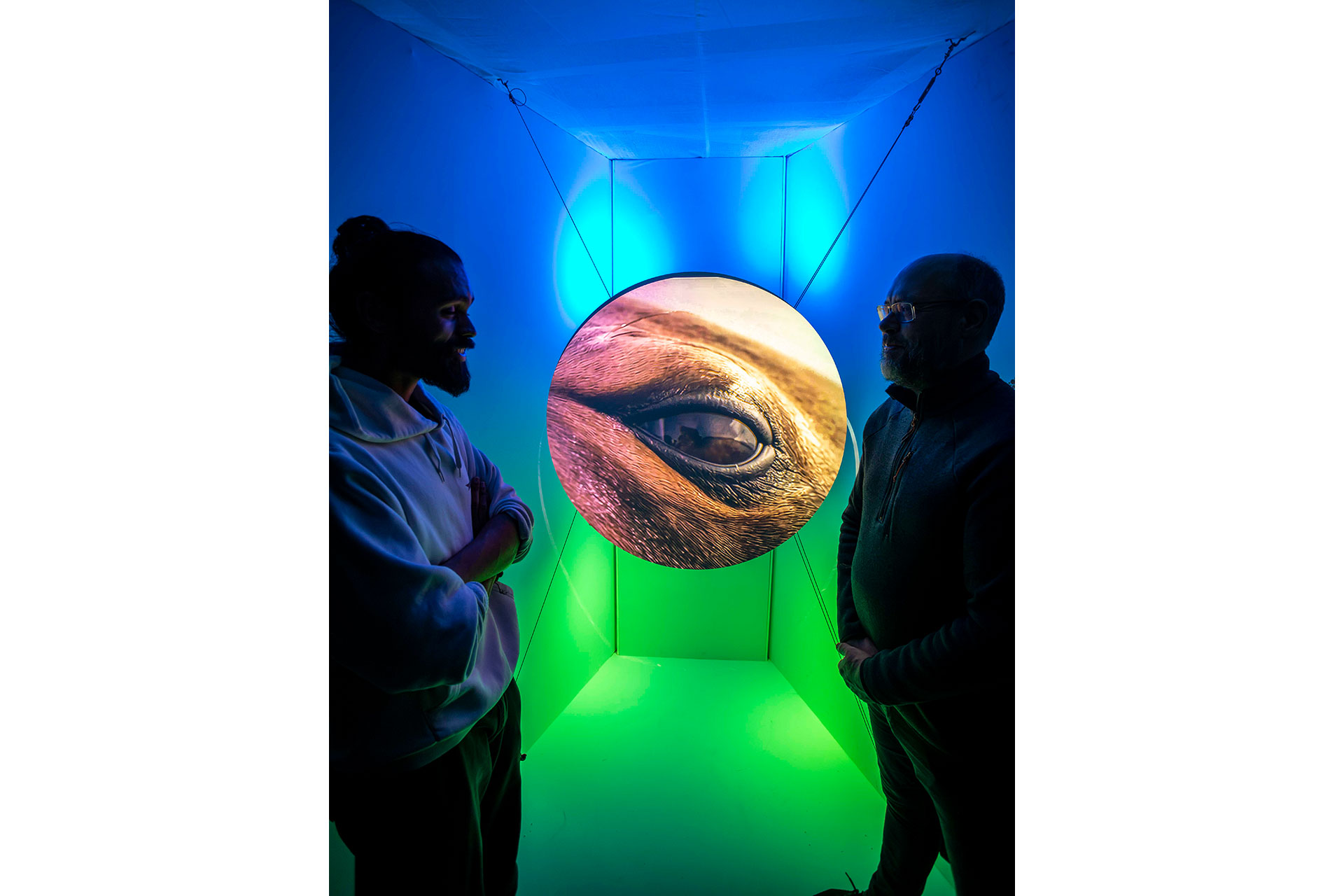
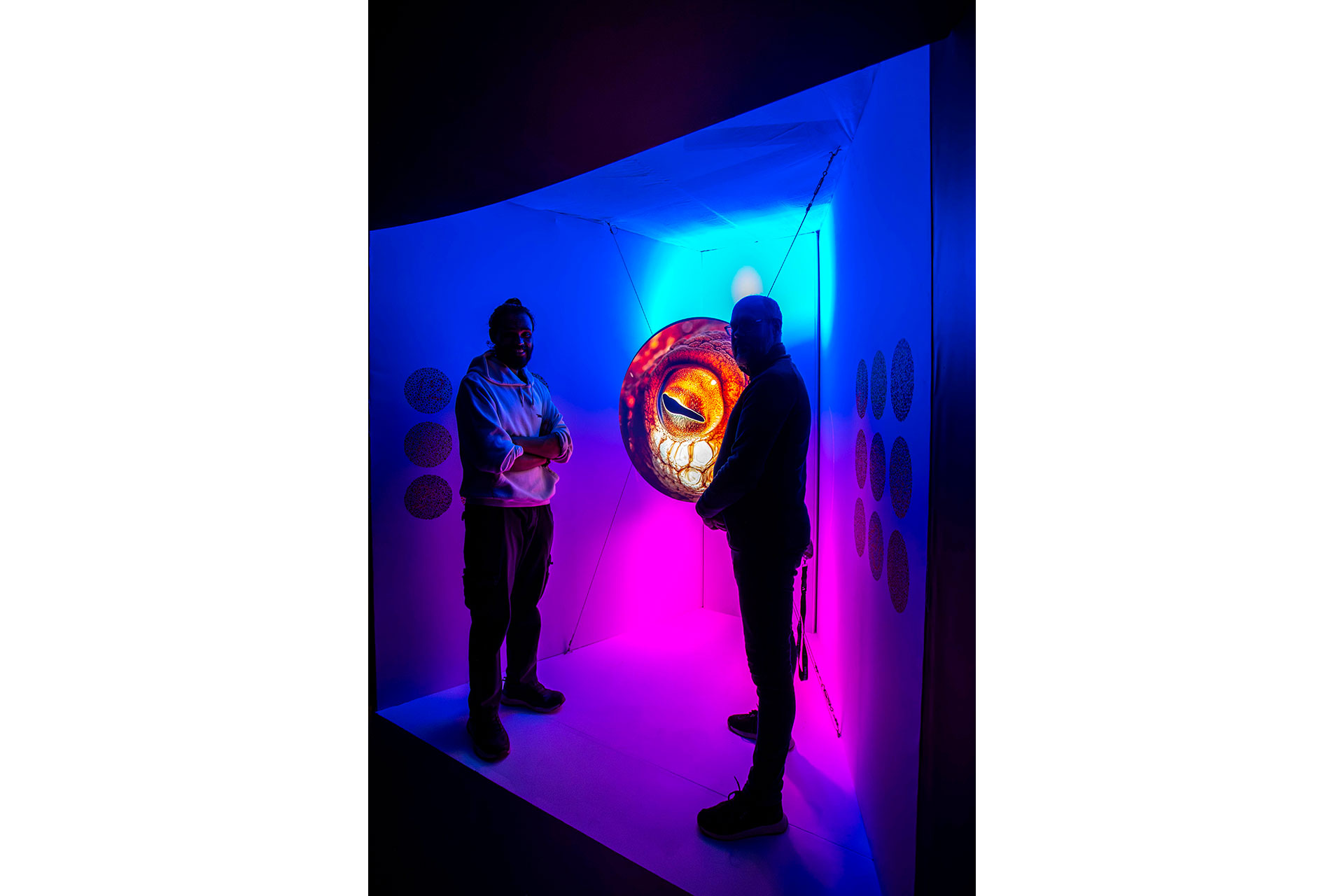
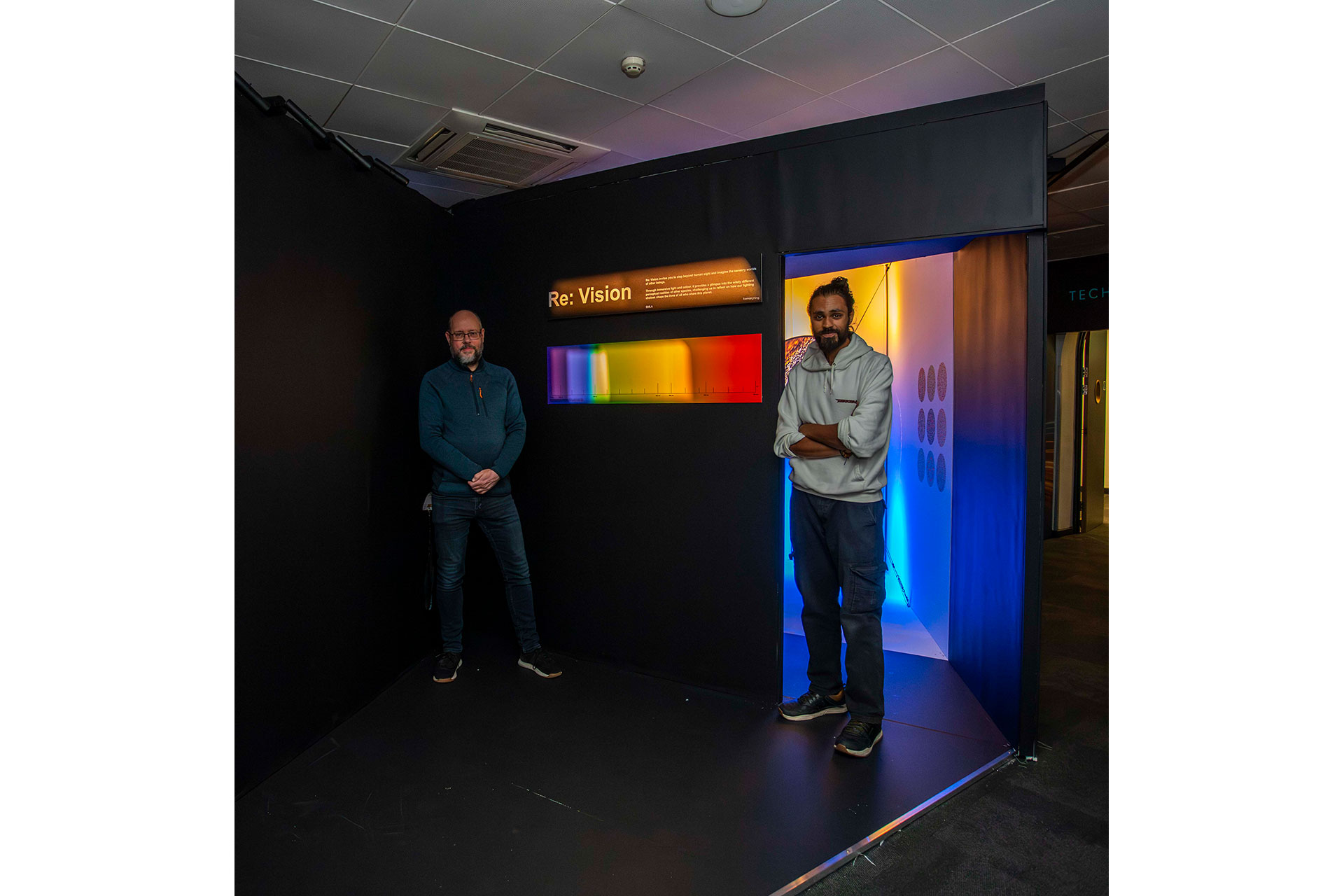
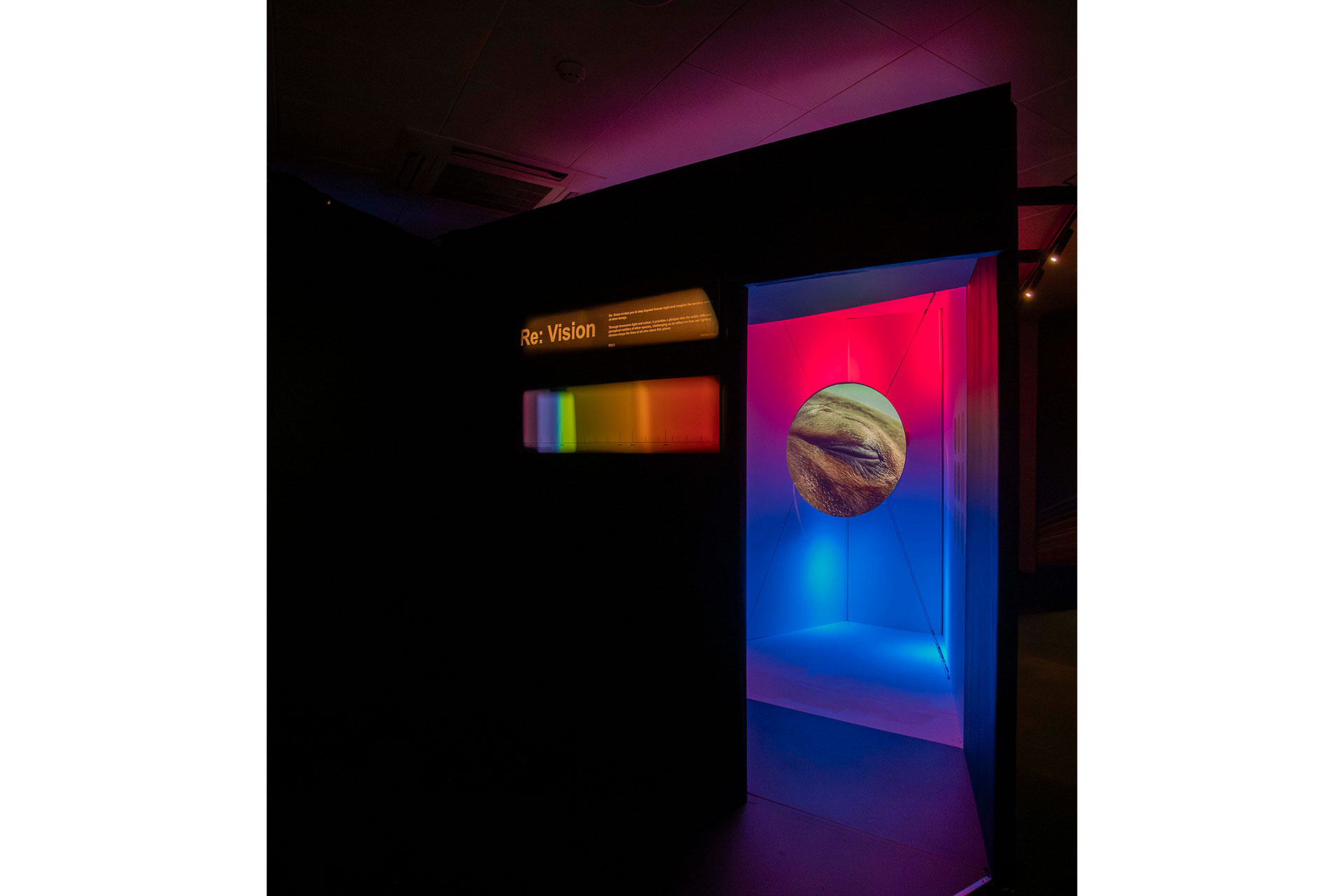
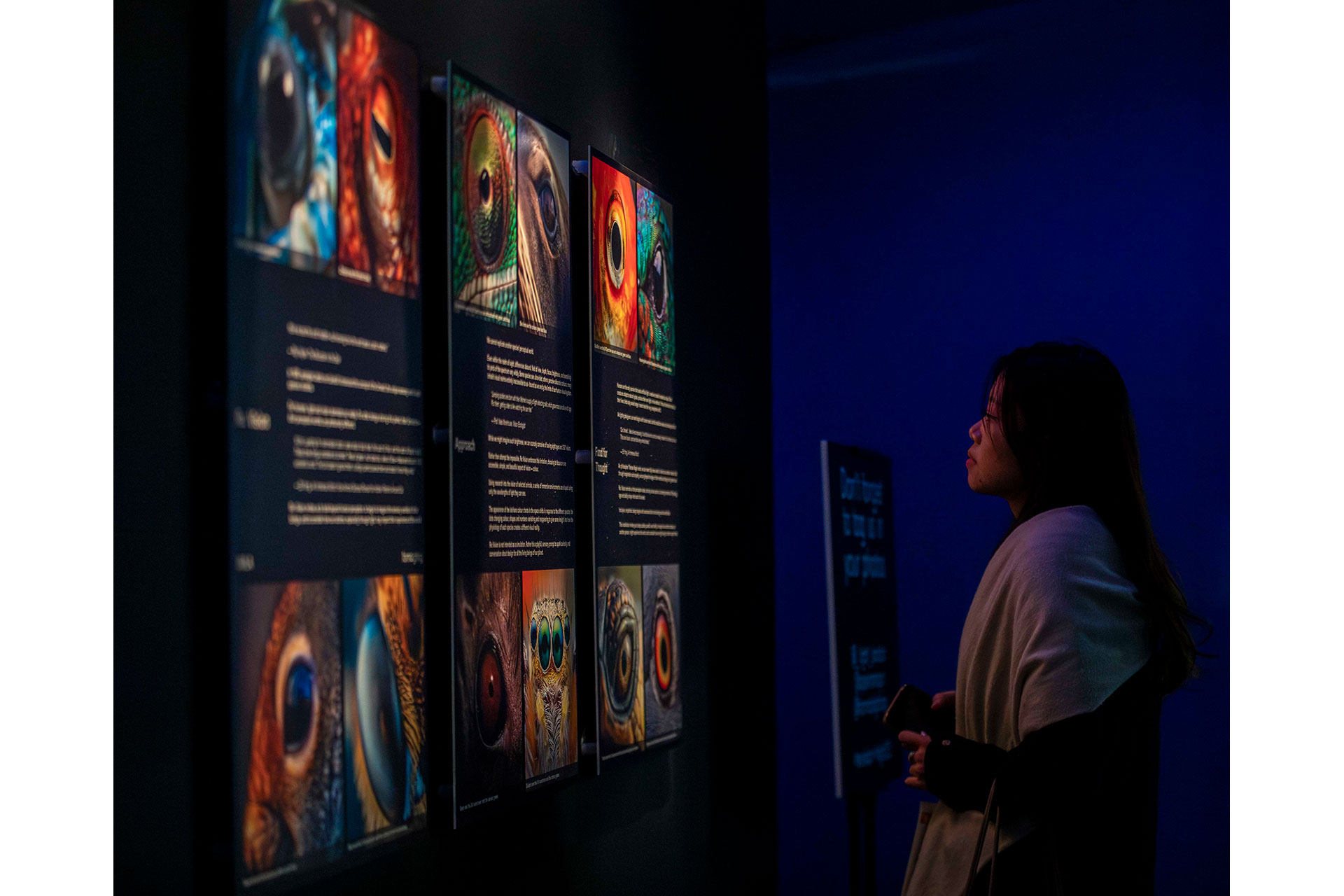
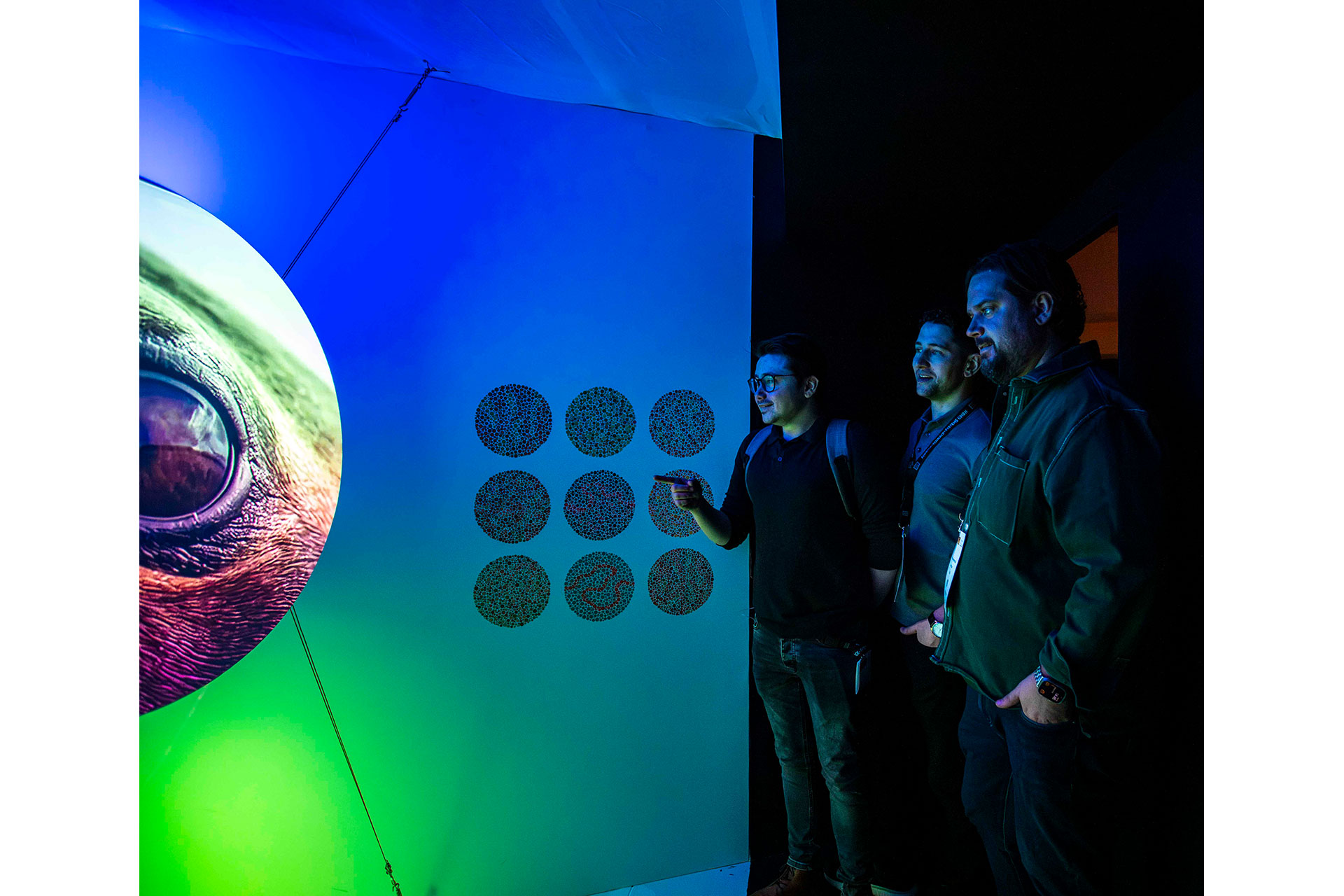
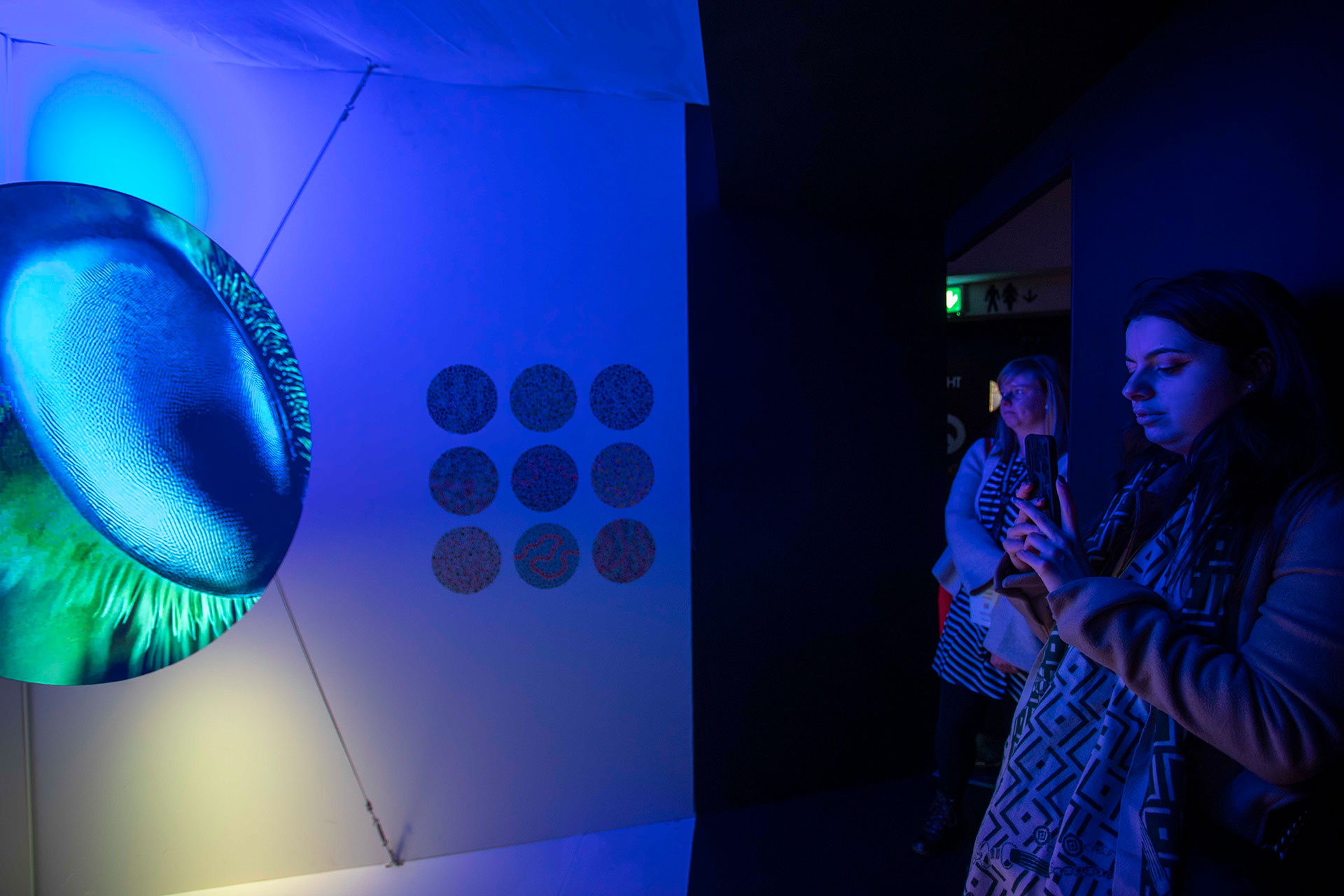
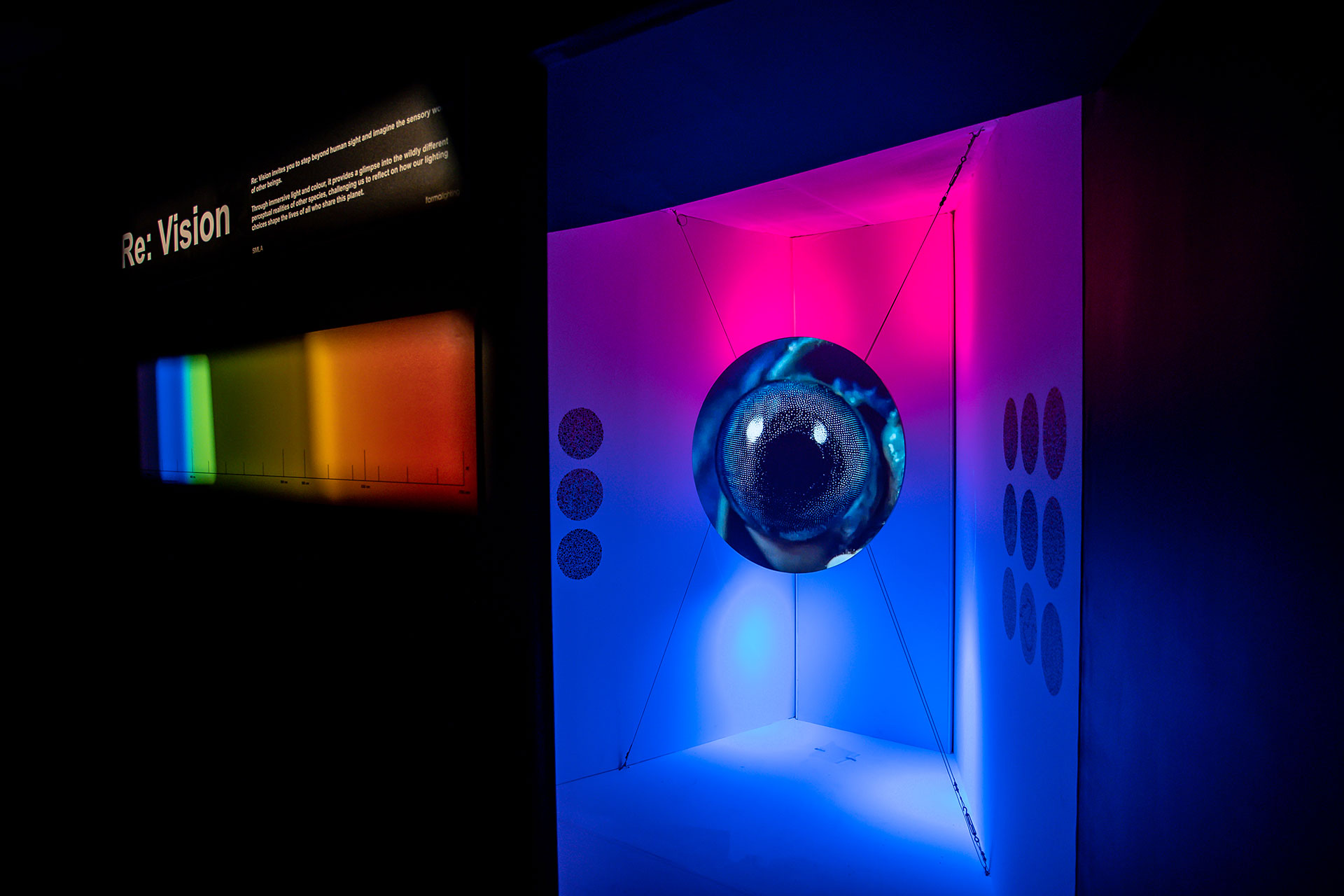
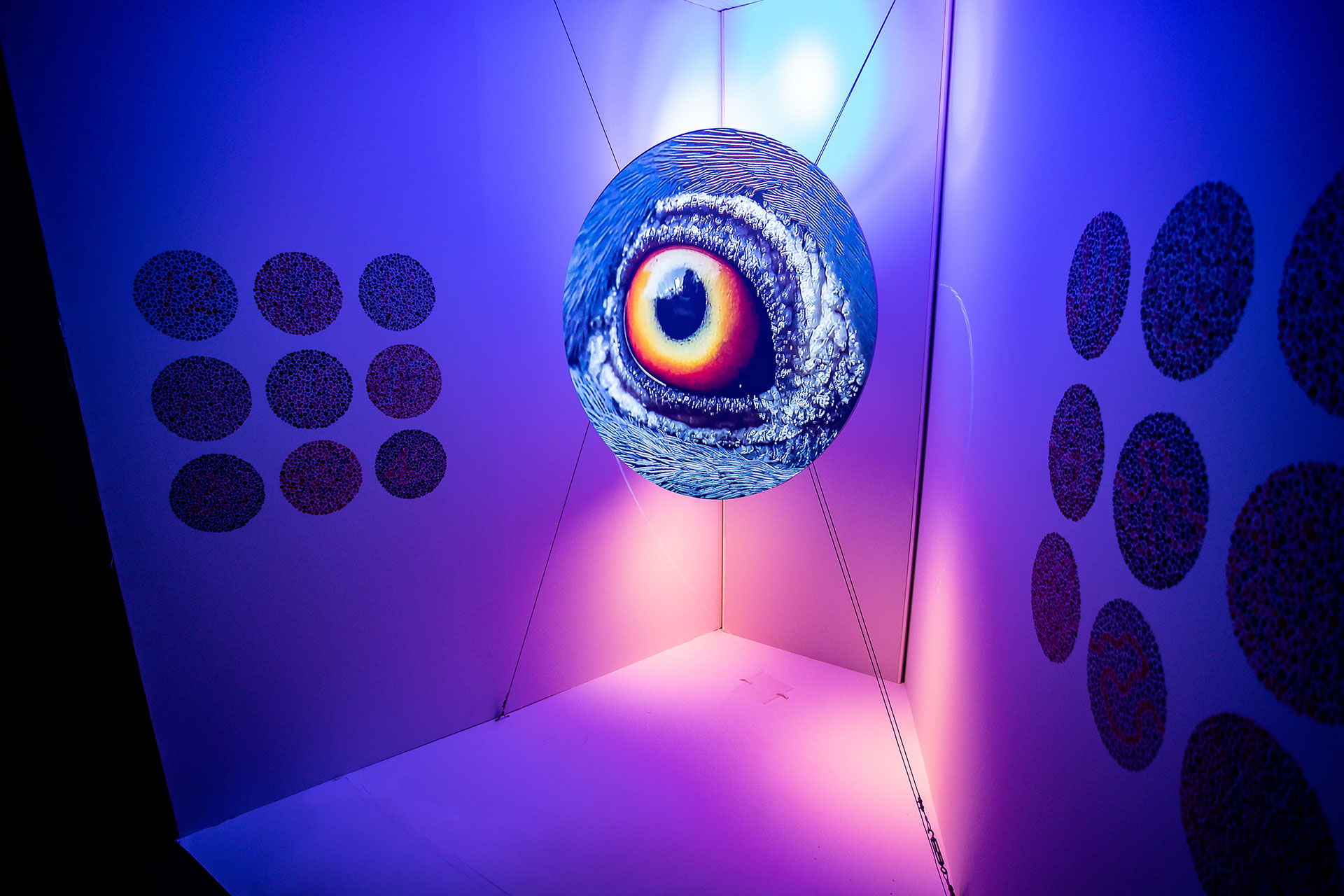
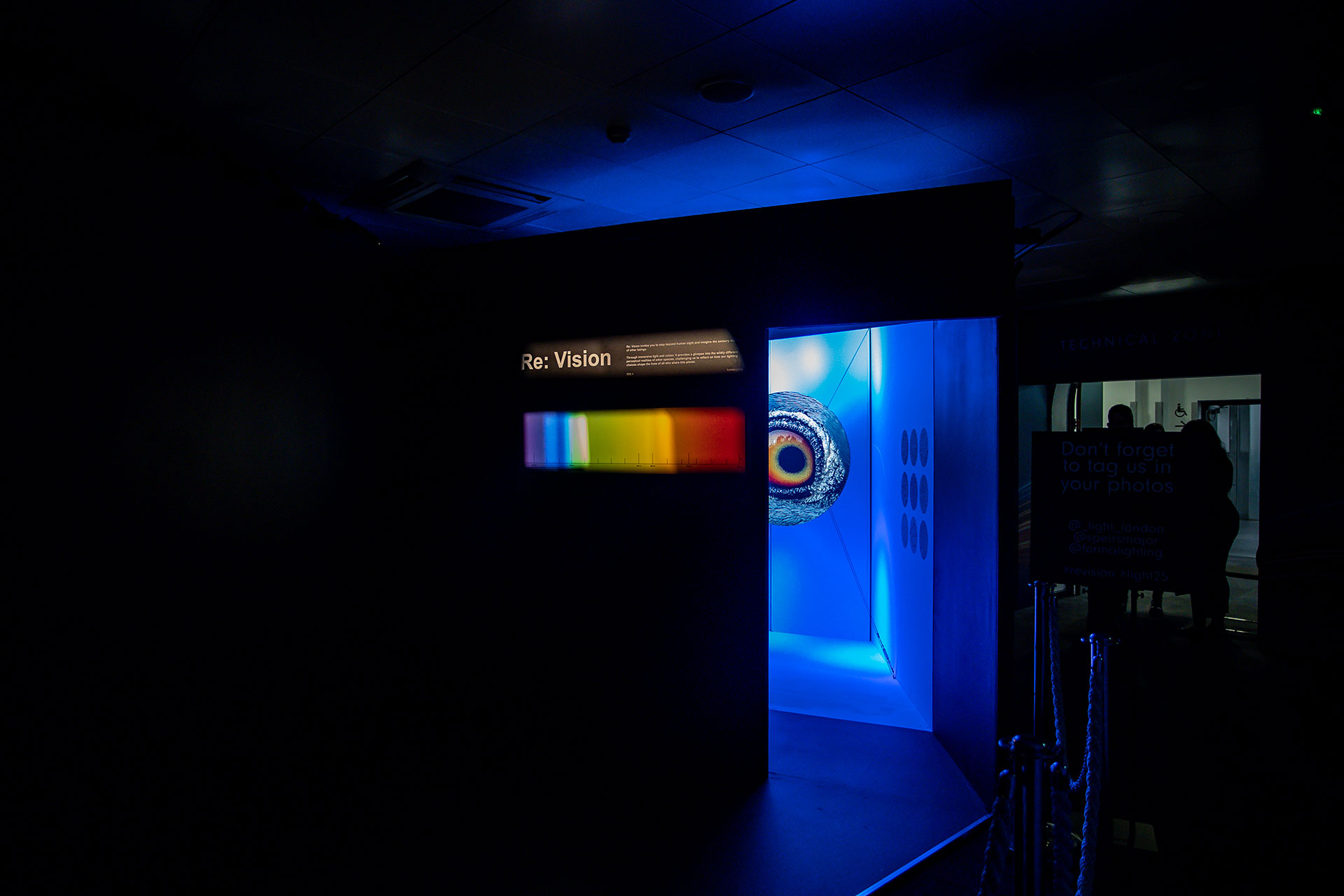
Re:Vision invited LiGHT 25 visitors to step into a world of light and perception – a sensory journey that challenges how we see and understand the visual experience of other species. Using custom spectral profiles and reimagined Ishihara colour blindness test patterns, the installation explored how different life forms perceive colour and light in ways entirely distinct from our own.
Speirs Major explains: “We’ve always been fascinated by how each species experiences a completely different version of reality, despite sharing the same planet. When you begin to understand this, you start to think about the impact we as lighting designers have on those experiences through artificial light. This installation is intended to open minds – to start a conversation about designing not just for humans, but for the many other living beings that share our spaces.”
To translate complex scientific research into an accessible experience, Speirs Major and formalighting crafted a series of environments, each based on the spectral vision of different animals. Within these spaces, visitors encountered Ishihara-style colour charts – familiar to many as tests for colour blindness – which appear or vanish depending on the available spectrum. The result was both playful and profound: an artistic incitement that makes us question how others, human or otherwise, perceive the world.
Speirs Major goes on to explain: “It’s not about simulating another species’ vision, but about creating a spark – an opportunity to see differently, even for a moment.”
Through their partnership with formalighting, known for their innovation and precision in light control, Speirs Major were able to bring this vision to life using advanced luminaires and motorised systems that enable dynamic spectral shifts and subtle changes in atmosphere.
“Formalighting have been fantastic collaborators,” Speirs Majoir noted. “Their technology allowed us to experiment and deliver light in new ways, pushing beyond traditional boundaries.”
At its heart, Re:Vision is a call for empathy and imagination. Inspired by philosopher Thomas Nagel’s essay What Is It Like to Be a Bat?, the installation embraces the impossibility of truly seeing through another creature’s eyes – and yet, in doing so, invites us to reflect on how we design for a world of difference.
“Humans are the only species that truly needs artificial light,” says Speirs Major. “Yet our use of light affects every other species. Birds stay awake longer under urban lighting, nocturnal creatures lose darkness, and ecosystems are disrupted. This project asks us to think beyond ourselves.”
The installation also resonated with wider conversations around inclusivity and accessibility in design. As Speirs Major explains, “Even within our own species, perception varies – ageing changes how we see, and those with colour blindness experience the world differently. Re:Vision is a reminder that design must account for those differences, cultivating awareness and empathy along the way.”
For visitors to LiGHT 25, Re:Vision was more than an installation – it was an experience that stayed with them. It’s aim was to make visitors pause, question, and perhaps even see their own work differently.