

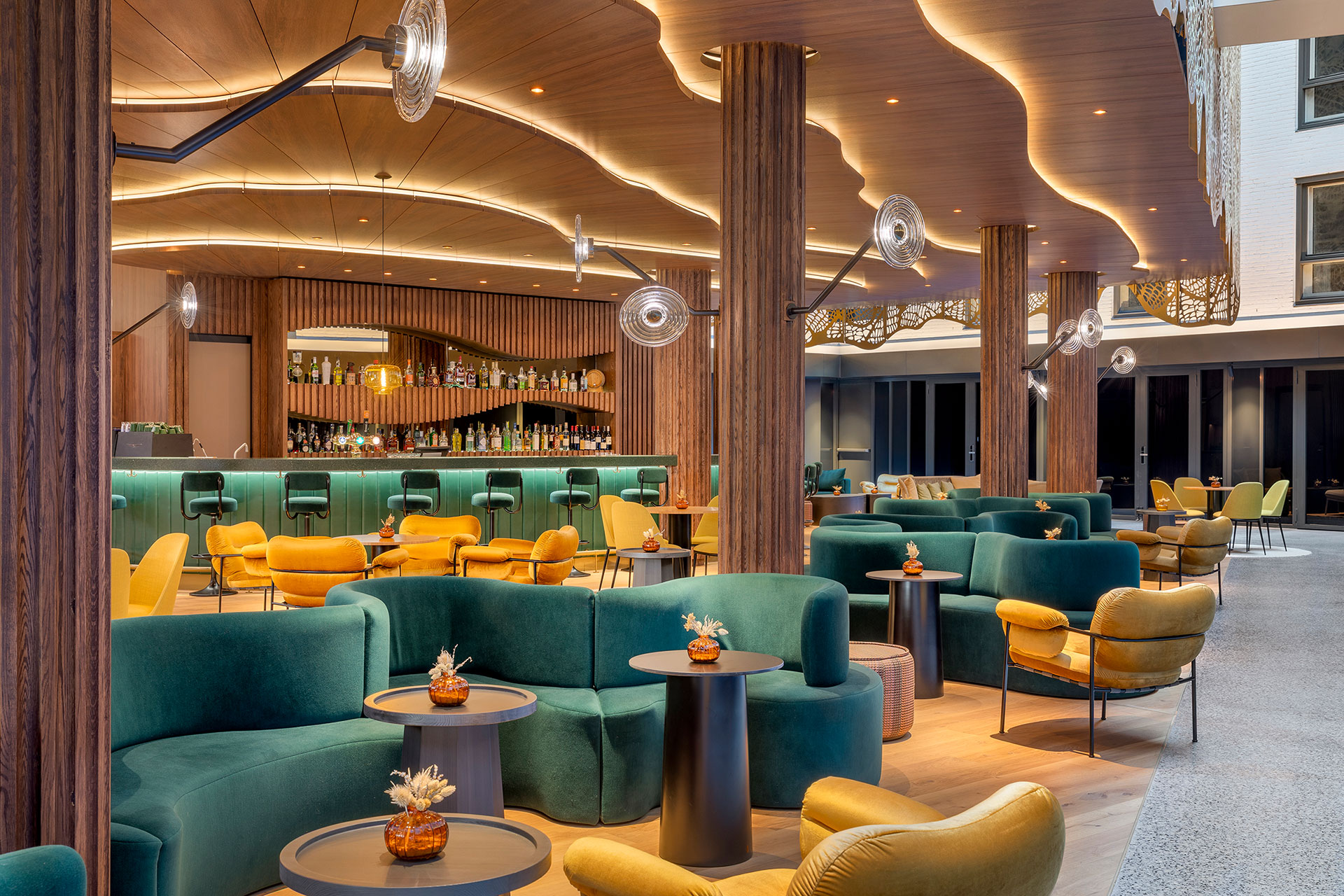
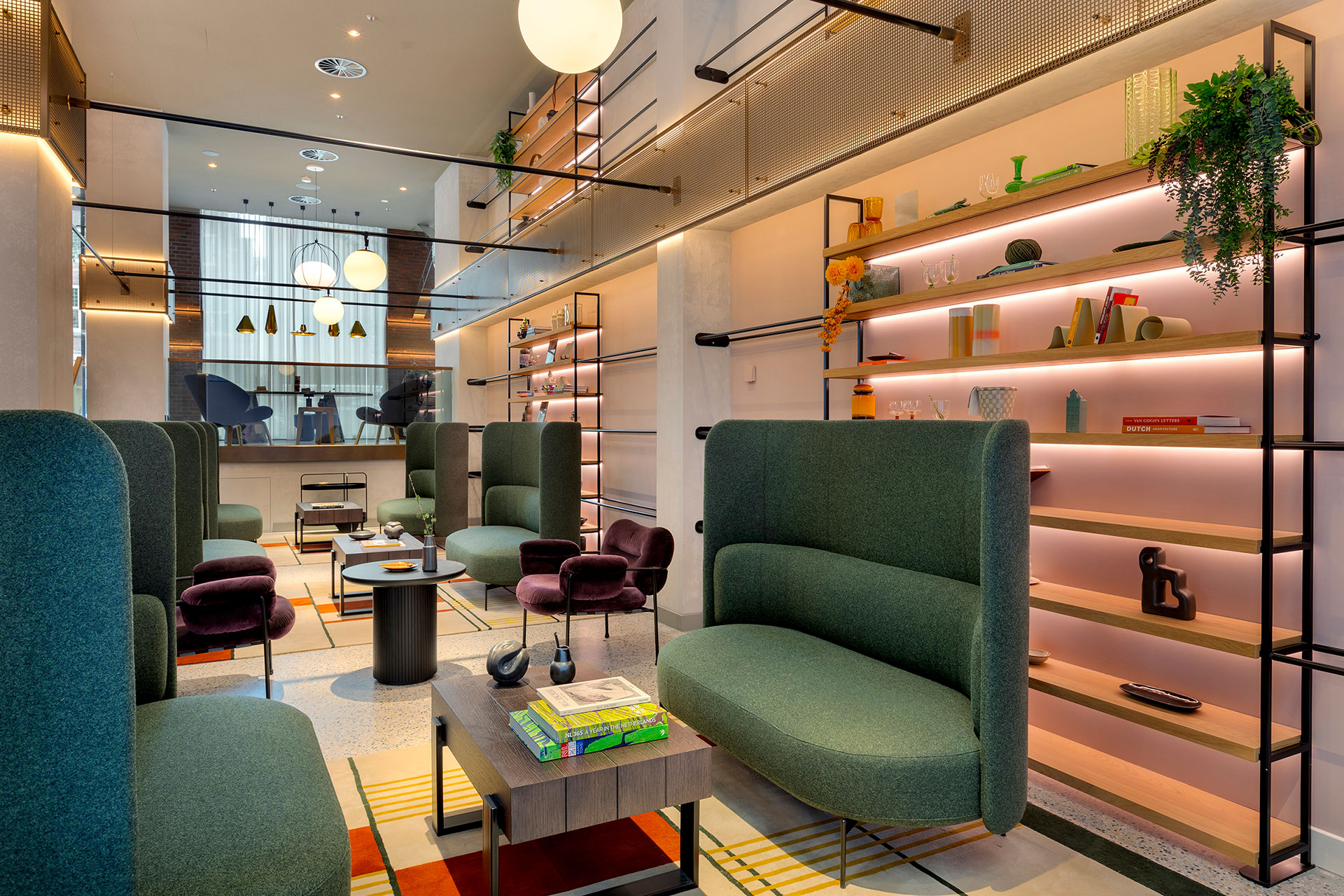
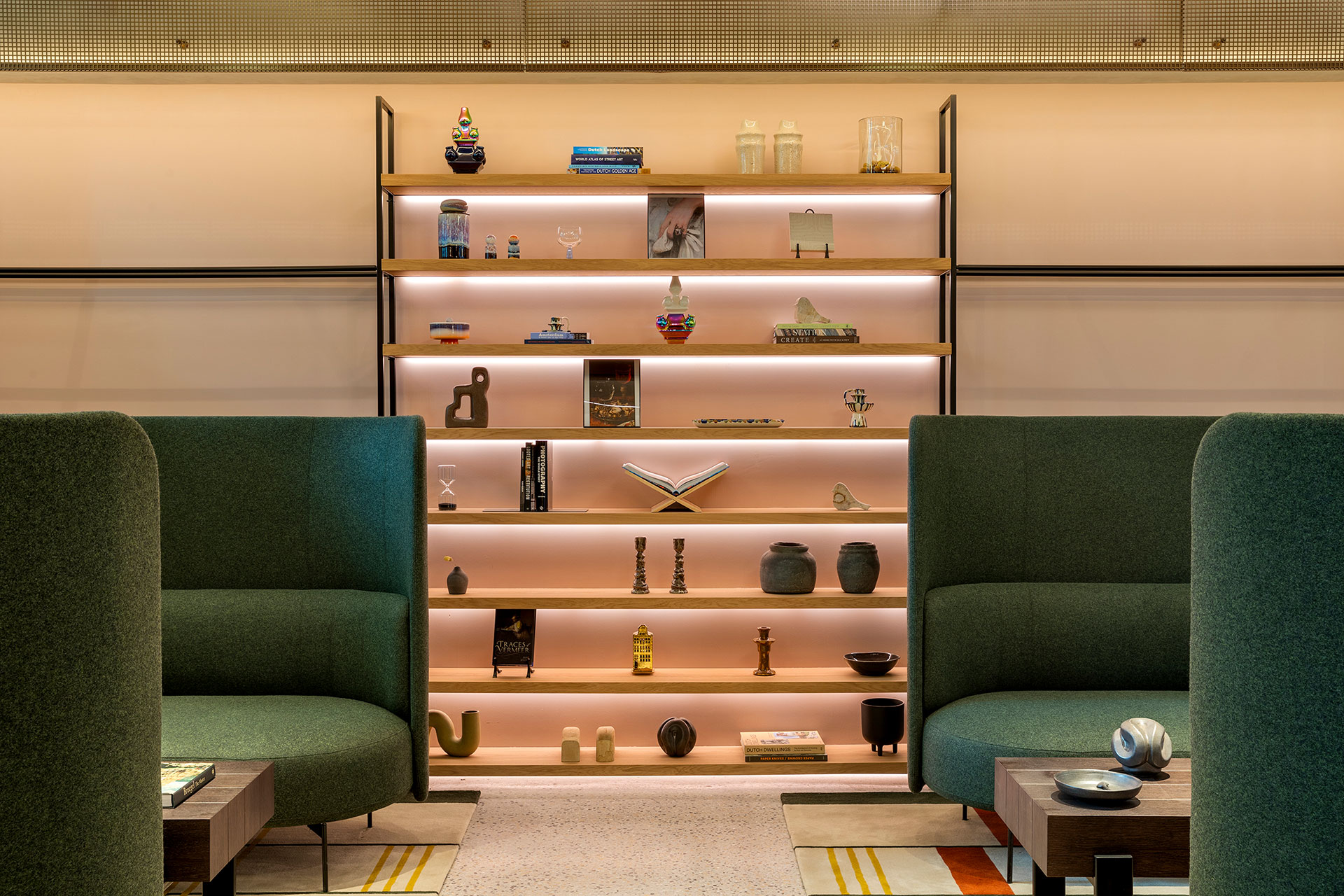
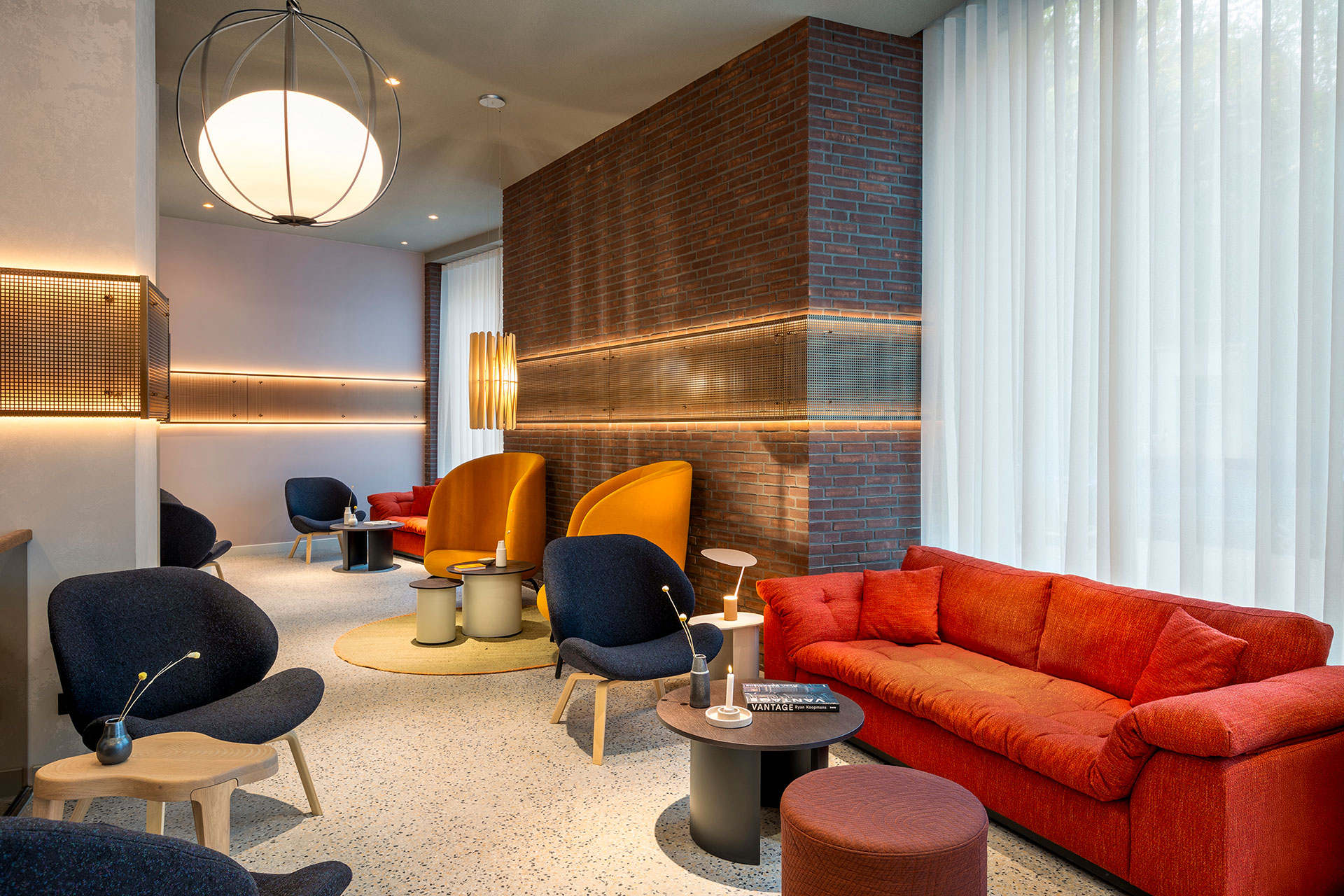
The lighting design for the Renaissance Amsterdam Hotel is a meticulously crafted response to a rich conceptual framework rooted in local narratives, tactile materials, and immersive spatial experiences. At the core of the design are themes such as Finding the Light, Biophilic Dreams, Floating Florals, and Amber is The New Red Light, which collectively emphasize natural forms, organic growth, and a contemporary reinterpretation of Amsterdam’s cultural and historic identity. The lighting supports these ideas by blending intensity, texture, and warmth to bring each conceptual layer to life.
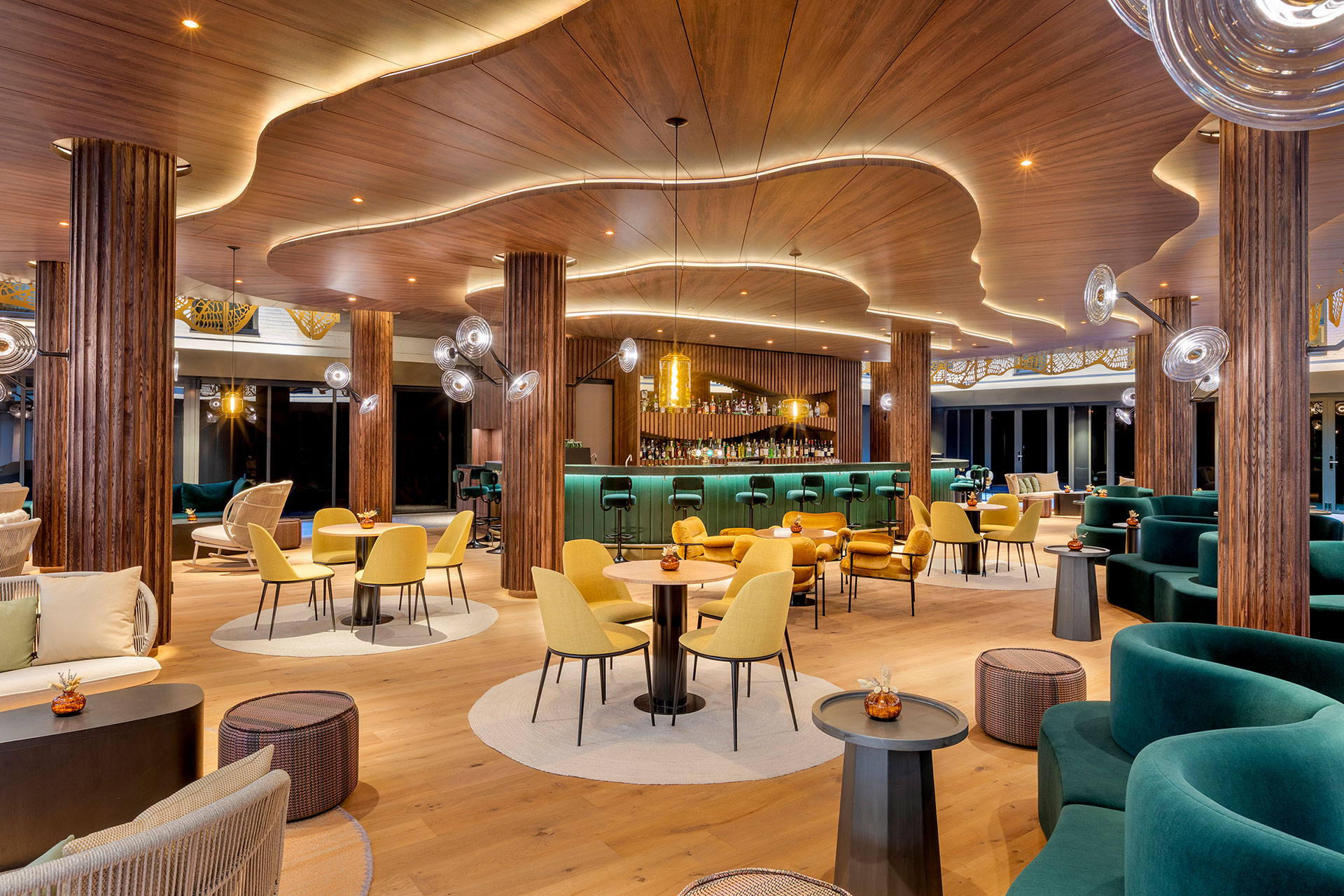
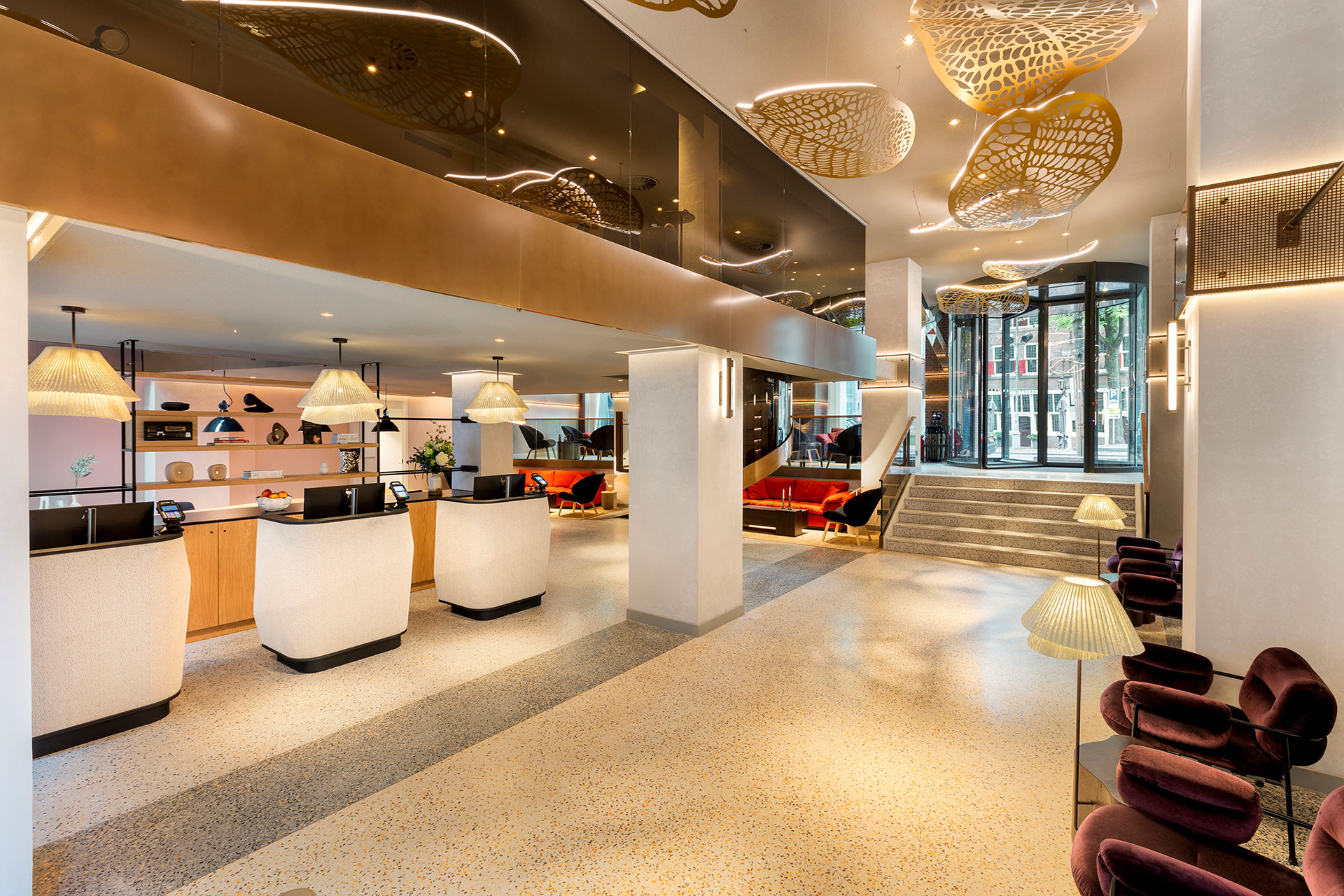
The design harmonizes seamlessly with the architecture and interior finishes by using concealed and integrated light sources that follow the rhythm of materials, organic shaped joinery, and structural geometry. In public areas like the Bar & Lounge and the Lobby, timber ceilings embedded with LED strips echo natural contours and growth patterns, enhancing spatial flow and connecting the interiors with the city landscape. Warm amber glows and organic sculptural pendants echo the inviting vibrancy of the city’s red-light history, now reimagined.
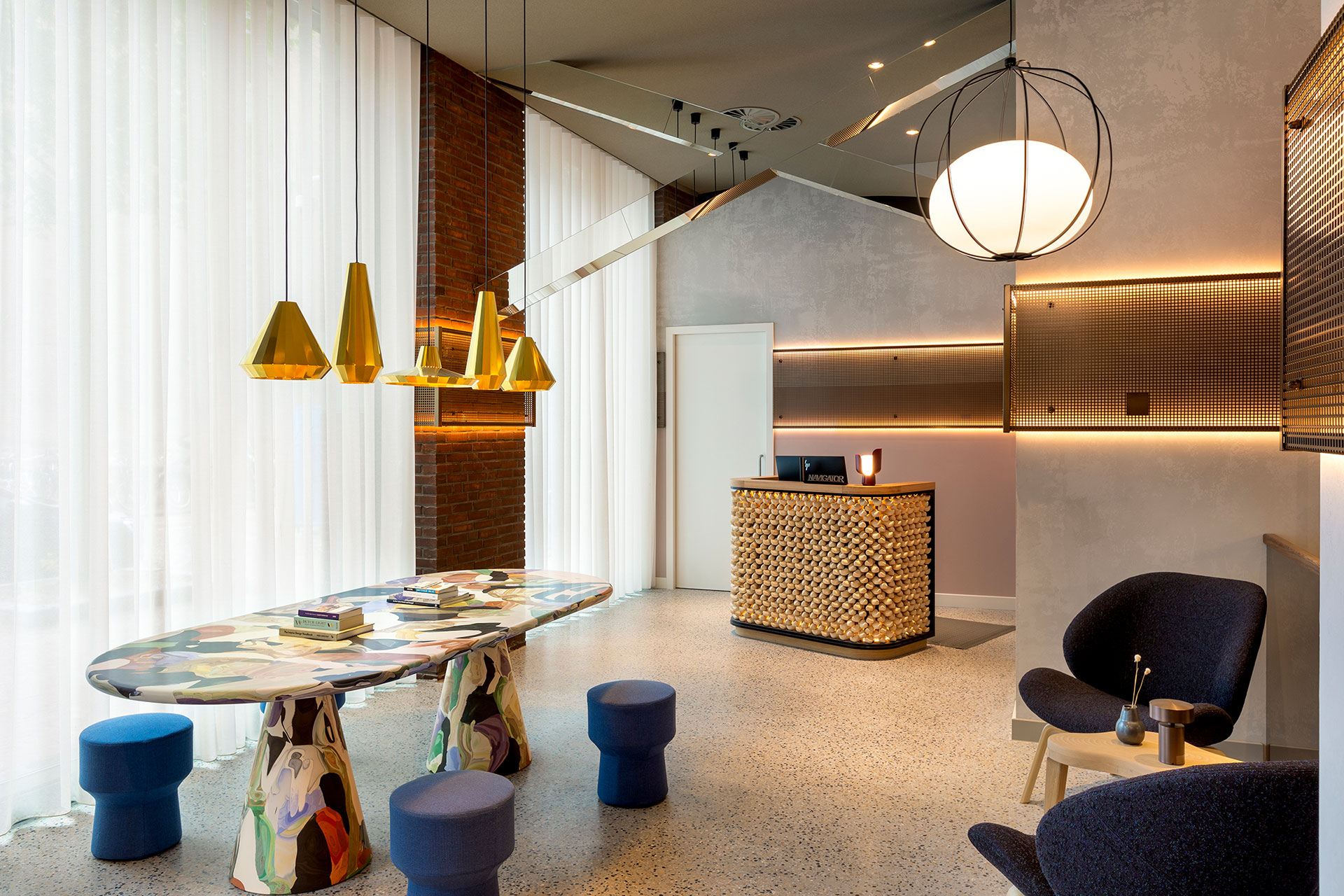
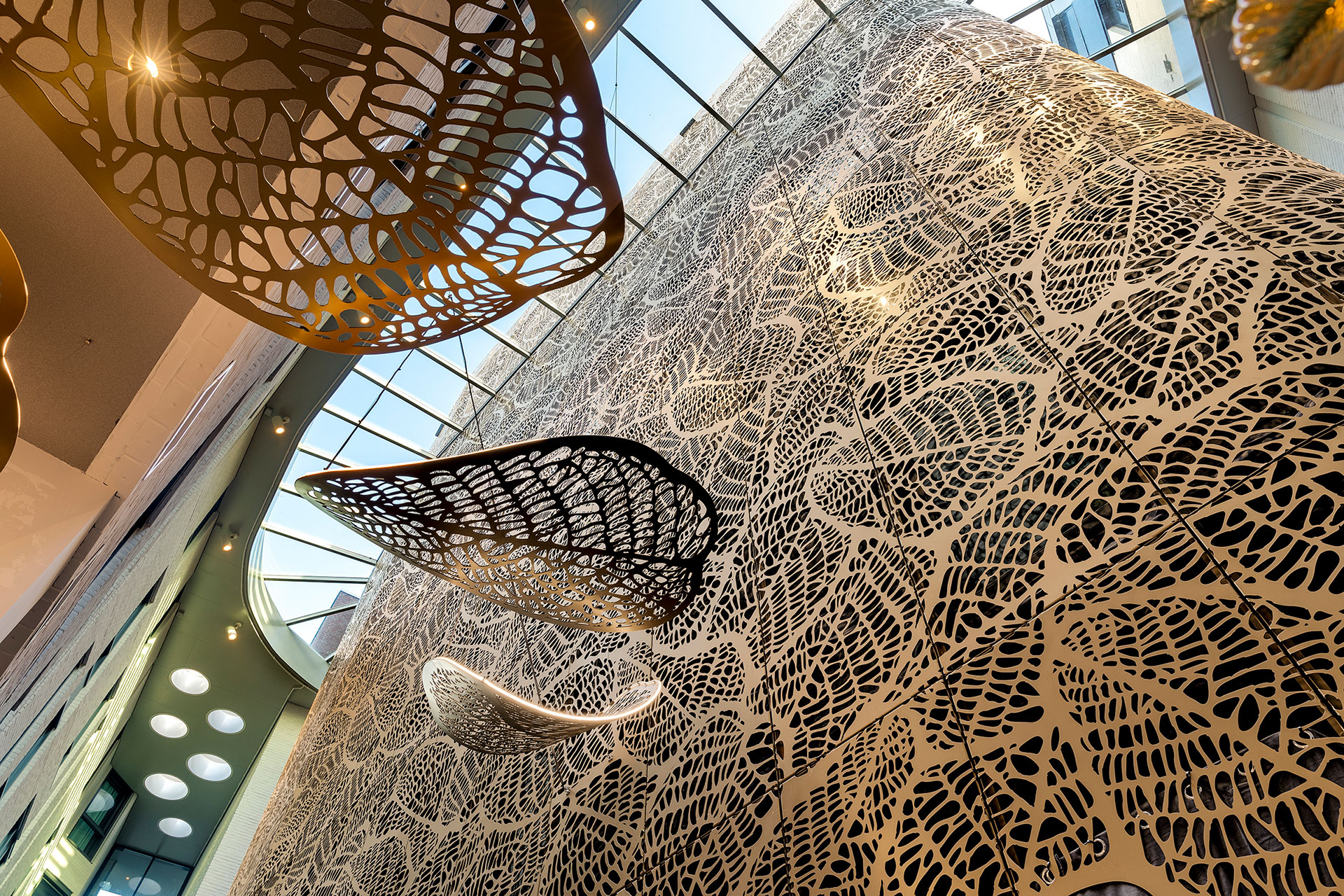
The lighting palette celebrates the full expressive potential of light—balancing contrast, layering shadow, and revealing texture. For example, wall sconces in ribbed leather-clad areas or glass-etched panels play with translucency and reflection, while ambient LEDs behind perforated steel panels offer playfulness and depth. Select decorative luminaires or bespoke pressed floral lamps add artistic storytelling and narrative symbolism, connecting the interiors with Amsterdam’s renowned elegant Elms.
A key challenge emerged during the post-pandemic value engineering phase, demanding a careful reassessment of scope and priorities. With a reduced budget, the design team adopted a highly strategic approach, focusing on using light only where it truly added value. Impactful moments were created through selective placement, with statement pieces concentrated in areas of high visibility. Repurposed fittings, upcycled luminaires, and locally sourced elements were employed to retain character while controlling cost. The design remained visually rich and conceptually intact, proving that well-placed light—not quantity—can deliver depth, drama, and meaningful spatial experience.
Sustainability is woven into the concept through low-energy LED technology and the use of dimmable and zoned control systems. These solutions enhance operational efficiency and reduce environmental impact while maintaining design intent.
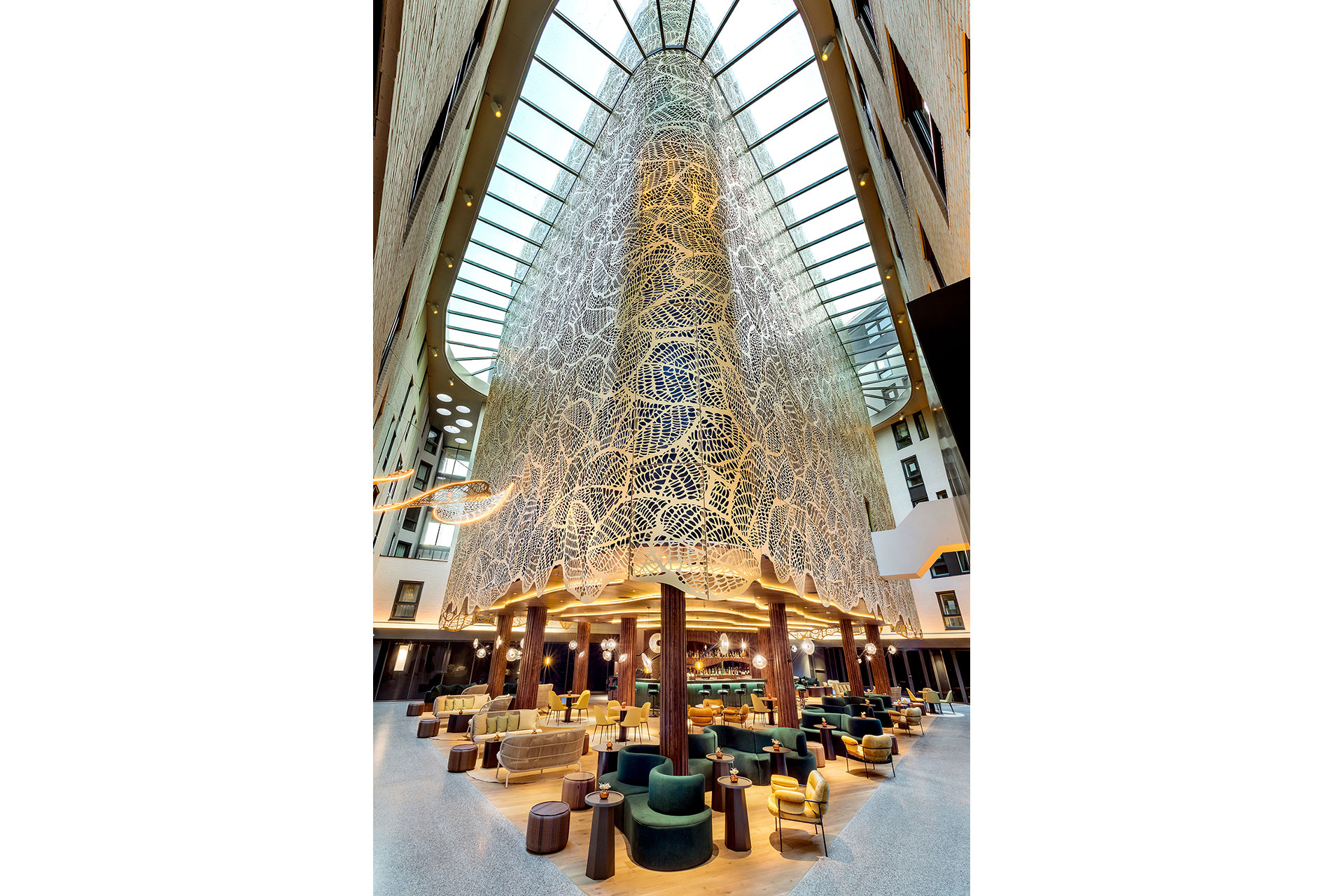
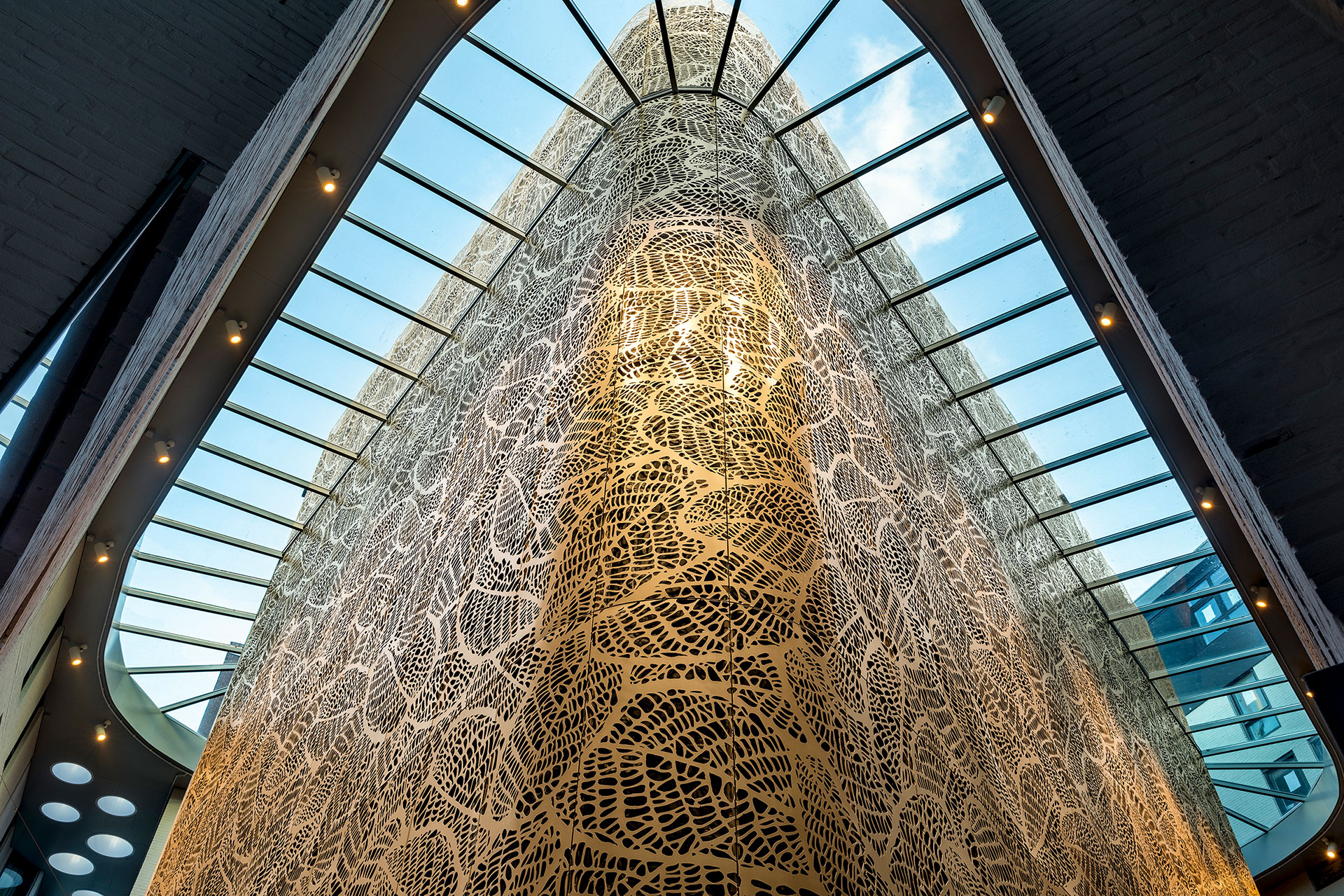
The lighting scheme challenges industry norms by rejecting generic, grid-based layouts in favour of expressive, site-specific interventions. It celebrates the beauty of Amsterdam’s imperfect forms, enhances local identity, and focuses on the interplay of light with material, space, and memory. The internal leaves cladding installation, which “grows toward the light” of the skylight, captures the poetic and experiential ambition of the design.
Ultimately, this project raises the standard of hospitality lighting design—showing how thoughtful, sustainable, and emotionally resonant lighting can elevate a space, even within tight financial parameters.