

Rave Rebels is Belgium’s largest indoor rave, bringing together up to 30,000 spectators over two days at Brussels’ ING Arena.
It is not just a festival — it’s a movement. Born from the heart of Belgium’s electronic music culture, Rave Rebels brings together passionate ravers for an immersive experience shaped by music, powerful visuals, and a distinctive light show.
Rave Rebels collaborates with leading artists, producers, and visual creators to deliver large-scale festival experiences defined by a strong curatorial vision and ambitious production.
The festival works closely with key organizations in the electronic music ecosystem, including local and international talent agencies, as well as sound, light, and multimedia production companies. These long-term partnerships ensure that each edition maintains a high production standard and continues to evolve creatively.
For 2025, large-scale installations were created in collaboration with the international multimedia production studio SILA SVETA for both the Spring and Fall editions.
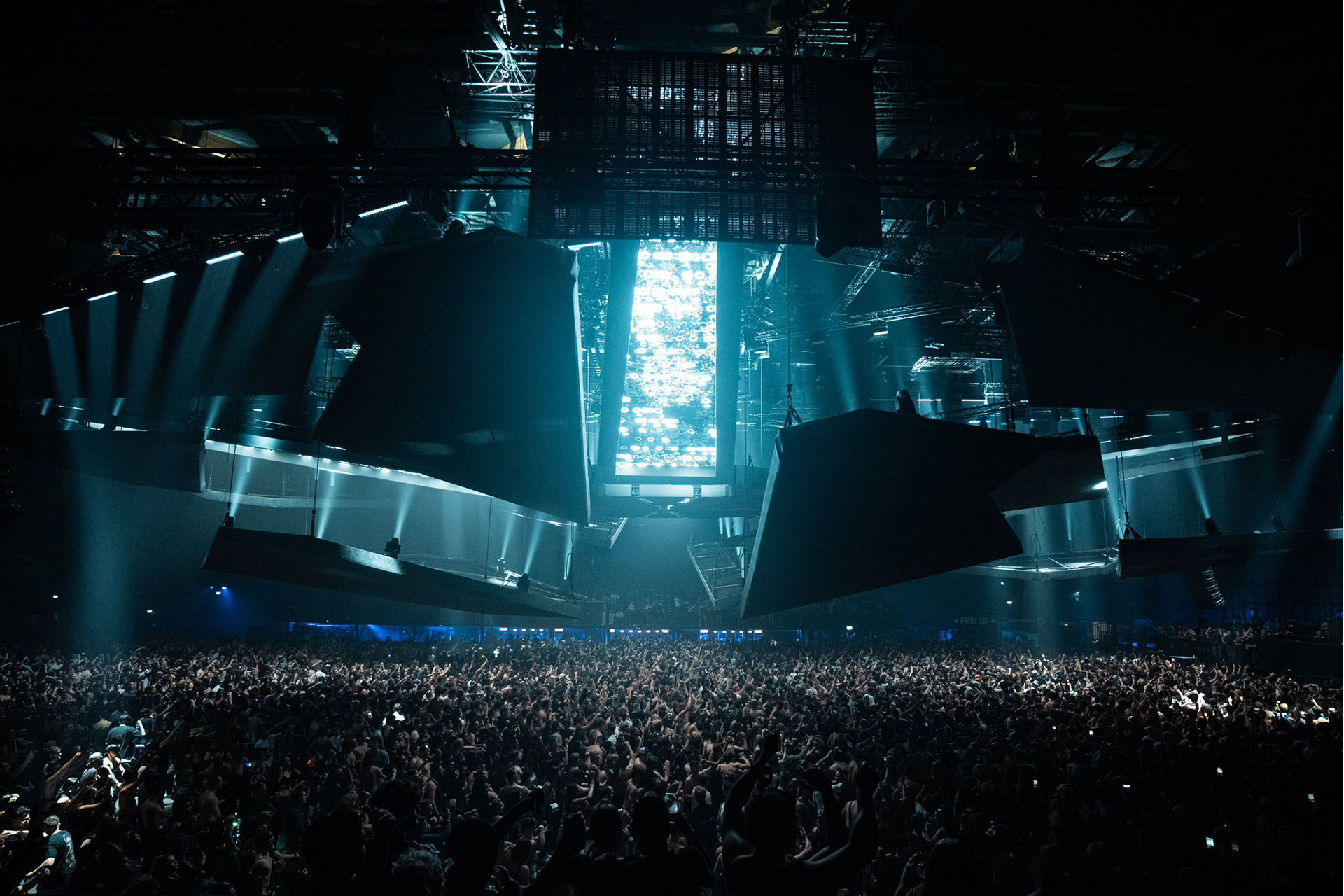
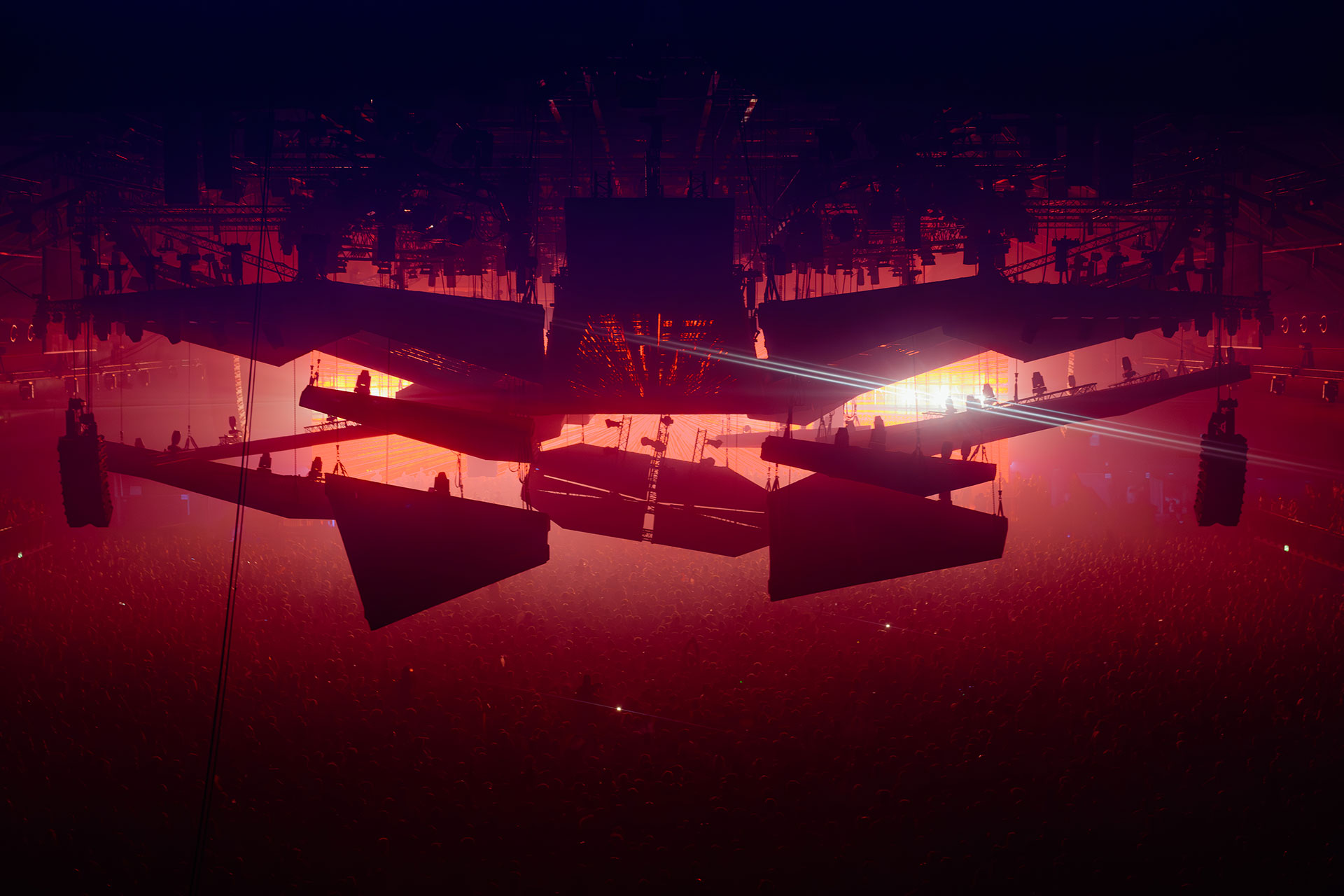
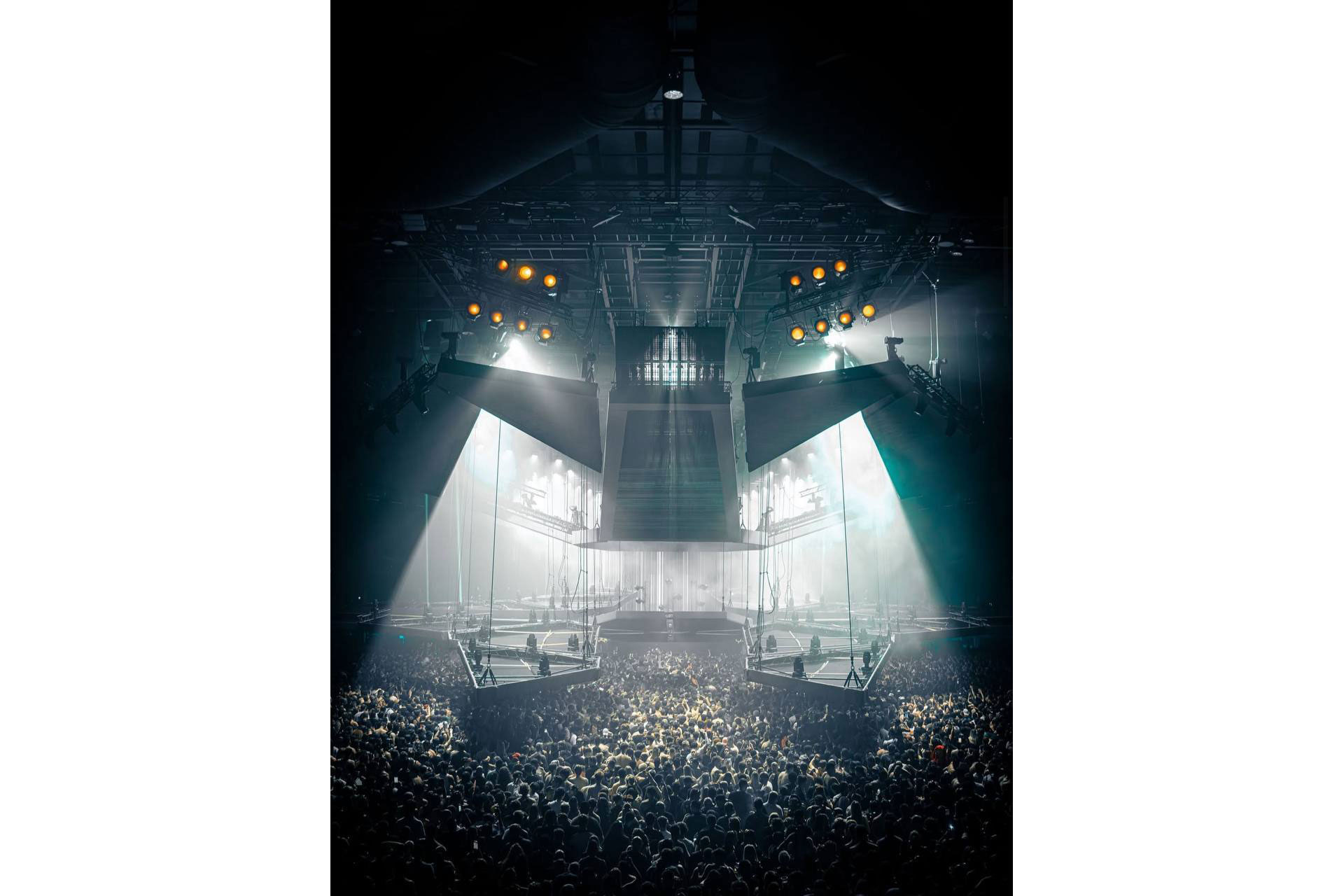
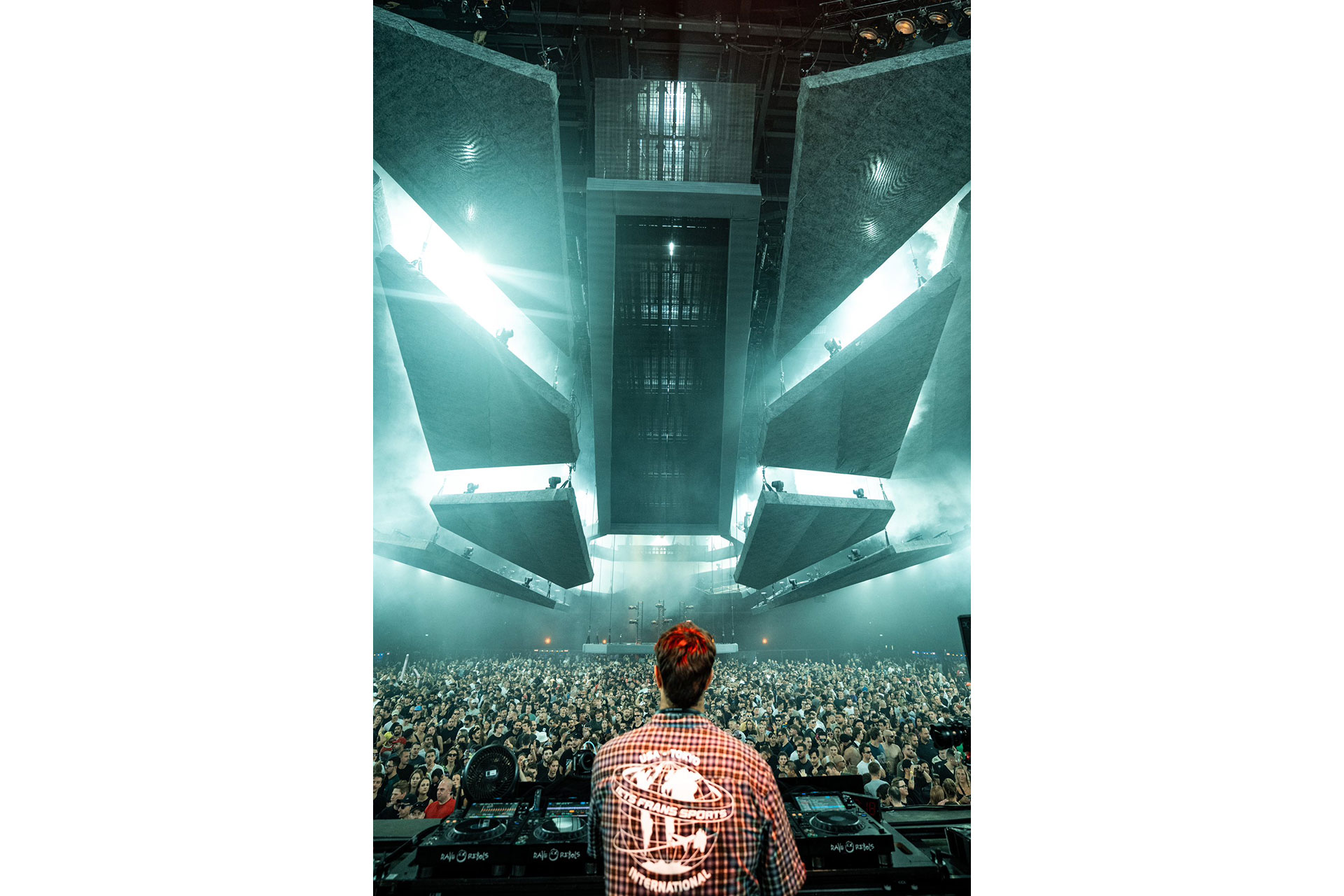
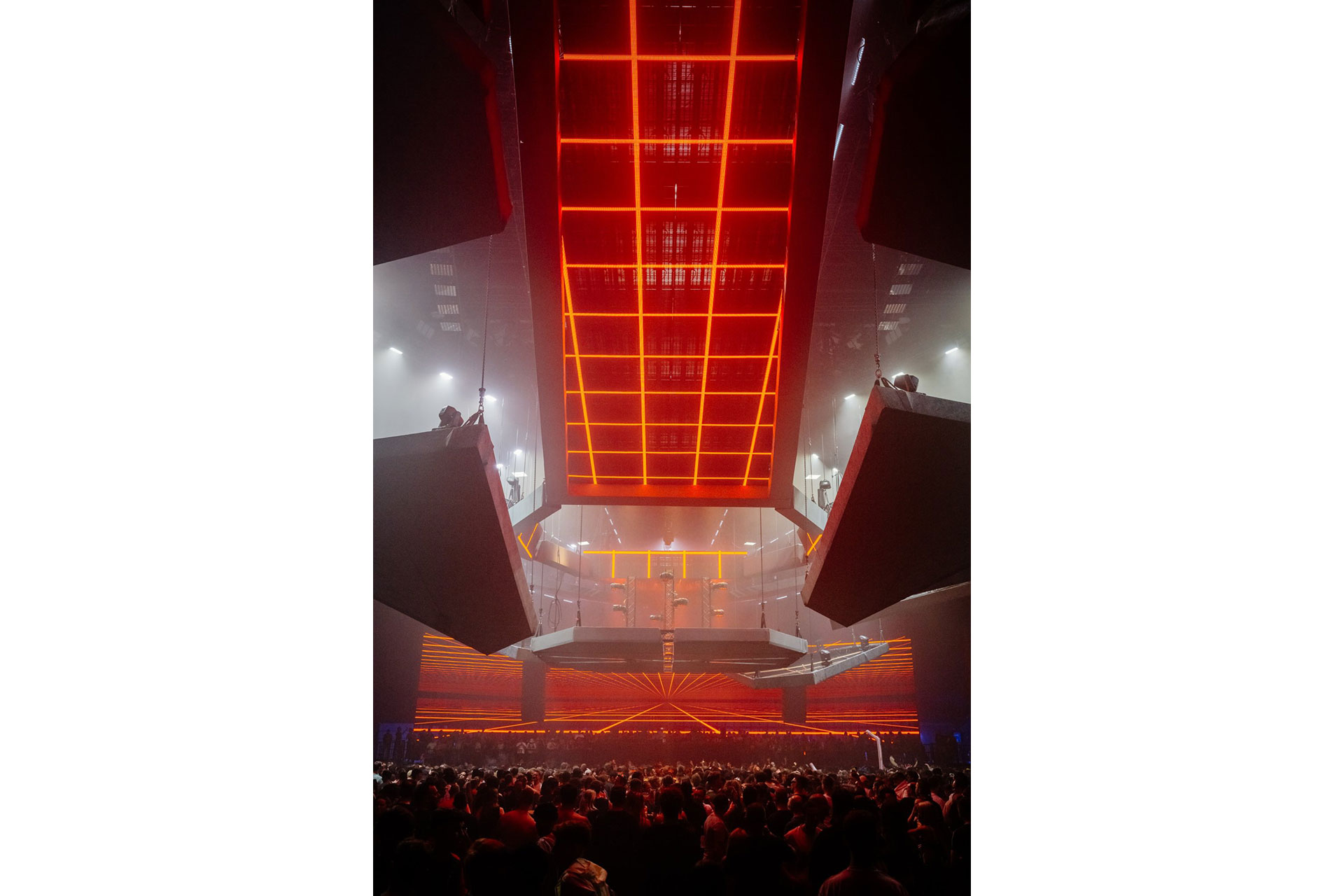
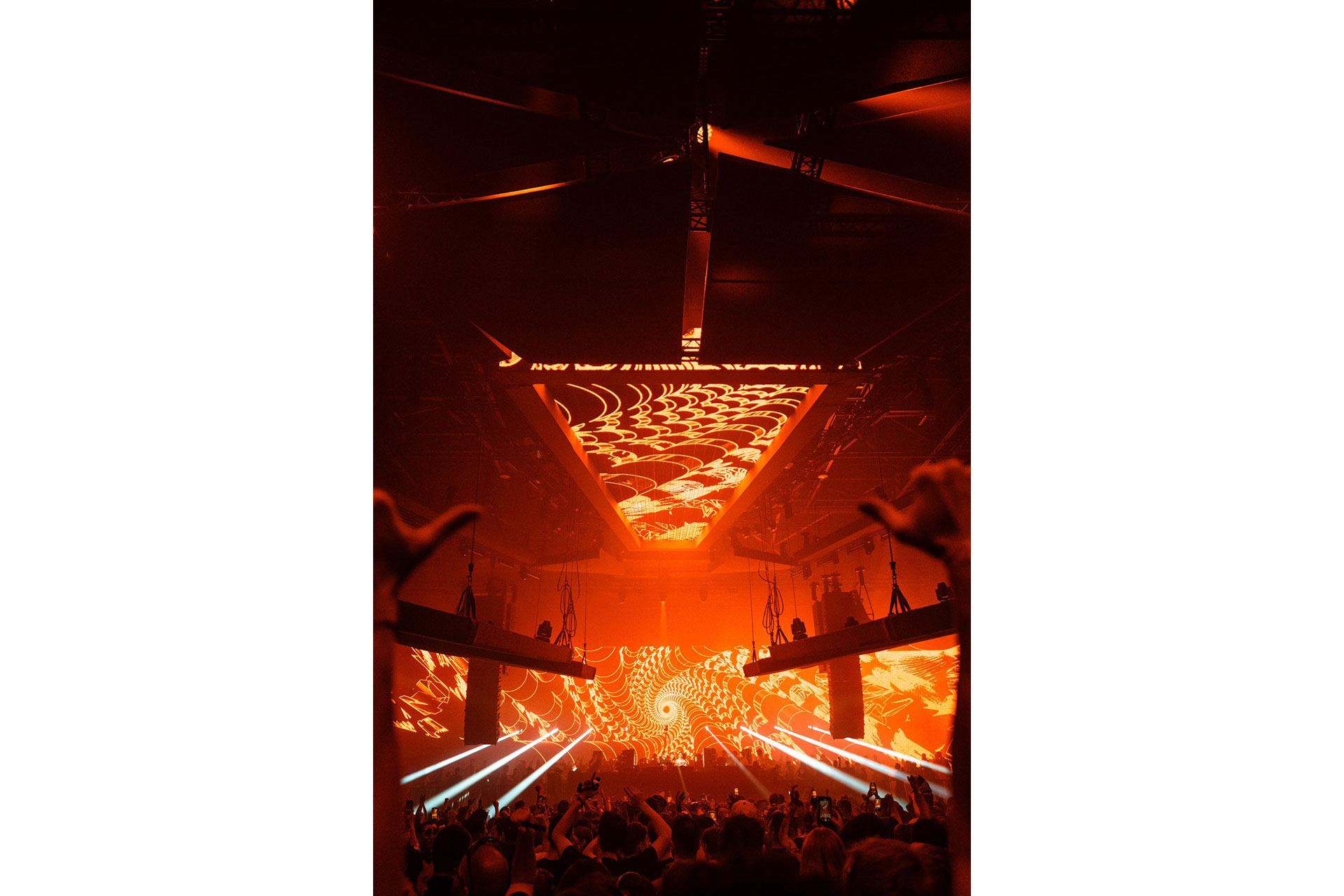
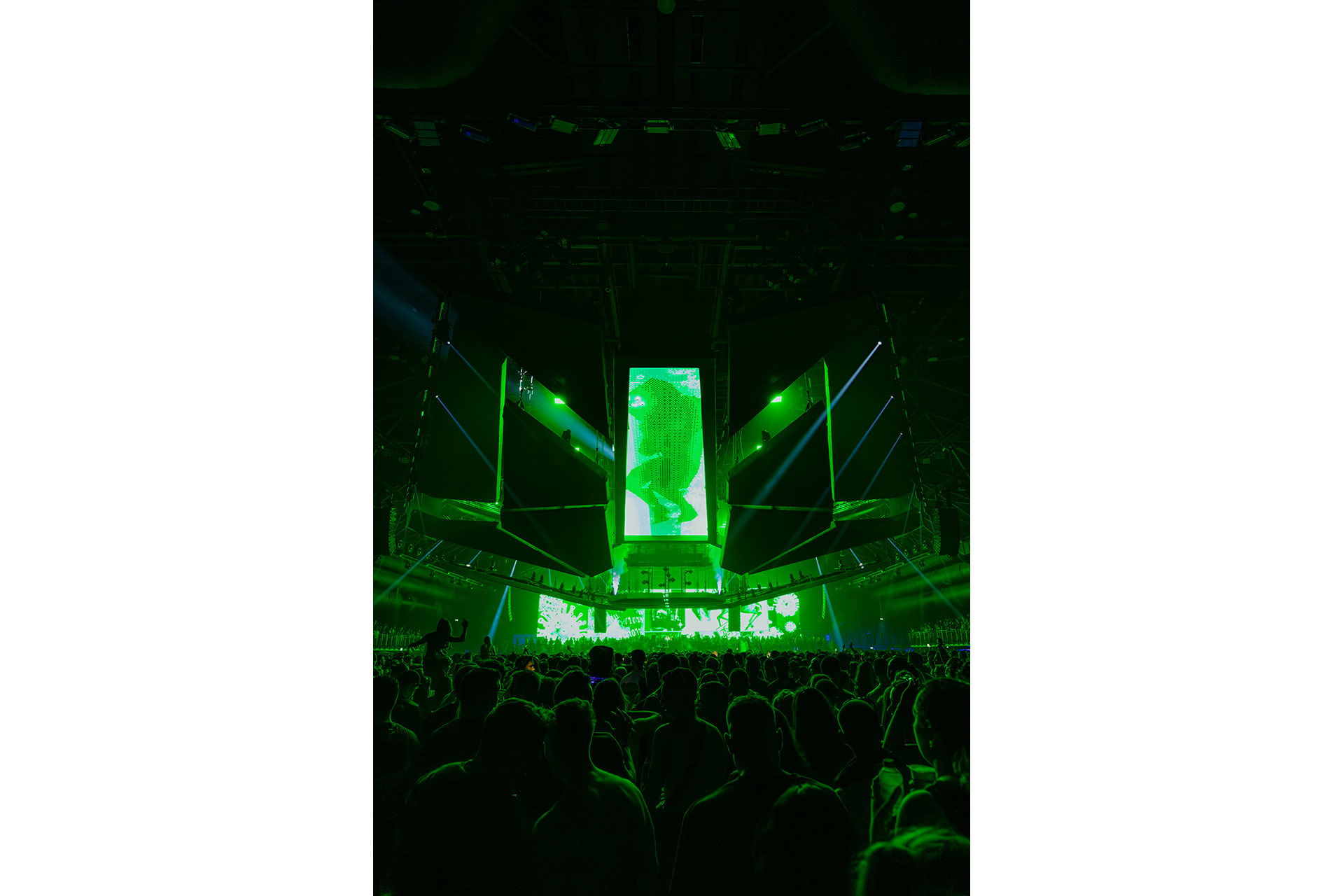
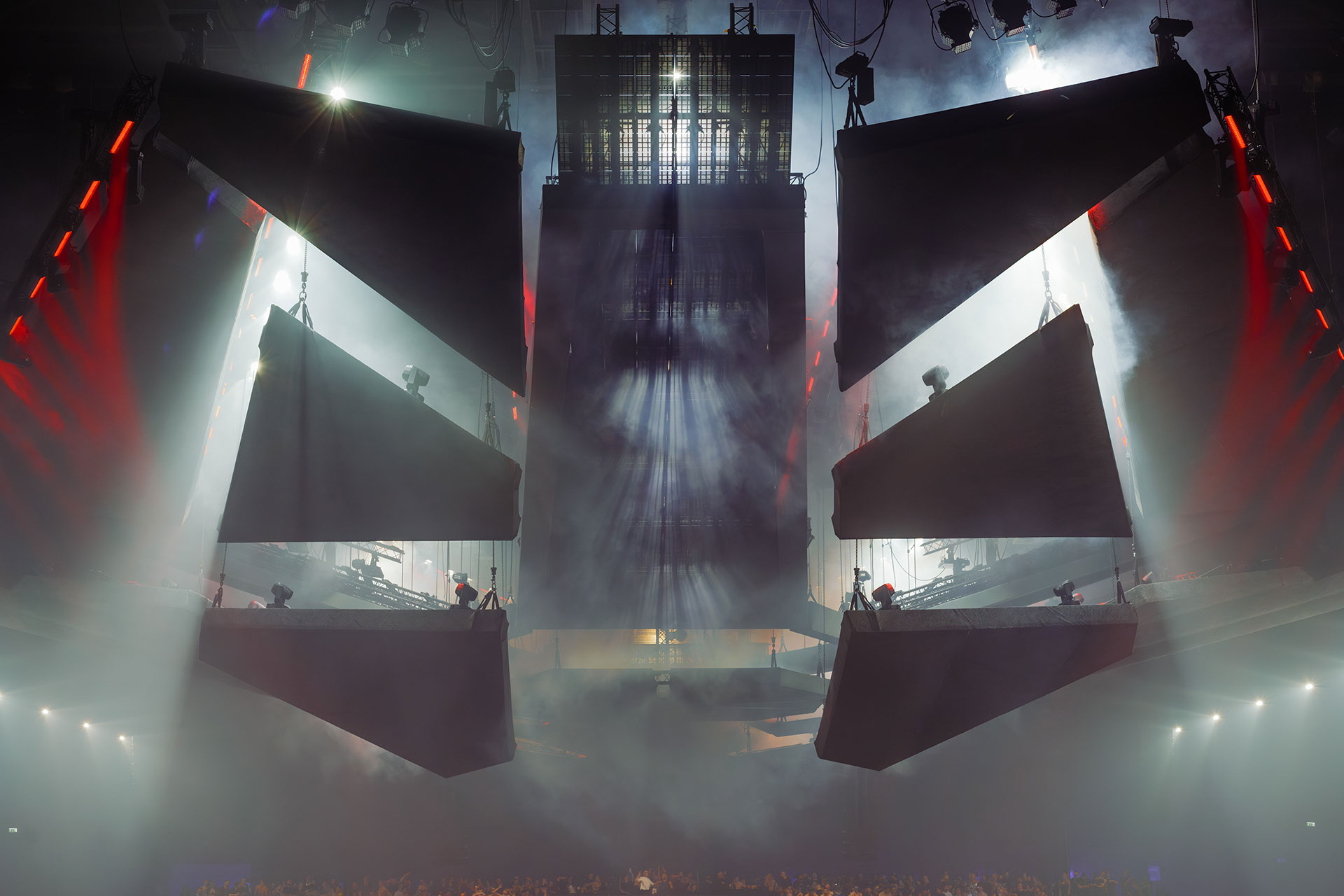
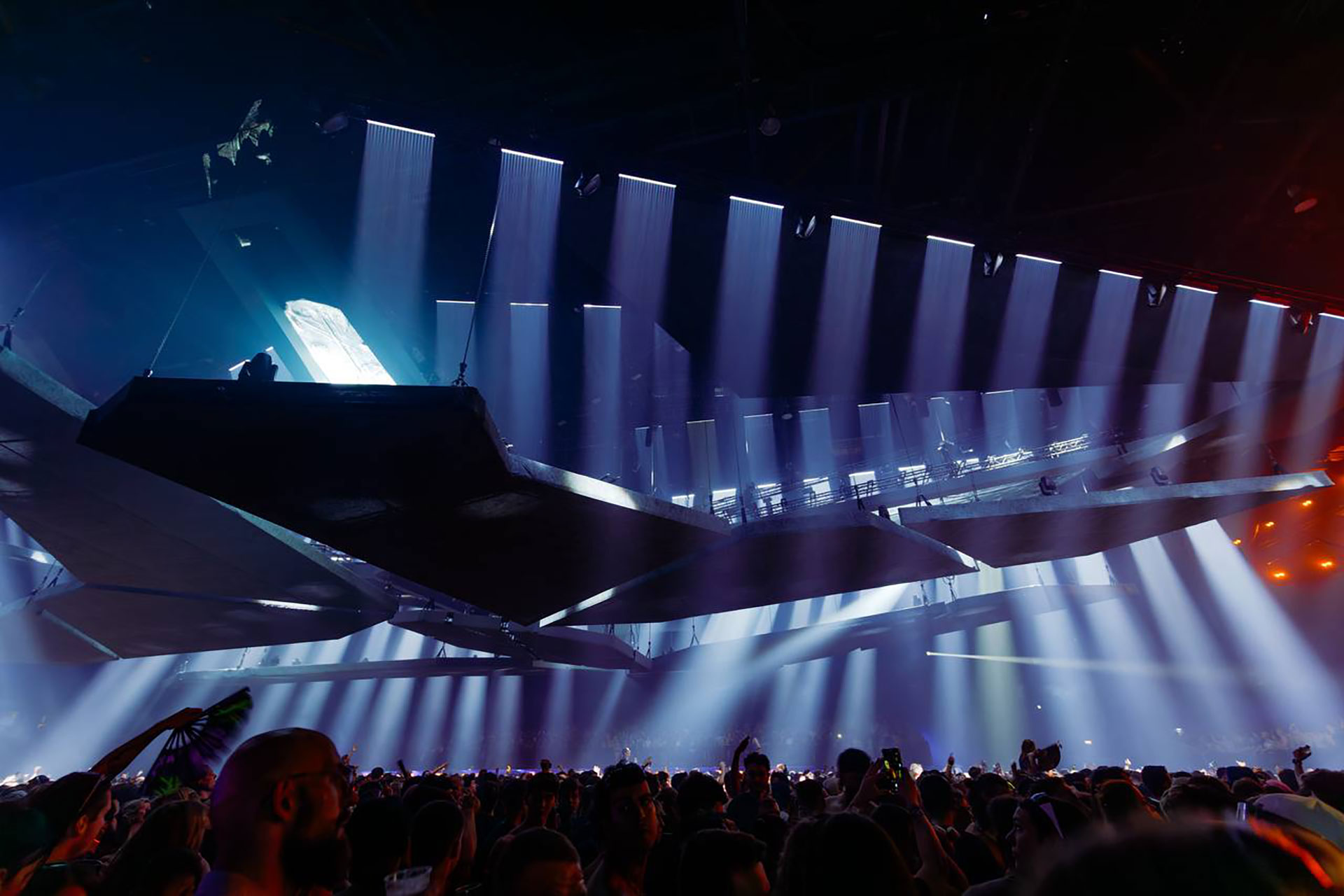
Installation The Ship for Rave Rebels (Fall 2025).
The large-scale installation The Ship inspired by the architecture of the ING Arena and the image of a spacecraft in culture and cinema, from retrofuturism to contemporary sci-fi. The result is a geometric object integrated into the architecture of the venue. At its core is a simple, clear, and easily readable image, free from unnecessary complexity.
The setup consisted of 25 sections: one central unit, twenty side sections, and additional screen elements. Twelve sections were mounted on kinetic hoists and continuously shifted in form throughout the show. Inside the structure, a multi-level system of trusses and rigging supported panels wrapped in multiple layers of fabric to block light.
In sync with the music, kinetic panels, lasers, and content on a transparent screen came into motion. Despite its scale, the structure maintained a clean silhouette, with all technical equipment concealed within the installation. Lighting initially broke through narrow openings in the structure, then intensified the show’s dynamics as the installation unfolded. The opening sections housed matrix, wash, and beam units. ARRI fixtures served as the installation’s “engines,” delivering powerful, high-output light typical of cinema-grade equipment.
To accentuate the ship’s inner glow, four haze machines were deployed. In total, more than 500 lighting units were spread across 6,300 square meters — some exposed, some operating through mesh screens, and others integrated directly into the structure.