

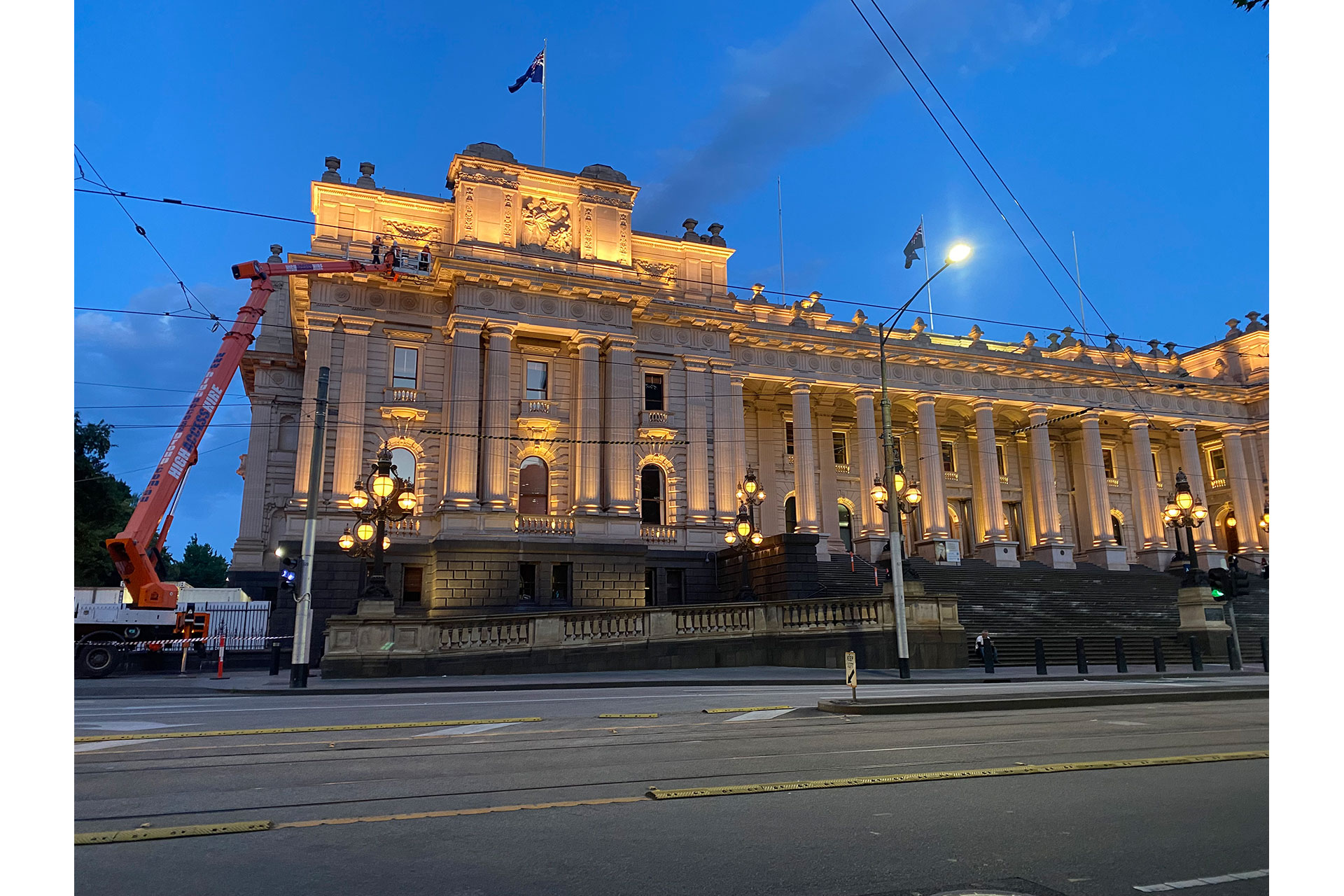
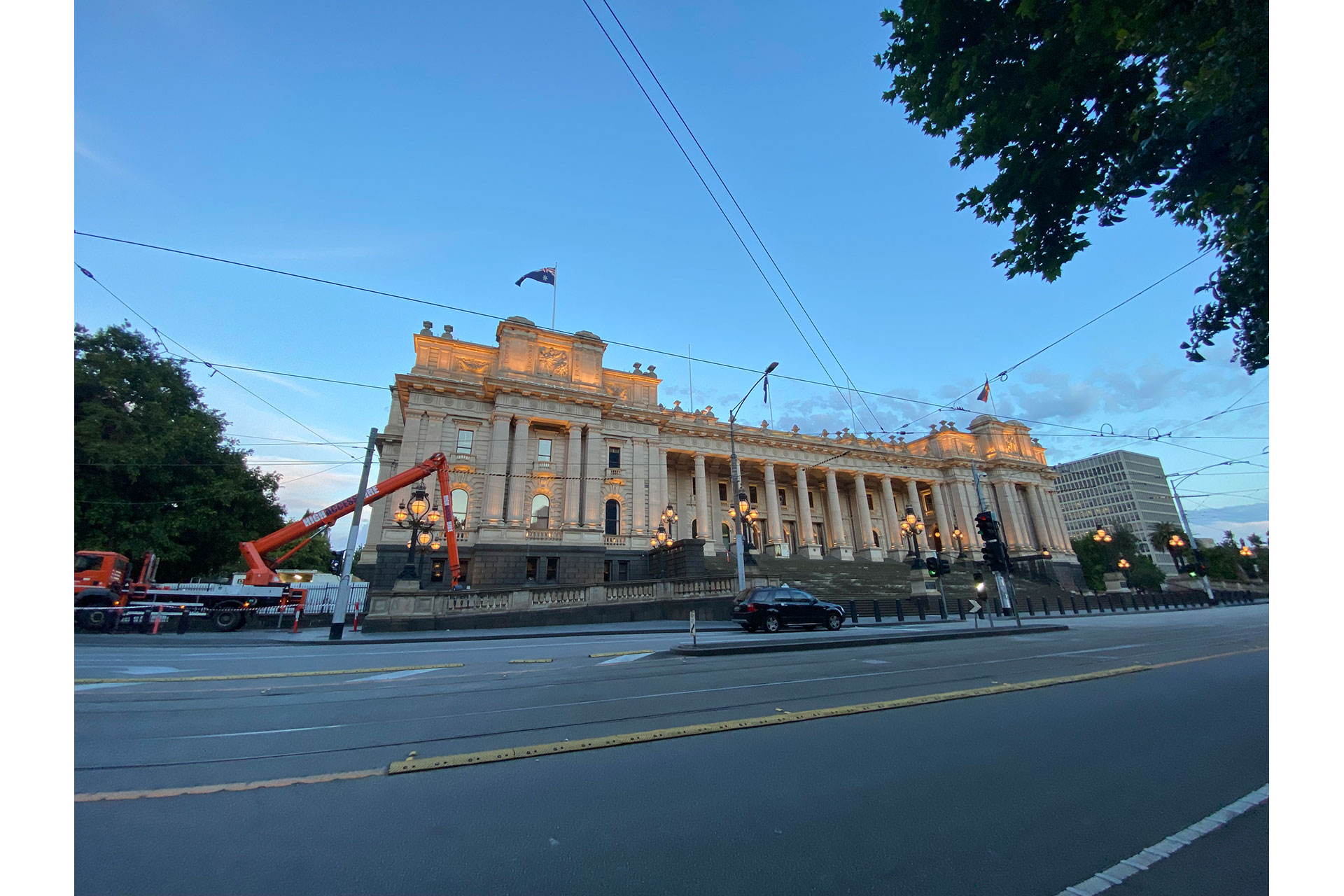
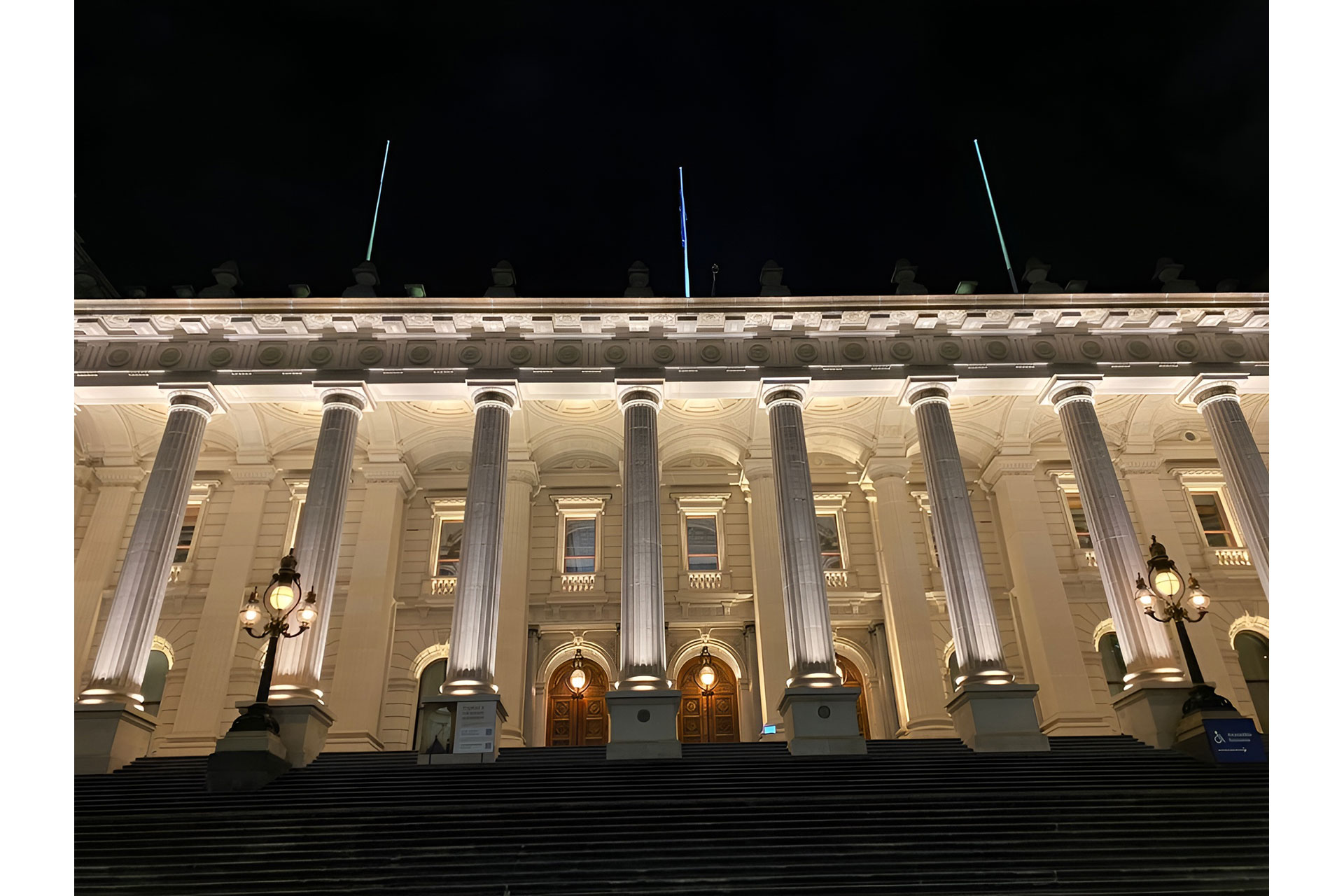
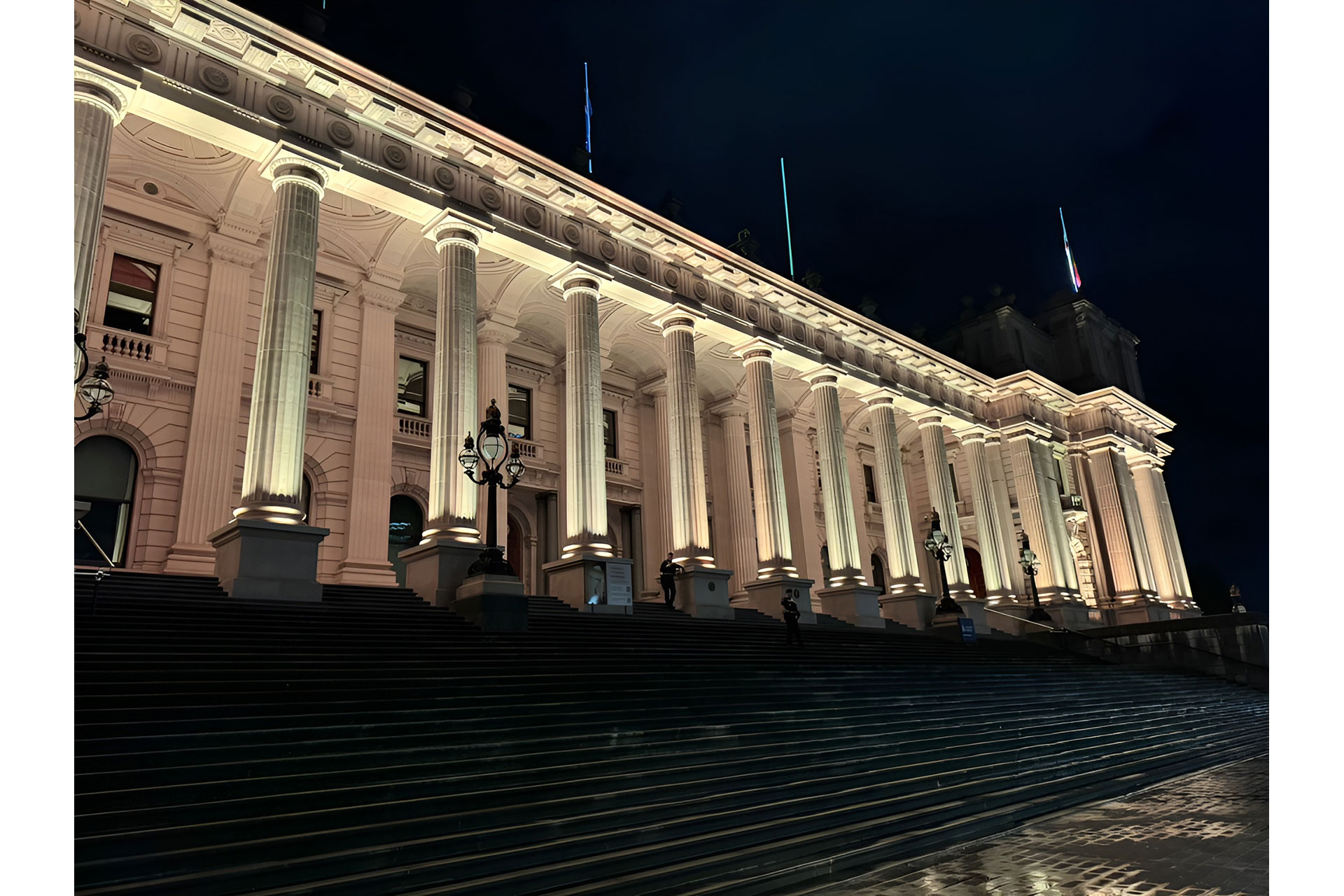
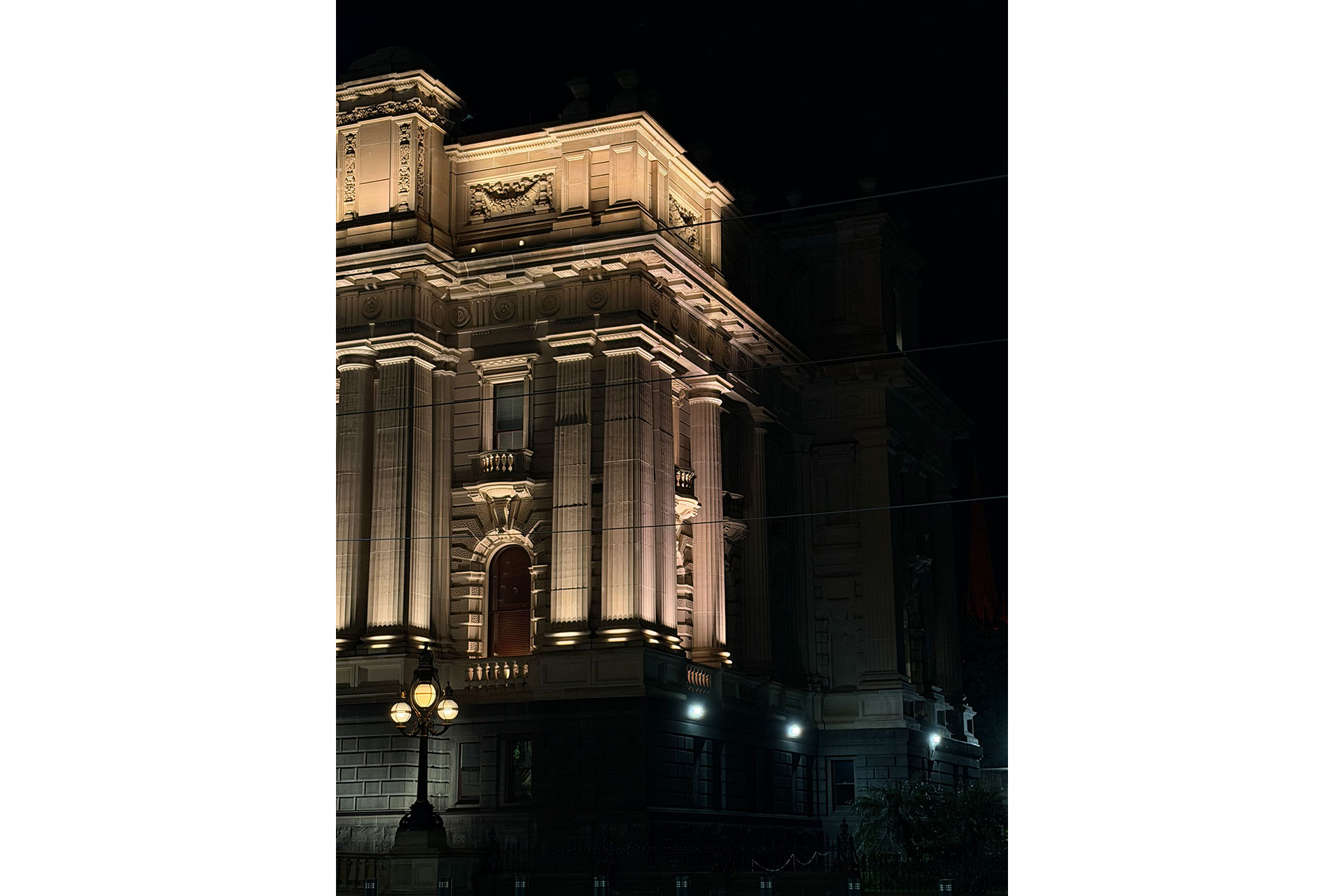
The Parliament of Victoria is one of Australia’s most significant civic buildings, its façade embodying democratic meaning, architectural authority, and a long-established presence within Melbourne’s nighttime identity. At the commencement of the project, the existing façade lighting had reached the end of its service life. The technology was outdated, maintenance demands were increasing, and the visual outcome no longer reflected the dignity or material quality of the building.
The brief did not seek reinvention. Instead, it called for careful refinement – elevating the Parliament’s presence within the city while respecting its heritage significance and addressing contemporary expectations for performance, safety, sustainability, and adaptability. This philosophy of restraint informed every design decision.
Operating within a heritage overlay imposed strict limitations on fixings, penetrations, and visible change. The lighting strategy therefore prioritised clarity, precision, and minimal intervention, allowing the architecture to remain the primary expression, with light acting as a supporting layer.
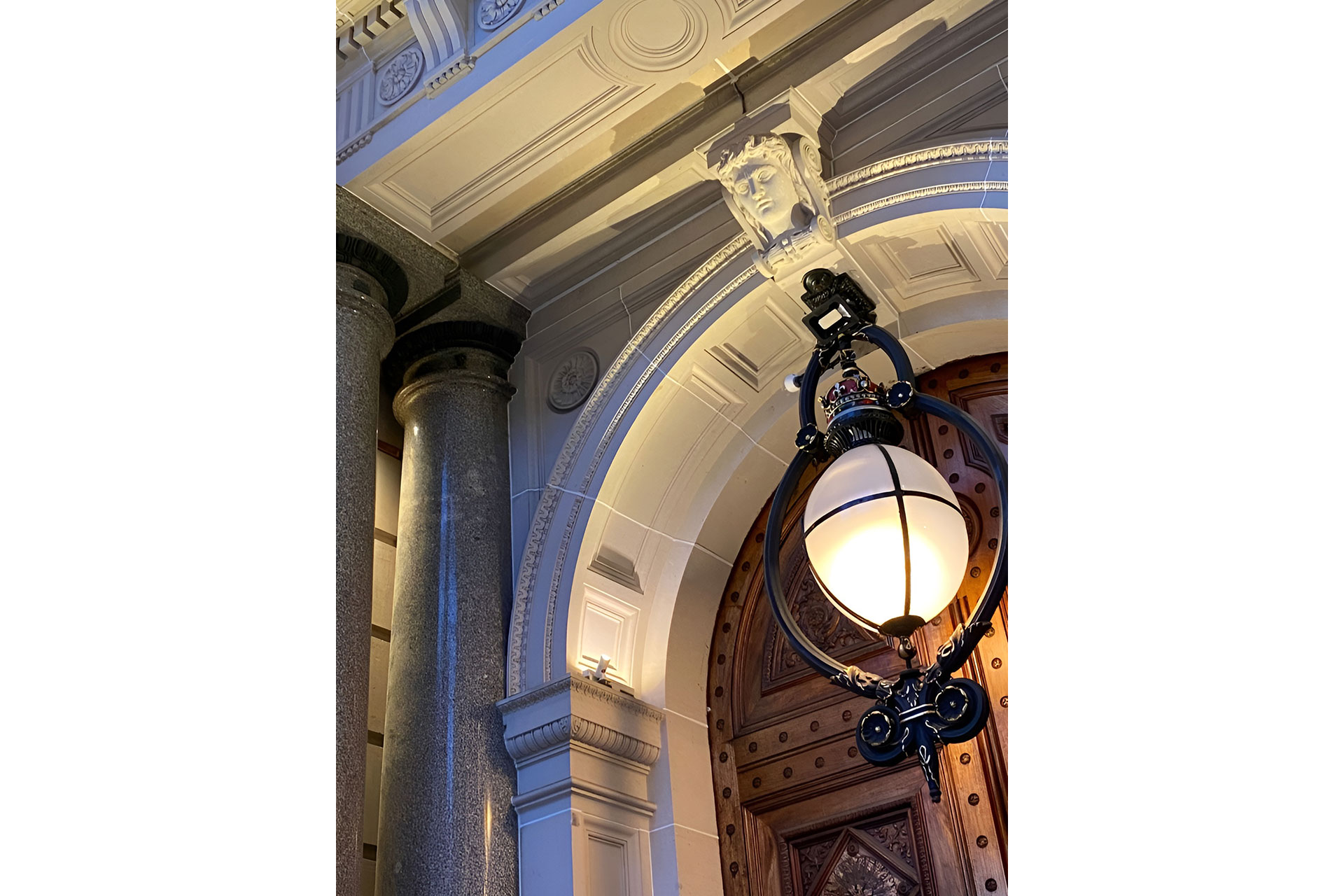
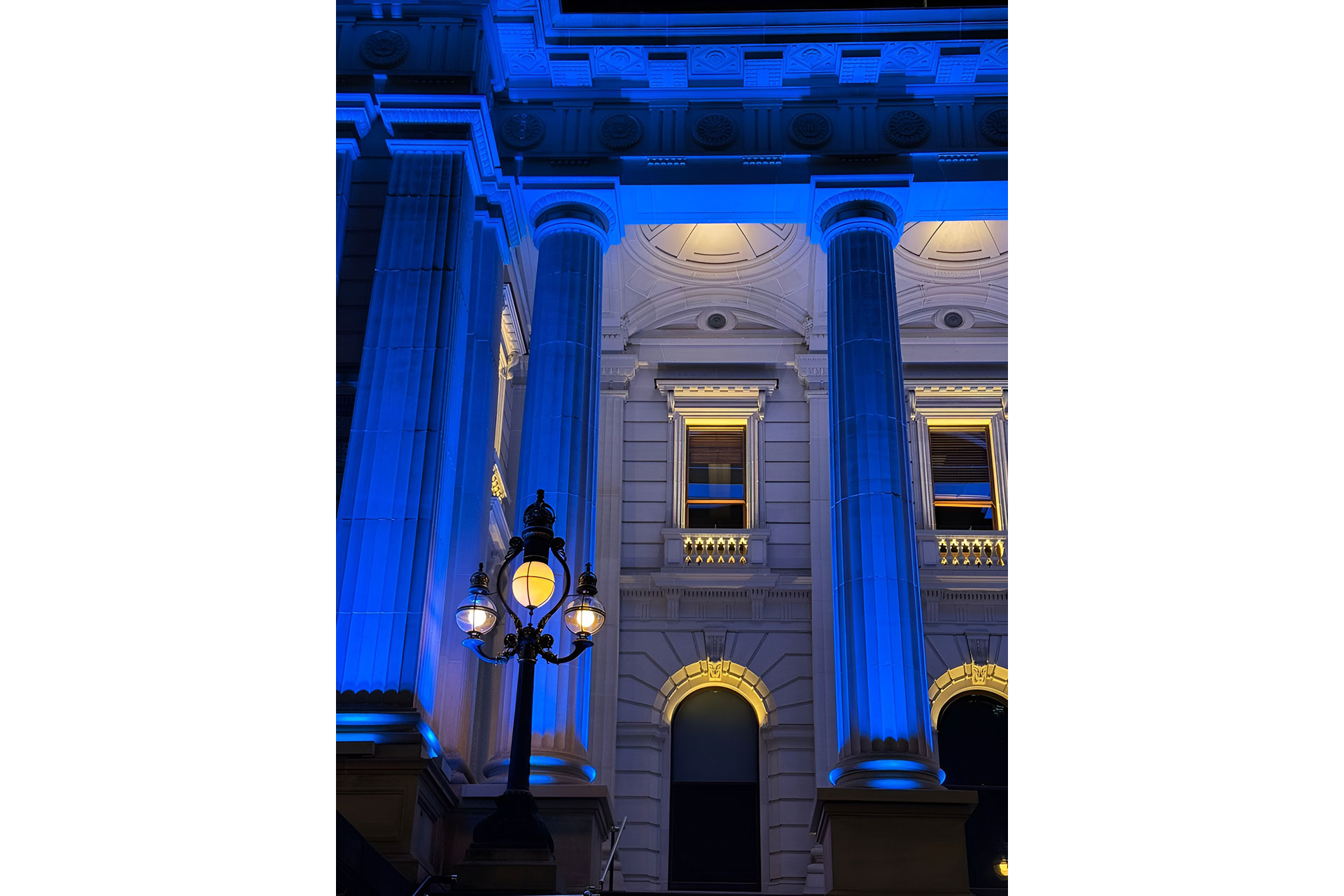
A central design decision was the conservation and upgrade of the existing heritage lanterns. These elements are fundamental to the Parliament’s civic identity and nighttime character. Rather than replacing them, the lanterns were sensitively retrofitted with custom high-performance LED globes designed to utilise original mounting positions and align centrally within the glass shrouds. This preserved their external appearance while significantly improving consistency, efficiency, and illumination quality.
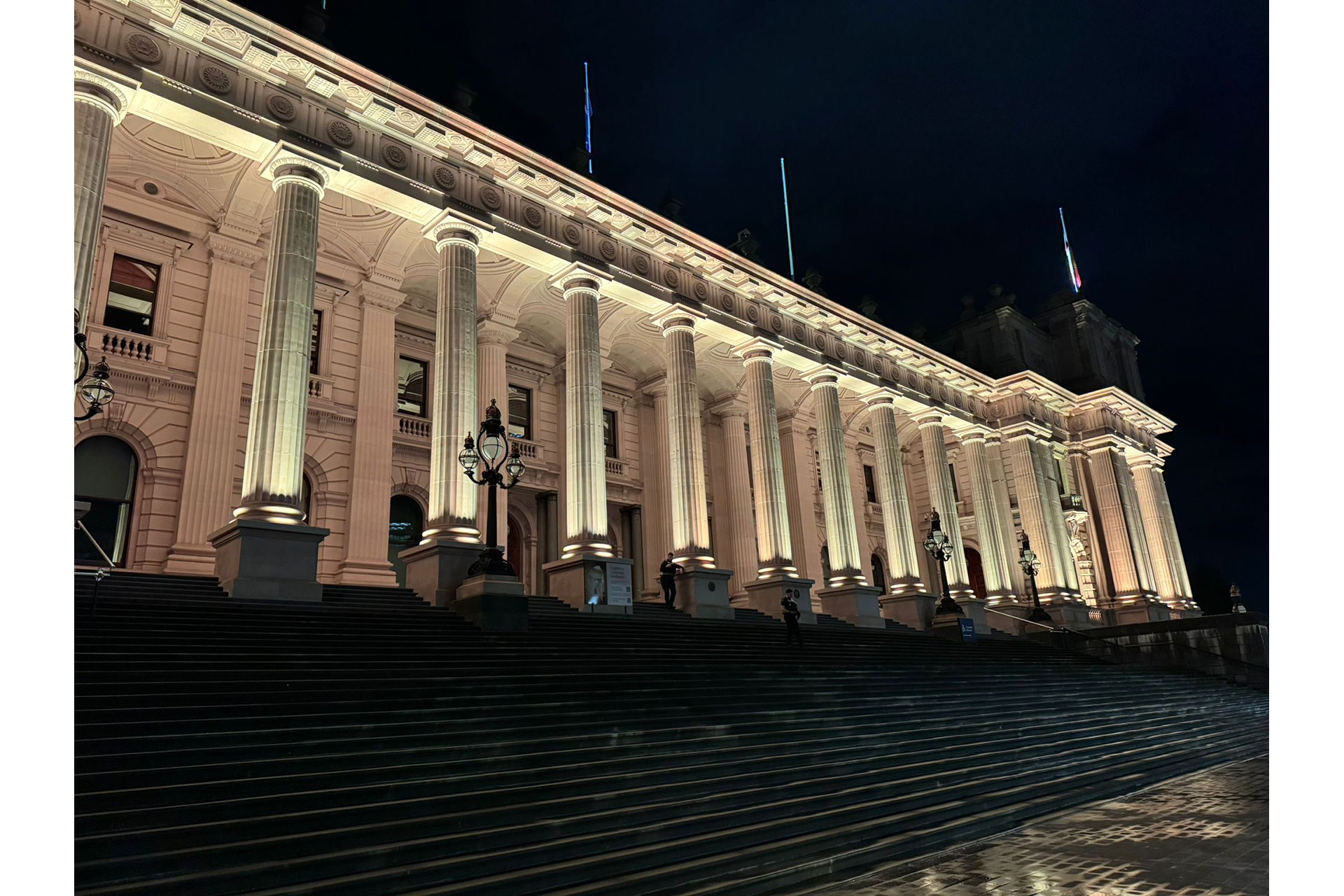
Material sensitivity guided the selection of colour temperature. Multiple on-site mock-ups were undertaken to assess how light interacted with the extensive sandstone façade. A warm 3000K source was selected, referencing historic light sources while accurately rendering the stone’s natural colour and texture without introducing a yellow or orange cast.
The lighting composition was developed as a layered and disciplined response, subtly reinforcing architectural hierarchy while avoiding over-illumination. Pathways, entrances, and transitional spaces were enhanced to improve safety, accessibility, and wayfinding, with functional lighting remaining visually recessive.
A restrained use of colour is available for moments of civic significance, secondary to the building’s everyday presentation in dignified white light. The completed scheme demonstrates how contemporary lighting can coexist with heritage architecture through discipline, precision, and respect, reinforcing the Parliament of Victoria as a timeless civic landmark.