

This project is the renovation of a traditional Japanese townhouse in Kyoto. The owner, deeply knowledgeable about Japanese culture, wished to preserve the inherent beauty of the machiya while achieving a level of comfort suited to contemporary living. The property consists of two buildings—the main house and a detached annex.
The design concept is “Light as Hospitality.” We sought to evoke the experience of arriving at a traditional Japanese inn: being welcomed by the okami (hostess), whose attentive presence and meticulous care create a profound sense of comfort. In Japanese culture, this feeling—being quietly and gracefully cared for—is at the heart of true hospitality (omotenashi).
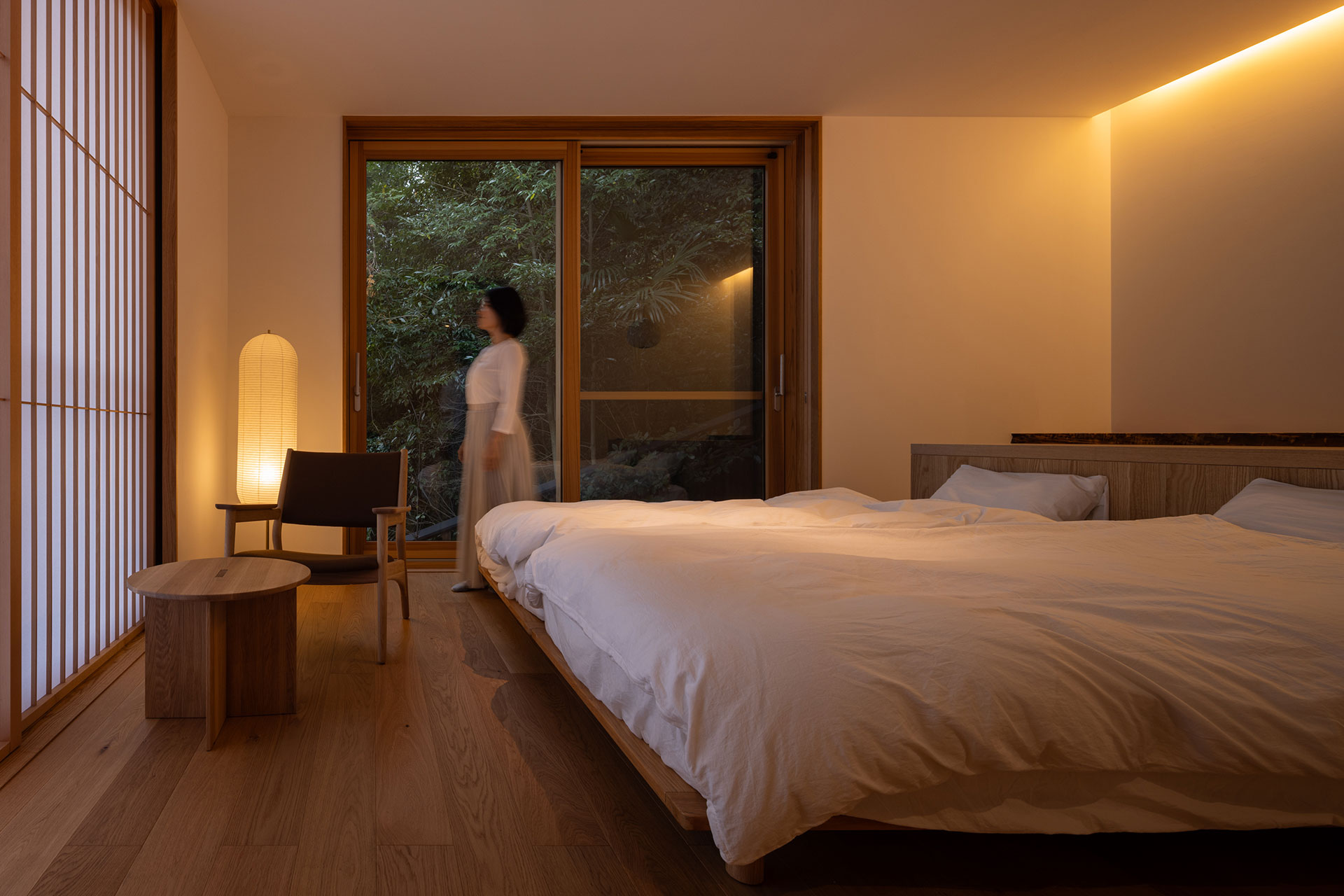
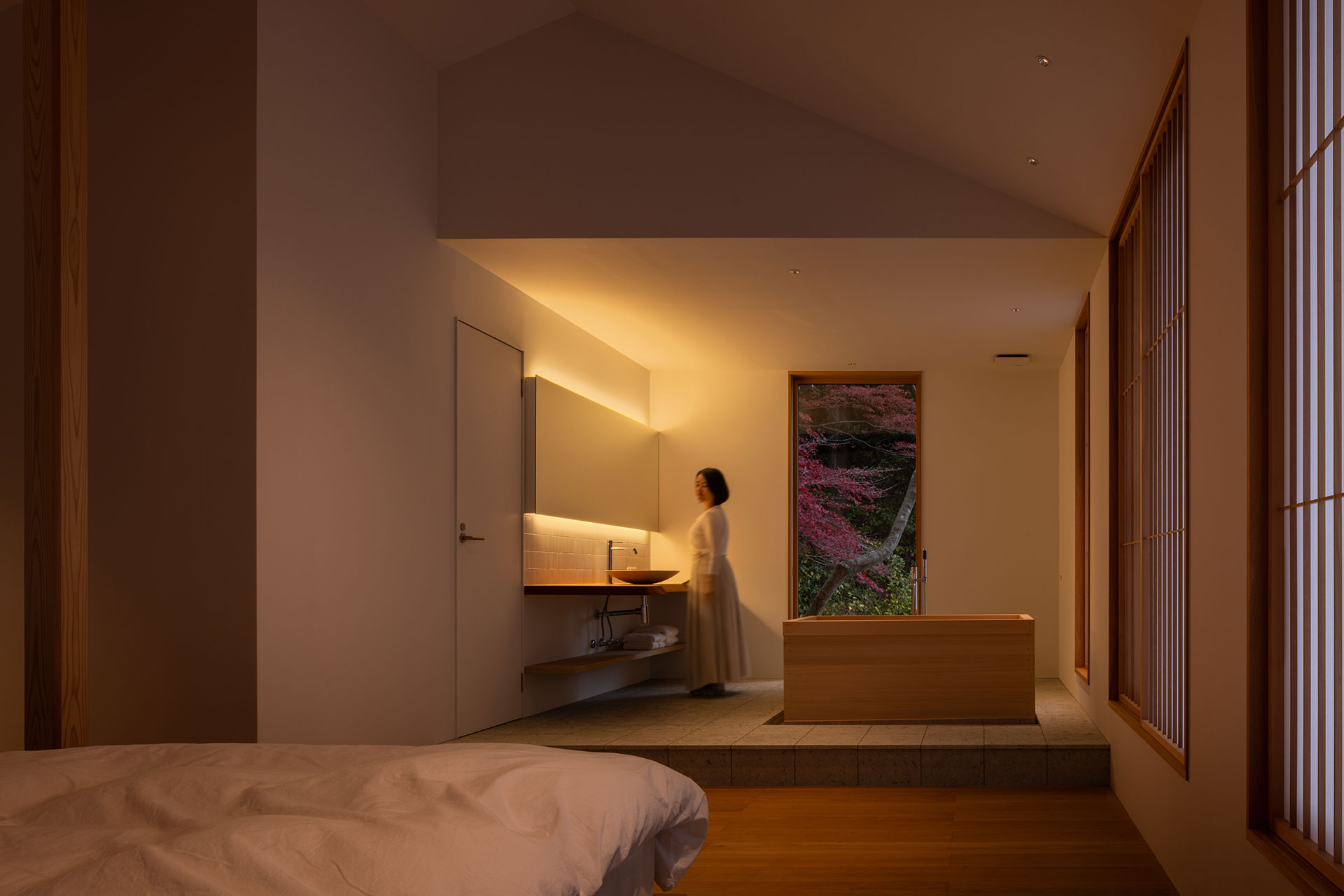
The okami’s form of hospitality is defined by anticipating a guest’s needs before they are spoken, and by acting with subtle discretion. To express this spirit through lighting, we adopted the idea of “switchless lighting.” Sensing human presence, the light gently illuminates the space: the moment one returns home, enters the washroom, or opens a closet. Every light softly fades in, as if whispering welcome home or you’ve had a long day. By removing the need to press a switch, light itself becomes a tender gesture of care.
To evoke the softness characteristic of Japanese light, we refined not only how the light turns on, but also how it disappears. Resistors were integrated into the ends of the fixtures, allowing the illumination to fade out gracefully. Fixtures were intentionally offset from the edges of architectural details, ensuring that only a gentle gradation appears on the illuminated wall, without any harsh cutoff lines on the opposite surface. Every aspect—the onset, disappearance, diffusion, and edge conditions of the light—was carefully controlled to eliminate visual noise. We believe that such thorough attention embodies the essence of Japanese hospitality.
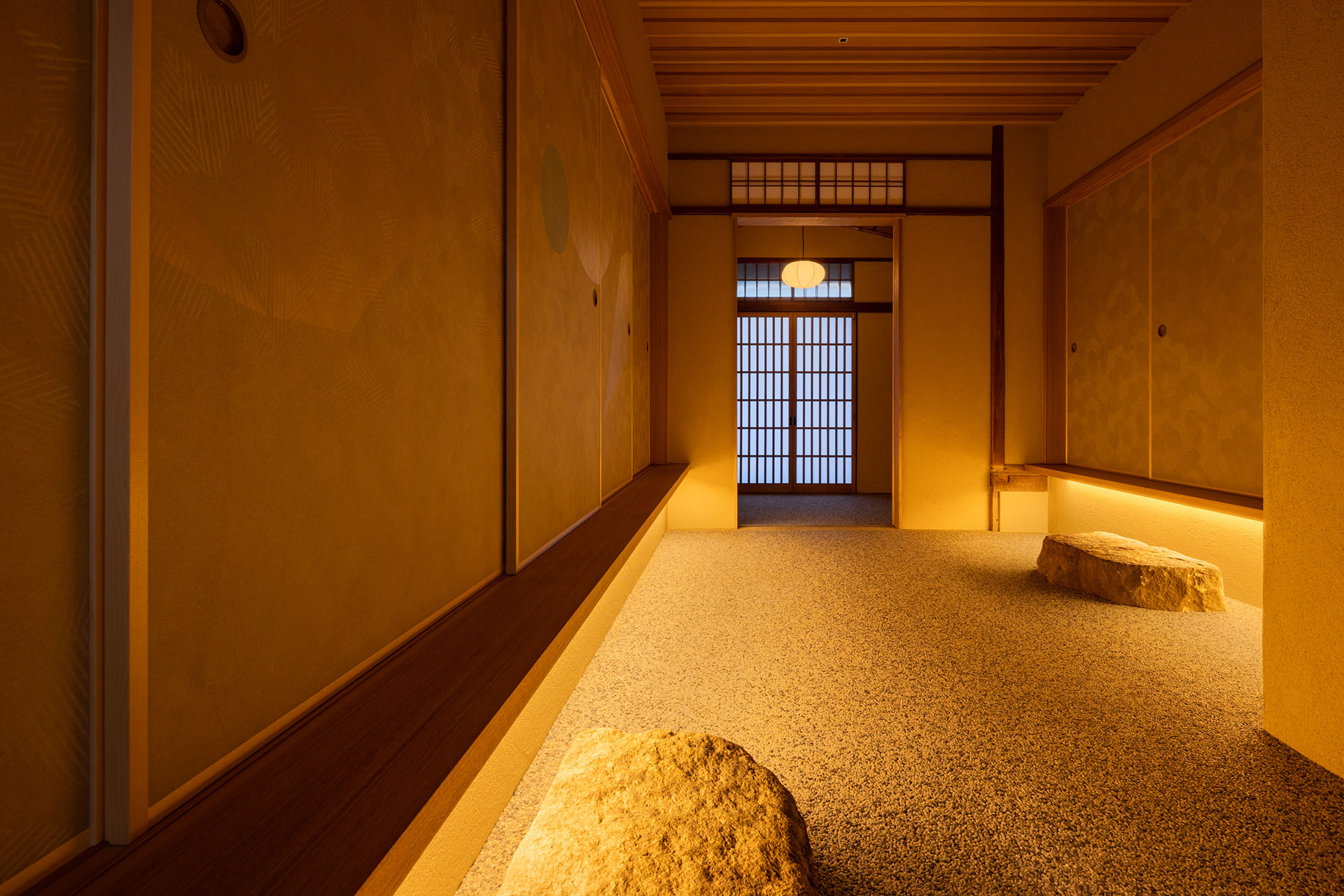
Entrance & Earthen Corridor – Inspired by the traditional act of sprinkling water to welcome guests, the lighting reenacts a “lighted uchimizu.” A slow fade-in upon returning home creates the feeling of being personally greeted.
Hall – The existing historical light fixtures were redesigned and preserved to maintain the heritage of the building.
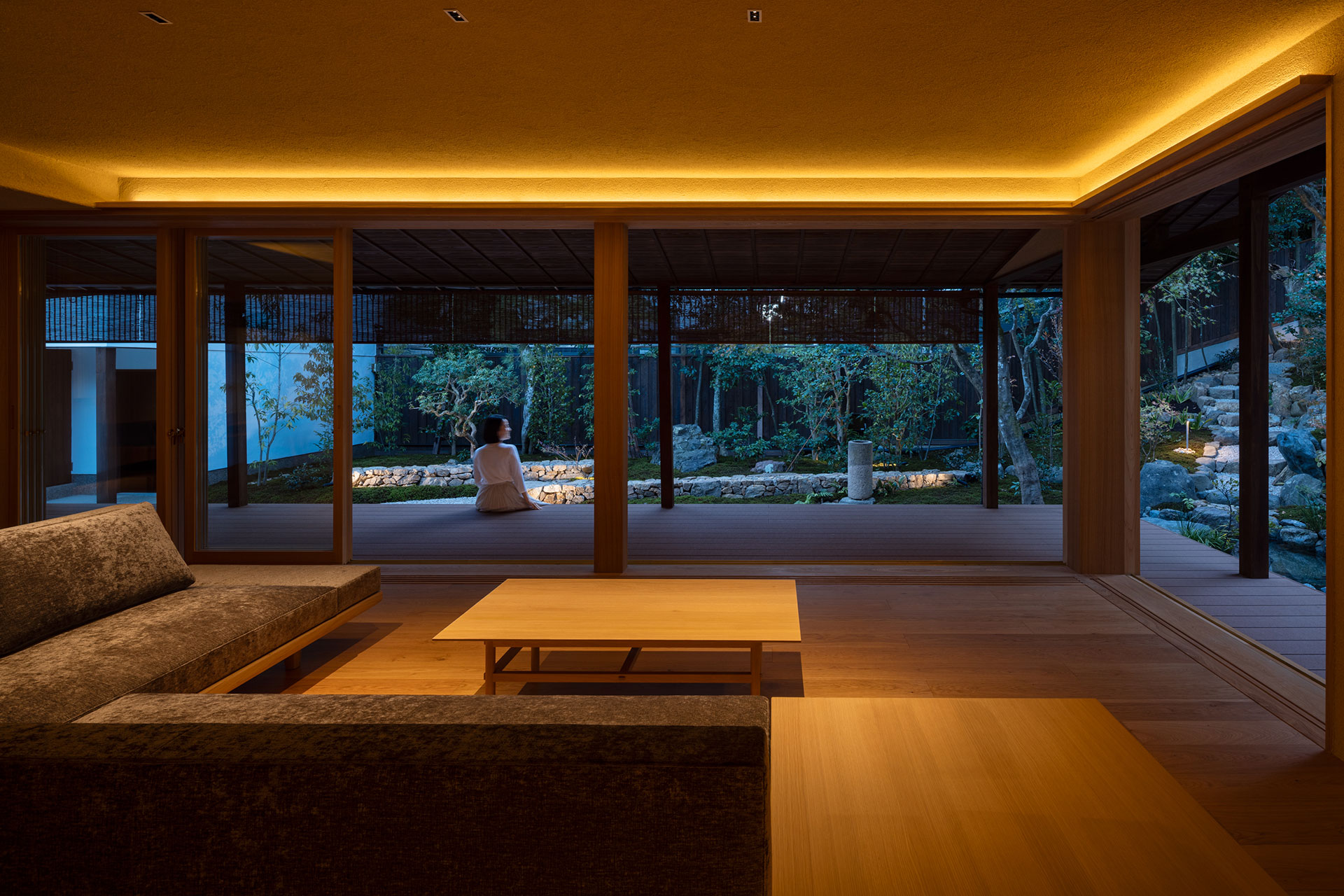
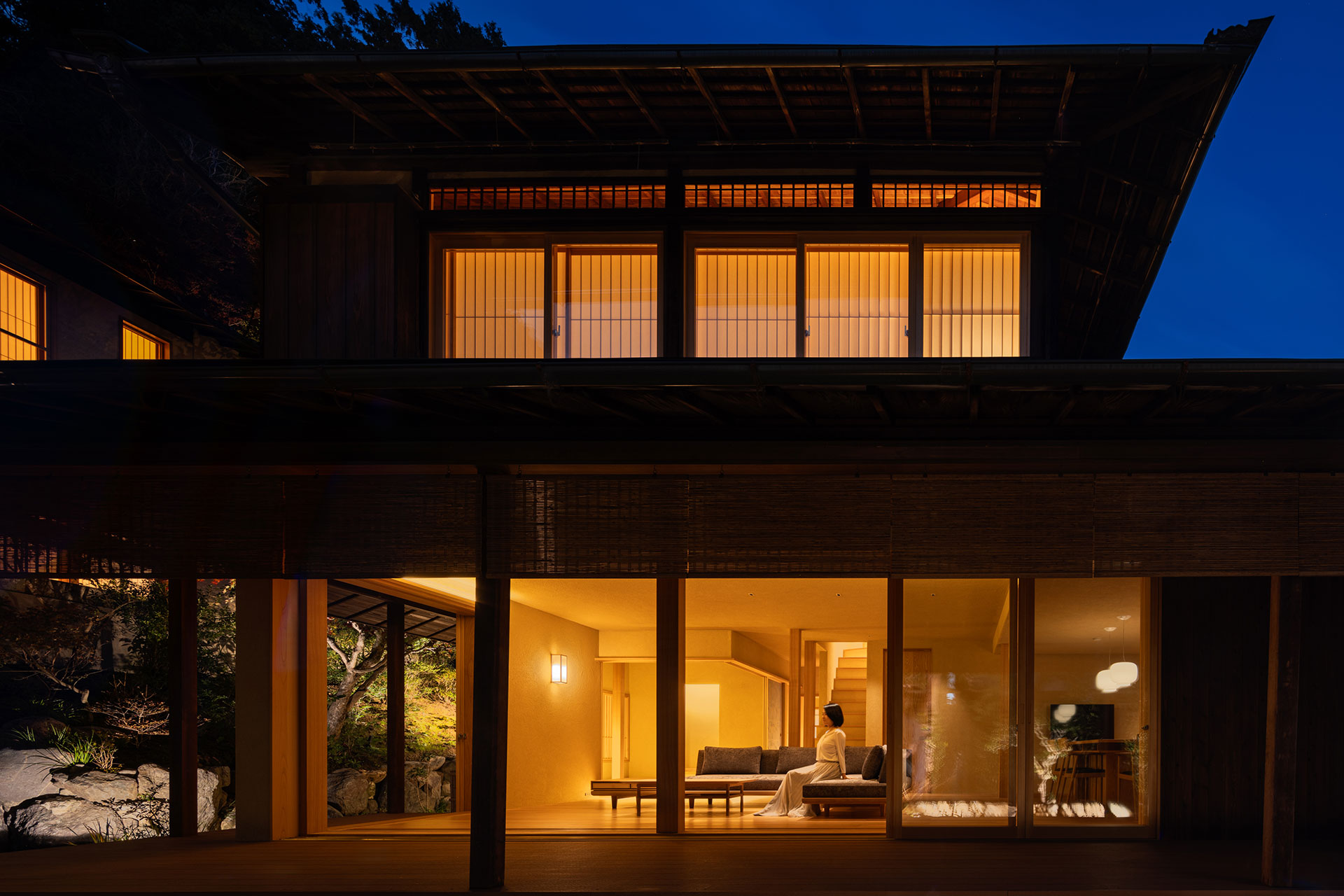
Living / Dining / Kitchen – When the shoji screens are opened, the space extends seamlessly to the garden. Key landscape elements such as stones and a waterfall are highlighted to visually expand the spatial boundary. Though no scene controller is installed, fine-tuned dimming is possible.
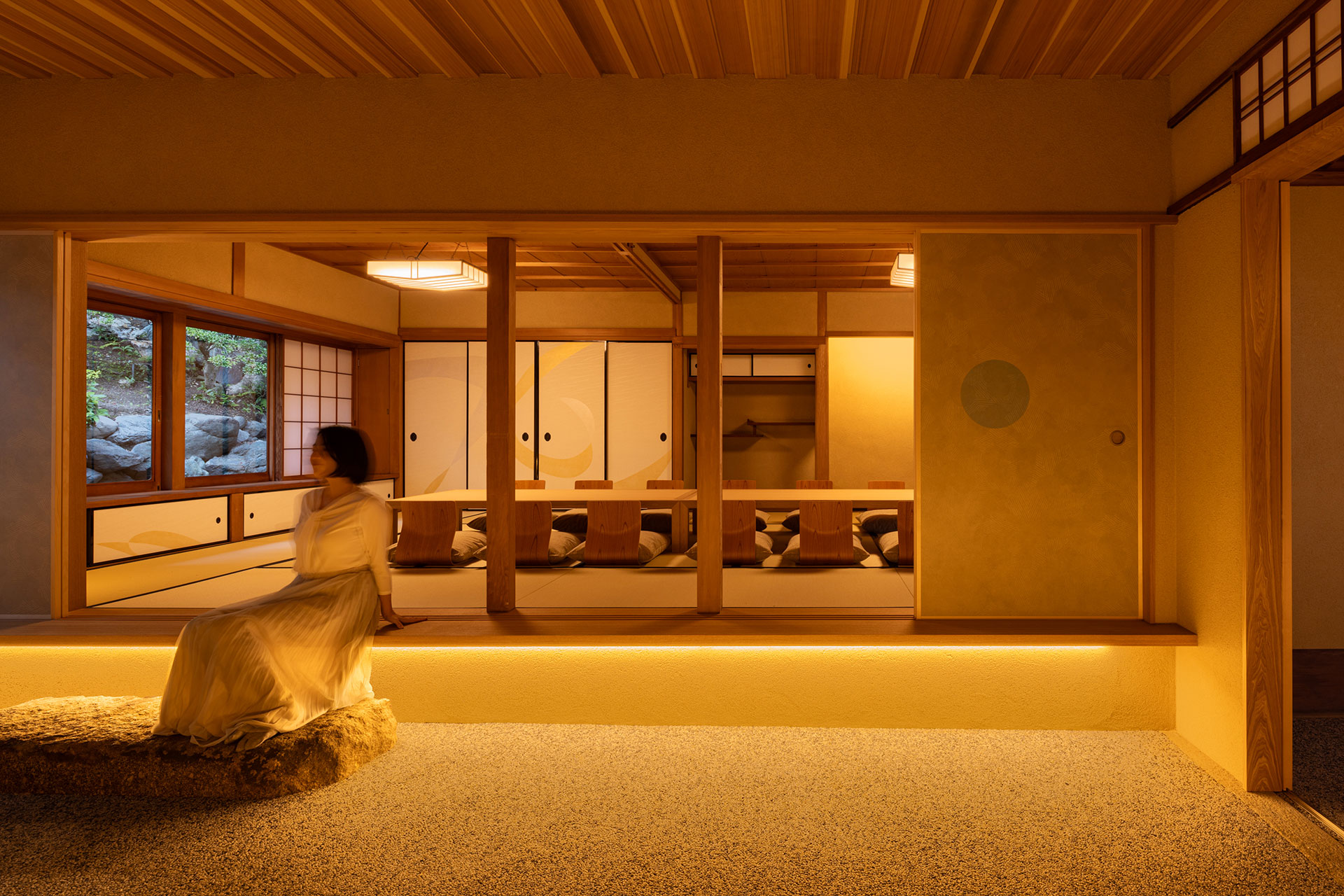
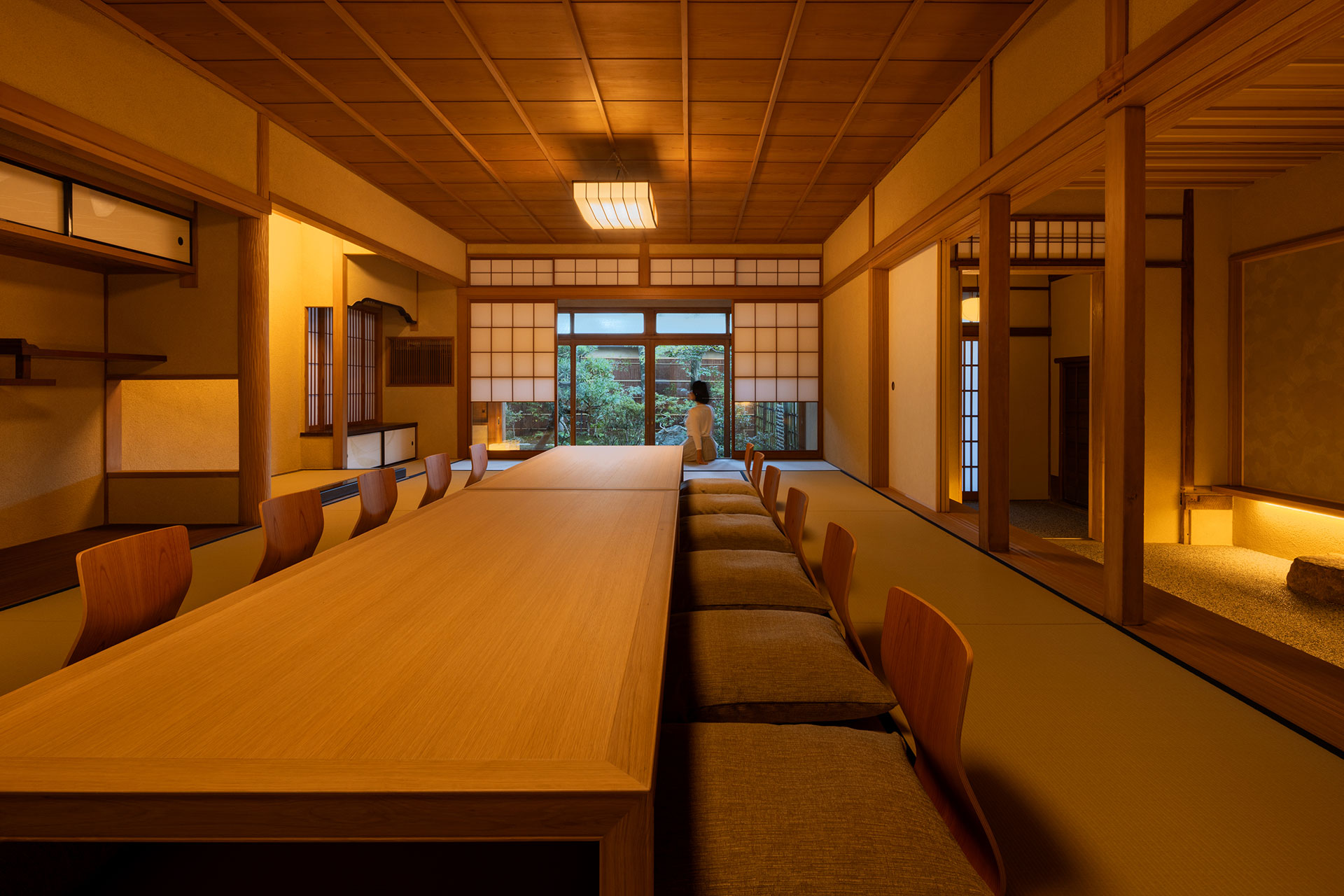
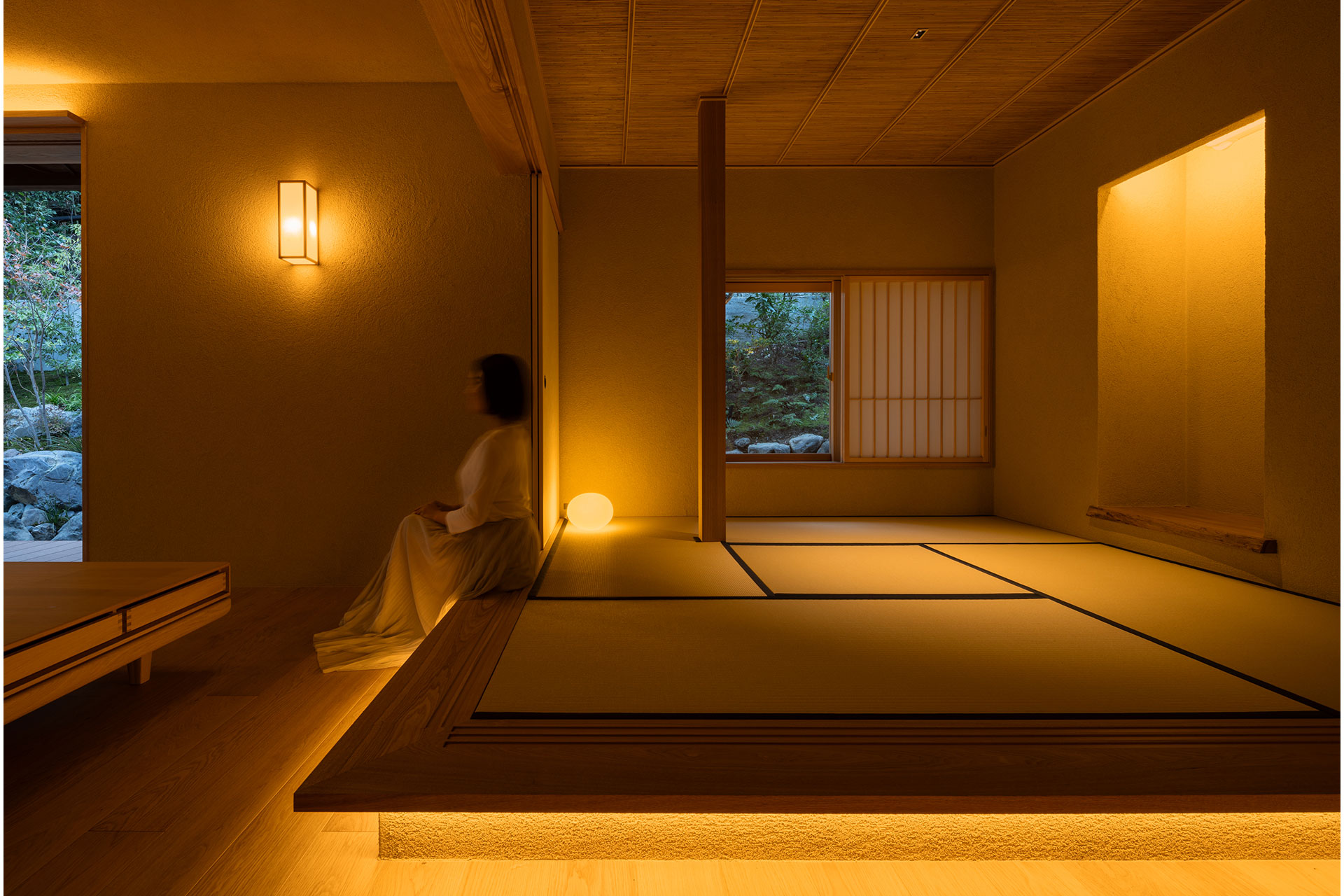
Japanese Room – Integrated step lighting emphasizes the dignity of the tatami space while providing soft illumination toward the living area.
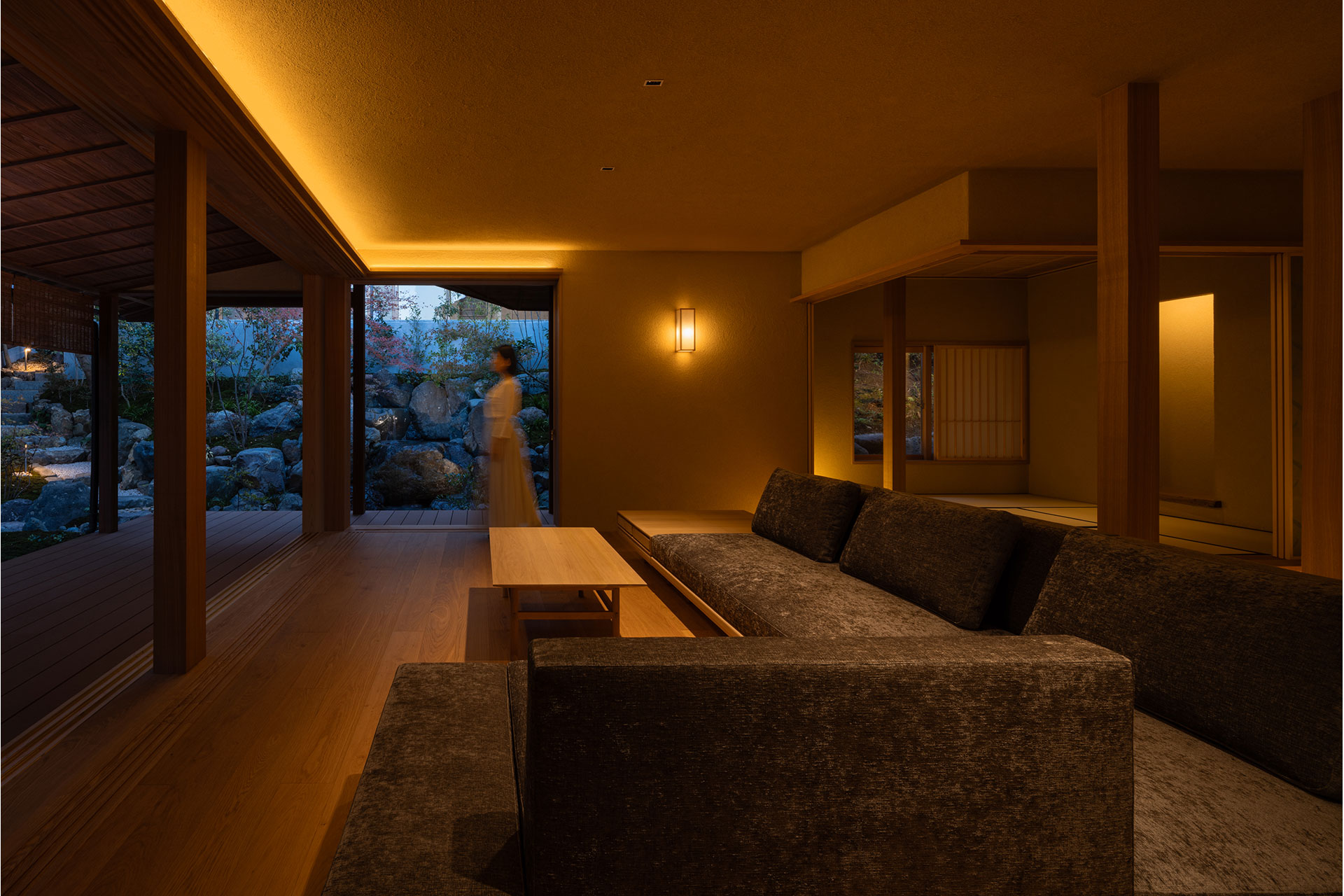
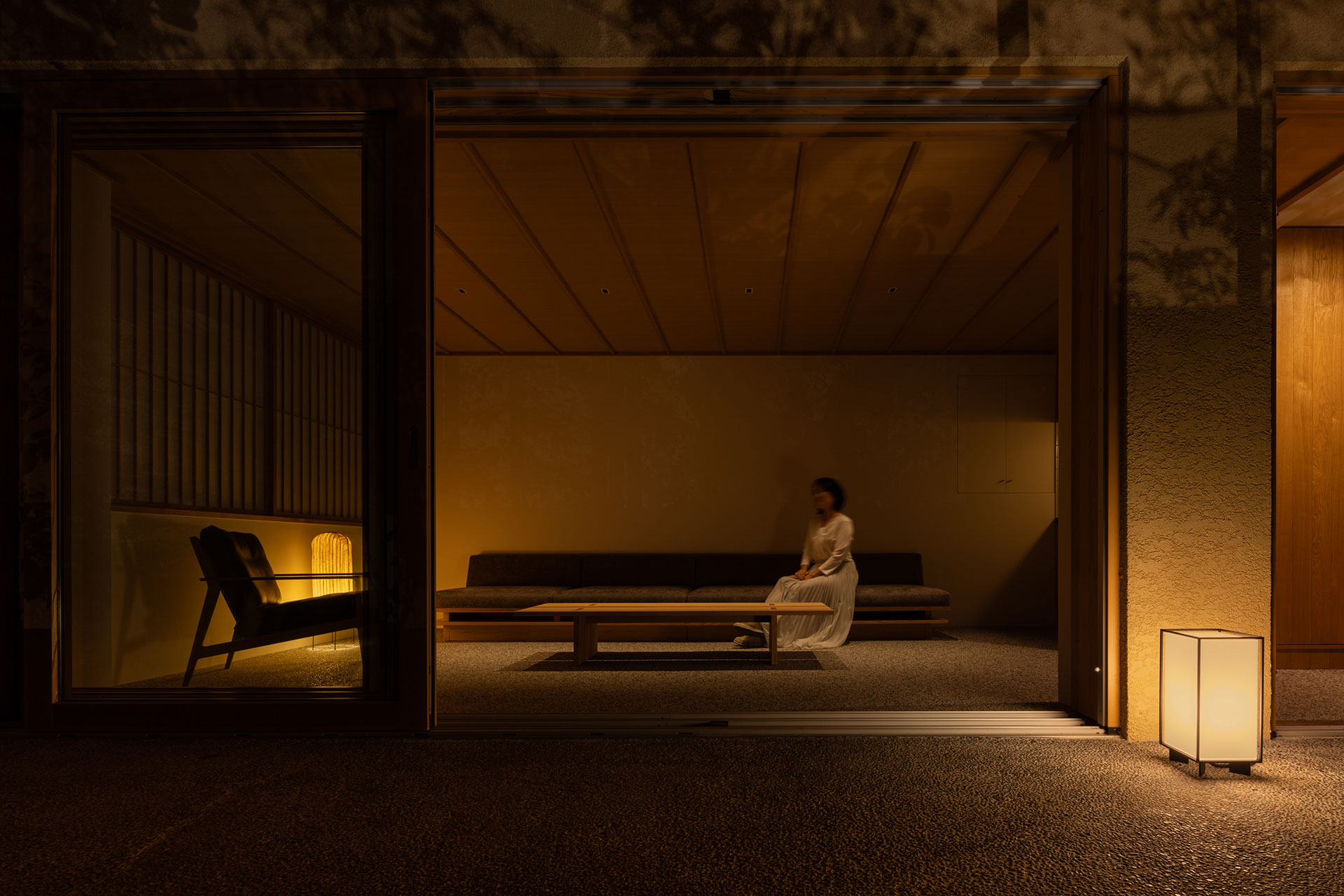
Annex Lounge – With large windows overlooking the garden and main house, lighting was kept low and without rear illumination to avoid reflections and maintain visual clarity.
Main Bathroom – The window frames a maple tree in the garden, allowing its foliage to be appreciated from the bathtub.
Facade – The arrangement and distribution of light were carefully studied so that no scalloping appears when the shoji screens are closed. The illuminated garden creates a calm backdrop, visually connecting the main house and the annex.