

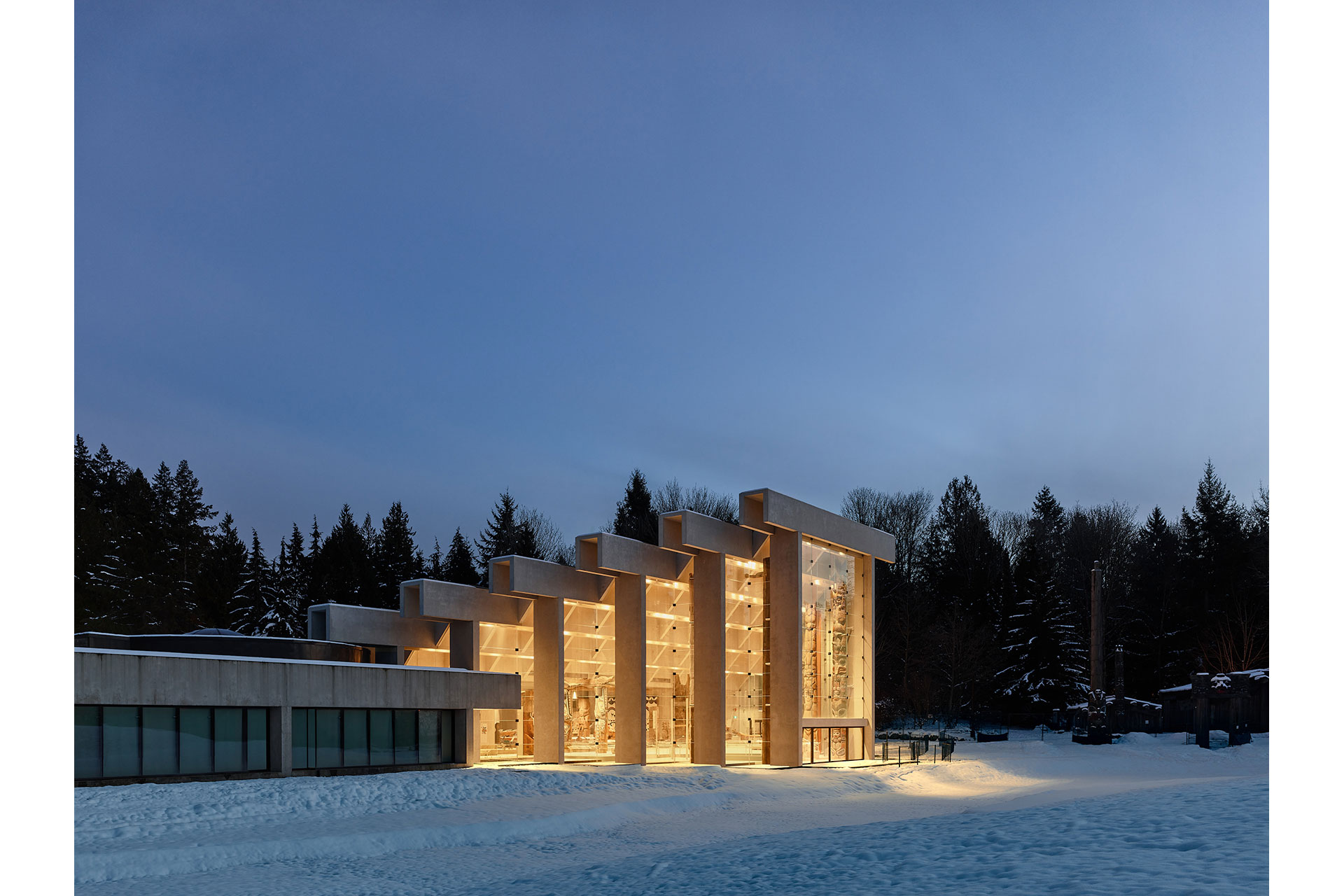
Updating the interior lighting design of one of Western Canada’s most renowned museums was no small task. It was, however, imperative. The building required seismic upgrades with related electrical and lighting improvements to accompany the new concrete structure.
Our team worked tirelessly to ensure each displayed artwork received illumination that honored its past, restored its present, and preserved its future.
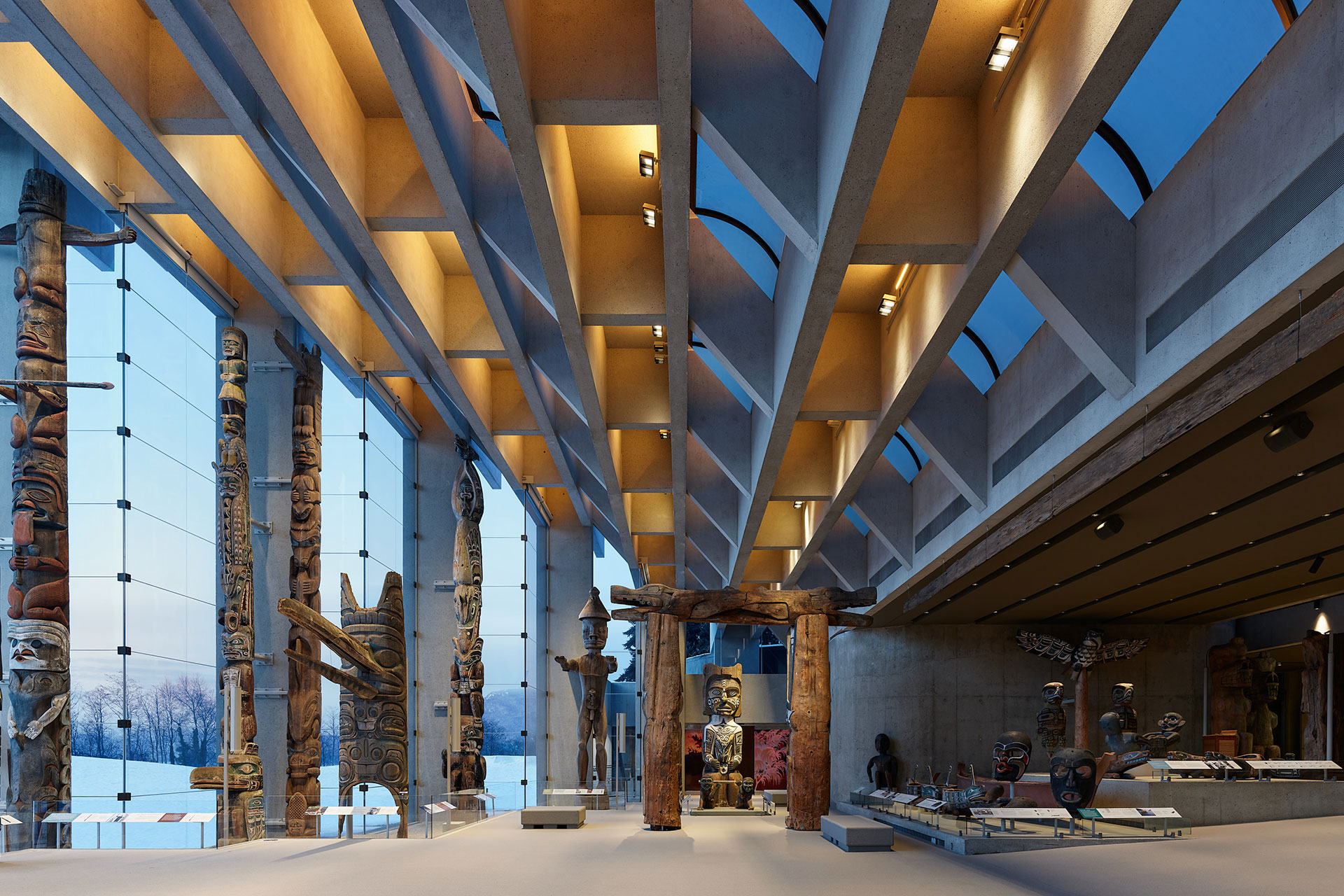
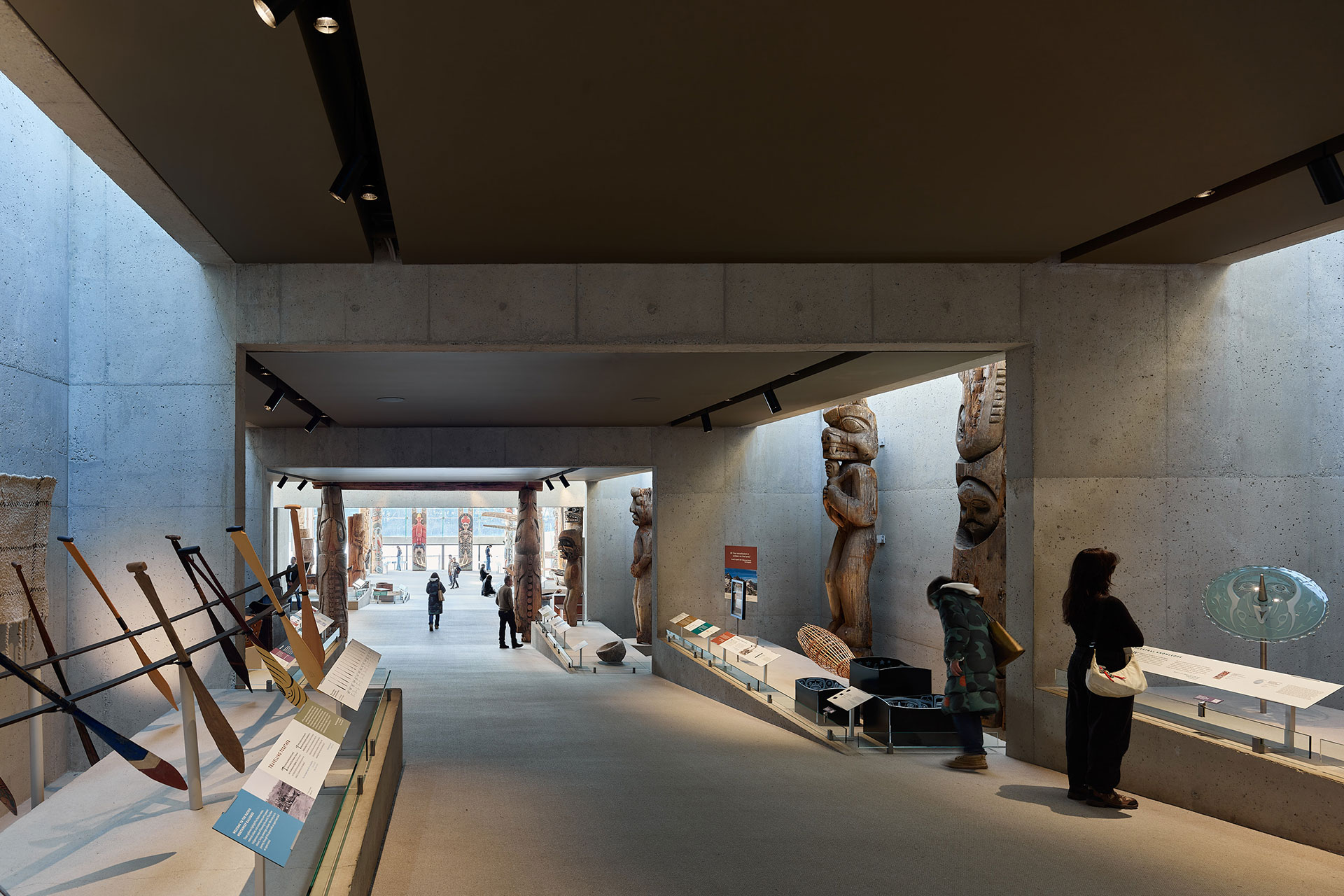
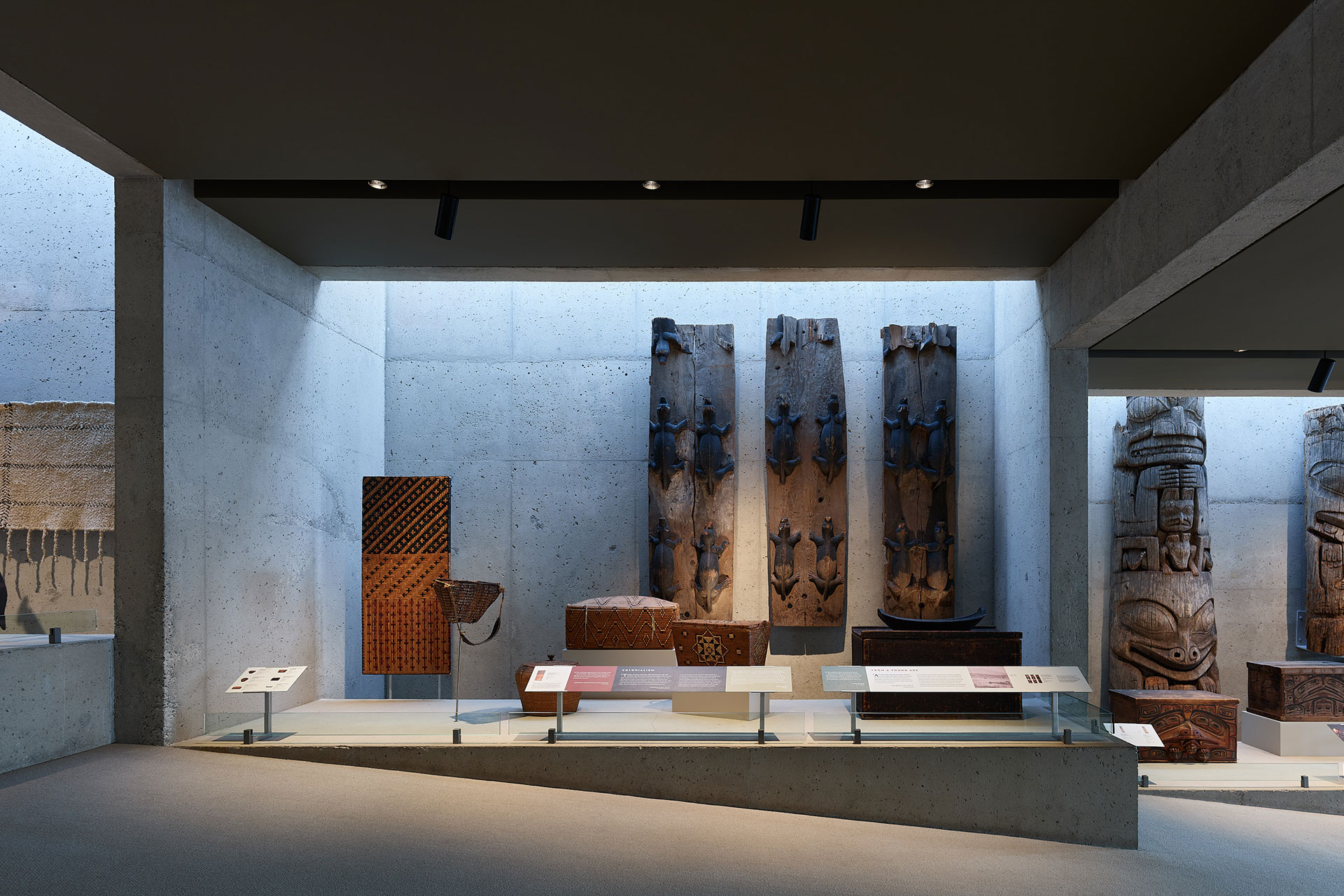
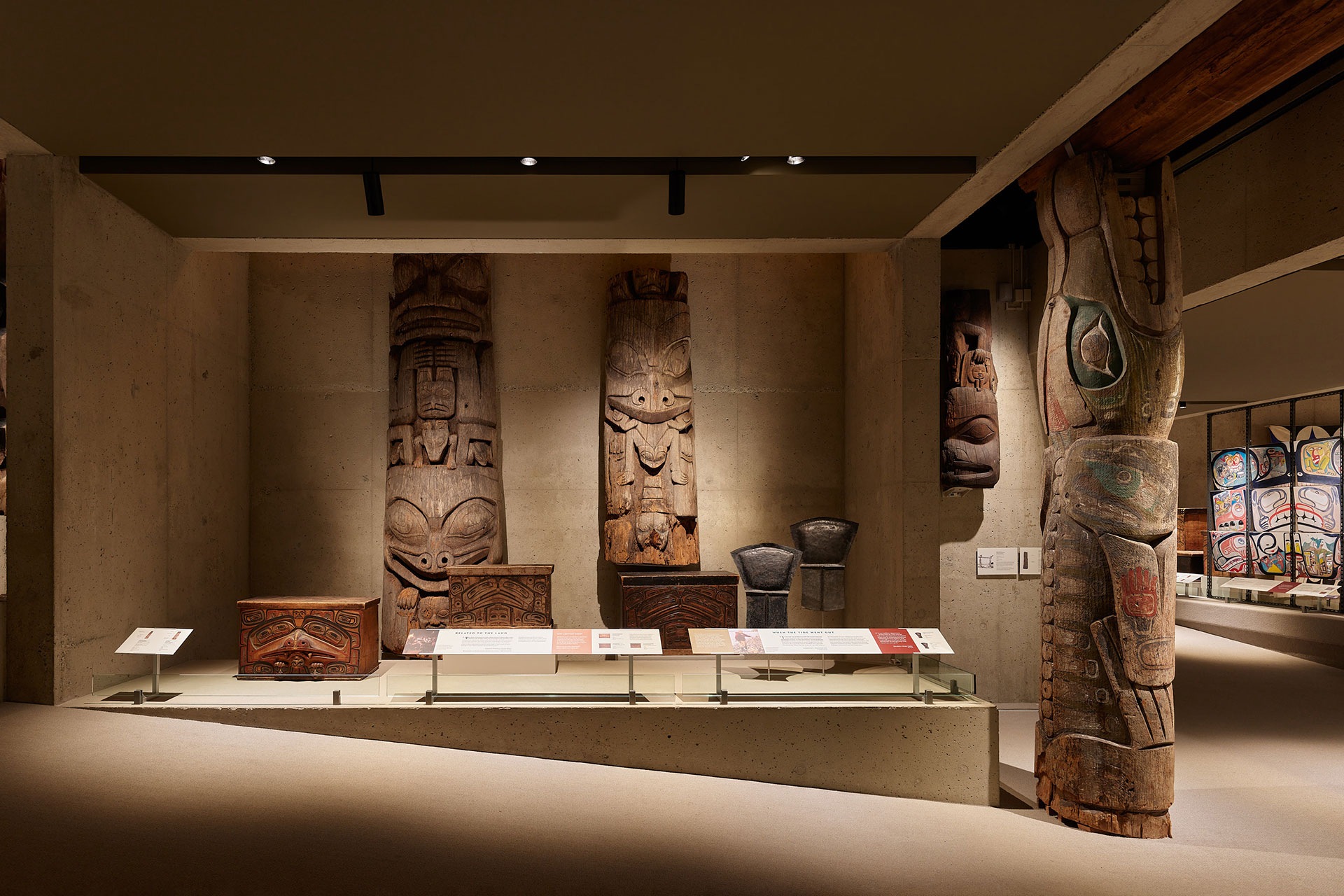
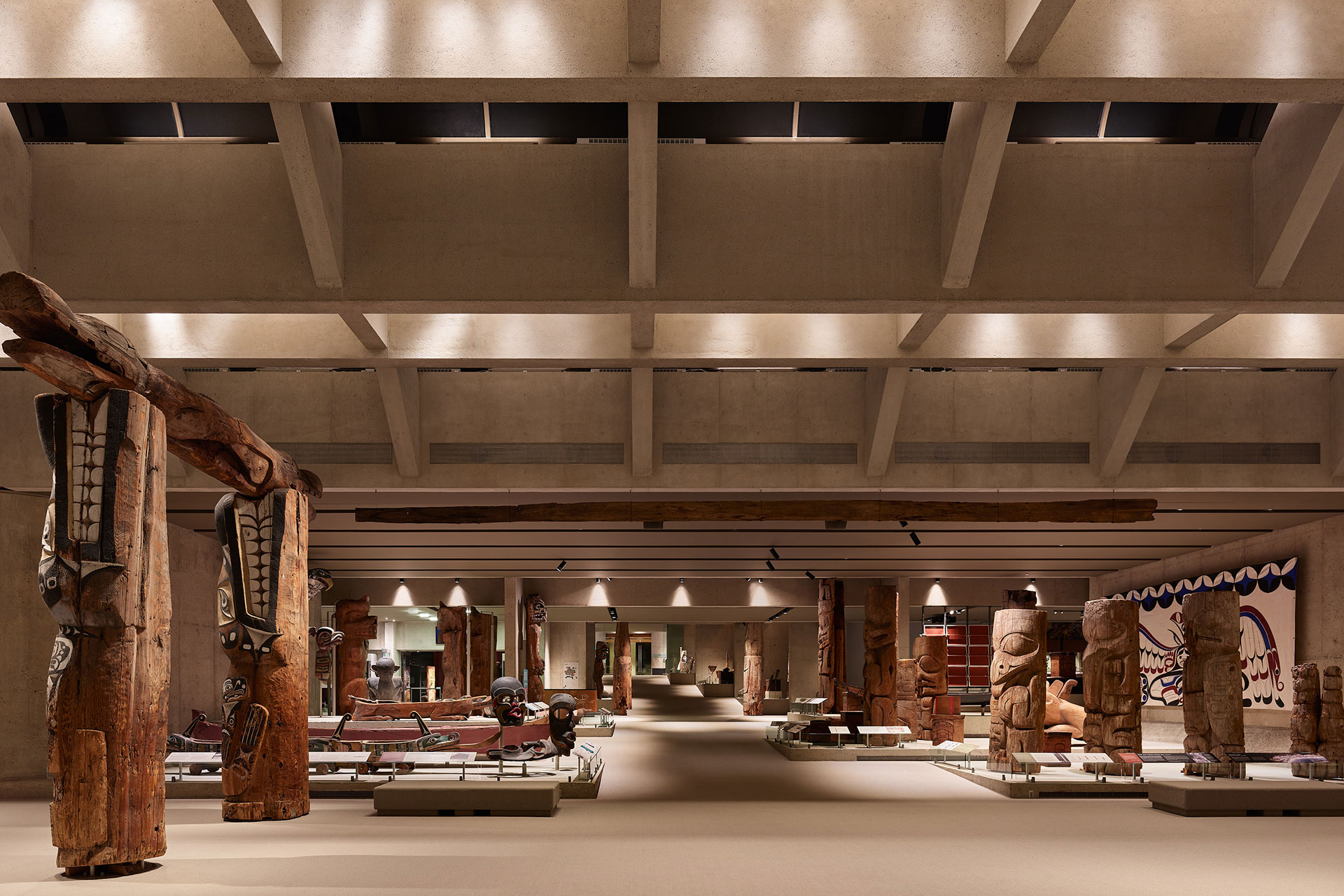
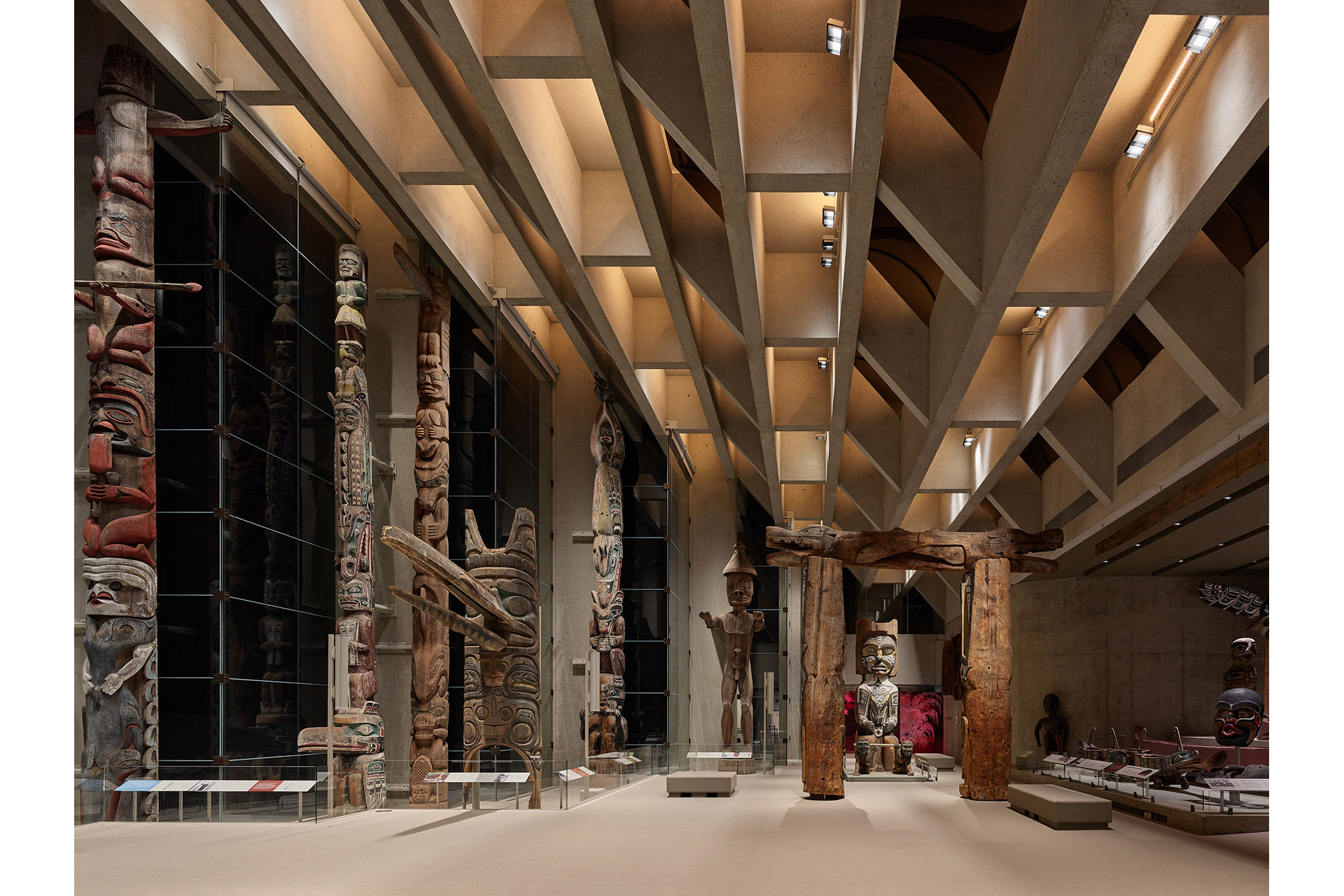
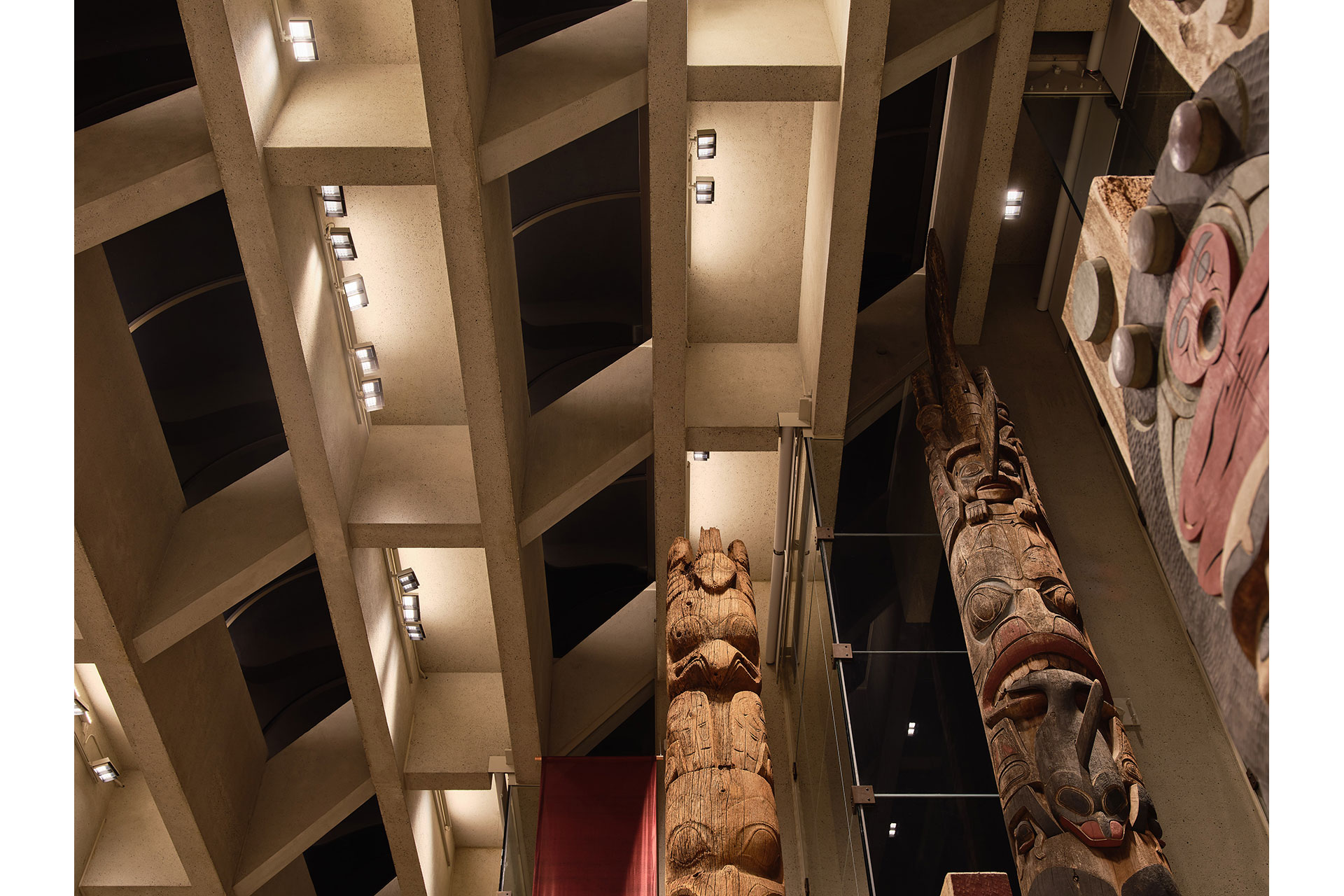
Throughout the Great Hall, 3000 Kelvin track heads with a variety of beam distributions were calibrated specifically for each illuminated artifact along with individual Bluetooth dimming controls granting staff additional functionality.
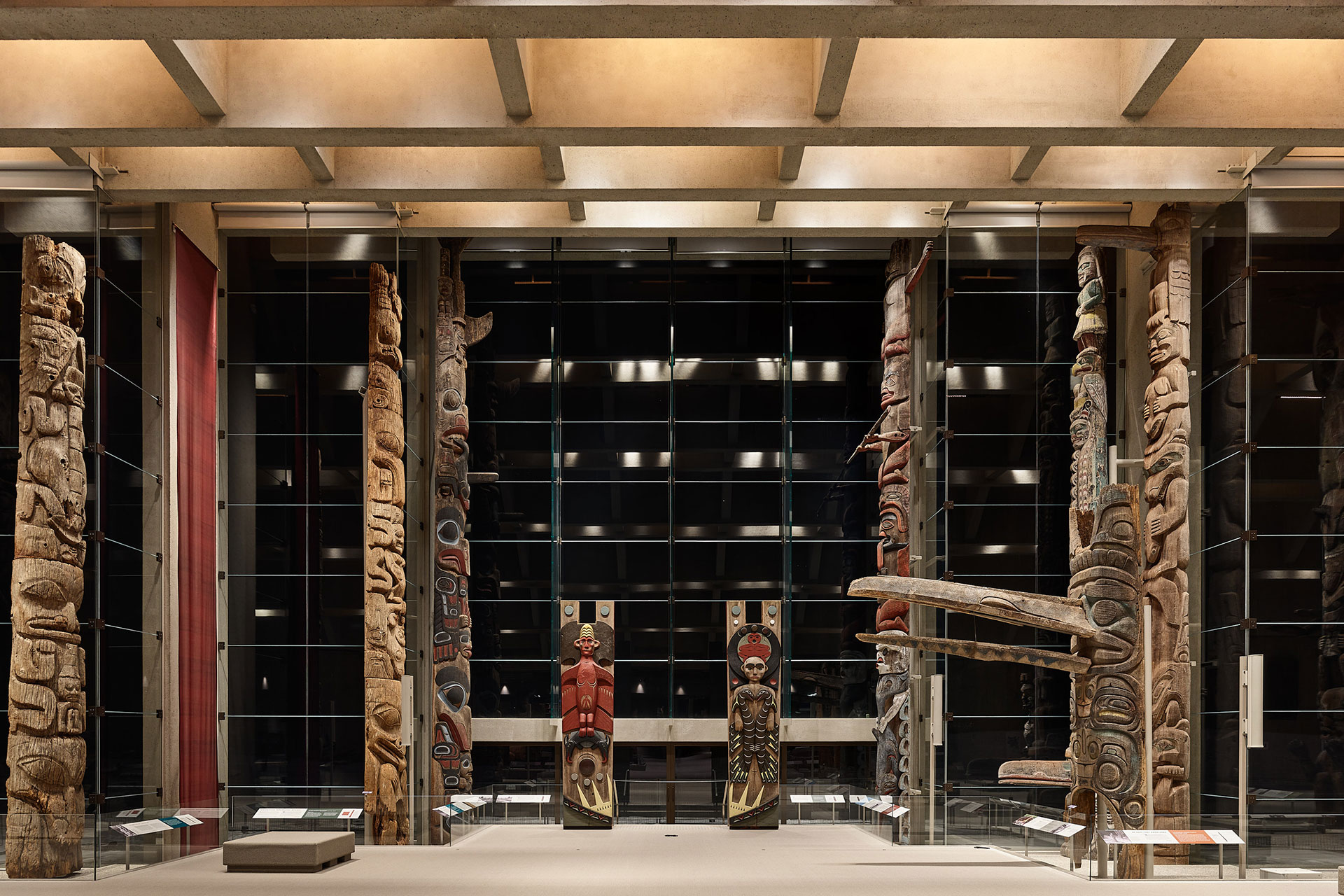
A particularly difficult challenge was modeling the lighting: all track heads in the museum’s Great Hall were installed prior to staging the art objects, using lighting design software to achieve the required archival light level range. Two documents were submitted: lighting calculations for each object to achieve 150-300lux on art wood finishes, and an aiming document for the electrical contractor. The aiming document listed object-specific spot, flood, wide flood, oval lenses and dimming percent values for each track head.
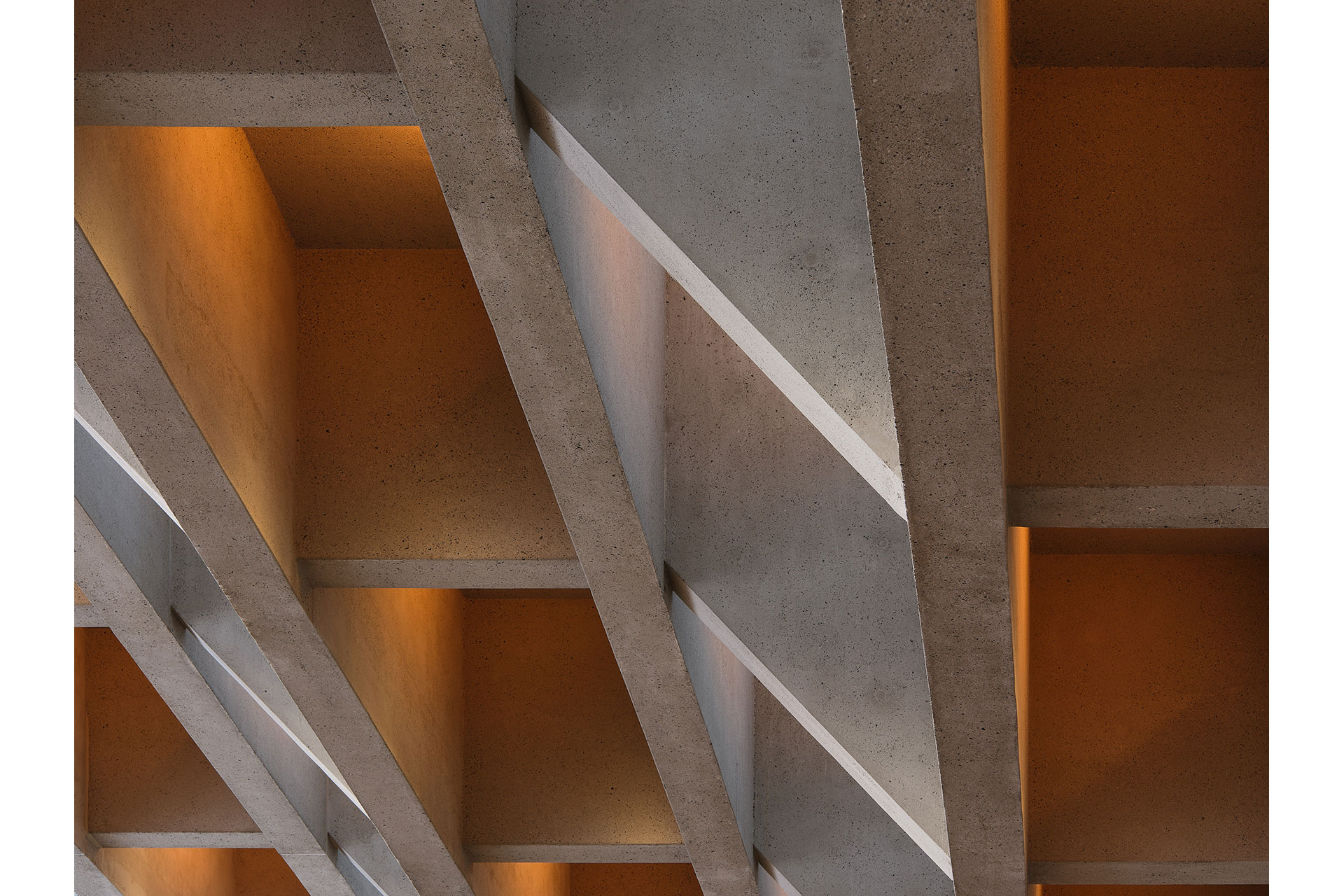
In total, there are 120 track heads and 101 coffer linear luminaires. All were custom-coloured to match the Great Hall’s new concrete finish.
Traditional First Nations longhouse firepits were a primary source of inspiration – the coffer linear luminaires are DMX-controlled and tunable white with a custom range of 2200- 4000 Kelvin allowing them to shift colour temperature as an homage to the firepits. As the project is on Indigenous land it is ASHRAE exempt.
The Great Hall entrance was also critical. We used layered illumination (ceiling, object, and floor) from hidden sources to channel visitor attention to the artwork. Pools of light create a theatrical contrast between the viewer and the viewed object, the present and the past, conjuring a dramatic tension and further accentuating the scale of the works.