

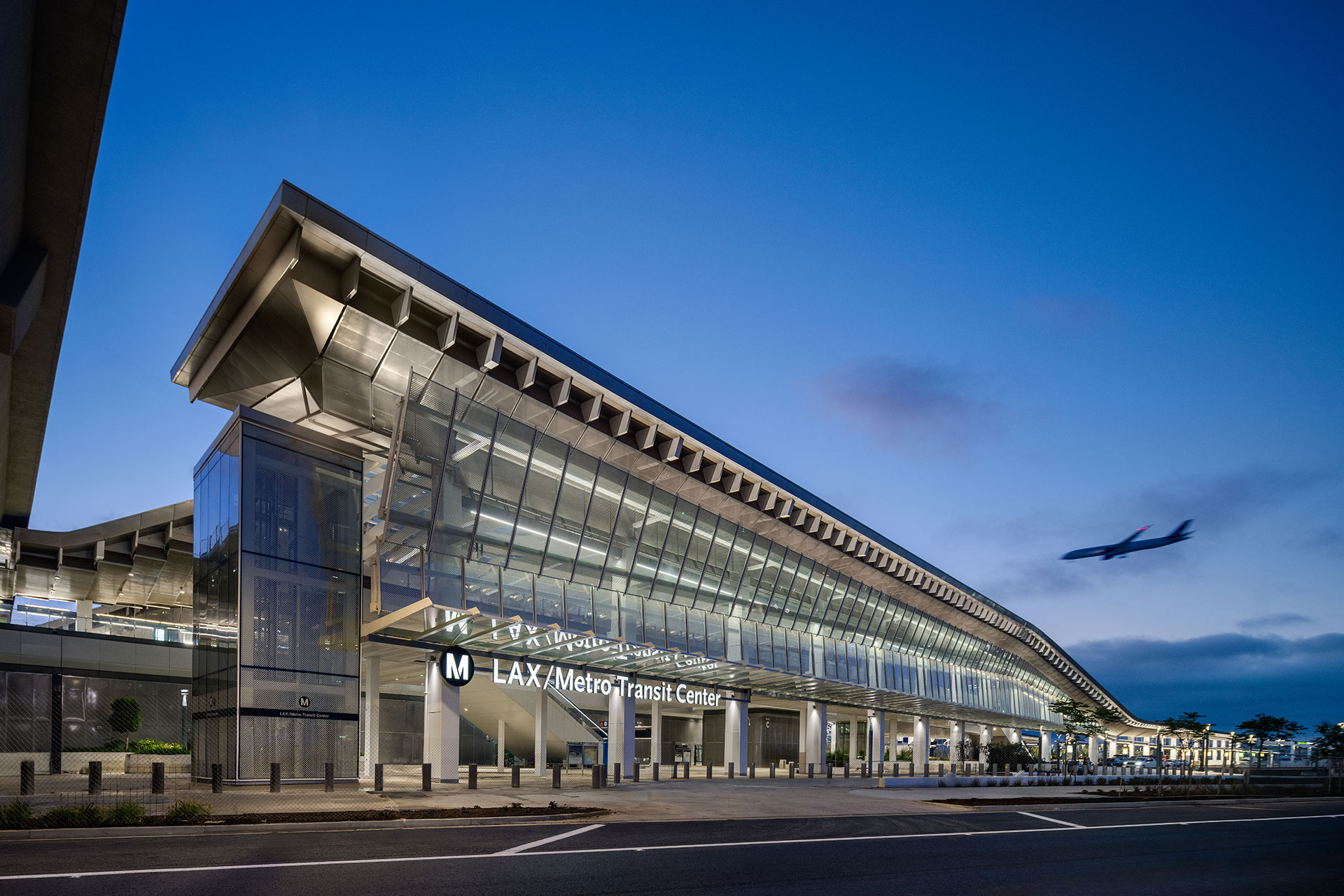
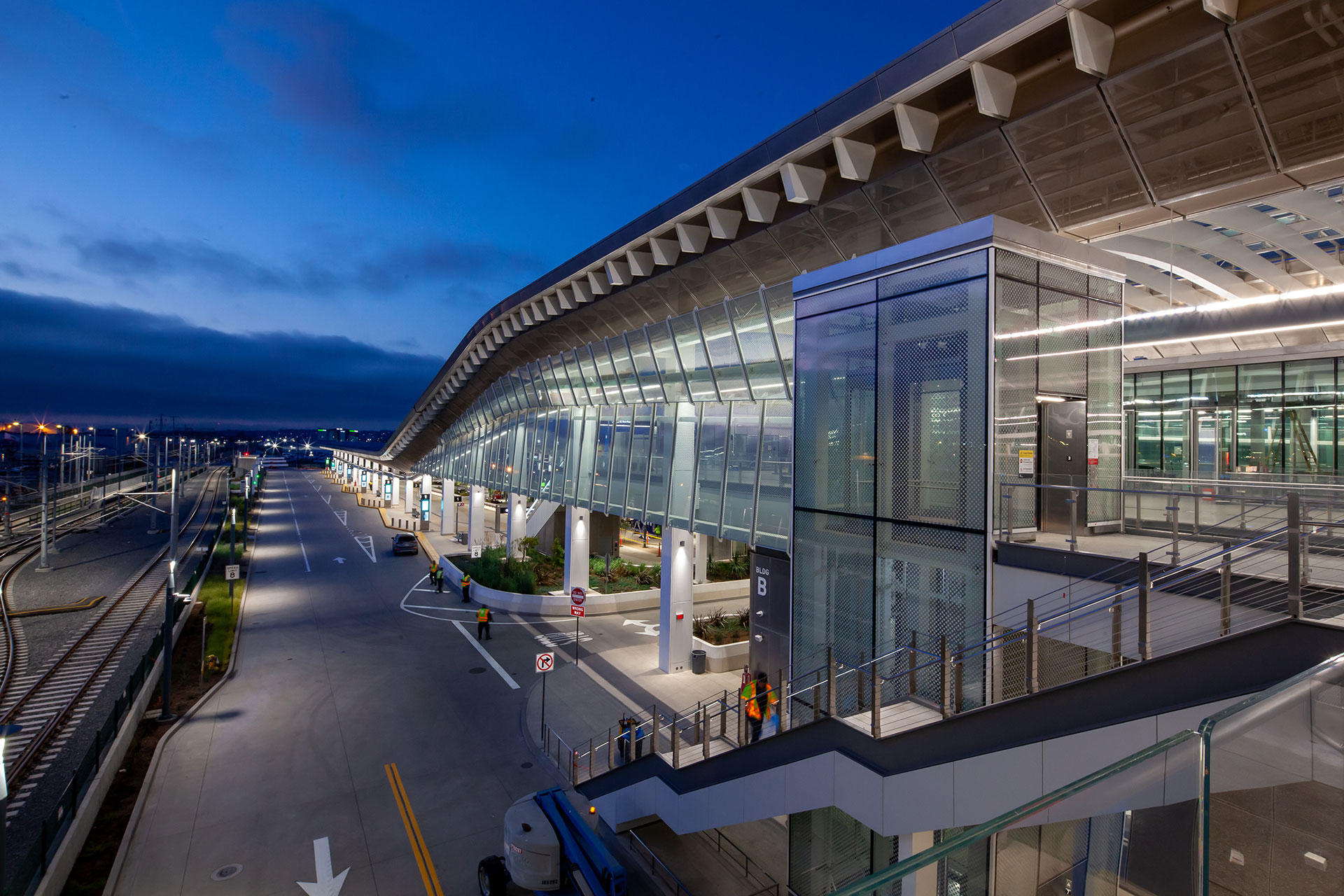
As a transportation hub for one of the world’s busiest airports, the LAX/Metro Transit Center serves as a gateway into the city’s multimodal network—connecting passengers to trains, buses, shuttles, automobiles, and bicycle routes. Designed as a civic landmark, the project aimed to enhancing accessibility to the airport.
Lighting played an integral role in shaping user experience. The design supported wayfinding, ensured safety, and fostered a welcoming atmosphere all while meeting the sustainability and maintenance demands of a high-traffic, day-to-night transit station. The lighting strategy was carefully developed to address the requirements of vehicular, rail, bike, and pedestrian circulation, enabling seamless navigation through consistent visual cues and brightness hierarchies.
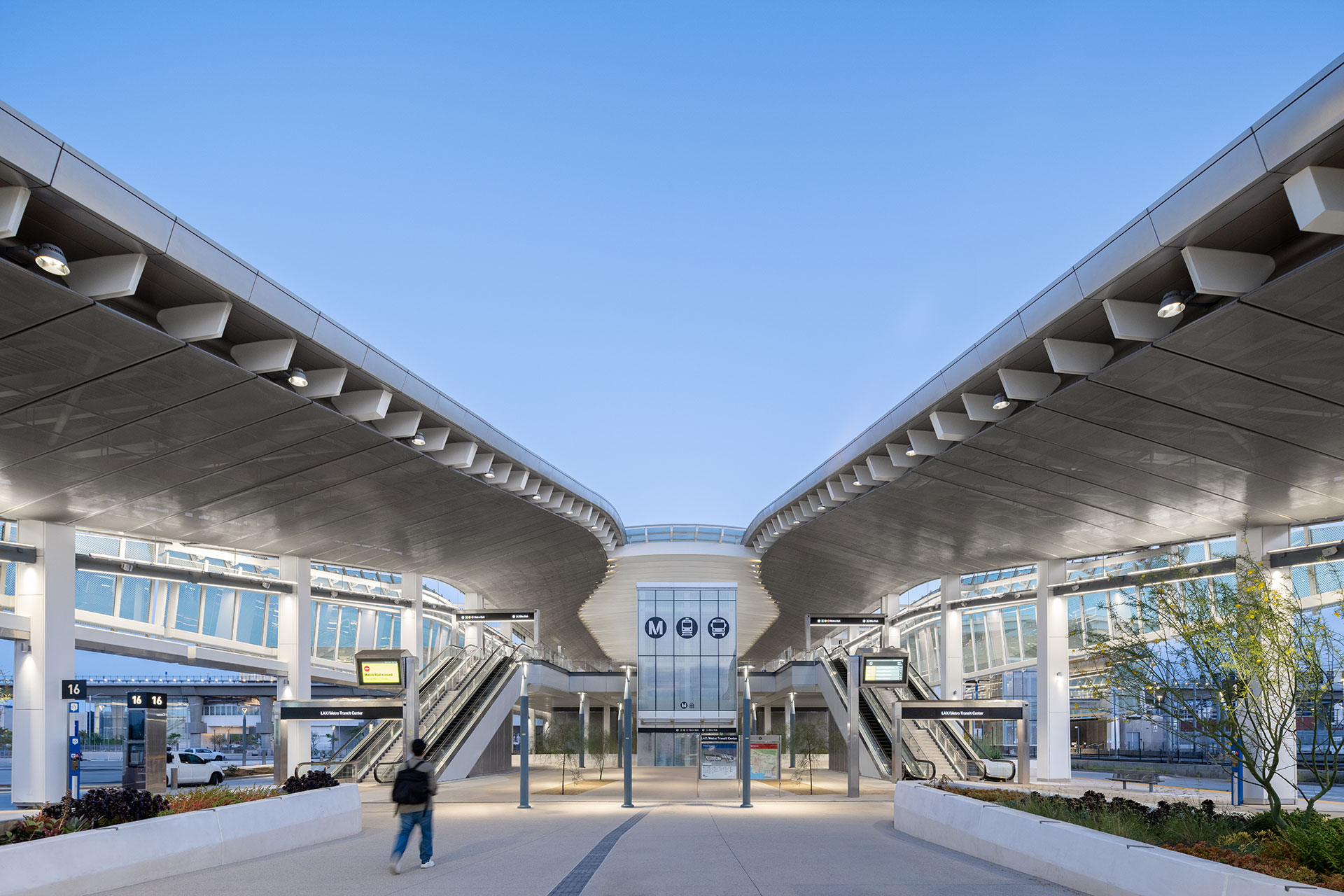
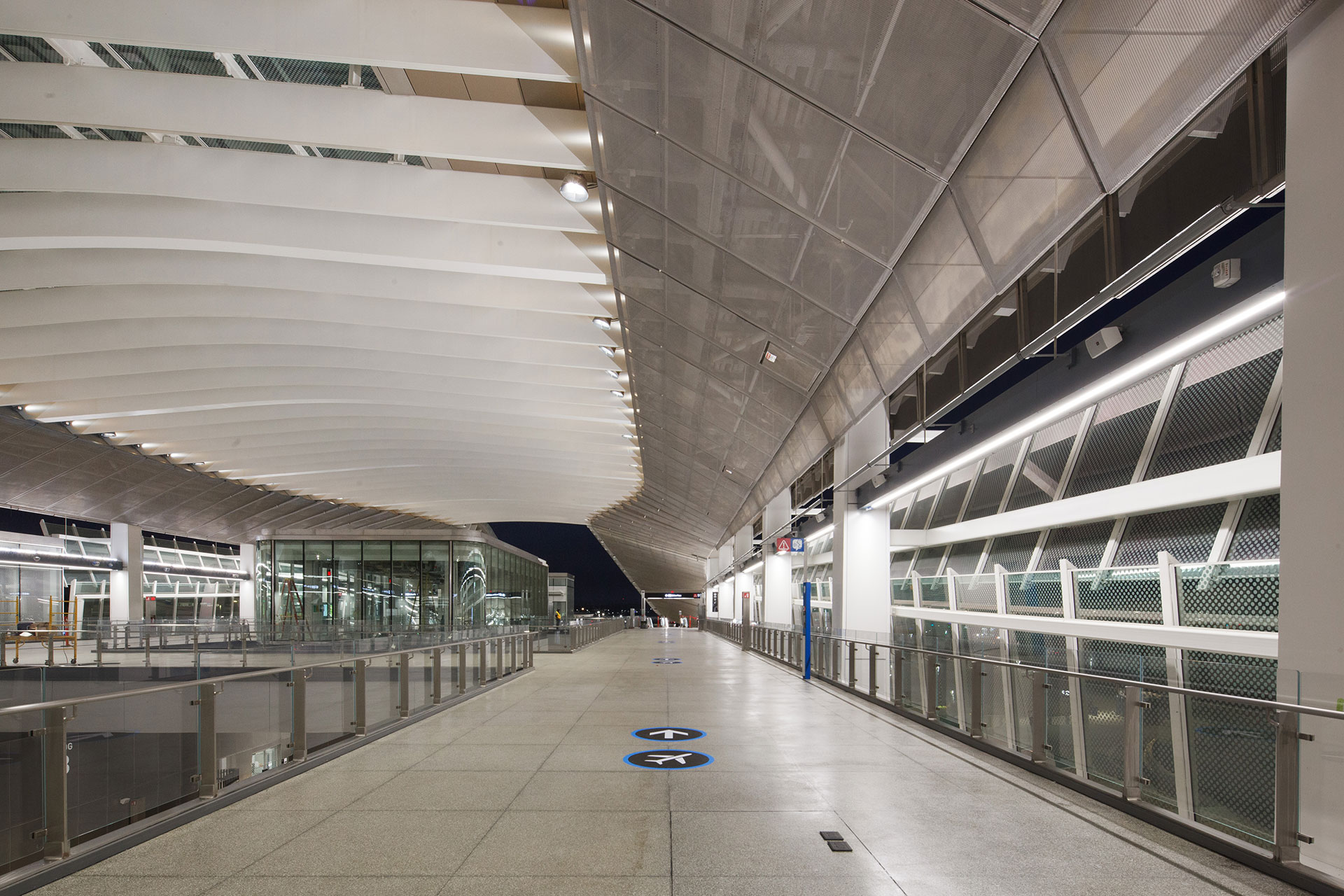
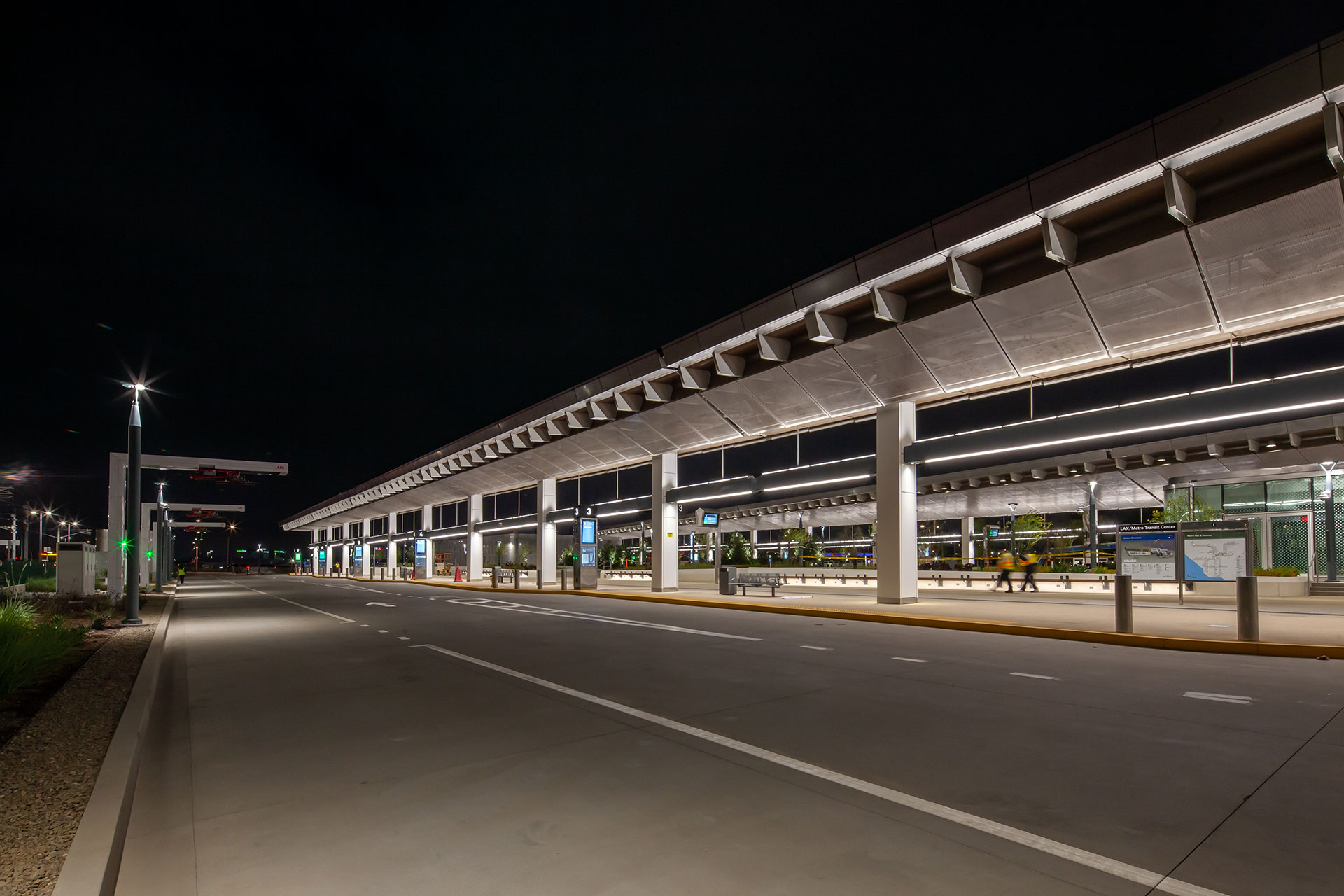
A central “techbar” beam integrated signage, speakers, security, and indirect/direct lighting systems, requiring close collaboration with the trades. A recessed line of light within the techbar runs parallel to passenger movement, reinforcing circulation flow and providing direct illumination across the bus plaza, mezzanine walkways, and rail platforms. Working with architects, contractors, and manufacturers led to a modified luminaire that transitions smoothly between straight and curved beams, preserving the station’s fluid aesthetic.
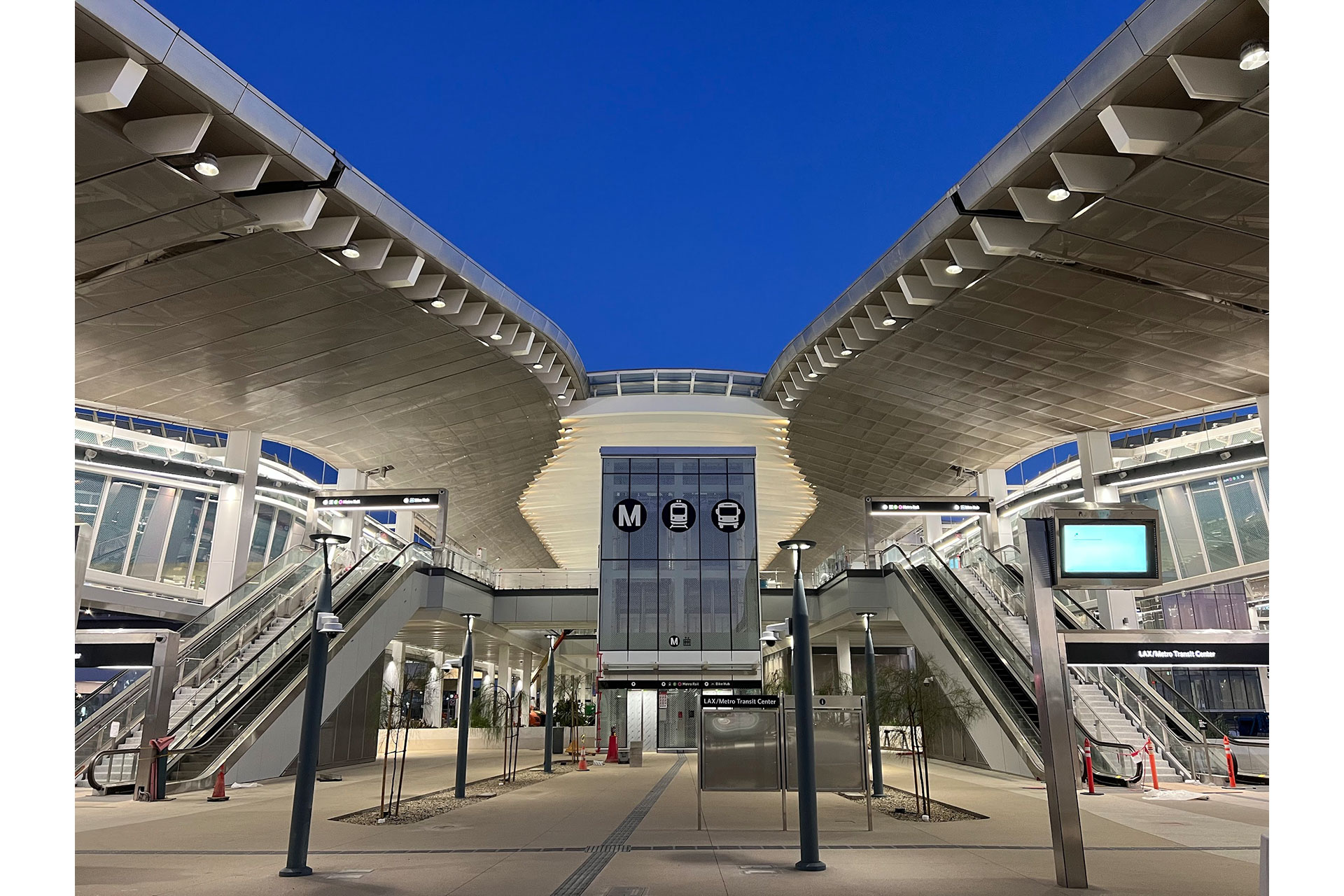
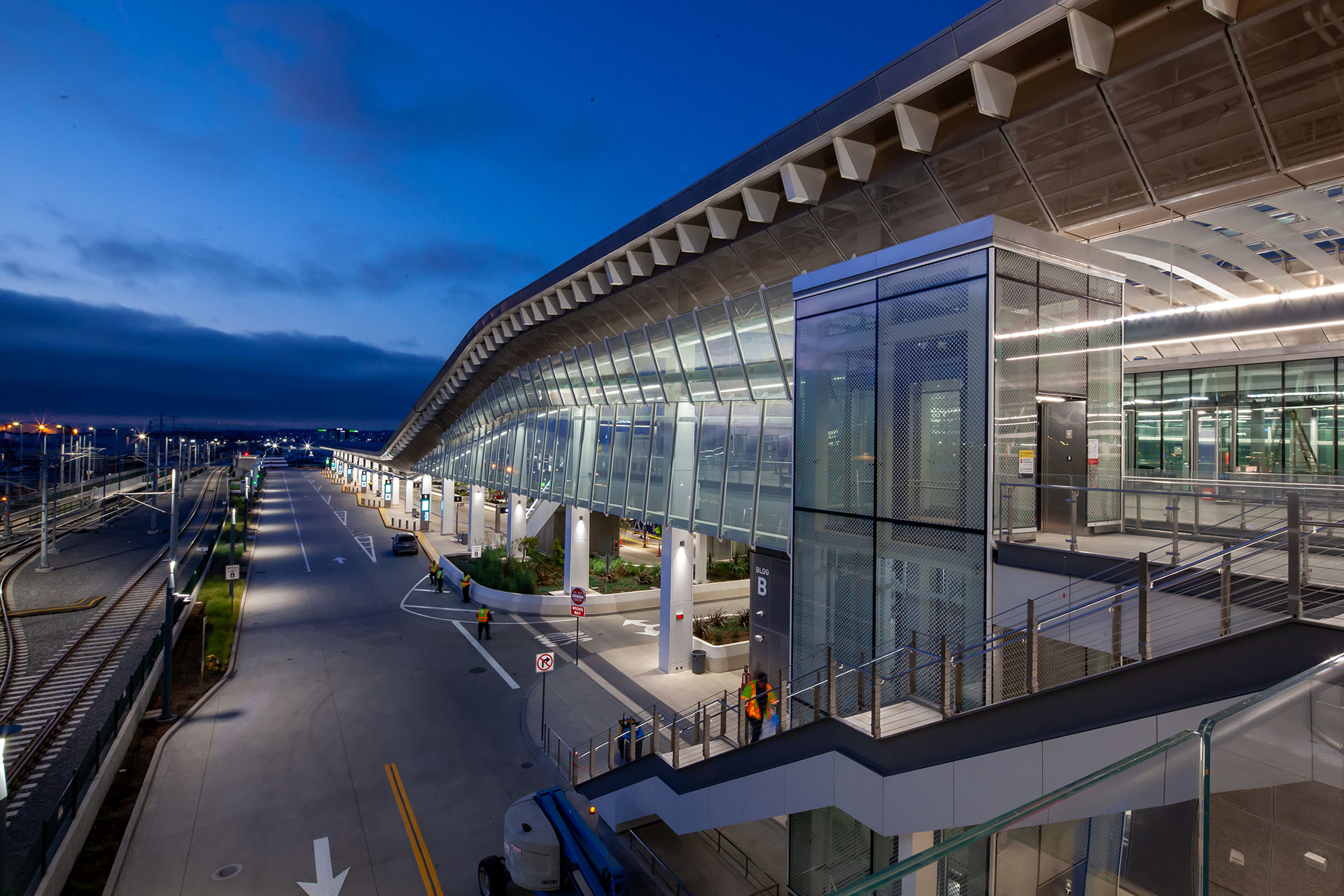
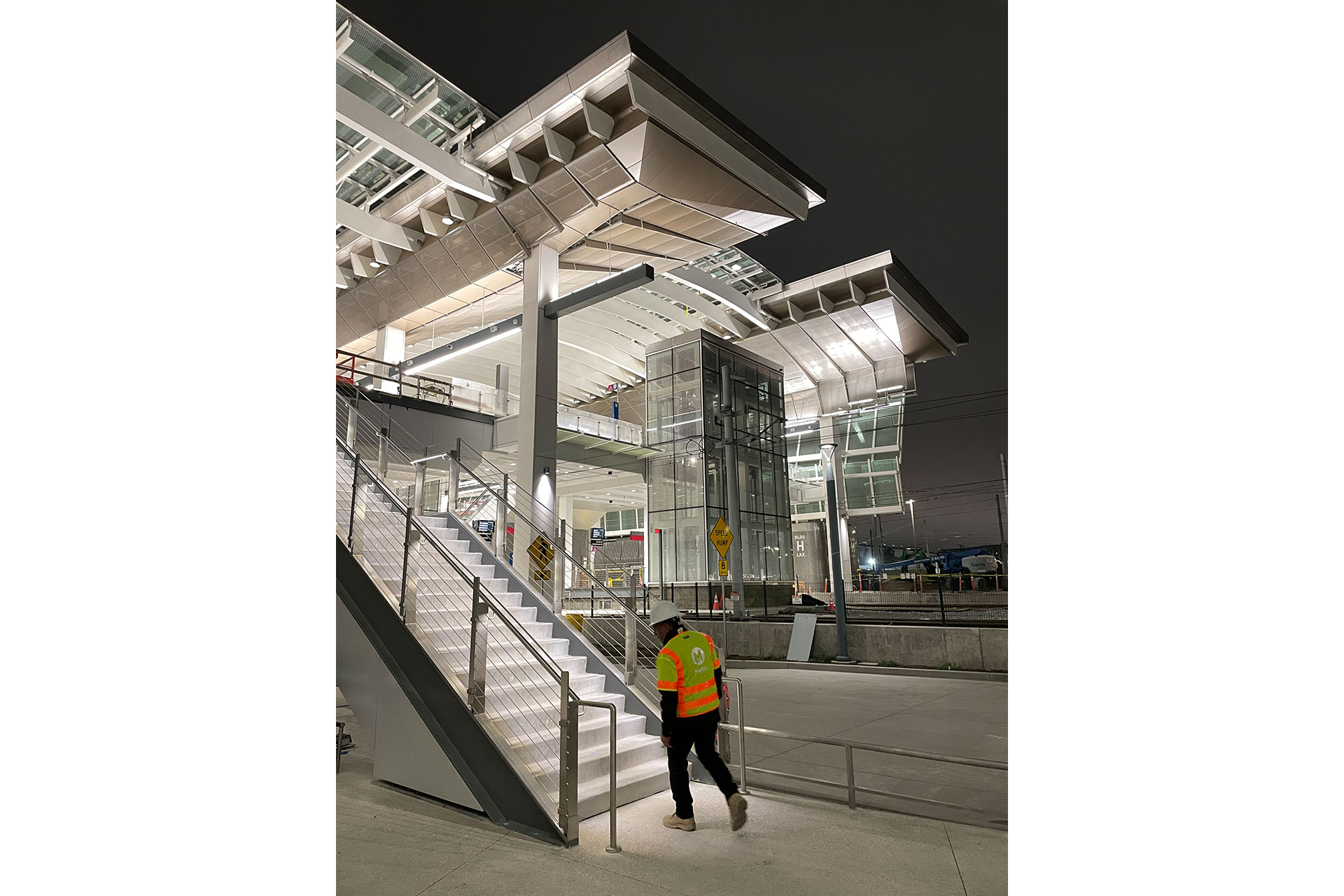
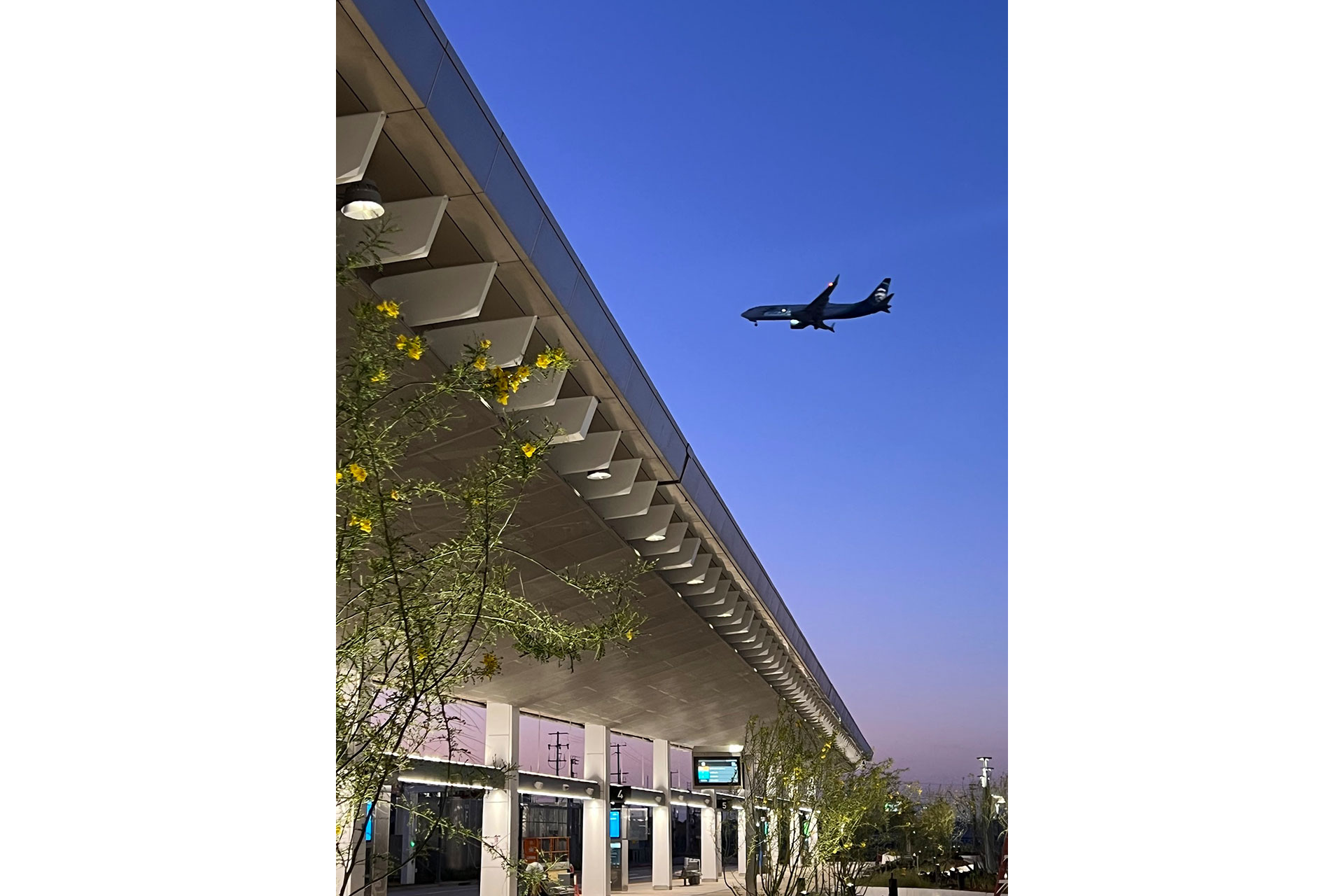
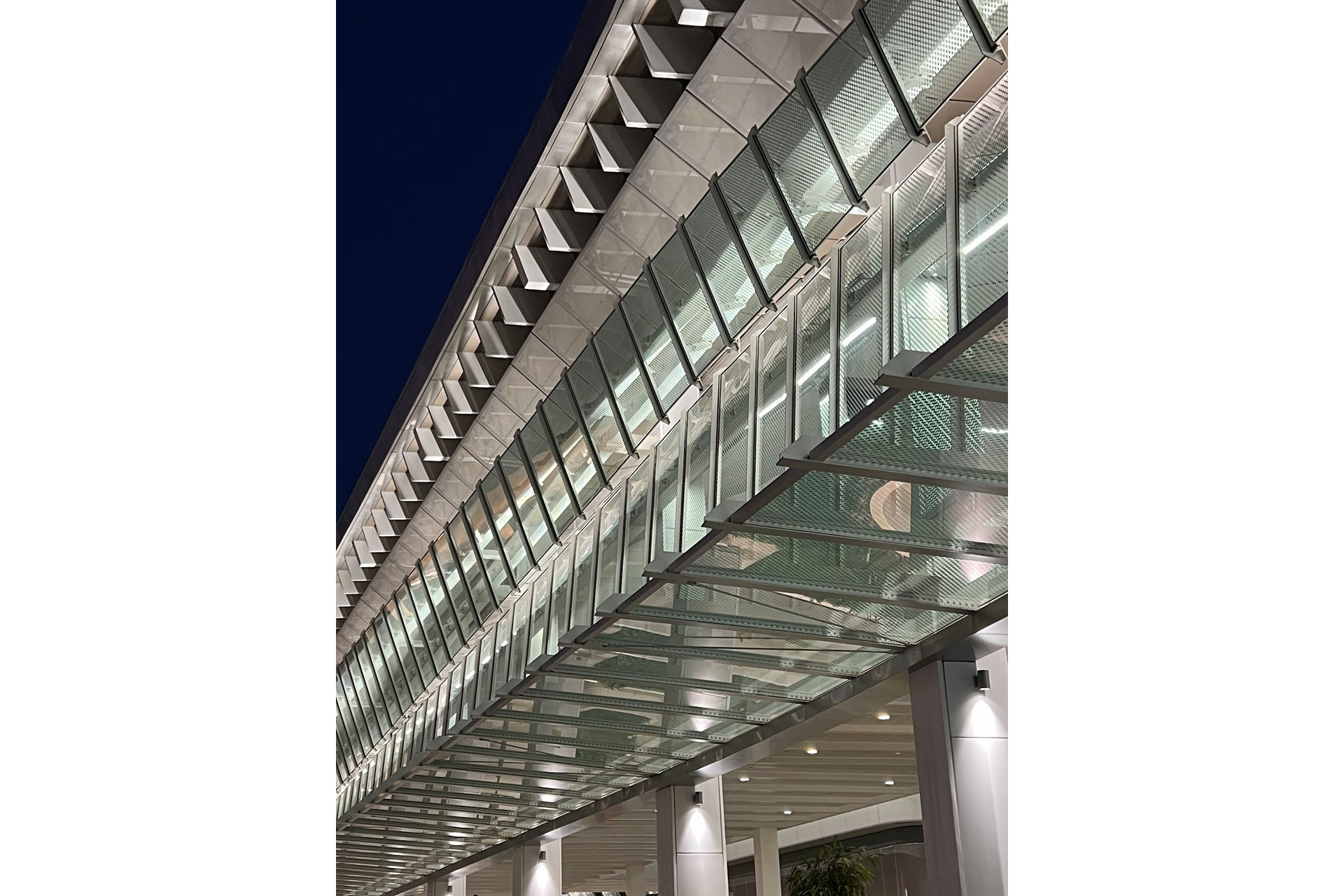
Perforated metal panels with undulating geometries form an elegant ceiling. The asymmetric, sloping façade panels presented a challenge for consistent illumination. Each bay contained multiple unique mounting conditions and geometries. Rather than customizing luminaires for each variation, the team developed a modular system of surface- and arm-mounted adjustable uplights. This solution design and construction, reduced costs, and allowed for attic stock to support future maintenance. The uplighting emphasized the floating, airy ceiling and enhanced perceived brightness during nighttime hours.
Lighting a large-scale interior space with wide spans required careful attention to visual comfort. Stem- and bracket-mounted baffled floodlights were placed between façade panels to provide downlighting, with precise beam spreads and aiming angles to avoid glare—especially across mezzanine walkways where overhead mounting wasn’t feasible. As passengers descended from the airport’s Automated People Mover, they moved through consistently lit mezzanine walkways guided by the techbar’s line of light and pendant projector lights that undulate with the ceiling’s geometry. Portal-recessed lighting highlighted key entry points to train platforms and escalators. At ground level, a balance of pole lights, bench-integrated tapelights, and landscape uplights created a harmonious, human-scaled environment. Column-mounted cylinders reinforced the architectural rhythm throughout the station. The lighting controls system was programmed with an astronomical timeclock to provide a seamless transition from a daylight experience to a safe and welcoming night-time scene. High-end trim was applied to optimize the life span and maintenance of luminaires throughout the life of the station.
The result is a visually compelling, intuitive, and technically sophisticated lighting solution that elevates the transit experience and reflects the city’s commitment to sustainability, accessibility, and inspiration.