

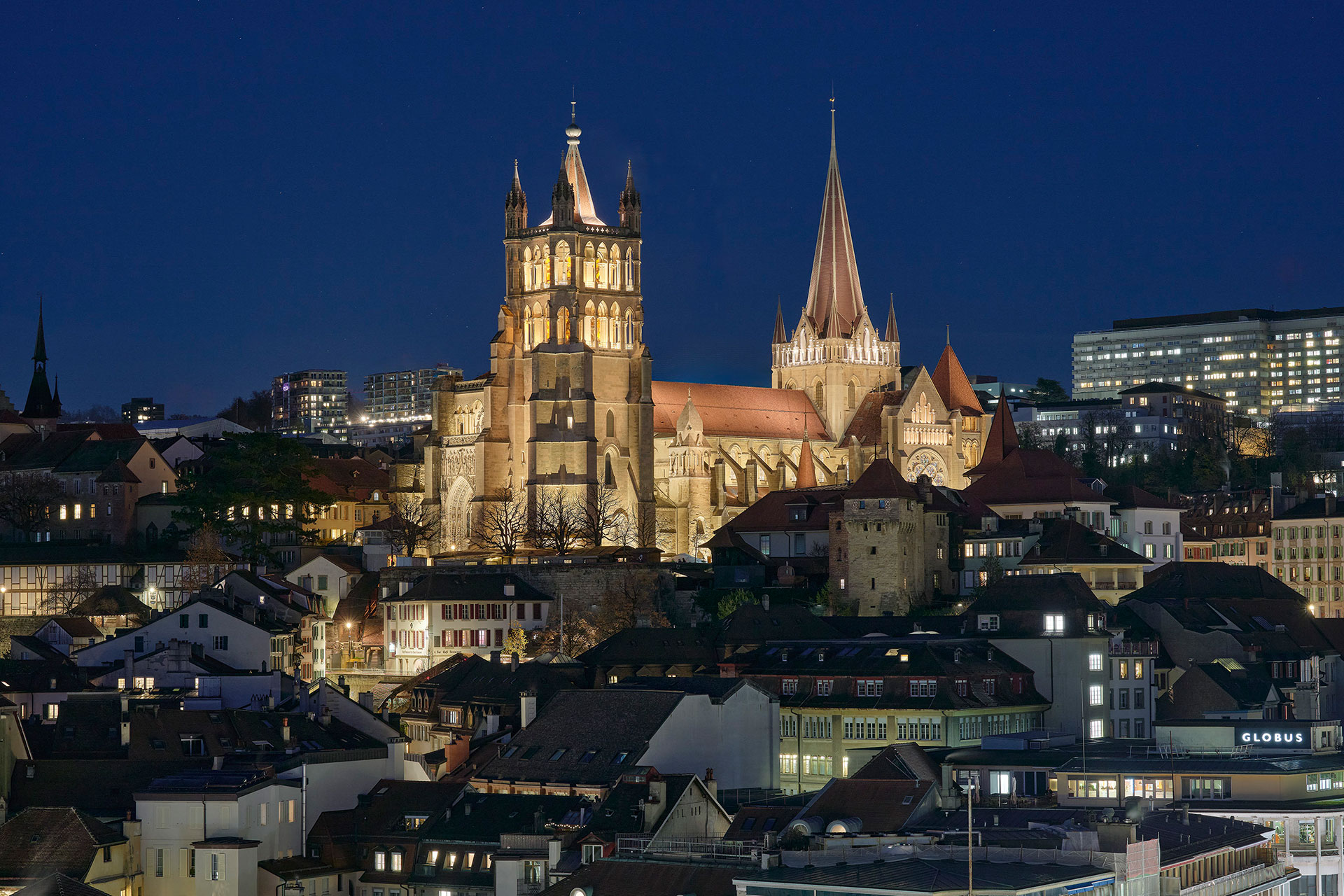
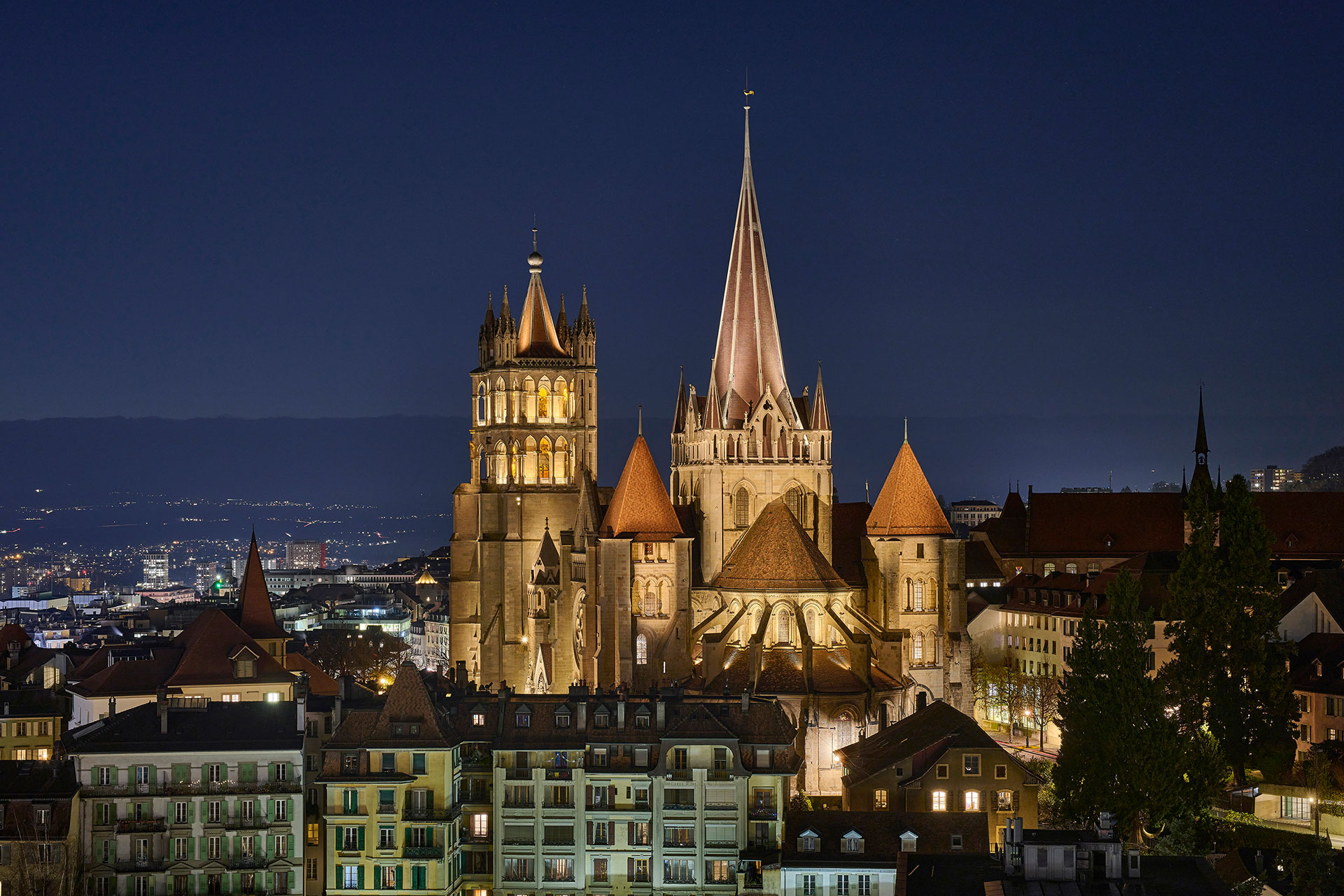
Lausanne Cathedral is the city’s defining landmark and a spiritual, cultural, and urban reference visible across Lausanne and far beyond. Our approach is grounded in restraint and fidelity to the place. The intent is not to add spectacle, but to reveal—sculpting mass with shadow, honouring the molasse stone, and clarifying the dialogue between Romanesque strength and Gothic ascent.
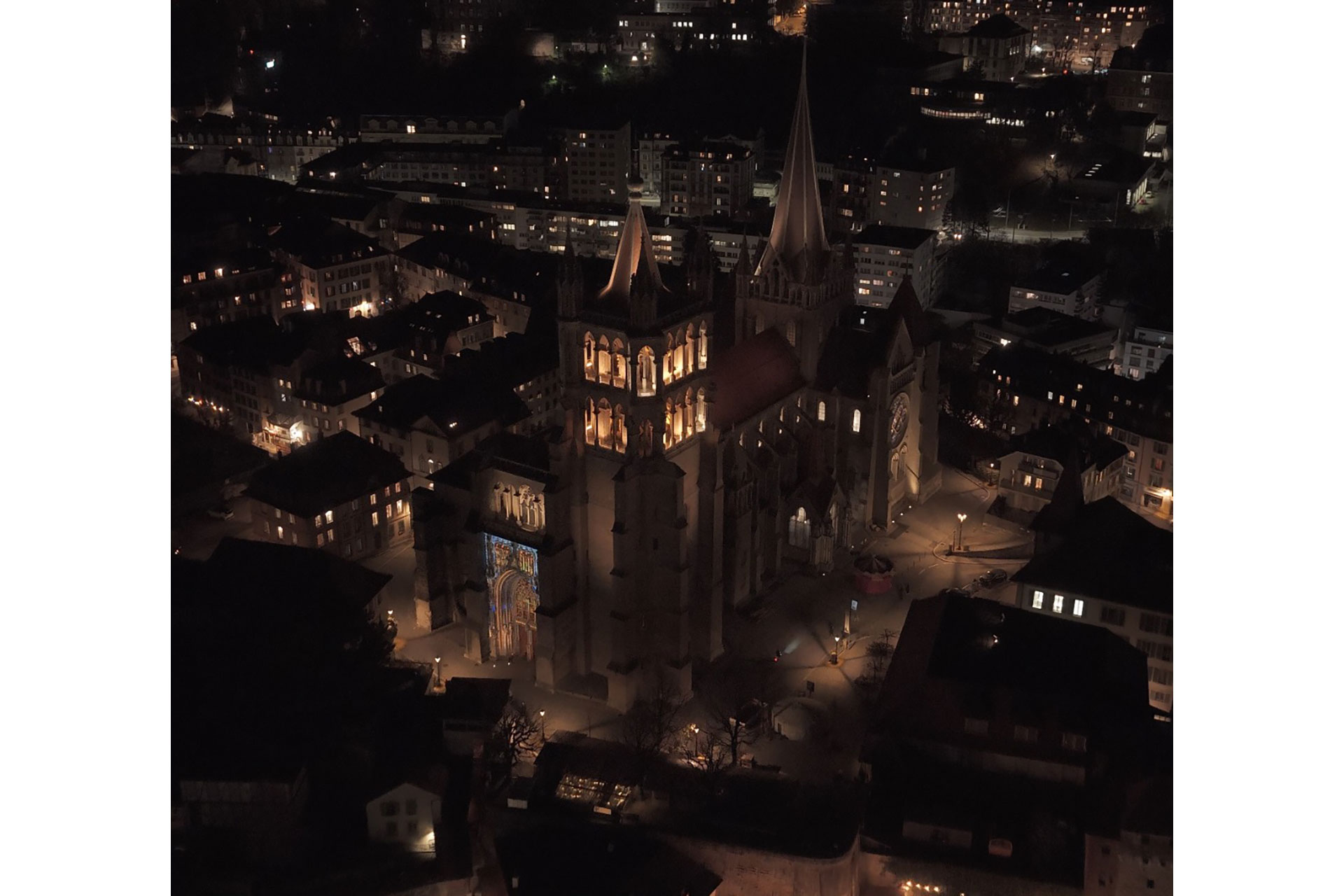
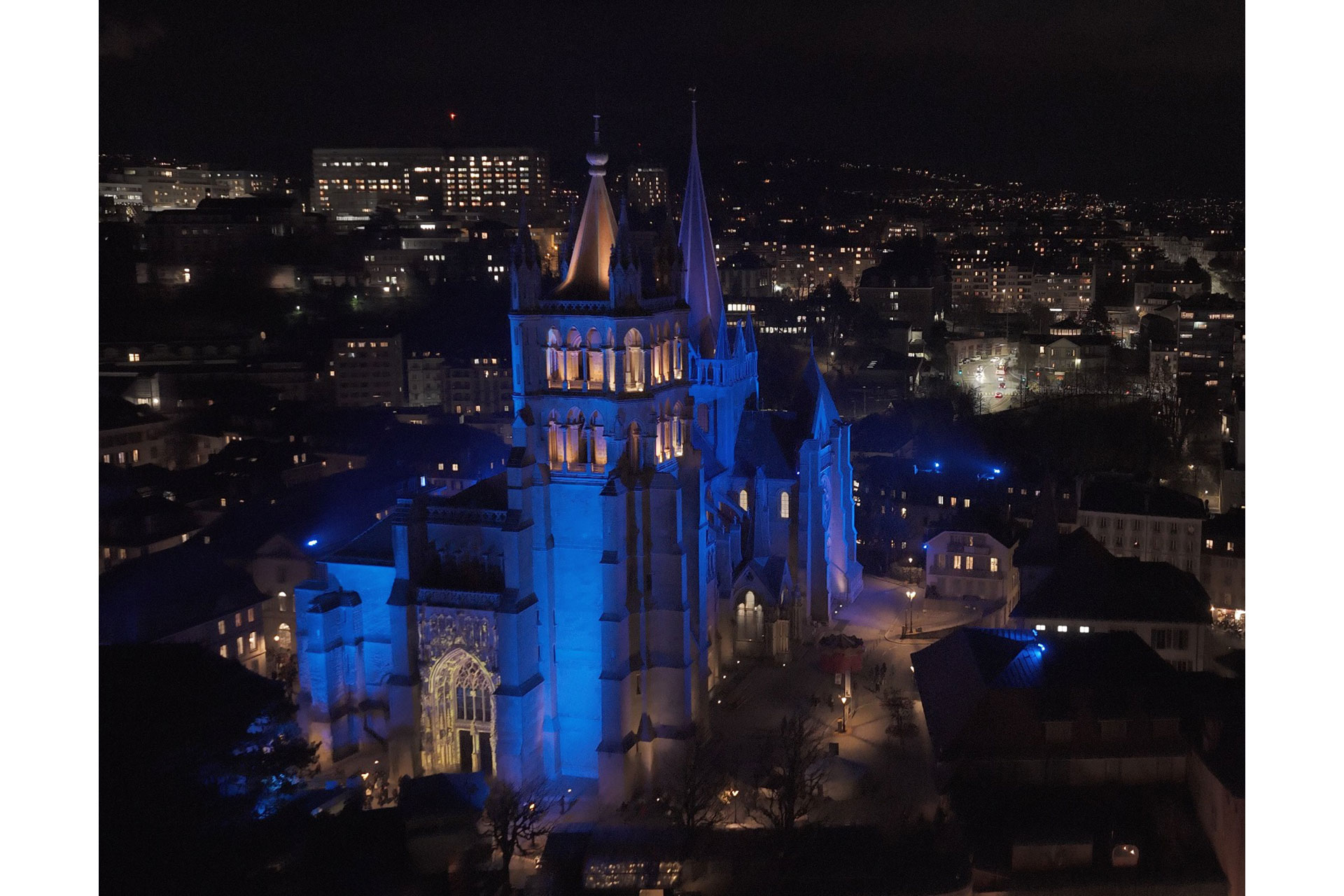
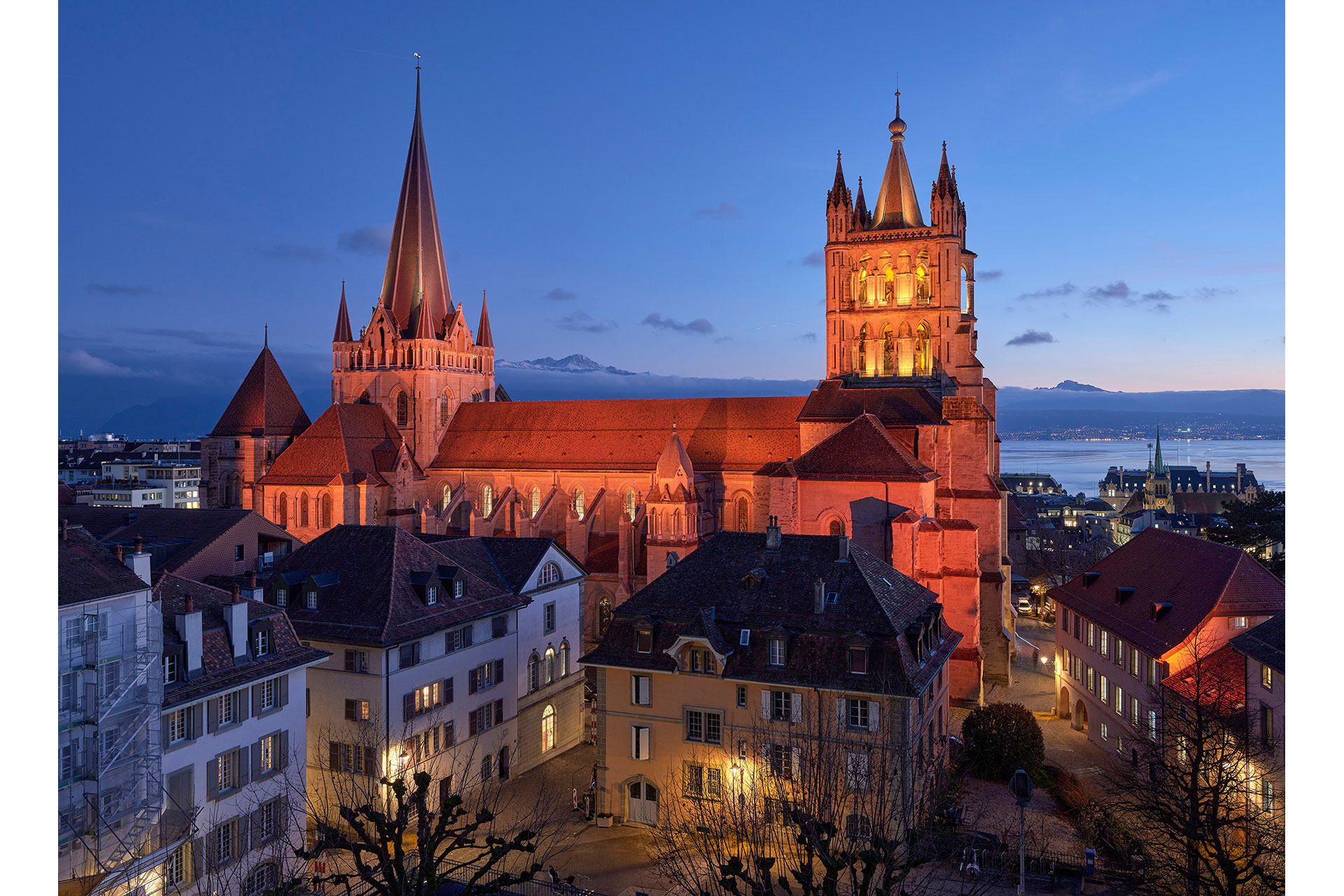
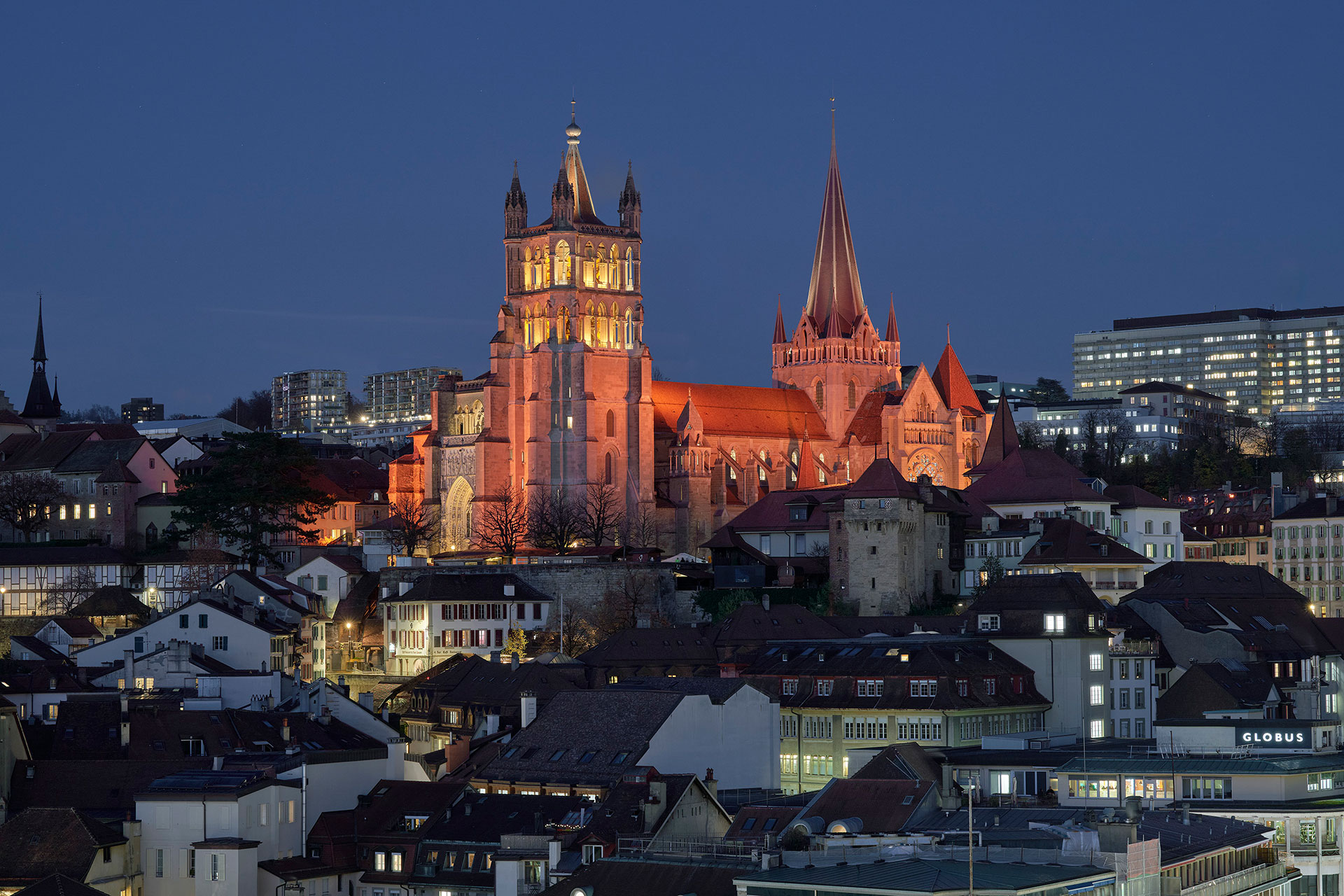
Lausanne’s identity is inseparable from its steep topography. Because of Lausanne’s steep topography, the cathedral can be viewed from vantage points that are naturally higher than the building itself, while in other views it dominates the ridge line above the city. It is also read against strong backdrops: mountain horizons, the dark body of the lake, and layered urban slopes. The lighting therefore had to operate as a clear sign at distance, yet remain precise and respectful at close range.
The concept is a nocturnal narrative in three operational states aligned with the night and the city: Twilight, Full, and Reduced.
Twilight (civil dusk) addresses a perceptual threshold: while the sky remains bright, detail is hard to read and the cathedral can dissolve into its context. For the first half-hour, a warm amber veil—cast from selected surrounding façades—detaches the silhouette from the blue hour, restoring legibility from multiple elevations.
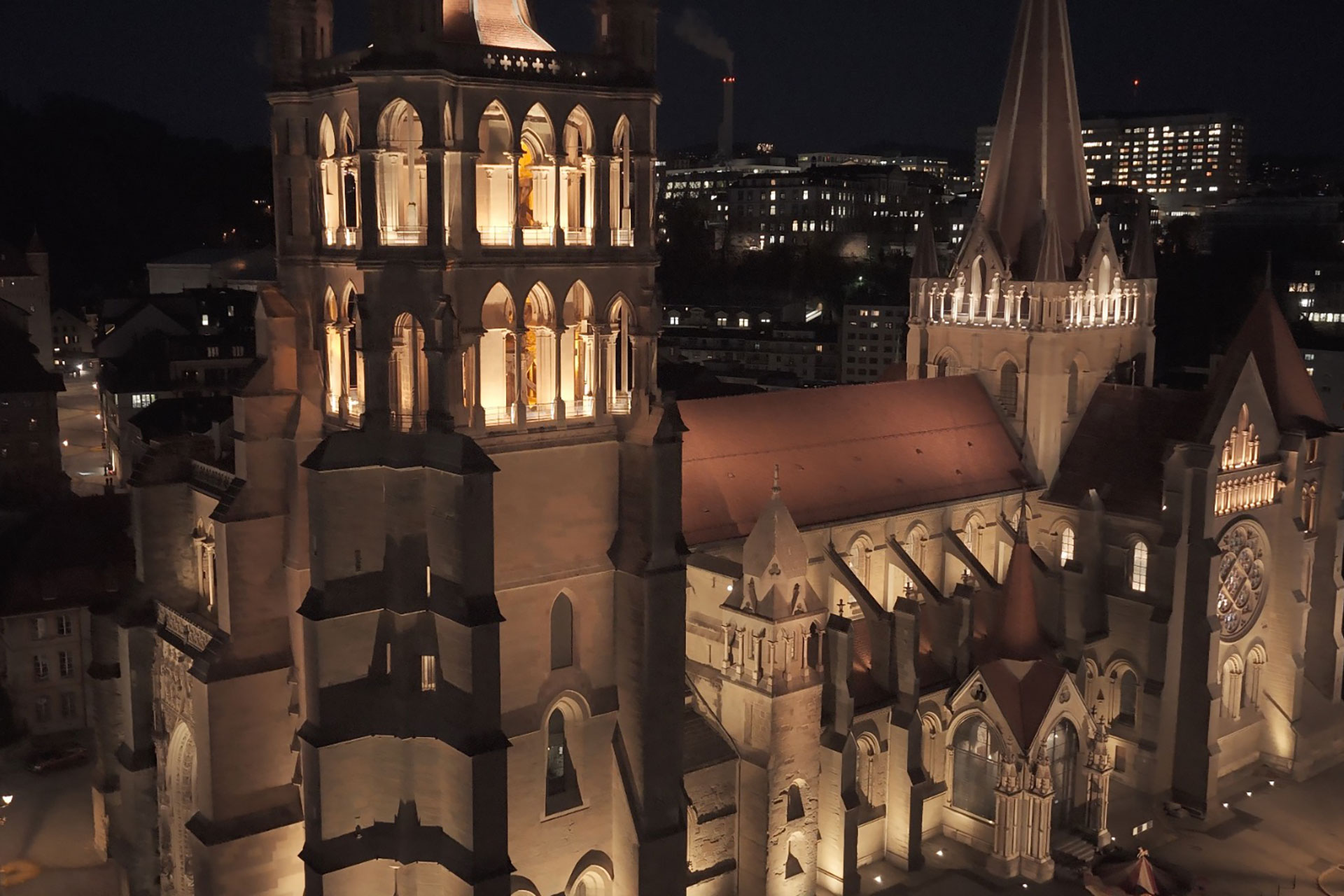
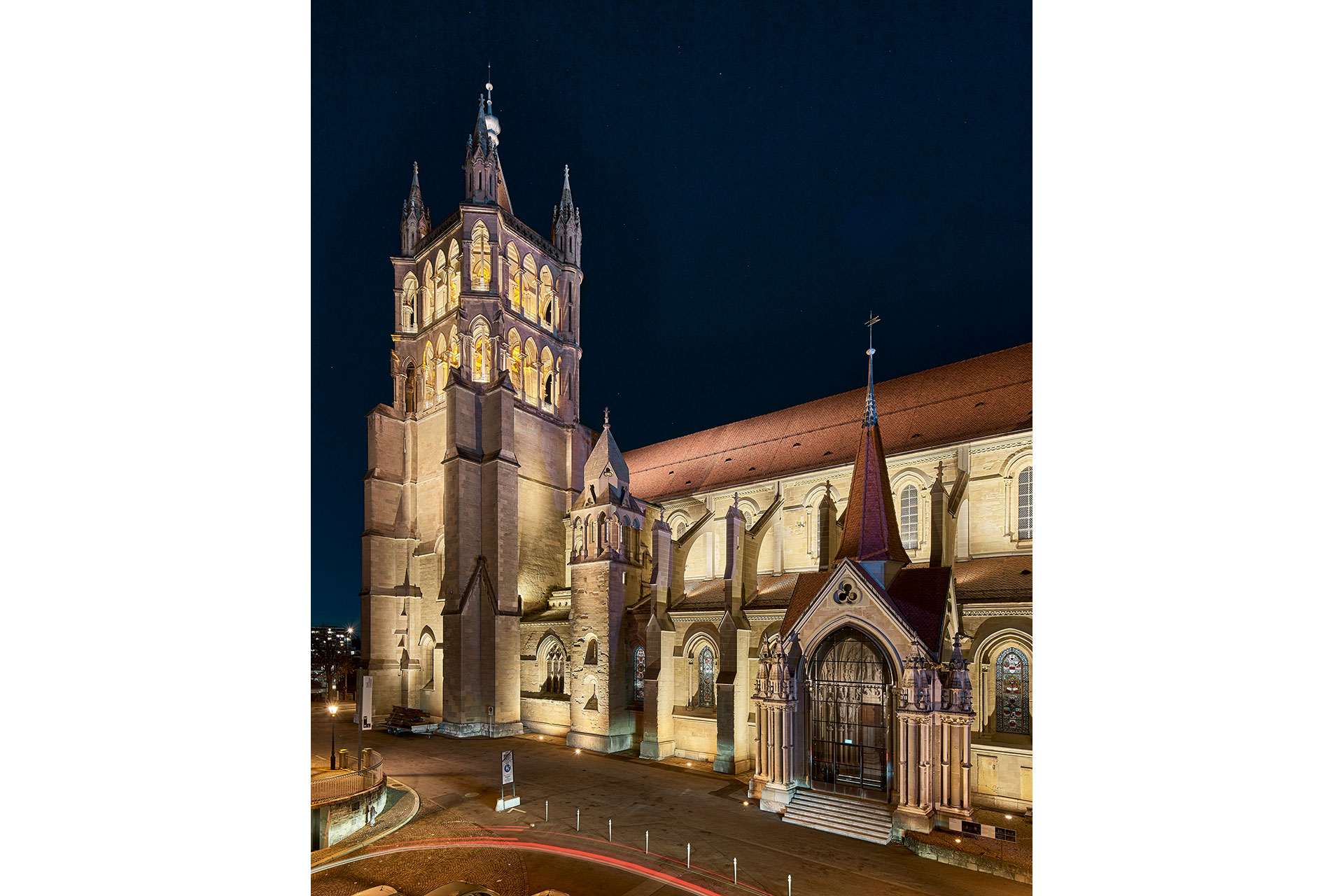
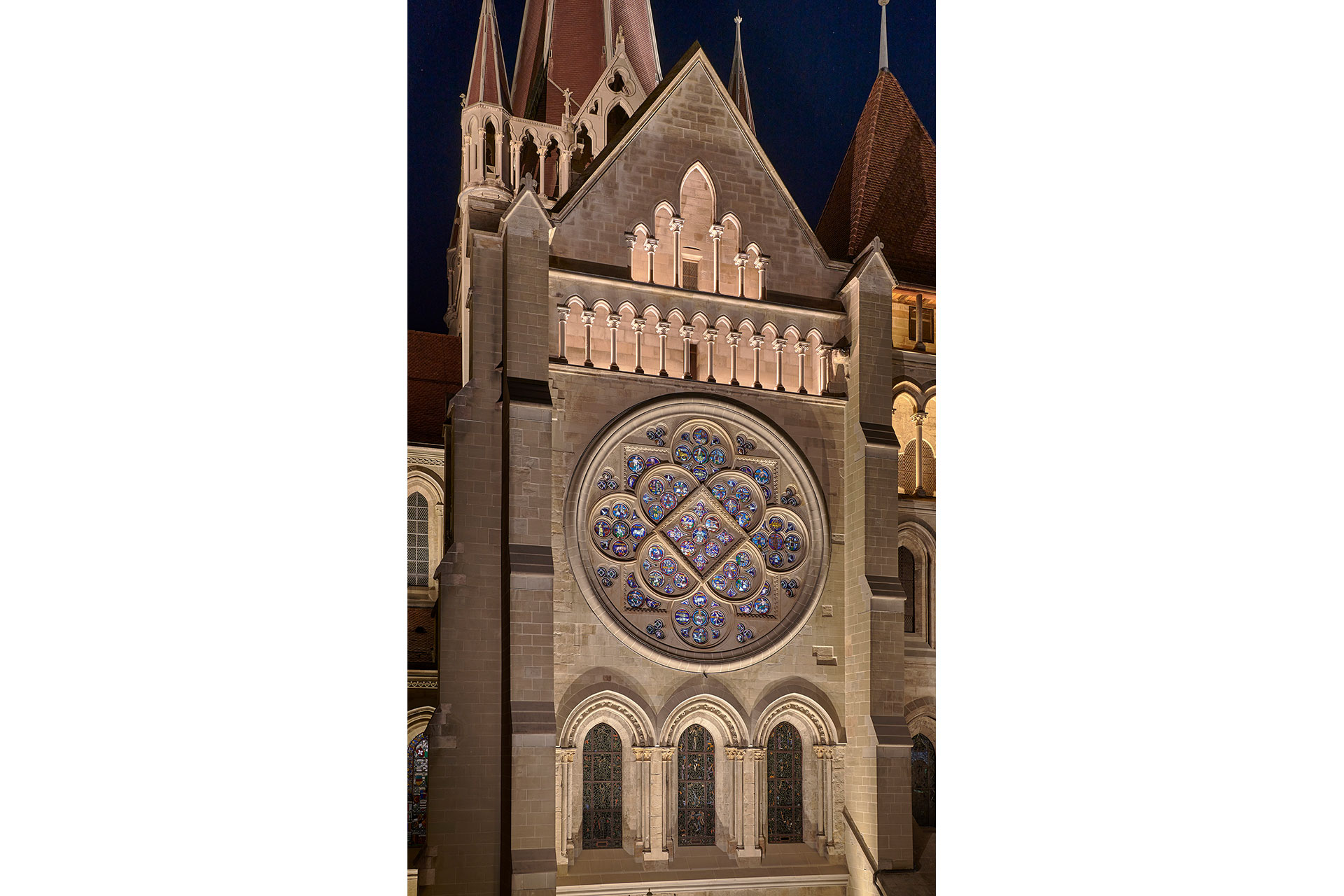
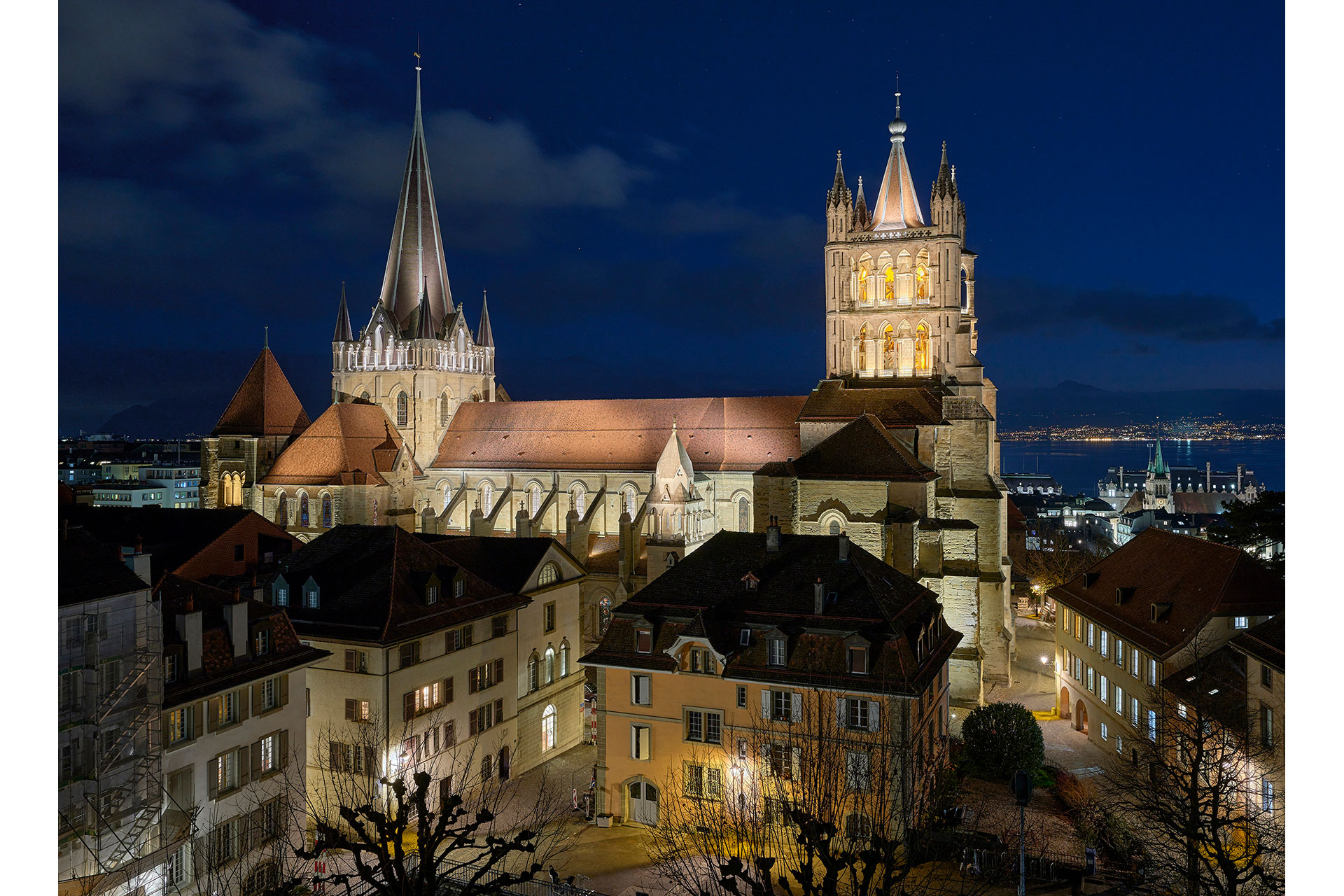
Full state (night) reveals the cathedral through a warm white palette (2700K), chosen to respect the molasse and keep a timeless character. Light begins at the base with glare-controlled in-ground luminaires, anchoring the monument to the public realm. Mid-height projectors deliver a precisely framed veil to avoid spill beyond the stone—essential when the cathedral is read against the lake’s darkness or the mountain skyline. Architectural depth is reinforced by warmer gradients that bring out intrados, thickness, and key volumes: the octagon, the belfry chamber, and the tower’s ascent toward the bells.
Four focal moments structure the composition:
Reduced state (late night) respects the cathedral’s tradition of nocturnal vigilance—embodied by the watchman’s call—and the city’s need for quiet. Levels soften, selected accents withdraw, and the cathedral fully switches off at 00:30, aligned with Lausanne’s nocturnal management.
Beyond daily operation, a liturgical scenario shifts the reading: the exterior steps back and interior light becomes the message, shining through stained glass with the Great Rose as its culminating sign. Two vertical symbols are emphasized—the lantern tower/spire and the belfry’s inner octagon—linking architecture, meaning, and the voice of the bells.
Environmental responsibility is integral and was shaped with an ecologist, whose recommendations led to concrete refinements. Warm spectra, spill-light tightly controlled. Seasonally, part of the lighting is intentionally switched off—most notably on the north façade—so the monument’s identity can also include periods of darkness.
This is a project of precision, reversibility, and care—light as heritage: present without intrusion, revealing without betraying.