

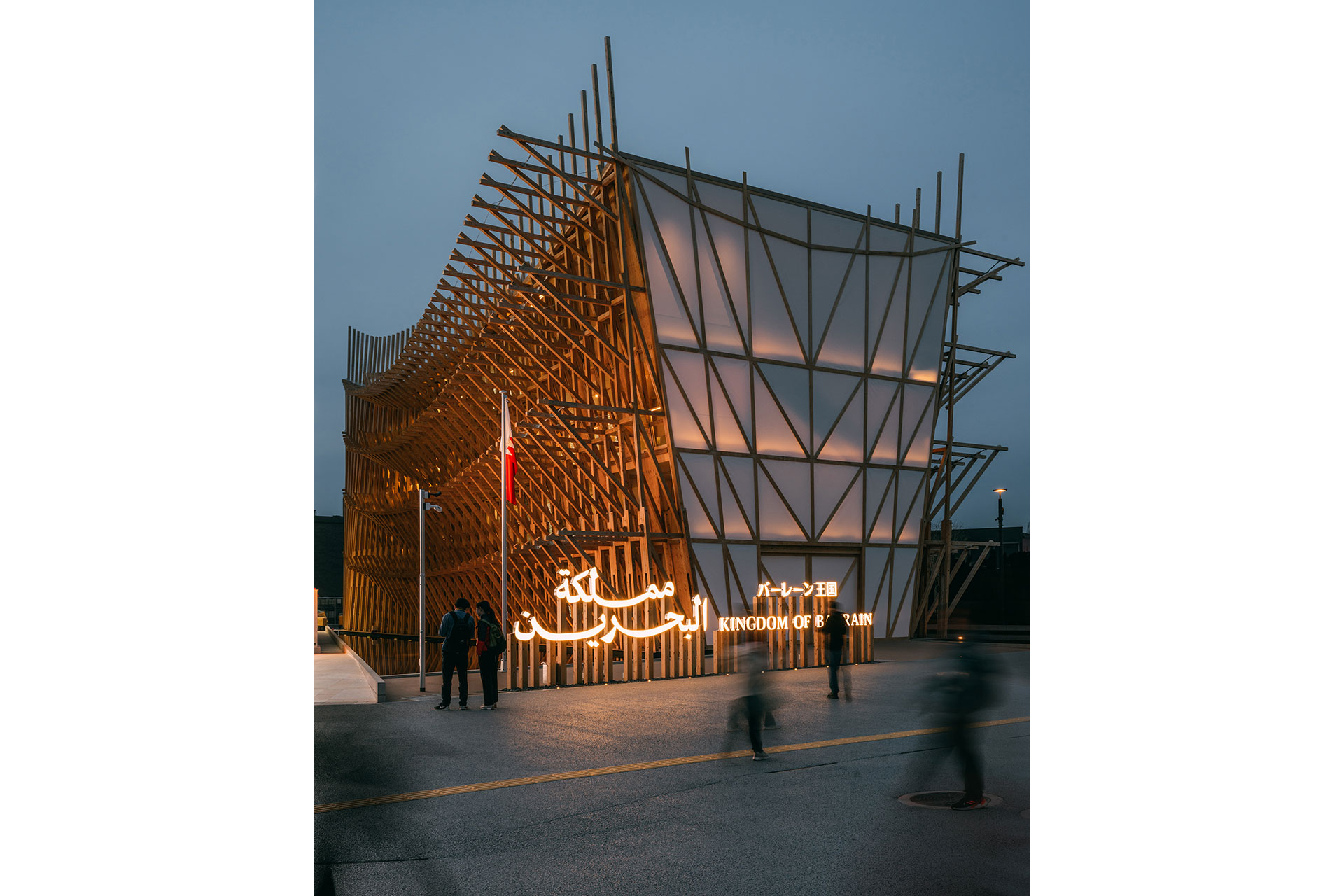
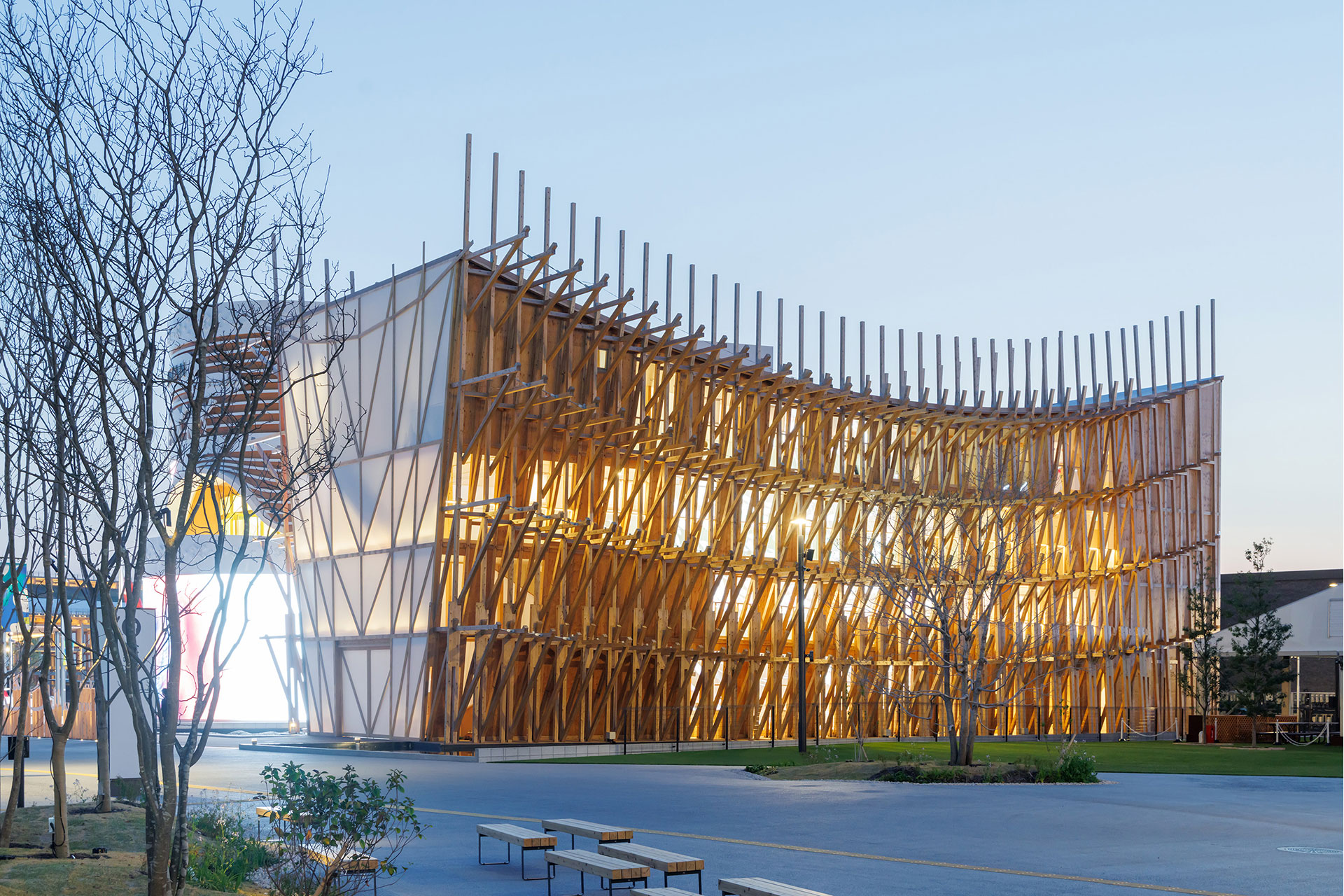
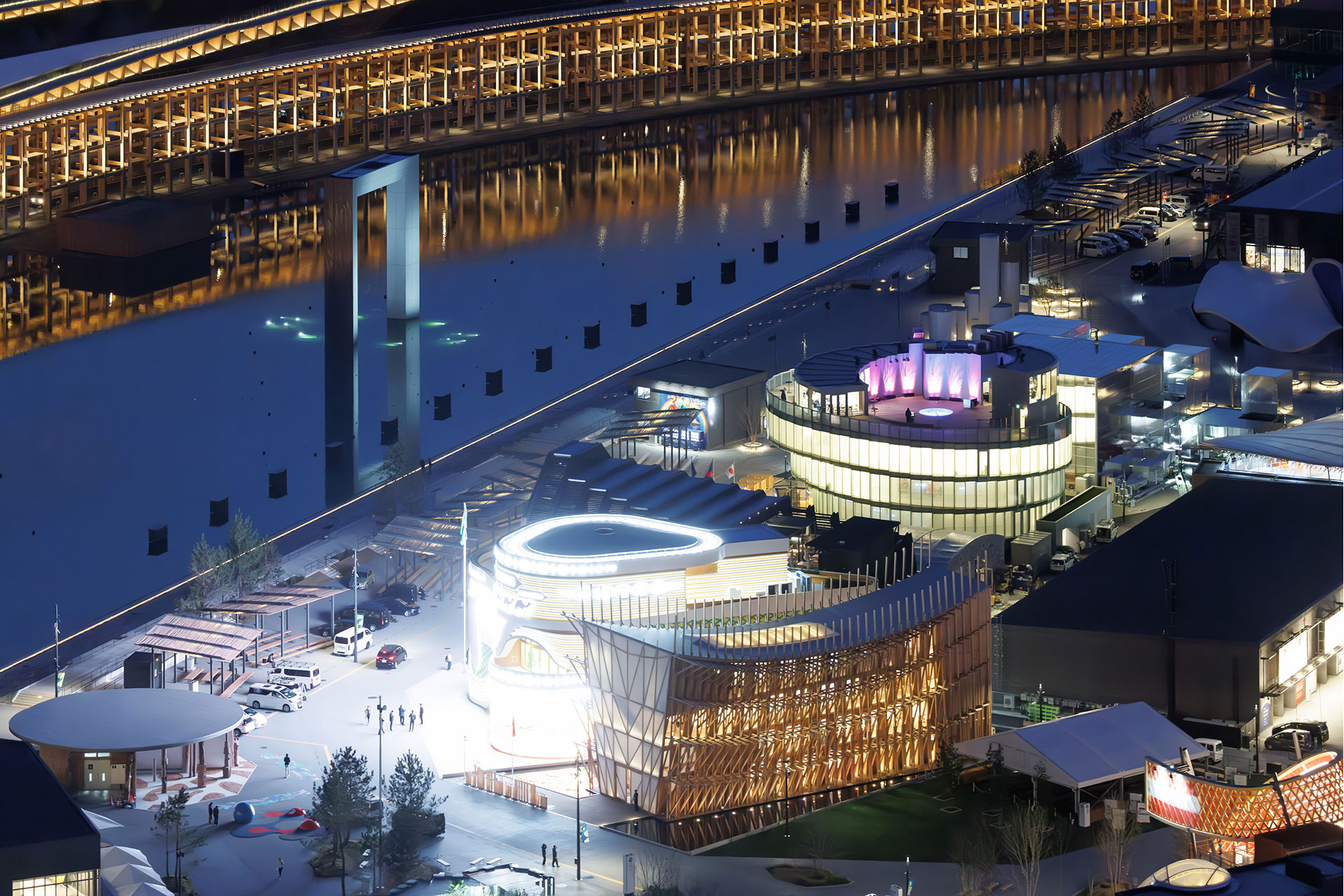
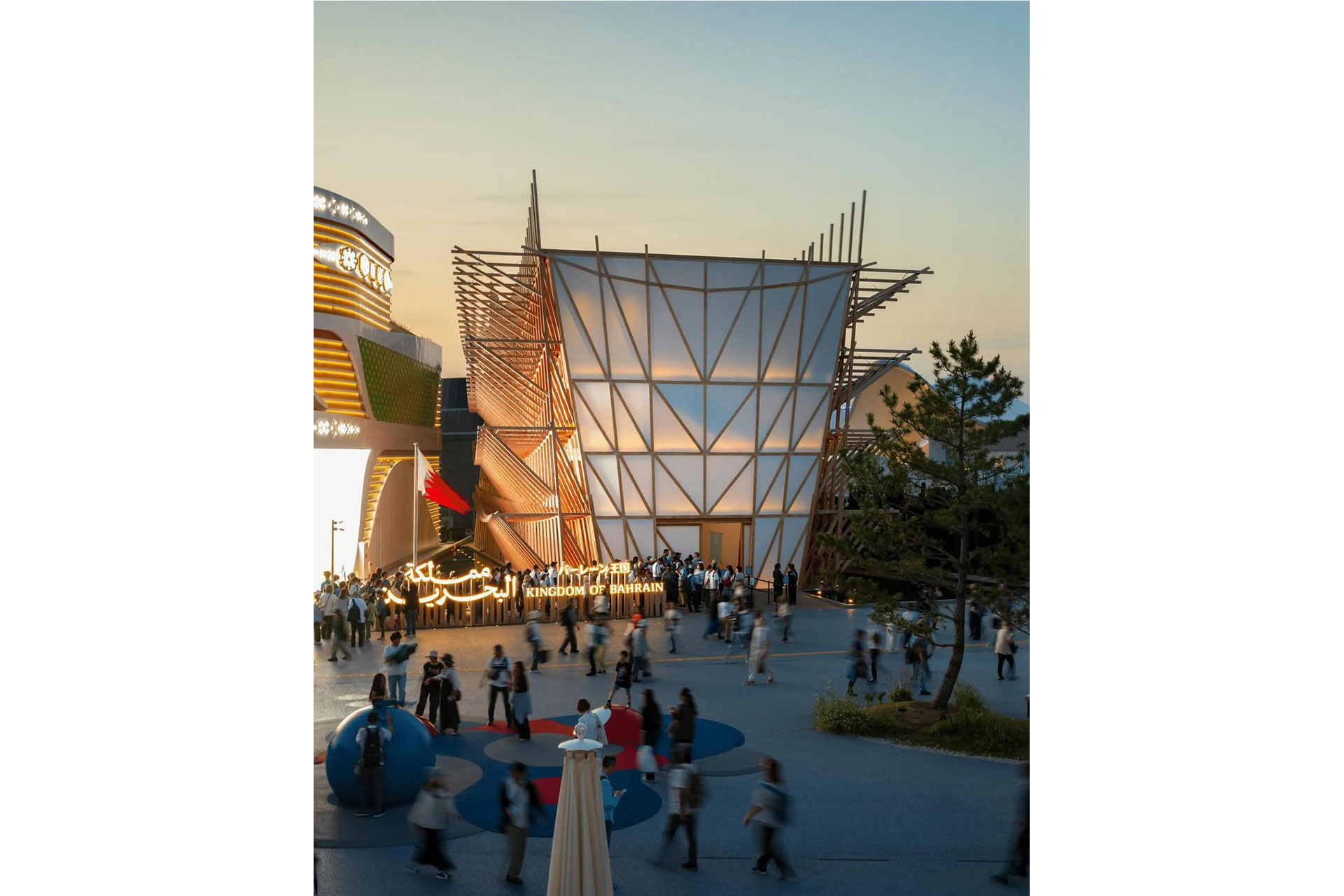
The large wooden-structured pavilion is designed to create a “well-being lighting environment” through lighting design and a dimming control system.
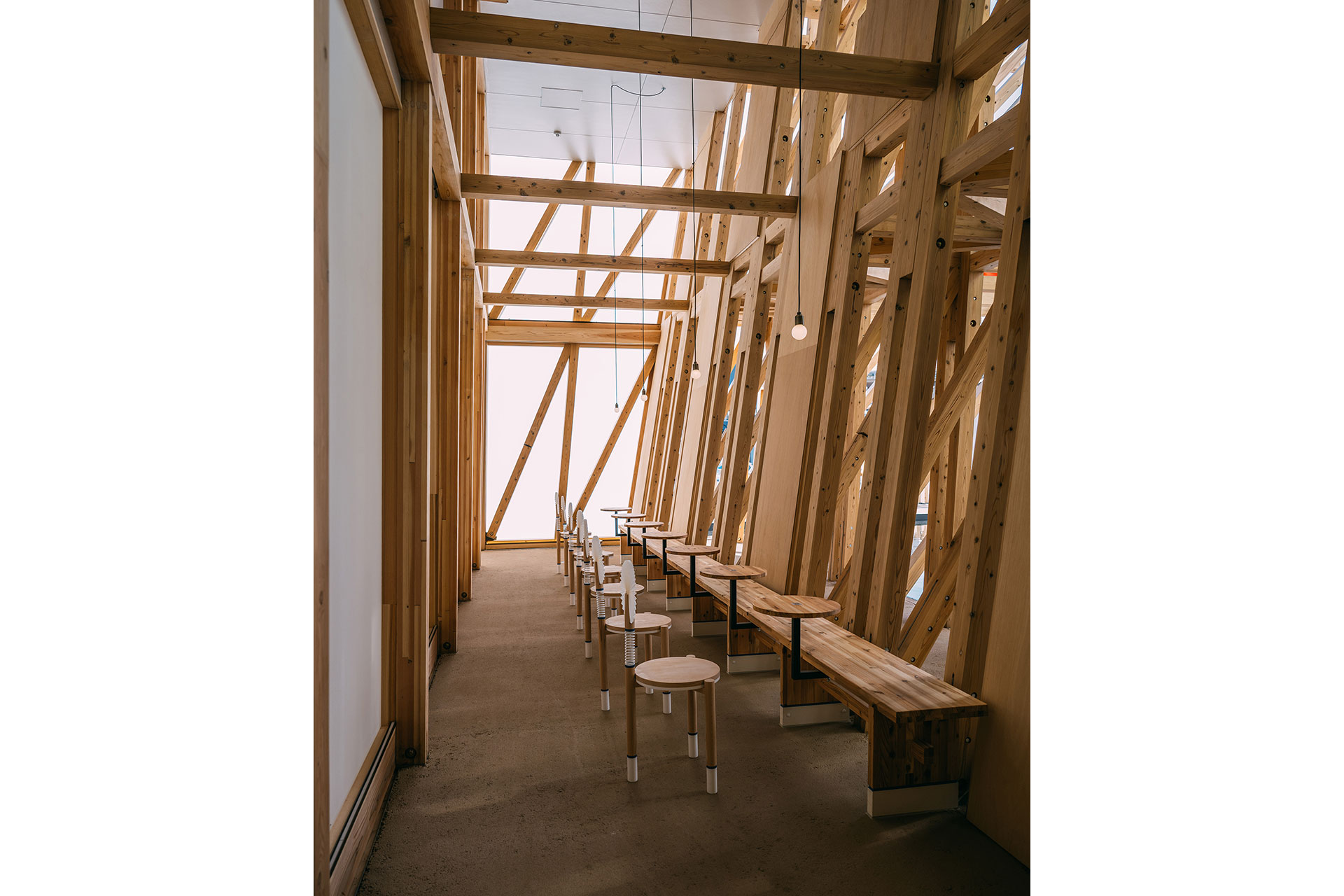
The pavilion’s defining features, the wooden structure and mesh membrane, evoke Bahrain’s traditional sailing vessel, the dhow boat. Constructed from approximately 3000 wooden pieces, it functions as a modern vessel carrying a story of connection between the two nations, the art of joinery, and cultural exchange. All wooden pieces are fully reusable after the Expo, reflecting a sustainable design philosophy.
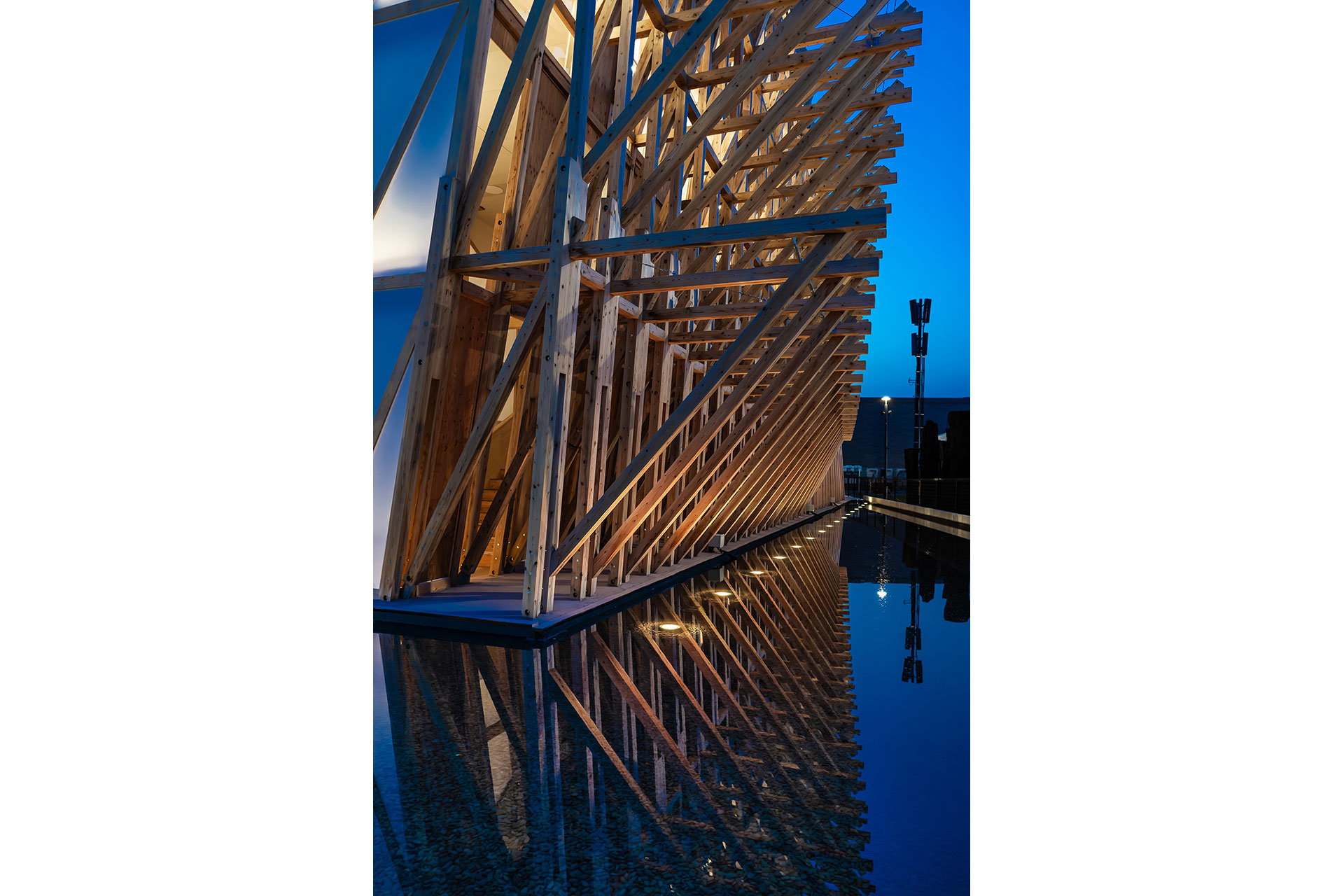
Underwater lighting installed in the water features on both sides of the pavilion illuminates the 13.8 m height wooden structure, creating the impression that the pavilion is receiving light from the “Mother Sea” as it sails.
This further emphasizes the pavilion’s symbolism as a bridge between the two nations.
The pavilion is composed mostly of wood, mesh membranes, and glass, and remains bright throughout the day. The openness of the wooden structure, combined with the mesh membrane’s efficient reflection and diffusion, allows for effective use of natural light. As a result, the combined consumption of general and exhibition lighting is only 4.63 lm/m², achieving energy efficiency while maintaining comfort.
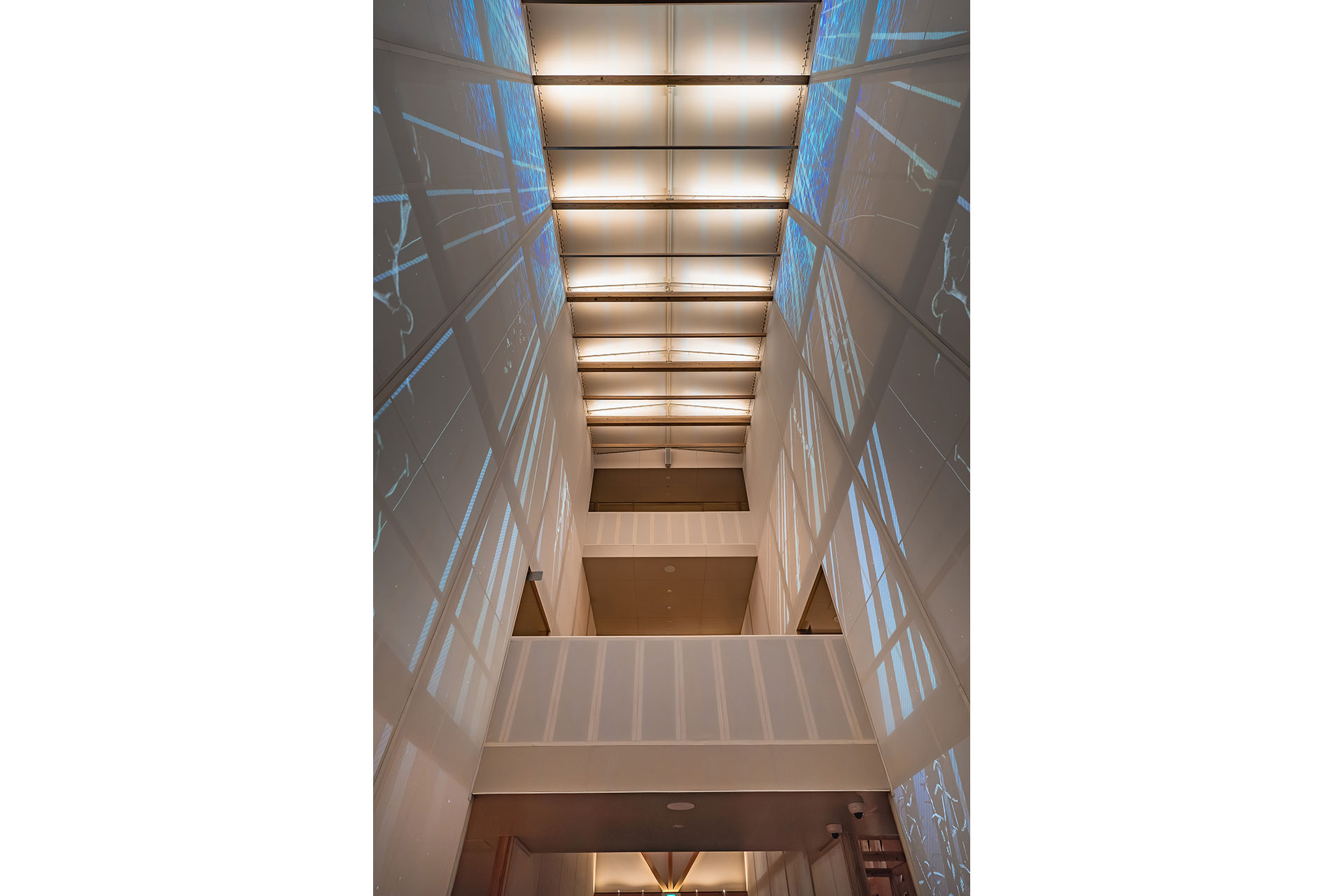
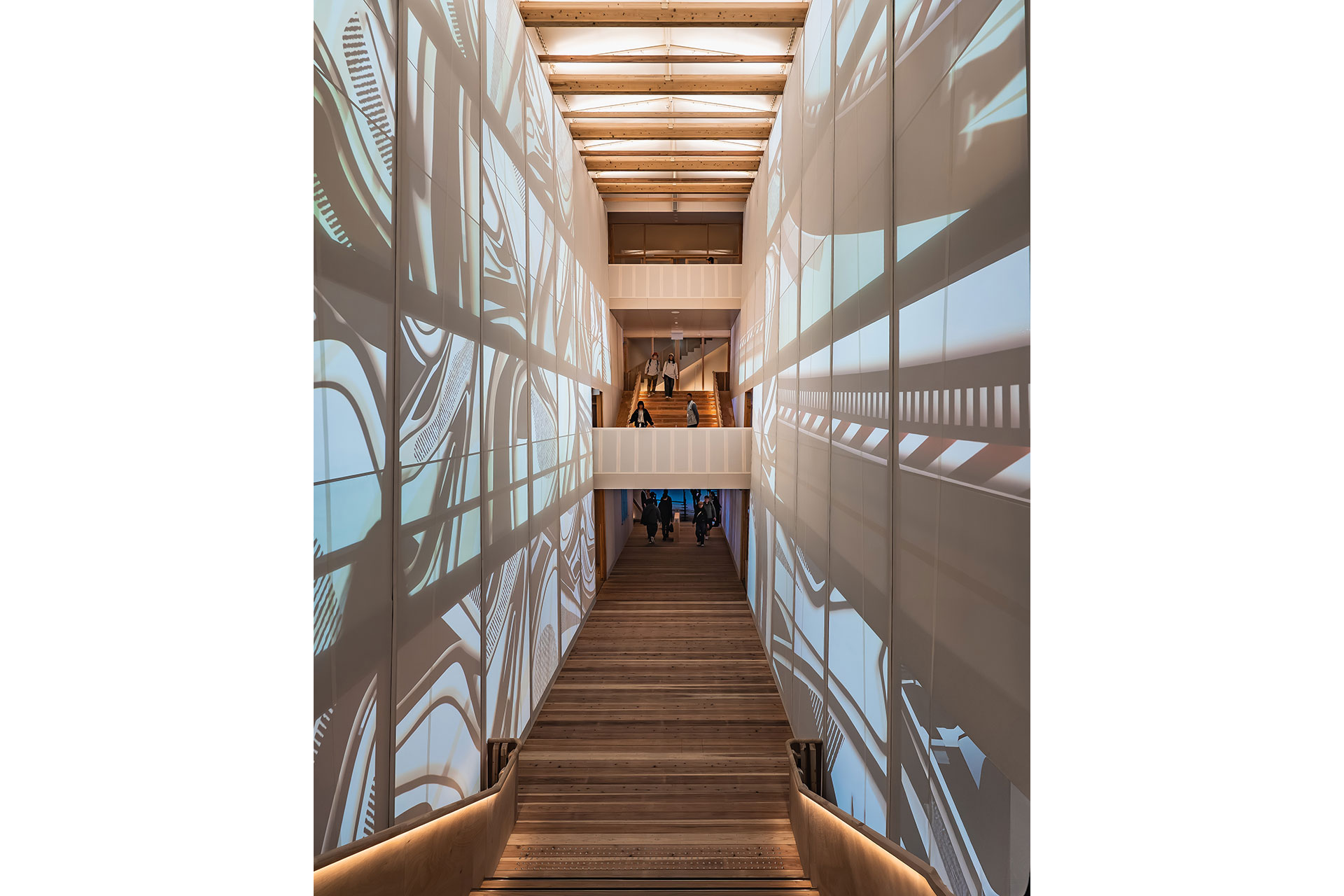
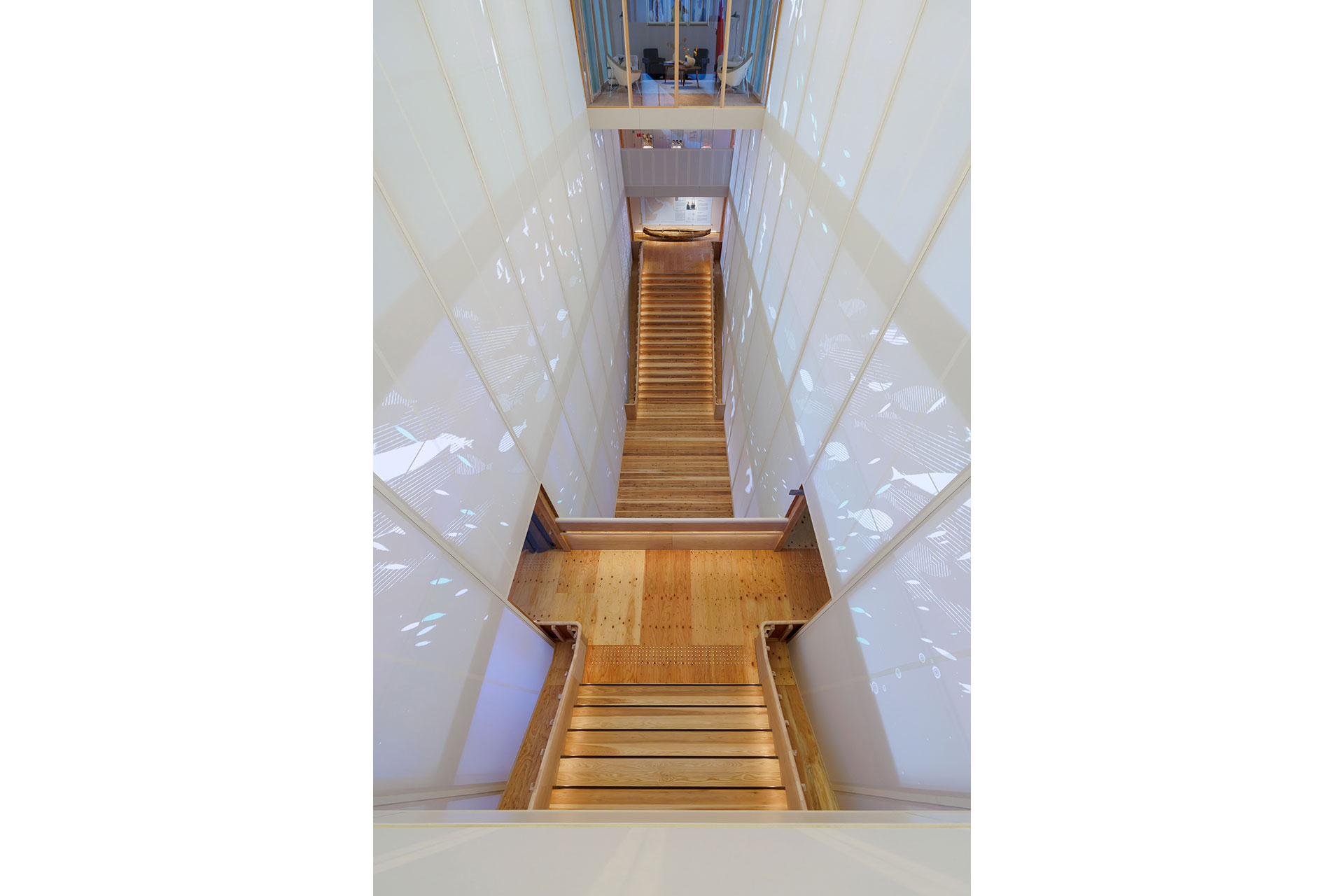
All light passing through the mesh membrane is indirect, preventing glare. High-power linear lighting on the fourth-floor beams of the central atrium also reflects off the mesh, blending with natural light. This envelops visitors on the first floor in a sensation reminiscent of the “Mother Sea” or a protective “mother’s womb.” The linear lighting installed above the beams is concealed by wooden curtain boards. As a result, visitors can experience the light naturally cascading from above like natural daylight at night, without being aware of the presence of the fixtures.
By installing indirect lighting on the mesh membranes at the ends of the corridors on both sides of the atrium (the mesh membrane at the pavilion’s front), the corridors on each floor gain a sense of depth and spaciousness, while simultaneously creating a dappled light effect as the pavilion’s interior light gently seeps outward.
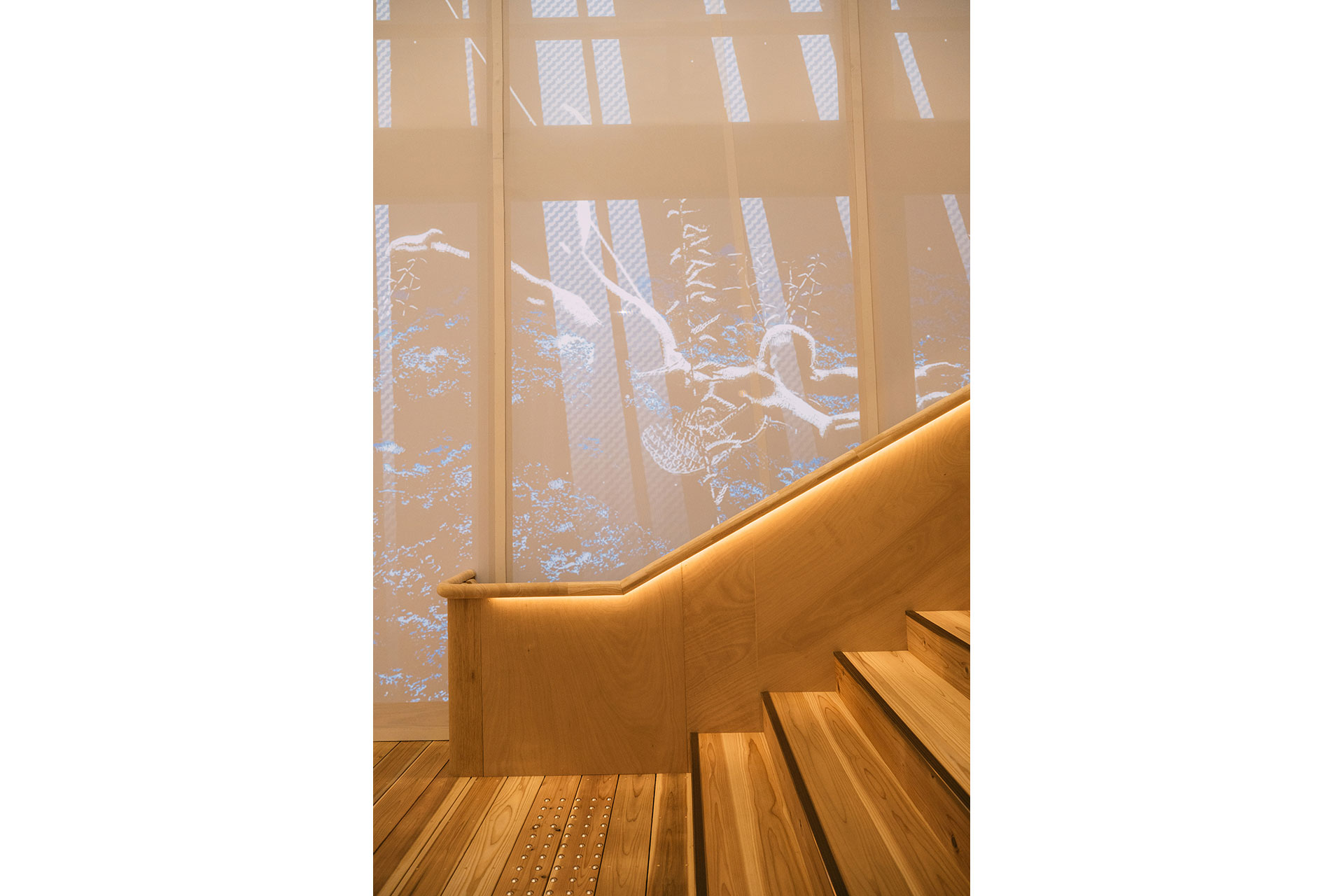
Projecter images in the corridors are illuminated only at the floor level by handrail-mounted indirect lighting, ensuring projectors are not obstructed. The combination of projector imagery and soft light allows visitors to follow gentle paths and experience an underwater journey.
Direct spotlights highlight the exhibits and display panels. The spotlights are adjusted in beam angle and quantity according to the content, with on-site fine-tuning to achieve optimal illumination. Small spotlights matching the ceiling color are used so visitors focus on the exhibits without noticing the fixtures.
The fourth floor features a distinctive ceiling with a gentle curved shape. Indirect lighting installed on the outer beams of the corridor creates a gradient of light along the ceiling’s curve, accentuating its form.
Rather than illuminating the exhibition uniformly, lighting is adjusted in dialogue with natural light and layered to create contrast.
This interaction between architecture, nature, and light provides visitors with comfort and new sensory experiences.