

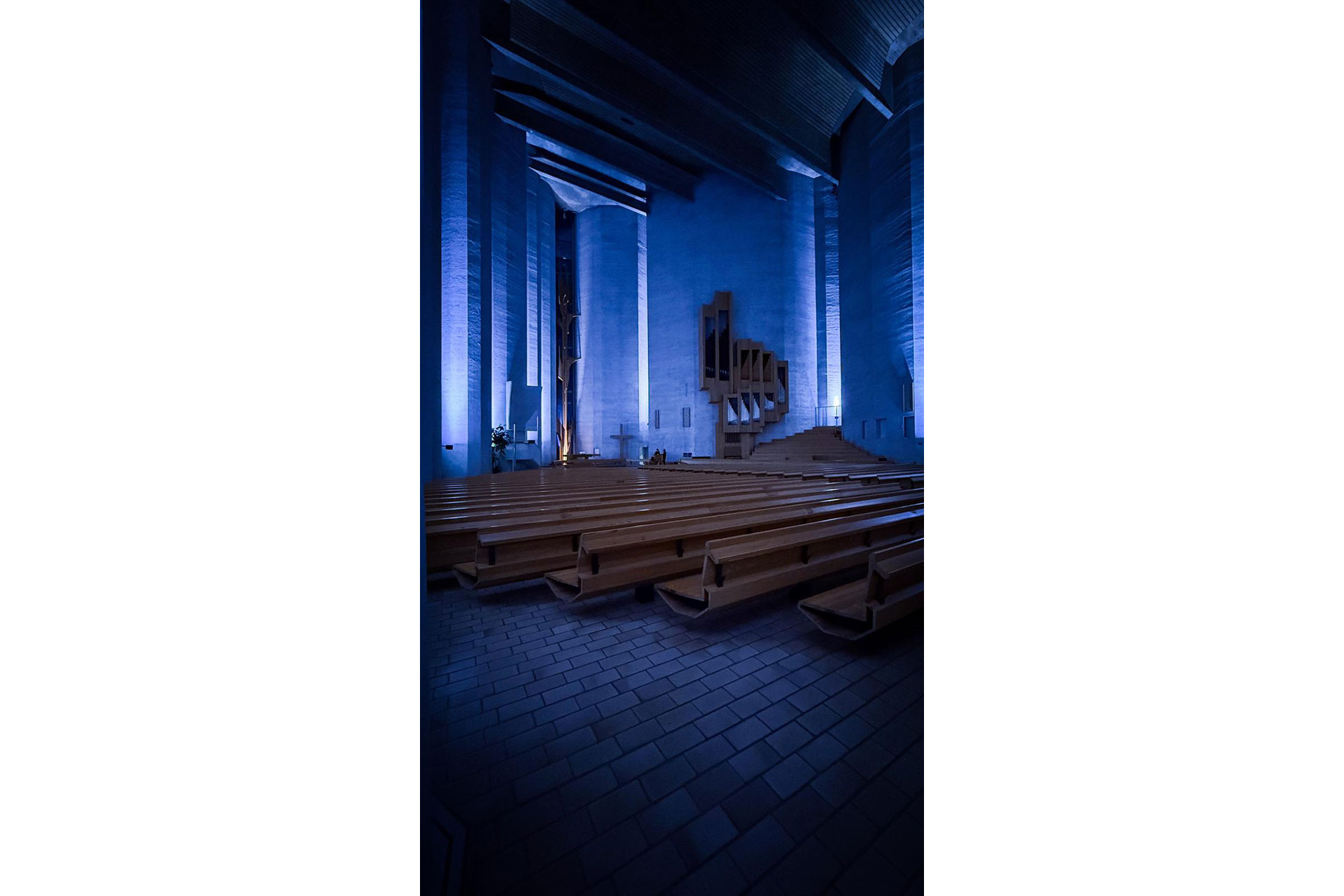
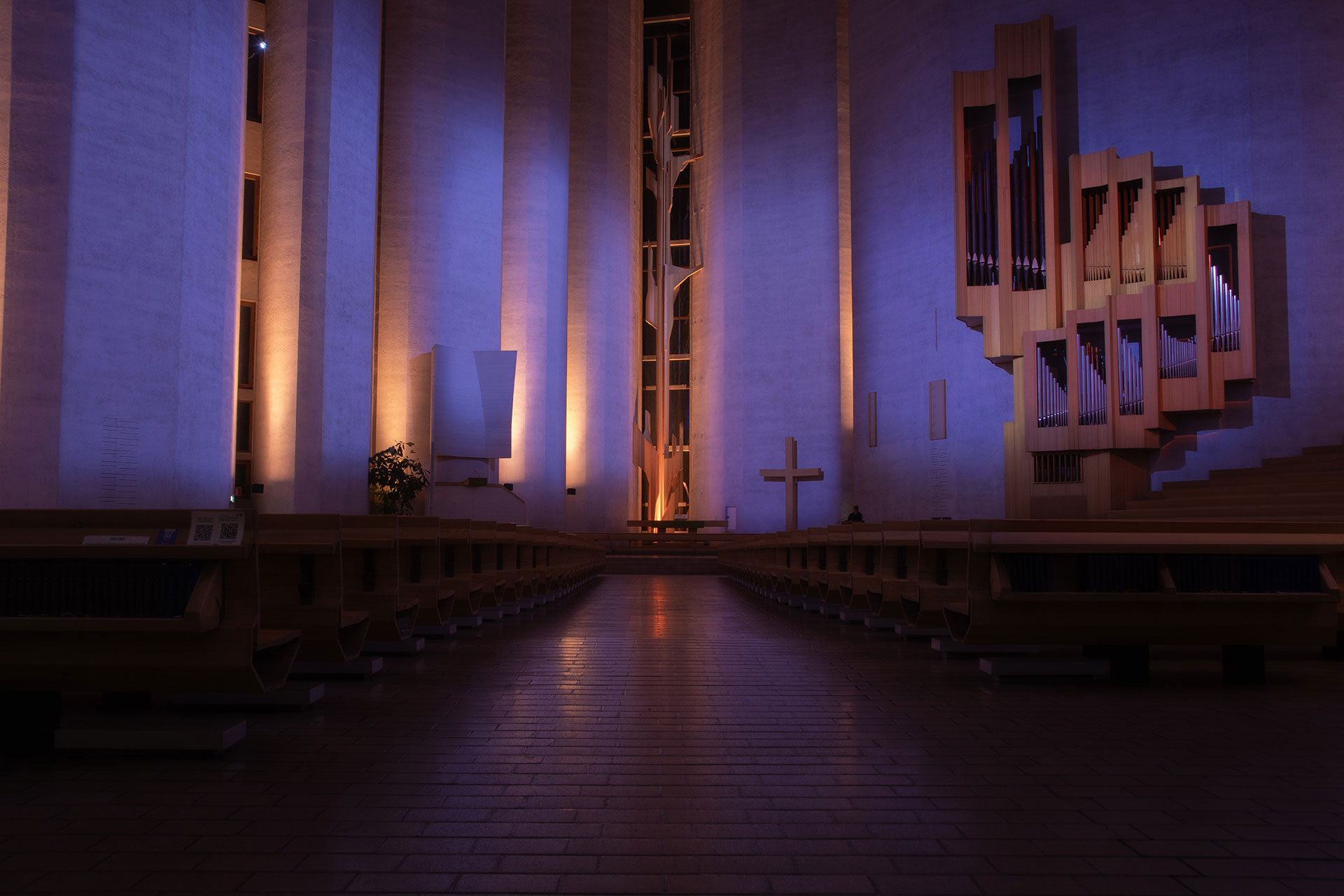
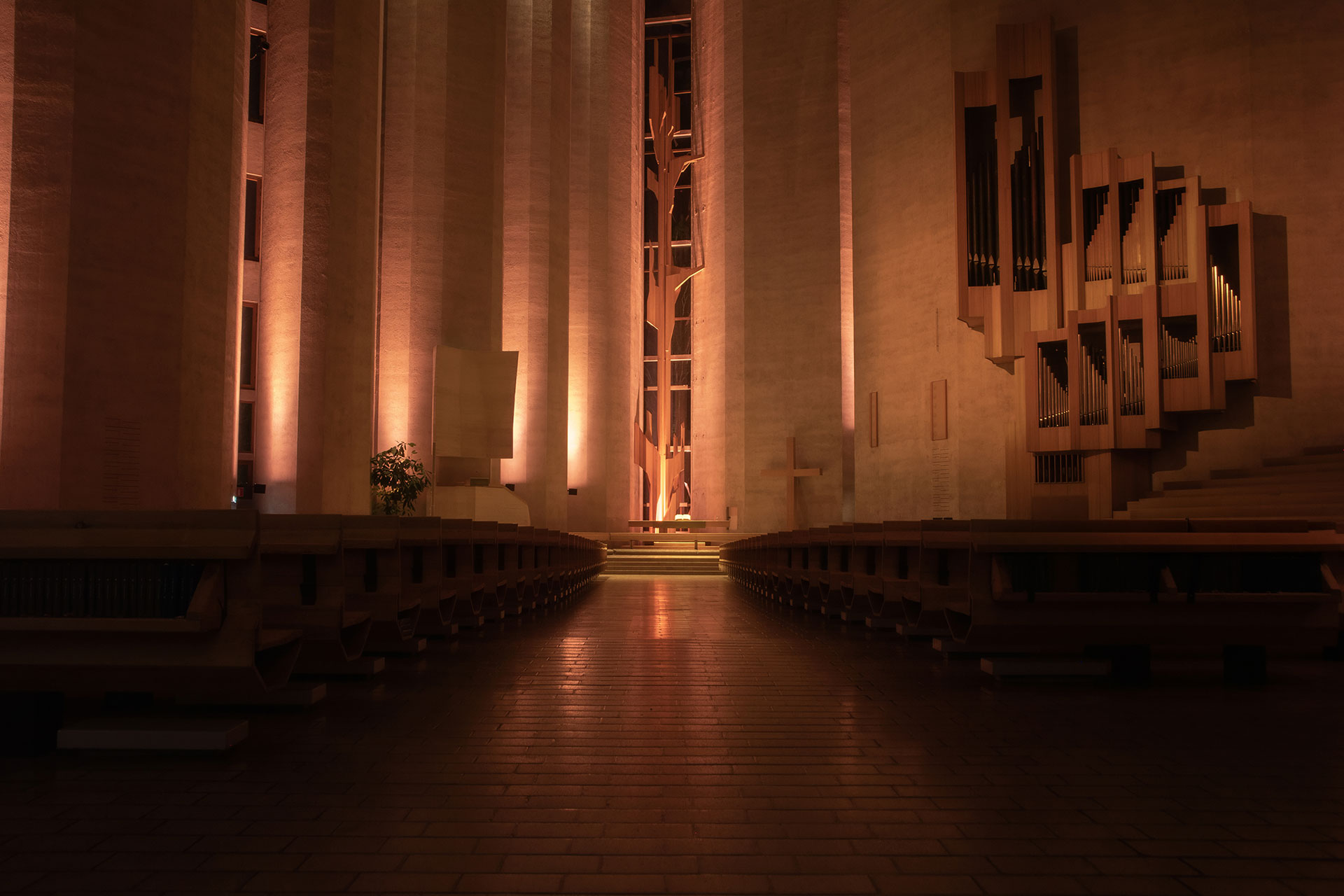
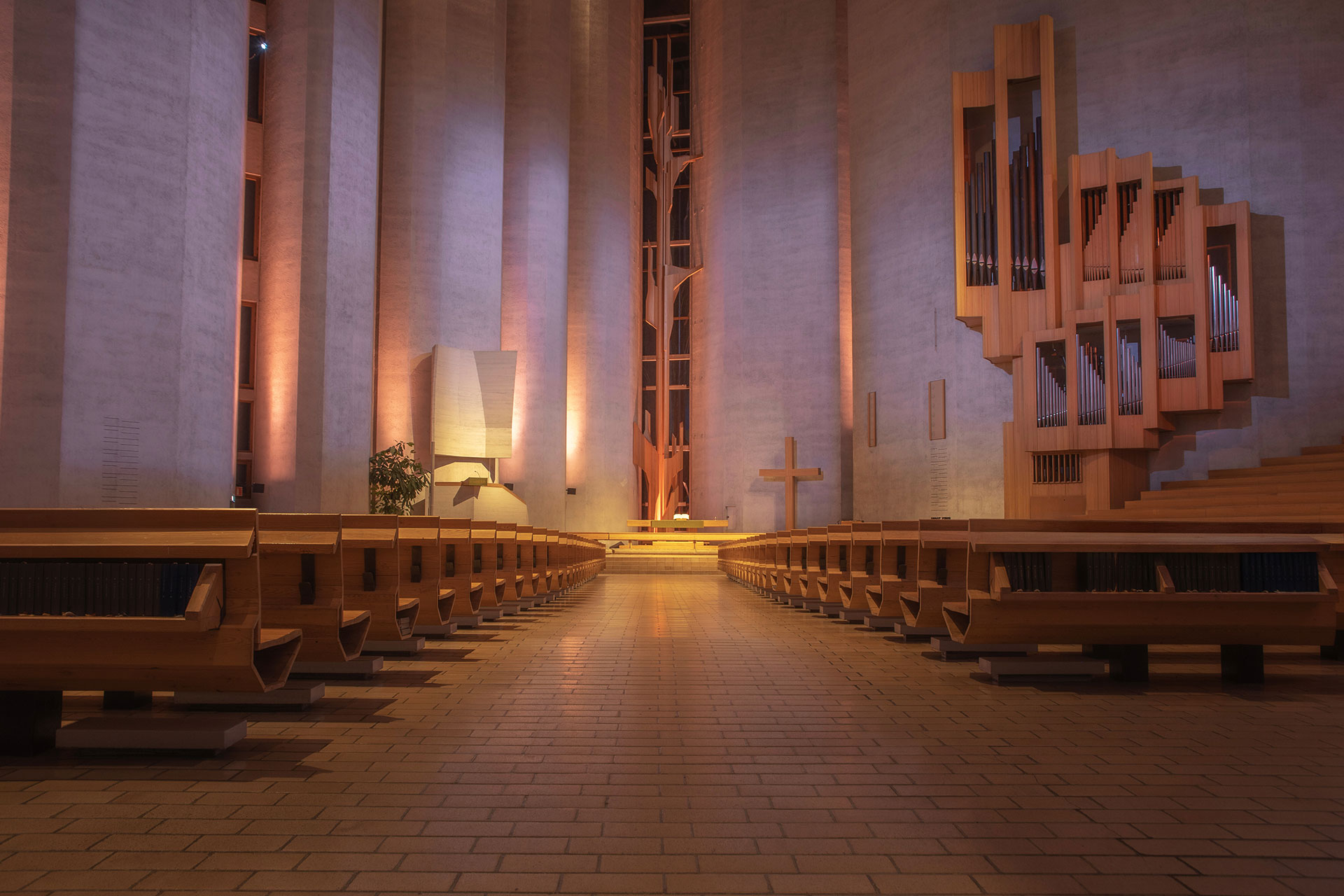
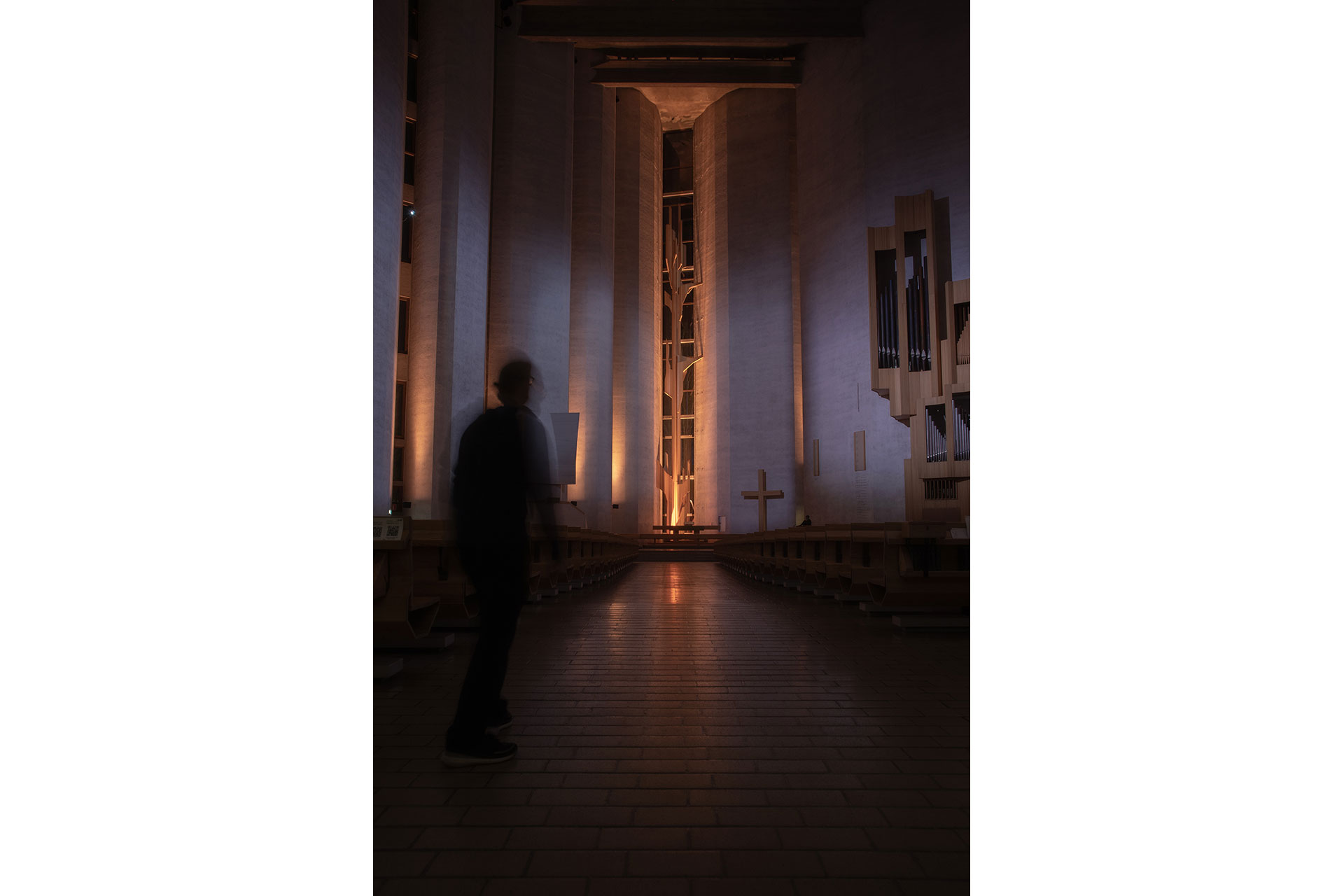
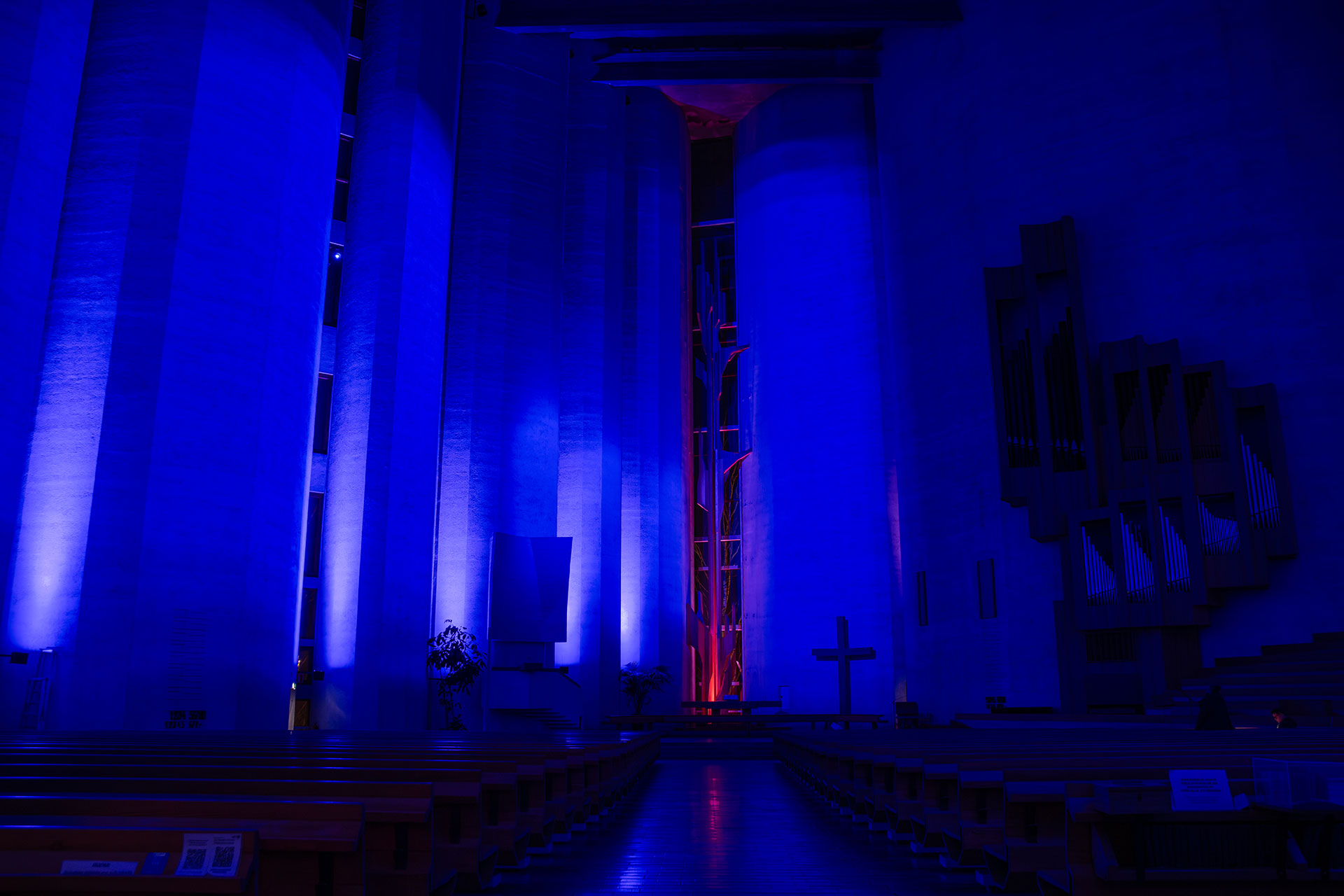
Kaleva Church in Tampere, Finland, designed by the architect couple Reima and Raili Pietilä, is a significant example of Finnish modern church architecture. Completed in 1966, the church interior is defined by its exceptional height, sculptural concrete surfaces, and tall windows, forming a luminous and almost immaterial space. The continuous interplay of natural light and shadow is fundamental to the spatial experience.
WhiteNight Lighting Oy designed the renewal of the interior lighting to reinforce the original architectural concept and to support both the spiritual and functional character of the space. The renewed lighting creates a calm and welcoming atmosphere in which architecture, symbolism, and light are closely interwoven. The system is versatile and controllable, enabling flexible use for everyday activities, ceremonies, and events.
The primary objective of the interior lighting design was to strengthen Reima Pietilä’s original architectural idea, in which light is an integral part of the building’s formal language. The lighting structures the space and emphasizes the monumentality, plasticity, and rhythmic curvature of the church interior.
A key design principle was the preservation of the original luminaire locations and lighting principles. This ensured continuity of the original lighting concept and maintained the cultural and historical integrity of the building, while allowing the lighting to respond to contemporary functional needs.
The lighting was upgraded to an energy-efficient and maintainable system. Maintenance-critical components were placed as low and as discreetly as possible to preserve the clarity of the interior architecture and to ensure safe and efficient maintenance, particularly in relation to the exceptionally high luminaire mounting heights.
The original luminaire positions within the window bays were retained. Luminaires are located both high and low within the window bays, following the original lighting logic in which light shapes the space from multiple vertical levels. The highest luminaires are mounted at heights of up to approximately 33 meters, imposing specific requirements on optical performance and aiming accuracy.
The lower-mounted luminaire units, consisting of both arm and visible luminaire element, required a specialized solution that preserves the historic arm and luminaire appearance while integrating contemporary lighting technology within. The solution was reviewed and approved in cooperation with the Finnish Heritage Agency.
The general lighting colour temperature was set at 3000 K, providing a neutral white light that supports the material qualities of the space. The lighting is divided into functional zones—altar, choir, and nave—allowing light levels and emphasis to be adjusted as required. Wall surfaces, the altar sculpture, and the organ are highlighted with dedicated, precisely controlled luminaires.
Control is provided via DMX and DALI systems, enabling scene-based operation and flexible use without temporary lighting installations. The entire design was developed using a BIM-based workflow, allowing lighting effects to be evaluated during the design phase and ensuring approval within this culturally and historically significant context.