

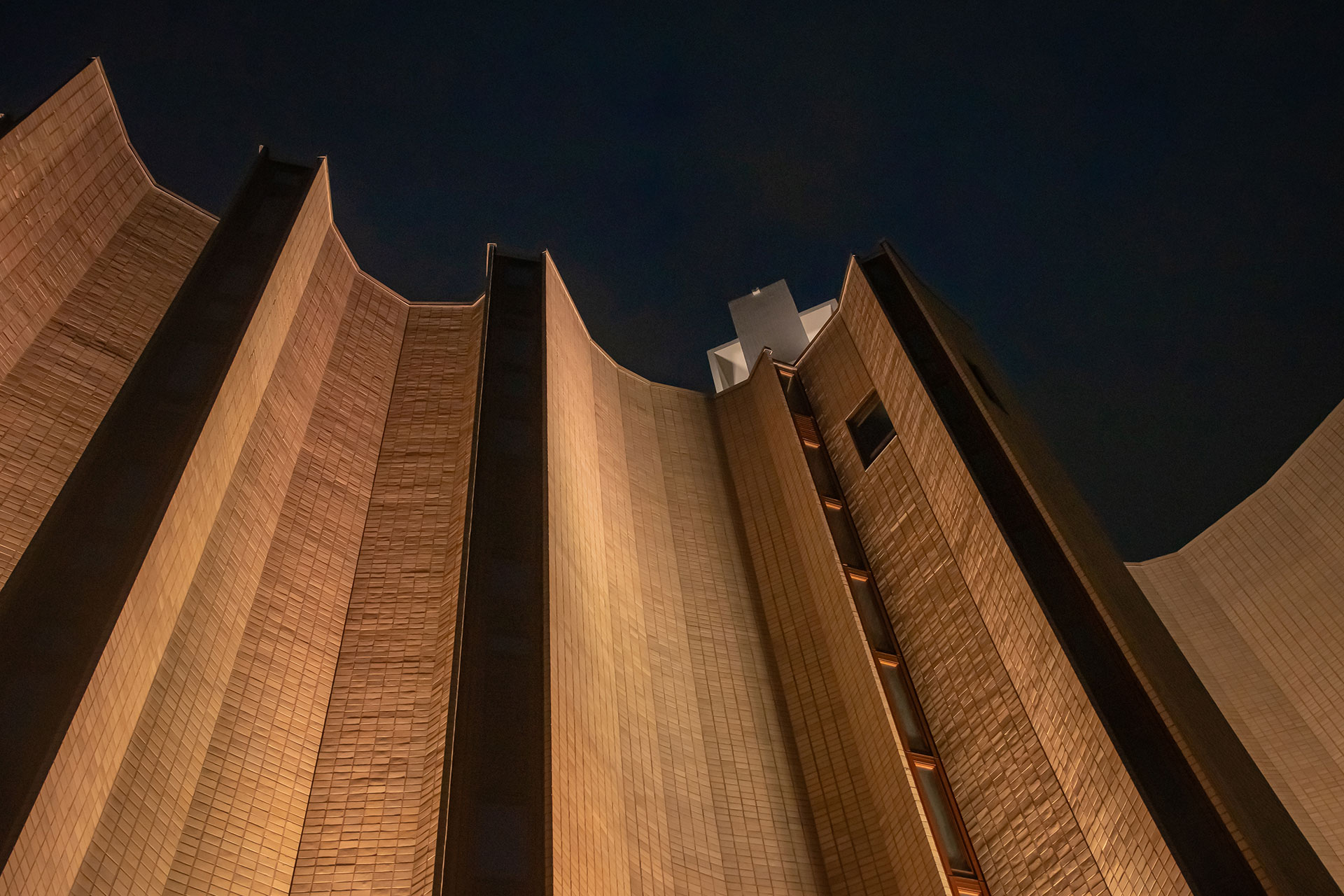
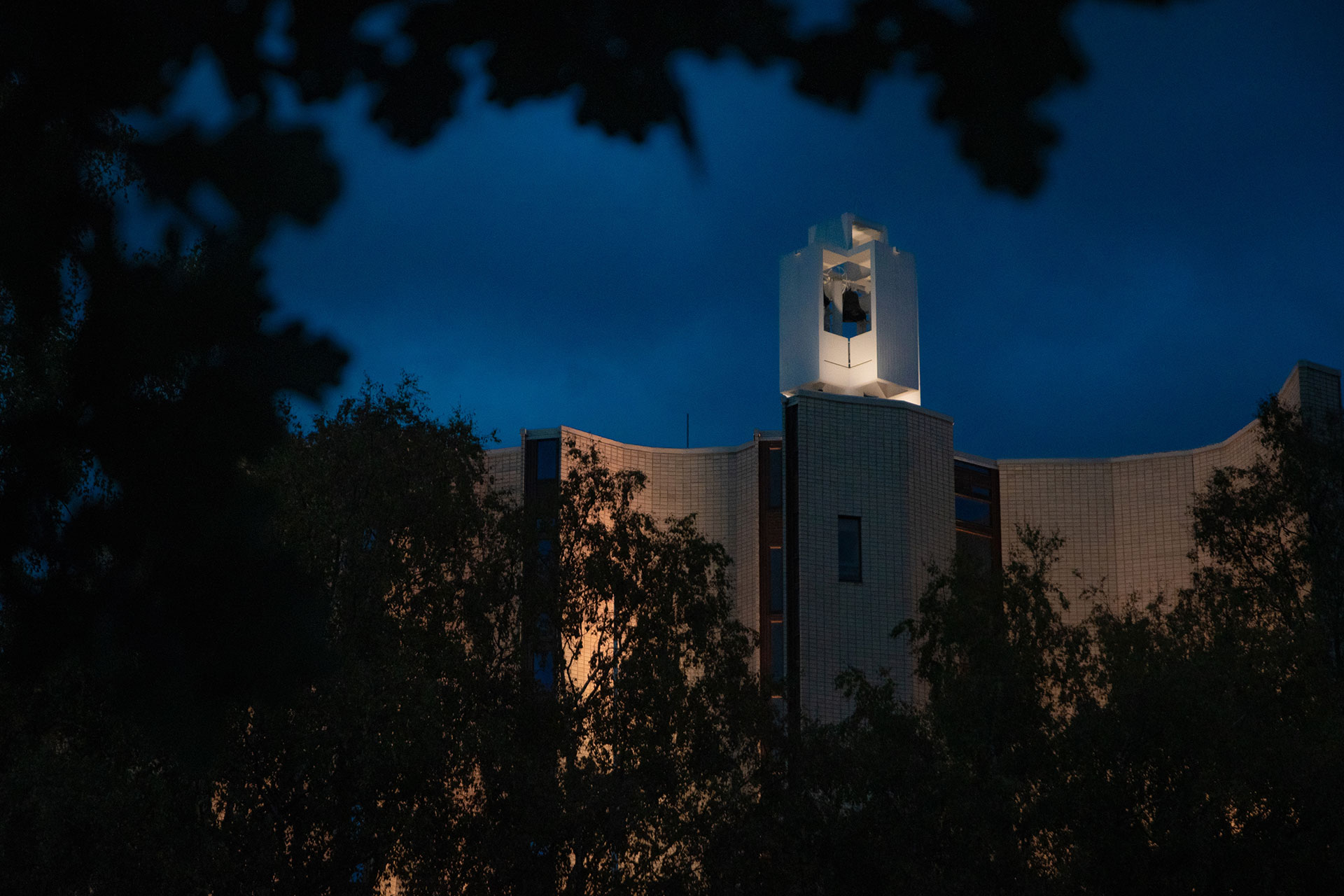
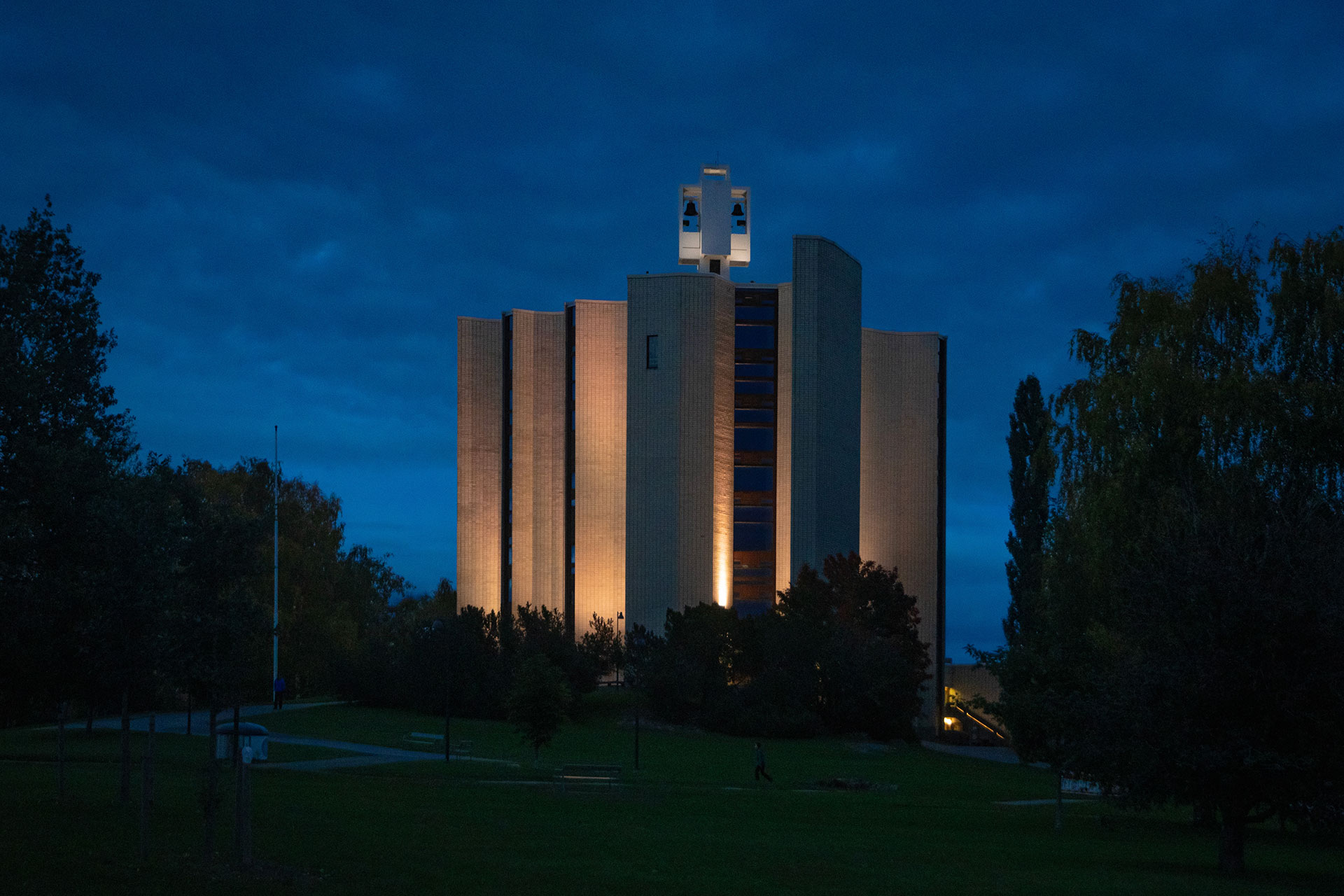
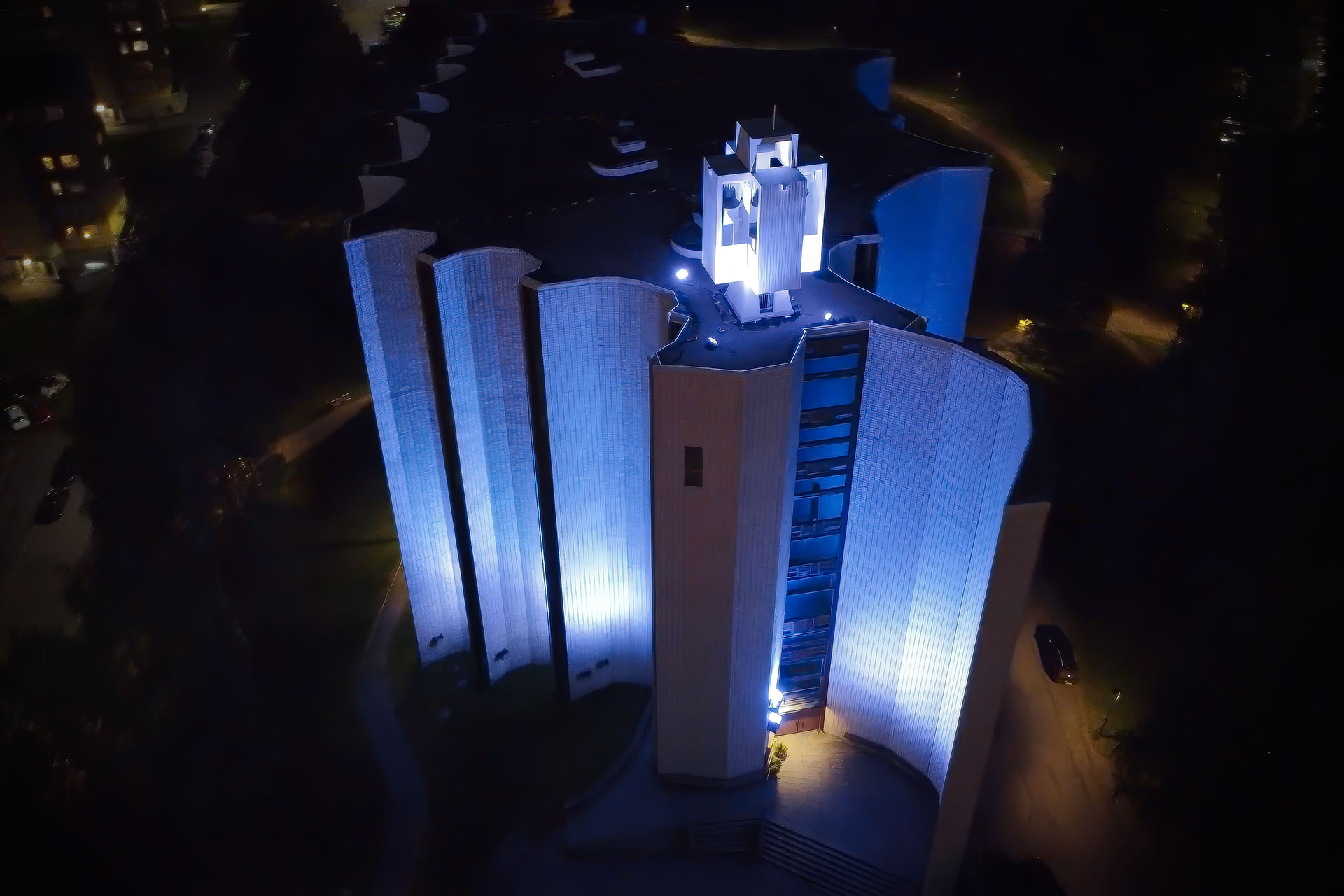
Kaleva Church, designed by the architect couple Reima and Raili Pietilä, is a significant example of Finnish modern church architecture. Completed in 1966, the church is fish-shaped in plan — an ancient Christian symbol. Its sculptural concrete form, defined by curved surfaces and deep recesses, gives the building a strong monumental presence in the cityscape. Light plays a central role in the architecture, shaping the perception of form, mass, and rhythm.
The exterior lighting renewal was designed by WhiteNight Lighting Oy with the aim of reinforcing the original architectural idea, in which light is an integral part of the building’s formal language. The lighting is not conceived as an applied effect, but as a continuation of the architecture itself, revealing the plasticity of the concrete surfaces through light and shadow.
A key objective of the project was to preserve the original lighting principles and luminaire locations. The exterior luminaires are integrated into existing concrete recesses cast into the façade, which strictly defined the available space and placement. Rather than altering these structures, the lighting solution was developed to fit precisely within them, ensuring continuity with the original design and maintaining the building’s cultural and historical integrity.
The limited space, combined with the church’s height and close proximity of the luminaires to the façade, required a carefully optimized balance between luminaire size, output, and optics. After extensive testing, a solution was found in which two independently adjustable luminaires with different optical distributions could be integrated into a single concrete recess. This allows the light to be distributed accurately across the façade, emphasizing the rhythm of the curved walls and creating a dynamic interplay of light and shadow.
The same luminaire family was used in different configurations around the building, including rear façades and intermediate roof levels, ensuring a coherent and continuous exterior lighting concept around the entire church. Particular attention was given to the bell tower, which functions as a distant visual marker and completes the building’s role as an urban landmark.
Despite the technical possibilities of dynamic and color-changing lighting, the everyday exterior lighting appearance is based on white light. The primary exterior lighting scene consists of a subtle, slow transition between warm and neutral white tones, moving gently around the building. This restrained movement brings life to the façade without drawing attention away from the architecture itself. The bell tower remains static, reinforcing its calm and monumental character.
The exterior lighting system operates under DMX control, allowing precise adjustment, time-based programming, and the creation of special lighting scenes for events and occasions when required. At the same time, the lighting remains energy-efficient, robust, and suitable for long-term operation and maintenance.
As night falls, Kaleva Church emerges as a quietly illuminated landmark, integrated into its surroundings without glare or excess brightness. The exterior lighting respects the building’s architectural and symbolic significance, revealing its form with dignity and restraint while allowing the church to remain a living and adaptable part of the urban environment.