

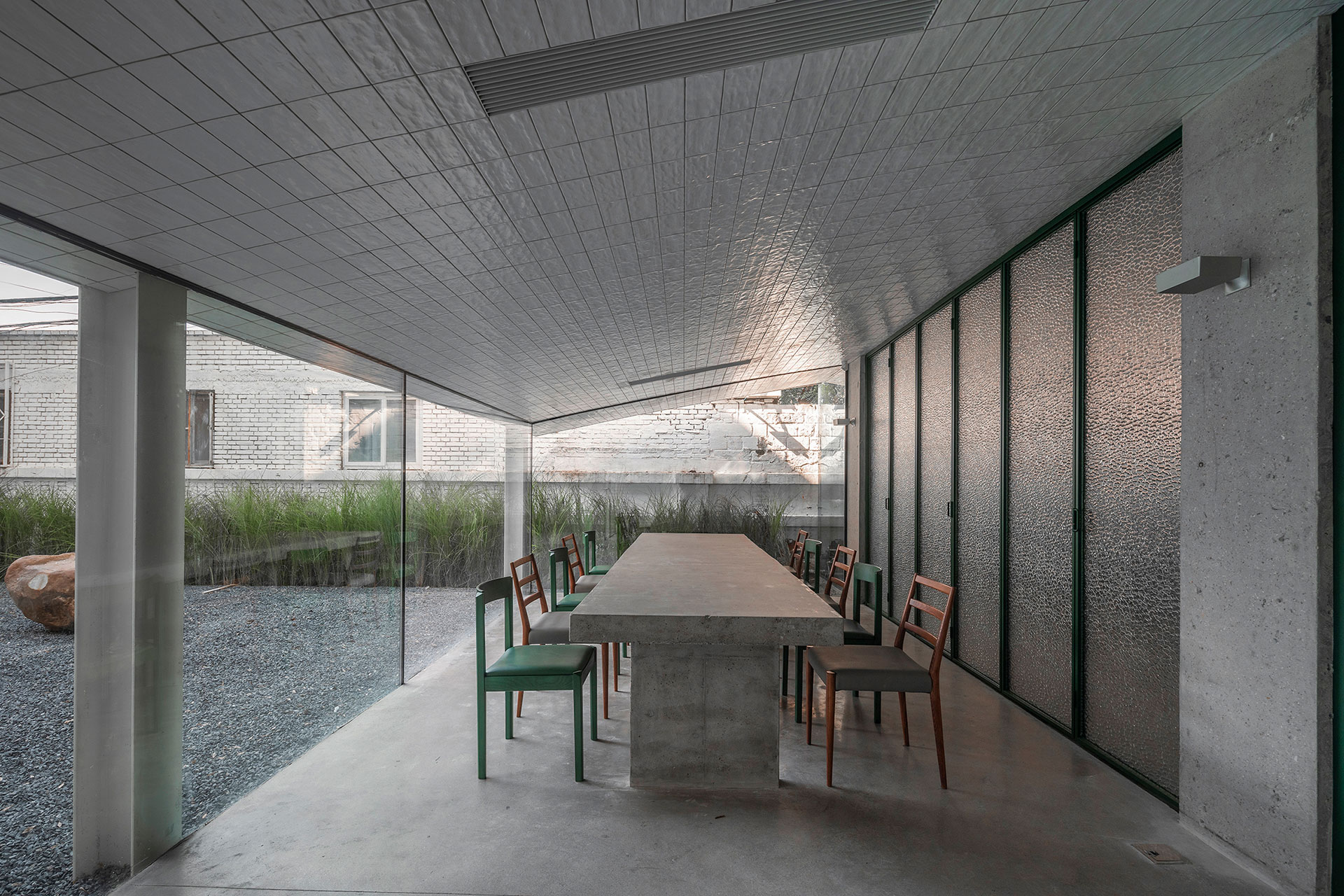
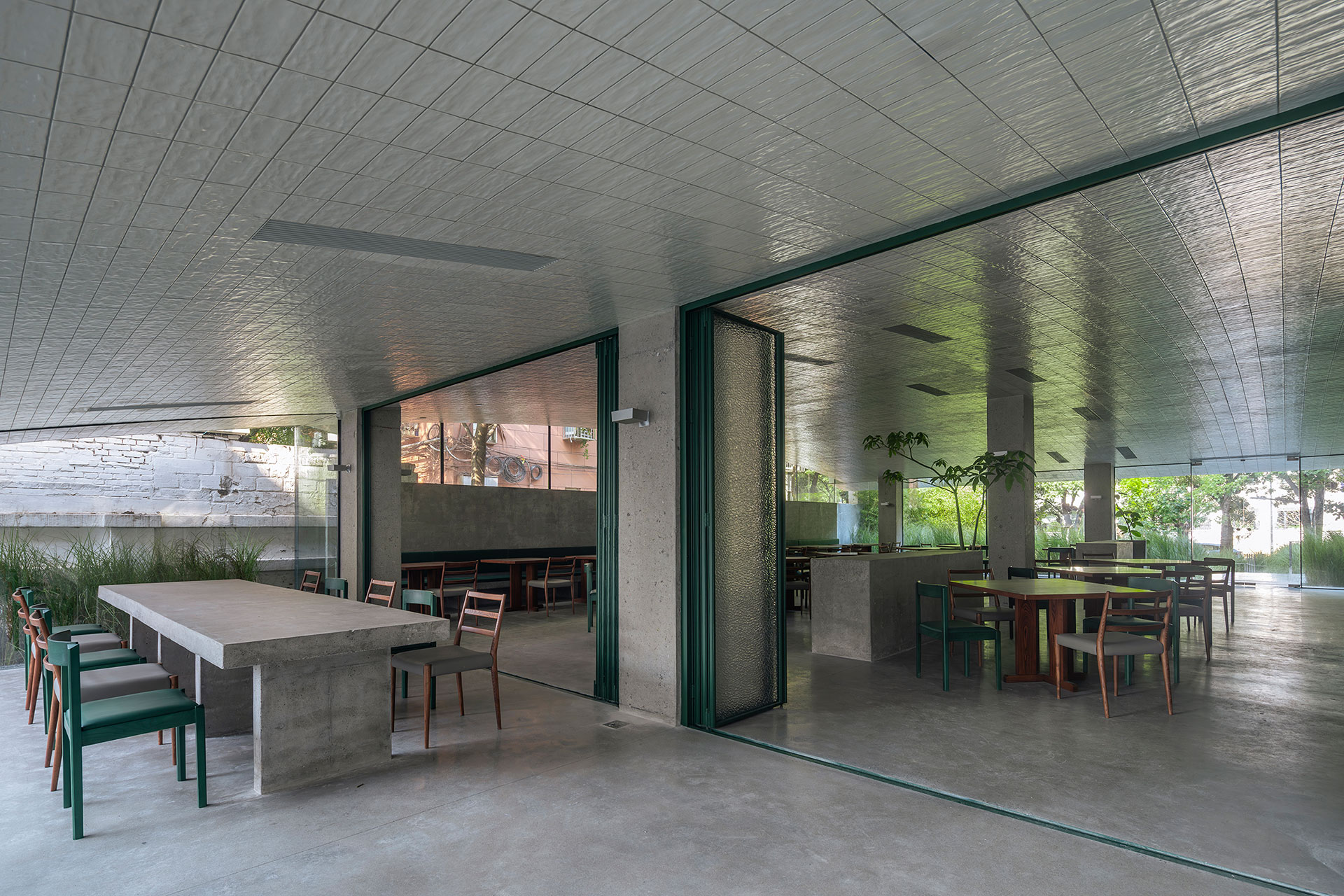
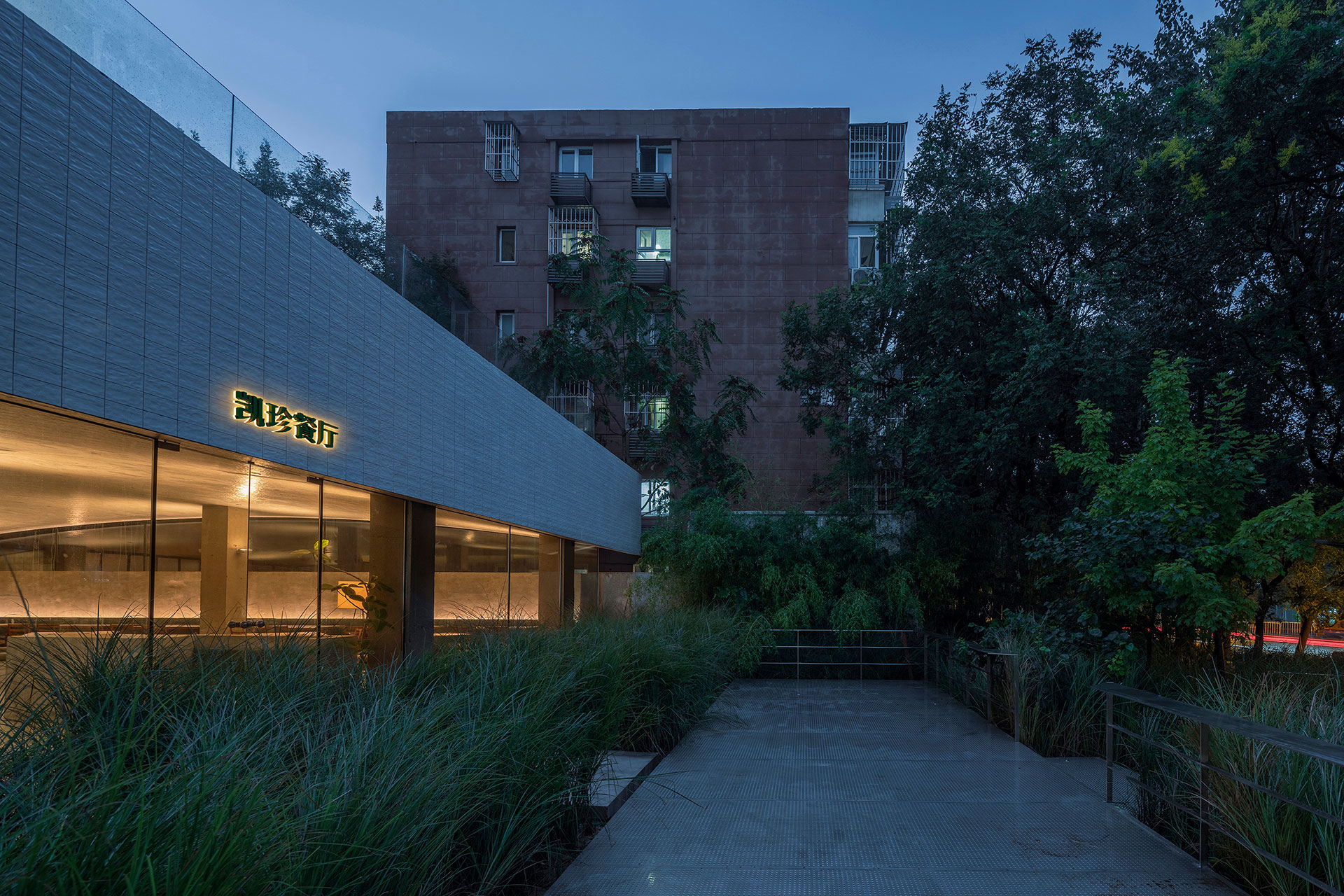
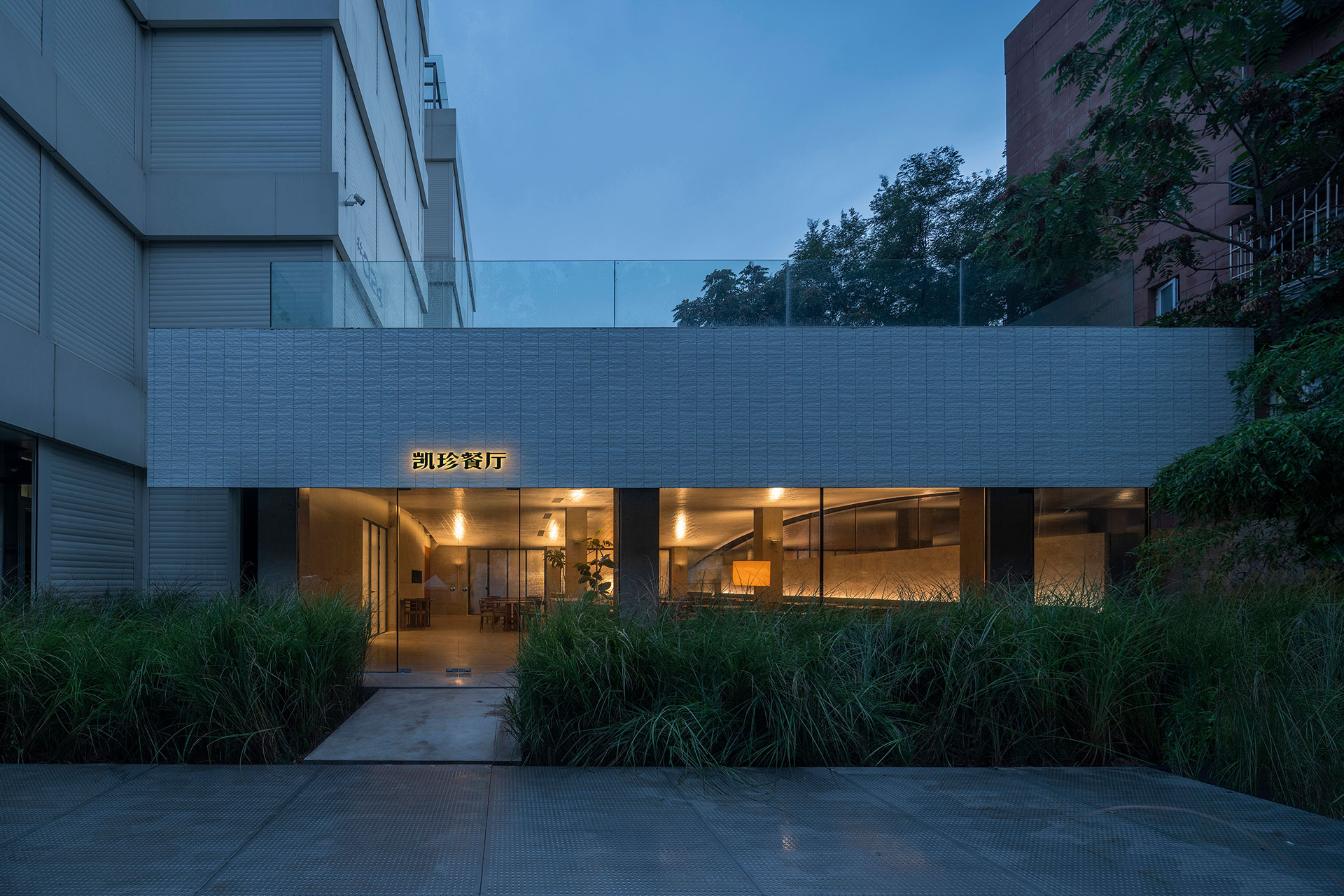
Located in Beijing’s bustling Sanlitun district, opposite the Embassy Area and framed by tree-lined streets, Kai Zhen Restaurant transforms an annex of the #024 commercial complex into a serene urban retreat. Commissioned by a film director, the renovation draws inspiration from the movie Last Night on Earth, using the “pearl” motif to weave light, time, and memory into a space that balances cinematic drama with intimate warmth. Transparent floor-to-ceiling glass blurs indoor-outdoor boundaries, creating a private yet open dining experience.Lighting Design Concept
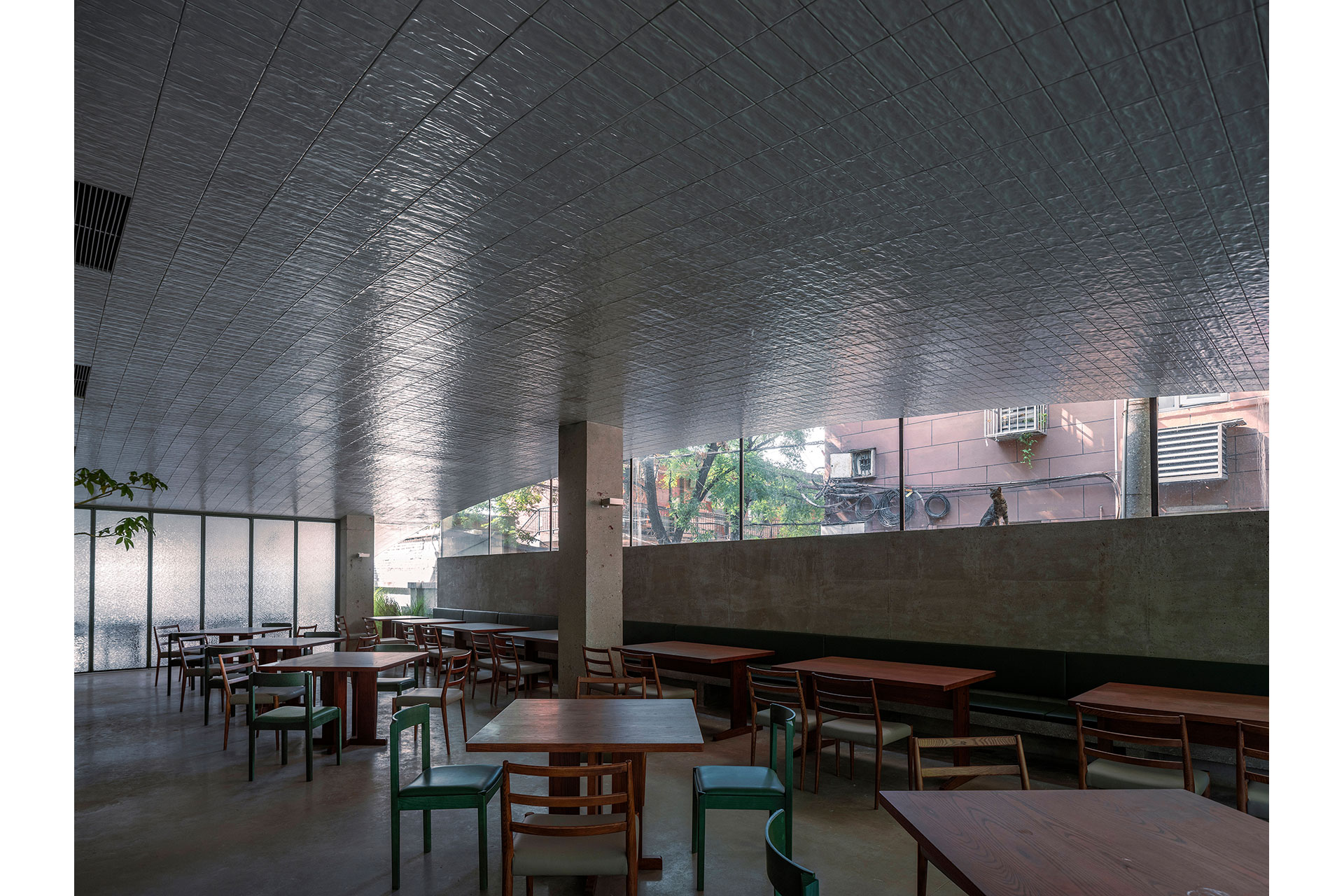
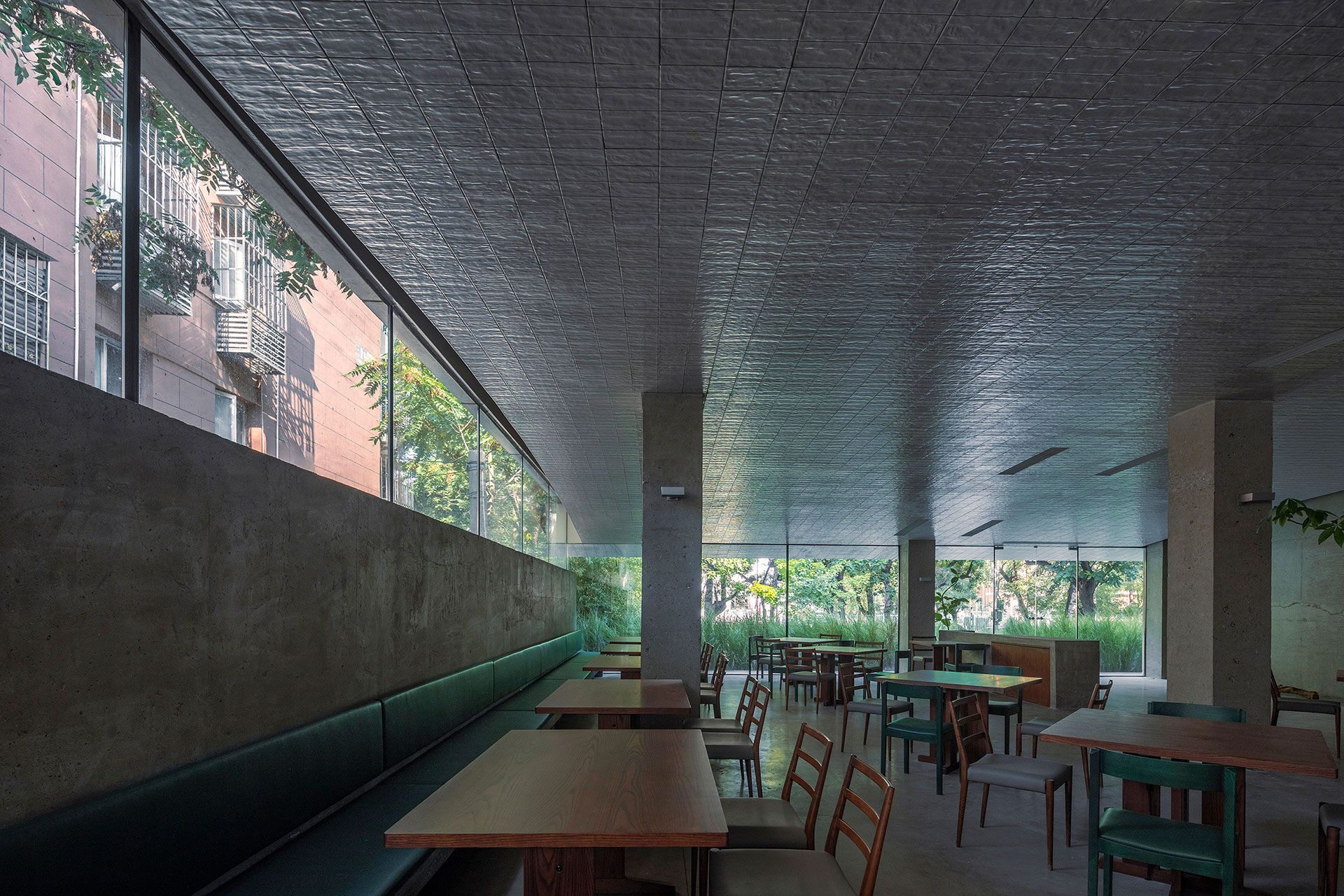
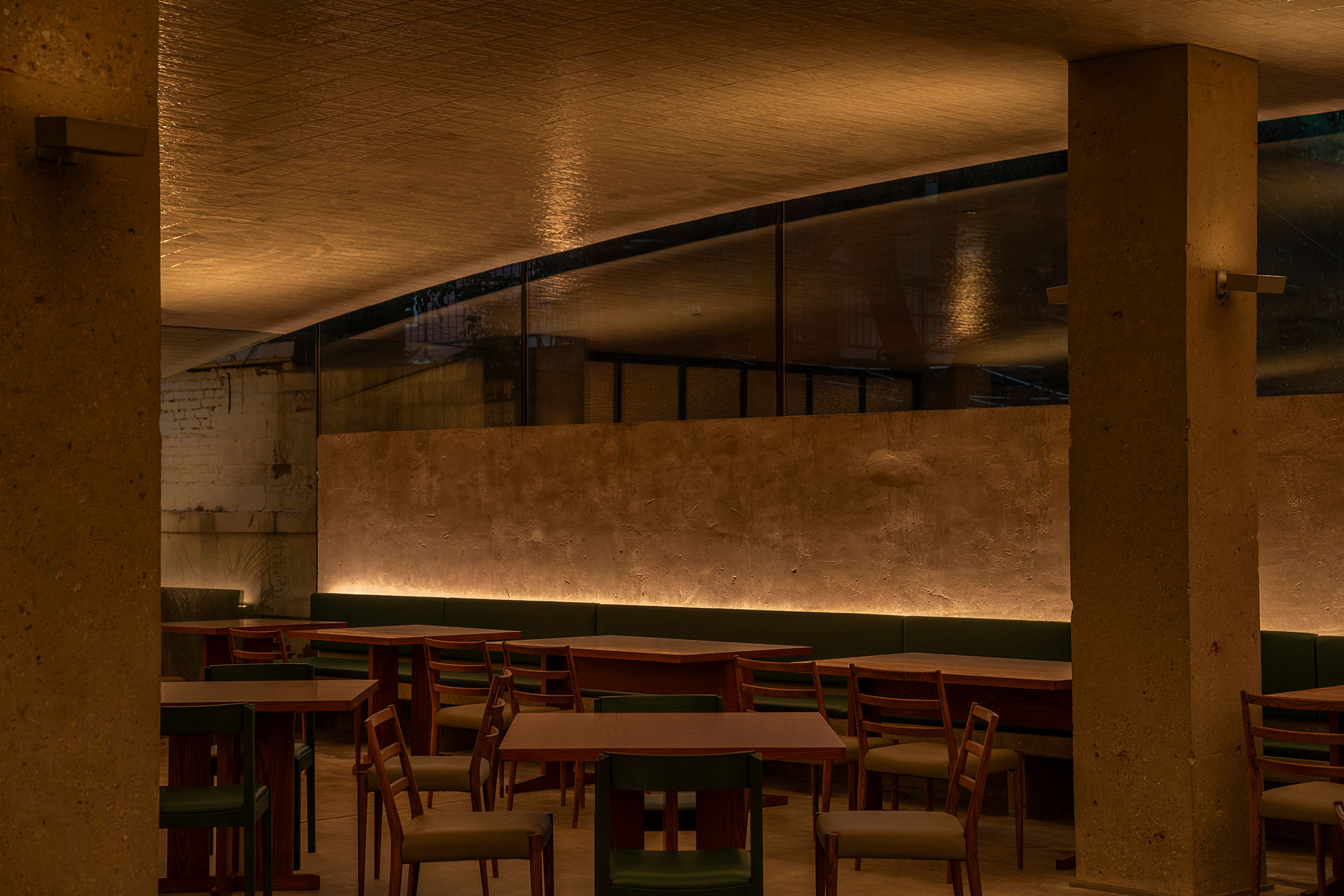
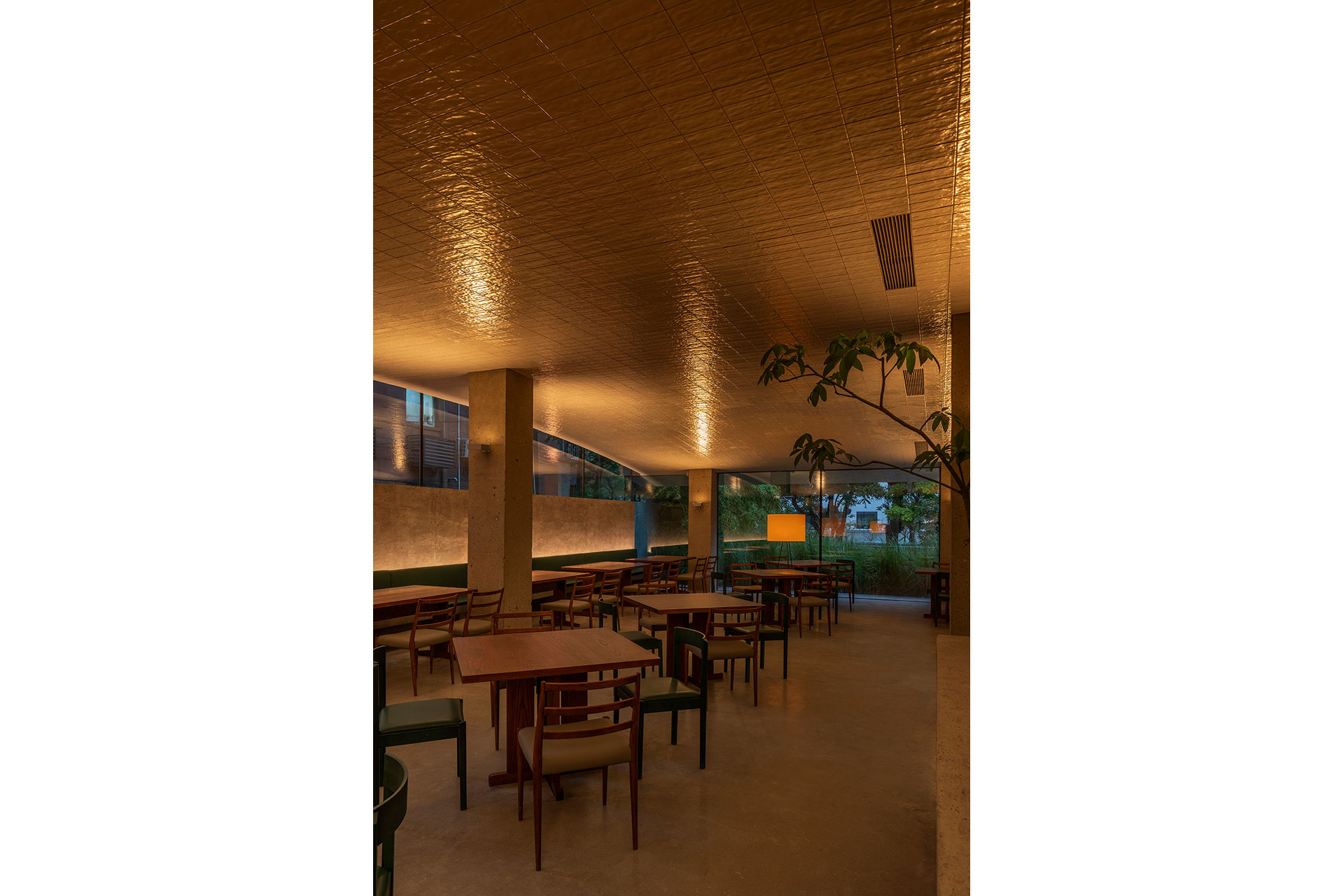
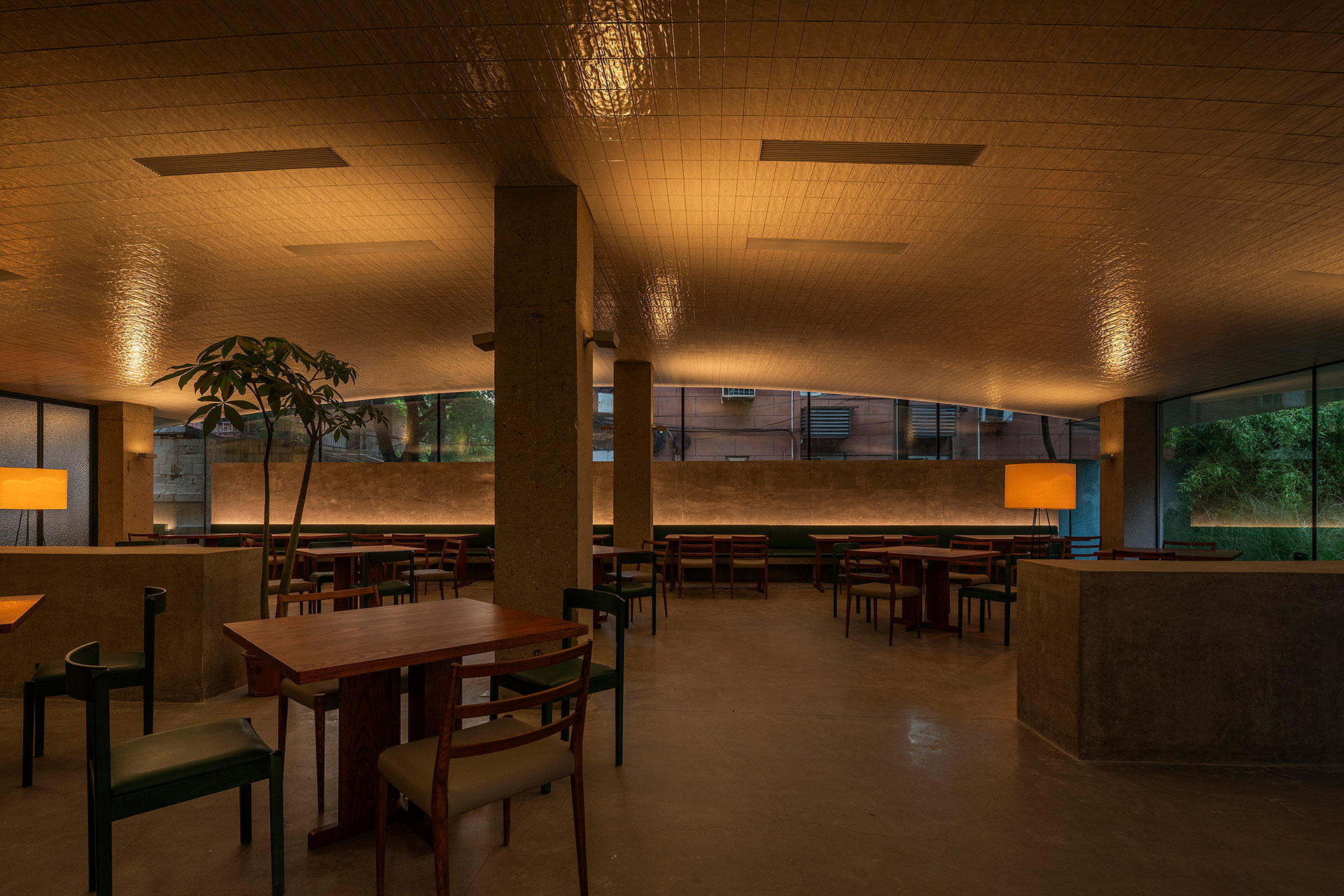
Guided by the client’s cinematic vision, the lighting design employs a film-like language to craft a dramatic yet inviting atmosphere. Eschewing conventional commercial lighting, it evokes the understated glow of a “bridge underpass” scene, using light as a narrative tool to sculpt time, space, and emotion. The design not only sets a theatrical mood but also fosters a cozy, welcoming ambiance for diners, blending artistry with human connection.Lighting Design Features Cinematic Light and Reflection: The ceiling, clad in pearl-glazed ceramic tiles, emulates a seashell, softly reflecting natural light like a movie screen. Gaps between the ceiling and walls allow daylight to filter in, creating dynamic light shifts that mirror a film’s unfolding scenes, evoking a sense of time’s passage with hazy, interwoven hues of inclusivity and depth.
Indirect Illumination as Narrative: Forgoing direct lighting, upward-facing column lights project onto the curved ceiling, their reflected glow enveloping the space in a soft, dramatic embrace, akin to a cinematic fade. Linear light sources subtly highlight the long bench and wall textures, adding depth and detail like a close-up shot.
Focal Glow for Intimacy: A large table lamp in the waiting area radiates warm light, serving as a visual anchor that draws the eye like a spotlight, fostering intimacy and social connection in a cozy, inviting focal point.
Synergy with Space and Materials
The lighting enhances the spatial narrative, complementing the rugged yet natural texture of polished concrete mixed with seashell elements. This material palette, paired with soft light, evokes a dawn-like shelter, resonating with the director’s vision of poetic refuge. Equal-height indoor and outdoor walls, designed with local stray cats’ paths in mind, allow diners to observe their movements through light and shadow, adding a playful, cinematic charm to the warm dining experience.Urban Renewal and Cultural Resonance
As part of Sanlitun’s urban renewal, Kai Zhen’s lighting design extends the city’s cultural fabric, revitalizing the landscape from Taikoo Li North to the Liangma River. The cinematic interplay of light and architecture bridges old and new, infusing the space with cultural depth and commercial vitality, offering a warm “urban hearth” in the bustling city.Conclusion
Kai Zhen Restaurant’s lighting design, inspired by the vision of a film director, uses cinematic techniques to craft a dramatic yet intimate dining experience. Natural and artificial light intertwine, with reflective and indirect illumination creating a narrative of time and memory. Guests are enveloped in a warm, theatrical ambiance, where light shapes a poetic urban oasis, blending Sanlitun’s vibrant charm with moments of human connection.