

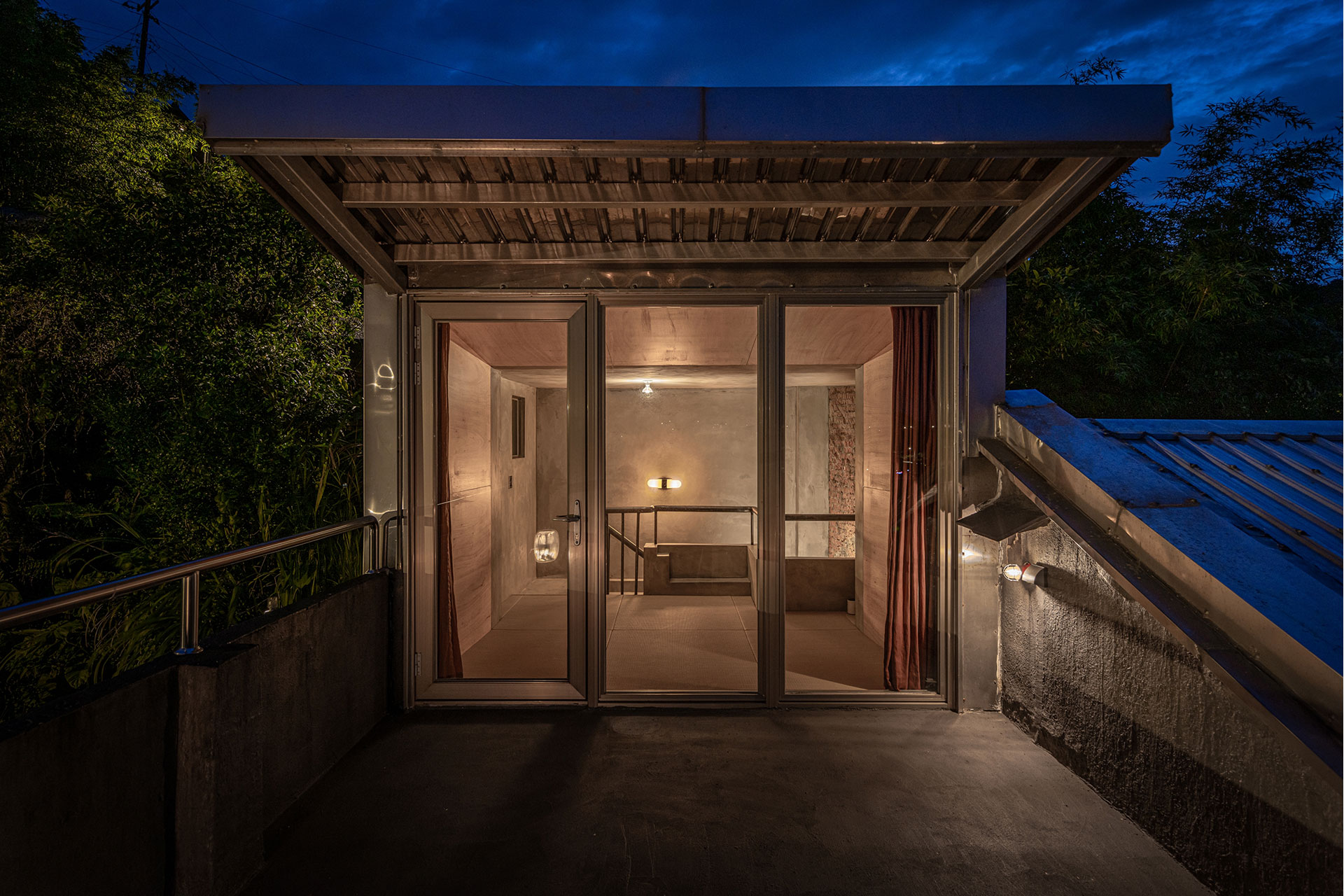
The former miner dormitory perched on the mountainside of Jinguashi bears the marks of Taiwan’s mining era. Its restoration project aimed to preserve old traces and create new scenery. The old building was transformed into a unique accommodation experience. Travellers are not simply staying in a guesthouse, but entering a story about light, time, and land.
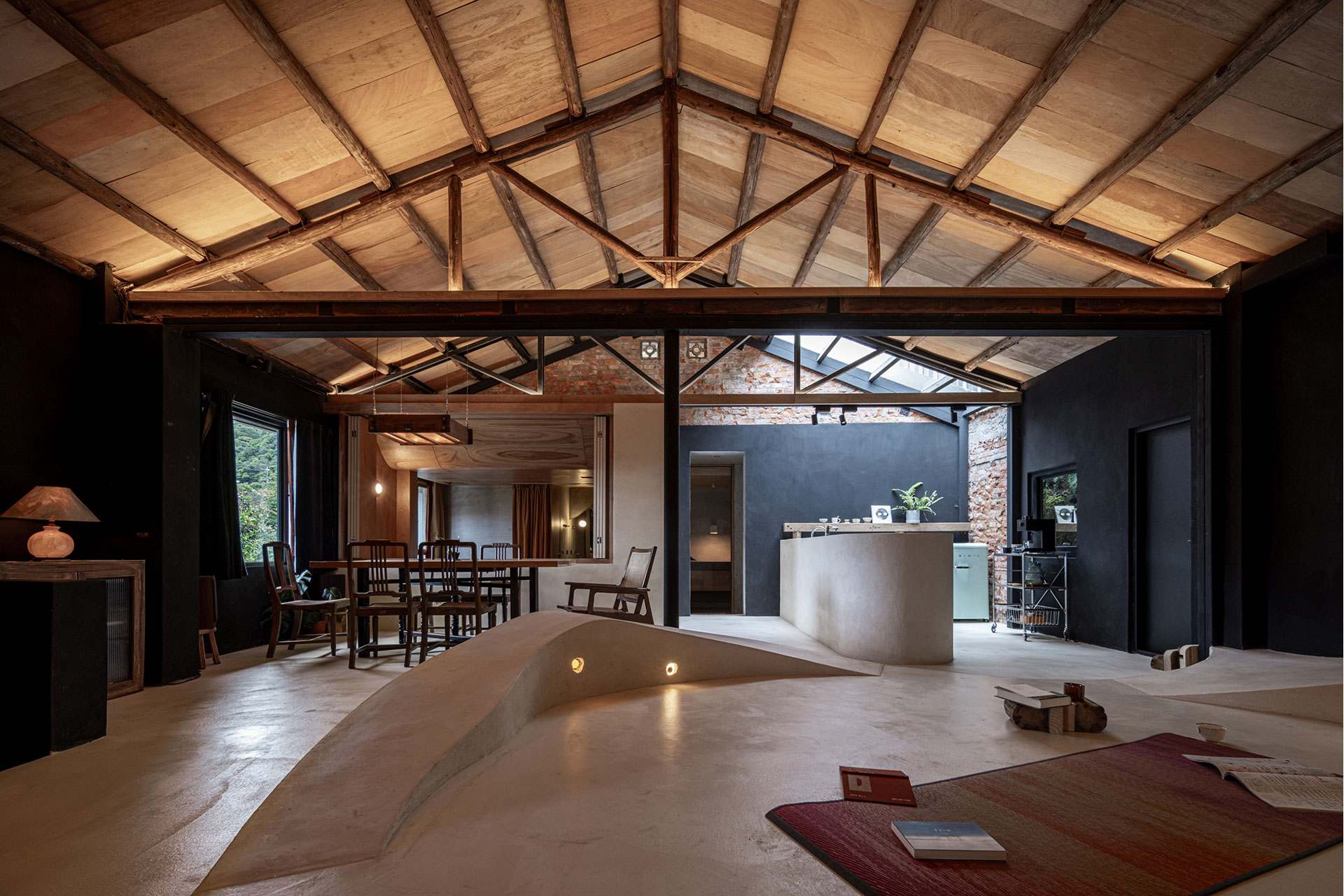
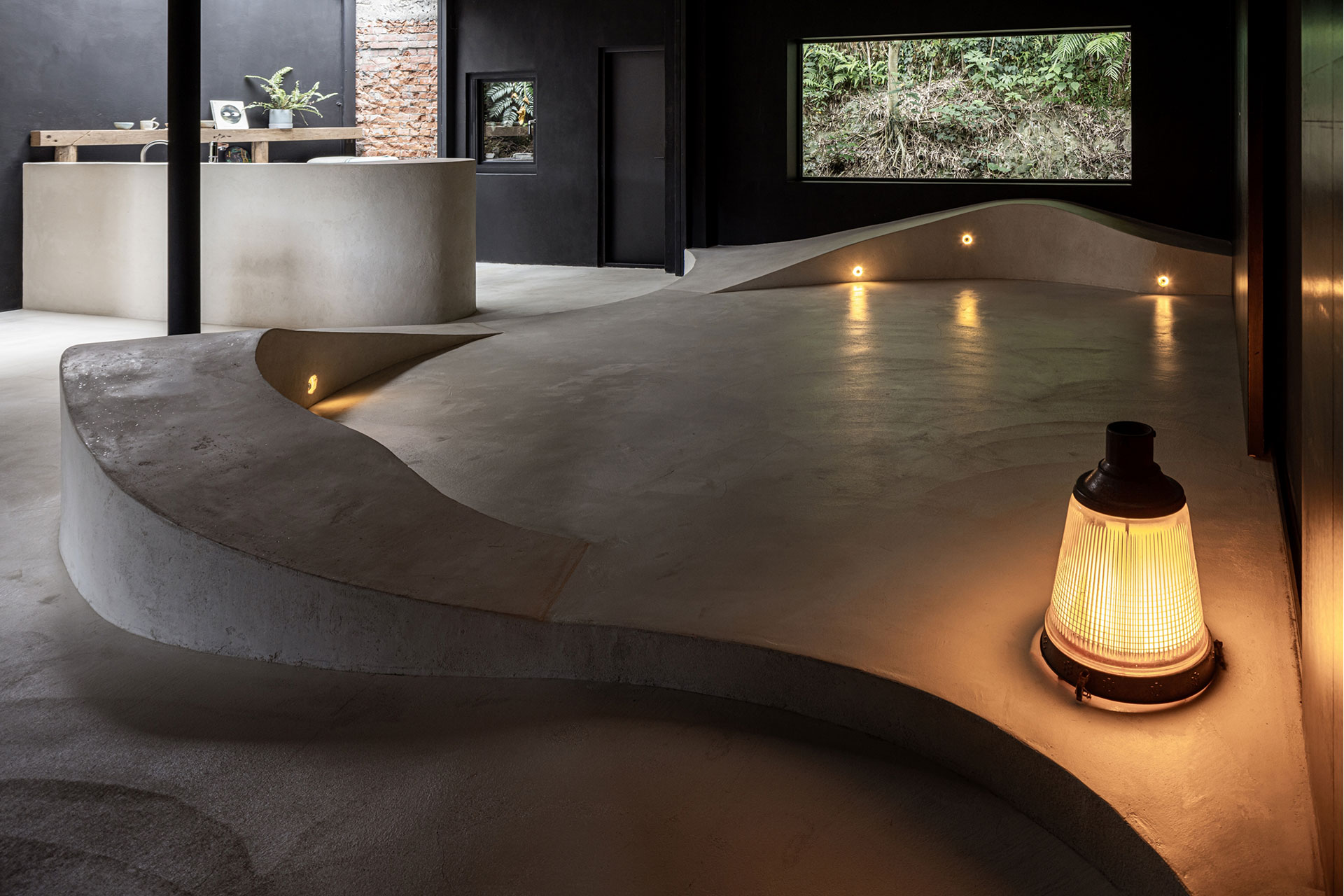
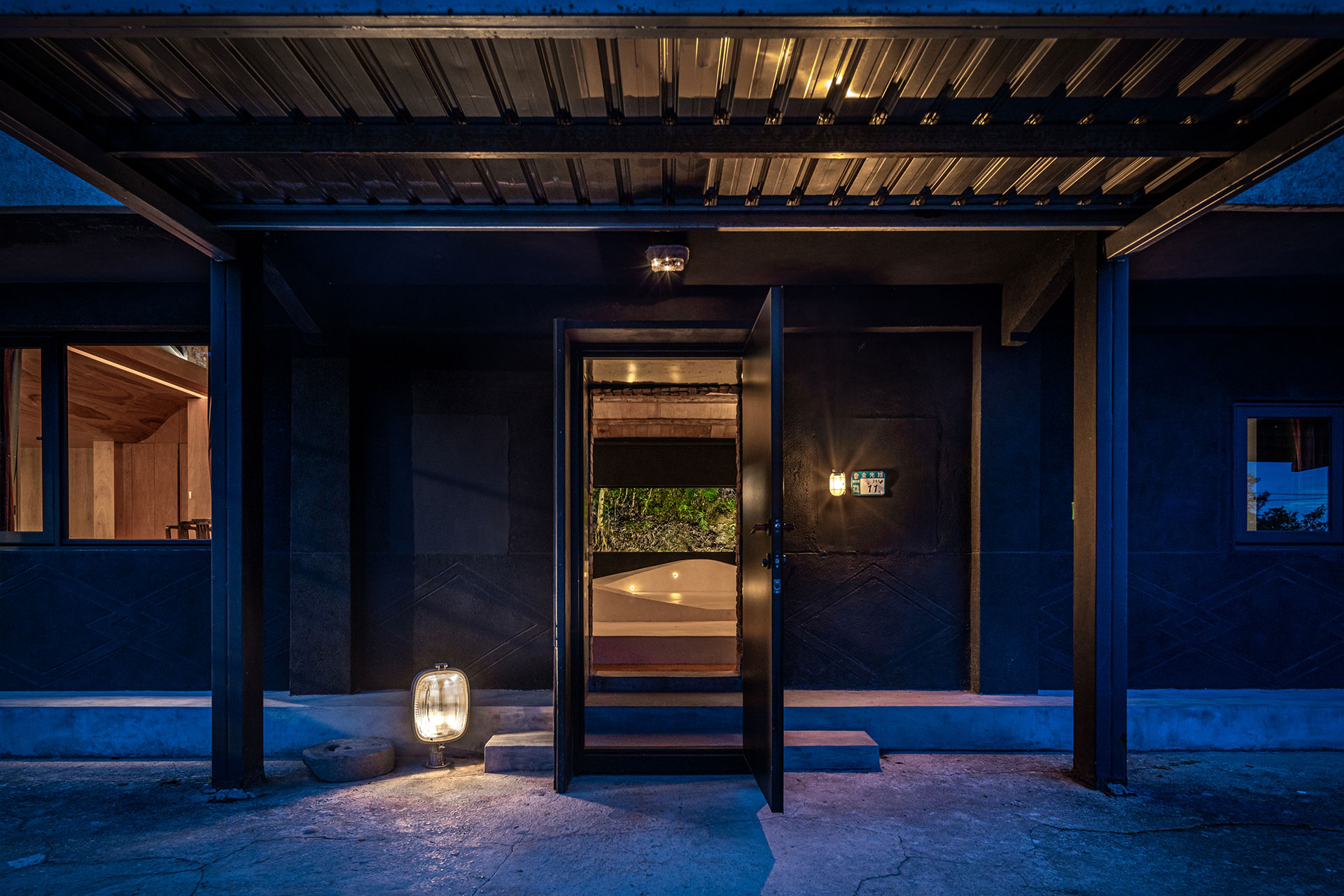
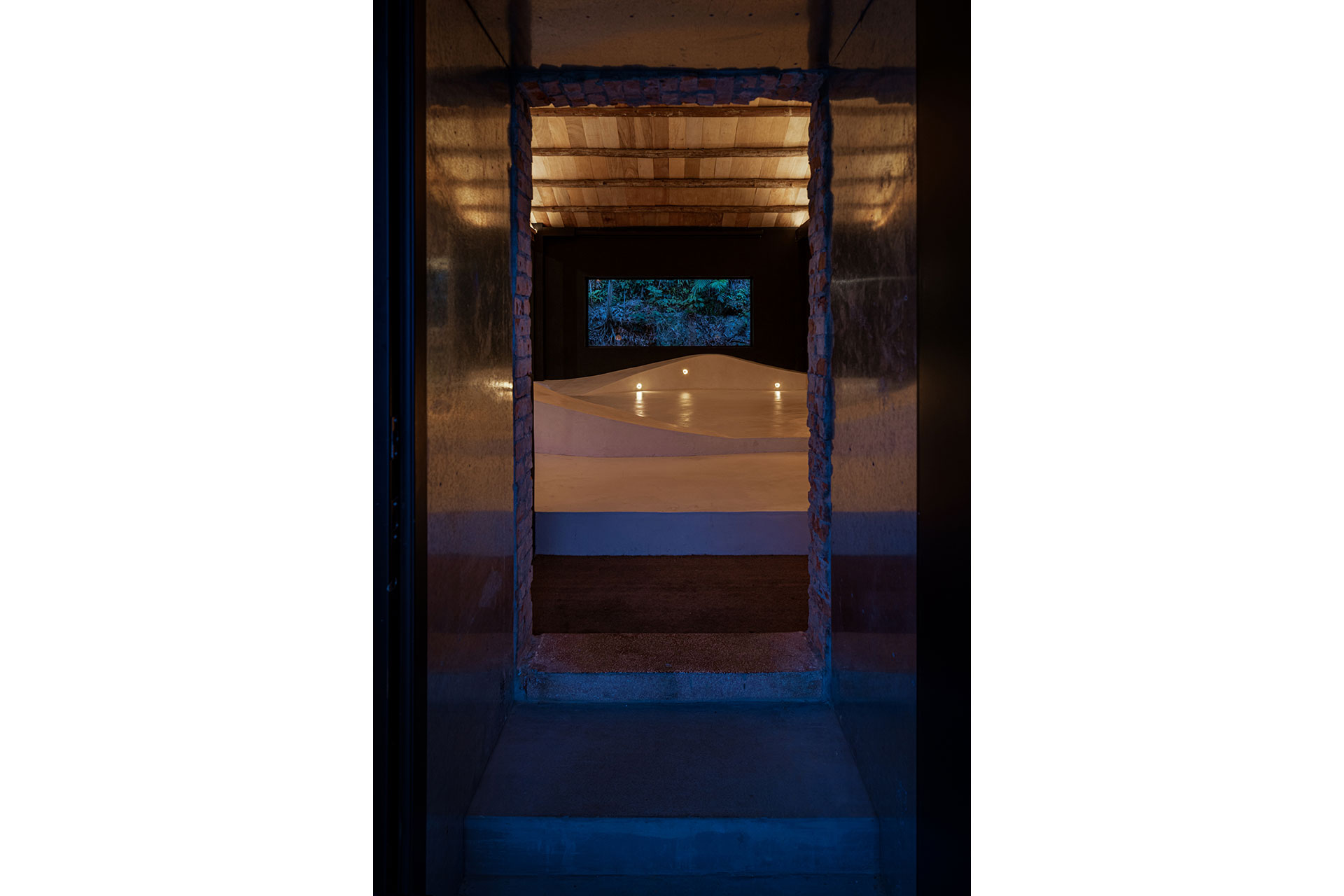
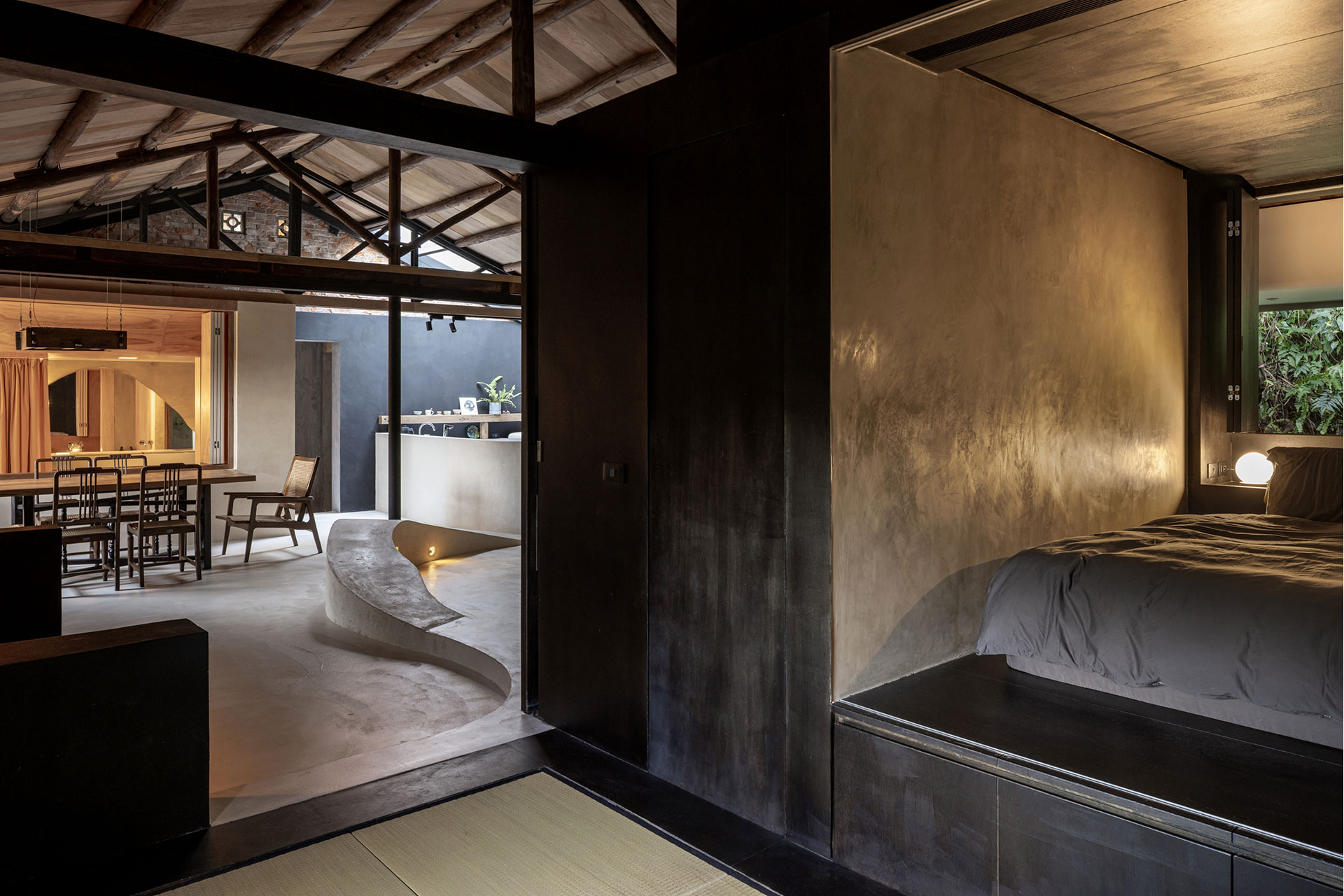
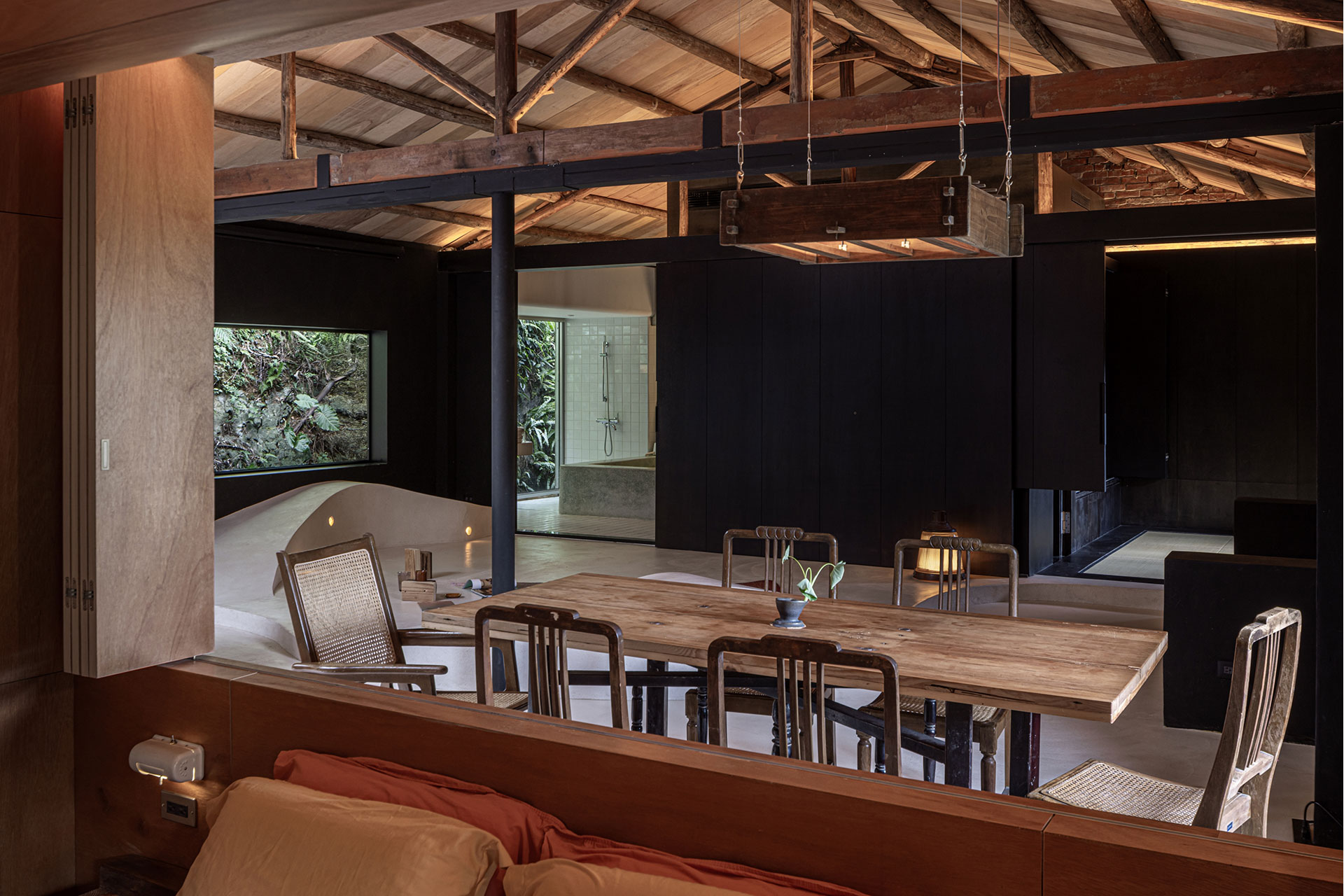
The narrow entrance recalls the atmosphere of a mine tunnel opening. As travellers open the door, low illumination and directional beams guide an emotional transition into the interior. Stepping inside, guests are greeted by a white sculpted communal space shaped like natural terrain, where visitors may sit or lounge to relax. Lighting is placed intentionally close to the ground with 2200-2700K low-colour-temperature, low-glare, narrow-beam fixtures. Subtle light embedded along the slope resembles glimmers hidden within an ore vein, gently guiding movement. Illumination does not dominate but shapes how the body meets the ground, slowing the pace and easing the mind instinctively.
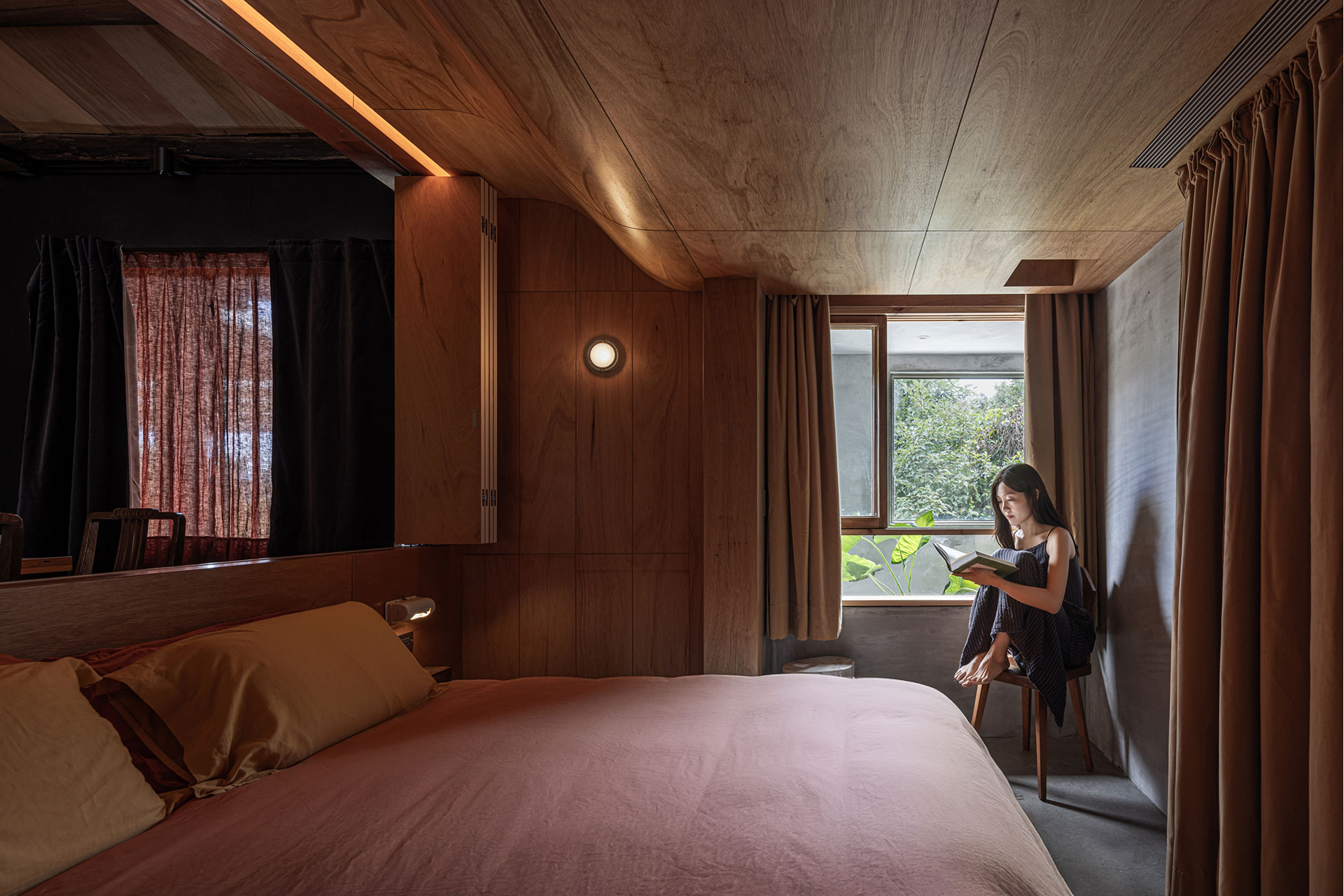
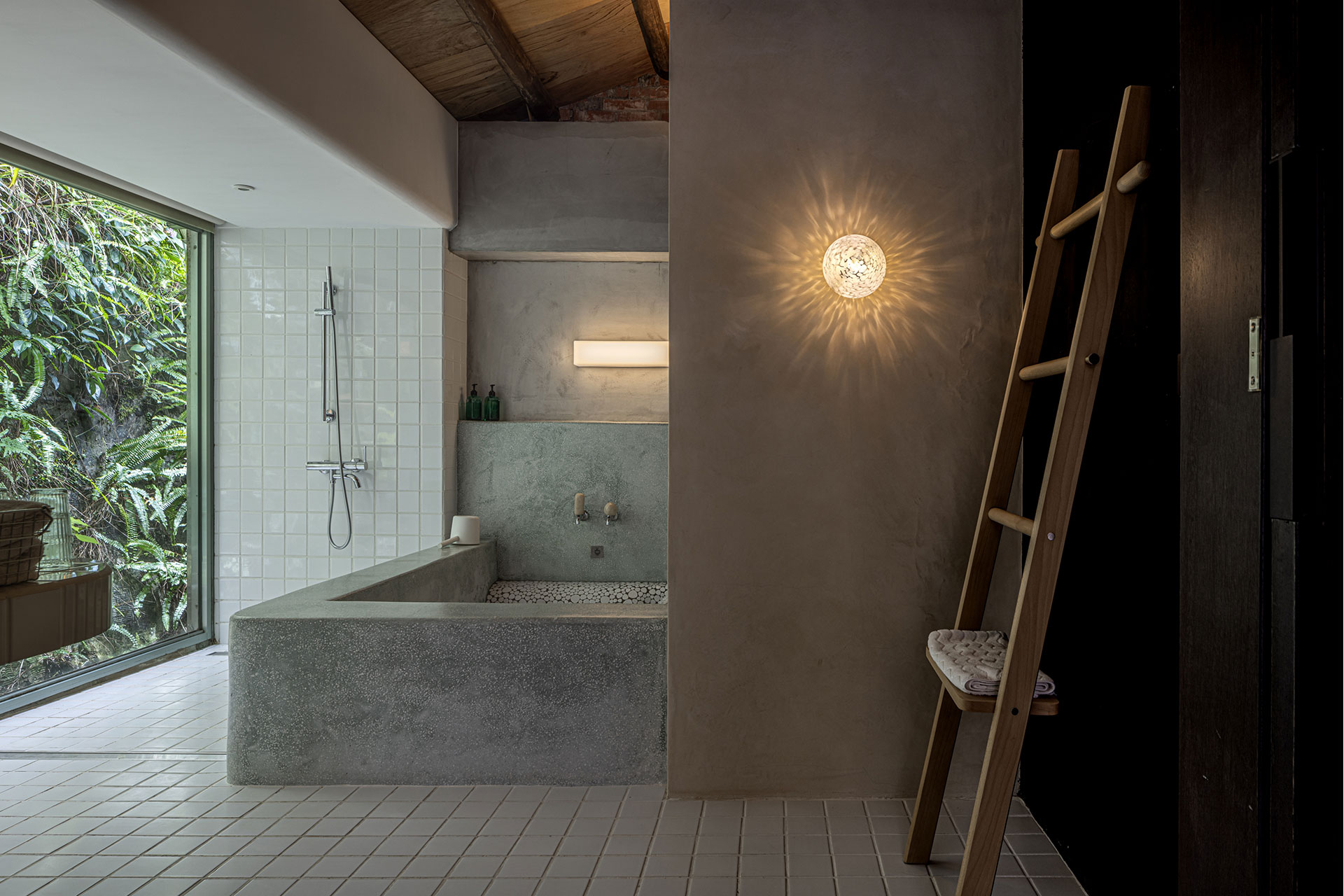
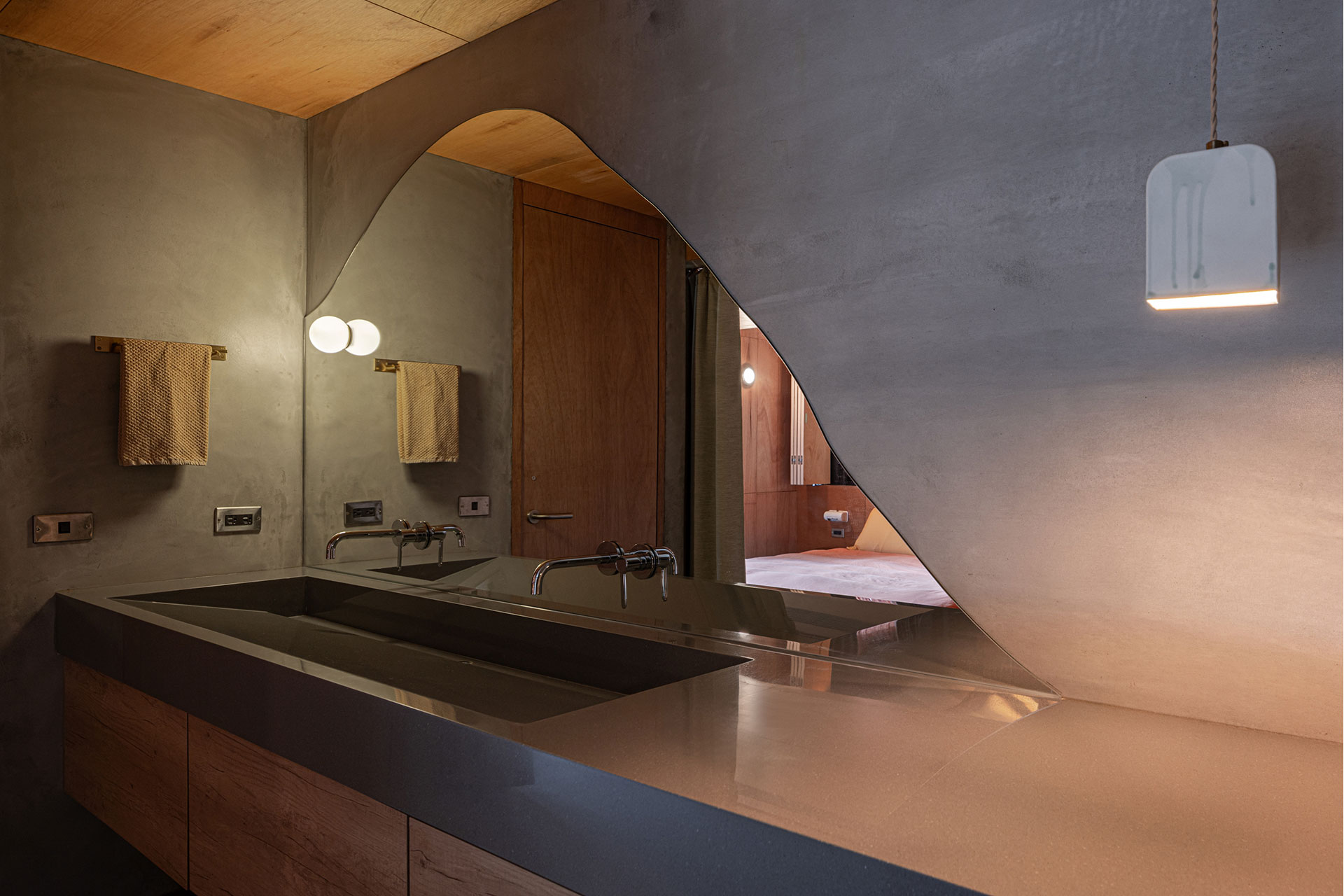
Instead of uniform brightness, light orchestrates the experience with theatrical layering. Warm tones reflect the timber roof structure to preserve the building’s unique atmosphere. Wall lighting highlights the textures of the original brickwork and weathered ironwork, allowing the traces of time to stand out. Guestrooms recede to a more intimate scale to support rest with low-intensity light. In the bathroom, the depth of the surrounding mountain is drawn inward. At night, reflected and refracted light turns the mountainside and vegetation into a soothing nocturnal panorama, creating a bathing experience in harmony with nature. Above the dining table, a pendant light reconstructed from a traditional bamboo steamer merges Taiwanese culinary culture with lighting language, becoming a light carrier that resonates with everyday emotions.
The lighting design faced three challenges. First, the old house’s structure was damaged in many places, so lighting installation required minimal construction. Second, the compact space and strong visual permeability demanded precise control to avoid glare and visual disturbance. Lastly, the design must honour the local cultural context rather than focusing solely on aesthetic renovation.
The lighting design responds to the site’s heritage while ensuring sustainability. Between day and night, light and shadow create a captivating and fleeting “magical moment” that invites travellers to slow down and embrace the space.
Through minimal lighting intervention, low-energy solutions, and cultural reinterpretation, the project redefines how the old house is experienced. Light not only serves functionality but also restores narrative. It reconnects visitors with the land’s history and rediscovers the quiet values of everyday life in the subtle interplay of time, memory, and illumination.