

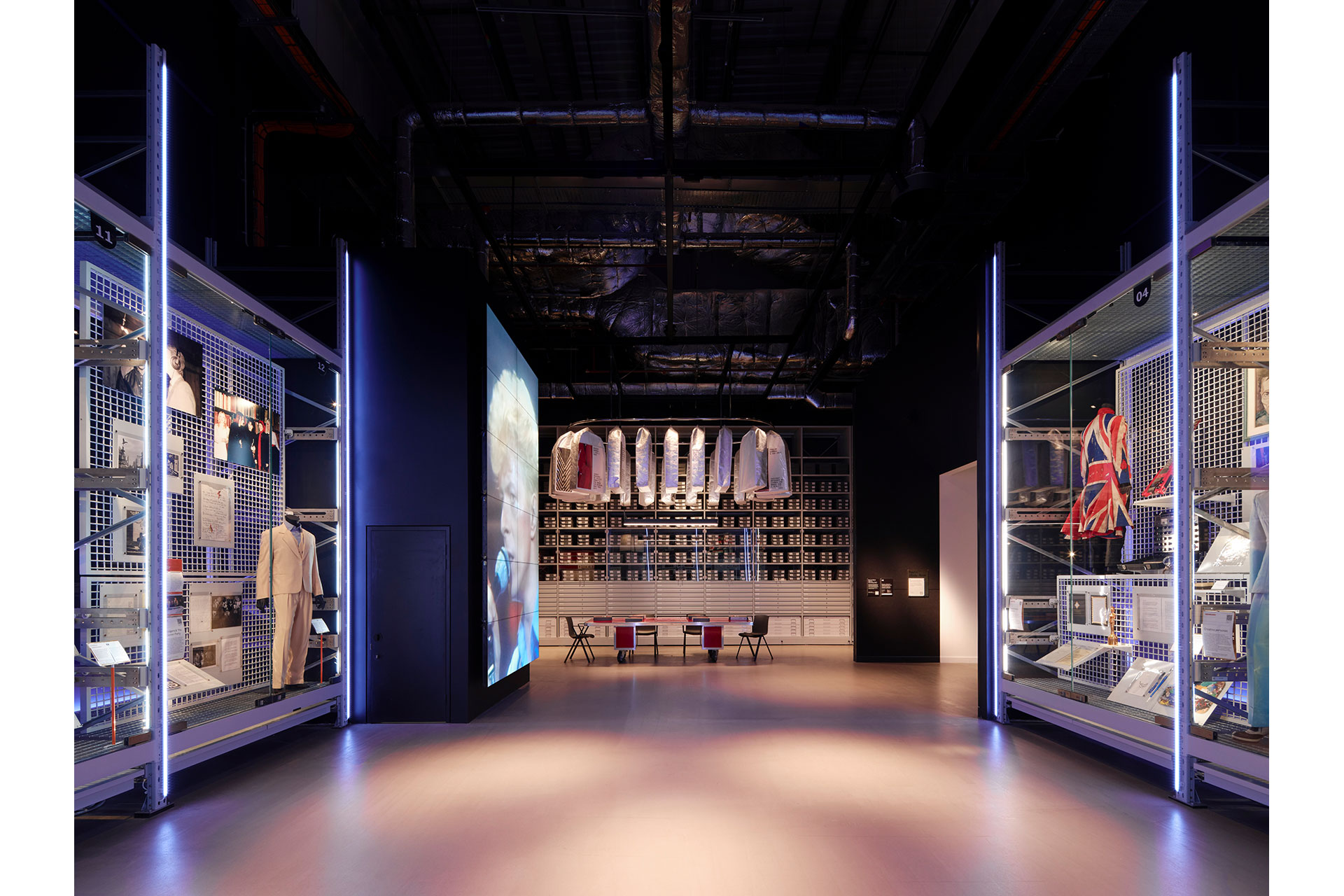
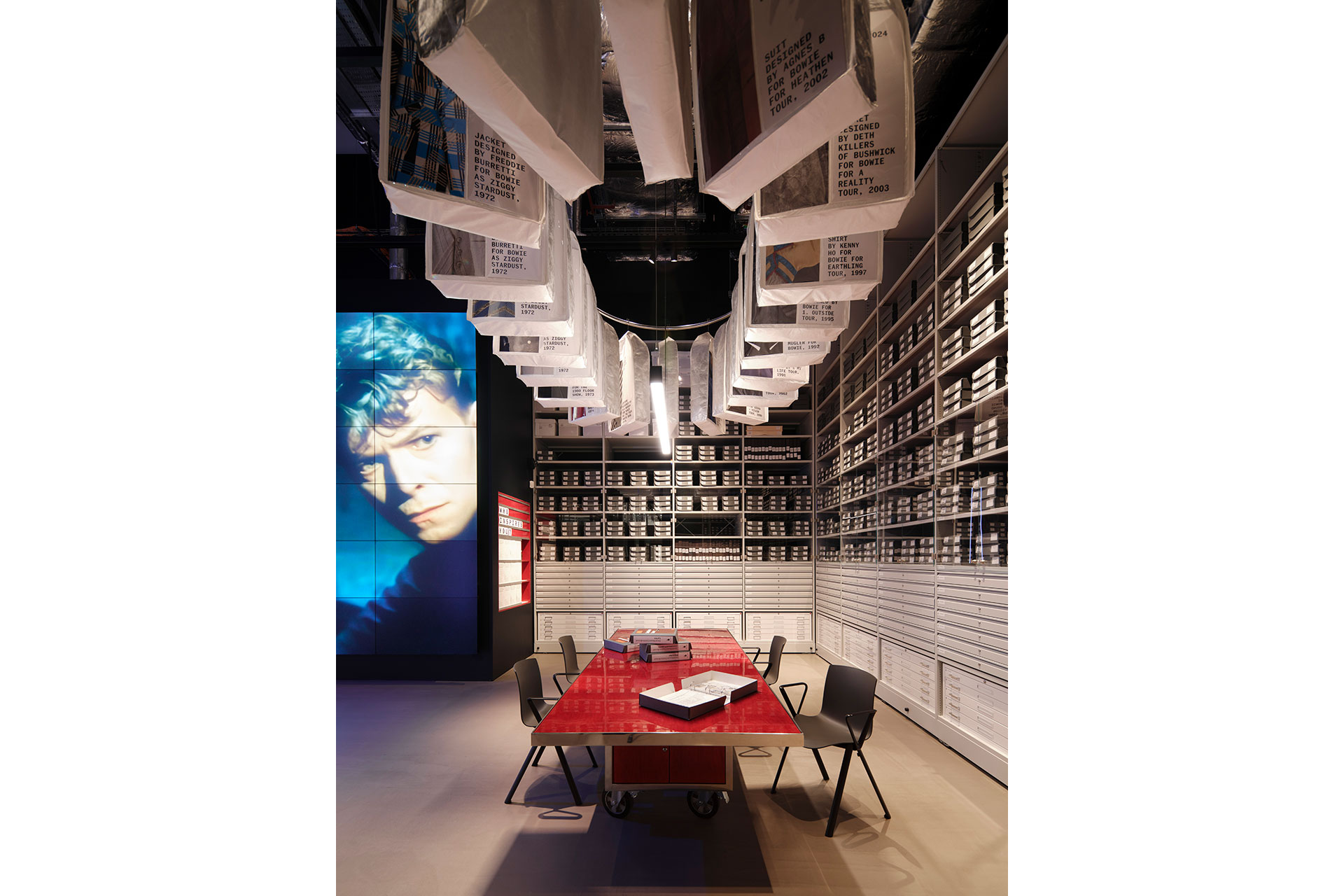
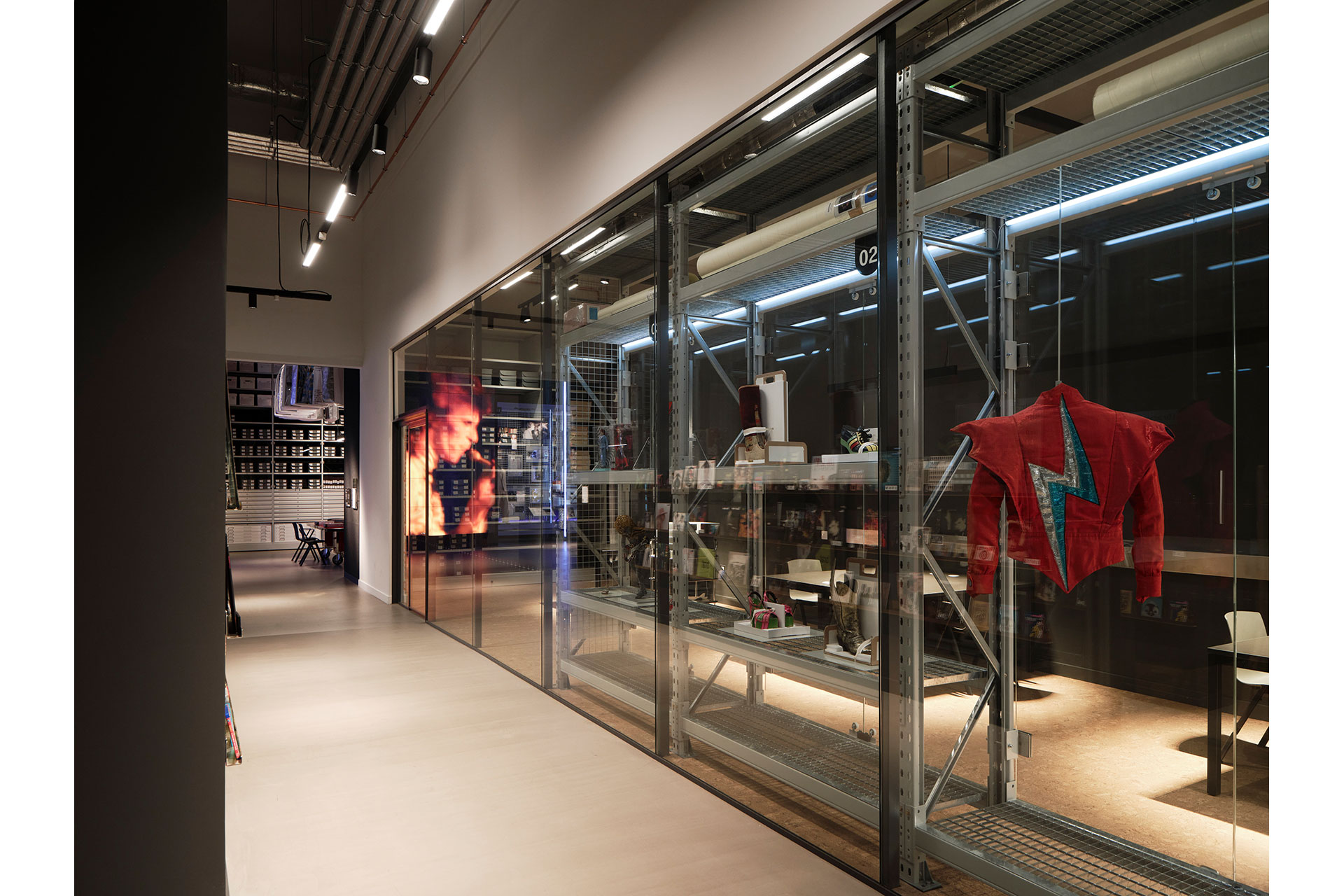
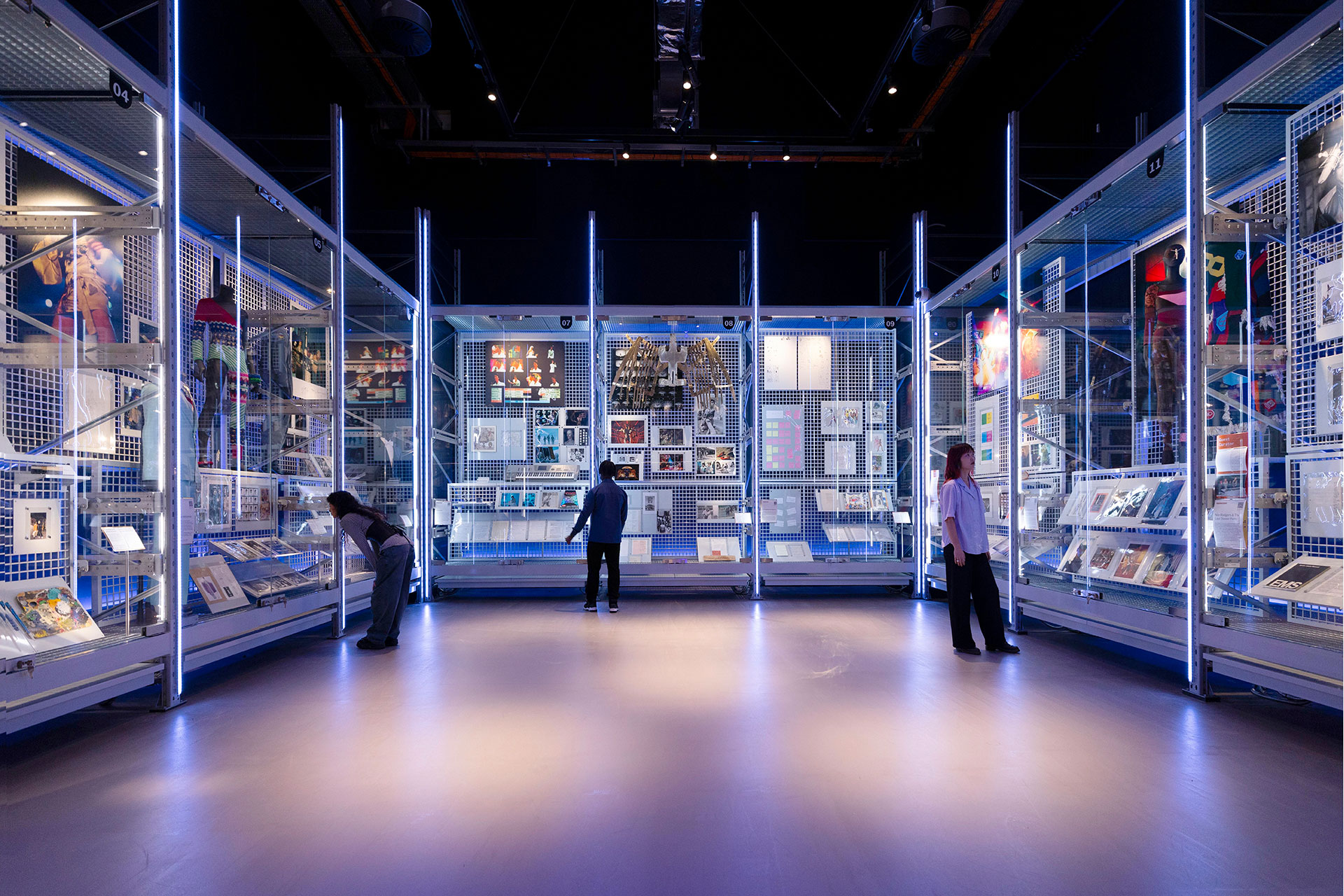
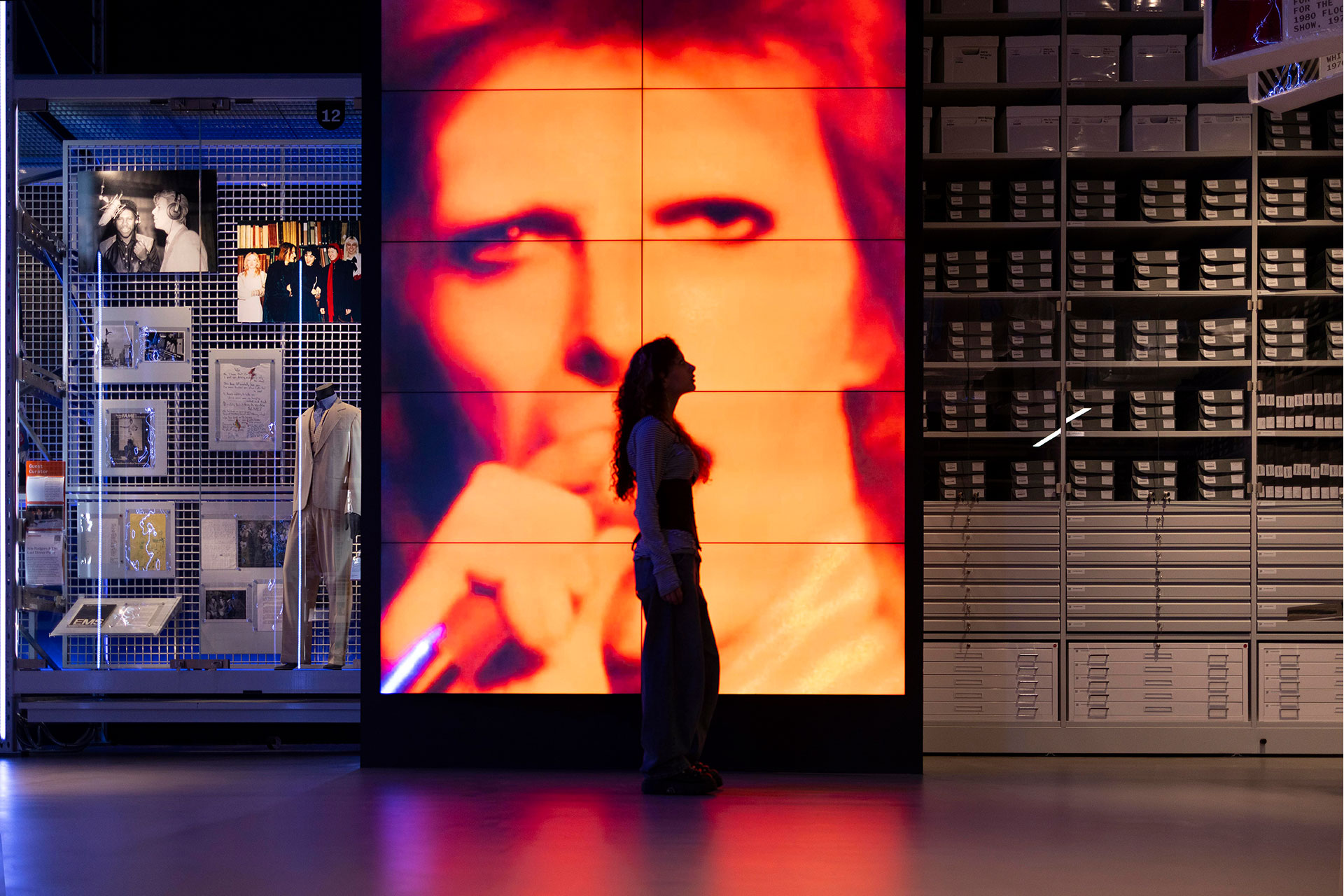
The David Bowie Centre opened on 13 September 2025 as a landmark addition to the V&A East campus, celebrating the life and legacy of David Bowie – musical icon, innovator, and champion of self-expression. Studio ZNA worked closely with the V&A team and IDK Architecture to develop a lighting scheme that brings Bowie’s body of work vividly to life, enabling it to resonate with audiences in evolving ways over time.
The lighting design draws on the visual language of museum archive displays focused on activating the archives and bringing the audience in close dialogue with the objects. We aimed to achieve this activation and dialogue while infusing the space with the dynamism and performative energy of live music. Our design supports Storehouse’s ambition to reach a broader audience and deepen engagement with younger visitors.
Adaptability is a defining principle of the scheme. As the Centre operates simultaneously as a research hub, exhibition environment, creative and events space the lighting responds fluidly to these shifting functions. Dynamic pixel linear LED elements integrated along the verticals of racking displays support these various functions by allowing synchronisation with AV for events with pre-set scenes available on a local control panel. A three-tier lighting system underpins the scheme, enabling seamless transitions from dynamic choreography to calm, static display.
High-Level Track Lighting
A layer of adjustable, ceiling suspended track-mounted spotlights provides versatile, targeted illumination across the space for circulation and environmental lighting.
Setworks Lighting and Internally Lit Showcases
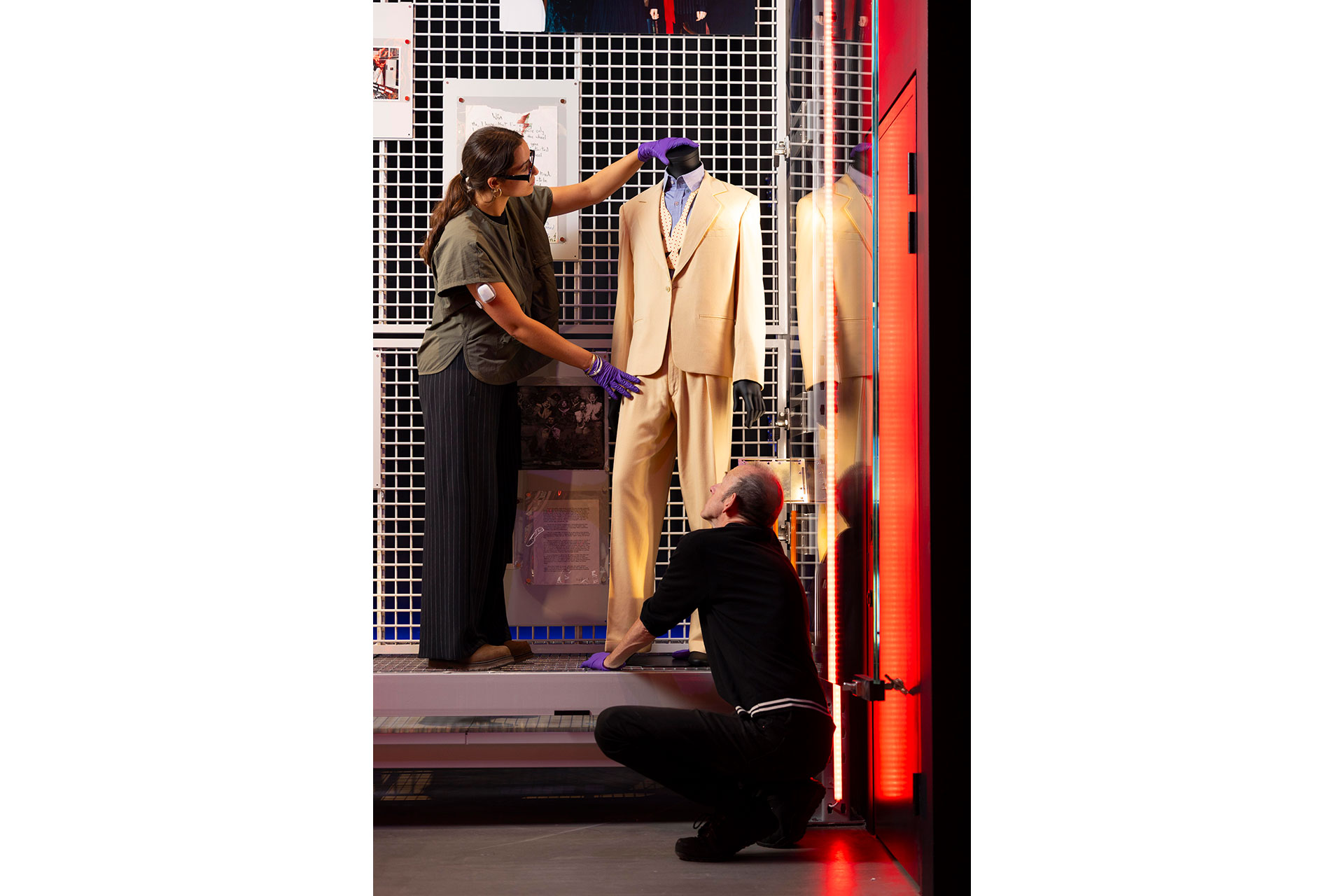
Large display cases incorporate fixed internal lighting – using diffused linear LEDs and miniature spotlights to light the collection – alongside a softly diffused back “horizon light” that adds depth while remaining adaptable to future curatorial changes. Smaller, self-contained display units are internally illuminated with linear sources for consistency, precision, and conservation compliance.
Dynamic Racking System
Pixelated linear lighting is integrated into the racking, offering colour-changing, static, or fully dynamic modes for the varied functions of this space. This system is synchronised with the large screen display to create an immersive environment.
Together, these components allow the scenography to shift effortlessly – from an immersive, fully choreographed environment to a still, contemplative presentation that highlights individual moments. Synchronisation with AV media is supported through a local show-control DMX protocol.
Individually targeted spotlights accentuate key artefacts with jewel-like precision, adding theatrical flair while meeting stringent conservation standards. These fixtures are managed through a custom Bluetooth-controlled platform, enabling efficient programming and day-to-day operational flexibility. Integration with the building’s networked control system ensures seamless communication with the wider gallery environment.
Large, diffused pendant luminaires above key workstations provide the ambient conditions necessary for research and creative work.
Our lighting design combined with bespoke control systems designed for long-term adaptability, the scheme delivers a carefully layered approach that reveals the collection with both sensitivity and impact. Ultimately, the lighting transforms a former black-box room into a multidimensional environment – one that adapts in synchronisation with the video wall and showcases the full breadth of the artist’s extraordinary catalogue.