

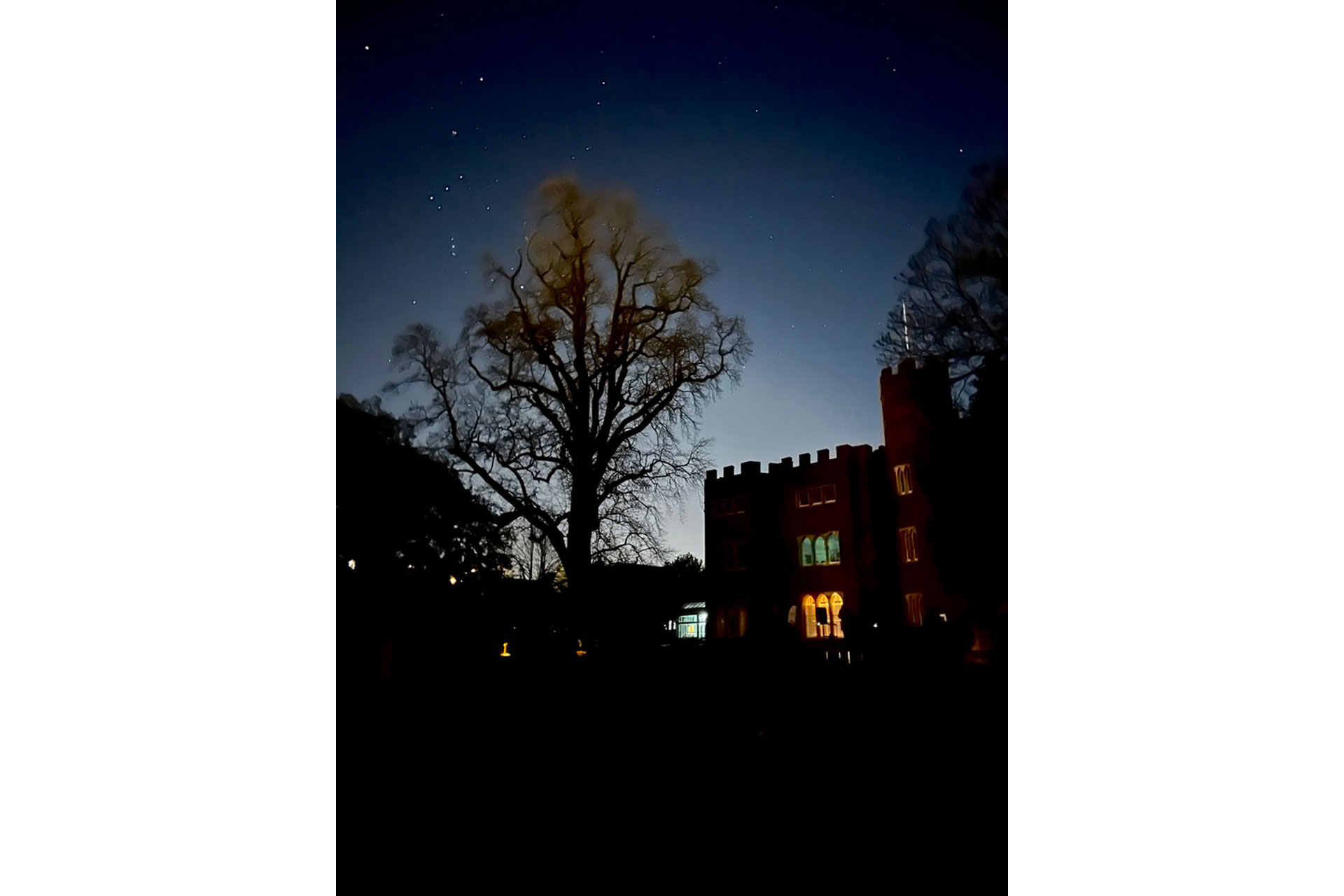
This annual event, now in its second year, was originally conceived in 2022 with the intention to sow seeds among individuals, businesses and the community to make steps towards darker skies and better quality lighting.
It has been a fantastic way of raising awareness about light pollution whilst enabling the community to come together and celebrate the night sky. Switching off surrounding lights removes unwanted glare and the accompanying contrast issues that inhibit people’s ability to see the night sky clearly.
The event also brings in local experts and enthusiasts to share knowledge and inspire each other. This year, Bayfordbury Observatory: University of Hertfordshire, Hertford Astronomy Group, Herts Amphibian and Reptile Group and Herts & Middlesex Wildlife Trust returned from last year’s successful event to participate again. In addition, BEAM Hertford, the local theatre and cinema, have added another dimension, while CPRE Hertfordshire have joined too to enable the event to grow.
Cinema Screening
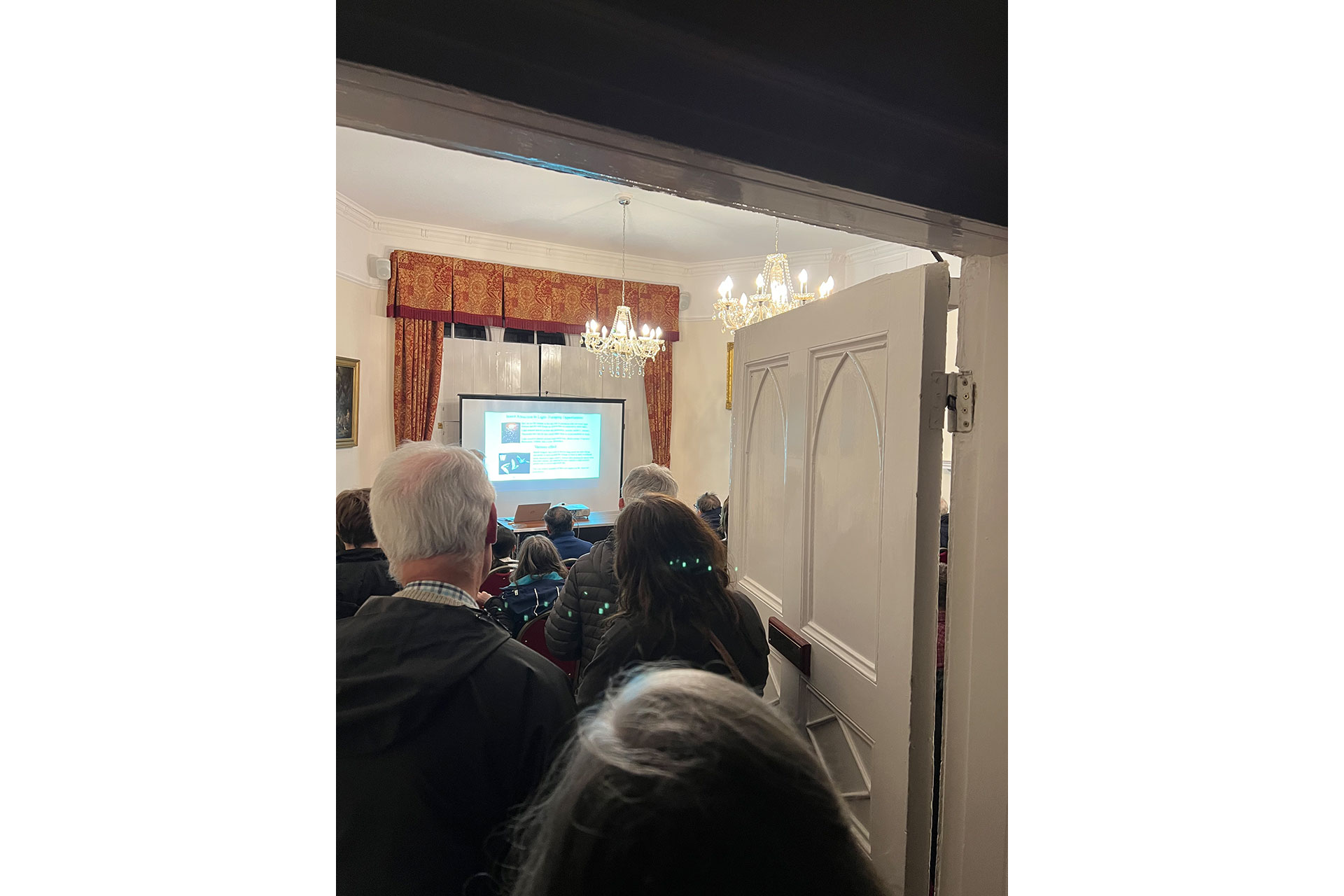
‘The City Dark’ film by Ian Cheney was shown to a sold out audience in Screen 1 of Beam Theatre. This feature documentary about light pollution questions our need to see the night sky and how important the human relationship with the night sky really is.
The film was accompanied by an educational talk from Simon Thorp that expanded upon elements missing from the film – namely the impact of LEDS as the film pre-dated their arrival.
The Castle
The event planned for clouds by including indoor talks and activities relating to light pollution by Bayfordbury Observatory, Herts Amphibian and Reptile Group and LAPD, along with a mobile planetarium from Bayfordbury Observatory.
Hertford Astronomy Group projected onto the ceiling, produced slide shows on the wall, demonstrated equipment and displayed amazing astrophotography.
Children had indoor entertainment too. Local author Alice Hemming used a shadow puppet theatre to re-tell some of her stories.
Outside Hertford Astronomy group had various telescopes available for people to look at different stars and constellations.
Herts and Middlesex Wildlife Trust talked about the effects of artificial lighting on wildlife. They also conducted nocturnal nature walks throughout the event for children and adults to observe nature in darkness.
CPRE Hertfordshire, the countryside charity, provided the opportunity to spot star constellations and measure the clarity of the night sky by doing star counts.
LAPD Lighting conducted visual experiments that demonstrated the human perception of colour after dark.
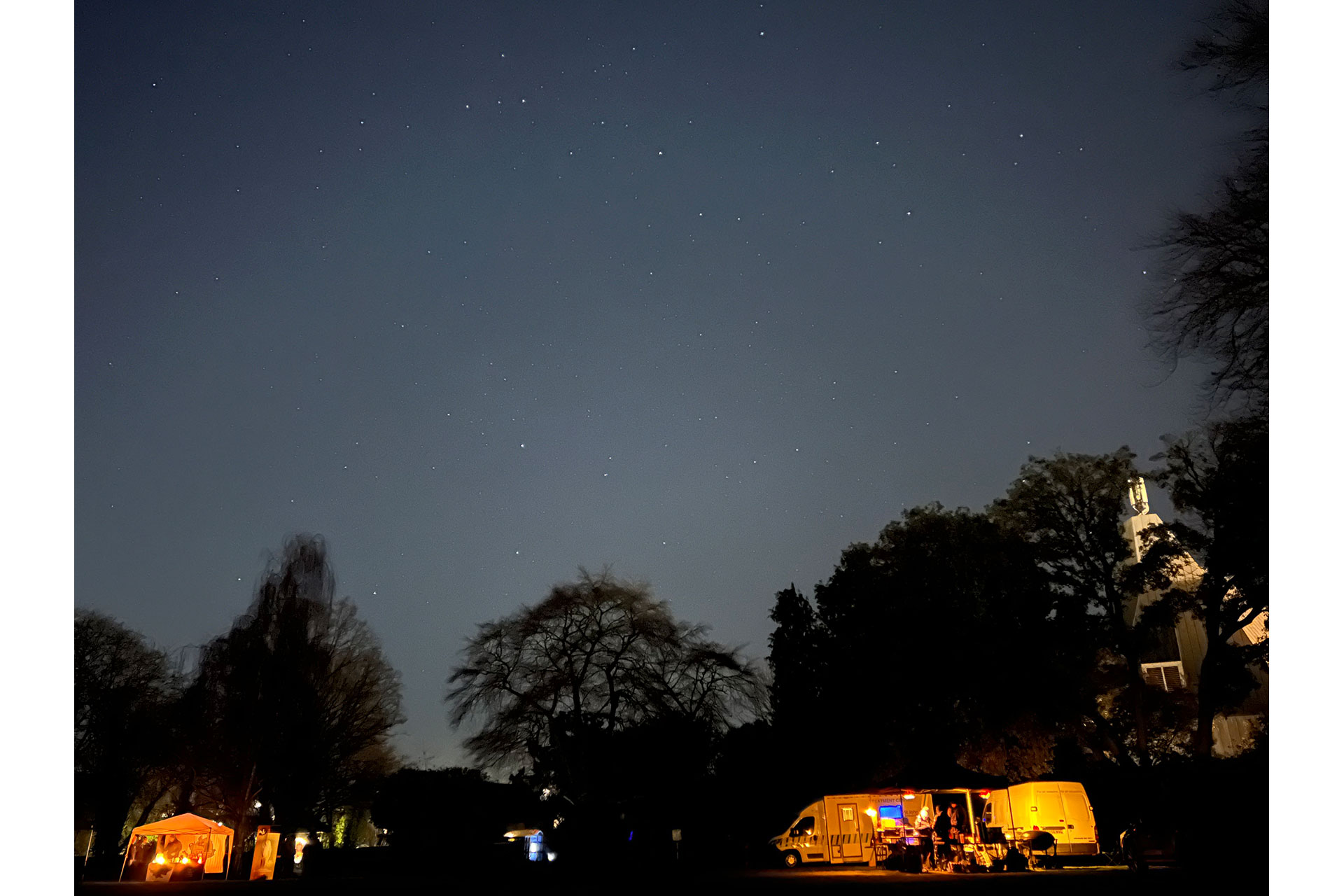
Lighting for all gazebos was discreetly provided by a combination of red filters over existing lights and Stoane Lighting’s Tadpole luminaires with remote battery packs.
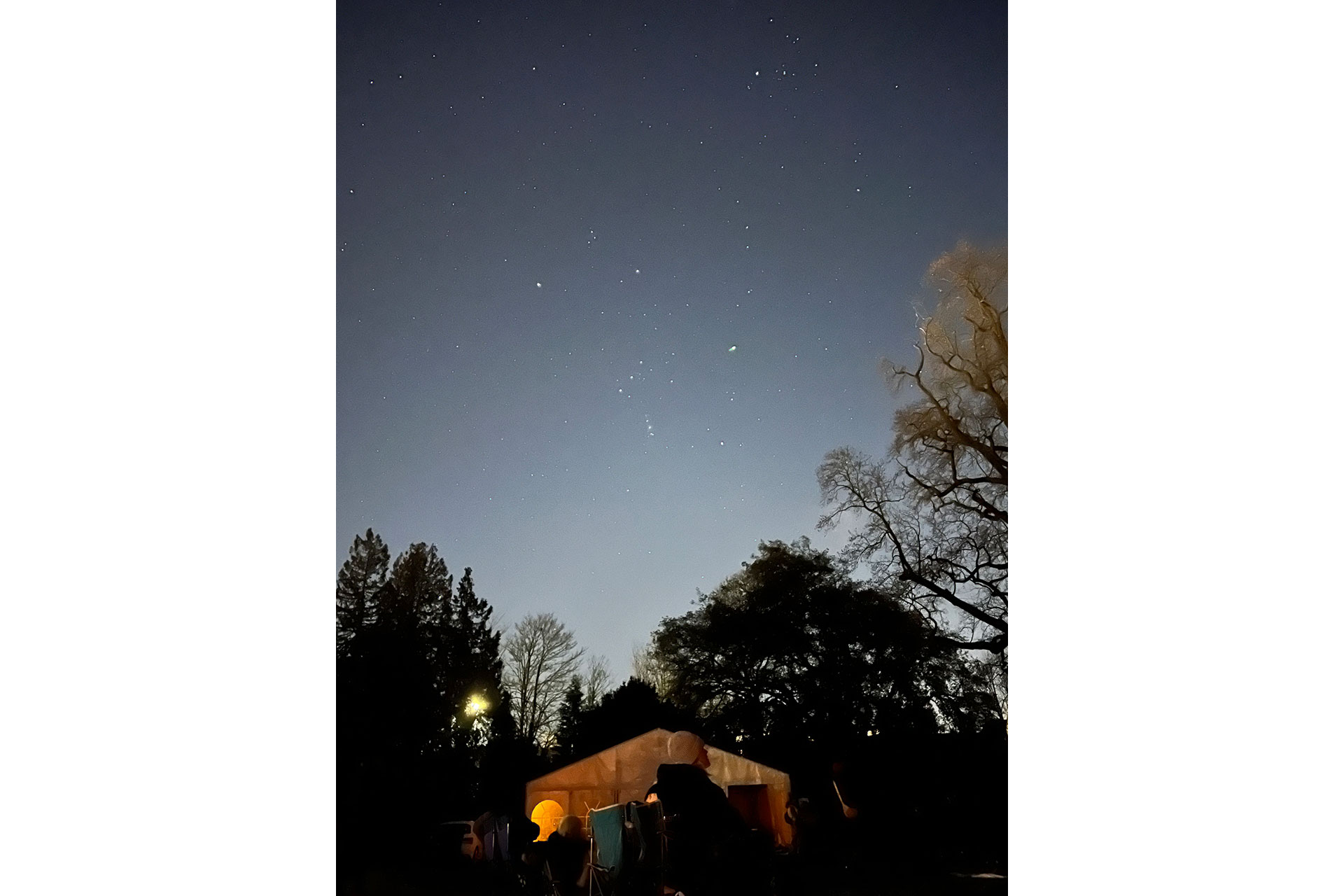
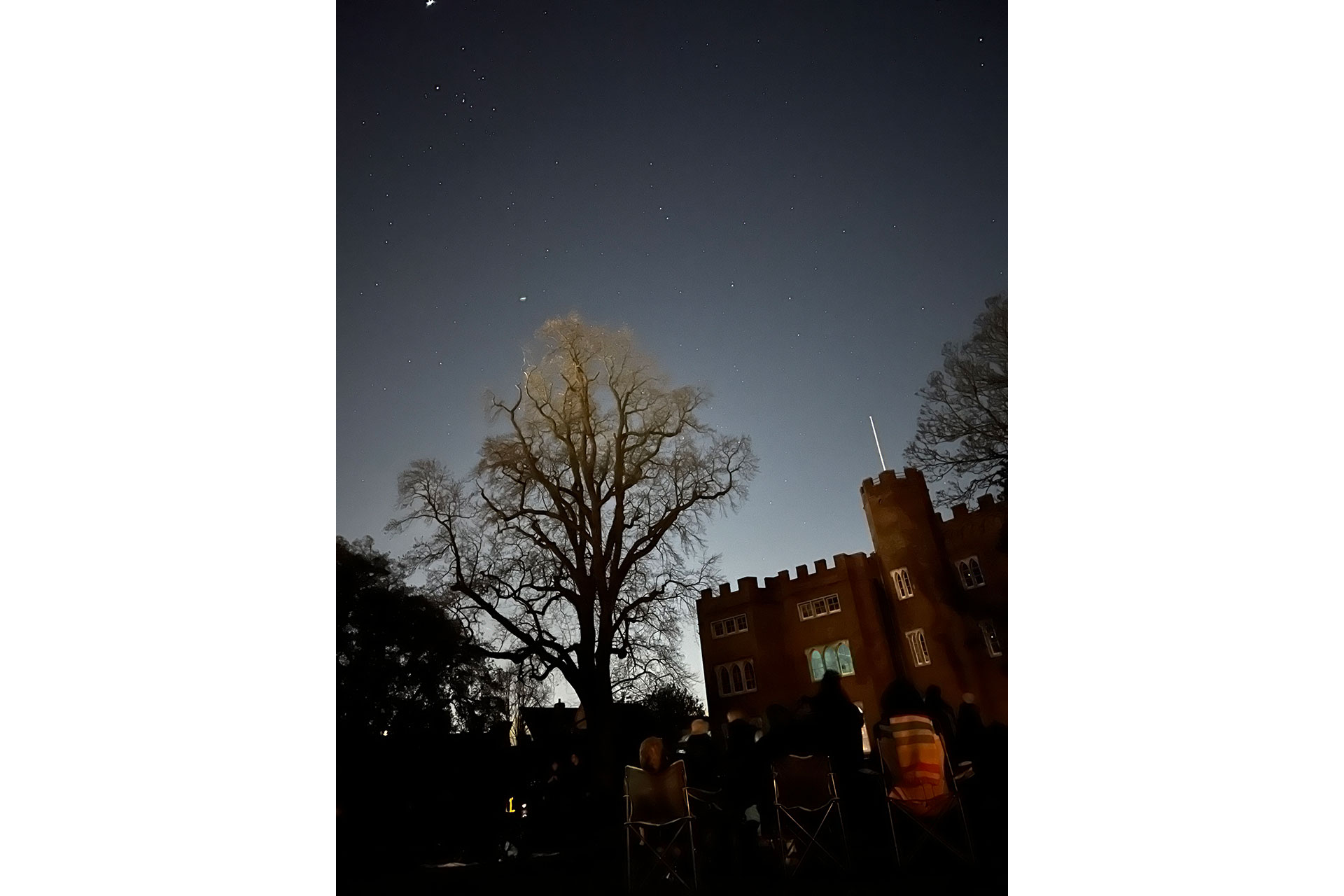
At 7pm, after the switch off, Bayfordbury Obervatory began an educational talk through the starry night sky. People stood, sat on camping chairs, or lay on picnic blankets looking up at the stars.
A key factor in creating this event was to ensure that dark skies are not perceived as something to be seen only in remote, rural areas, or further afield. Ultimately, one day, we will achieve dark skies in built up areas too.