

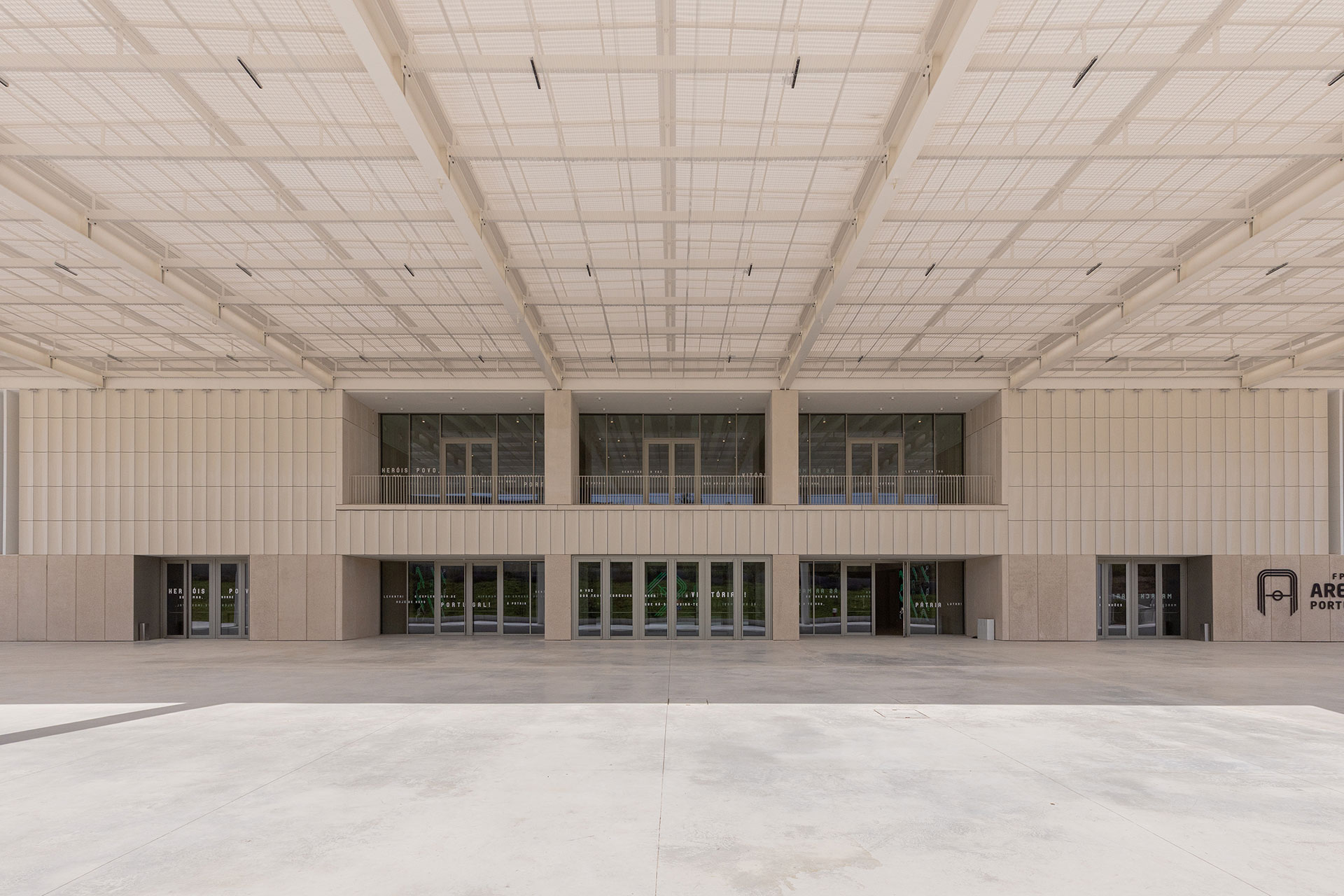
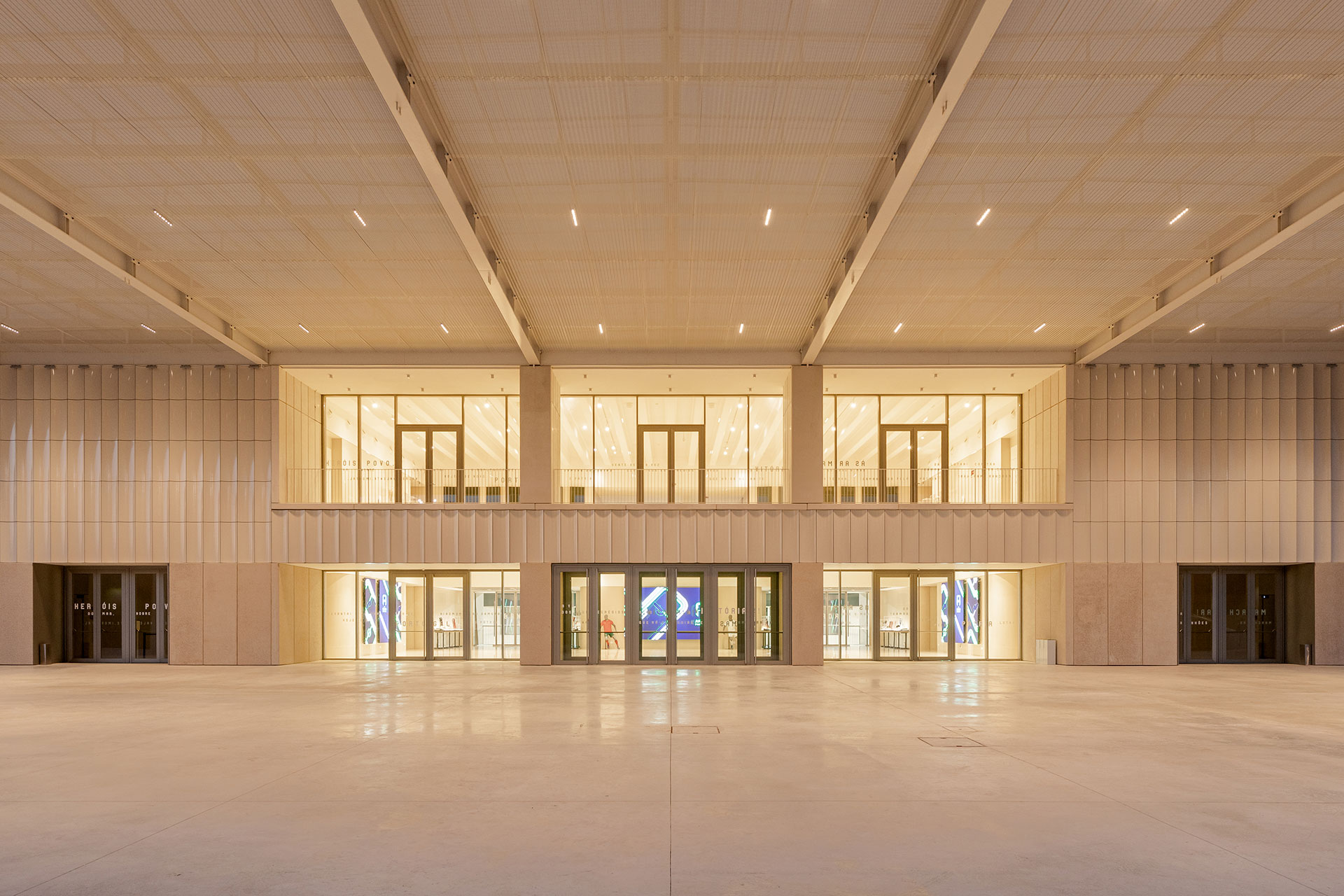
Phase 3 of the Football City represents an evolution of the campus, focusing on converging sport, media, and public experience. The project introduces new indoor sports and operational facilities, with lighting design supporting the narrative of a building open to the exterior, with high standards of design and technical solutions. The complex was soft inaugurated in the end of 2024 and fully completed in March 2025.
The exterior lighting establishes a clear and recognizable identity across the site after sunset, setting the interfaces between interior activity and the public realm in scene. Contrasts are controlled and shadows allow architecture to reveal itself softly through the dark hours. This approach reduces visual noise while strengthening the legibility of the campus as a coherent whole.
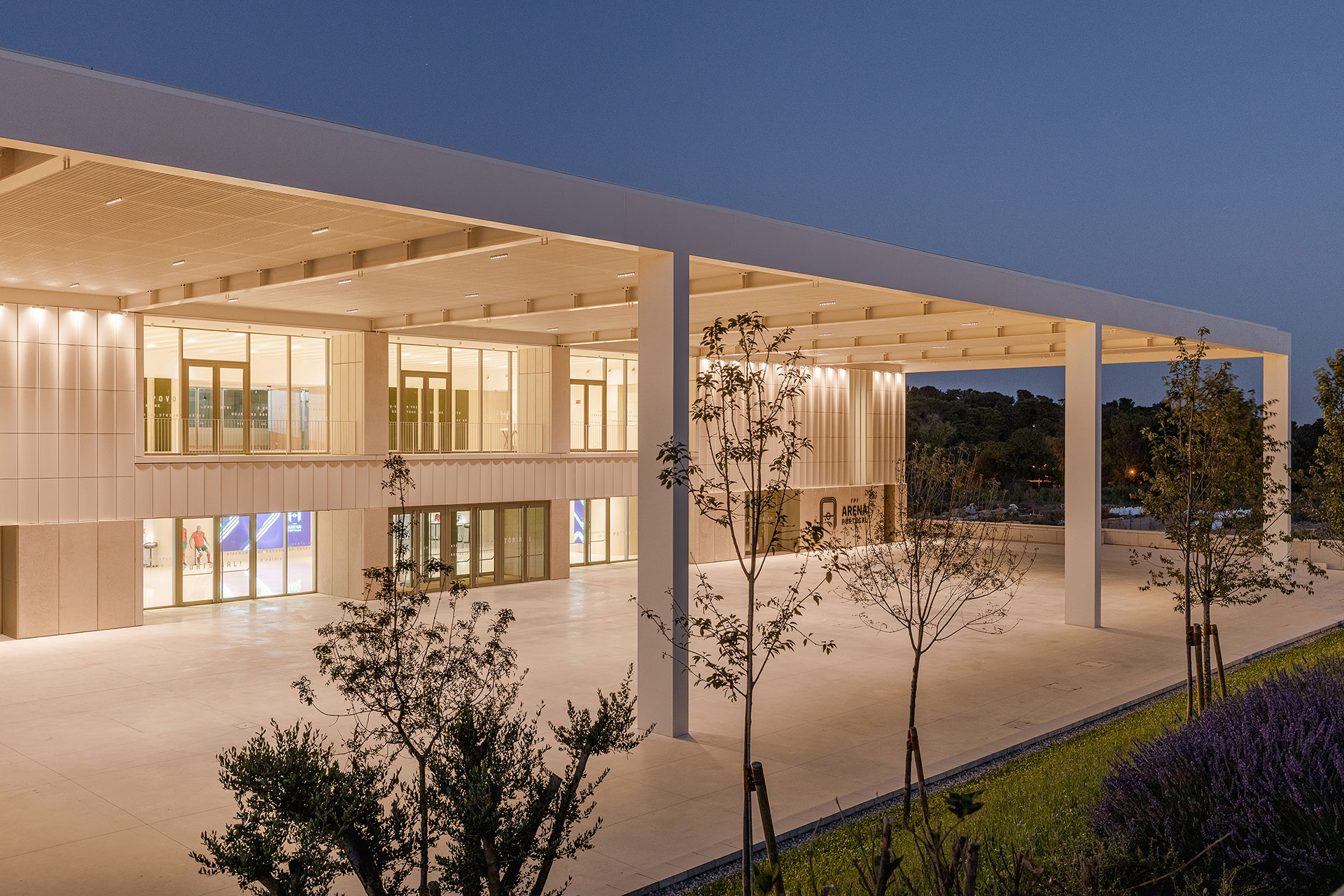
The FPF Arena Portugal is the primary nighttime landmark, with façade lighting conceived as a soft, volumetric presence, defining the arena’s mass without overpowering its surroundings. Light washes and accents respond to the architectural rhythm, enhancing the ceramic cladding and the open spaces between volumes, while allowing the building to shift character, depending on use.
Adjacent buildings, including the Channel 11 headquarters, adopt a more restrained façade lighting language. The contrast between the arena’s presence and the quieter media building creates a hierarchy that is easily readable from across the site.
We have used a combination of downlighting with shielded/framed uplighting to ‘paint’ the façade at night, giving it a warmth that invites life to continue during the night, to support events and gatherings outside in summer nights.
Glazed areas are treated as luminous thresholds rather than dominant light sources. Interior light is allowed to spill outward in a controlled manner, creating a warm, inhabited glow that contrasts with slightly cooler exterior surfaces. This transparency reinforces the connection between inside and outside, suggesting activity within, while maintaining a composed exterior expression.
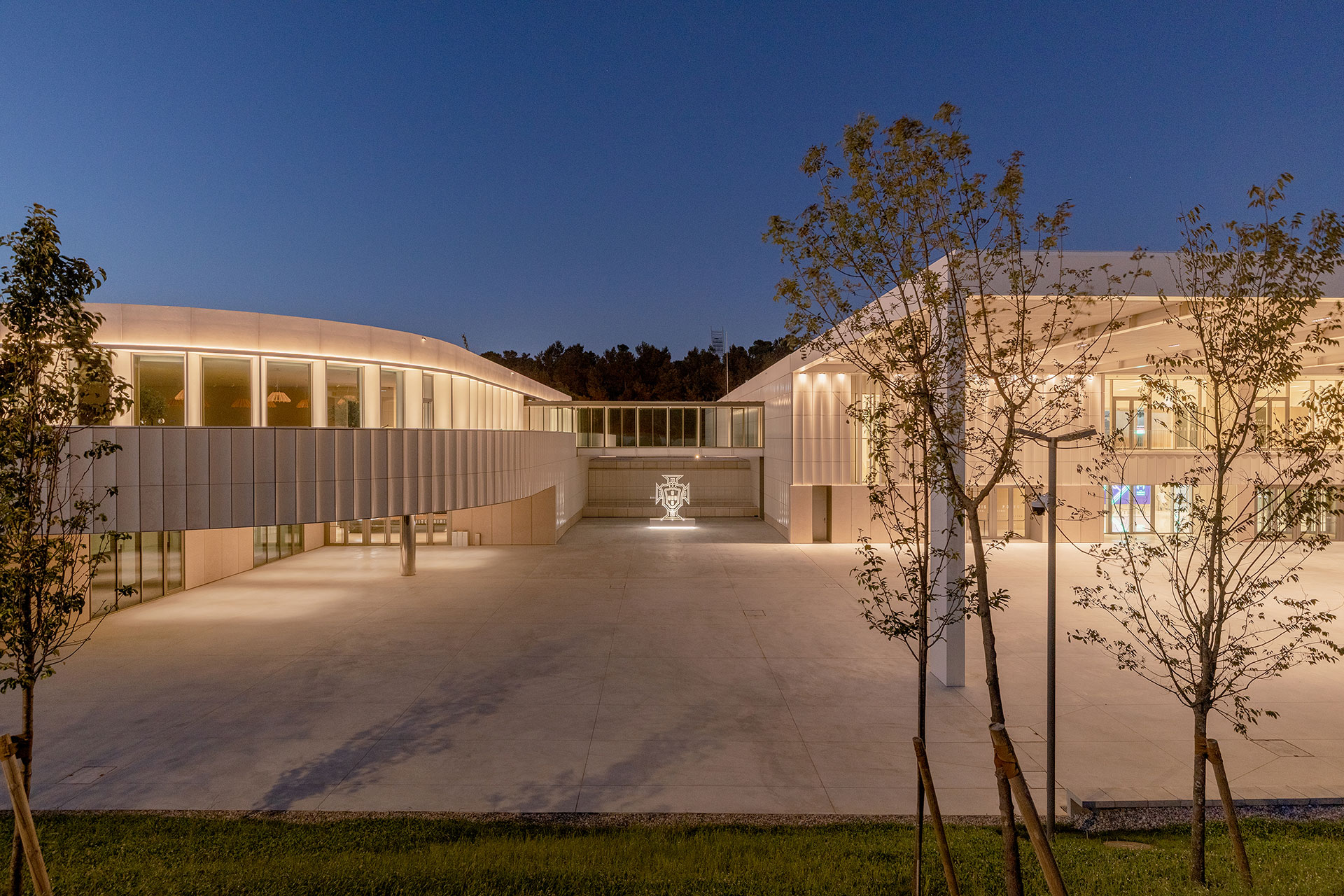
The courtyard is defined through horizontal illumination, with light concentrated at ground level to support orientation and movement. The absence of vertical glare preserves clear sightlines and allows the architecture to remain the primary visual focus.
Circulation routes and exterior gathering spaces are guided by low-level integrated lighting, ensuring safe movement while preserving a dark-adapted environment. Light is used to frame views, mark thresholds and connect buildings.
Across Phase 3, exterior lighting acts as connective tissue of the campus, unifying diverse architectures into a single nighttime narrative. The façade lighting scheme is conceived as a flexible framework, capable of adapting to future phases of development, including Phase 4, scheduled for this year.