

Object description
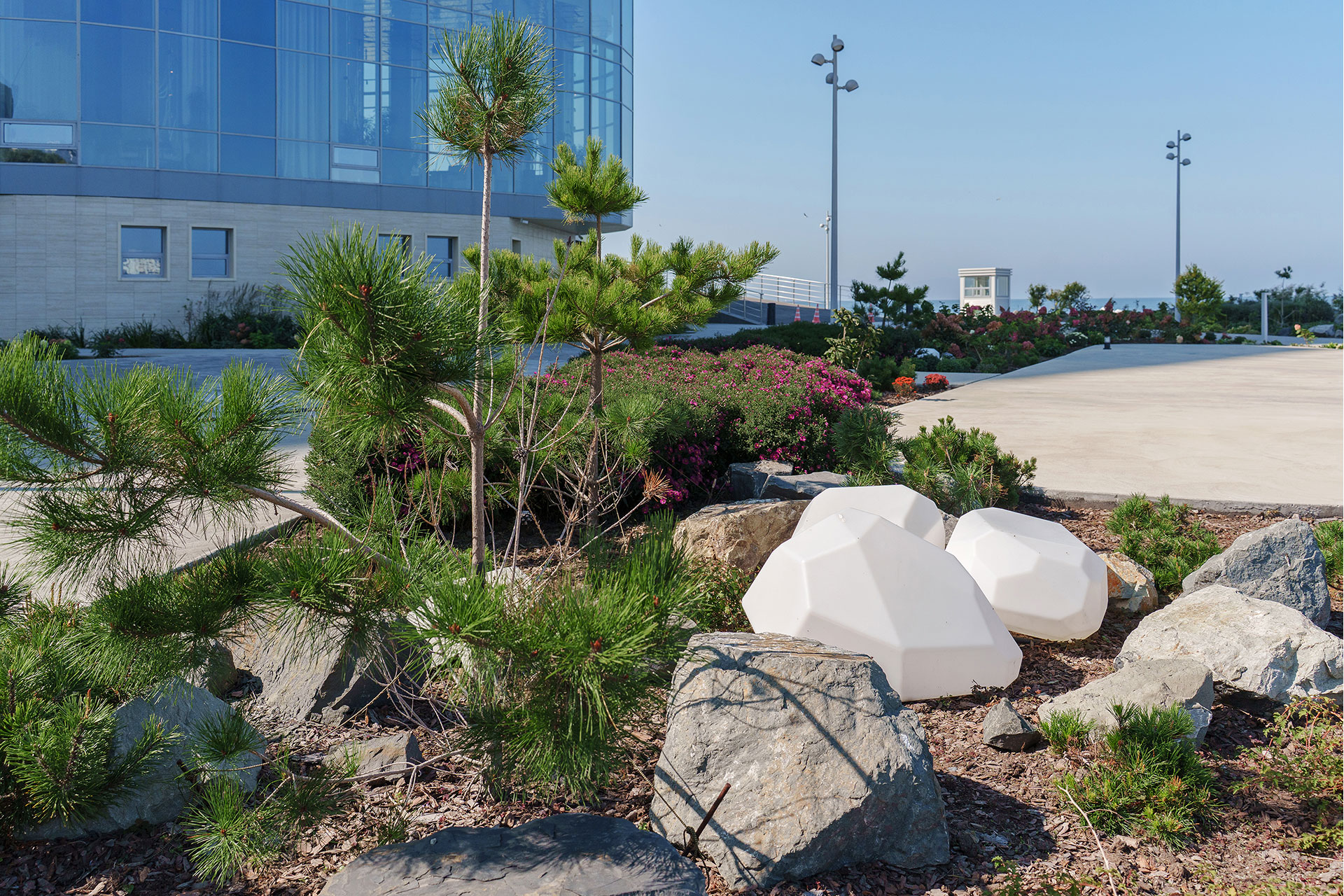
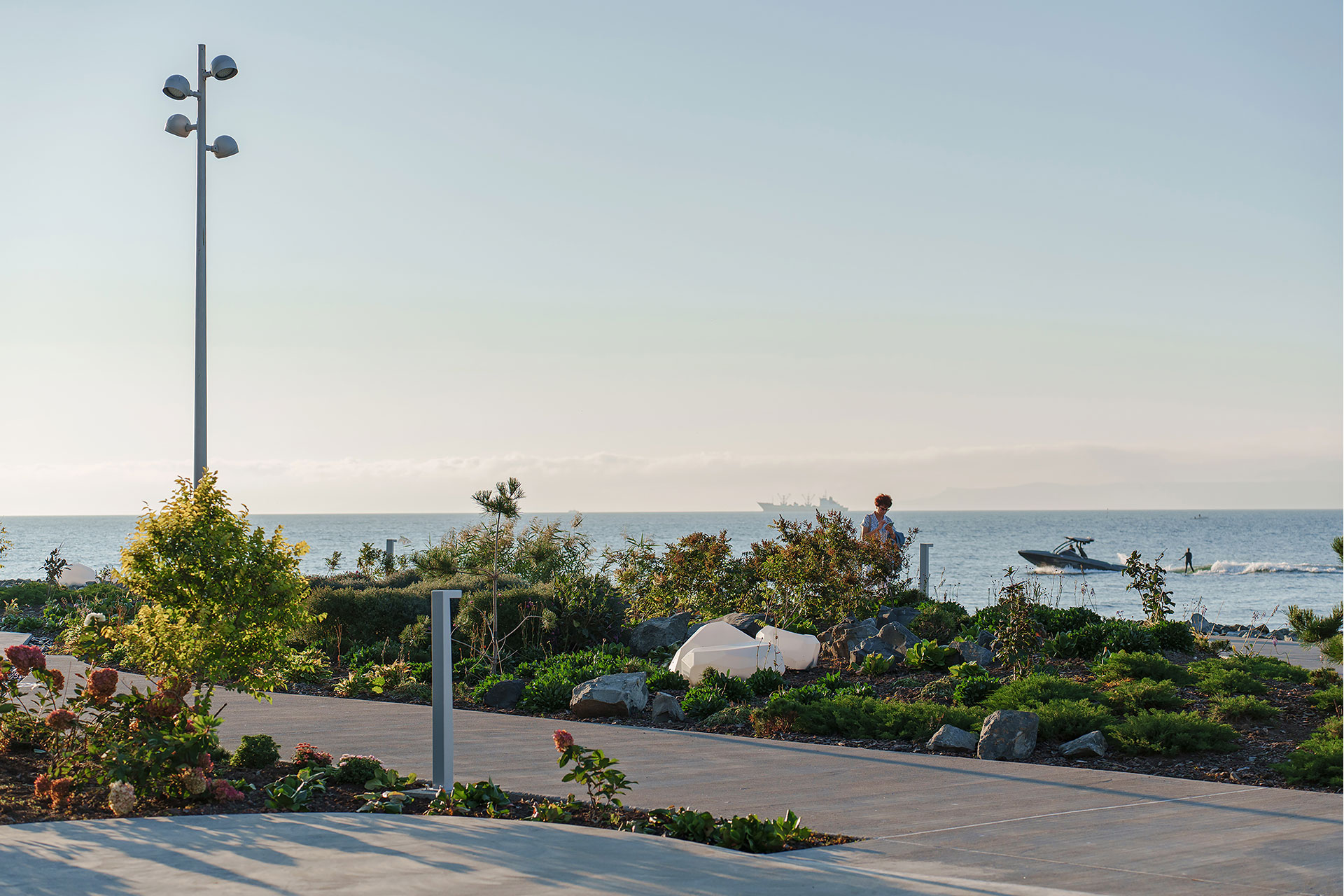
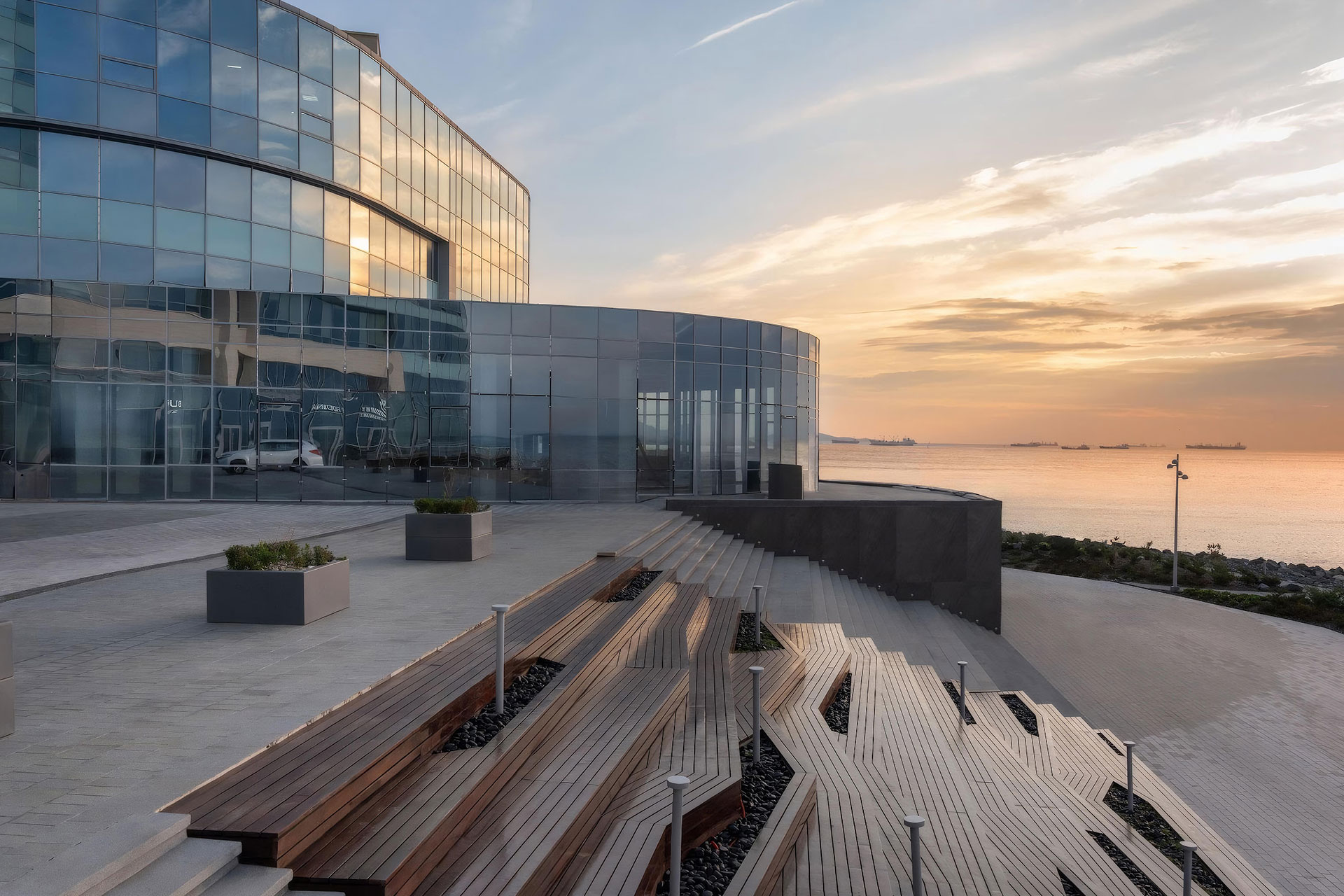
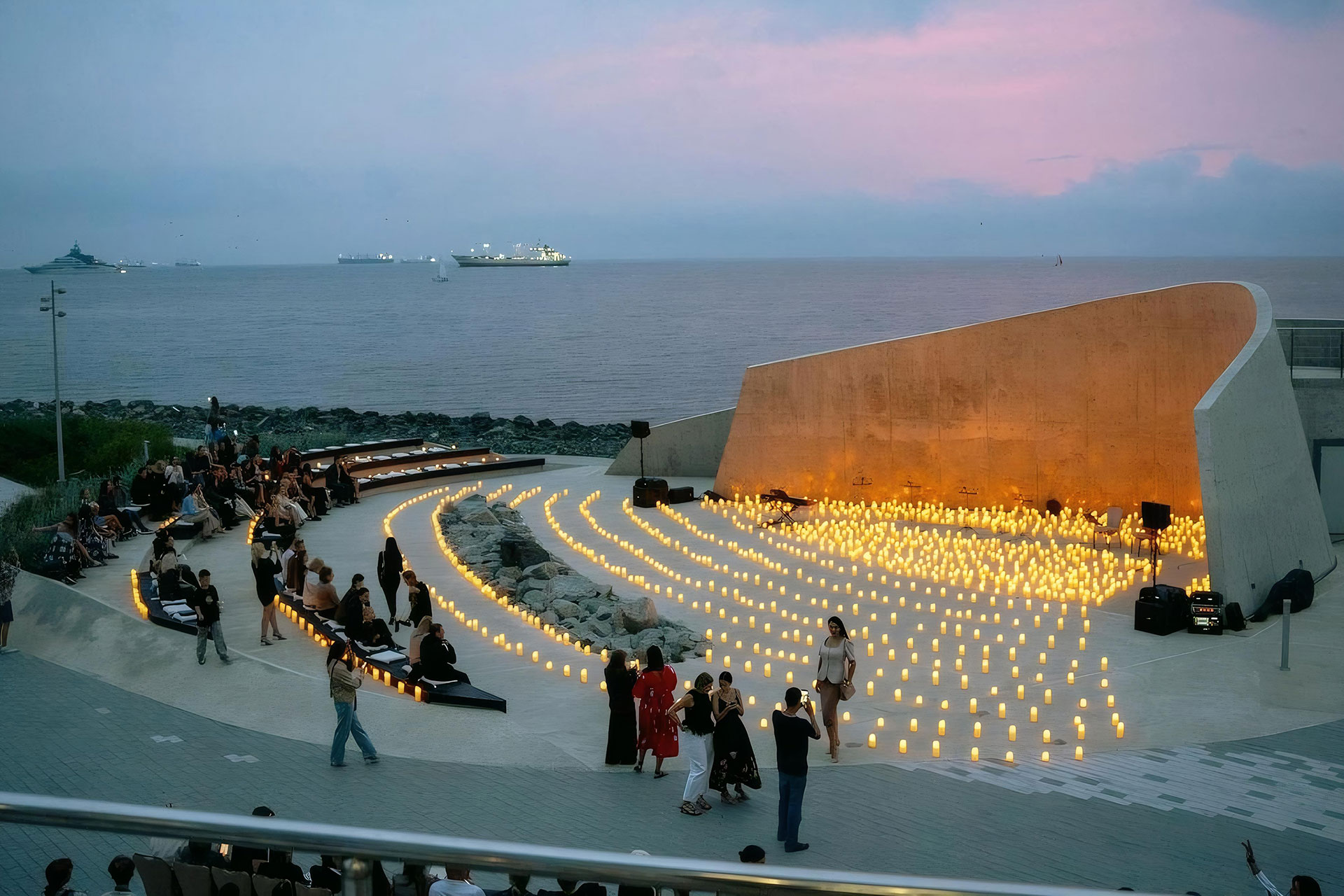
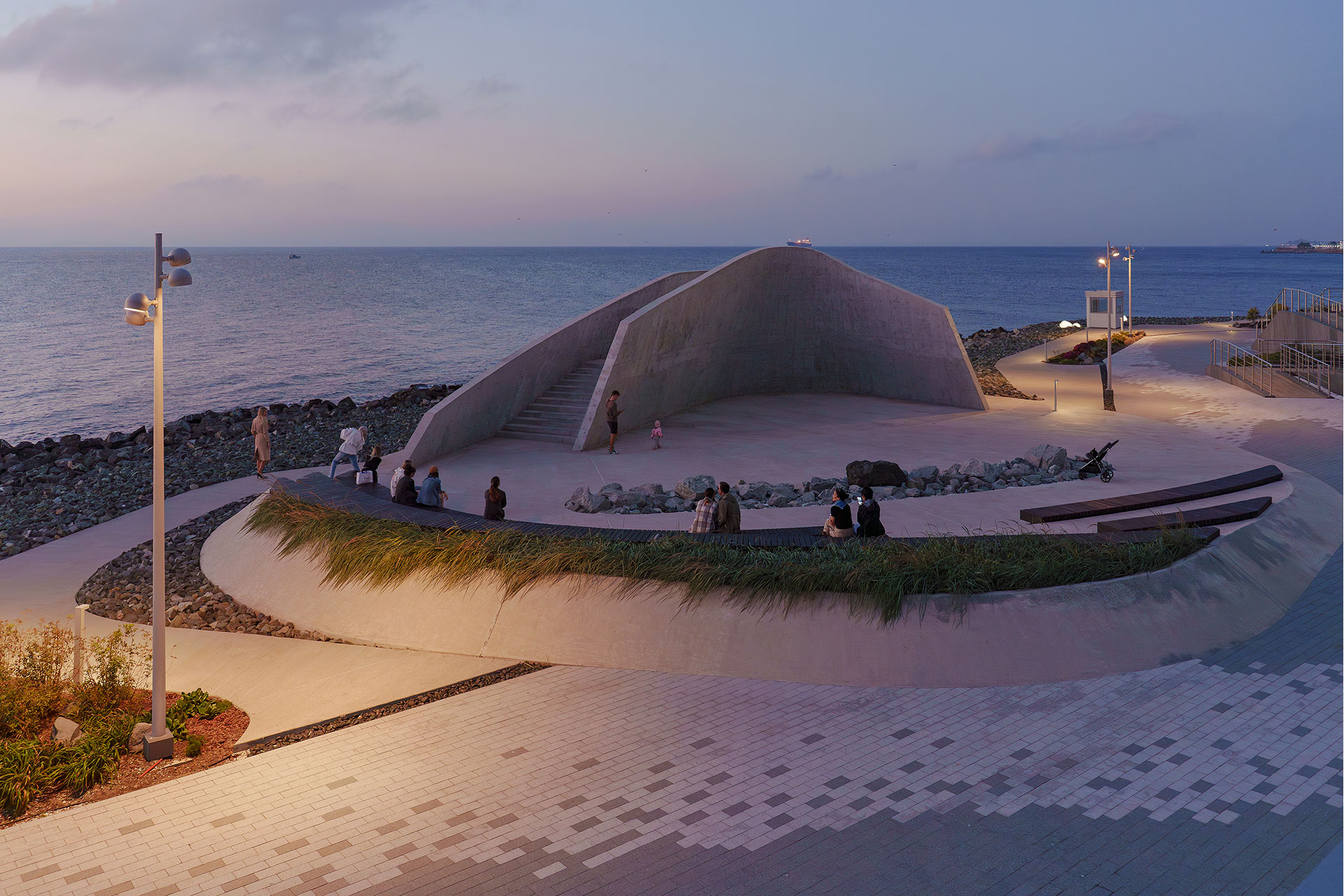
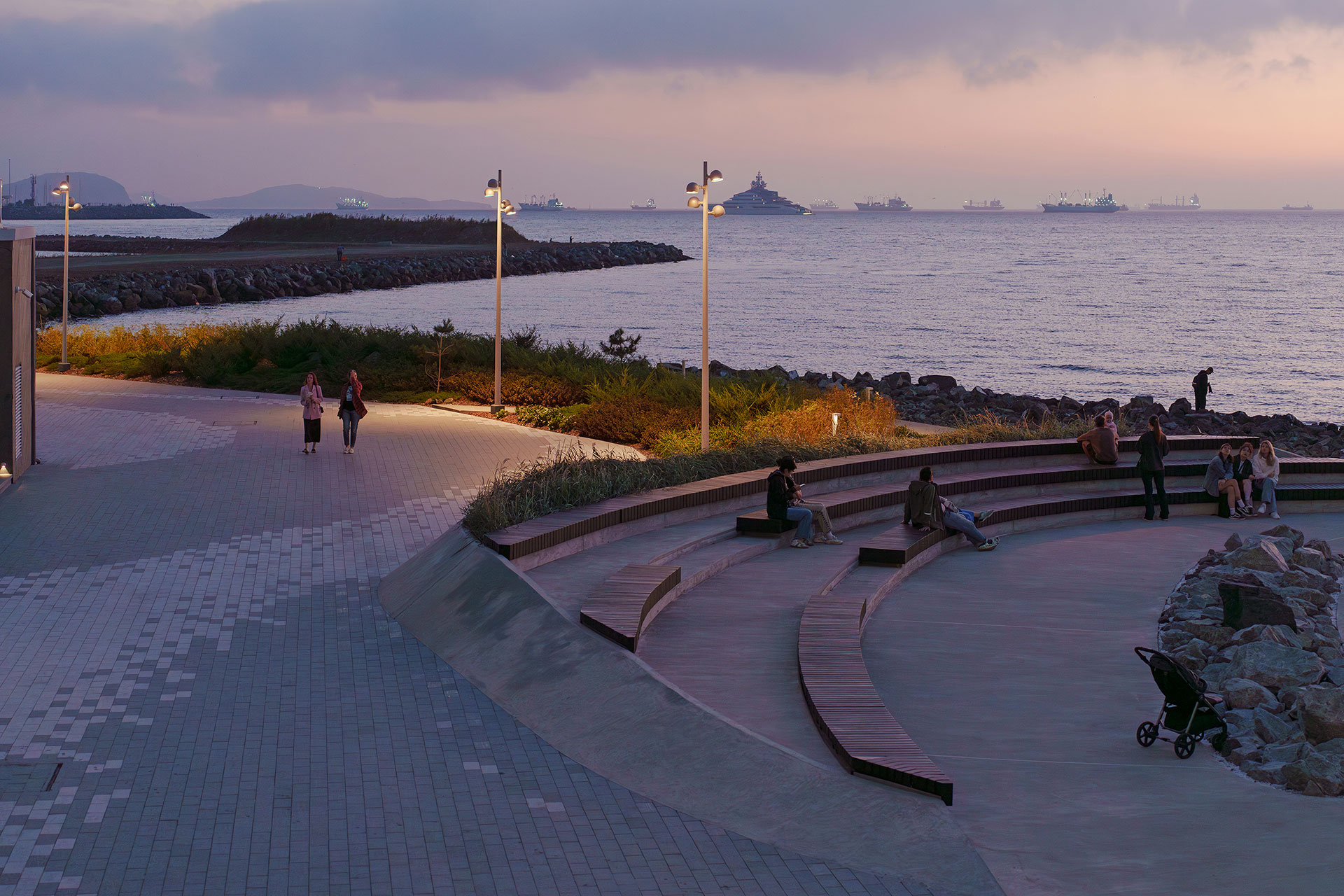
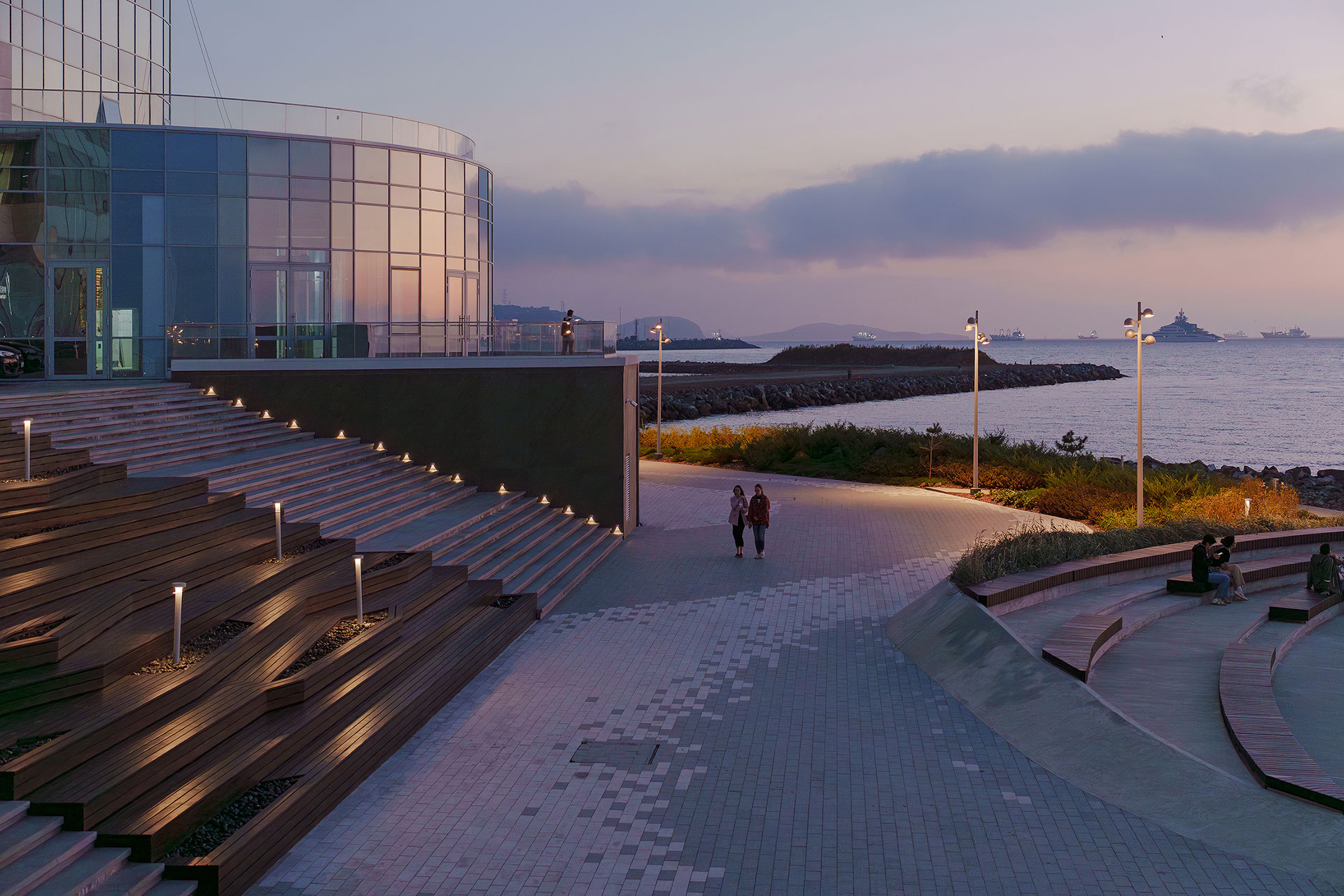
Cape Burny (means “stormy”) is located in Vladivostok on the shore of the Golden Horn Bay. The new multifunctional complex Burny is located on the territory of the cape. The embankment at Burnie turned out to be restrained and stylish: gray concrete, smooth lines, green islands and the sea, which seems endless. From here you can enjoy an amazing view of the sunset and the new quarters of Vladivostok. Classical music concerts are already being held here by candlelight. People are sitting in the amphitheater, listening to the cello, and at this moment it seems that Vladivostok is not just a city, but the breathing of the Pacific Ocean in a human rhythm.
Project Statement
Cape Burny is a prominent headland where architecture, landscape, and the Pacific horizon converge. The landscaping project, developed by the architectural bureau Wowhaus, takes into account the climatic and seismic characteristics of the Far Eastern region. The lighting design provides a context-sensitive, functional, and resilient solution for a site exposed to extreme marine conditions.
Design Intent
The project’s goal was to create a safe, legible, and emotionally coherent nighttime environment while preserving the natural and architectural qualities of the site. The concept follows a nature-responsive urbanism approach: light serves as a mediator between human activity, architectural elements, and the coastal landscape rather than a visual spectacle. Preserving the uninterrupted ocean horizon was a primary objective, alongside reinforcing the spatial identity of Cape Burny.
Key Strategies
1. Horizon Preservation and Minimal Visual Intrusion
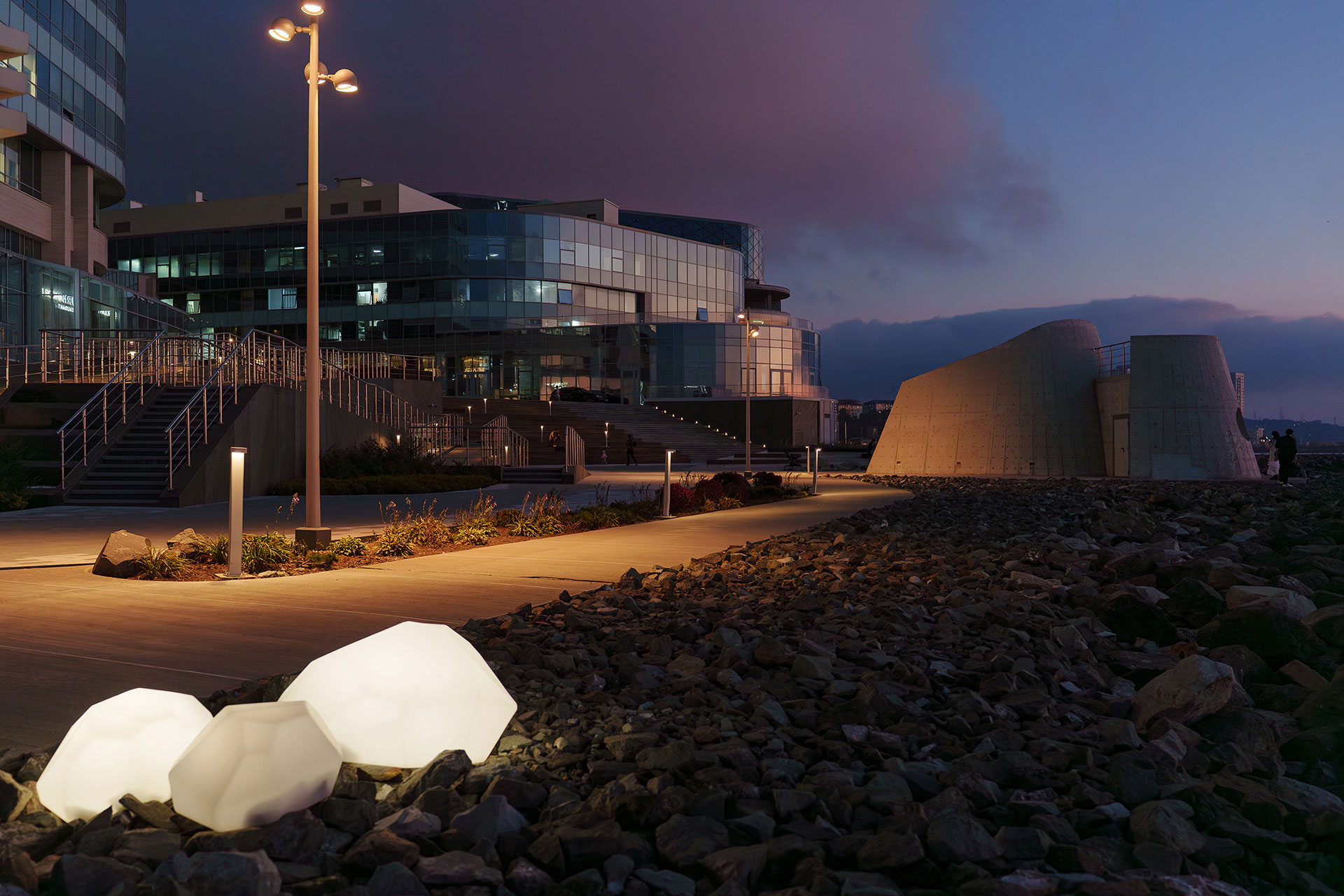
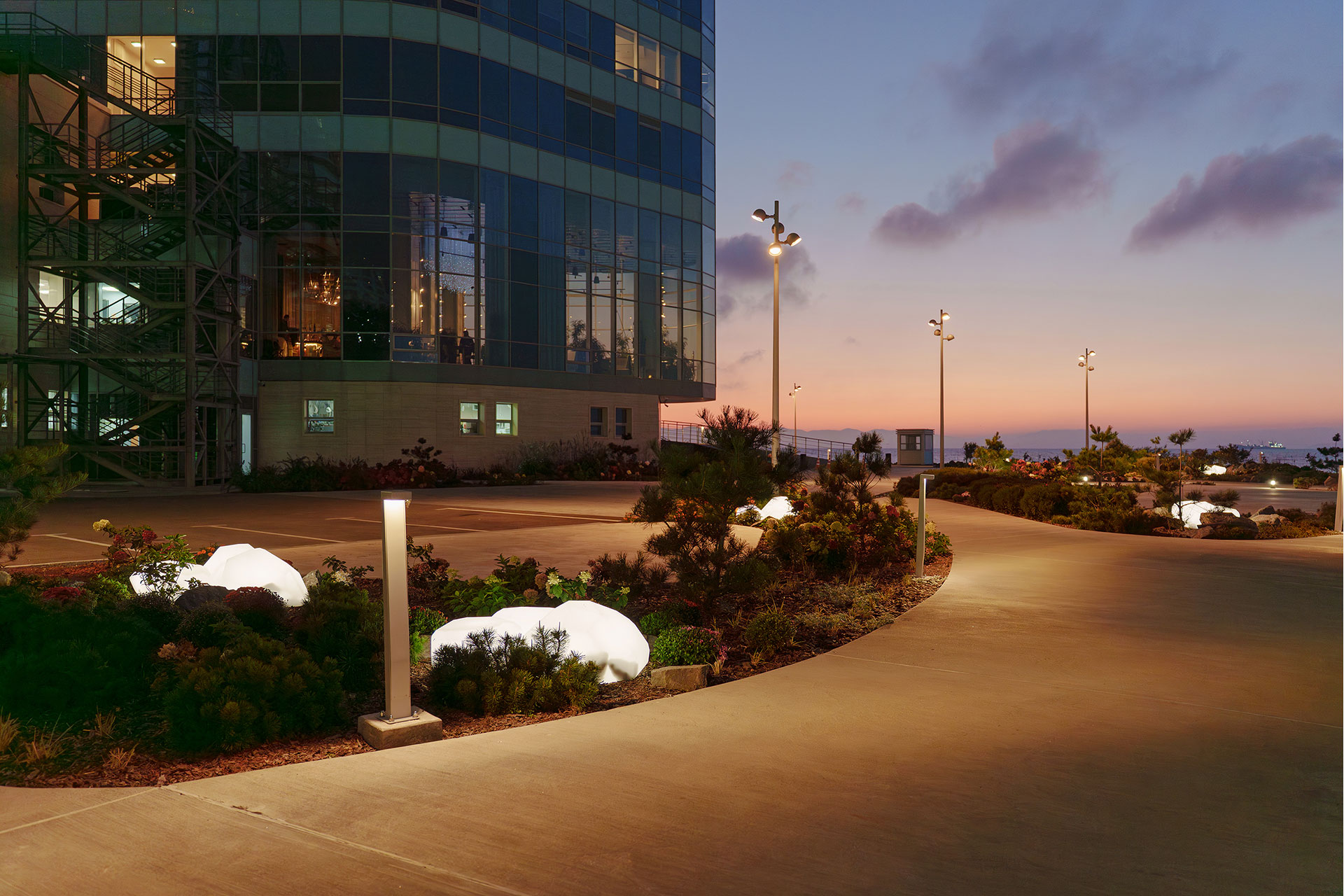
To maintain the panoramic view of the ocean, all traditional vertical lighting poles were removed across the headland and near the open-air stage. Low-height bollards with asymmetric optics provide orientation and define pathways while minimizing glare and spill. This approach preserves the natural scale of the site and reduces visual clutter.
2. Integration into Architecture
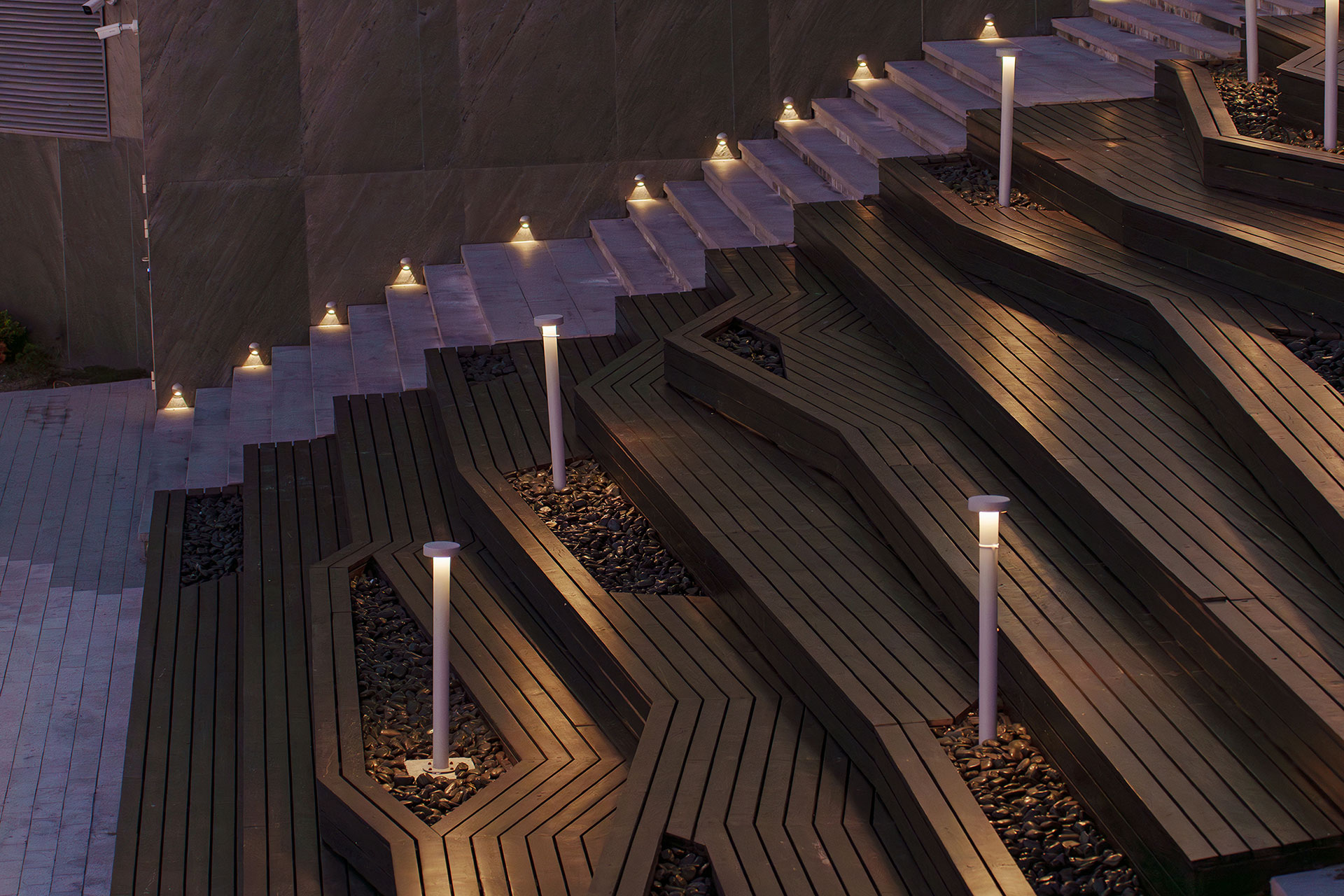
Light is embedded in retaining walls, stairs, timber decks, and relief features. Each fixture location was determined based on pedestrian flows, sightlines, and architectural rhythm. By integrating light into the built environment, the scheme establishes a subtle, cohesive nighttime structure that supports movement and spatial comprehension.
3. Controlled Brightness and Visual Comfort
The design avoids excessive contrast or decorative accents. Shielded luminaires, precise beam angles, and controlled luminance levels provide clear route definition and safety without overwhelming the landscape. This ensures a calm, legible environment that respects the site’s natural qualities.
4. Technical Resilience in a Marine Environment
Exposed to wind, humidity, and salt spray, the site required robust materials and engineering. Fixtures employ corrosion-resistant materials, sealed housings, and optics engineered for long-term stability. The system is designed for minimal maintenance and consistent performance over time.
5. Result
The Cape Burny lighting scheme demonstrates how subtle and contextual lighting can enhance a public coastal space without dominating it. By removing visual clutter, embedding luminaires into landscape elements, and carefully controlling photometry, the project establishes a coherent nighttime identity. The lighting design enables a seamless dialogue between architecture, nature, human activityю.., and sometimes music.