

Gentle renovation and innovative lighting design for the Brunnenhof school complex
The Brunnenhof school complex in Zurich combines two listed buildings designed by Otto Dürr (1930s) and Max Bill (1960s). Formerly used as SRF radio studios, it has been converted into a multifaceted educational and cultural facility: secondary school, Zurich Conservatory of Music, and publicly accessible concert, recording, dance, and theater spaces. The lighting design by spektrum aimed to preserve the architectural identity of the buildings while creating sustainable, flexible, and energy-efficient lighting for learning, rehearsals, and performances.
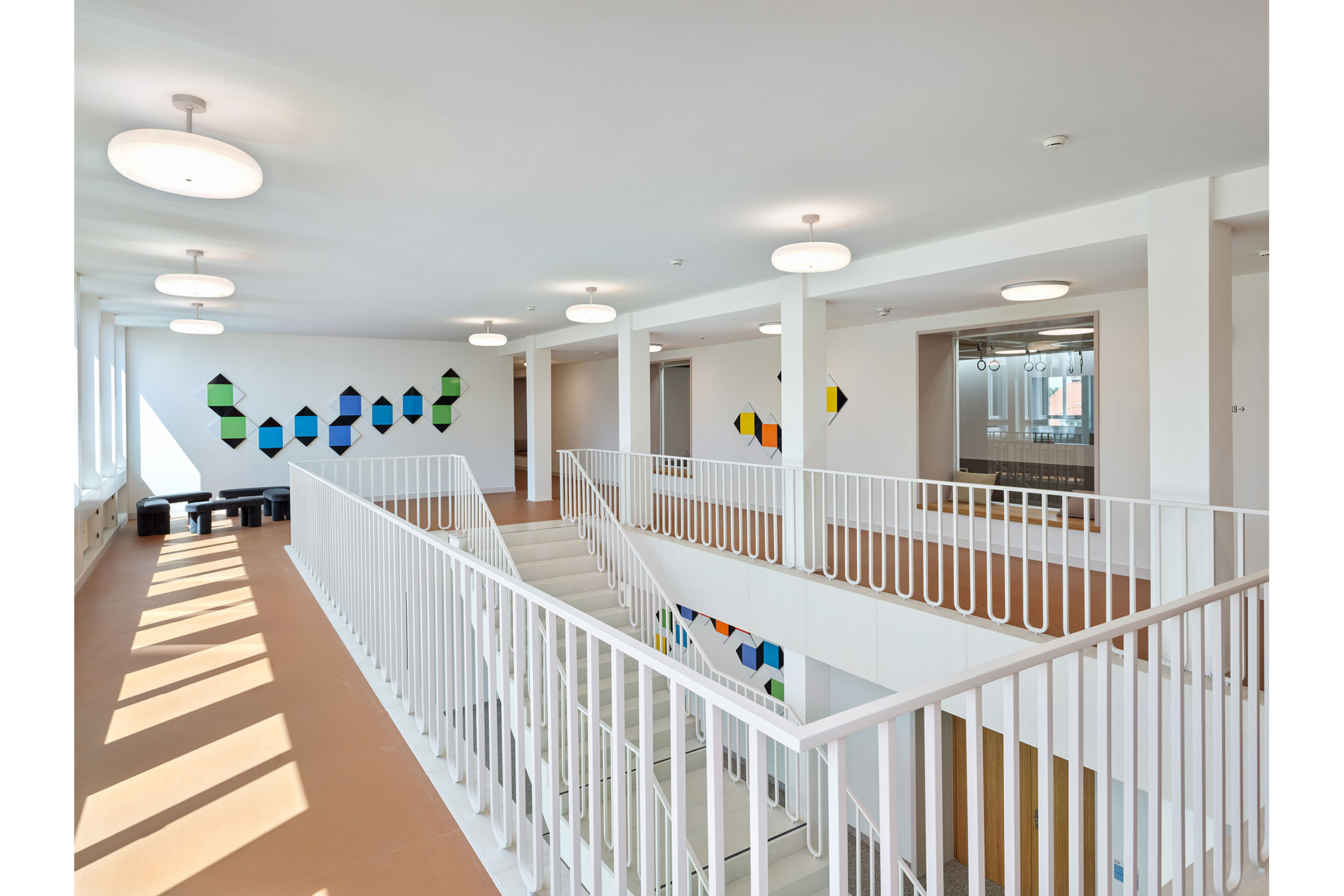
Foyer
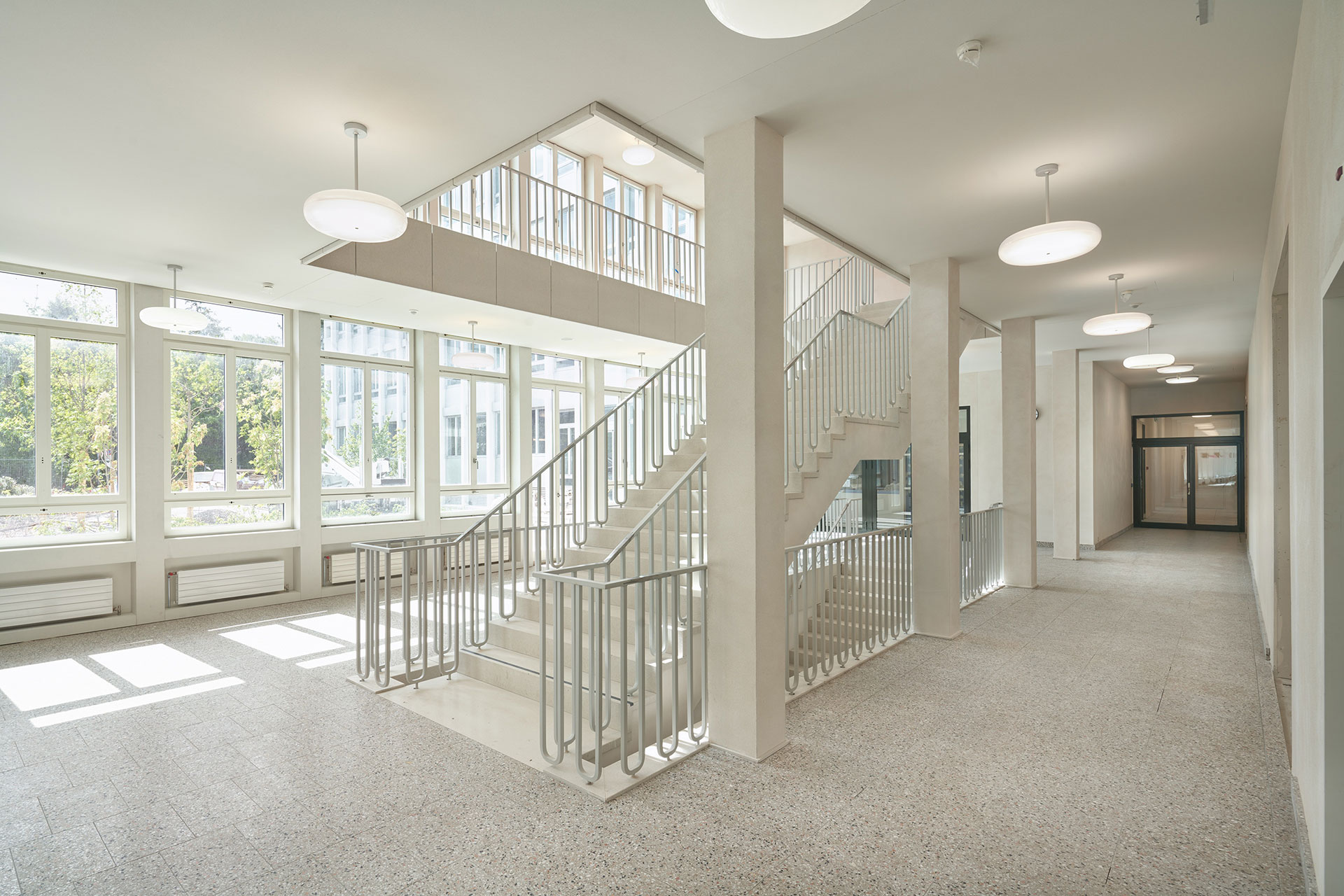
The two-storey foyer forms the spatial and functional heart of the complex. Lighting defines clear zones for welcoming, circulation and informal gathering, while precisely aligned light axes support the architectural structure and provide orientation. Presence and daylight-dependent controls reduce artificial lighting to the necessary minimum and optimise energy consumption in daily operation.
Reinterpreted historical luminaires
In the listed staircases and music rooms, historic luminaires were reinterpreted. Newly manufactured glass luminaires, based on historical images, preserve the atmospheric quality of the original spaces while integrating contemporary LED technology. This results in durable, low-maintenance luminaires with modern light quality, without compromising the historic character of the interiors.
Classrooms with customized lighting
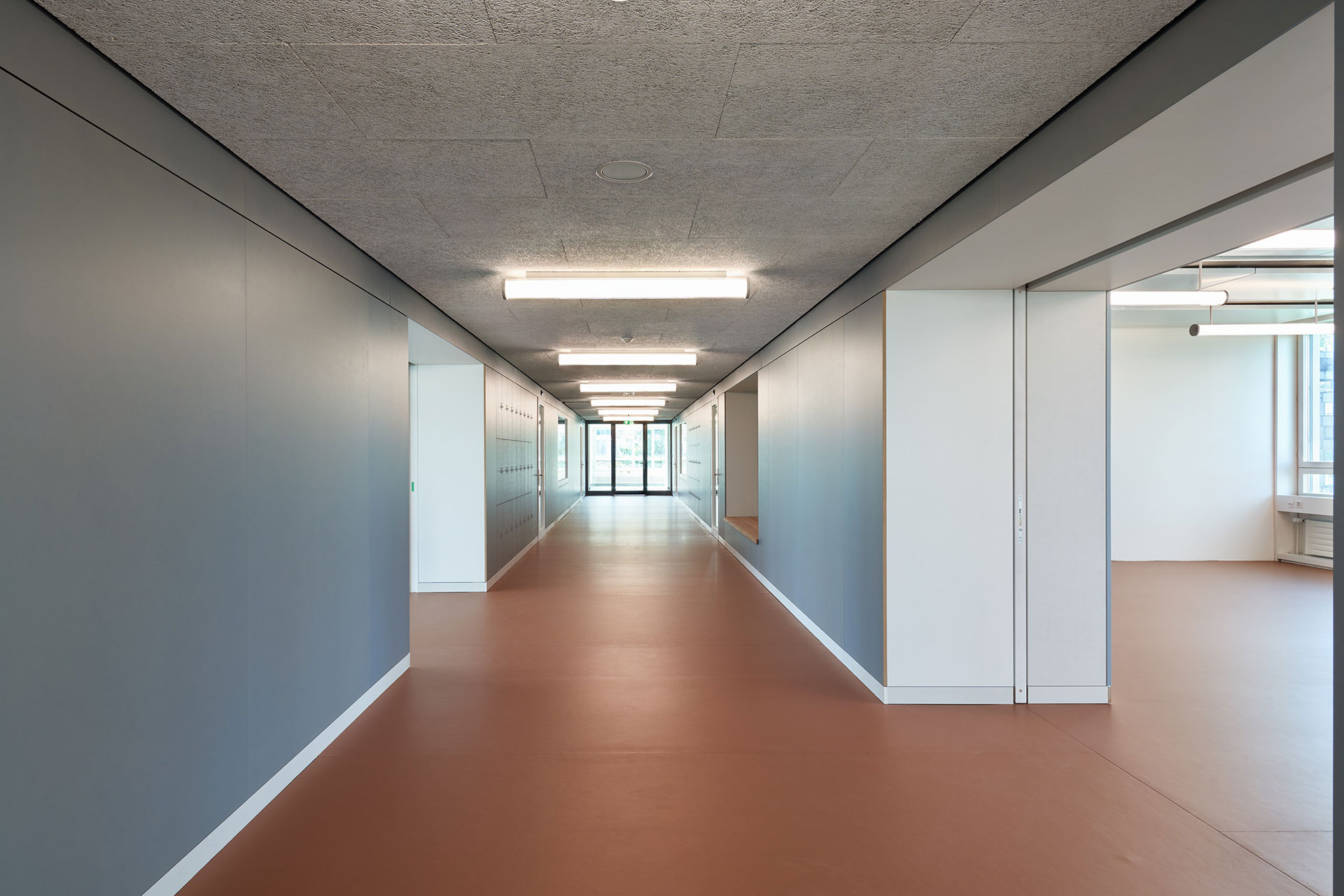
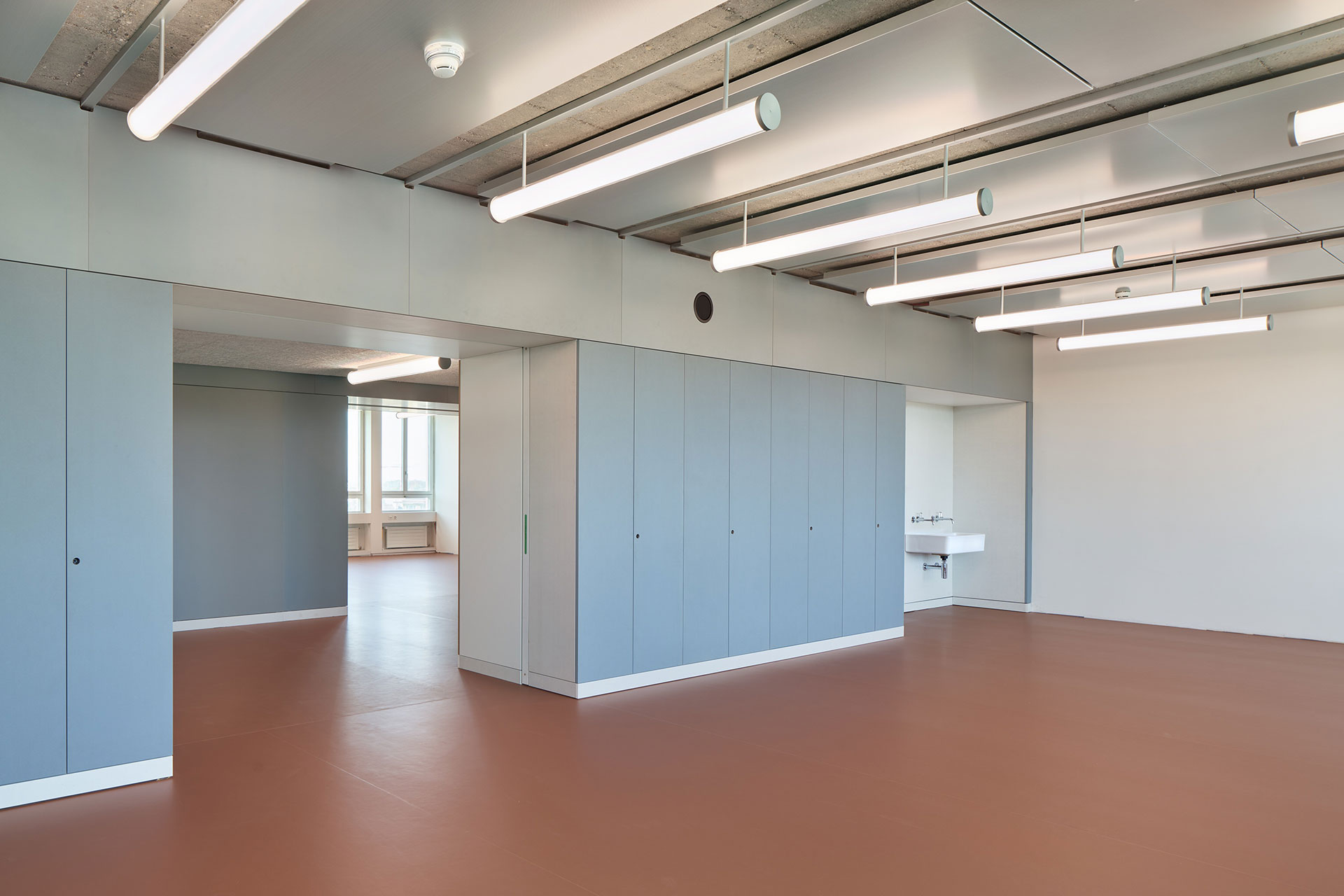
A customized lighting family was developed for the classrooms in the high-rise building. Round tube luminaires are integrated into a continuous ceiling profile between heating and cooling ceiling elements, creating a uniform appearance across all floors, including the canteen. The lighting ensures high uniformity and glare control in accordance with UGR standards, while addressing pedagogical requirements for flexibility and visual comfort. Daylight-dependent control supports concentrated work with minimal energy consumption.
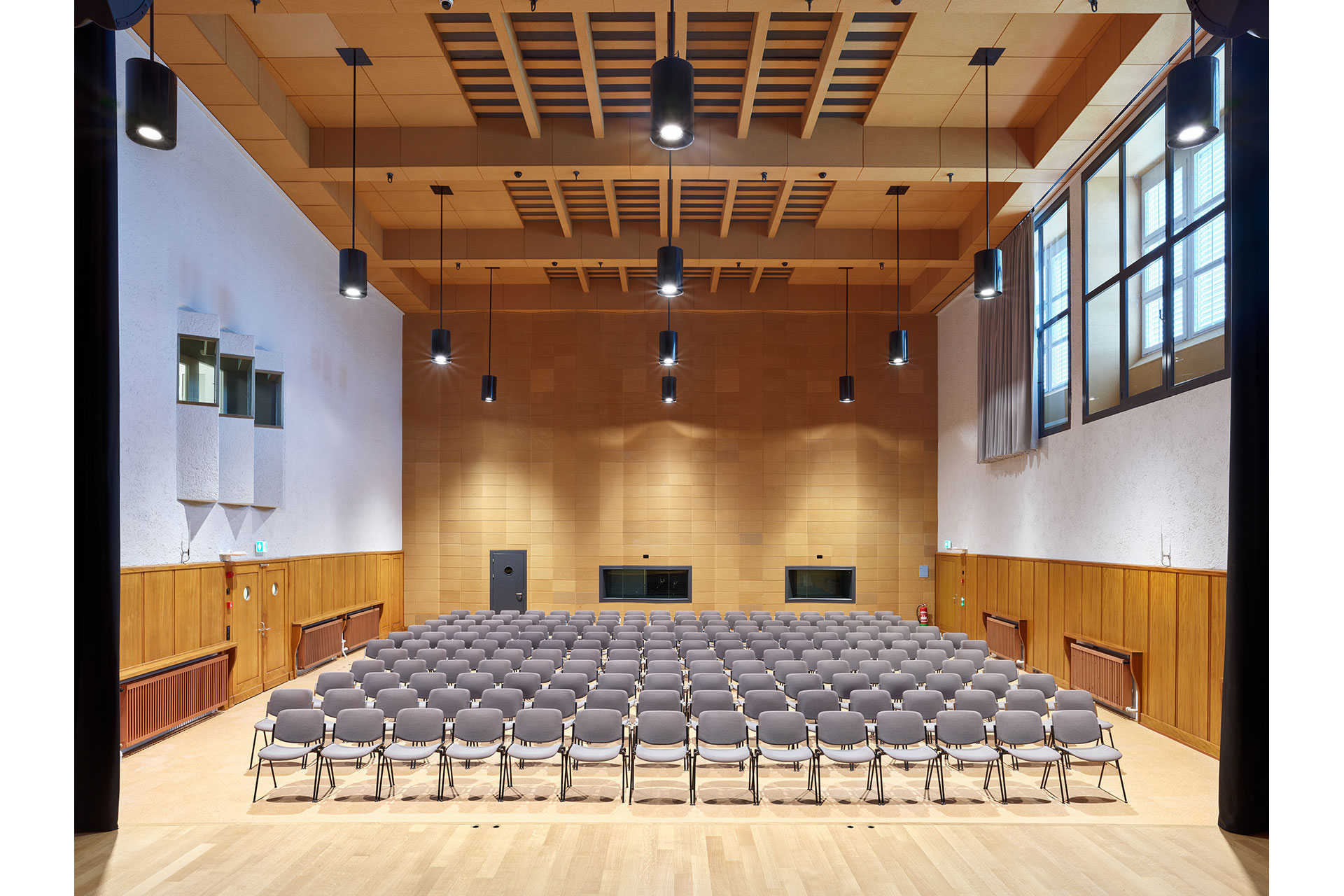
Studios for concerts, music, and sound recordings
Studios 1 and 2 place the highest demands on light quality, acoustic compatibility and controllability. Studio 1 is frequently used as a concert hall, which is why exclusively fanless, convection-cooled luminaires that are flicker-free, dimmable, and offer excellent light quality, were specified. High-output downlights from stage lighting technology were integrated into custom-designed pendant luminaires and complemented by profile spotlights and moving lights with shutter systems.
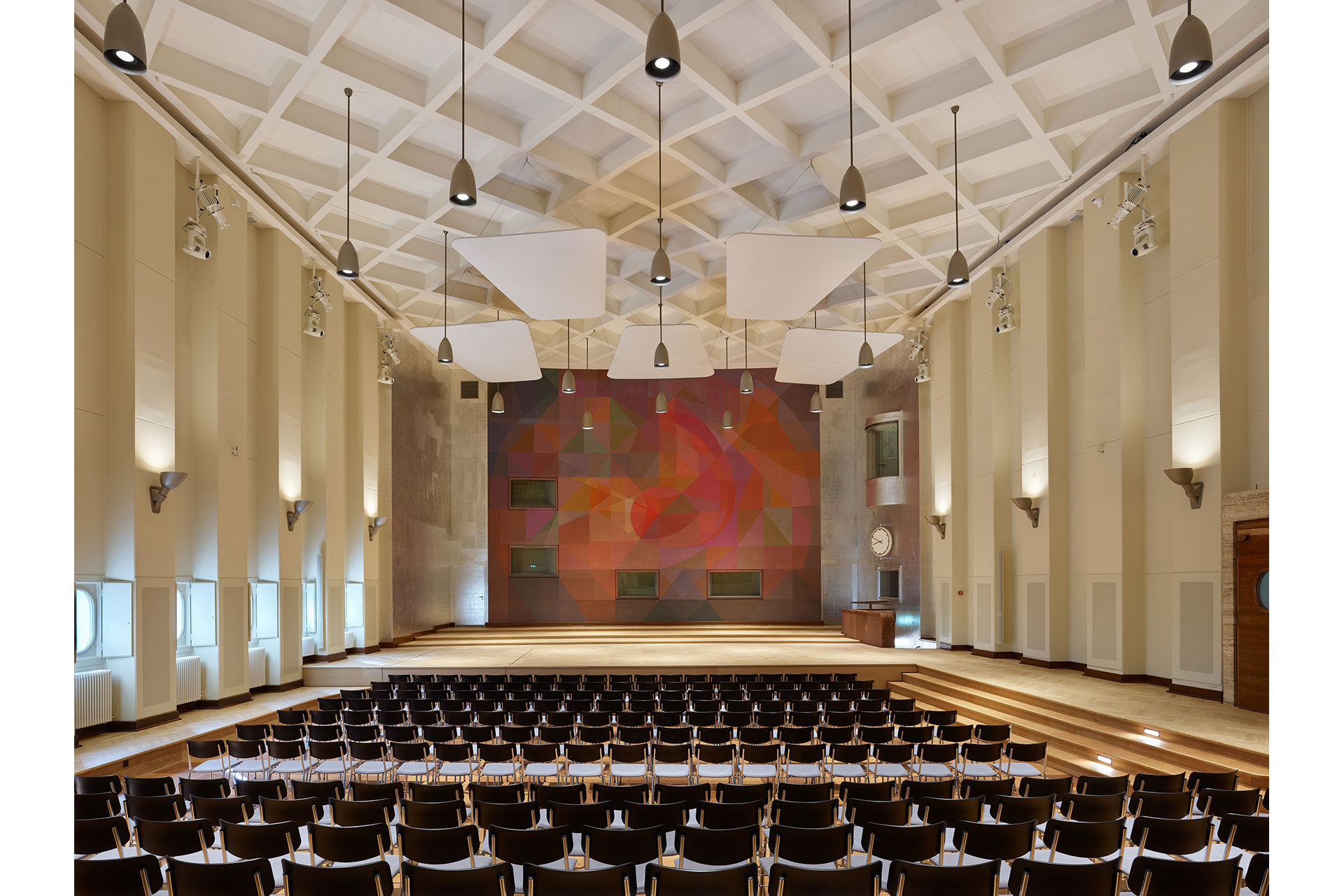
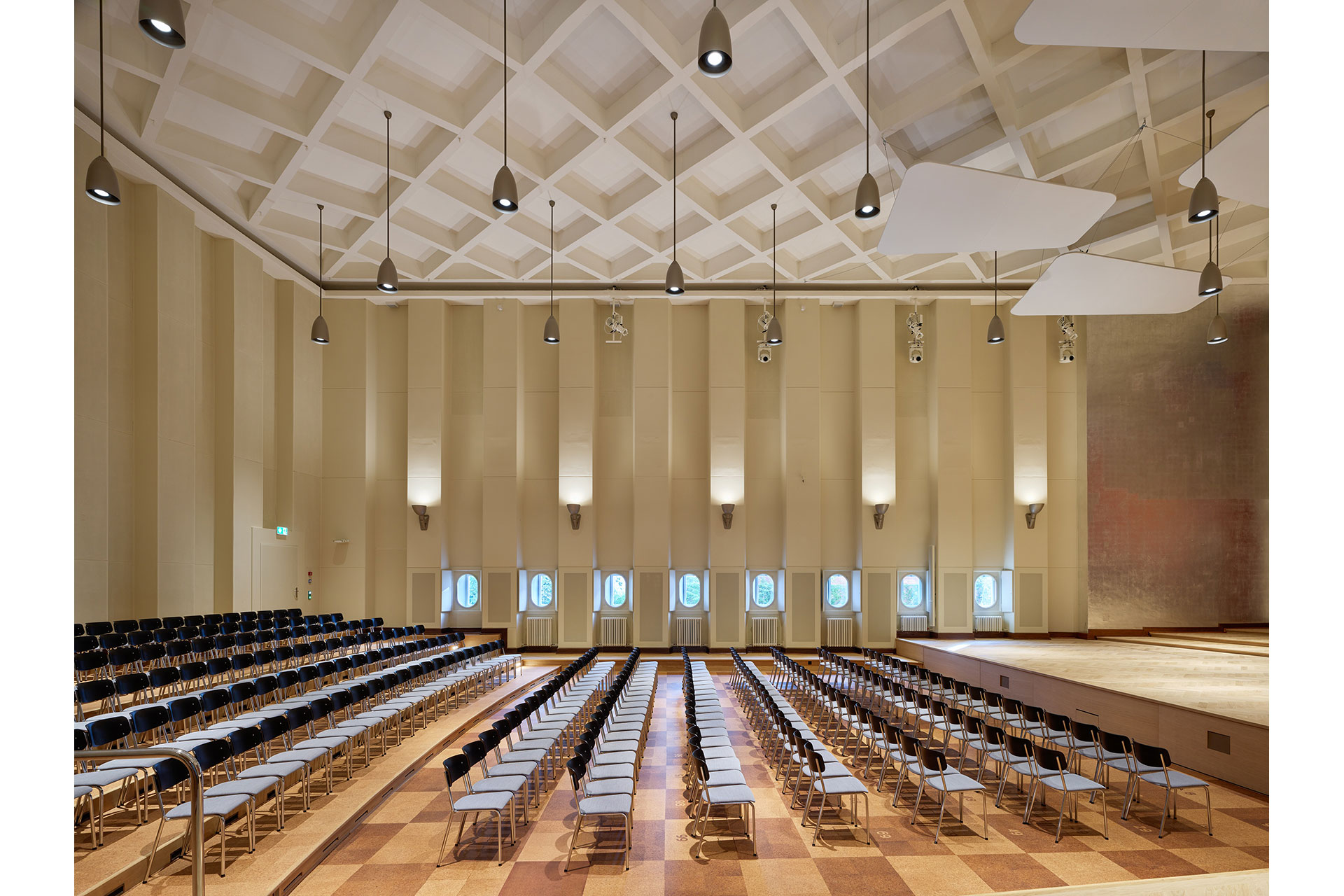
In Studio 2, the hall lighting was also implemented using downlights integrated into bespoke pendant luminaires. There was more freedom in the design for the stage: different light directions, colored light, and effects create versatile scene lighting. A special feature is the lighting bridge integrated into the hall ceiling, enabling optimal front lighting. Fully closable ceiling openings preserve the architectural appearance despite the integration of modern lighting technology.
Control Concept
An integrated control concept connects architectural lighting (KNX) and stage lighting (DMX) via a media control system. This allows different operating levels, ranging from wall-mounted switches and tablets to professional lighting consoles.
The lighting design for the school complex is a prime example of how historical substance can be respectfully preserved while seamlessly integrating contemporary lighting technology. Responding to heritage requirements and energy targets, the concept combines functionality and atmosphere through project-specific luminaires, intelligent control systems and energy-efficient solutions, achieving a balanced dialogue between tradition and the future.