

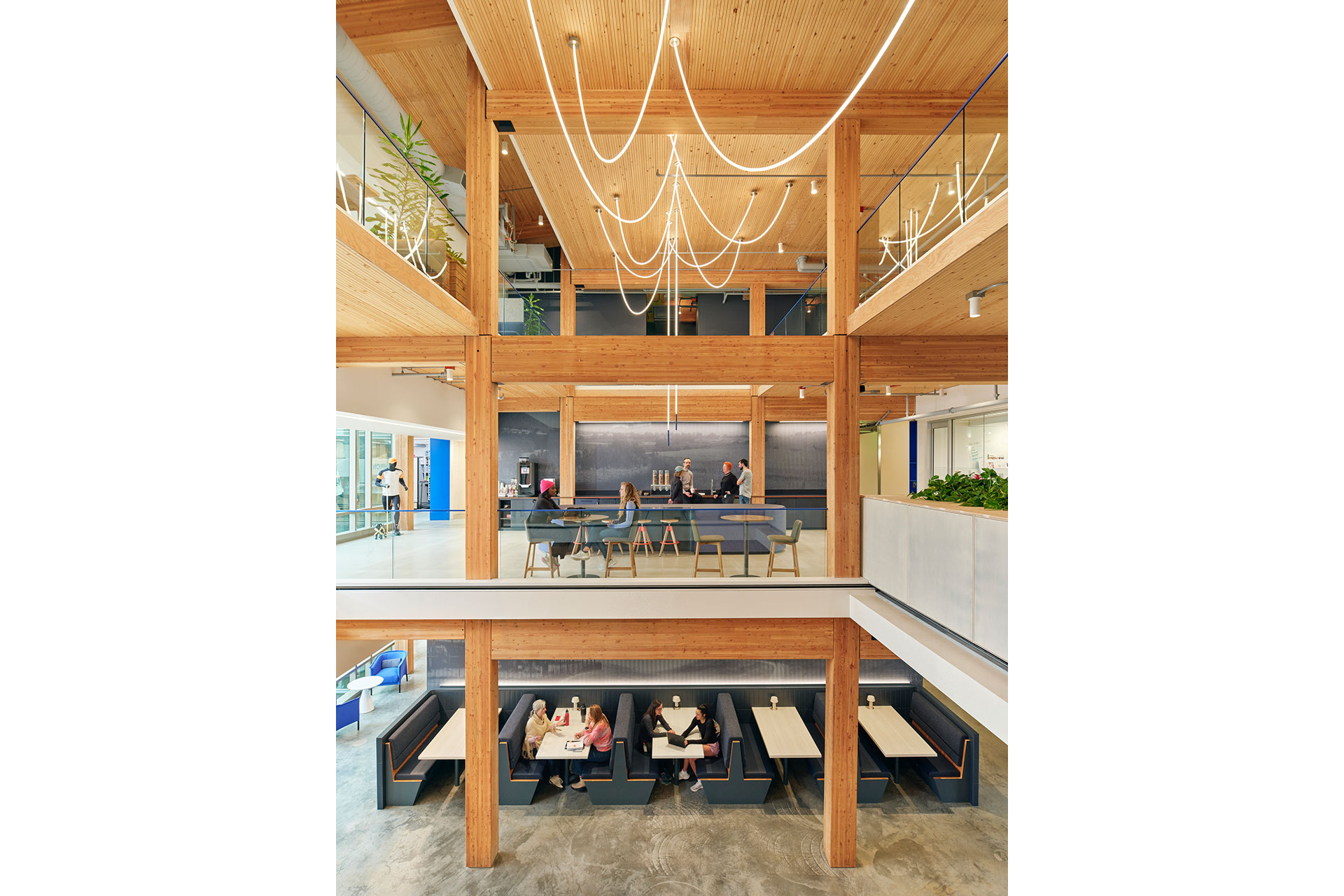
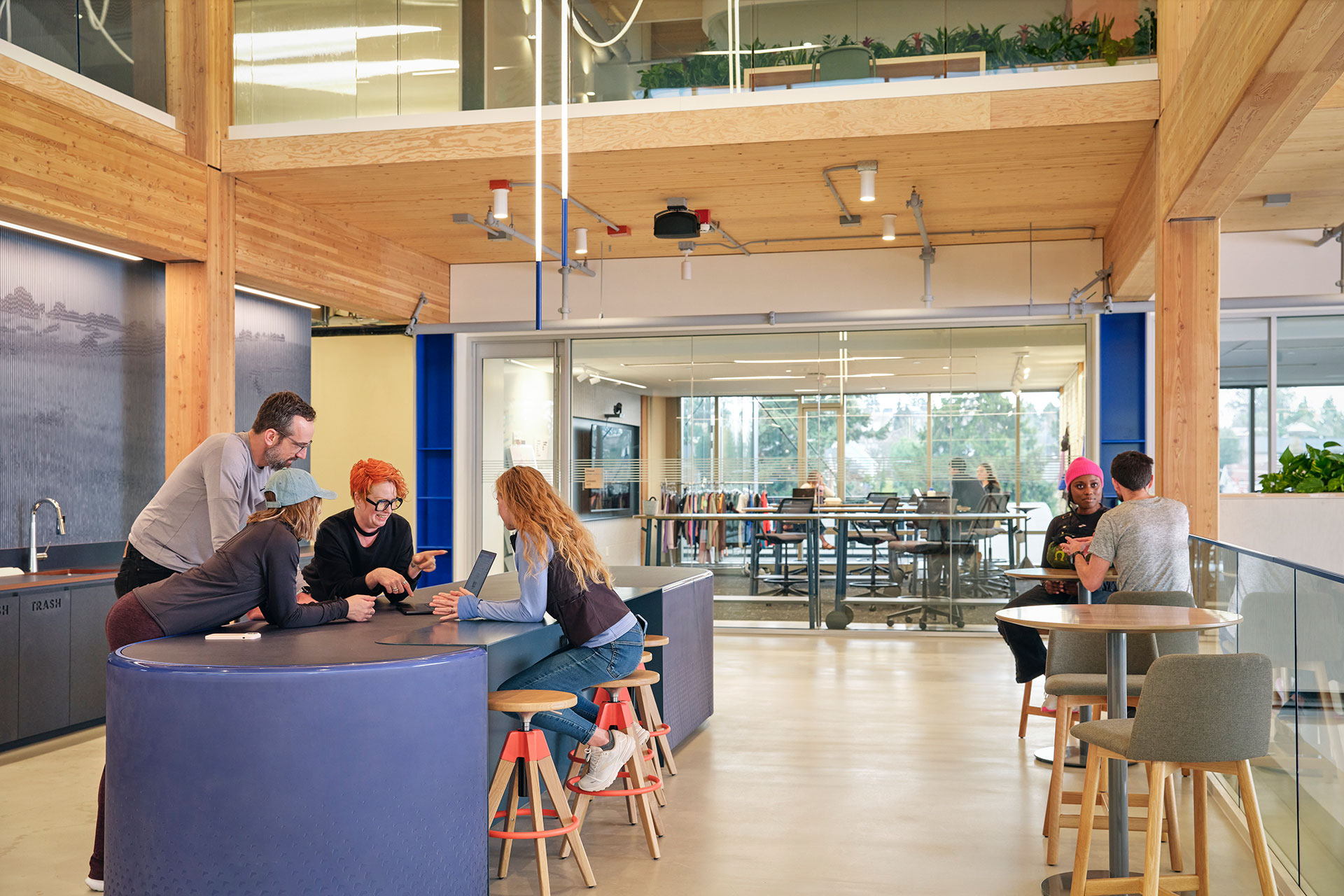
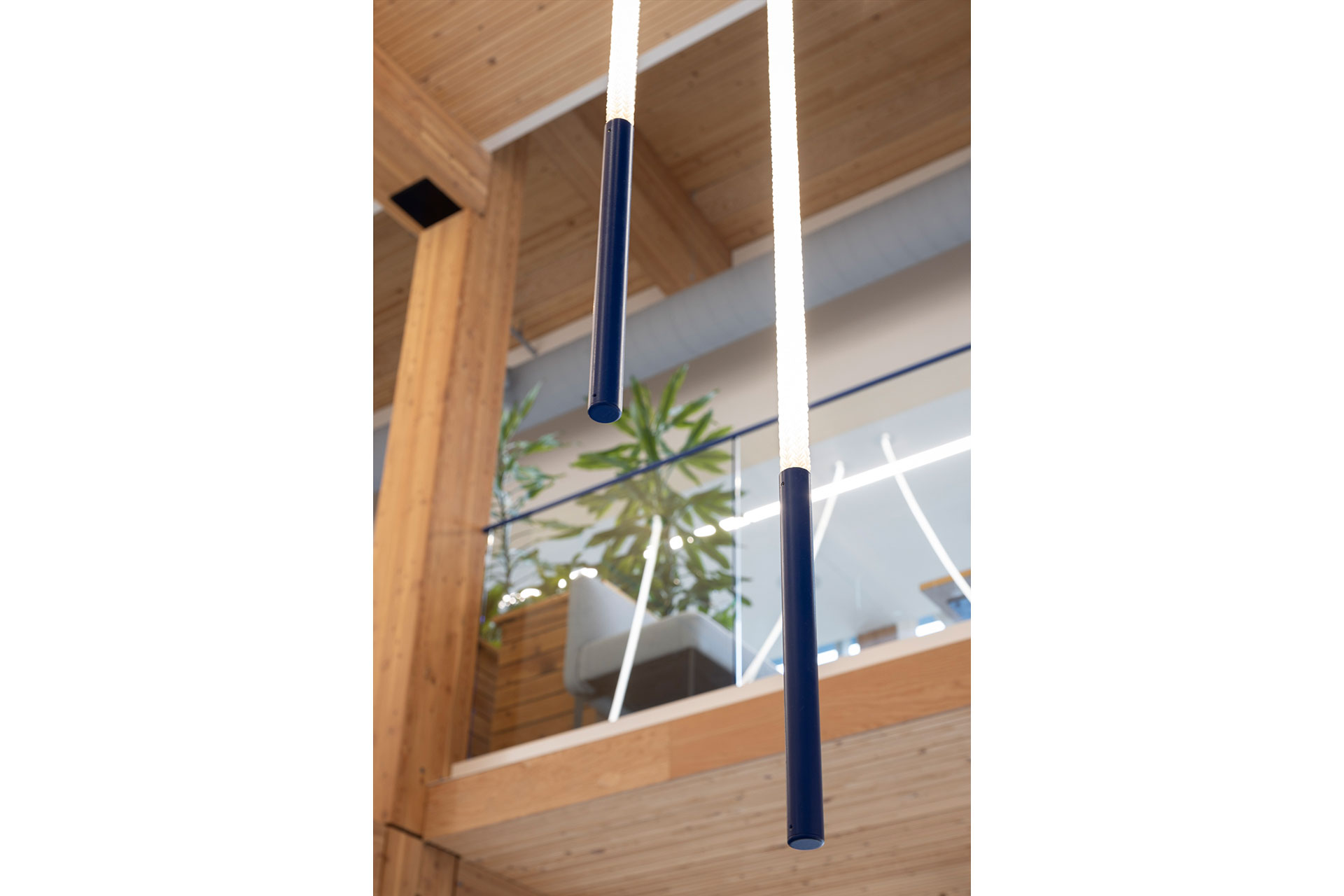
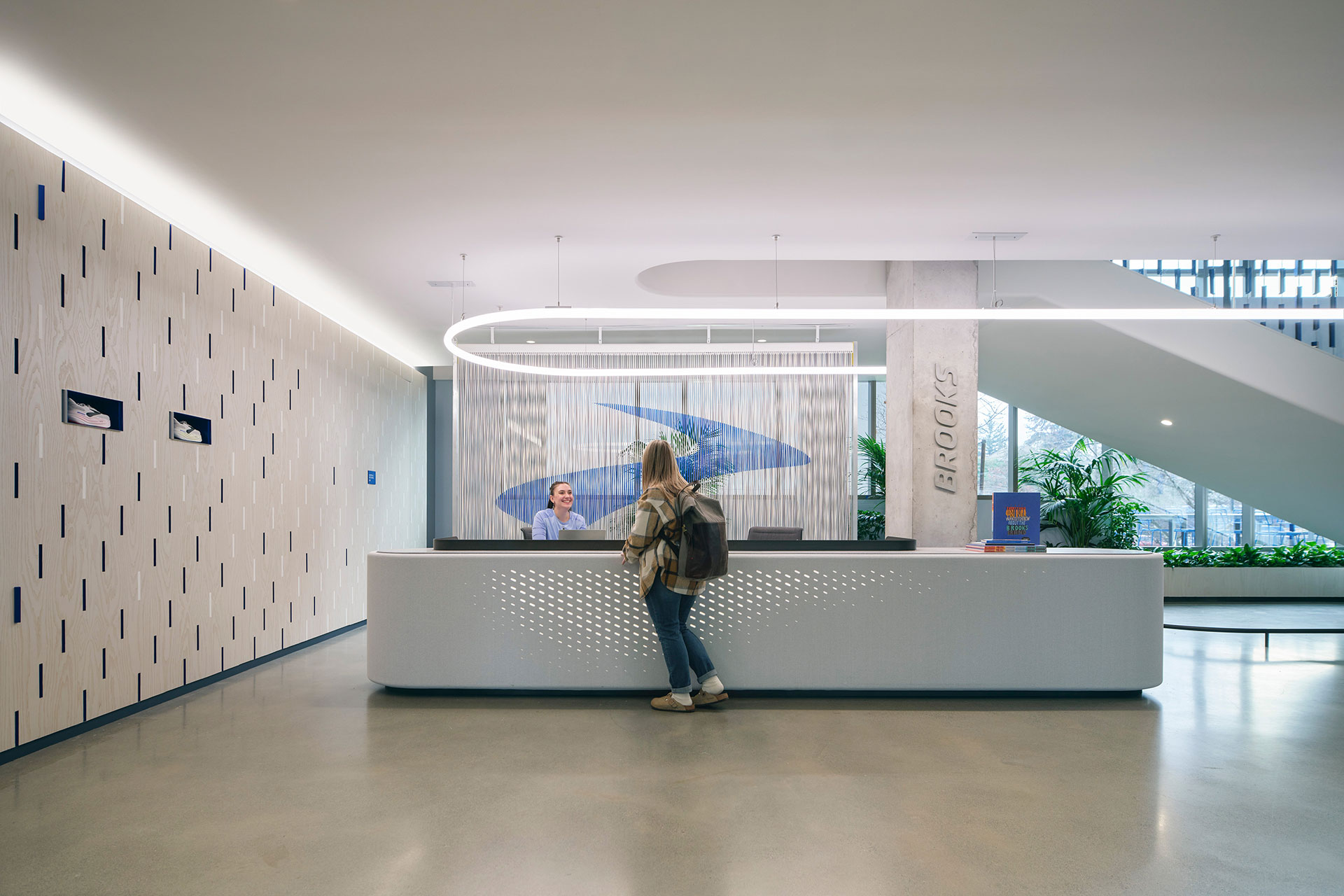
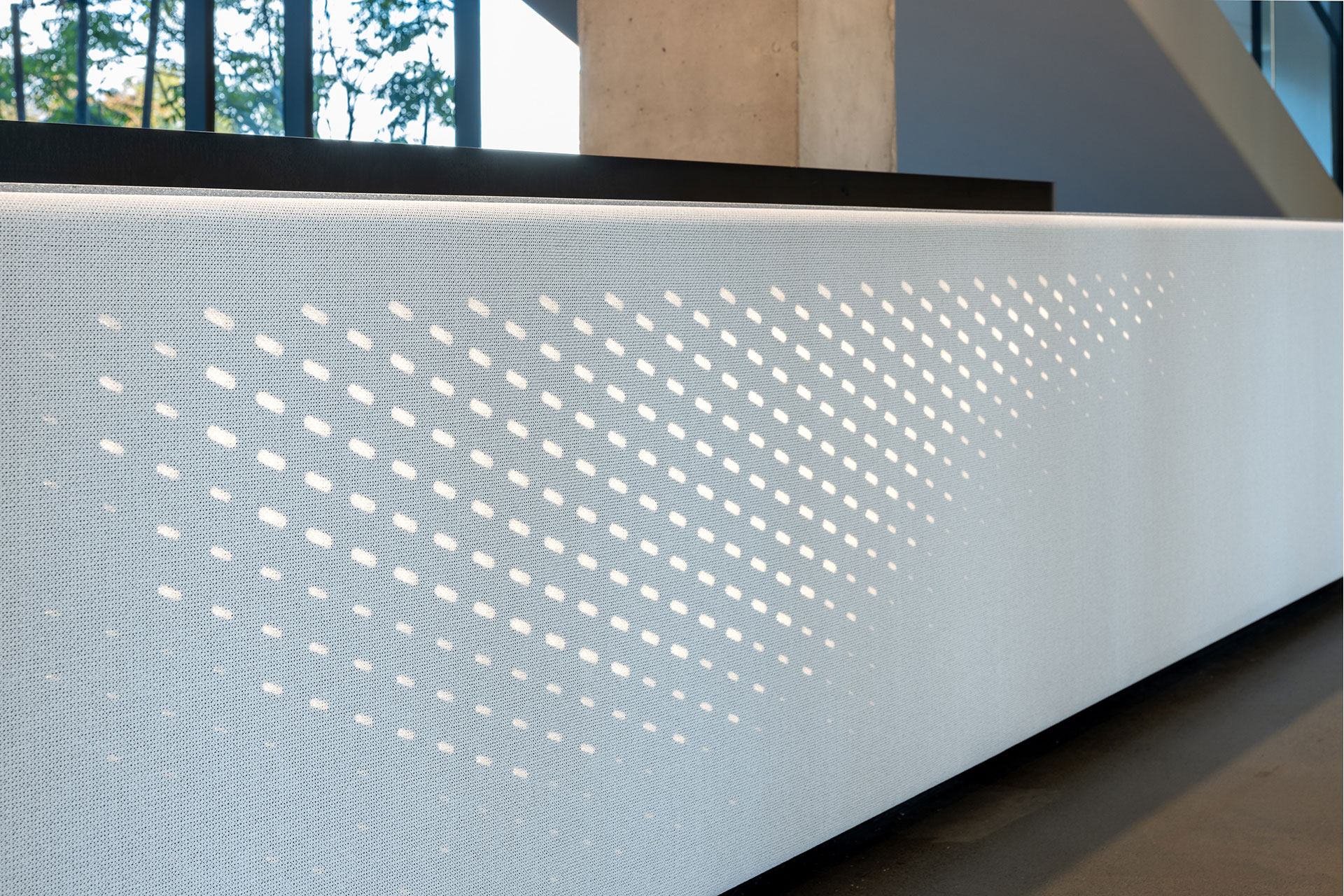
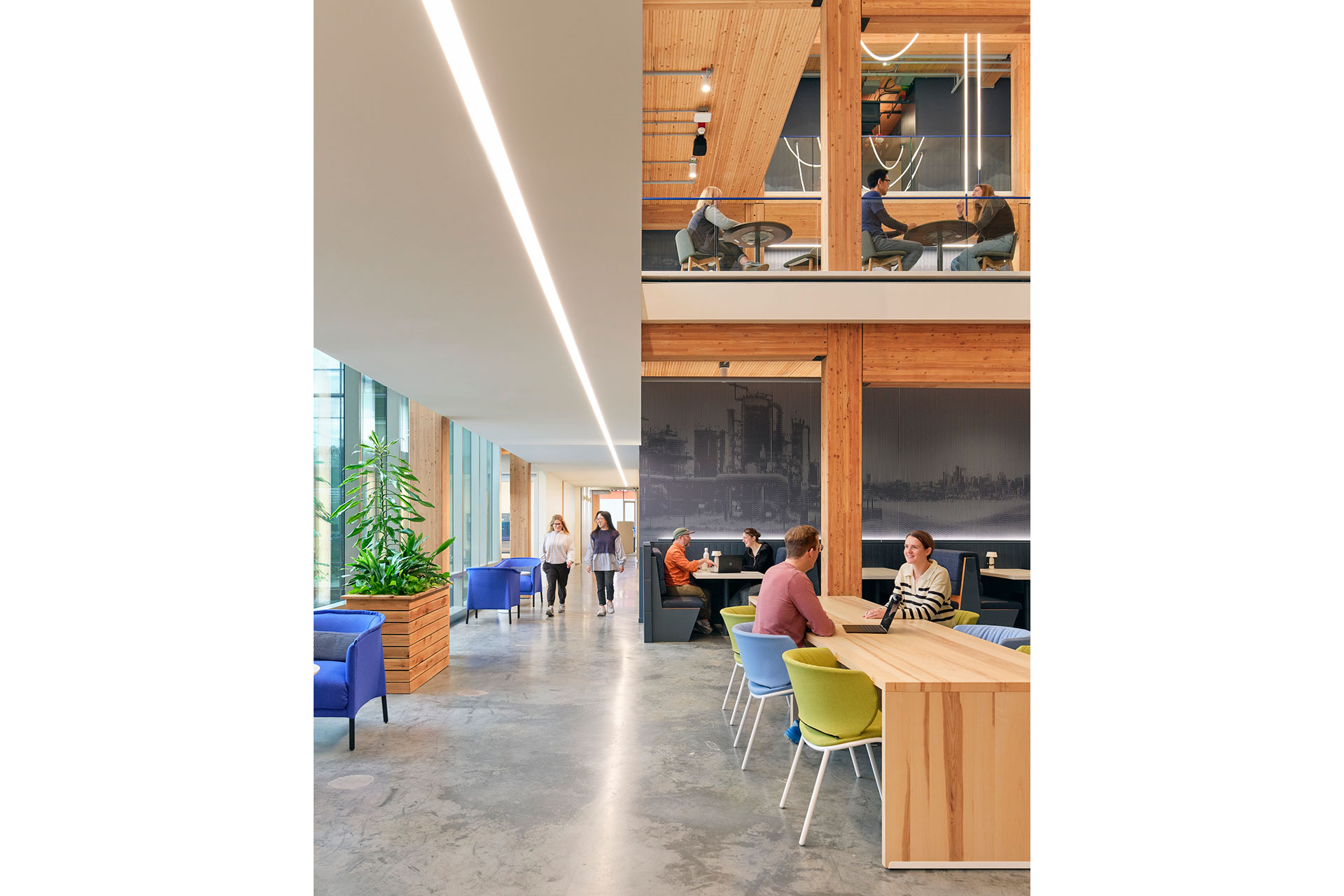
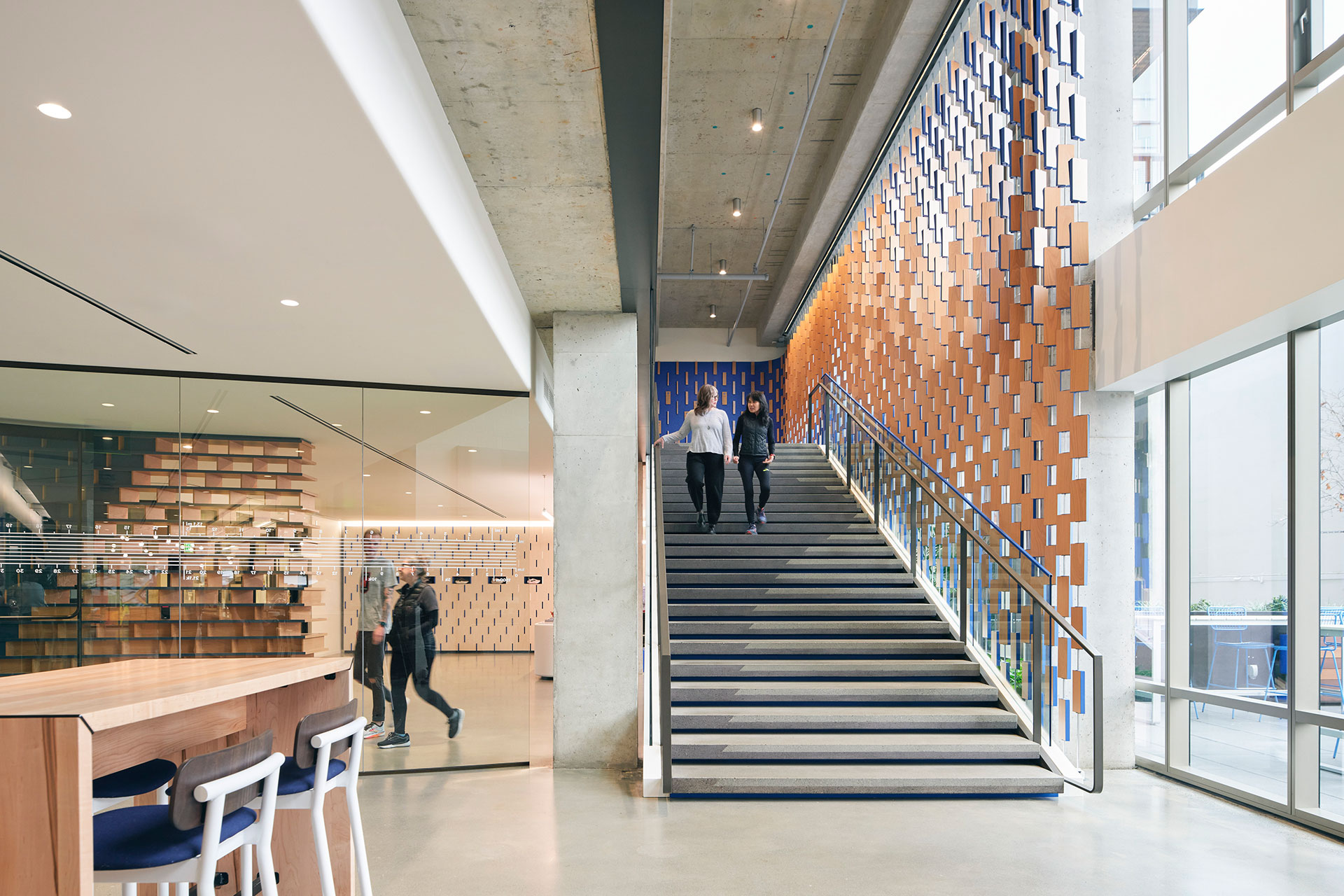
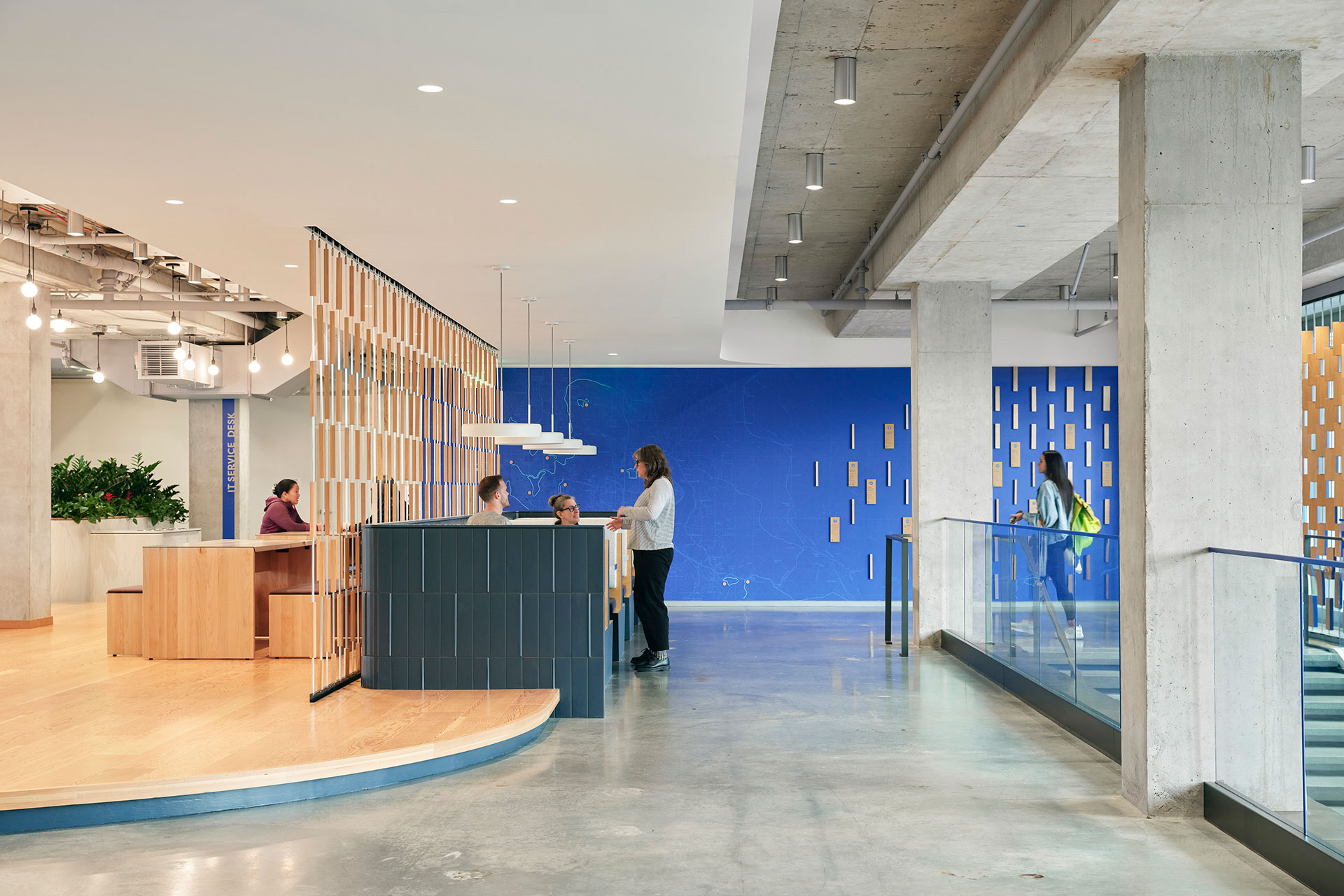
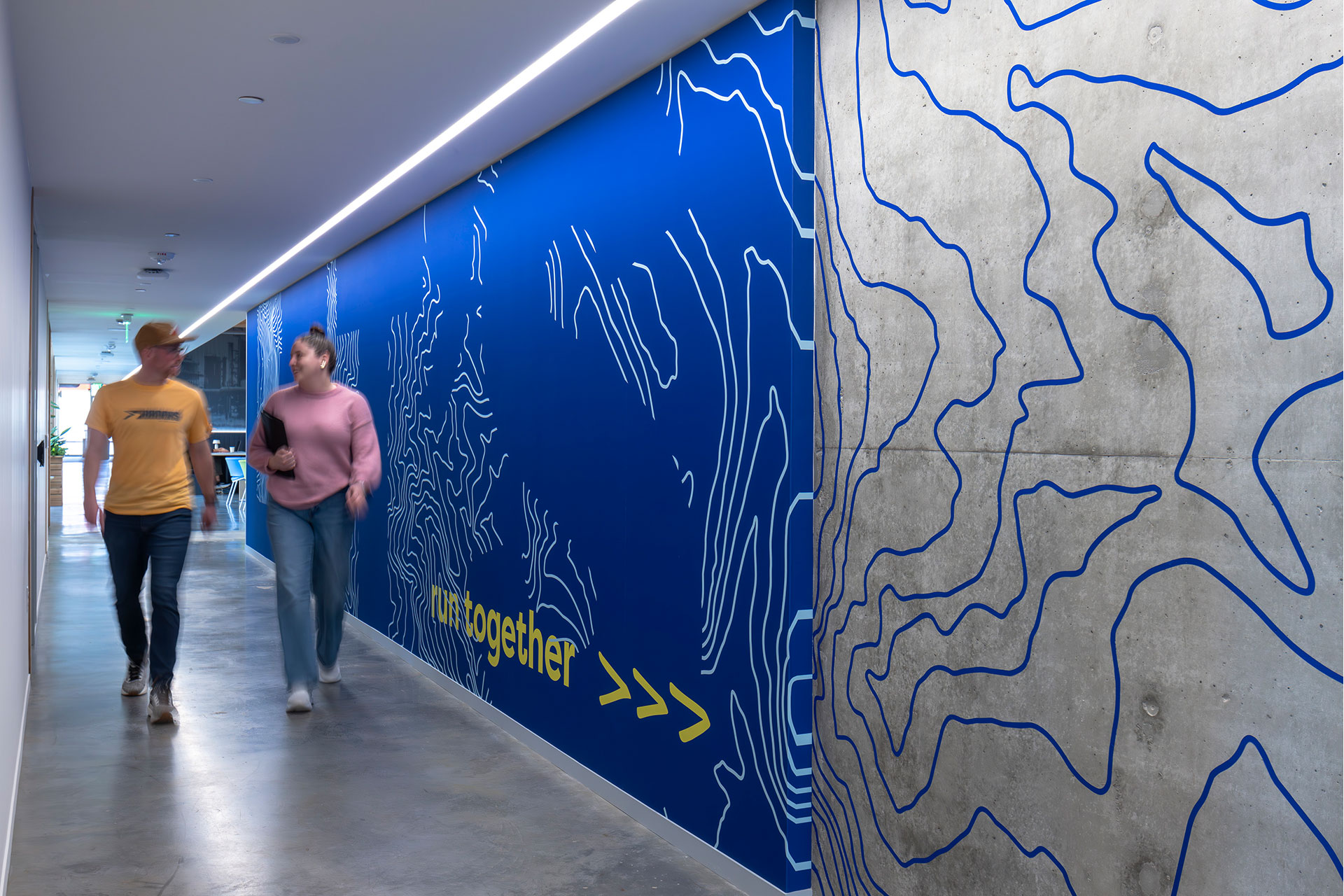
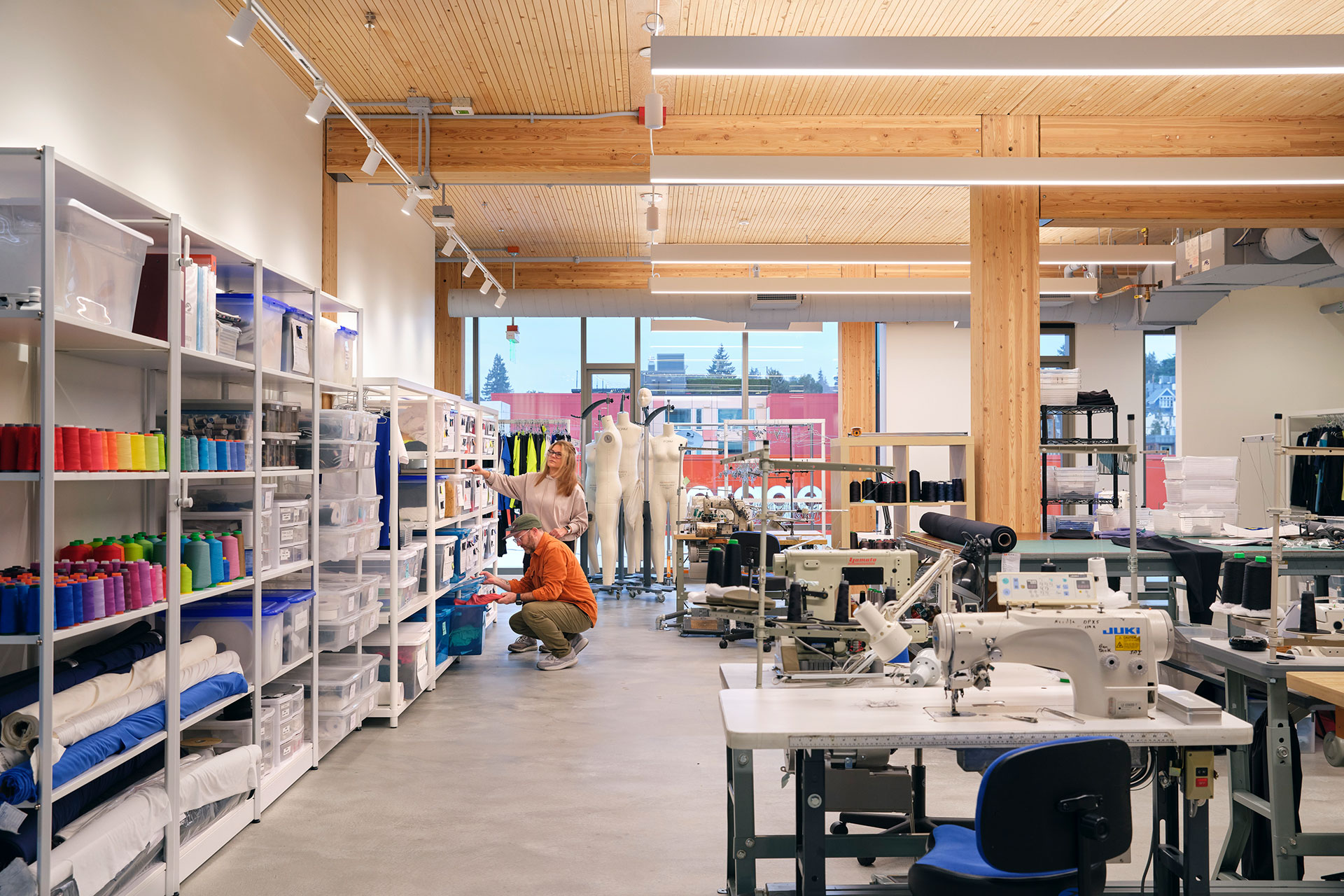
The lighting design sought to support the client’s company ethos of sparking joy and embracing sustainability. Joy, in this context, revolves around their innovative products—engineered with care and crafted for performance—and the lighting was intentionally designed to spotlight this spirit. Most of the lighting remains architecturally integrated and visually unobtrusive, allowing the products themselves to take center stage. However, embedded within the space are subtle design callbacks—small lighting gestures and details that reflect the brand’s story and identity for those familiar with it.
Throughout the entire office, all general lighting achieves a color rendering index (CRI) of 90 or above to accurately render colors—an essential requirement for product evaluation and material specification. Specialty product review rooms are outfitted with tunable white lighting fixtures, adjustable from 3000K to 6500K. This flexibility allows for precise lighting adjustments that simulate various environmental conditions—both interior and exterior—ensuring product colors, materials, and finishes can be evaluated in lighting scenarios similar to those encountered by end users in the real world.
While the majority of the lighting is minimal and performance-driven, select moments throughout the space introduce poetic nods to the company’s products—whether through material finishes, form language, or lighting placement. These moments serve as brand touchpoints without compromising the project’s clean, purposeful aesthetic.
The architecture of the headquarters, much like the lighting, was designed to reflect the company’s values: precision, simplicity, and environmental responsibility. Constructed using cross-laminated timber and 95% Red List Free materials, the project participated in Seattle’s Living Building Challenge (LBC) Pilot Program. Targeting LBC Materials Petal Certification, the design team placed particular emphasis on material transparency and health—extending this commitment to every component, including the lighting fixtures.
One of the most significant challenges faced during the project was addressing the presence of PVC in standard lighting fixture wiring—a material prohibited by the Living Building Challenge. Navigating this required deep engagement with manufacturers, pushing them to innovate and re-evaluate their standard materials. This collaboration resulted not only in alternative wiring solutions that met LBC standards but also in broader conversations about material equity and responsibility. Through persistent advocacy, the team helped push the lighting industry toward healthier, more just materials, advancing both the project’s goals and wider industry norms.
In the end, the lighting design functions as both a quiet backdrop and an active storyteller—balancing performance with purpose, and aesthetics with advocacy.