

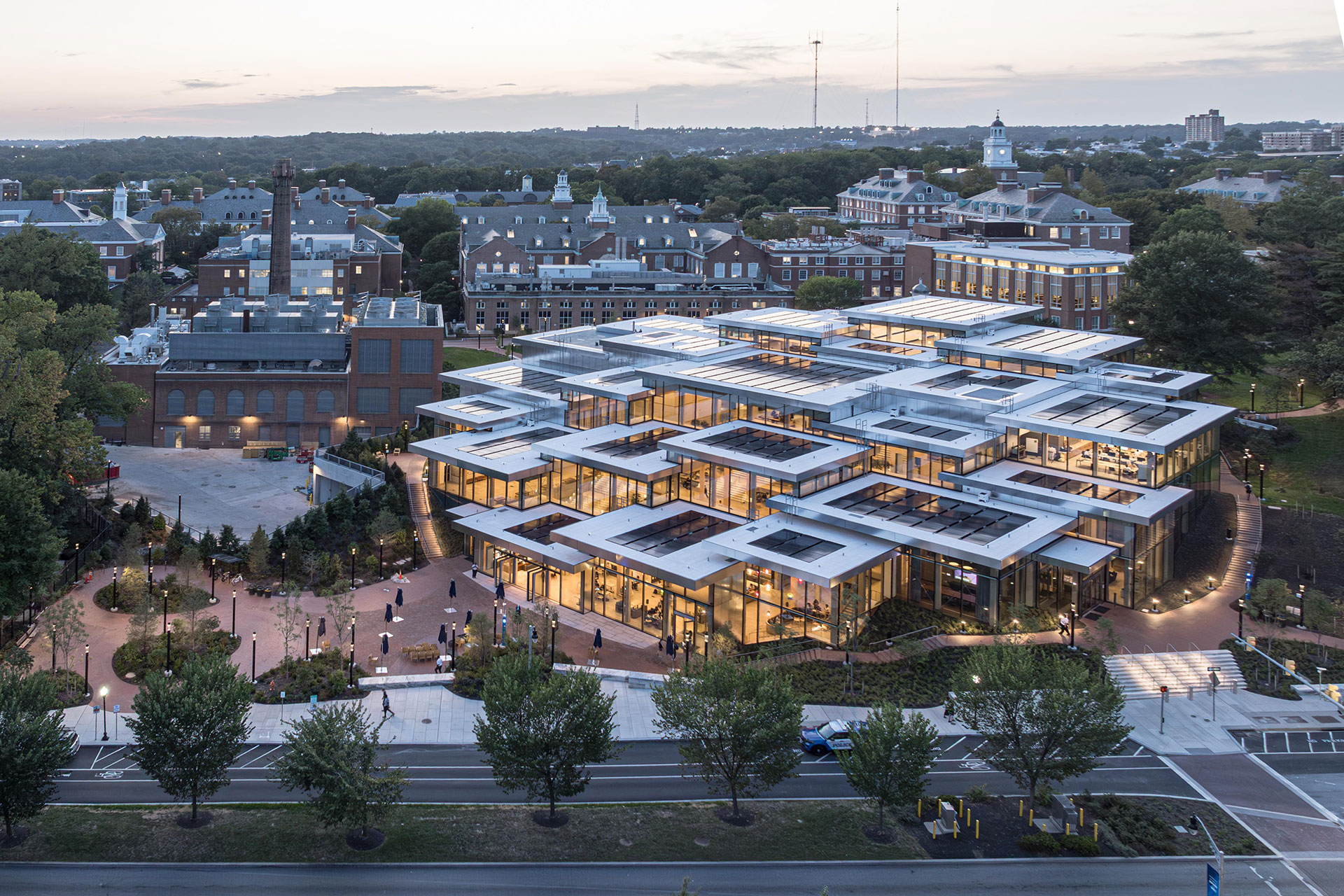
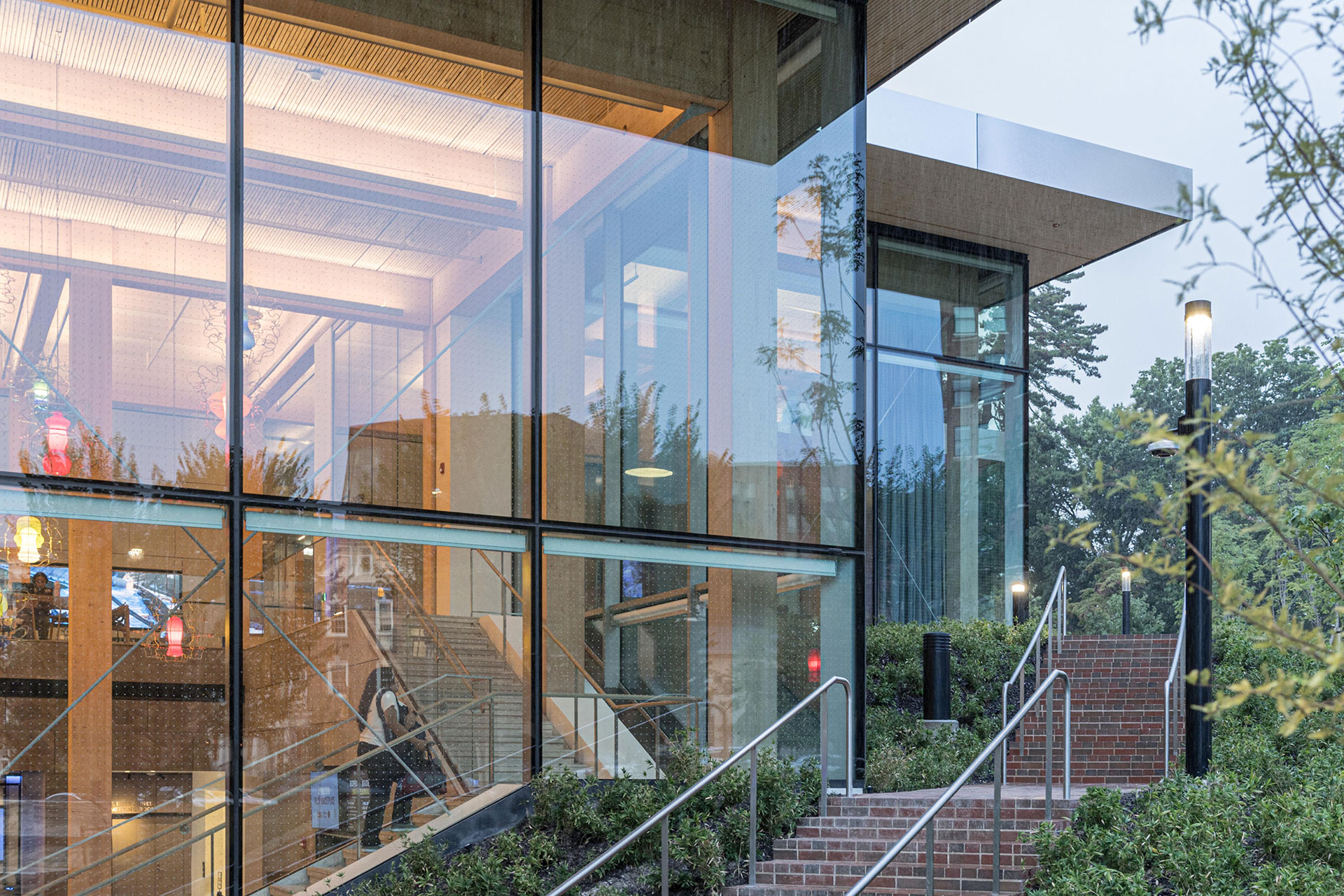
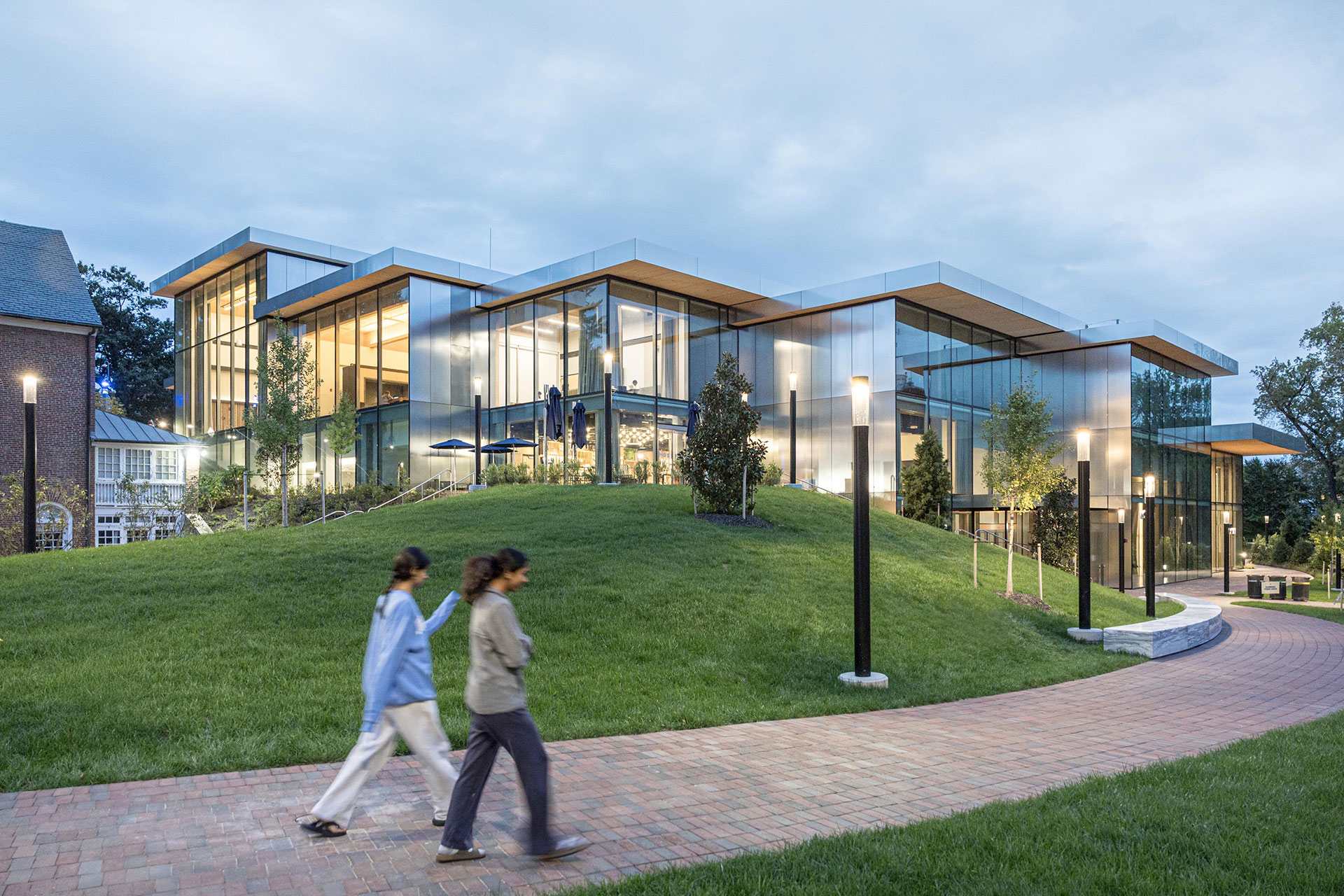
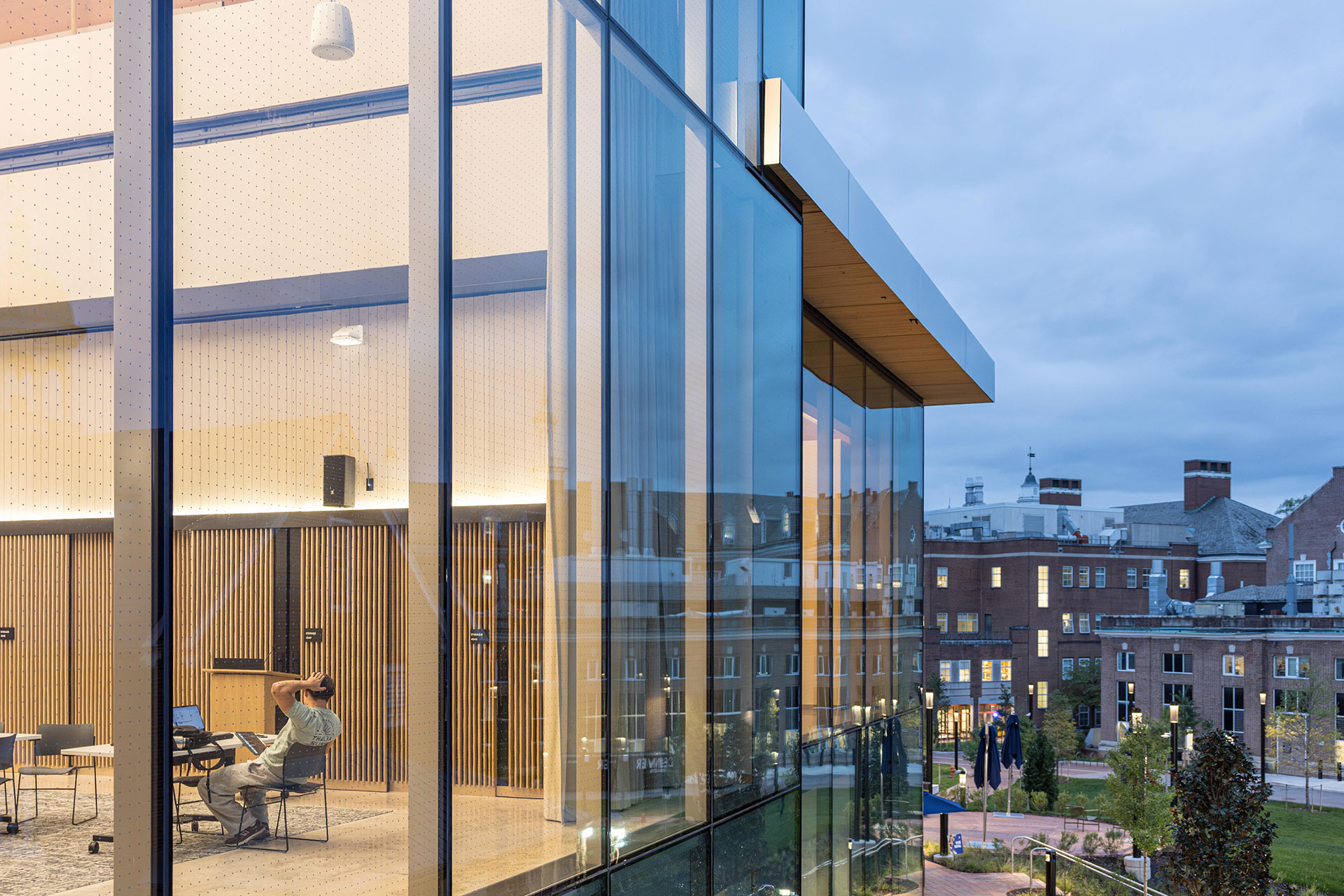
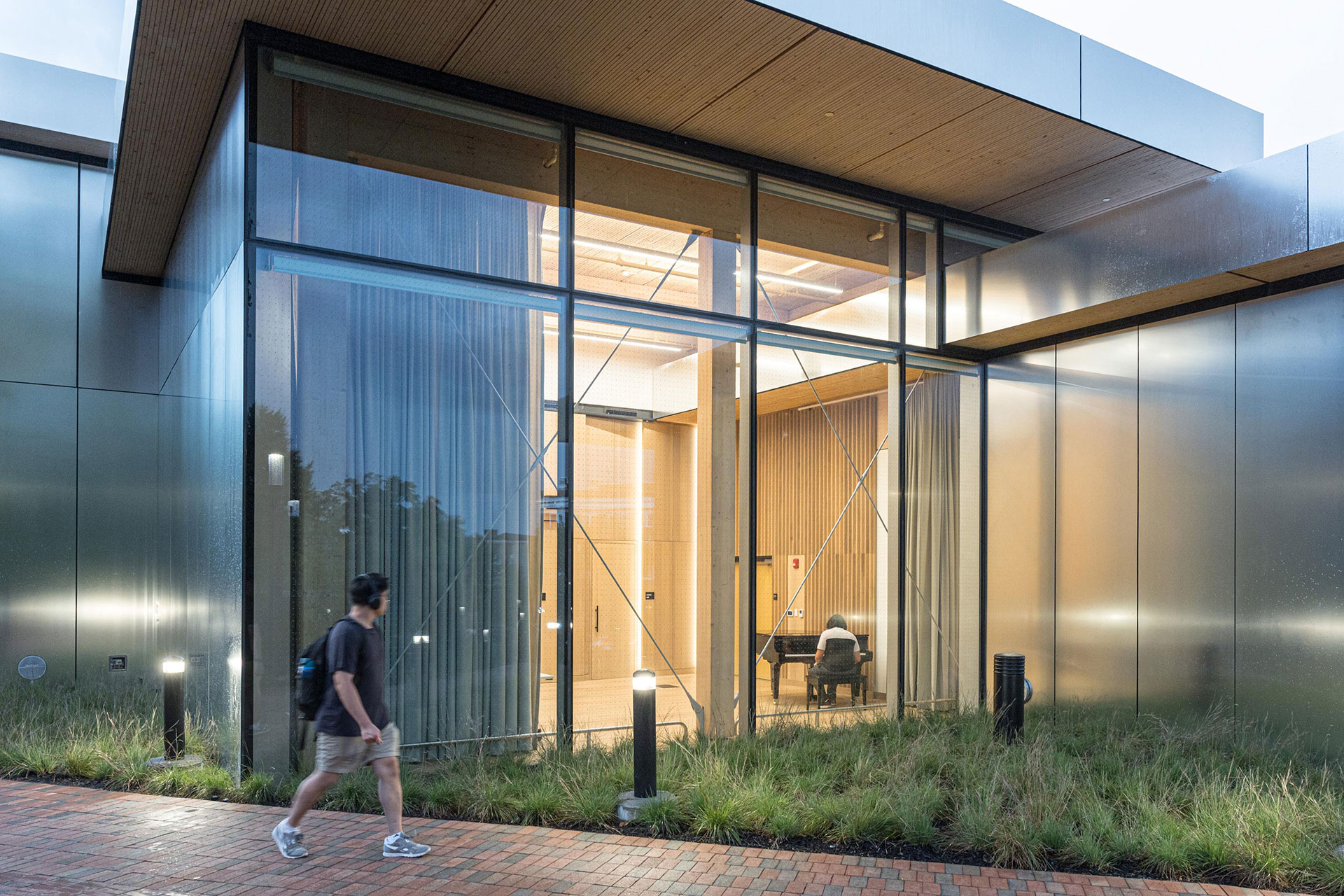
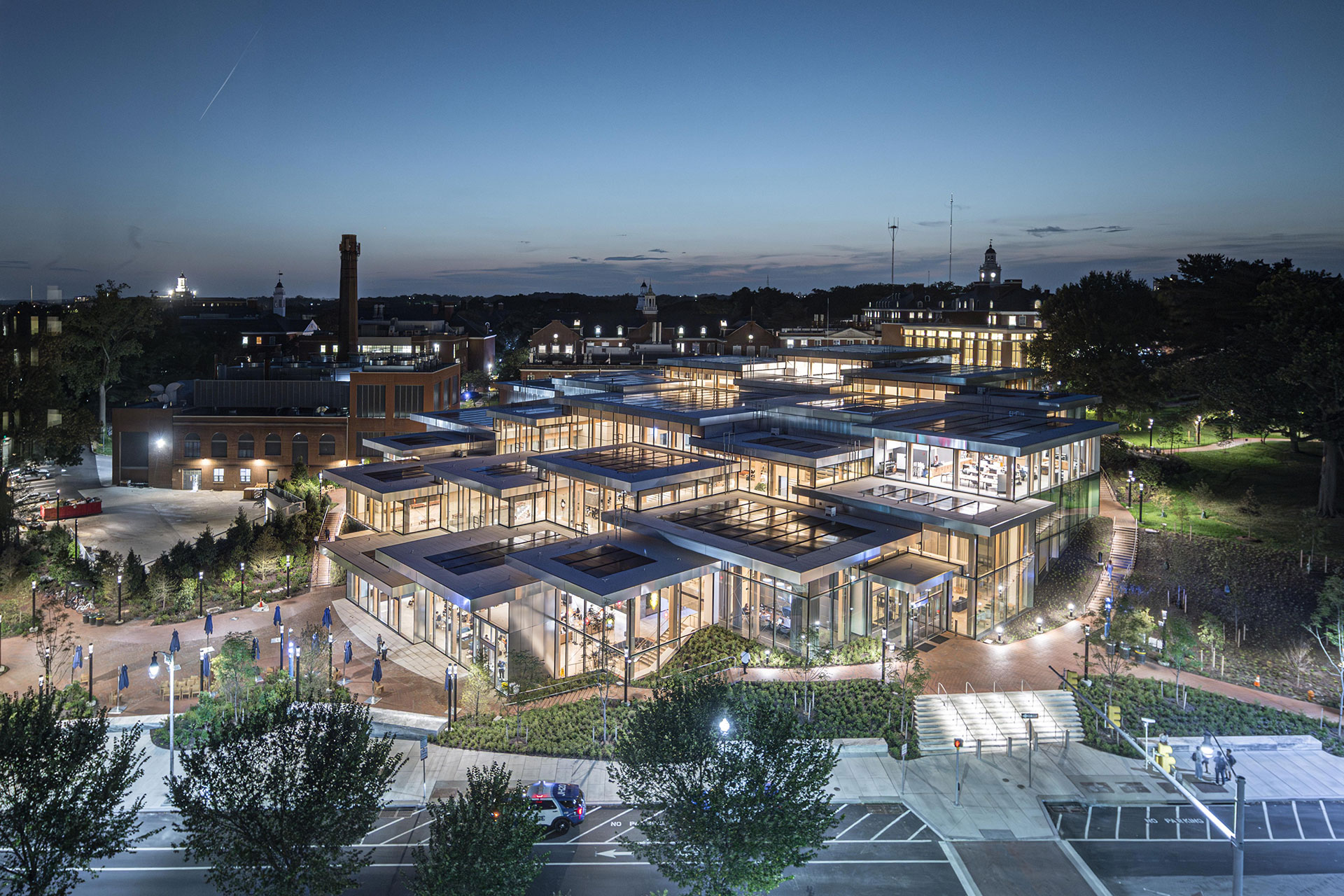
The lighting design for the new Bloomberg Student Center at Johns Hopkins University was conceived holistically, operating across three distinct and crucial scales to maximize its impact and functionality. At the city scale, the design serves to establish a new focal point within the urban landscape, giving the building a unique and recognizable visual identity that draws attention and signifies its importance. This presence is deliberately executed to reduce light pollution, aligning with the project’s sustainability goals. Moving to the campus scale, the lighting strategically improves circulation and orientation across the immediate district, transforming the student center into a clear navigational anchor that guides students and visitors. Finally, at the intimate street scale, the lighting creates a fluid and porous transition, connecting the center seamlessly with its surroundings from various directions and changes in elevation, fostering an inviting and accessible atmosphere.
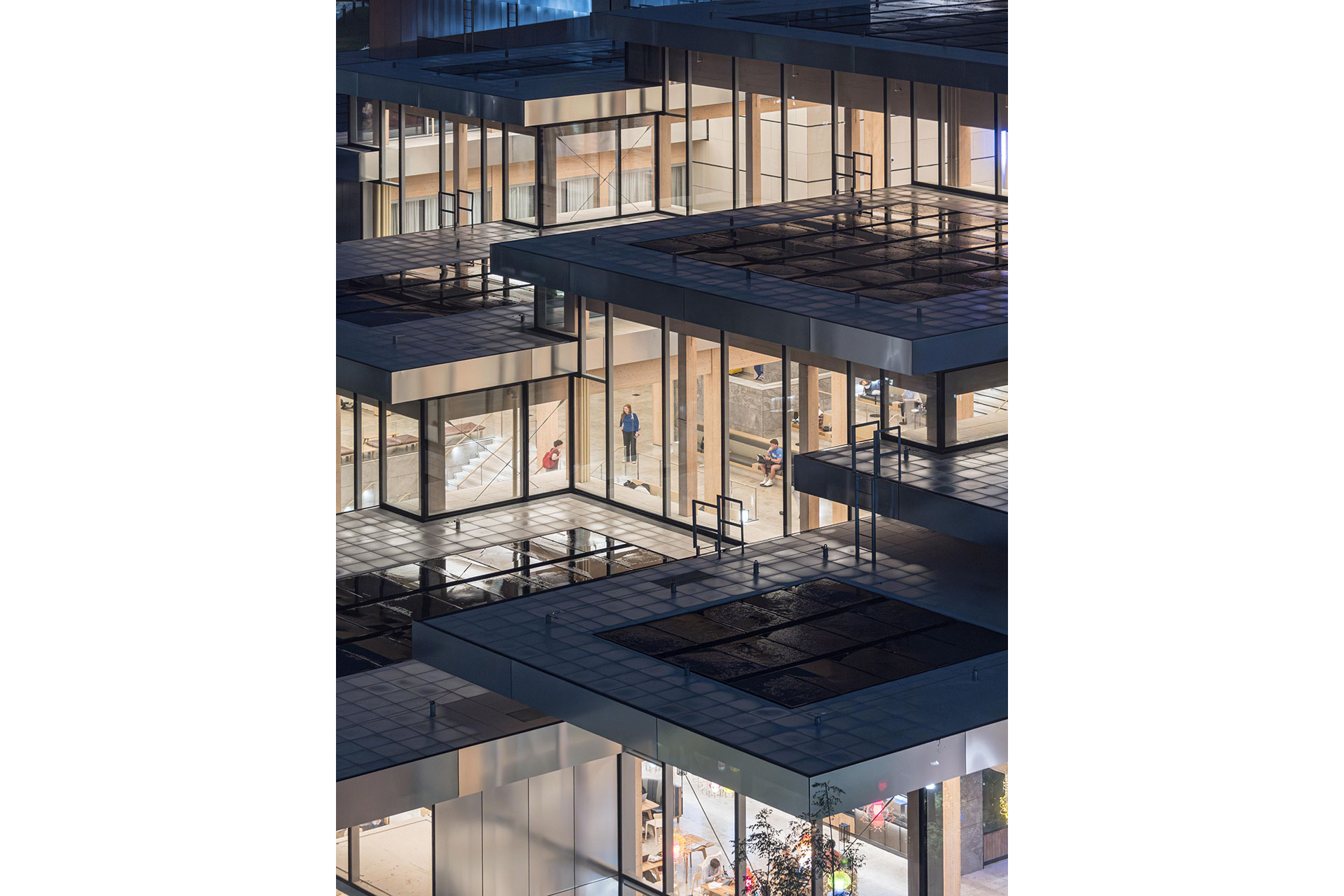
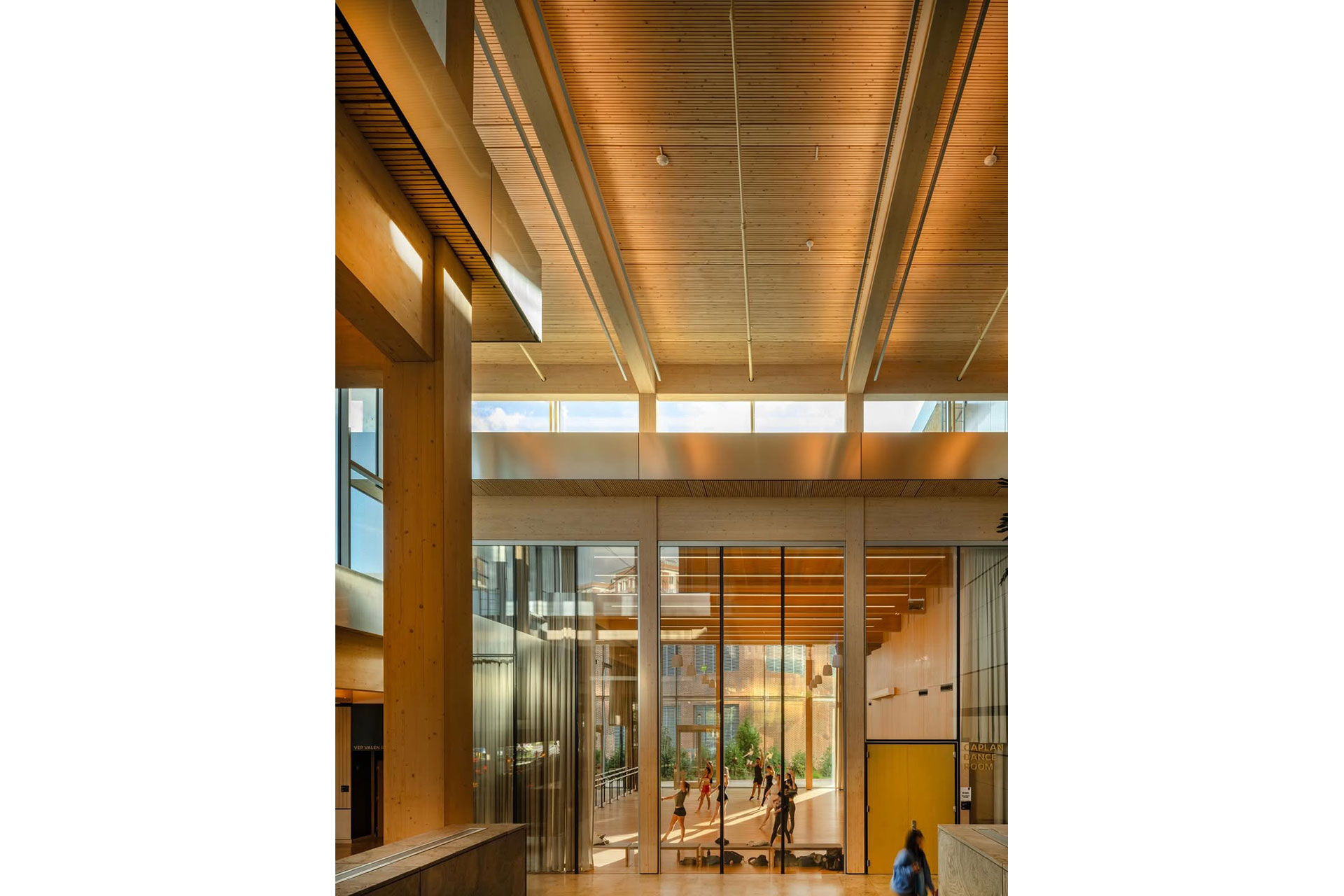
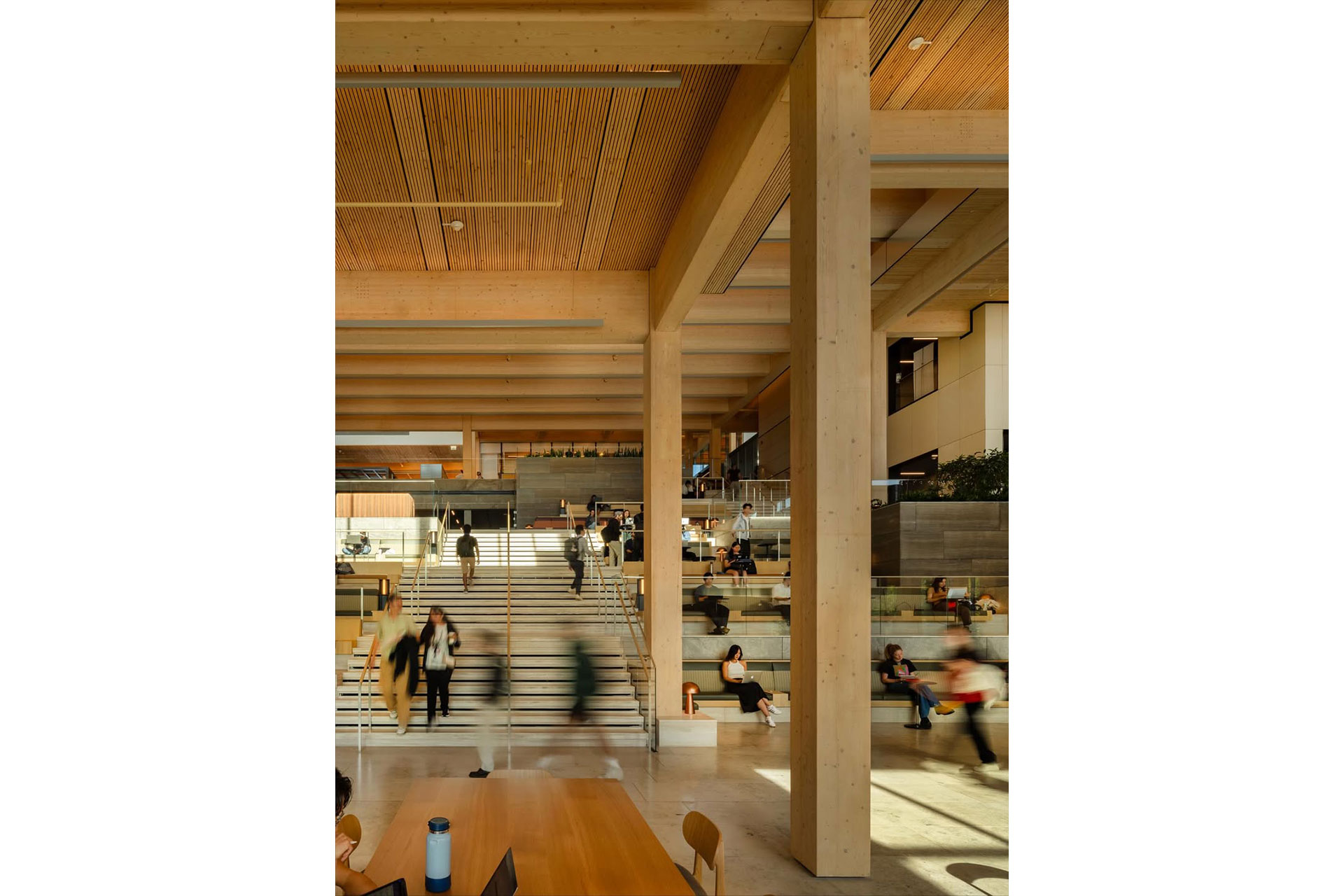
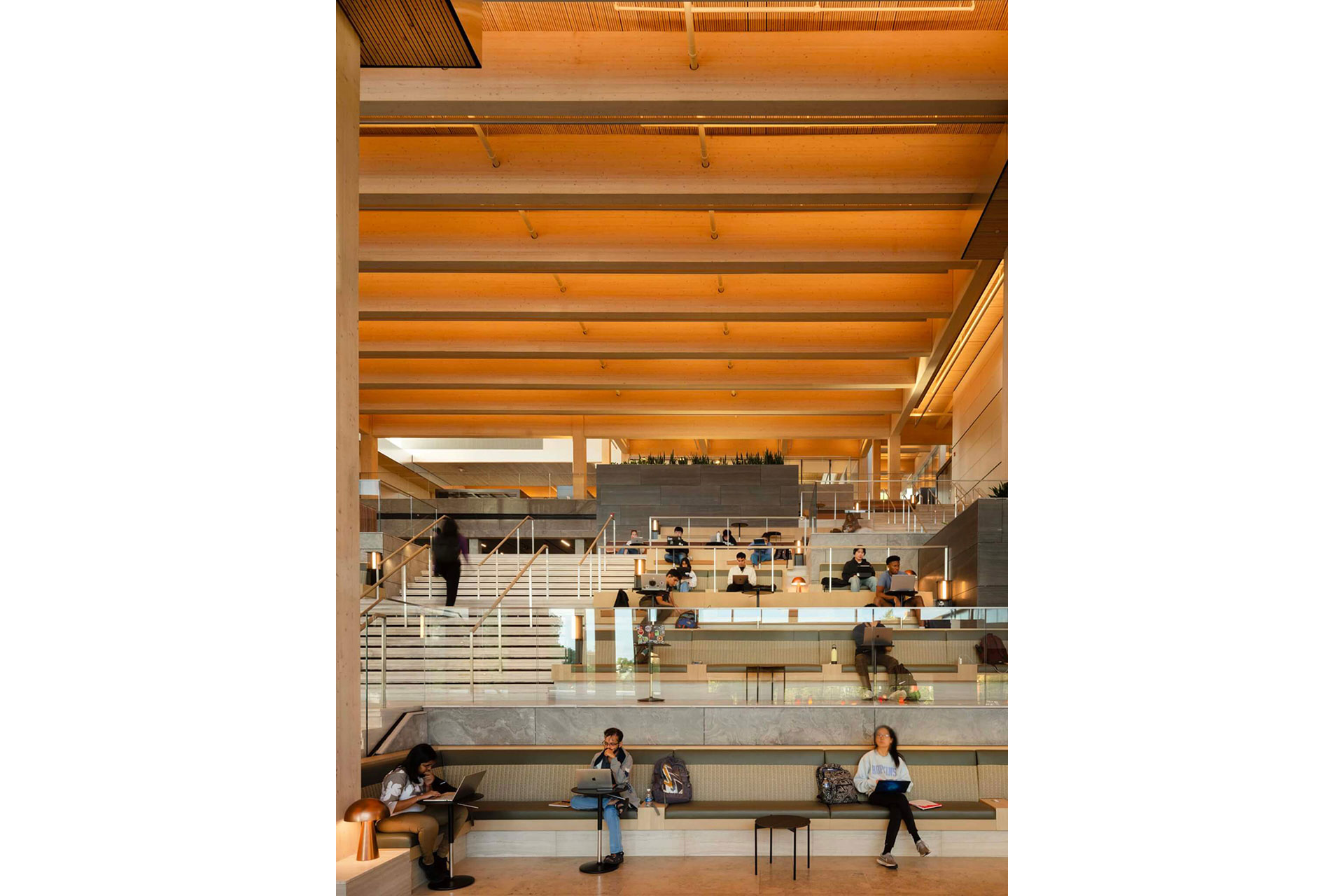
The architectural intent, characterized by the grand, formal gesture of the ‘floating roofs,’ is meticulously complemented by a lighting strategy that relies almost exclusively on indirect illumination. This approach ensures a soft, uniform, and glare-free general lighting throughout the interior spaces, enhancing comfort and architectural clarity. To accommodate the center’s dynamic future, a highly flexible and functional track lighting network was integrated. This system allows for the easy deployment of linear, accent, and decorative lighting elements, ensuring that the lighting infrastructure can be interchangeable and adapted as the building evolves, grows, and changes its programmatic uses over time.
A central conceptual pillar of the design was the notion of creating a ‘village’—a translation that manifested in the deliberate integration of decorative lighting fixtures. These elements are strategically placed to provide localized pockets of glow, activating the human scale experience within the expansive space and fostering a sense of community and warmth. As the first formal student center on campus, the building’s presence and impact were recognized as being equally important in the nighttime as they are during the day. The lighting design was thus crucial in shaping the nocturnal identity of the campus.
A core commitment to sustainability drove the technical implementation. The project successfully met its LEED Platinum target in part by innovative lighting solutions. Specifically, the indirect interior lighting was strategically utilized as the building’s primary exterior presence, a technique that significantly reduced the need for dedicated facade lighting and thereby minimized light pollution. Furthermore, the entire installation exclusively uses LED-only light sources, providing superior energy efficiency and longevity. The sophisticated management of this system is handled by a comprehensive Lutron Athena control system, which ensures consumption is minimized by dynamically adjusting or powering down lighting circuits when full illumination is not required, thereby optimizing energy use around the clock.