

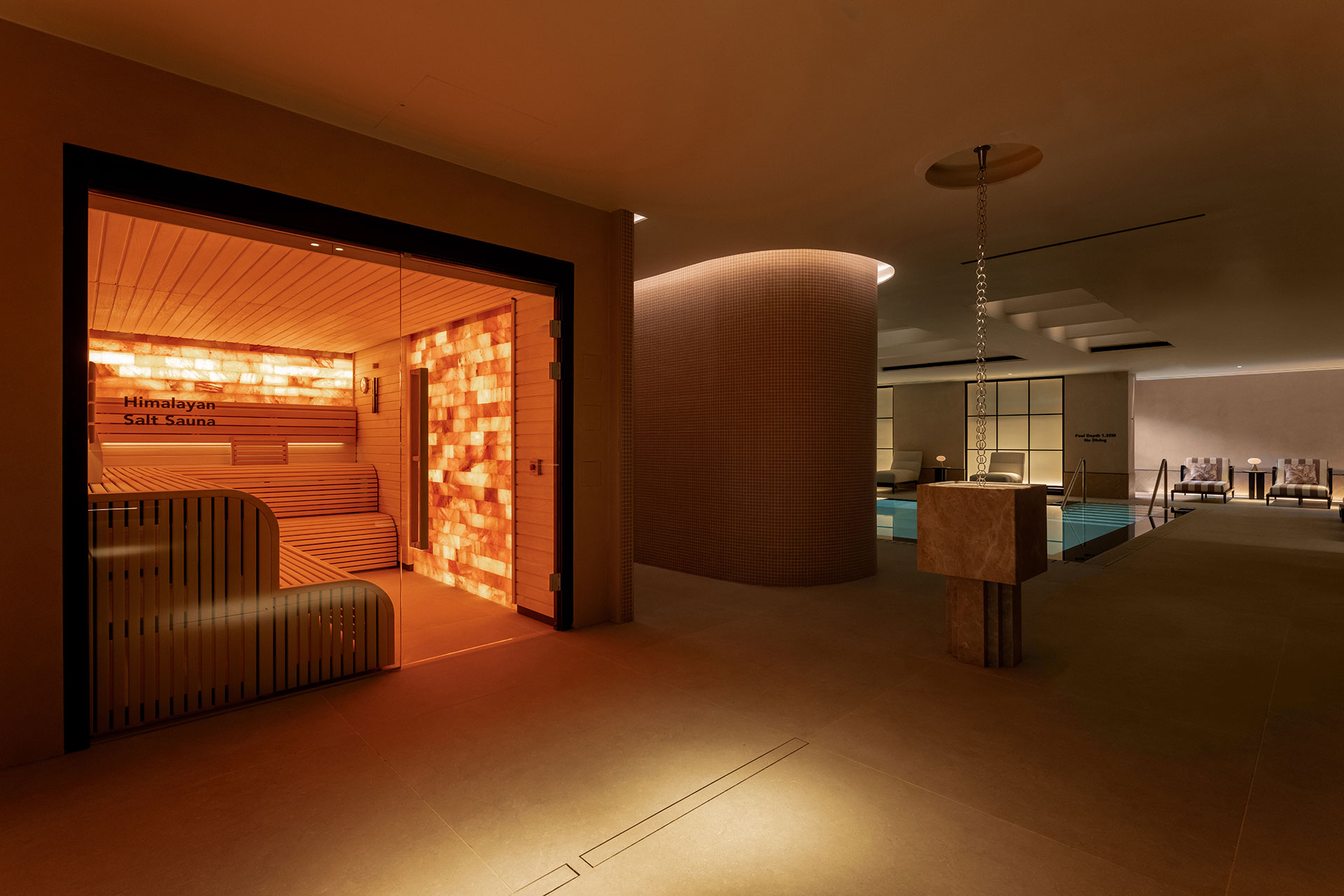
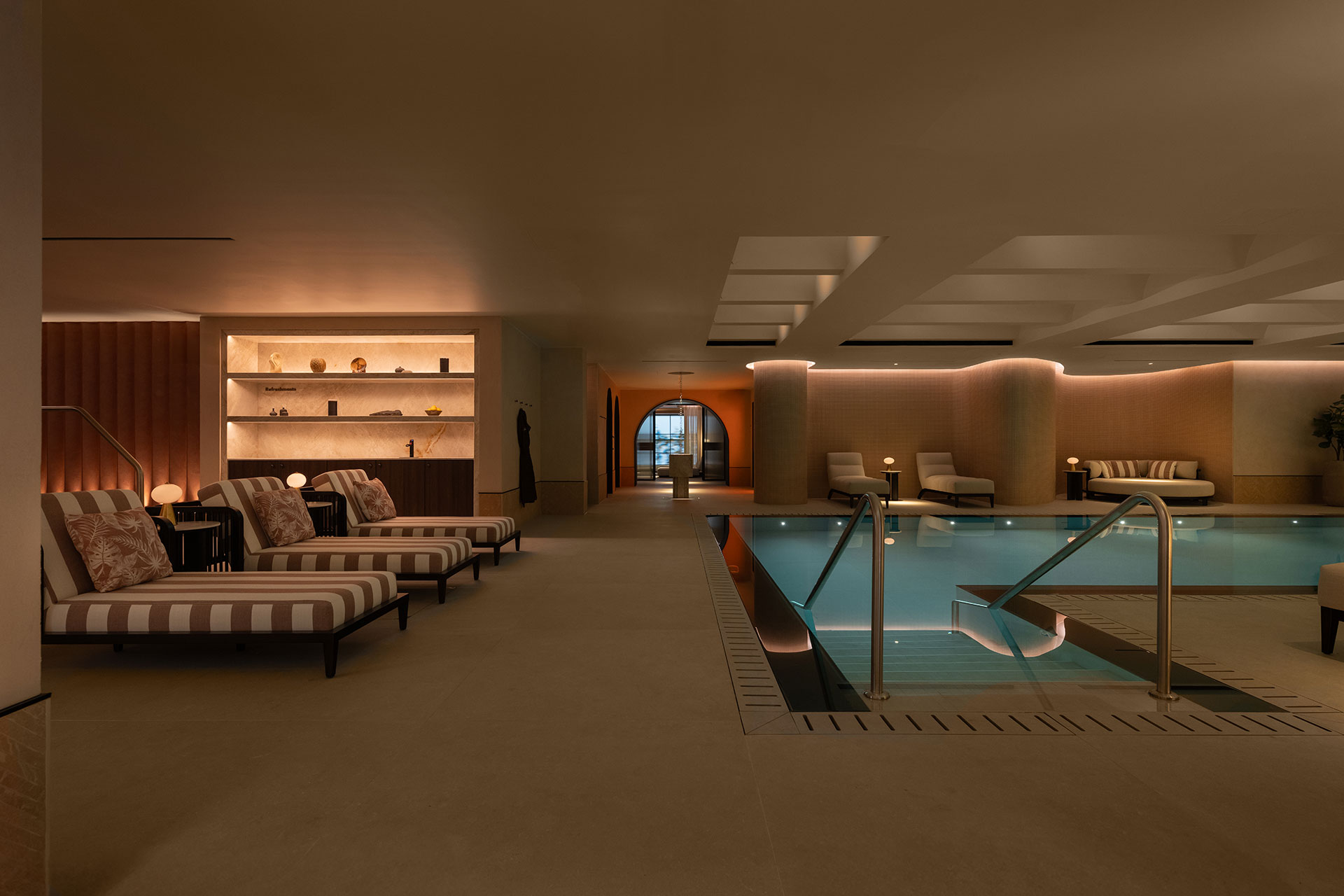
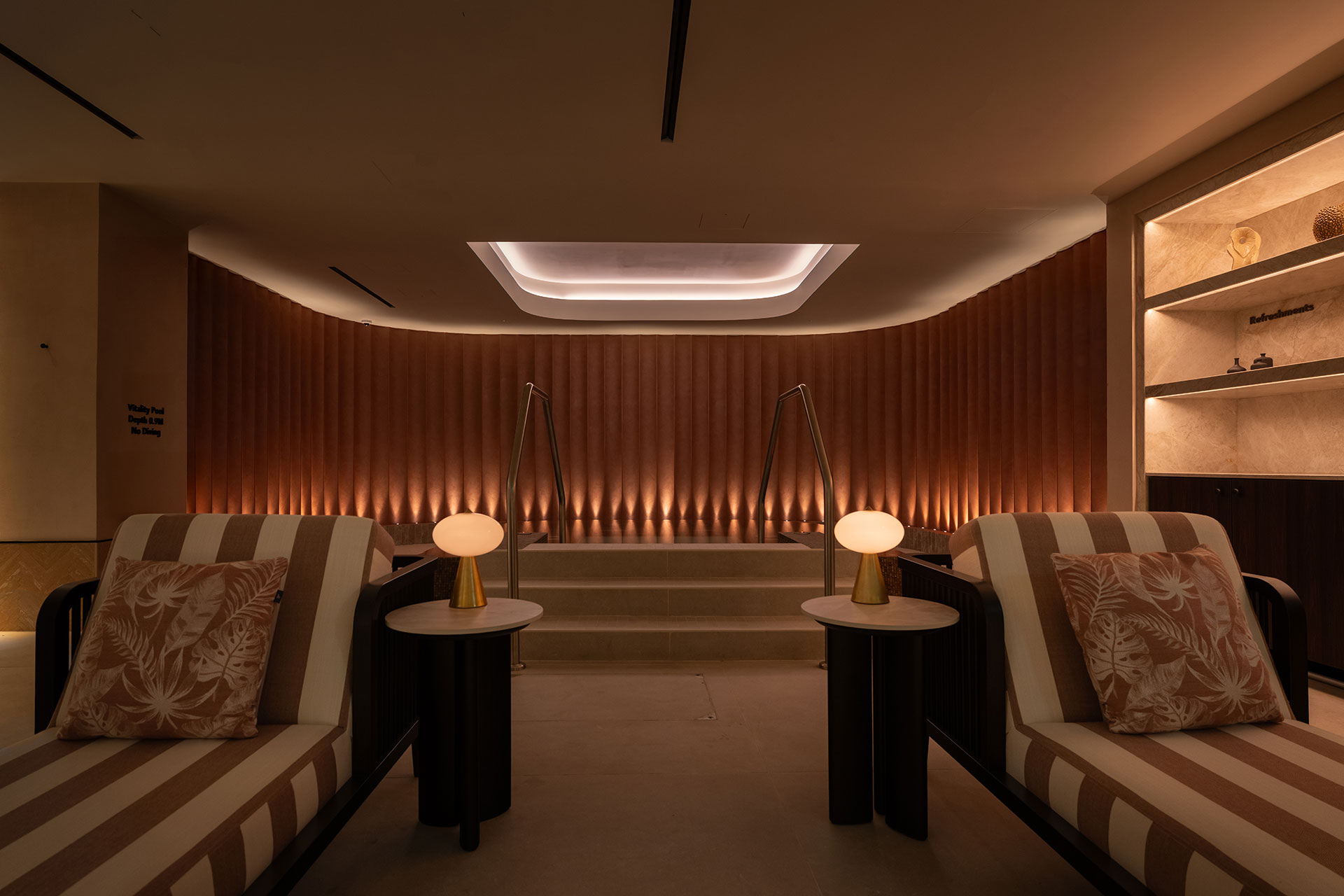
Bask Thermal Spa is located within the historic Davenport Hotel, a 19th-century neo-classical building in central Dublin. The project transforms a basement level existing space into an immersive wellness environment, where lighting plays a fundamental role in shaping atmosphere, supporting wellbeing, and resolving complex environmental and technical challenges.
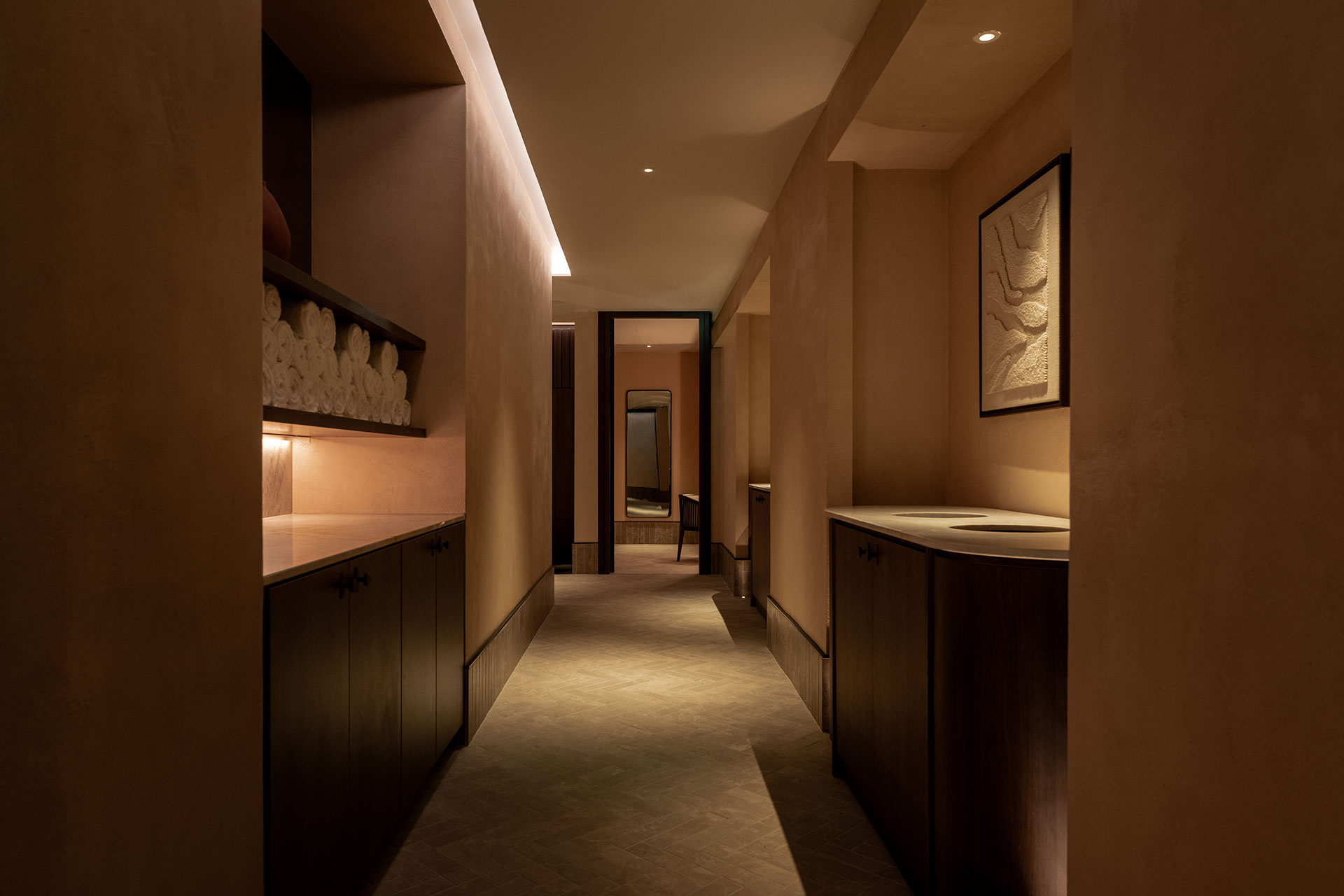
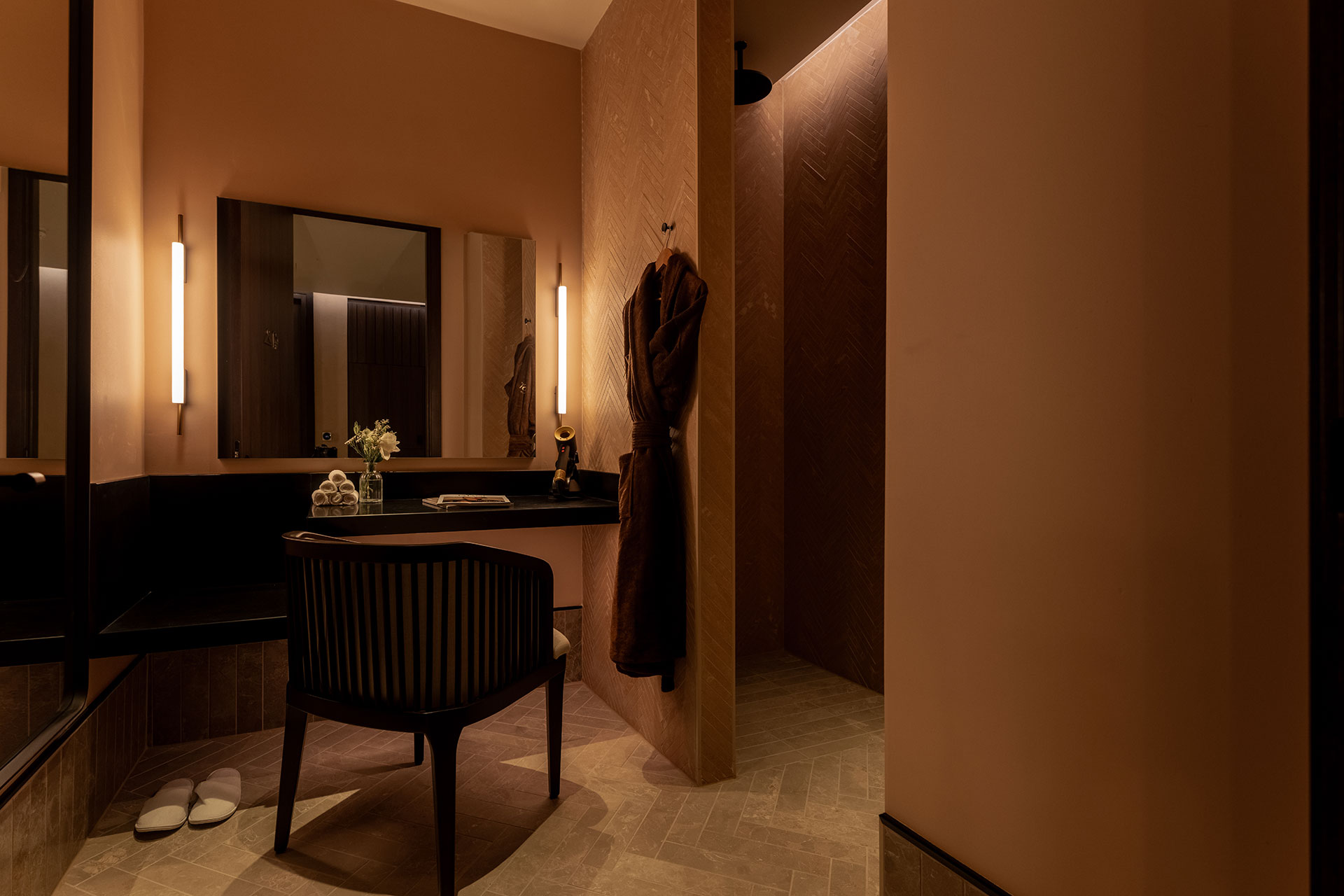
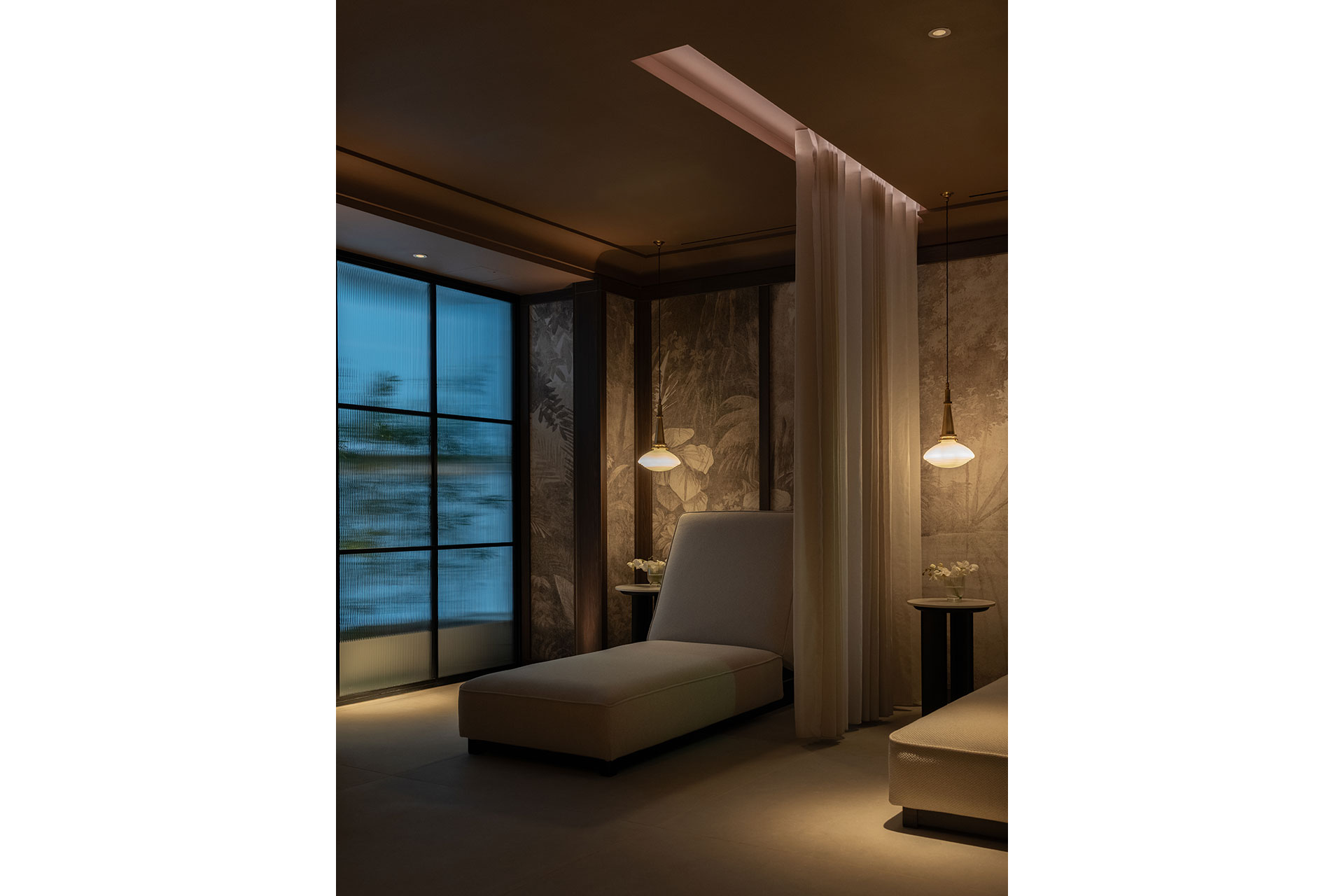
The lighting strategy was conceived as part of the guest journey rather than as a purely functional layer. Each spa zone was treated as a distinct sensory environment: warm, low-glare illumination supports relaxation within thermal and treatment spaces, while crisper, higher contrast light reinforces clarity and safety in circulation routes and active areas such as pools. Layered lighting hierarchies — combining concealed ambient light, architectural grazing and selective accent — enhance materiality including stone, mosaic, timber and textured plaster, while maintaining visual calm and avoiding luminaire clutter.
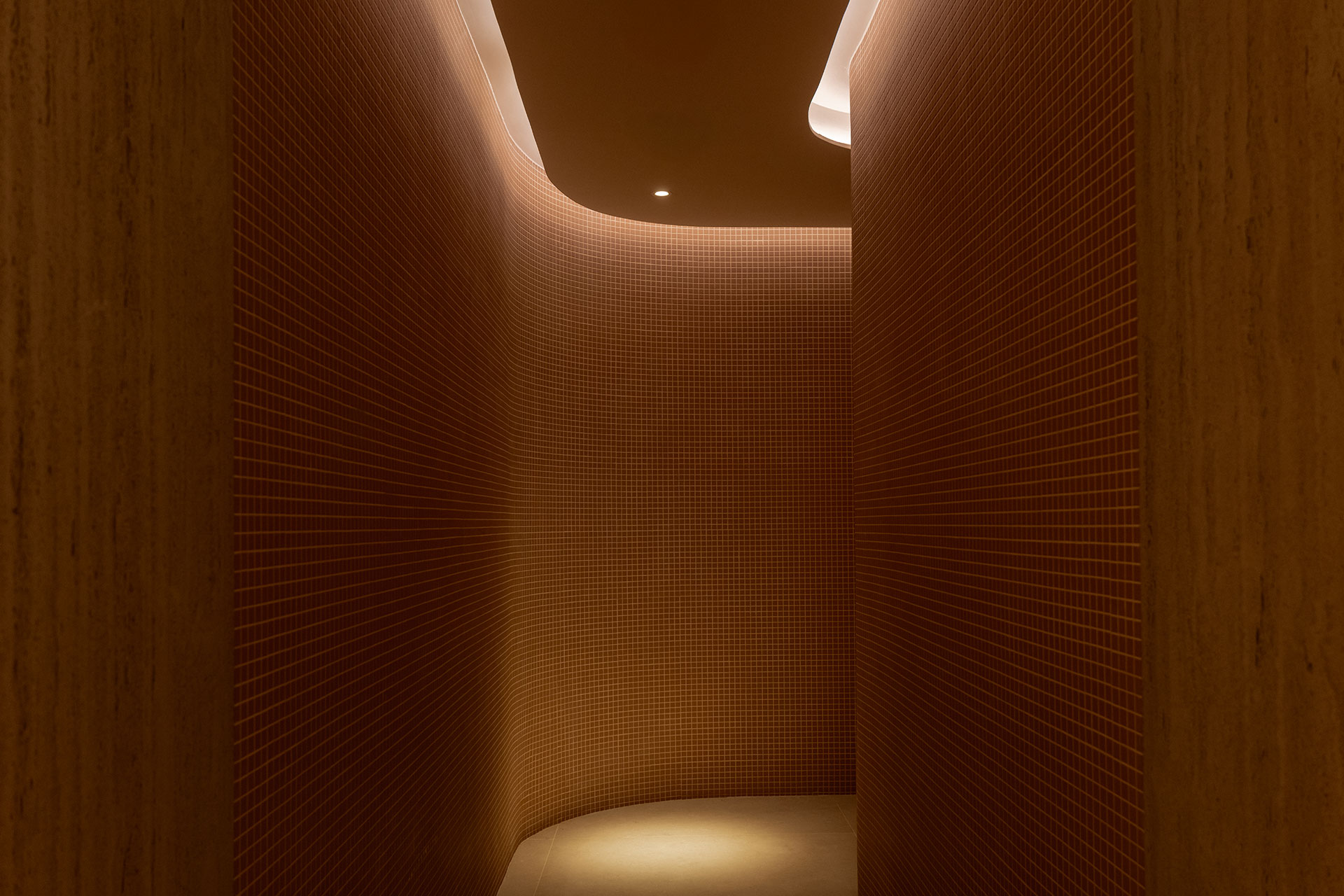
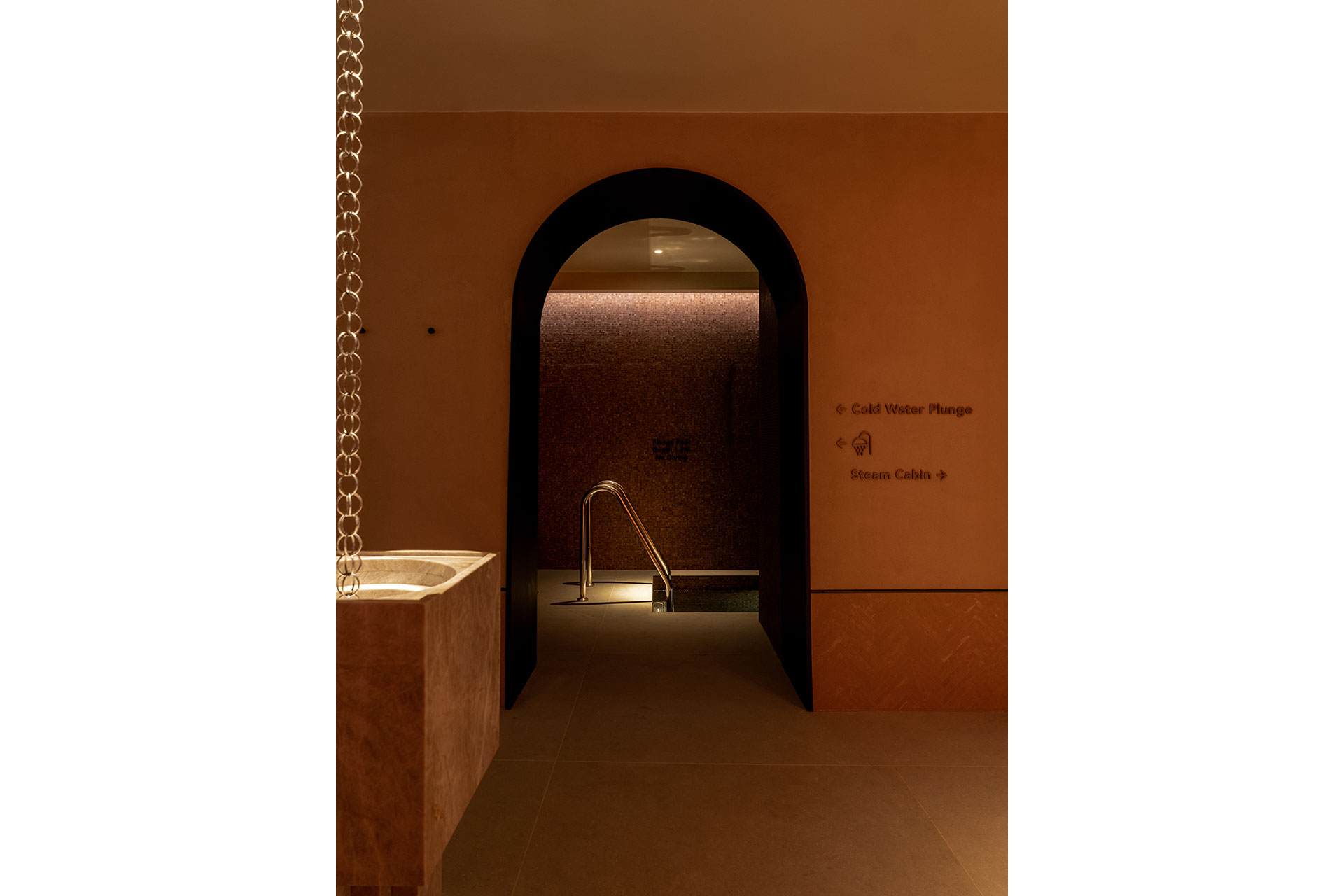
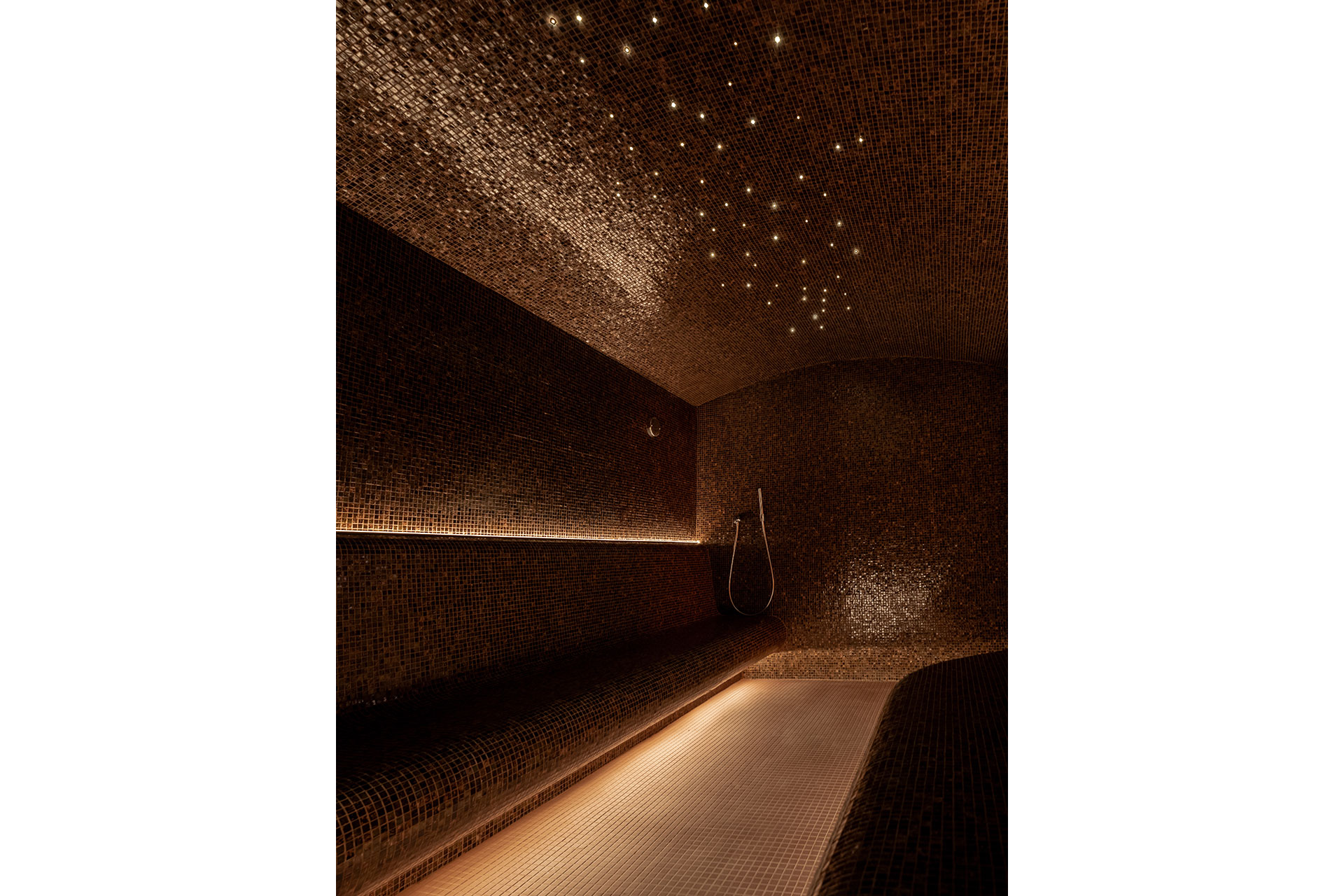
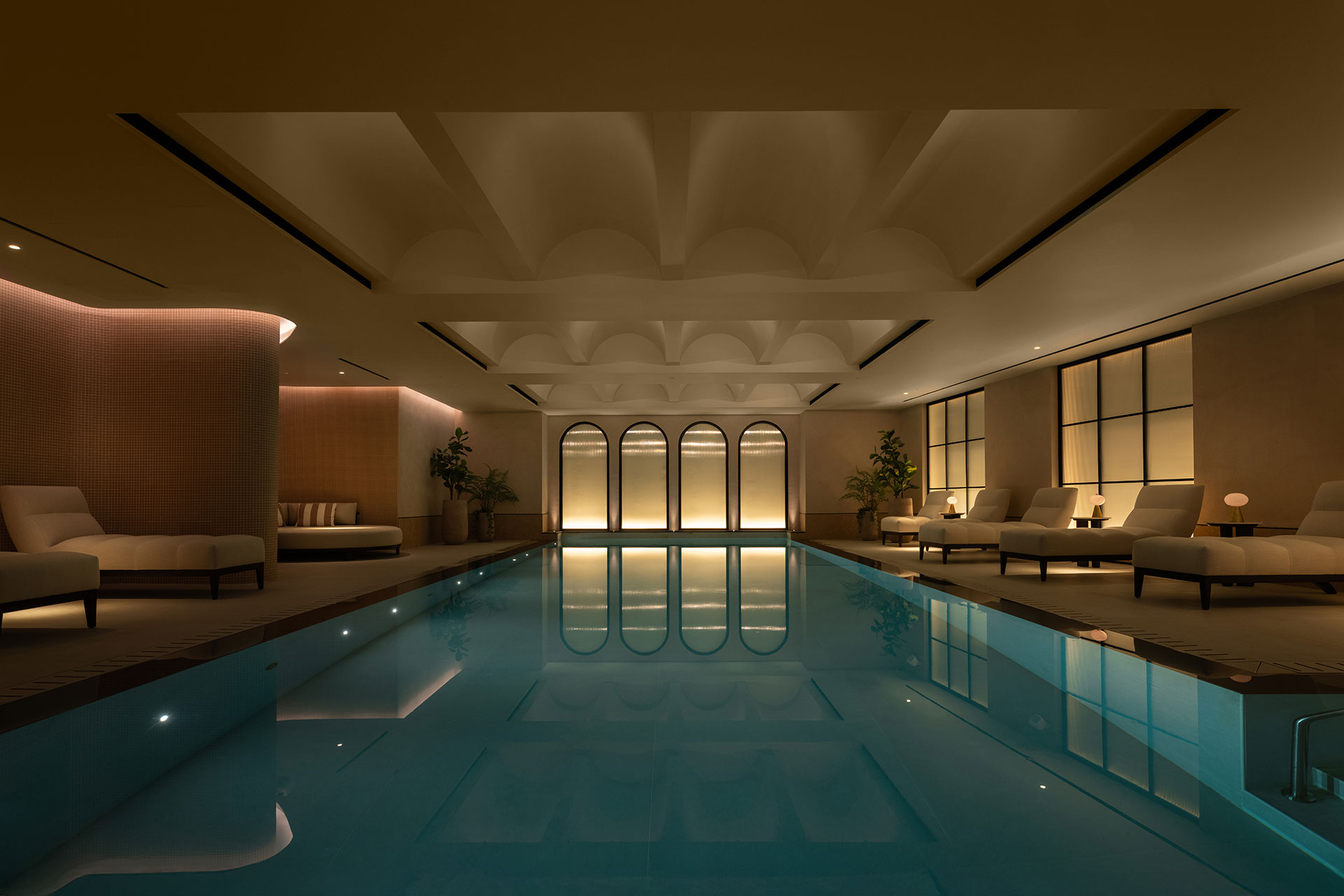
The basement location presented inherent challenges such as installing a 12x4m swimming pool in a historic area of the city with limited limited natural light, restricted ceiling void, complex coordination, and demanding environmental conditions including humidity and heat. These constraints directly informed the technical approach. Robust IP-rated products suitable for a spa environment were specified throughout, with careful attention to longevity, maintainability and safety. In areas where conventional luminaires were unsuitable, fibre optic systems were employed to deliver light into steam room and both pools. This allowed light to become a key visual element without compromising operational resilience and provided ease of maintenance.
Dynamic lighting was integrated where appropriate to support both atmosphere and flexibility. Tunable white lighting (2000–6000K) is used in key zones, enabling scene setting aligned with time of day, operational modes and guest experience. All primary architectural lighting is DALI controlled, allowing intuitive scene selection, zoning flexibility, and long-term adaptability for the operator without the need for physical alteration.
Concealment is a consistent principle throughout the scheme. Linear systems are integrated into coves, joinery and architectural details to wash curved surfaces, vaulted ceilings and textured walls. Vertical illumination plays a central role: feature walls are grazed to reveal depth and material richness, vanity units and niches are softly backlit, and architectural elements are articulated to provide rhythm and spatial orientation within an otherwise enclosed environment.
Energy efficiency was embedded into the design process rather than applied retrospectively. The scheme relies exclusively on LED sources, low connected loads, task-appropriate illuminance levels and scene control to avoid over-lighting. Careful optical selection and integration reduced overall fixture quantities while maintaining visual quality and uniformity.
The completed spa delivers a calm, immersive environment that feels both luxurious and effortless, while being underpinned by a technically robust and operationally intelligent lighting solution. The project demonstrates how considered lighting design can enhance wellbeing, solve complex constraints, and deliver long-term value within a highly challenging architectural context.