

Concept
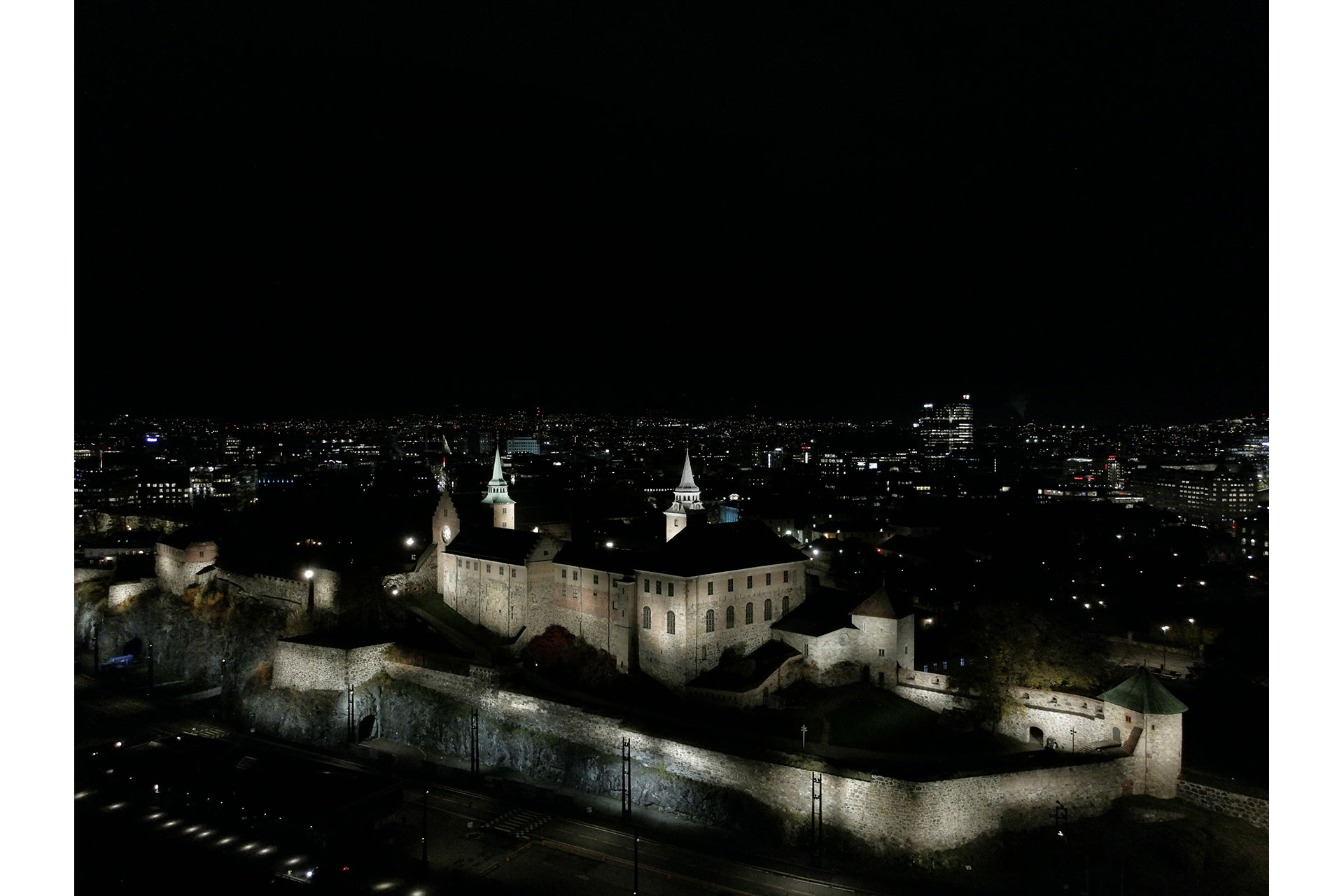
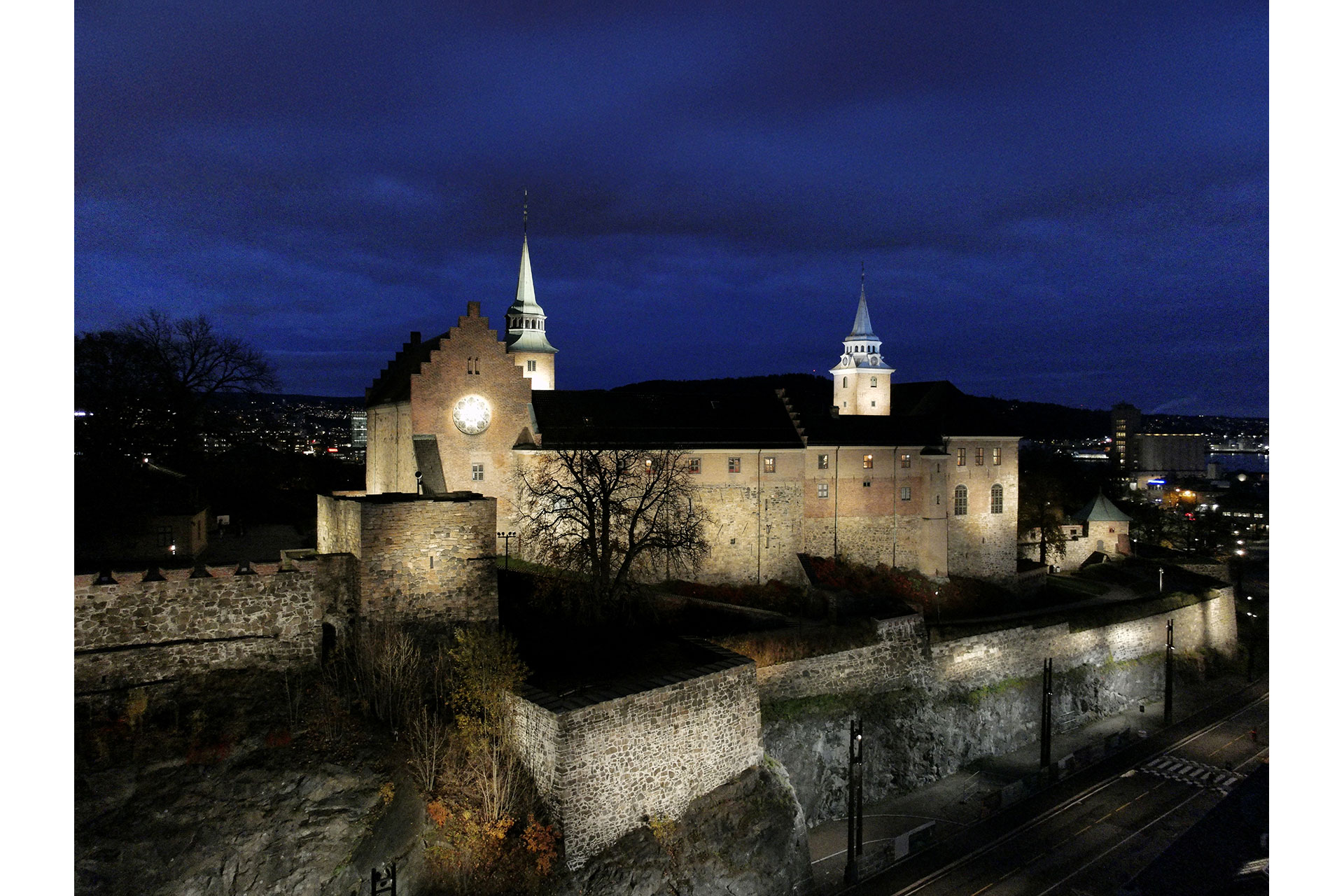
The lighting design for Akershus Fortress is a comprehensive renewal of the exterior illumination, developed with respect for the site’s historical significance and monumental scale. The project replaces an outdated, fragmented system with a cohesive, energy-efficient solution that enhances both long-distance legibility and close-range architectural experience.
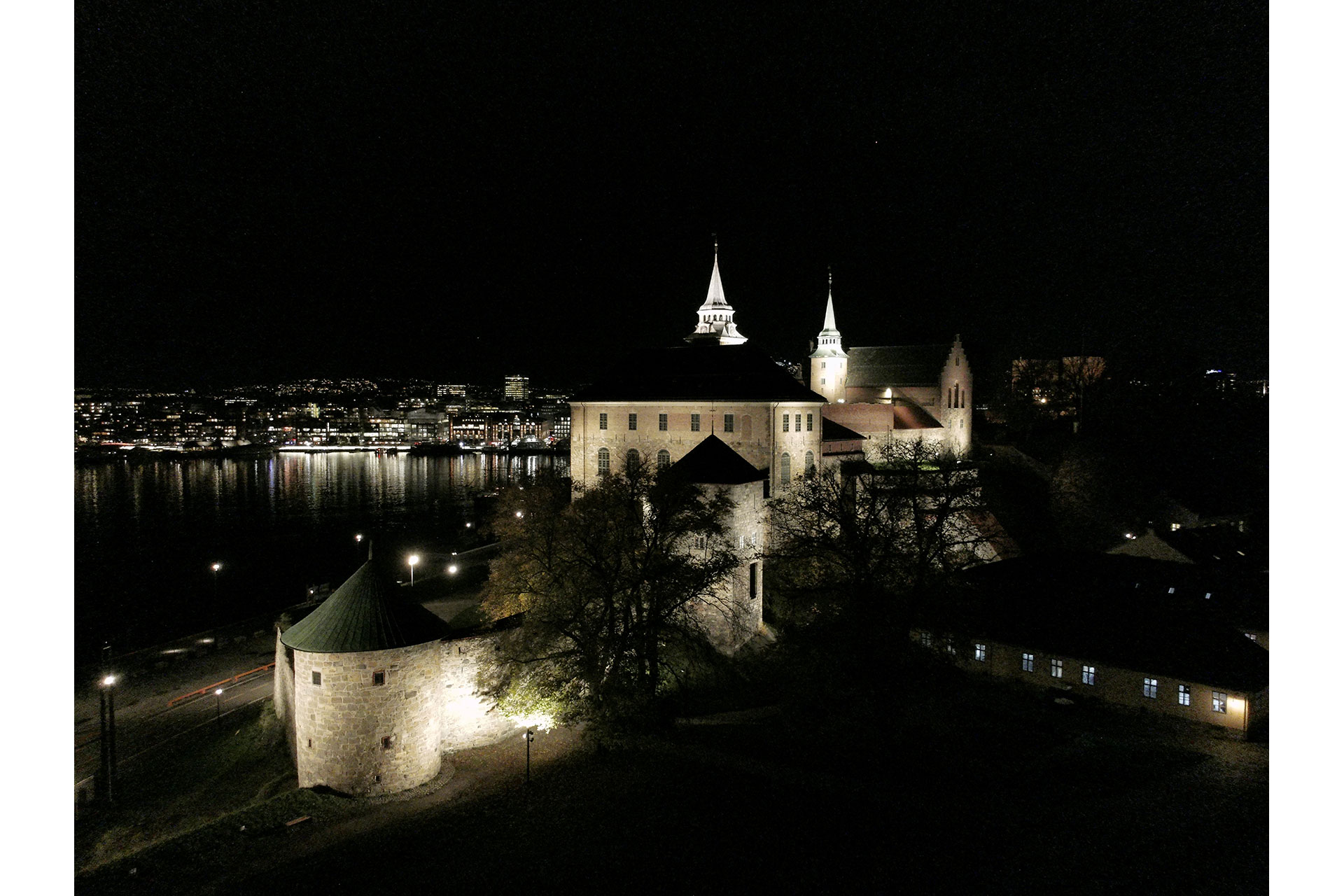
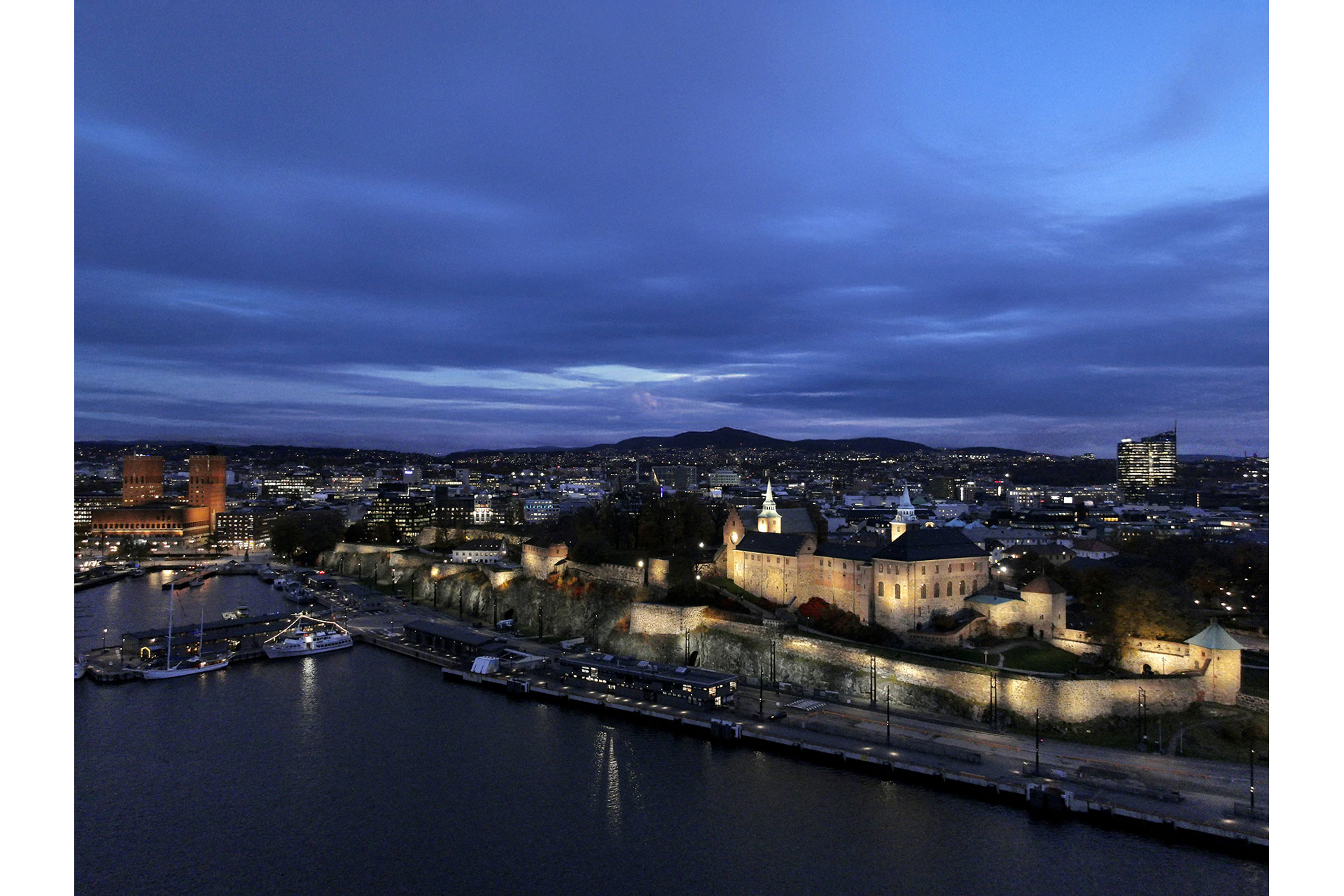
The concept is founded on restraint and contextual awareness. Rather than asserting itself through high luminance, the lighting is calibrated to allow the fortress to merge naturally into Oslo’s nightscape. Akershus Fortress forms part of Rådhusplassen together with Oslo City Hall and the National Museum, and the lighting design acknowledges this urban hierarchy.
The fortress is not intended to compete for visual dominance, but to serve as a calm presence that allows Oslo City Hall to remain the primary focal point of the square. Through controlled illumination, balanced contrasts, and precise articulation of volumes, the fortress remains clearly recognisable, demonstrating that identity is not dependent on brightness alone.
Design and Aesthetics
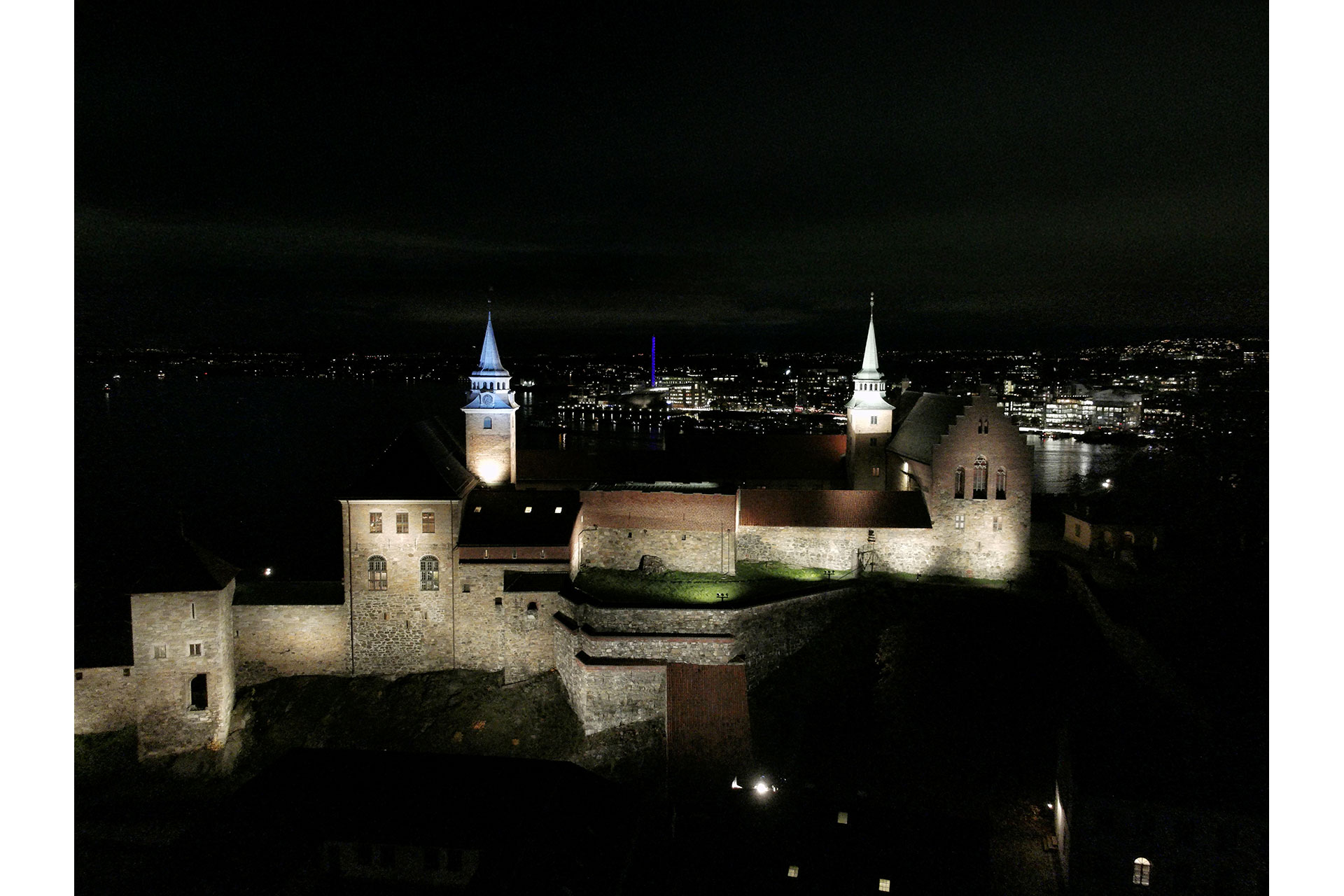
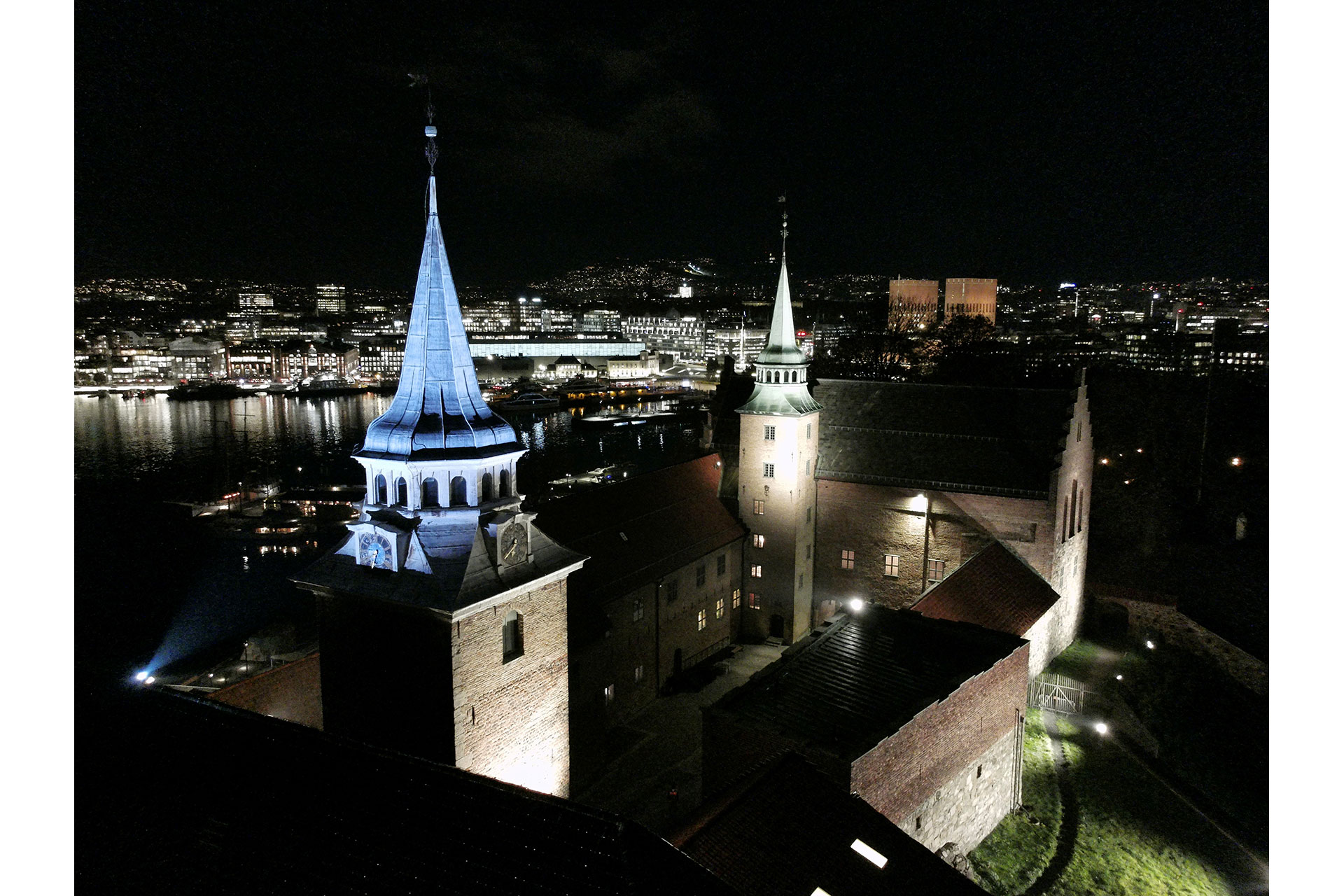
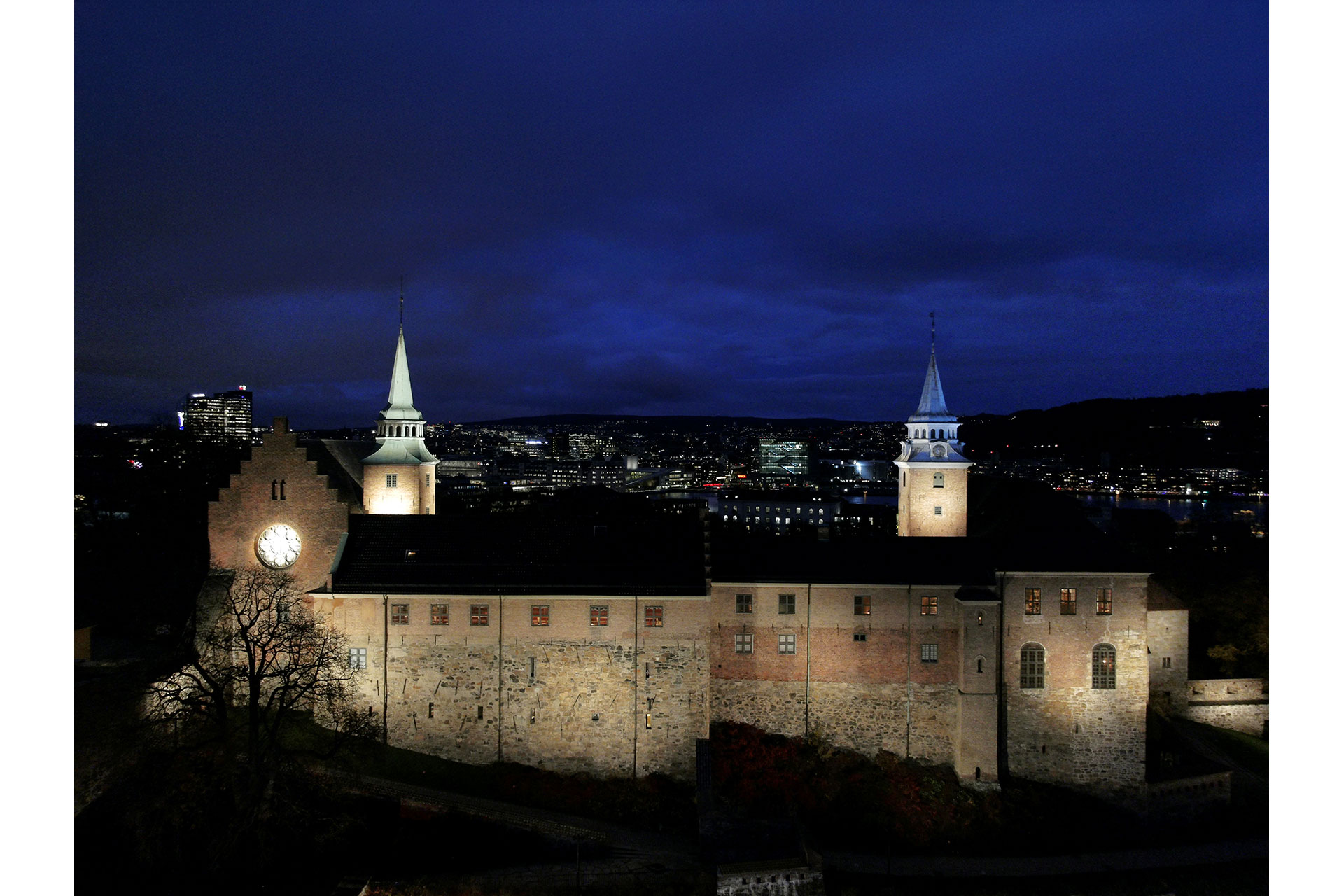
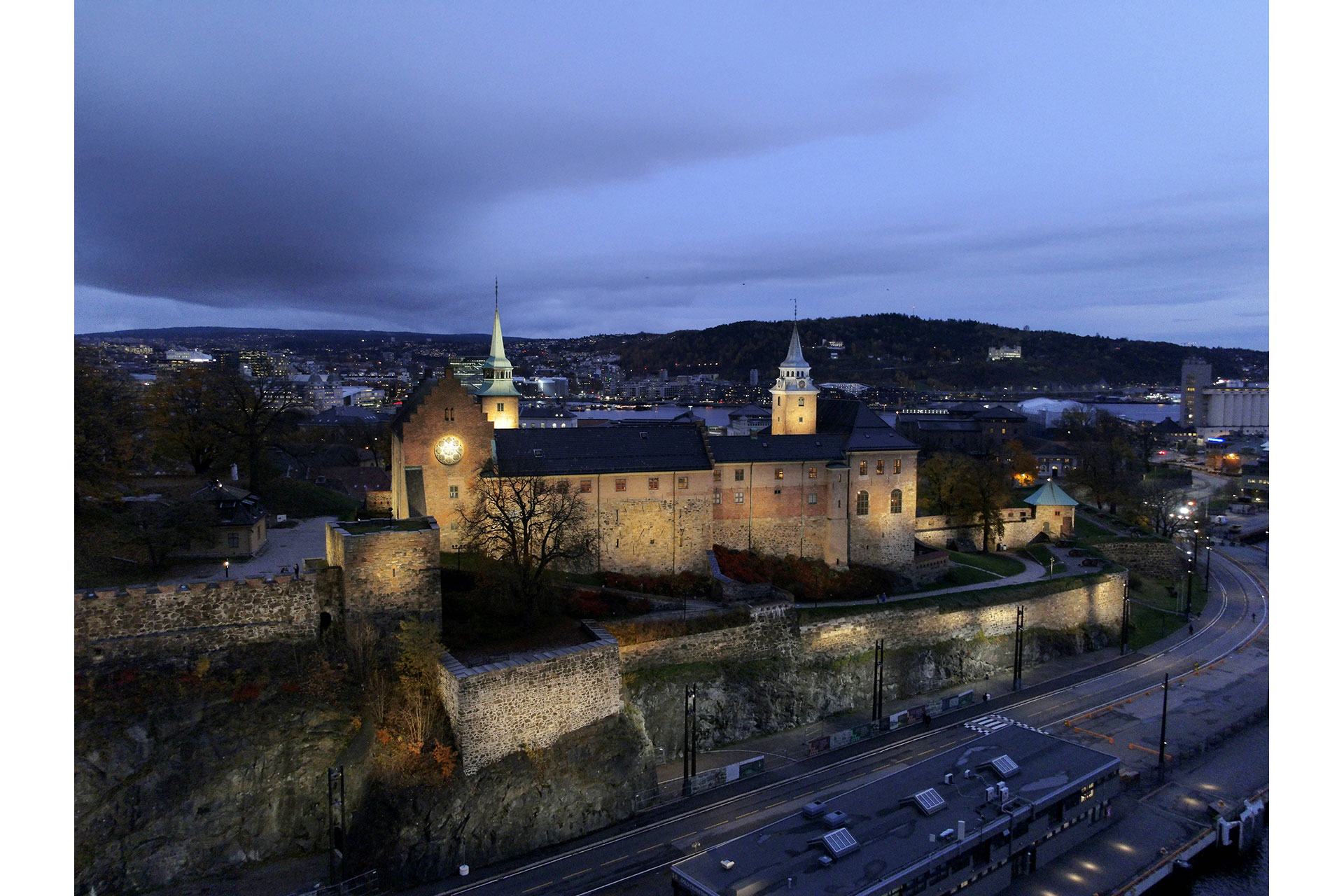
The lighting strategy is based on a hierarchy of tones and intensities responding to material character. Darker natural stone in the lower sections is illuminated at 4000K to enhance texture and depth, while upper masonry is lit at 3000K, creating a subtle visual lift and a clear reading of the volumes.
All luminaires have been precisely aimed and programmed to avoid glare and unnecessary spill, maintaining a dignified nighttime expression aligned with the site’s historical and civic importance. At the Blue Tower, a bespoke GOBO projector with a blue filter reinterprets an existing lighting concept, by Erik Selmer, and integrates into the overall scheme.
In prominent sightlines, slender masts with integrated light sources were selected for a refined, unobtrusive presence. In less visible areas, more technical and cost-efficient masts were used without compromising overall expression. Daylight appearance was a key consideration, ensuring a discreet presence both day and night.
Sustainability
Reducing operational and maintenance costs was a central ambition. This was achieved by reducing the number of luminaires per square meter and upgrading to modern, energy-efficient solutions. Despite fewer light points, the fortress now appears more evenly and clearly illuminated.
Existing luminaires illuminating trees were removed for environmental and design-related reasons. Lighting vegetation contributes to light pollution and can disrupt growth cycles and local ecosystems. In the Nordic climate, where trees are bare for nearly half the year, illuminated vegetation can also appear visually heavy. By illuminating only the fortress walls, dark tree silhouettes are revealed against the masonry, ensuring a coherent year-round expression.
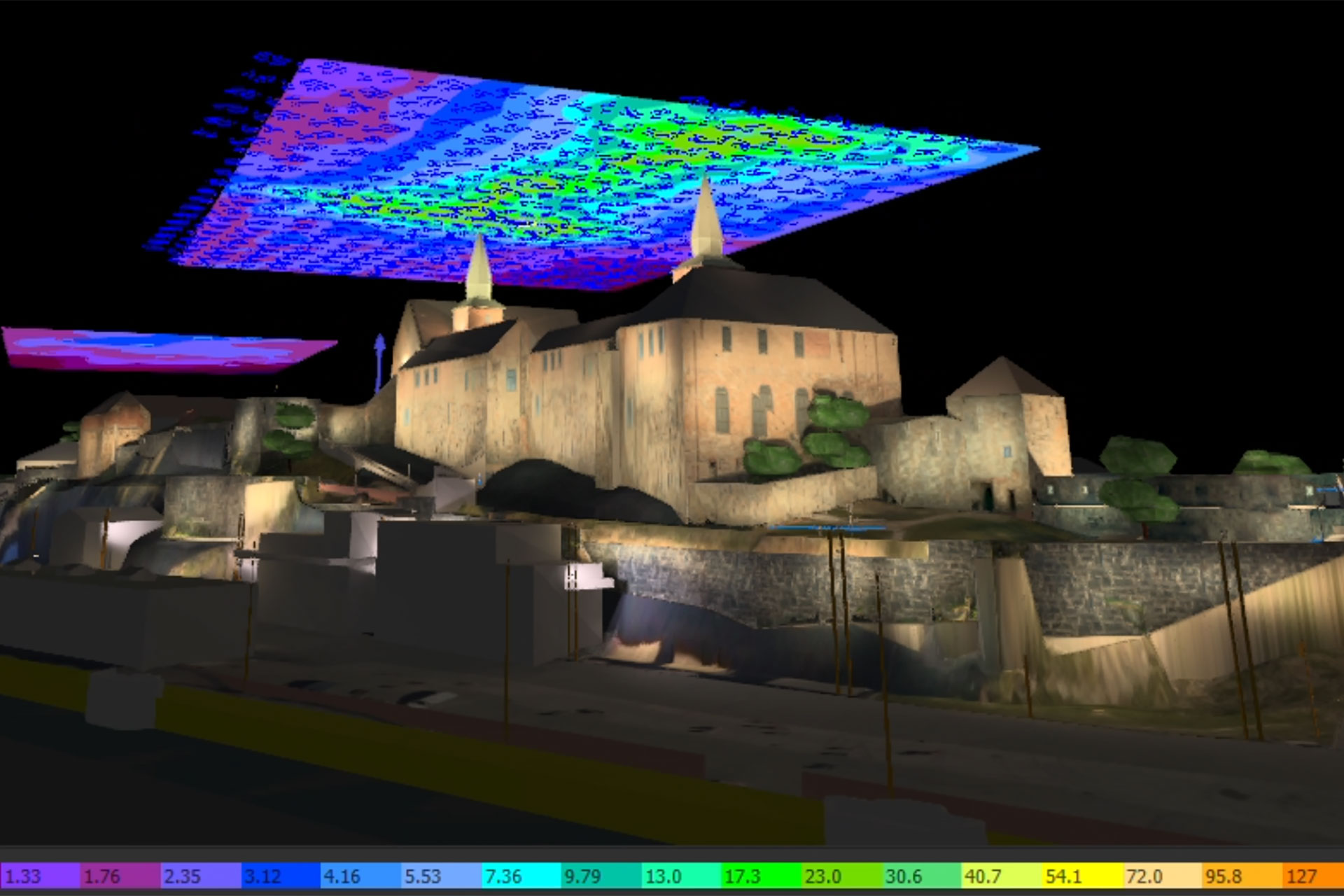
All luminaires are mounted at heights of 3-4 metres to protect against vandalism and snow accumulation. Light pollution was mitigated through lighting calculations, applying a large-scale grid above the fortress to control aiming angles and prevent upward spill.
In total, approximately 20,000 square metres of stone wall are illuminated using 250 luminaires, connected through a wireless control system. Existing cabling was reused wherever possible, reducing material consumption. Overall, the luminaires achieve an average efficacy exceeding 70 lm/W, and calculations show an estimated annual energy reduction of 58%.