

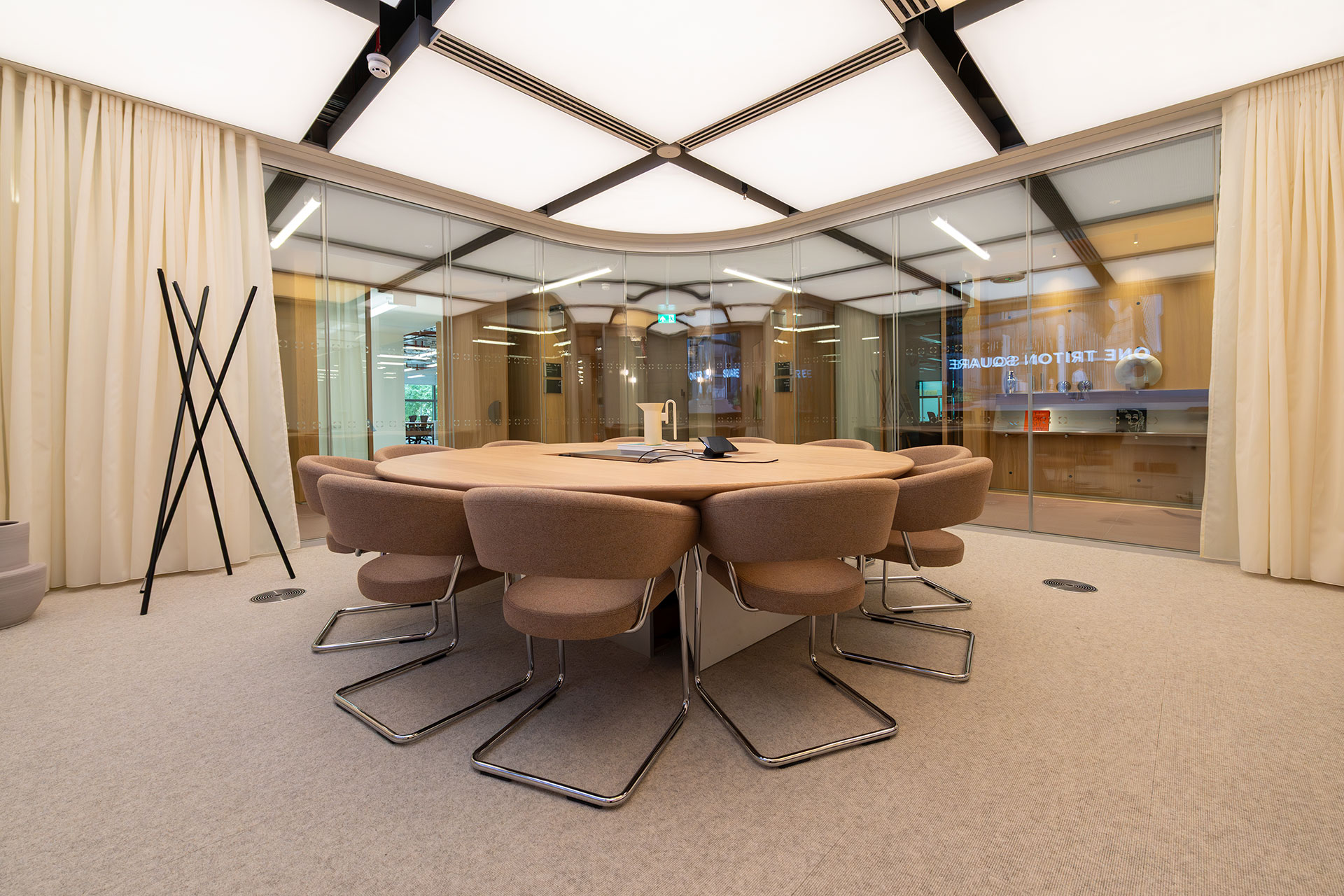
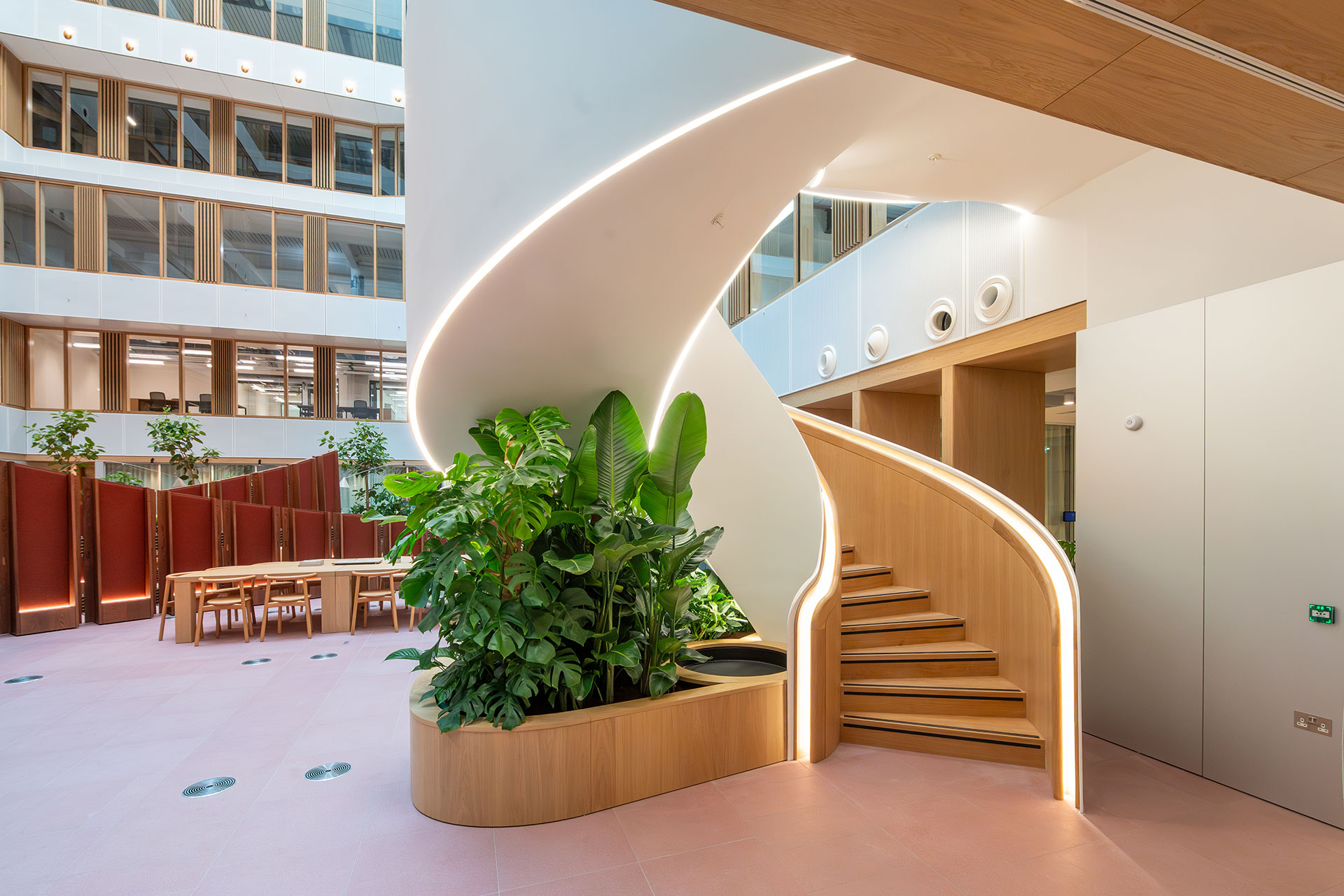
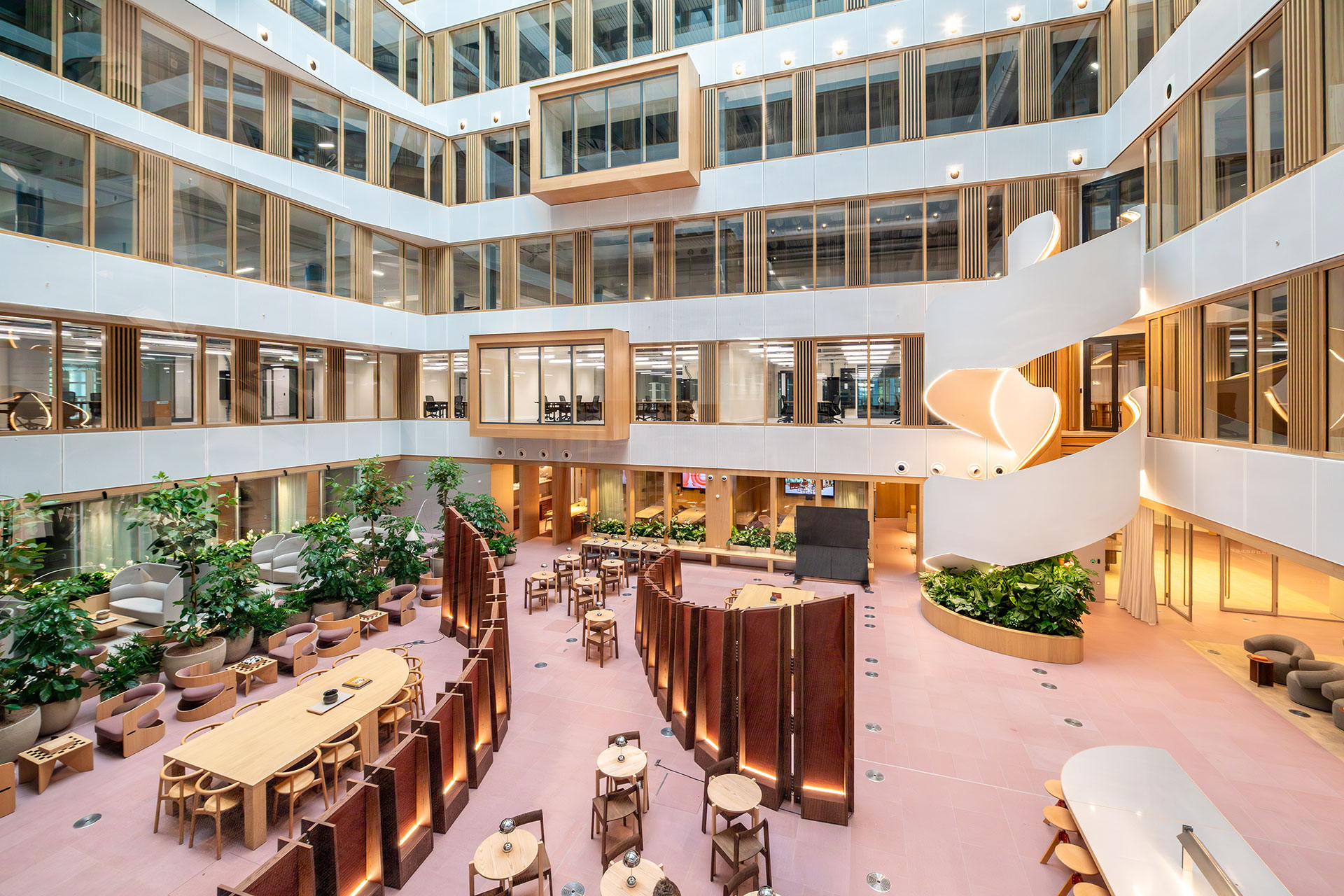
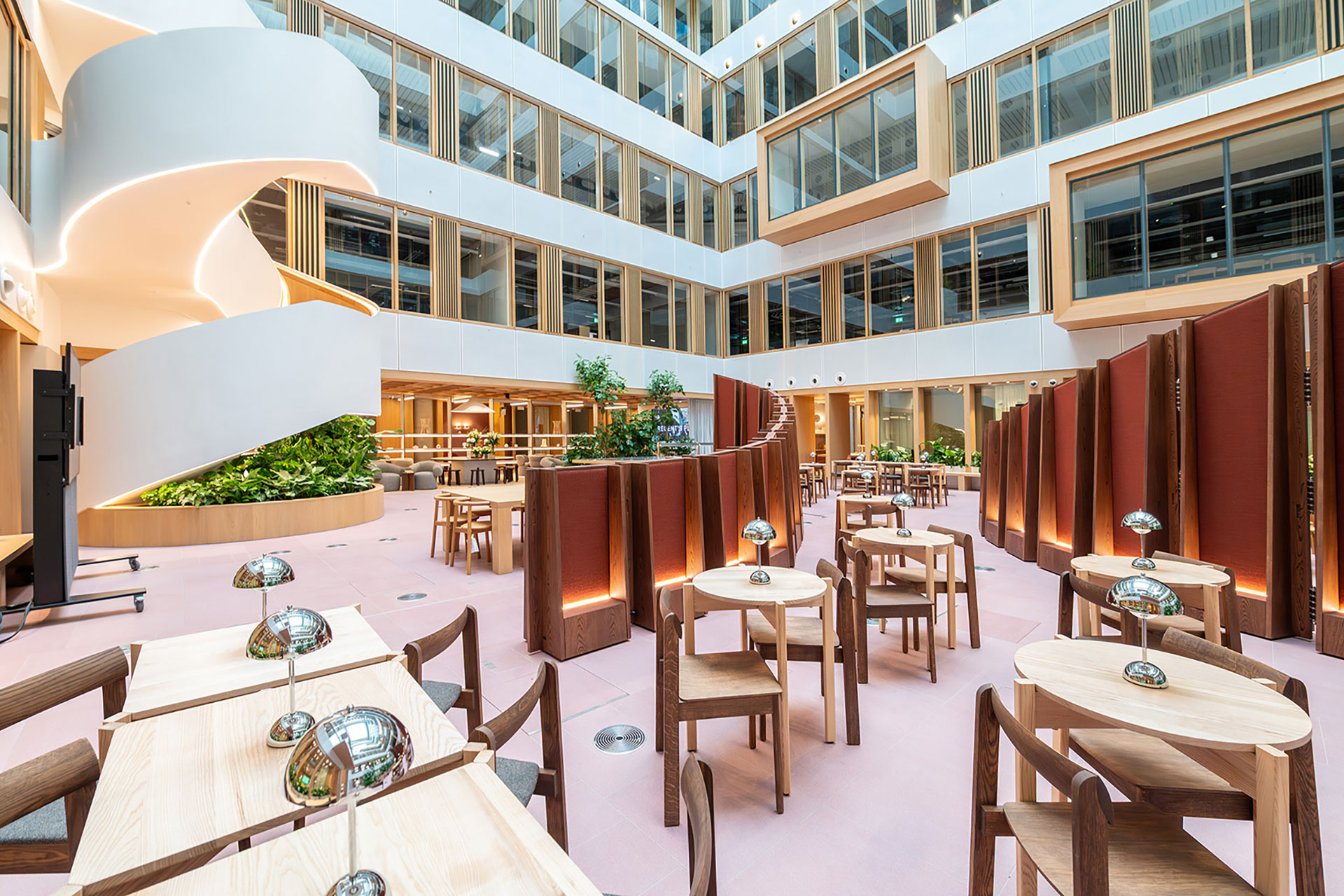
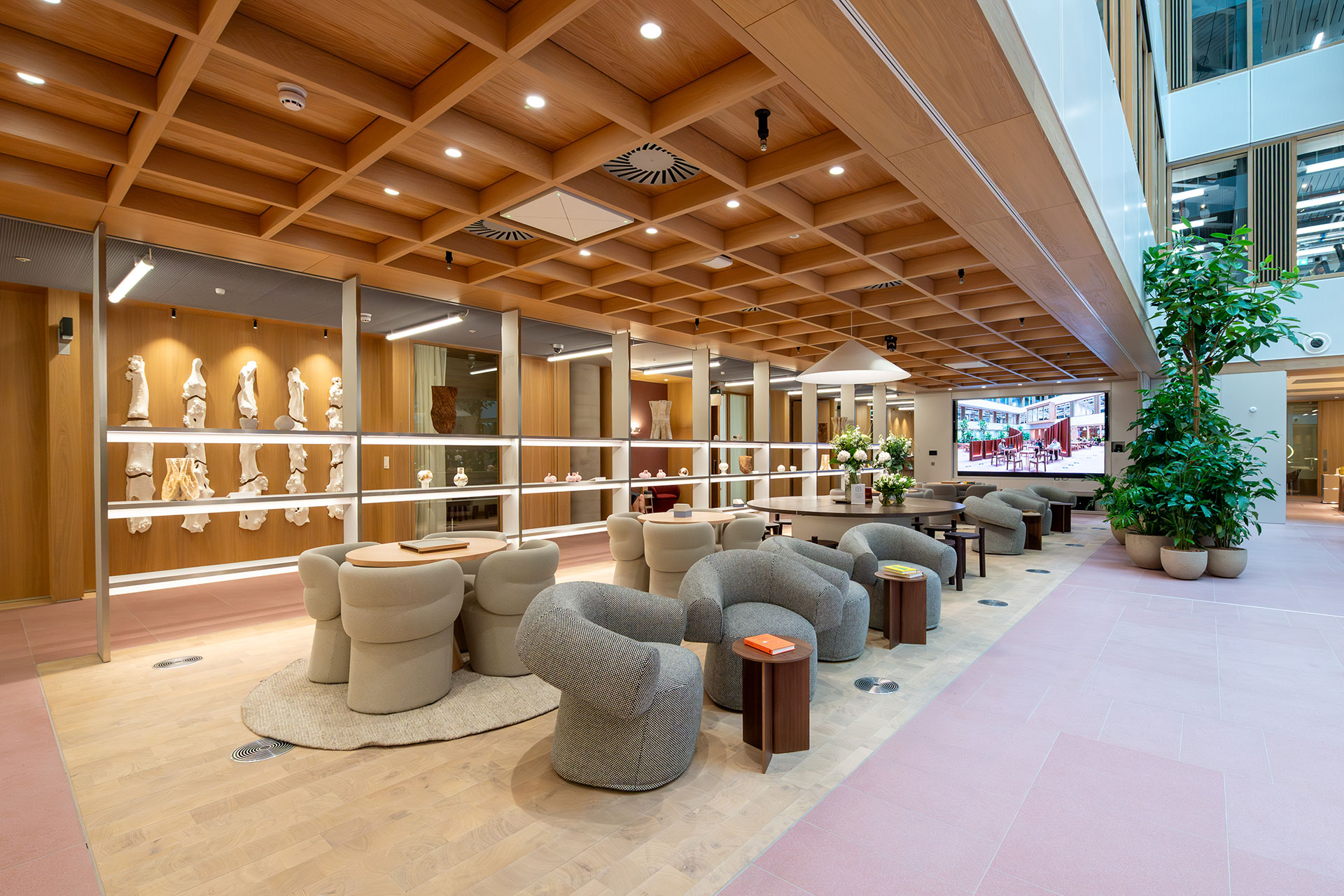
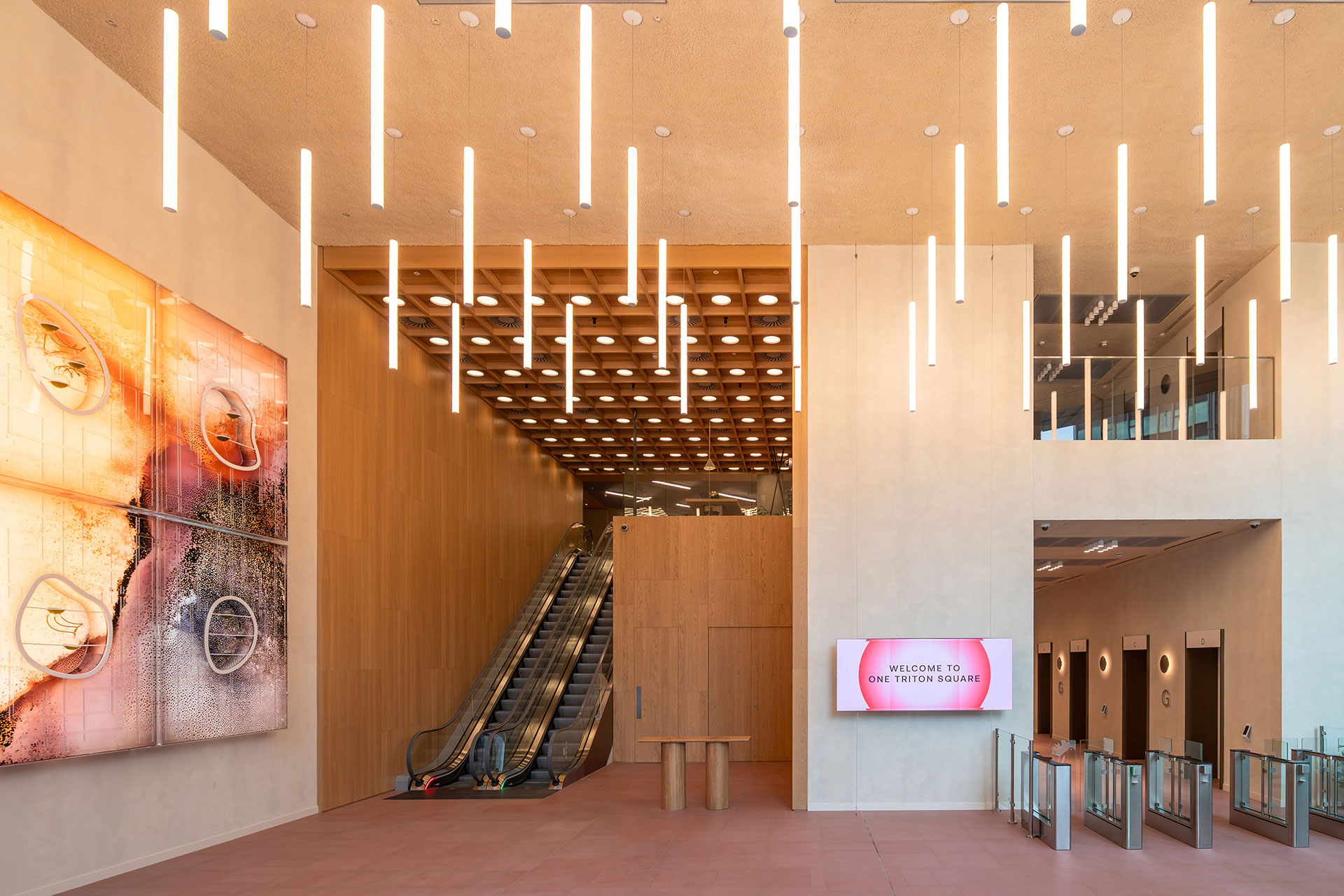
The lighting design at 1 Triton Square plays a central role in the building’s transformation into a sustainable, high performing workplace. Conceived as an integrated architectural and environmental system, the lighting strategy supports energy efficiency, occupant wellbeing and long term adaptability across the Level 0 Reception, Level 1 shared spaces and Level 6 Lounge.
A daylight first approach underpins the design. The generous central atrium, perimeter glazing and feature stair allow daylight to penetrate deep into the plan, reducing reliance on artificial lighting while enhancing transparency, orientation and visual connection between floors. Lighting is carefully calibrated to work in balance with these conditions, reinforcing wayfinding and supporting intuitive movement through the building.
Where spaces are removed from direct daylight, tuneable white lighting provides a responsive solution that mirrors natural light rhythms and adapts to changing external conditions. This approach enhances visual comfort, supports wellbeing and allows users greater control over their environment—key to creating inclusive, flexible workplaces that respond to varied patterns of use.
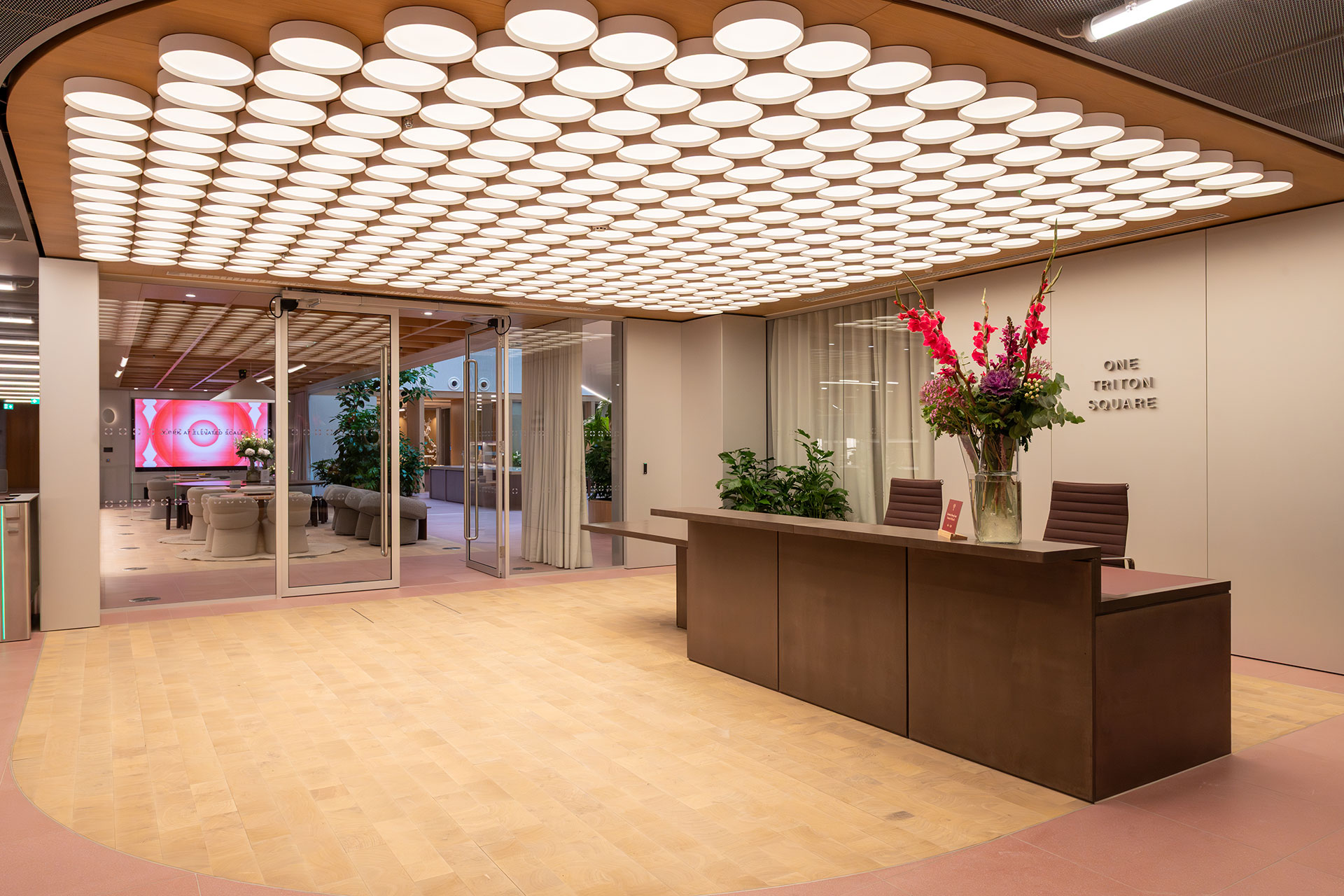
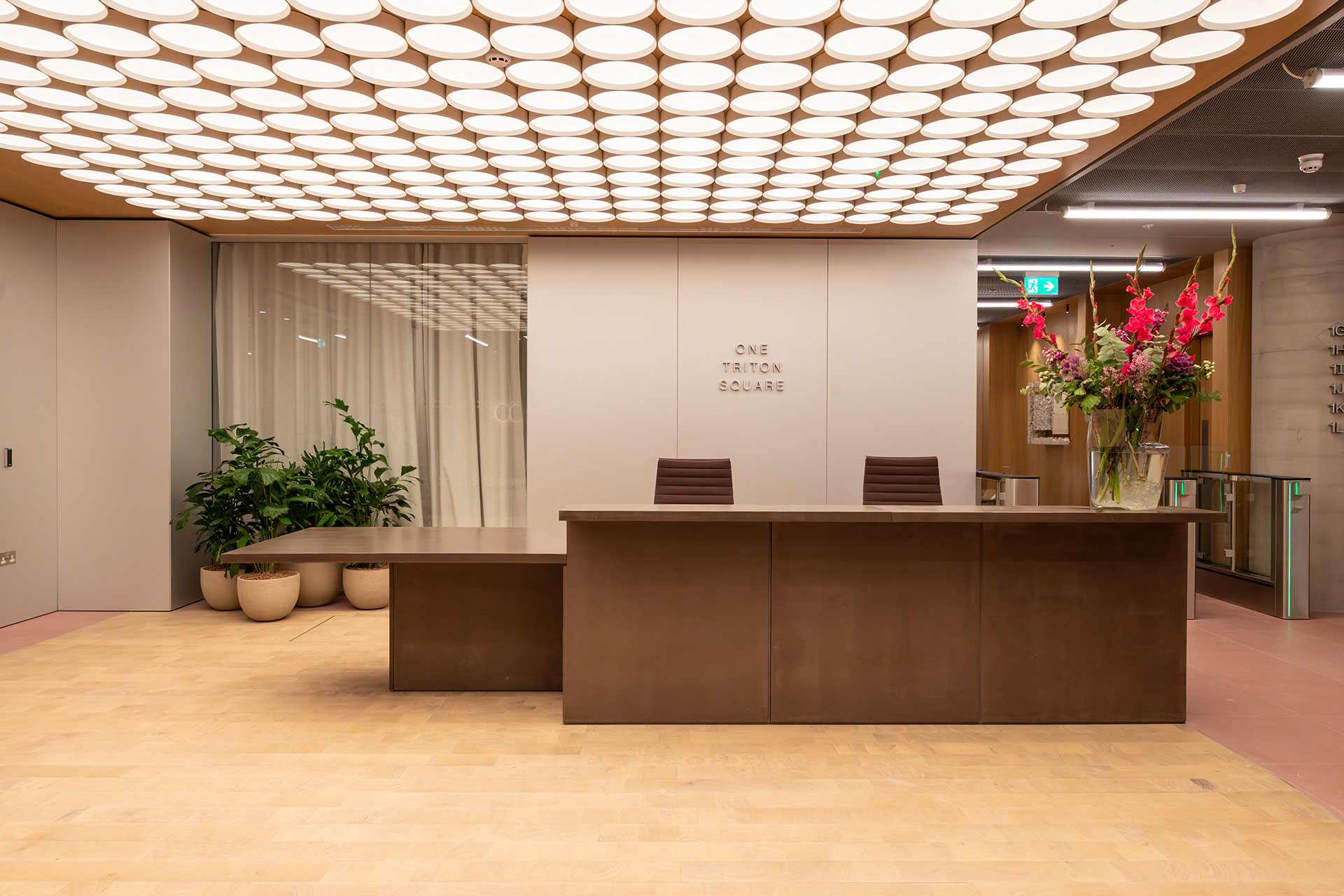
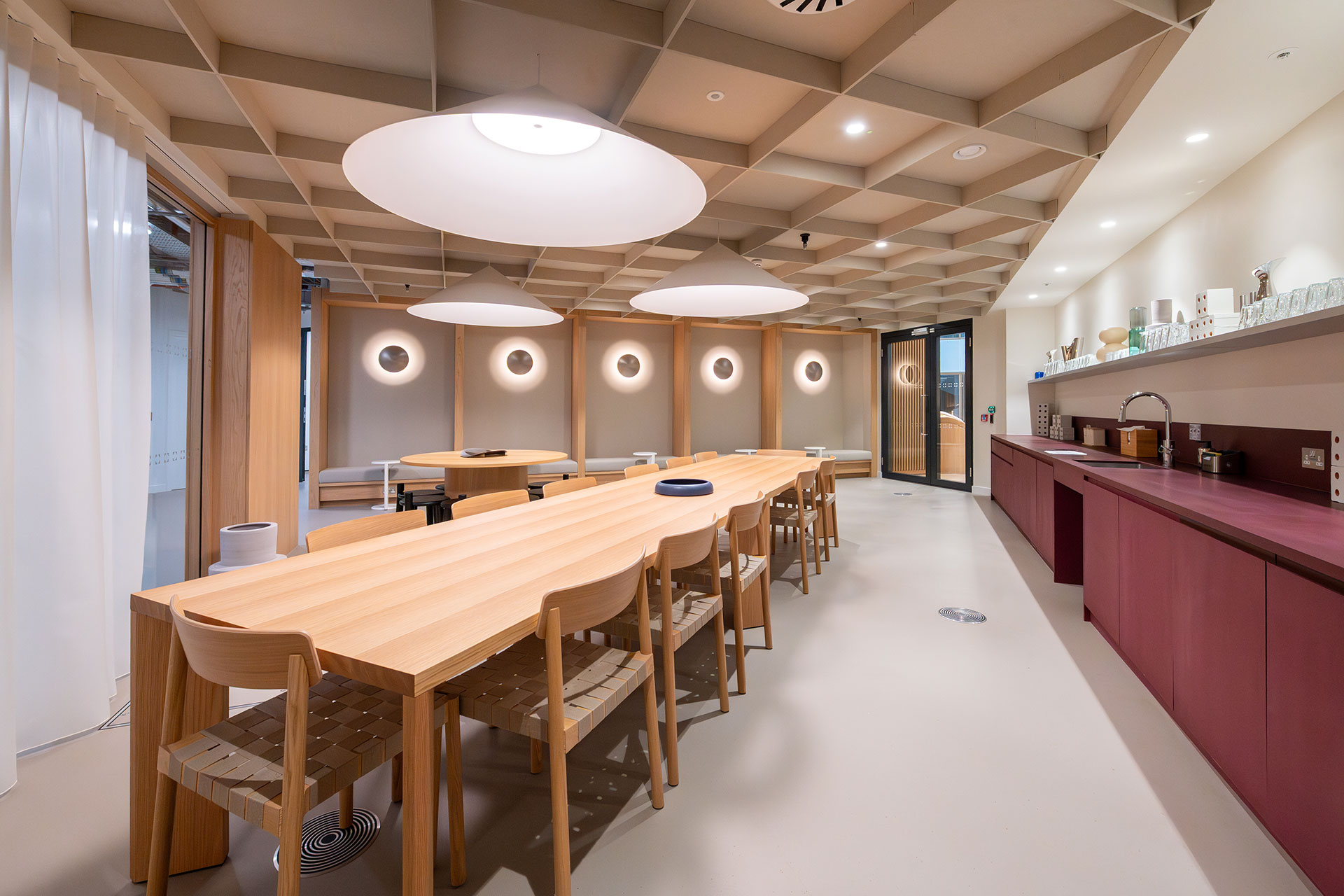
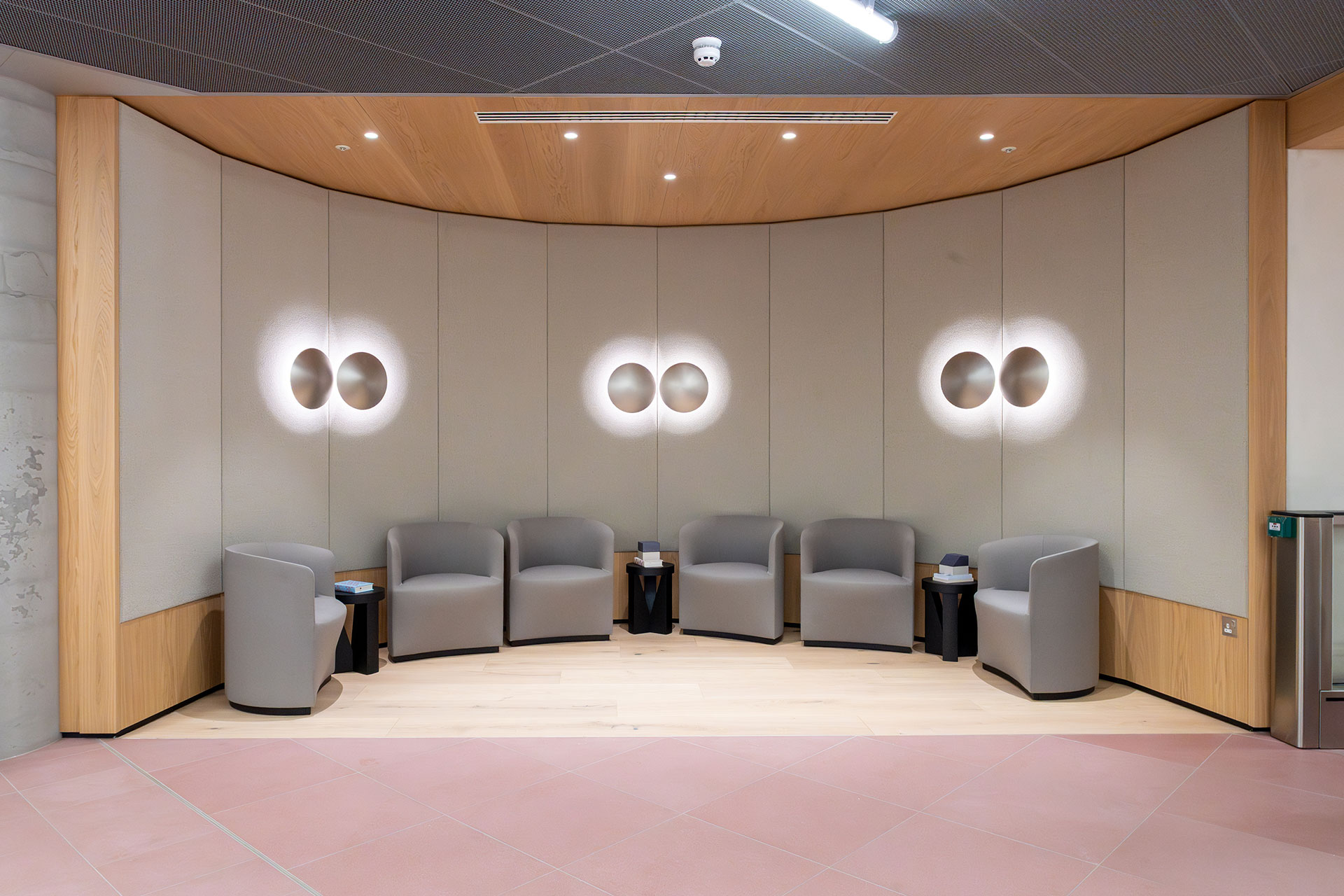
Artificial lighting is deployed as a complementary and efficient layer, shaped to enhance architectural clarity and spatial hierarchy. In reception and breakout areas, patterned circular luminaires provide soft, ambient illumination that enriches material textures and creates a welcoming arrival experience. Along the primary circulation route, linear tubular luminaires introduce rhythm and direction, reinforcing clarity of movement while maintaining visual comfort. Perimeter wall lighting subtly defines quieter zones for pause and reflection within the dynamic workplace setting.
After dark, the atrium lighting strategy shifts emphasis to the lower levels, using restrained feature lighting integrated into planting and furniture. This creates a calm, grounded evening atmosphere while preserving darkness in the upper volumes, reducing unnecessary light spill and maintaining a visual connection to the night sky.
Across all workspace and collaborative areas, layered lighting and flexible controls respond to daylight availability, occupancy and programme needs. This adaptability supports efficient energy use while ensuring consistent visual performance and comfort.
Overall, the lighting design at 1 Triton Square demonstrates how a sustainability led approach can enhance workplace quality. By integrating daylight, efficient technologies and user centred control, the lighting reinforces architectural intent, supports wellbeing and delivers a future ready environment aligned with contemporary standards for sustainable workplace design.