
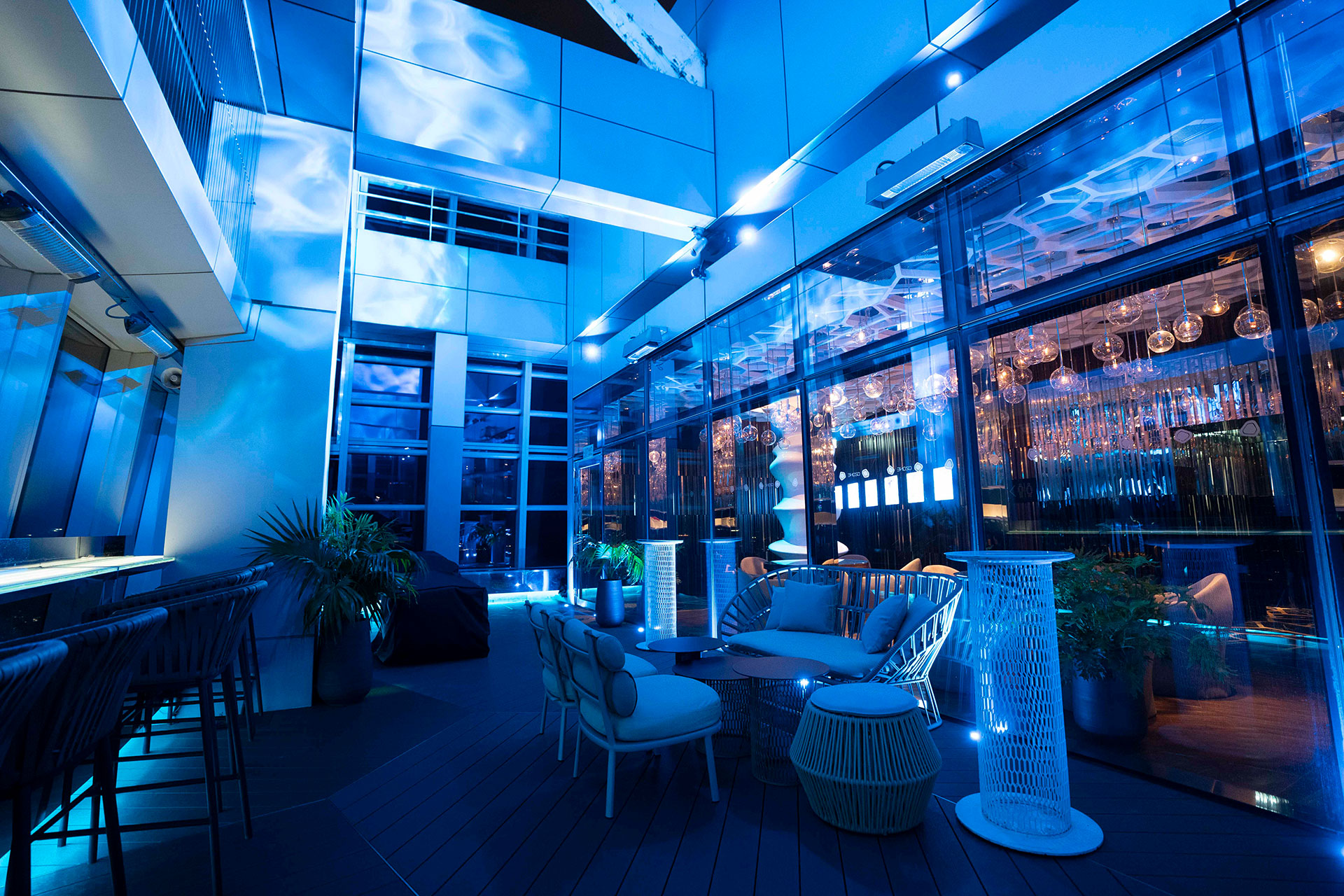
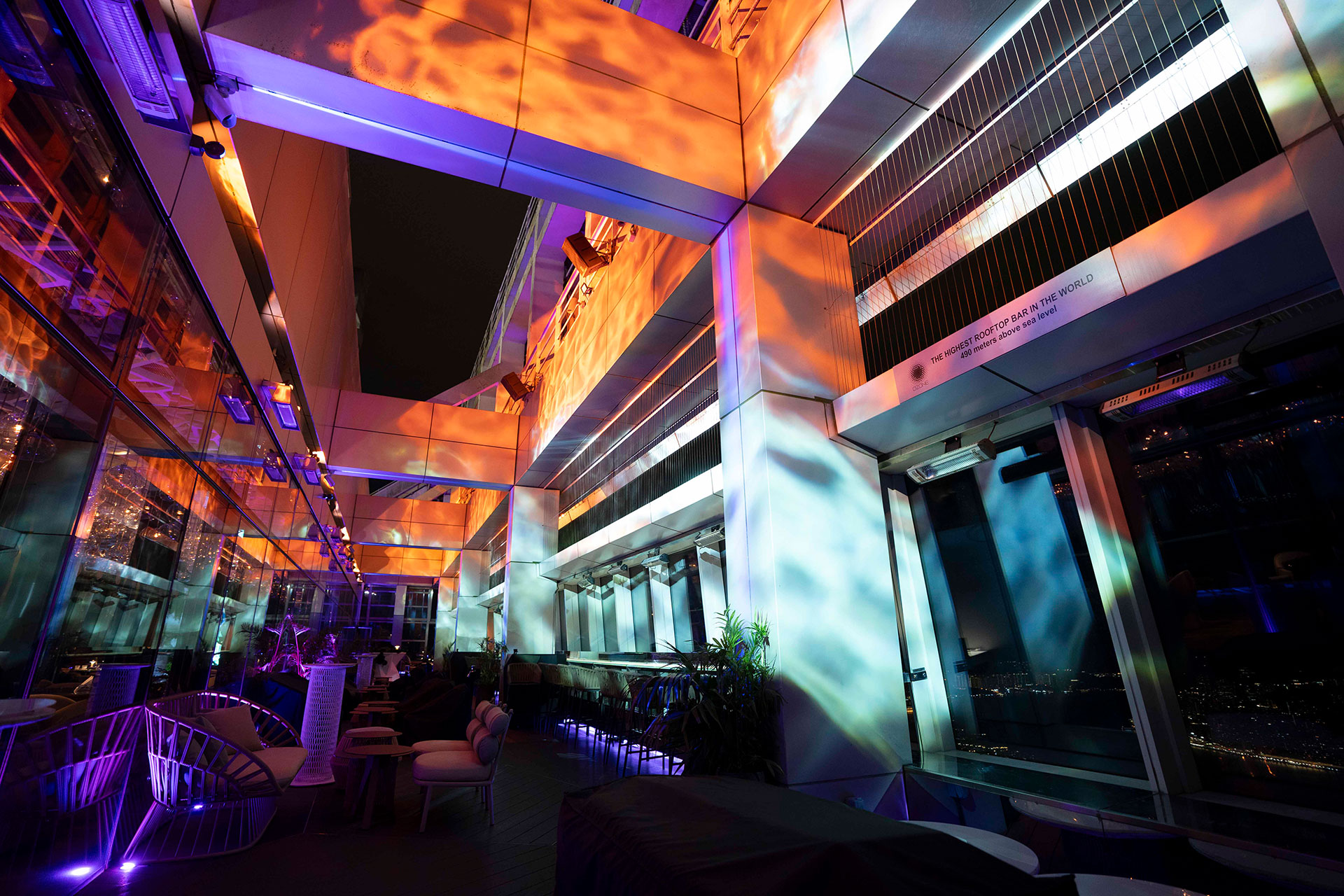
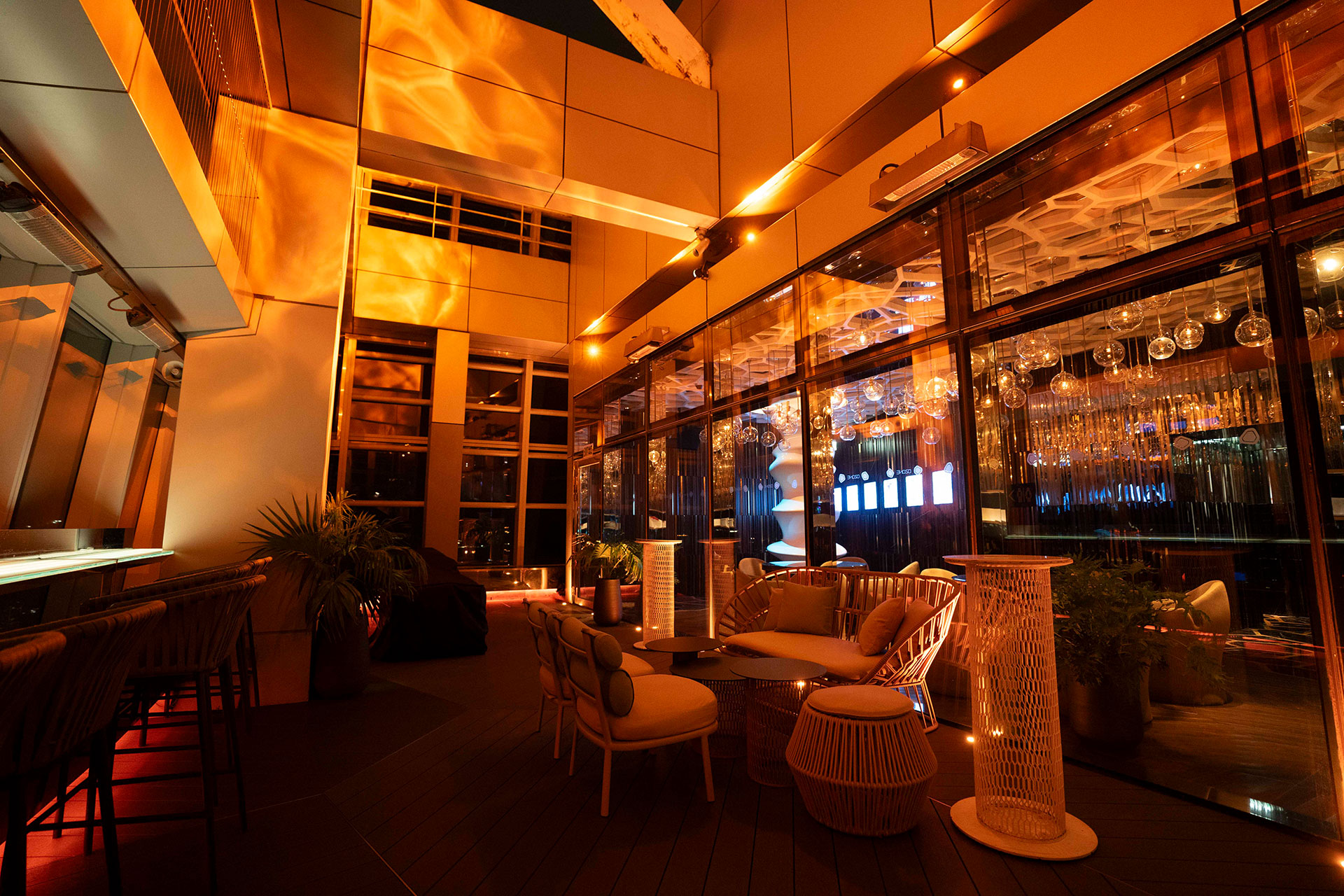
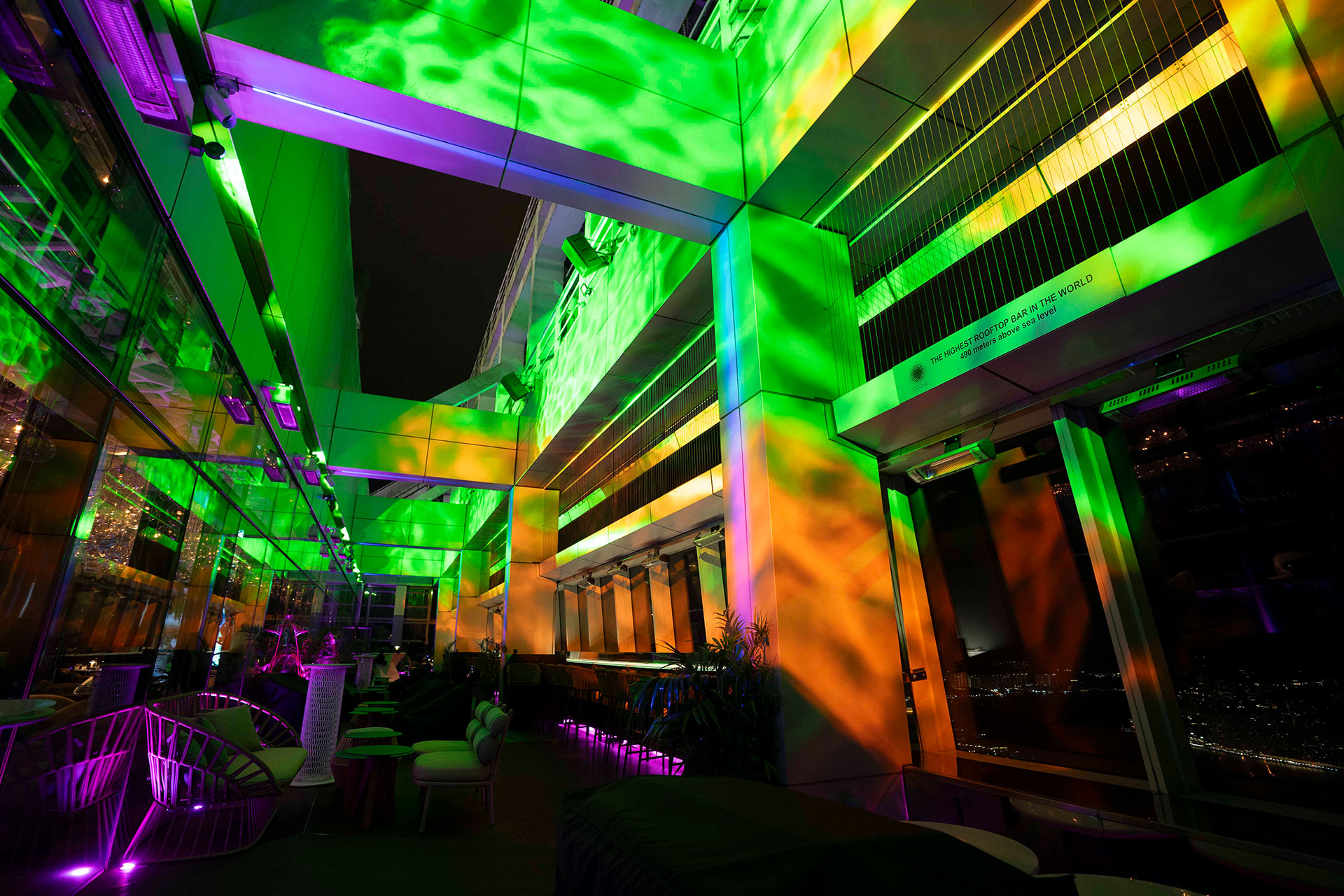
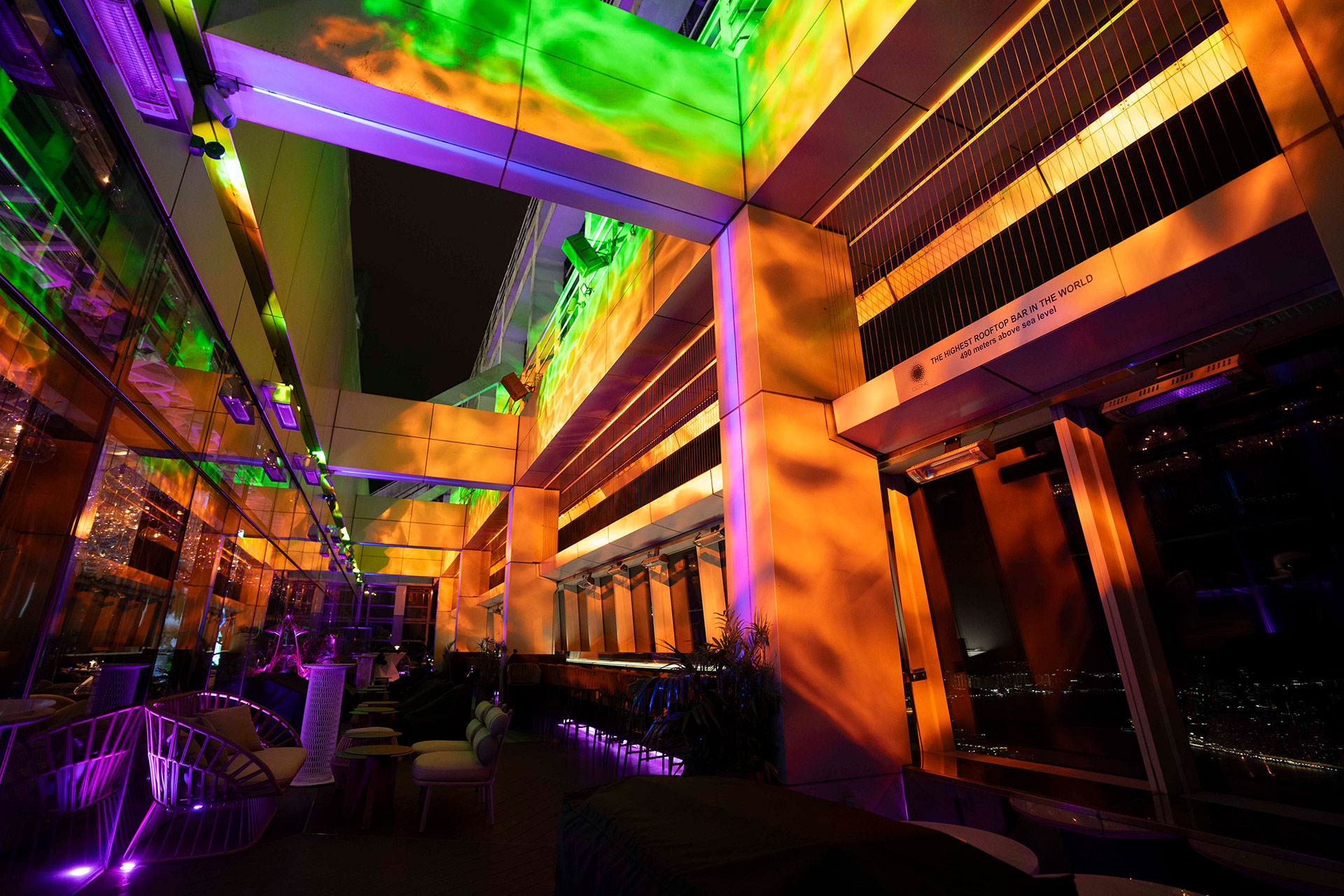
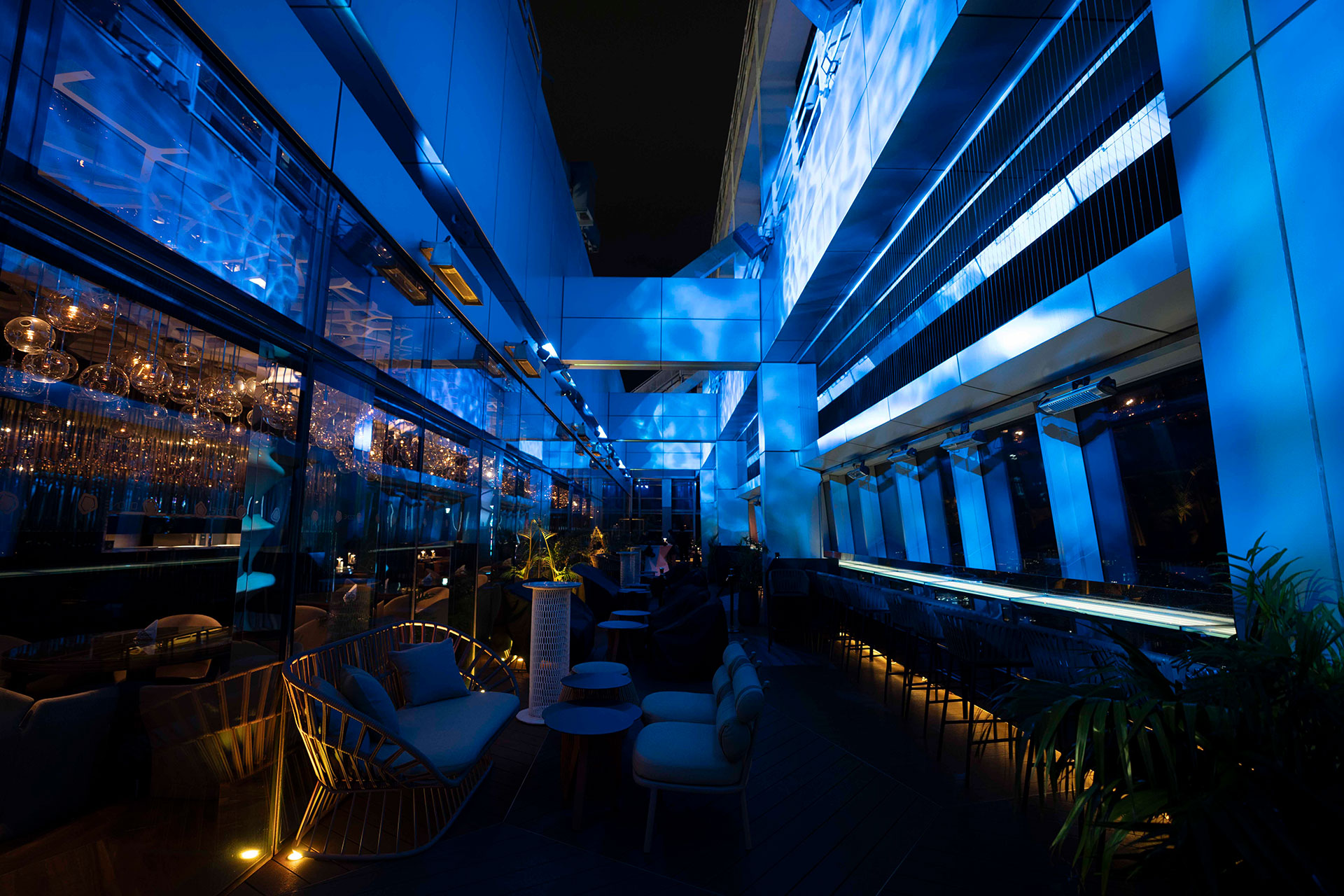
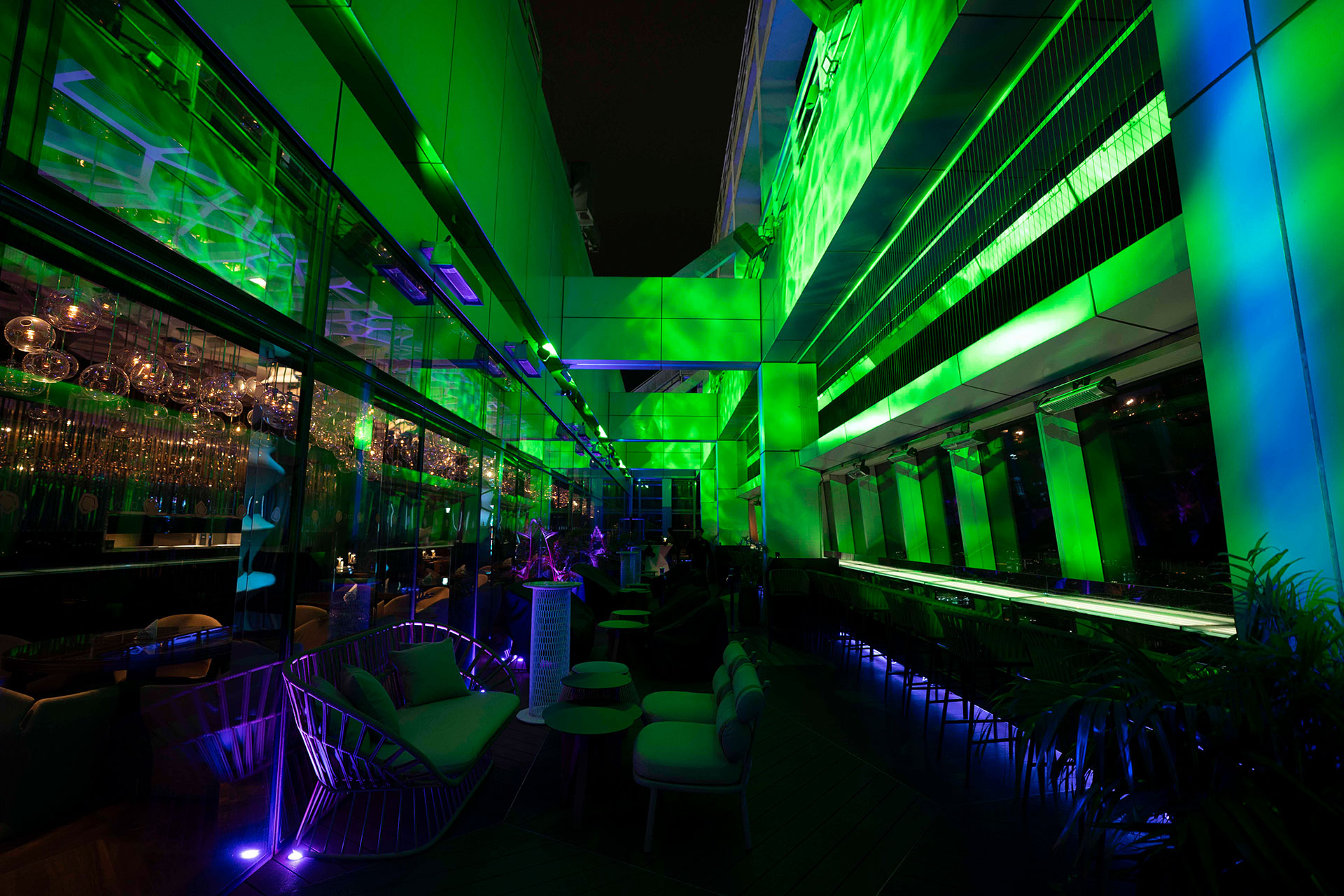
Located on the 118th floor of the Ritz-Carlton Hong Kong, Ozone is one of the world’s highest rooftop bars, commanding panoramic views of Victoria Harbour and the city skyline. Prior to the intervention, the space relied on static, conventional lighting that left the architectural structure visually flat and the atmosphere comparatively subdued. Despite its extraordinary elevation and views, the experience lacked energy and identity after sunset.
The redesign introduced a dynamic architectural lighting strategy that transforms the rooftop into a kinetic, immersive environment. The project faced substantial constraints: an open-to-the-sky setting exposed to weather, protected glass façades, a strict prohibition on new electrical penetrations, and a tightly controlled budget. All enhancements had to integrate seamlessly within the existing infrastructure while preserving guest comfort and operational simplicity.
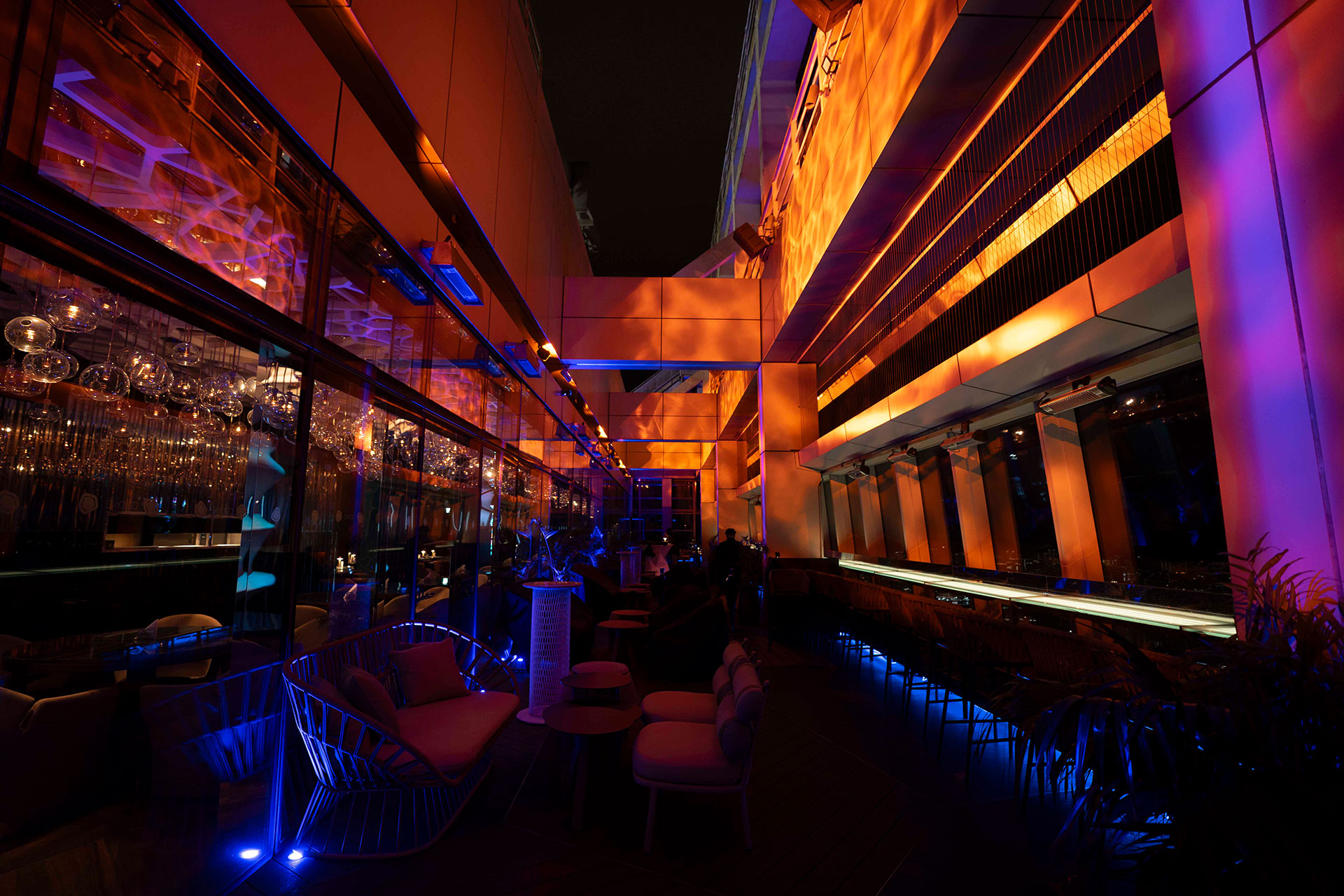
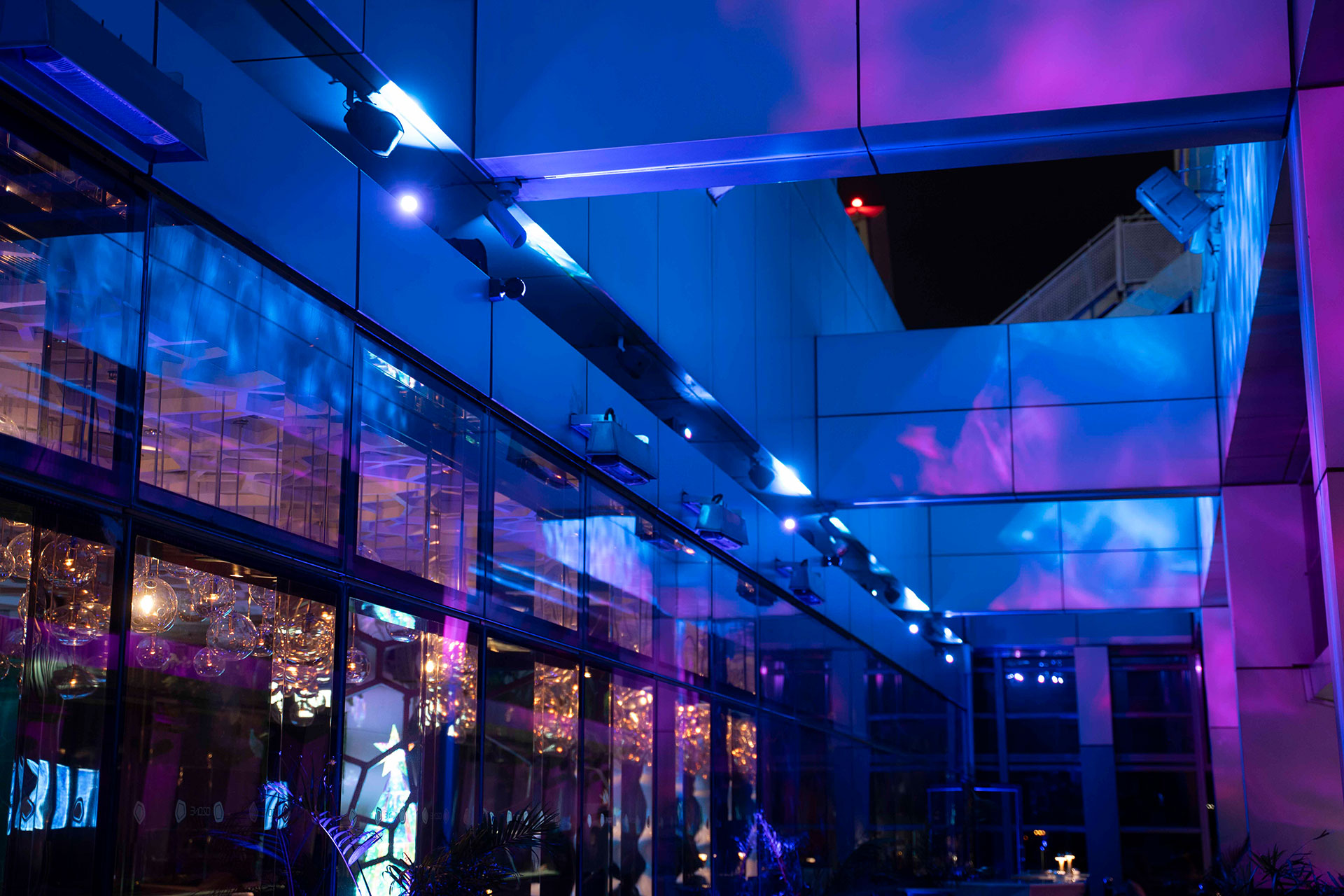
Grey pearl enamelled steel surfaces became the canvas for the new composition. Structural columns and perimeter beams are precisely articulated using ultra-narrow beam accents in contrasting tones, creating depth and rhythm along the linear corridor. Low-level illumination is intentionally restrained to maintain visual comfort and protect outward views.
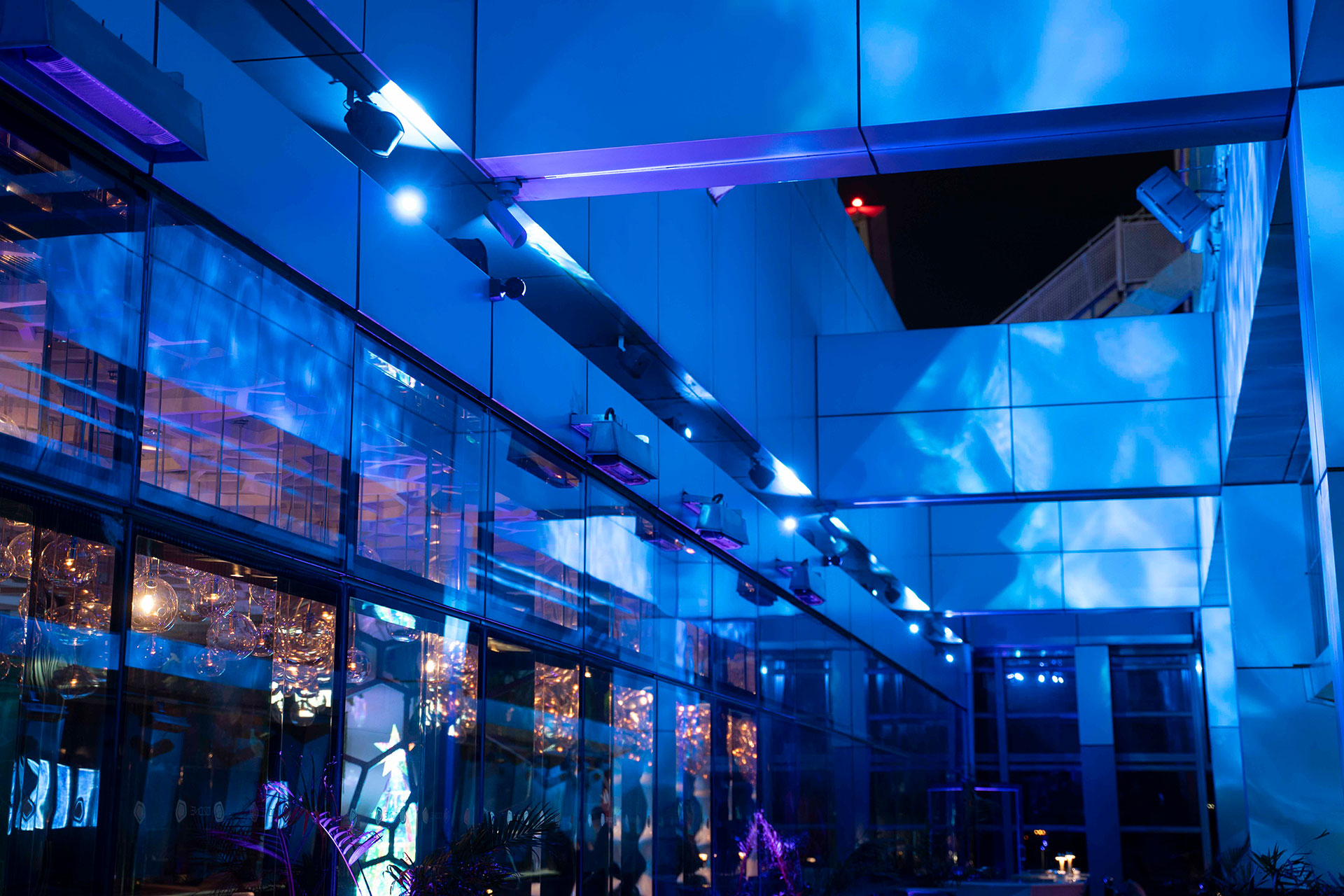
Dynamic colour-changing architectural lighting is paired with rotating colour wheels and precision glass lenses to project elemental fire and water motifs across the structure. Projector locations and beam angles were meticulously engineered to cast a continuous water ripple effect onto the inner faces of the architectural beams. Fifteen projectors operate in coordination to maintain seamless movement without visible breaks, hotspots, or glare.
The control strategy reinforces the experiential narrative. An astronomical clock initiates a gradual fade at sunset, transitioning through programmed color sequences that respond to diminishing natural light. Simple touch-button overrides allow event-specific adjustments. Projectors and architectural lighting operate on independent control systems, ensuring clarity of operation while maintaining overall visual cohesion.
Performance objectives were rigorously addressed: upper beam faces are animated without spill onto seating areas, structural lines remain sharply defined, and reflections on glazing are minimised. Energy-conscious decisions, including the use of rotating glass filters instead of video projection, achieved dramatic visual impact with reduced power demand and minimal equipment intrusion.
The result is a rooftop transformed from a static viewing platform into a vibrant nocturnal landmark. Elemental fire and water animate the architecture, amplifying the drama of the skyline beyond while respecting the surrounding urban environment. Through precise control, restrained spill light, and efficient technology, the project enhances Hong Kong’s nighttime identity, creating a socially engaging destination that balances spectacle with responsibility.