
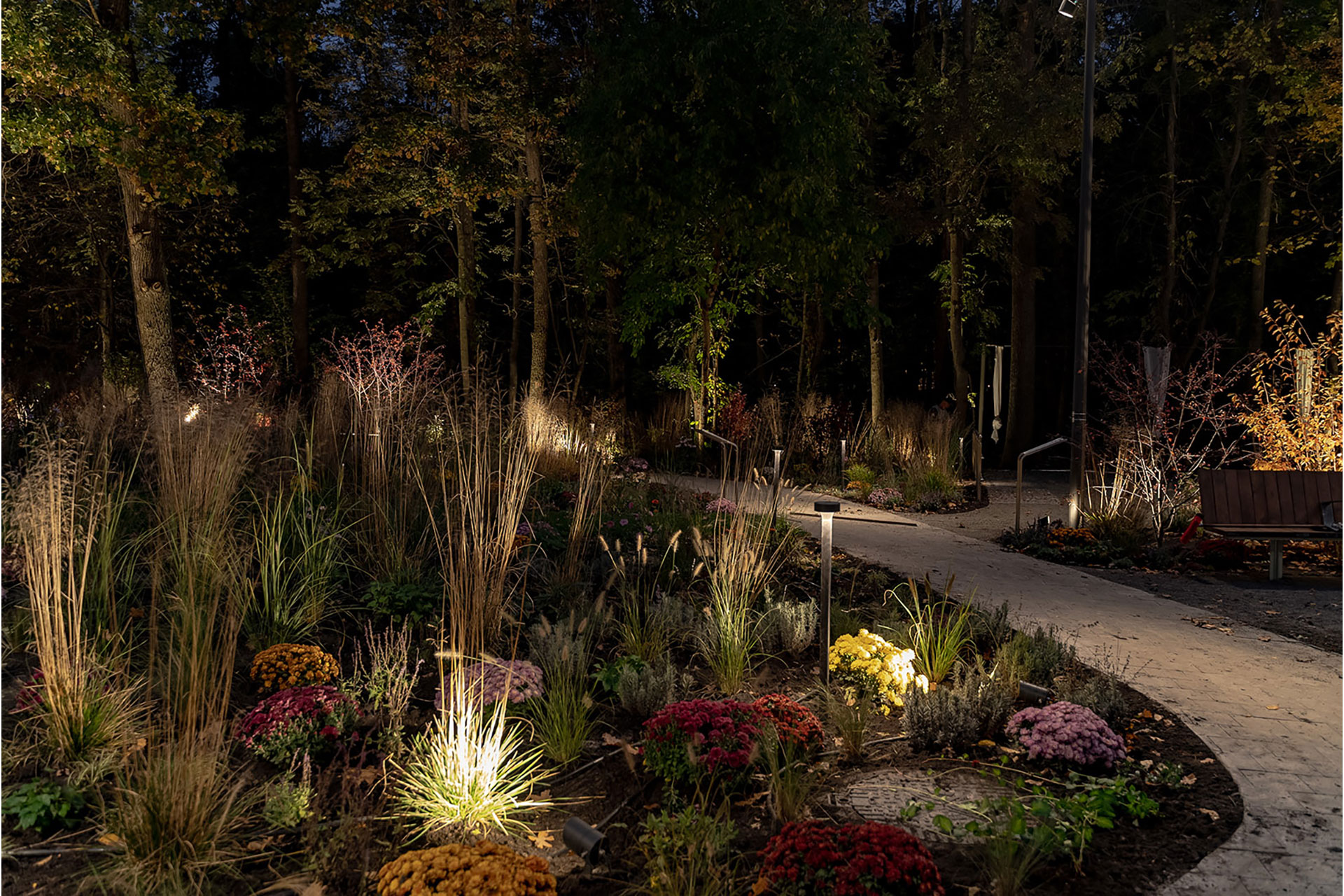
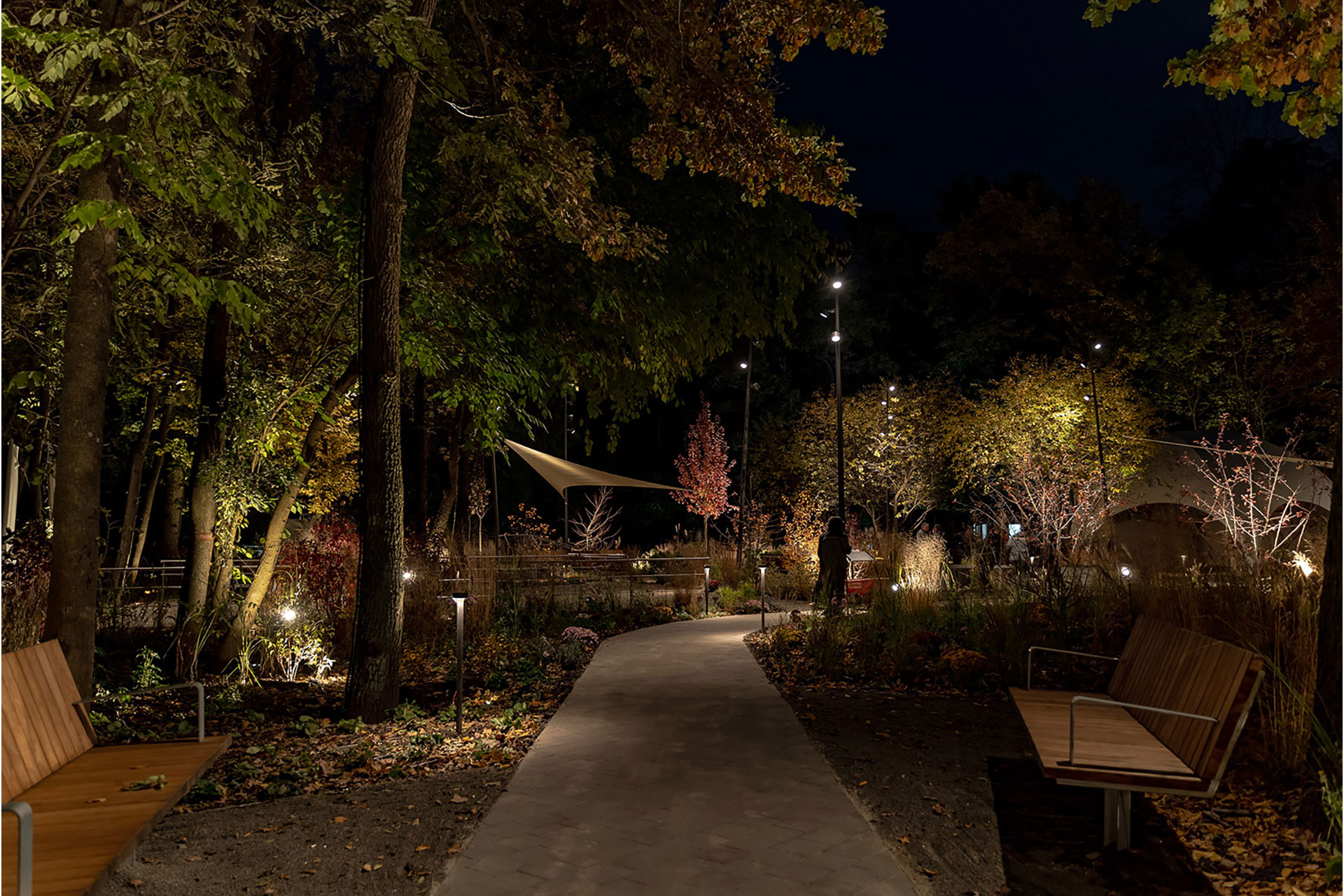
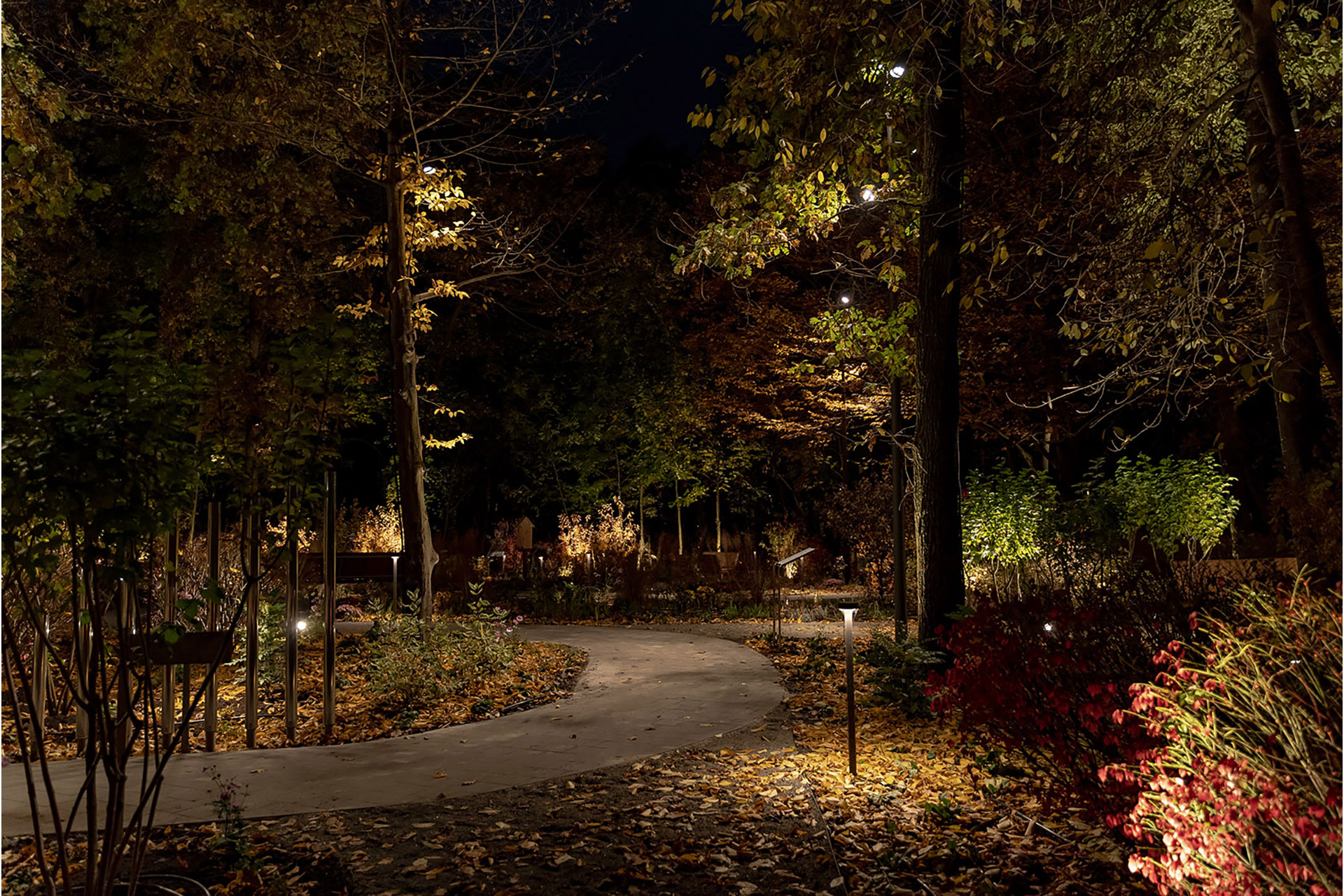
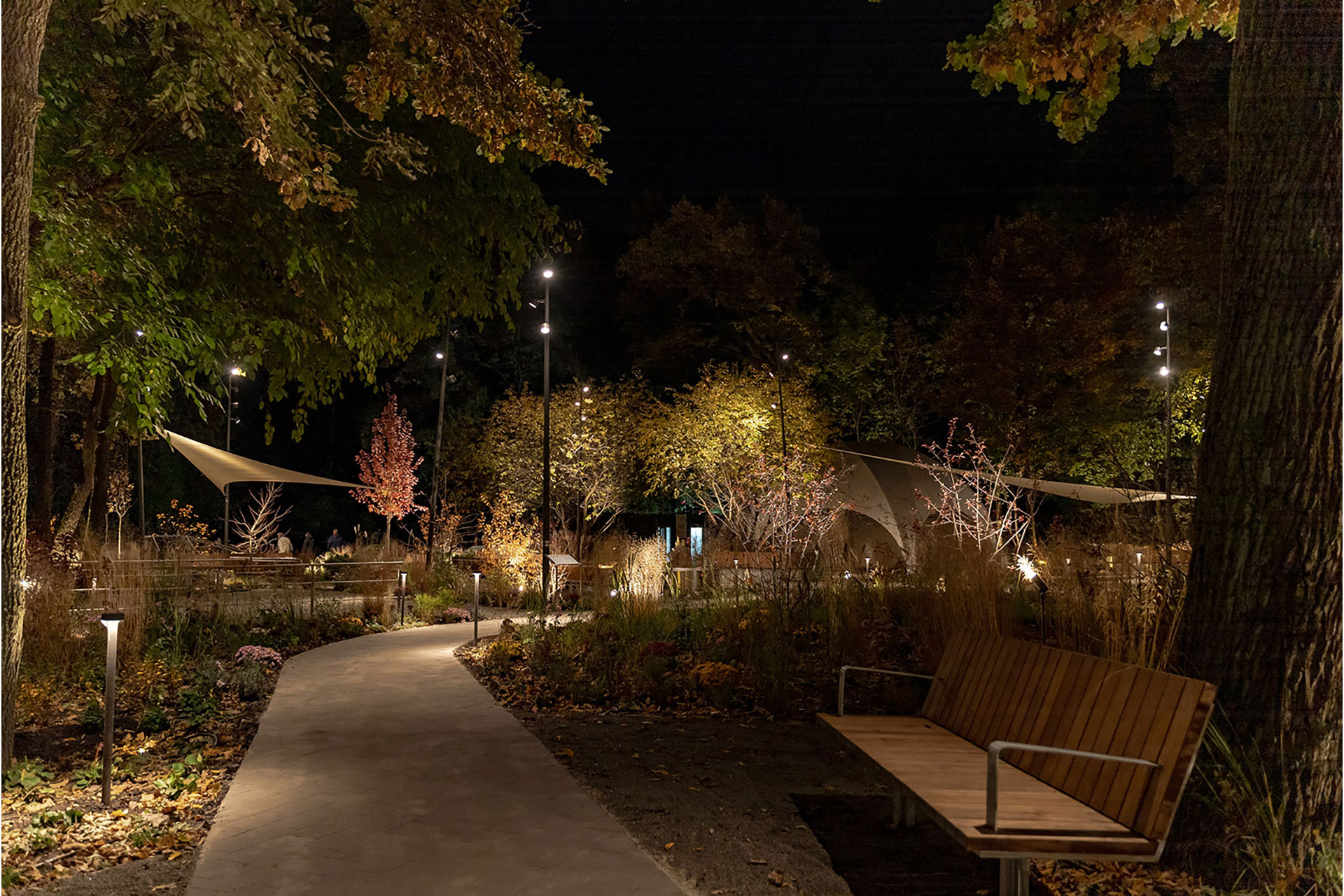

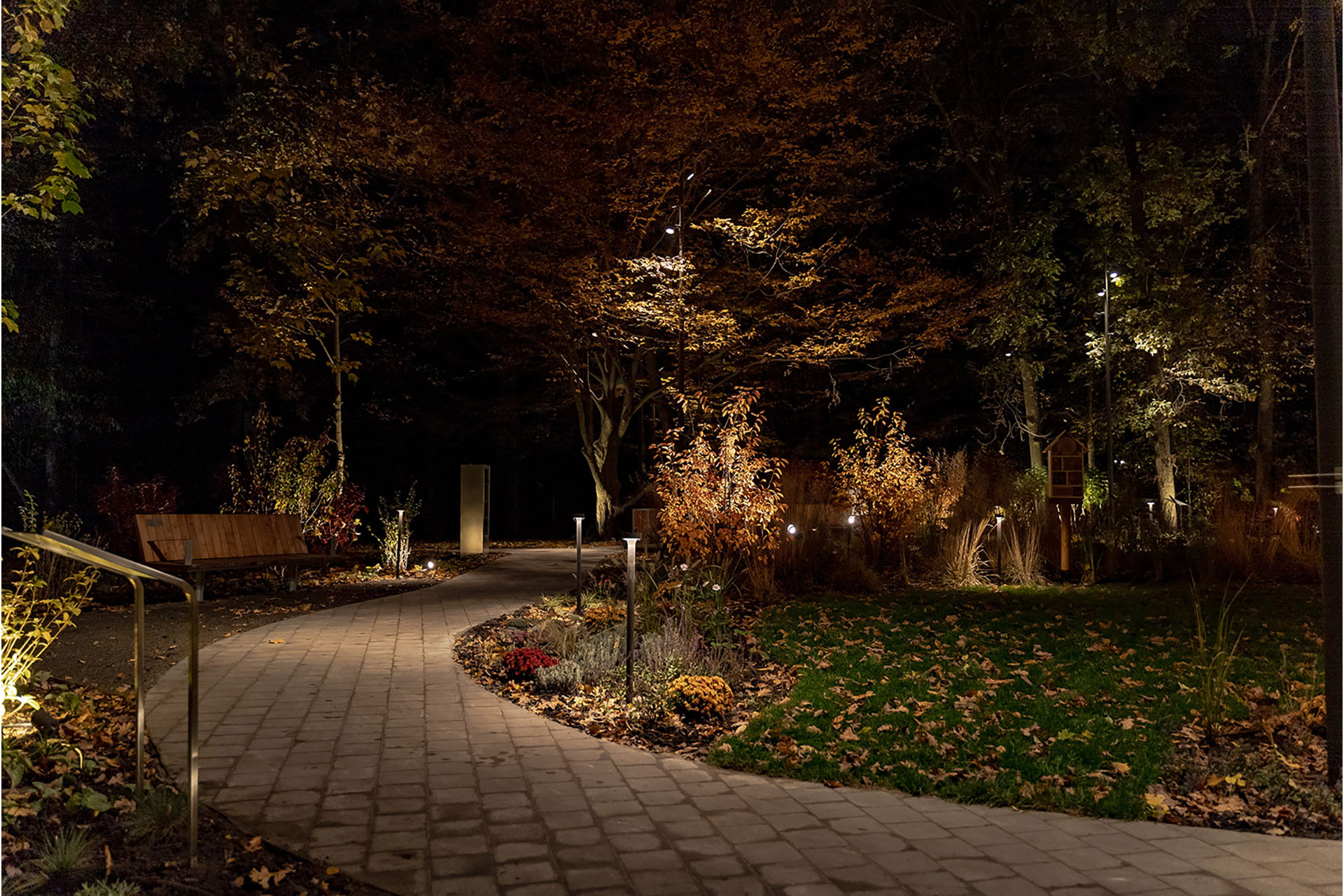
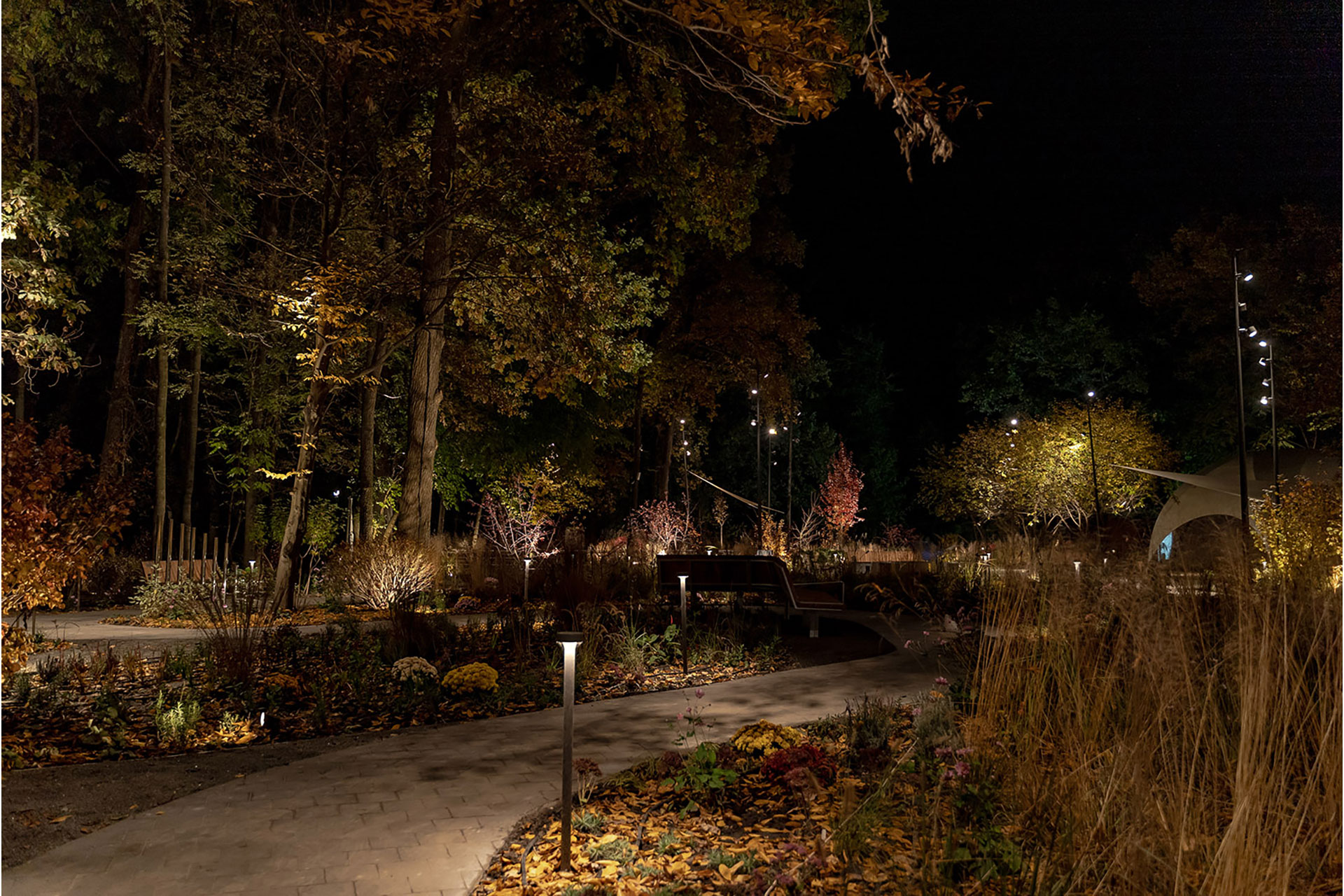
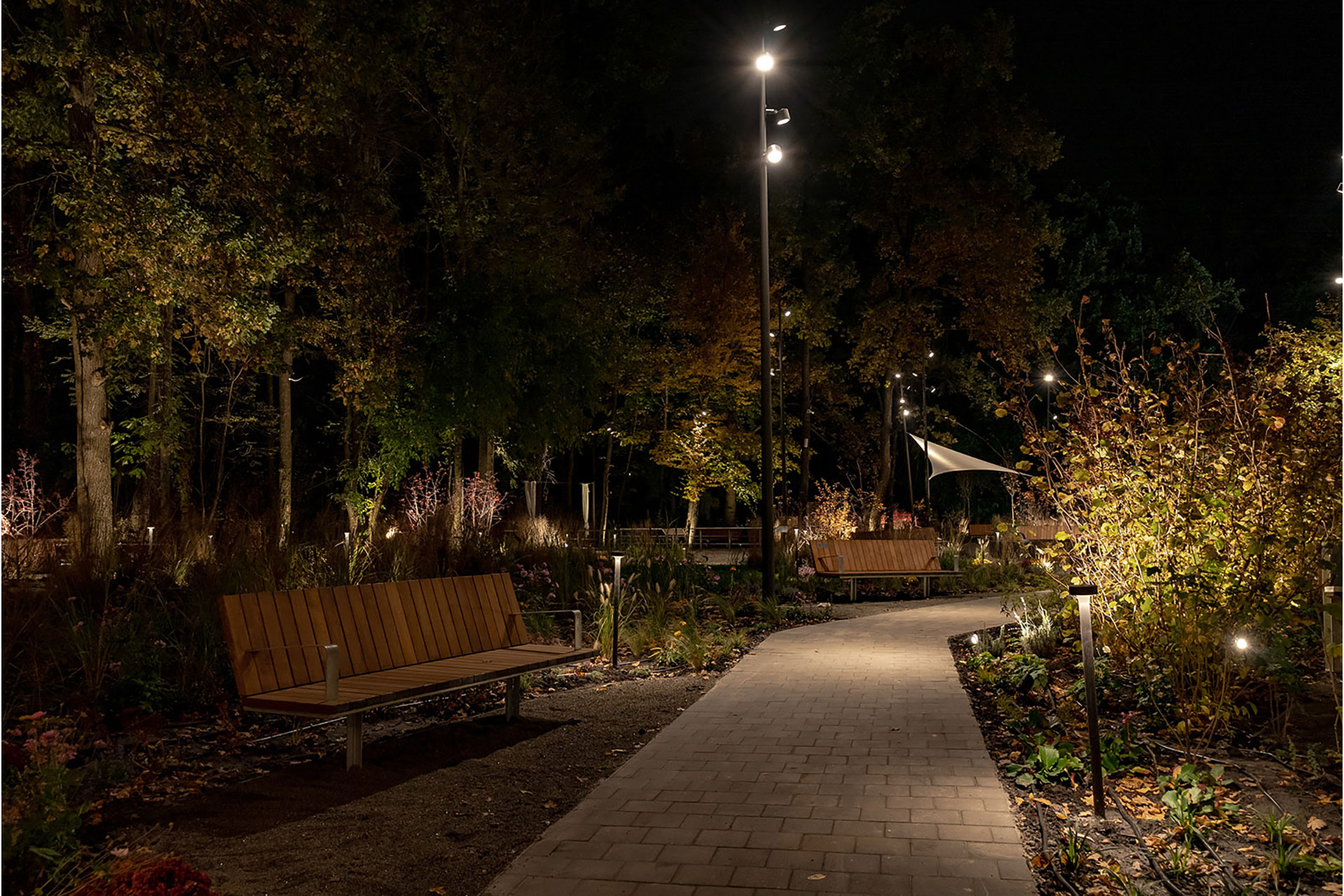
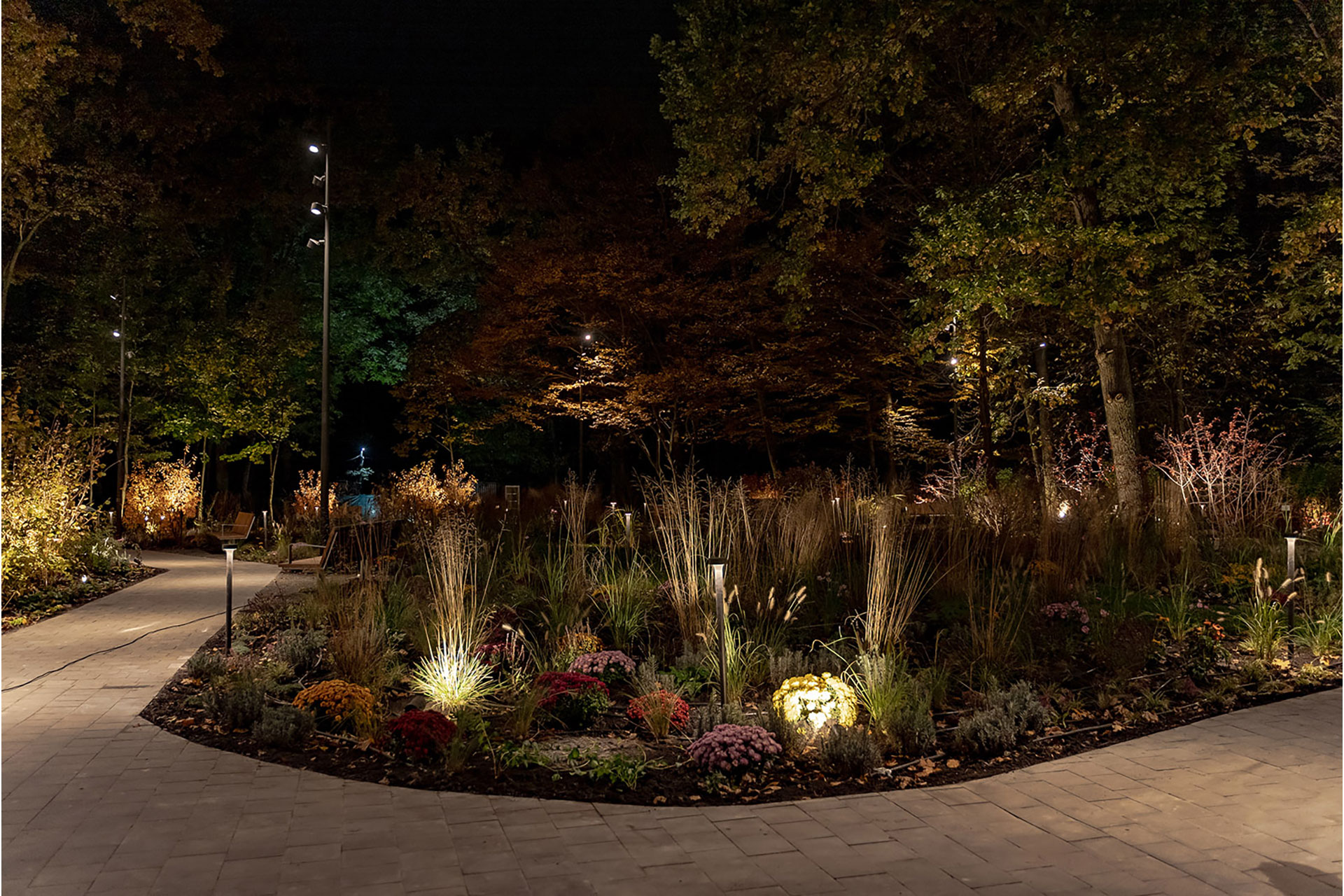
The project carries a clear and meaningful mission: to create a public space that supports the restoration of physical, psychological, and social well-being through interaction with nature, the body, and creativity. The garden is conceived as a carefully orchestrated therapeutic environment, where selected plant species, visual, acoustic, and tactile stimuli coexist with spaces for horticultural, body-based, and art therapy, as well as areas for individual rest and children’s activities.
Beyond its immediate function, the project has an ambitious long-term goal. Following the implementation of the pilot site at VDNH, the concept of therapeutic gardens is intended to be scaled across Ukraine — integrated into hospitals, rehabilitation centers, medical facilities, and public community spaces.
In this context, light acts as a mediator between space and human condition. It amplifies the natural therapeutic qualities of the environment and supports a meditative atmosphere that helps release tension and shift attention from the mind to the body — through breath, sensation, and presence. Lighting here is not decorative; it is a subtle tool for emotional regulation and embodied experience.
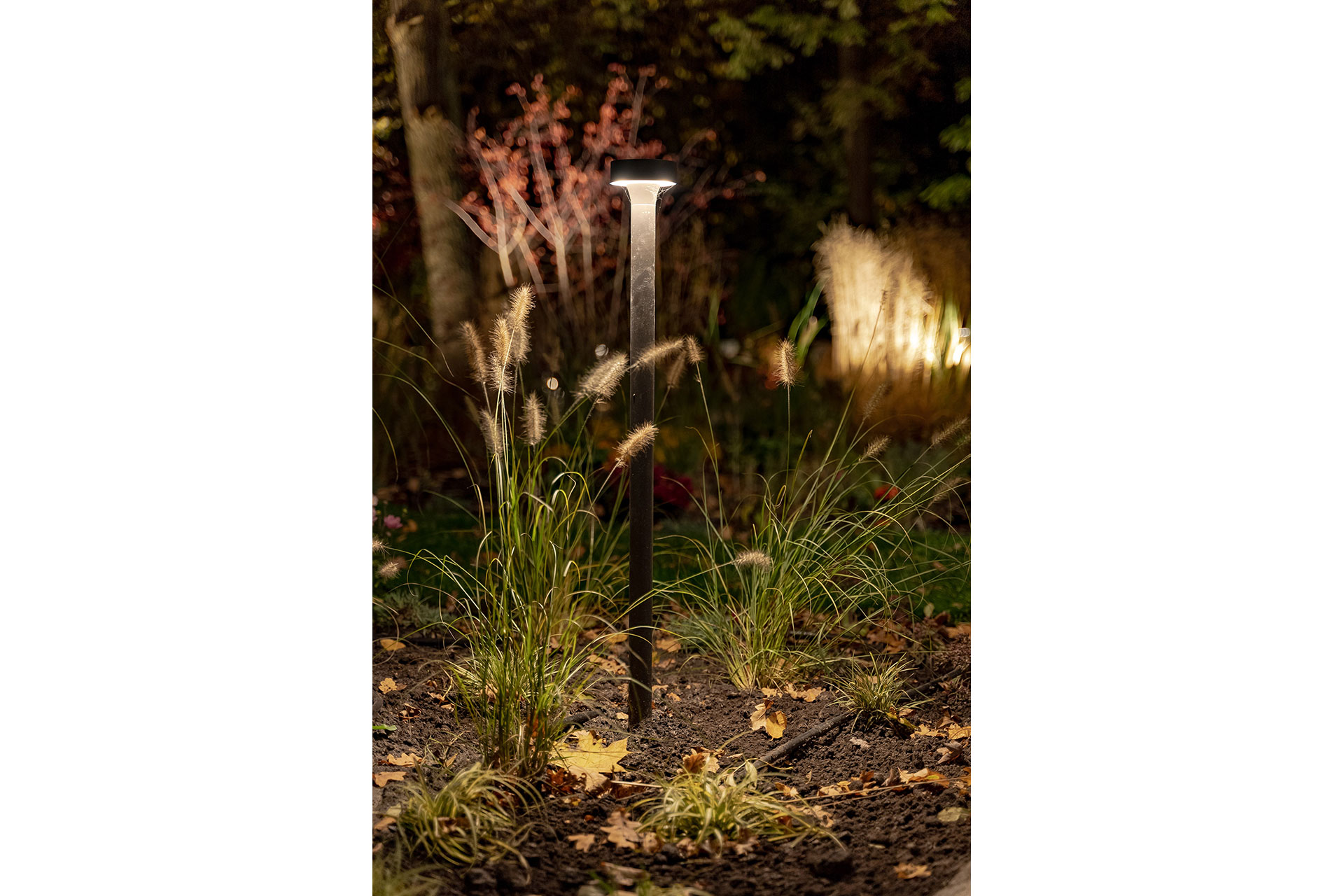
We deliberately selected soft, natural light spectra close to sunset tones, which are known to be most beneficial for emotional and physiological calming. The lighting design is built on a finely tuned interplay of light and shadow cast by trees, the creation of spatial depth and layering, and the use of a wide range of custom luminaires mounted on poles as well as in-ground fixtures. Specially selected LEDs, chosen according to key spectral and performance parameters, allow precise adjustment and long-term adaptability.
The result is a holistic lighting system composed of dozens of optic types, color temperatures, and beam angles. It functions as a therapeutic instrument grounded in a careful balance of science, technology, and nature — seamlessly integrated into the landscape and human experience.
Statement of Impact:
The lighting design transforms the garden into a restorative public environment where light actively supports healing, presence, and social reconnection. By aligning natural rhythms, scientific principles, and custom technology, the project demonstrates how lighting can extend beyond functionality to become a powerful contributor to mental and physical well-being. It establishes a scalable model for therapeutic public spaces, offering a sustainable and human-centered approach to recovery and resilience.