
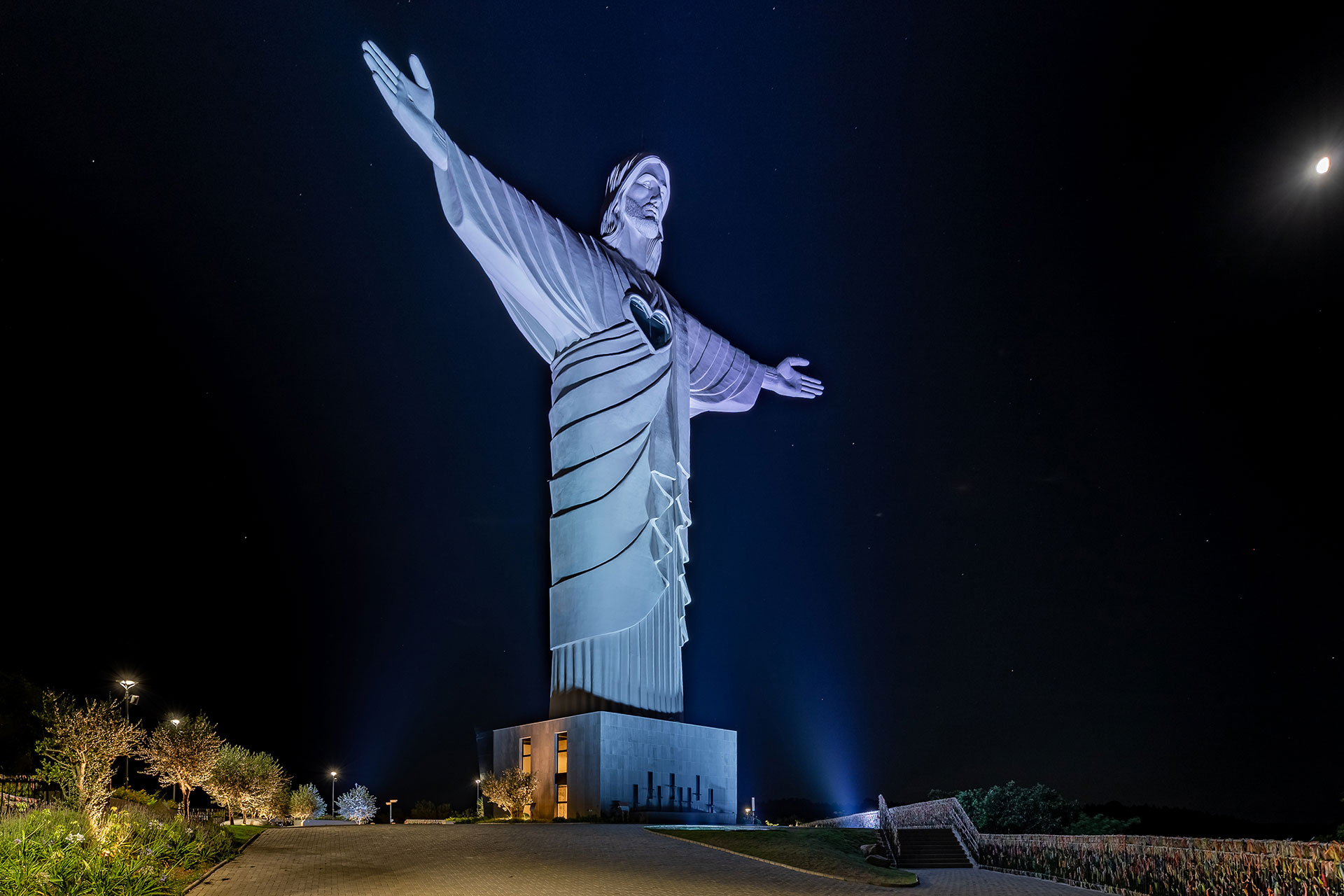
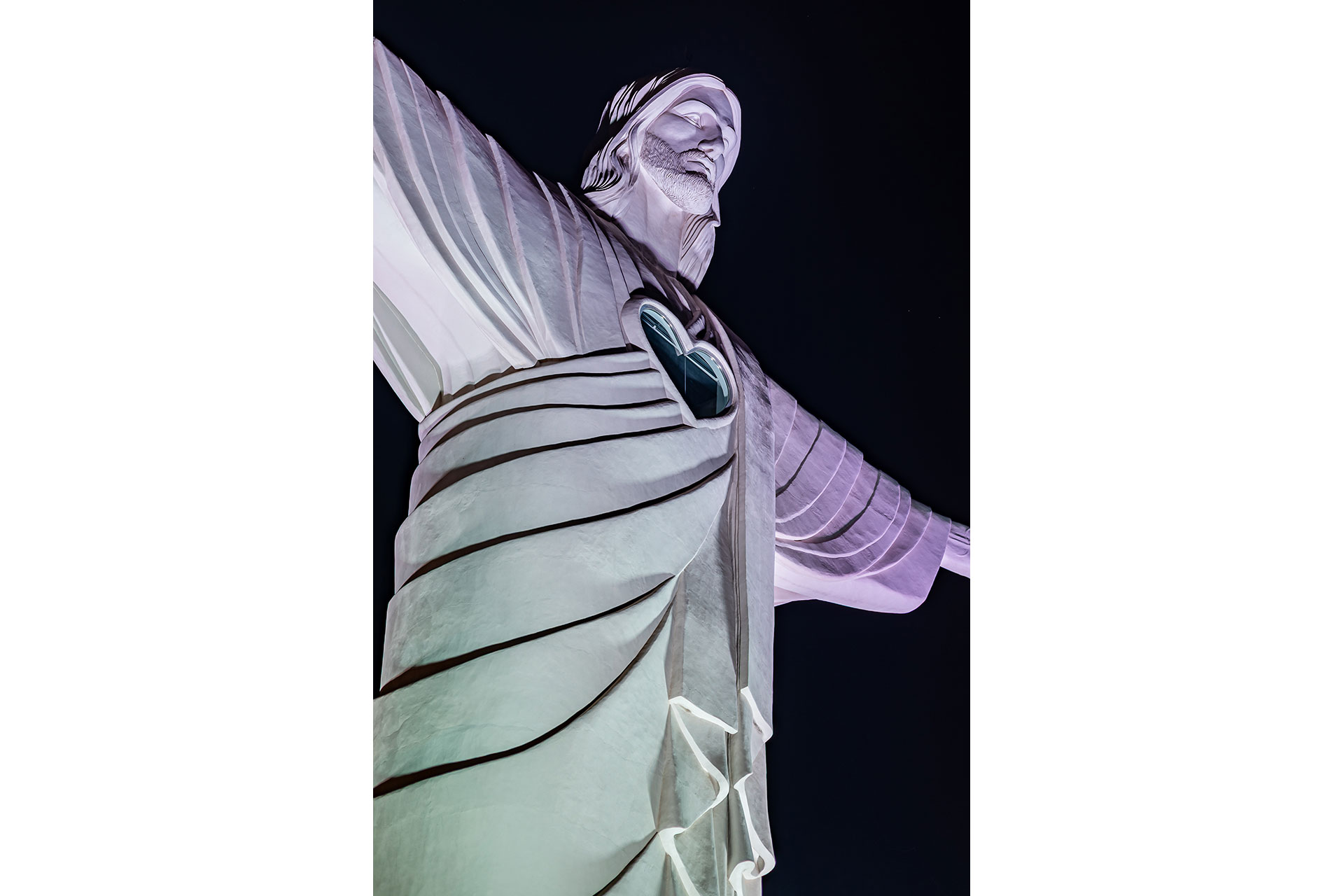
The ‘Cristo Protetor’ of Encantado is not merely a monumental feat of engineering, but a symbol of faith and community unity that has placed the Taquari Valley region on the global tourism map.
Origins and Community Mobilization
The history of the complex began in 2019, born from the vision of local leaders and the then-mayor Adroaldo Conzatti to create a landmark expressing the religious devotion of the people of Encantado. The central intent was twofold: to strengthen spirituality and to drive economic development through religious tourism.
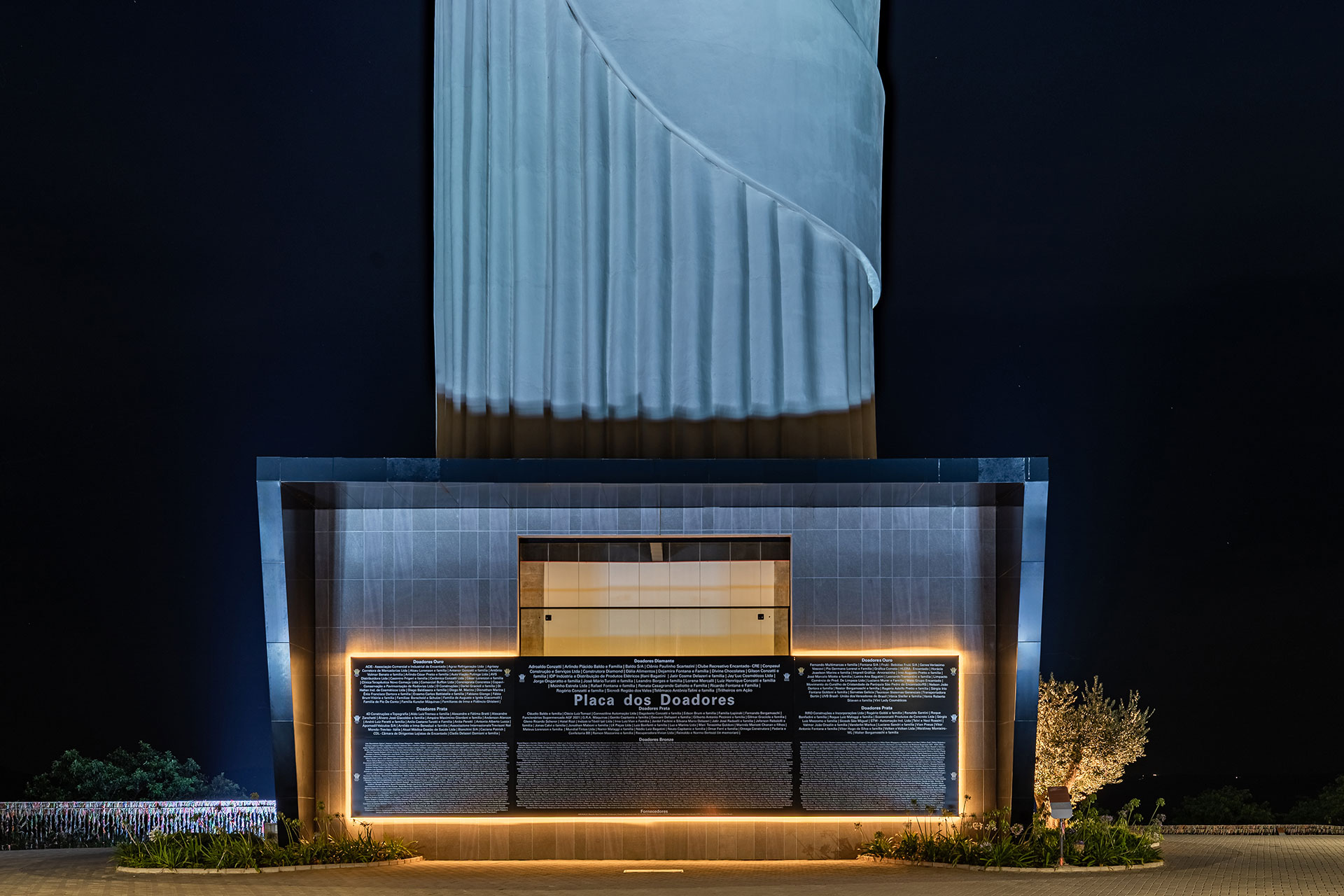
What makes the Christ Protector unique is its financial model. Unlike many large-scale projects, no public funds were used. The construction was managed by the Association of the Friends of Christ (AAC Cristo), a non-profit entity that organized fundraising exclusively through donations from entrepreneurs and the community, as well as ticket sales for guided tours during the works. This collective effort demonstrated the power of regional partnership.
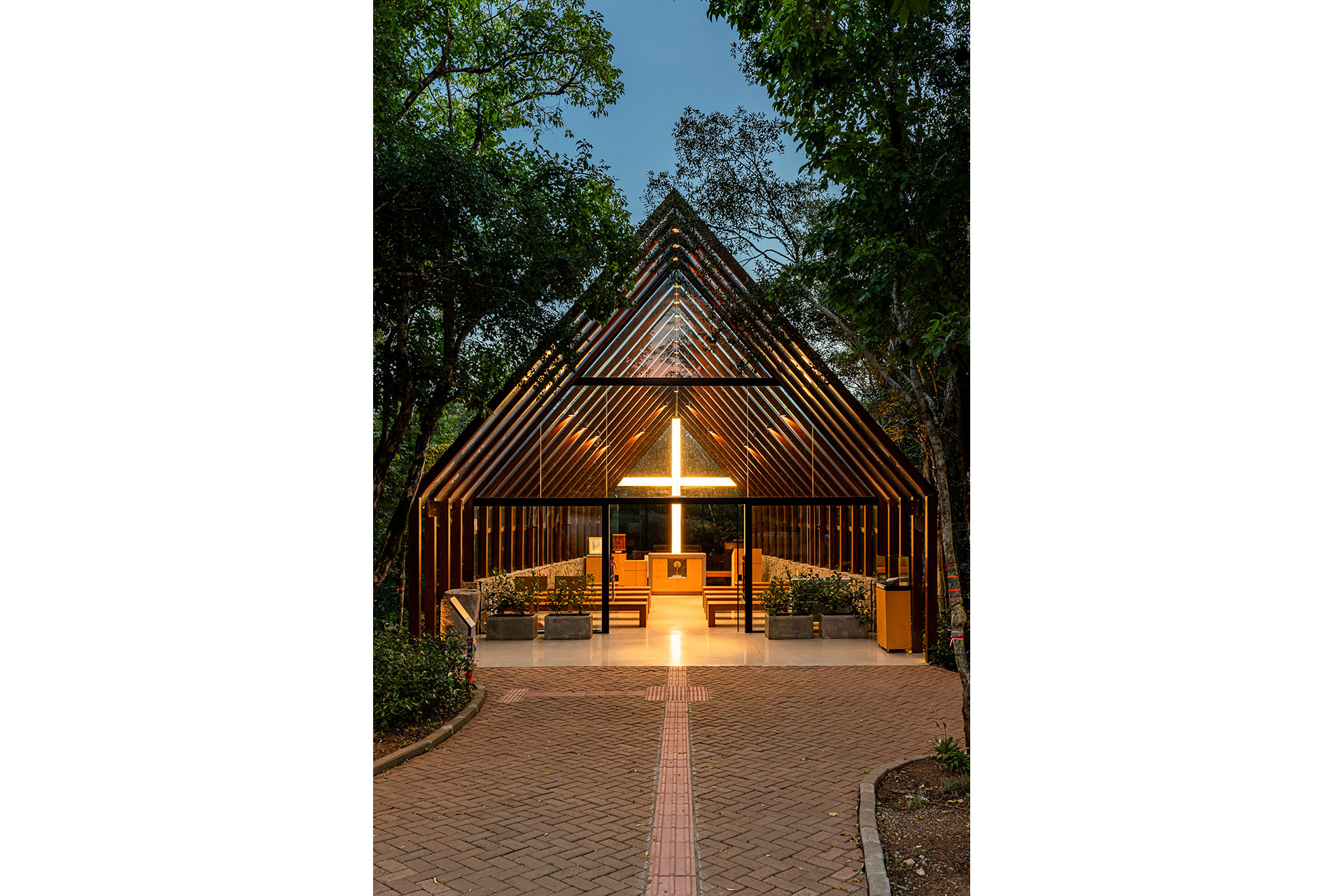
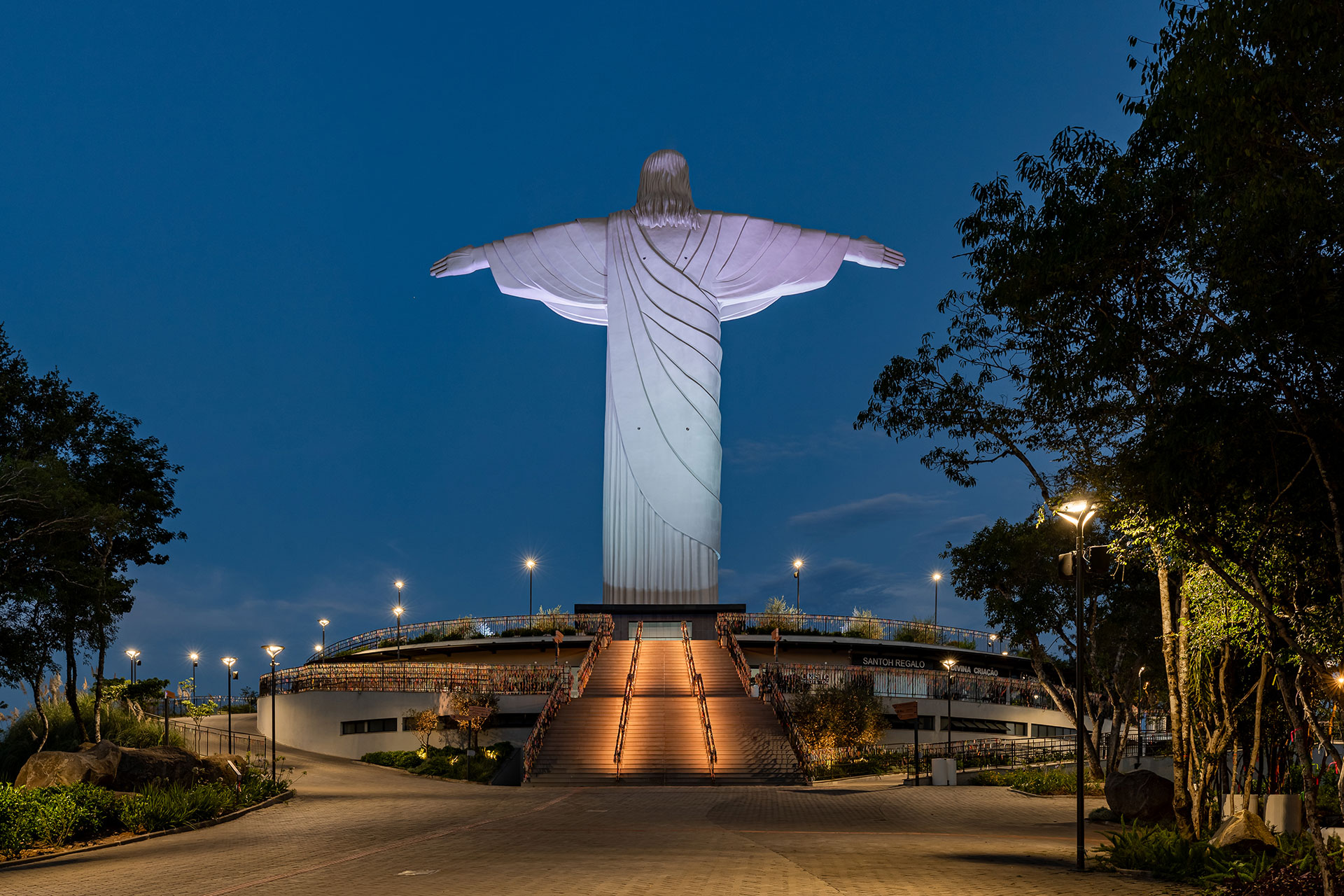
The architectural project, designed by the firm Livas Arquitetura, was conceived so that the statue—standing 43.5 metres tall (including the pedestal)—would be the heart of a harmonious complex.
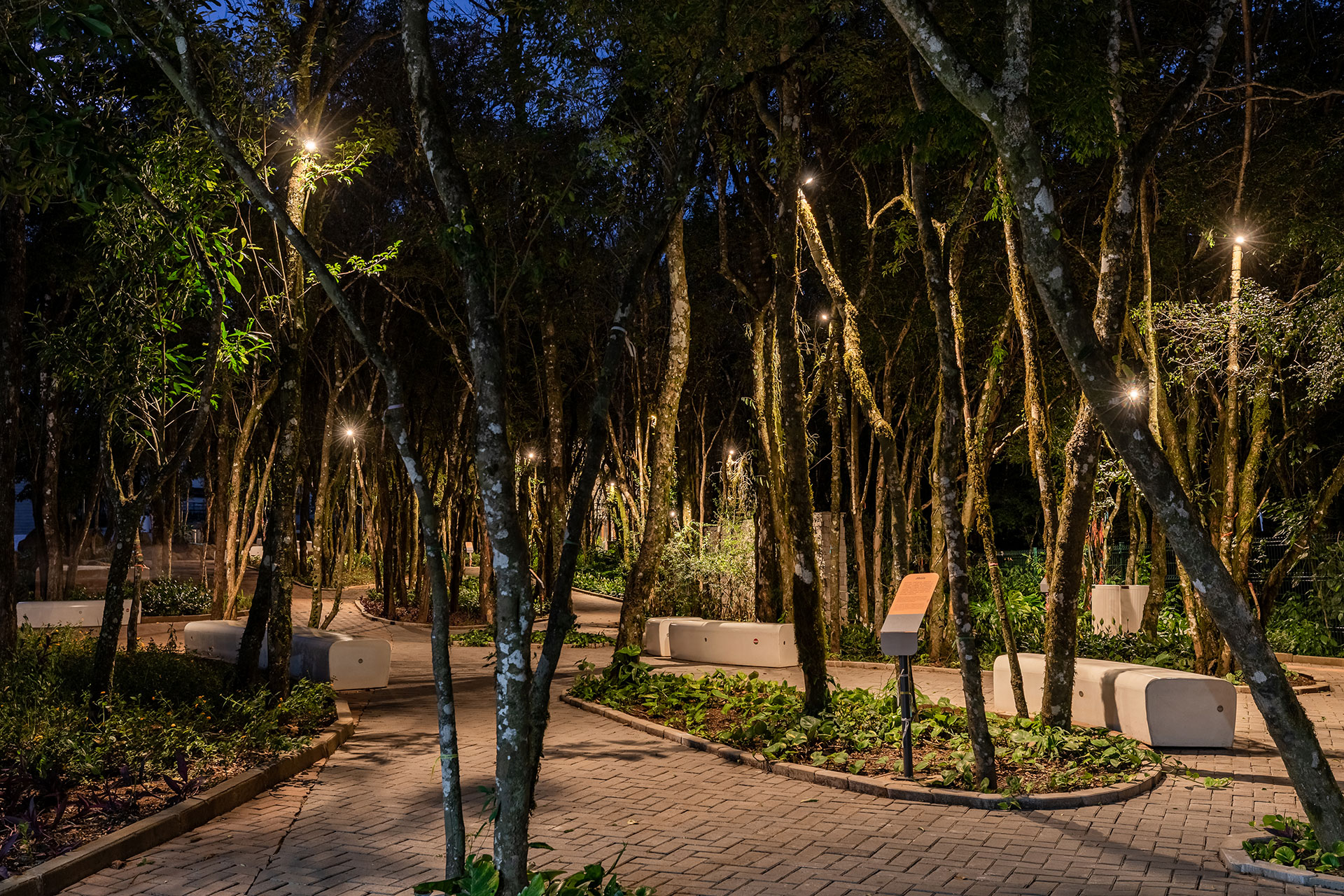
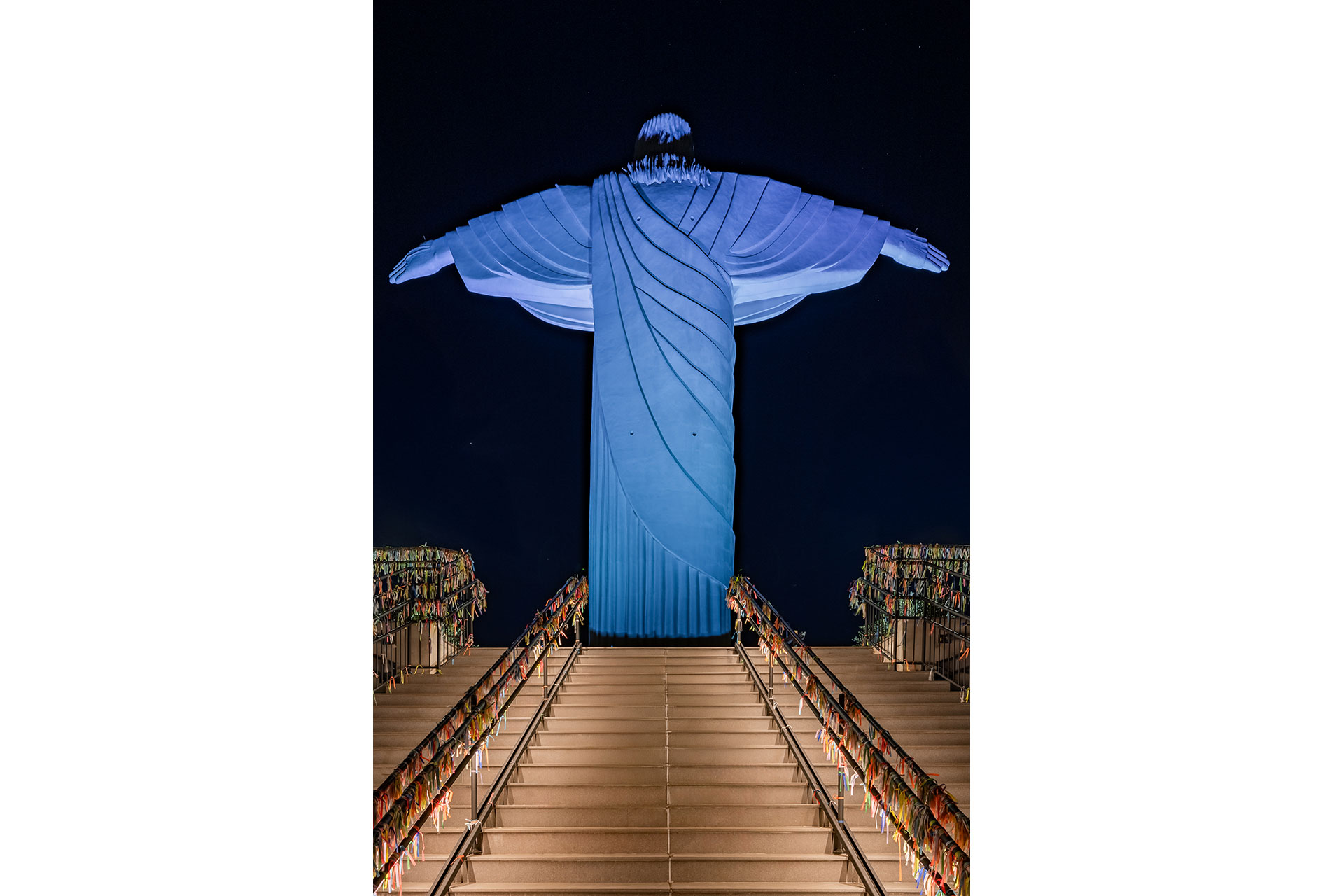
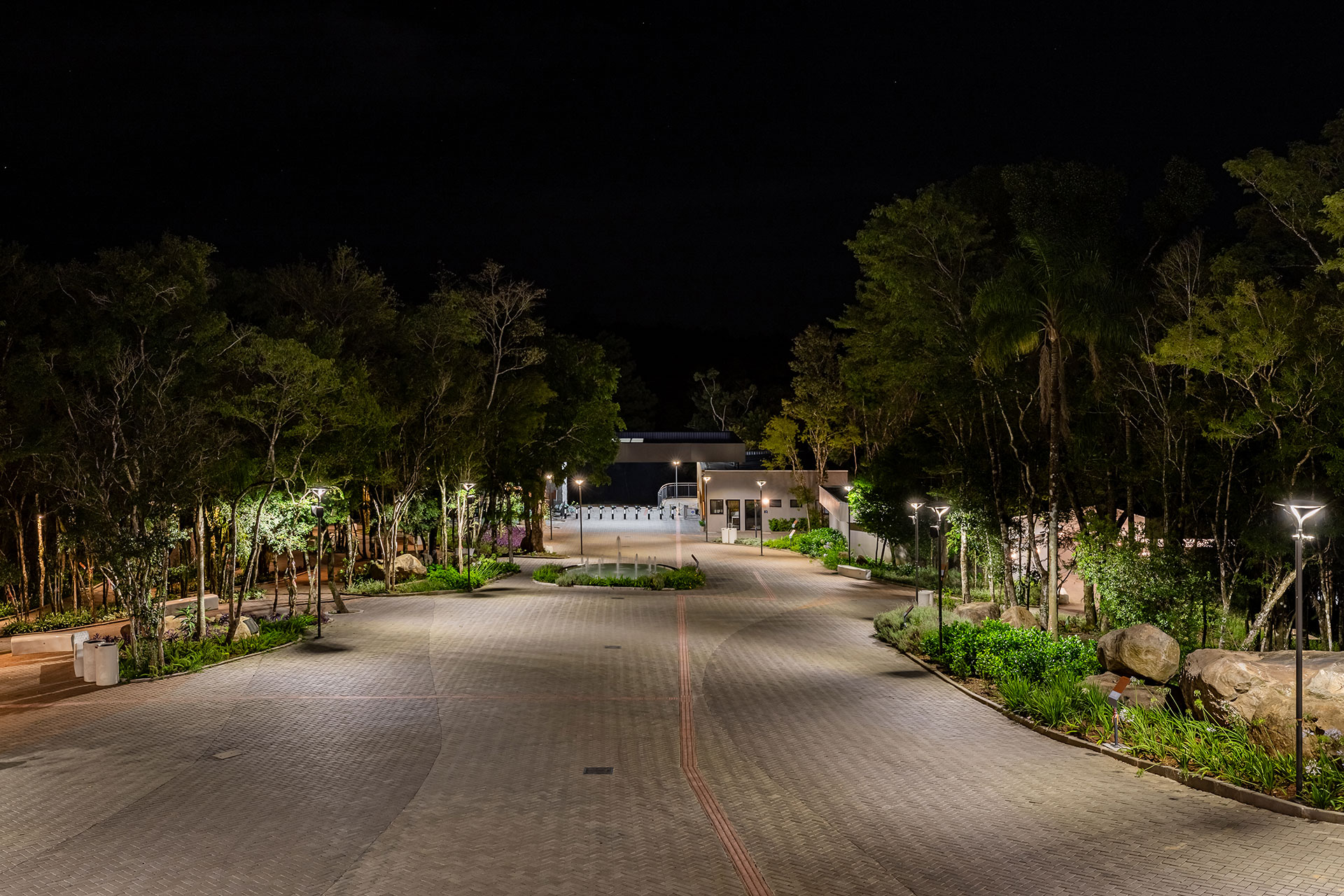
Sculpted by Genesio Gomes Moura and his son Markus Moura, the statue surpasses Rio de Janeiro’s Christ the Redeemer in height. The complex was designed for an immersive experience:
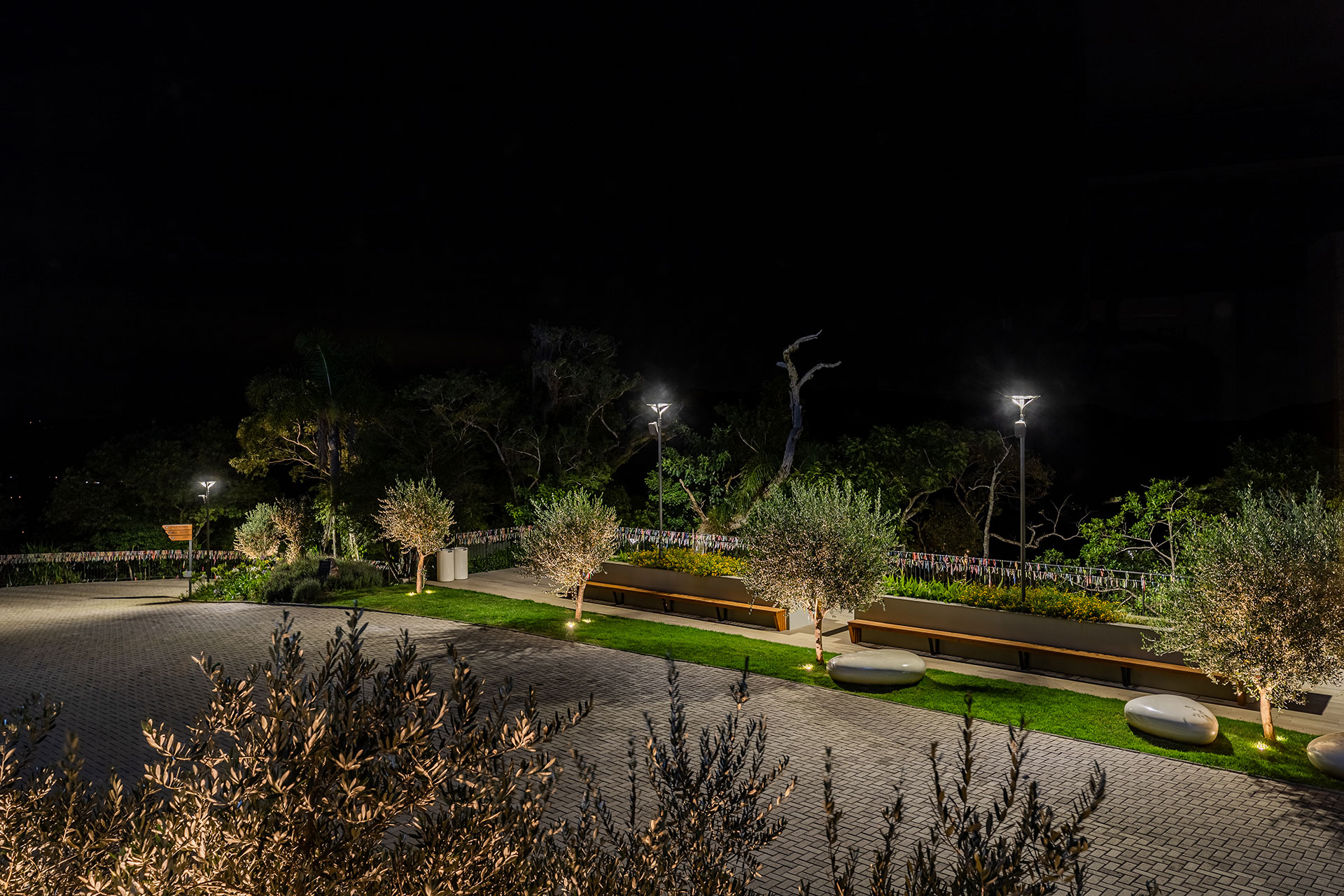
The lighting of the complex is a spectacle in itself, developed with 100% LED technology, ensuring energy efficiency and aesthetic precision. The concept was structured so that the statue remains the absolute protagonist of the horizon, visible from kilometers away, without overshadowing the visitor’s on-site experience.
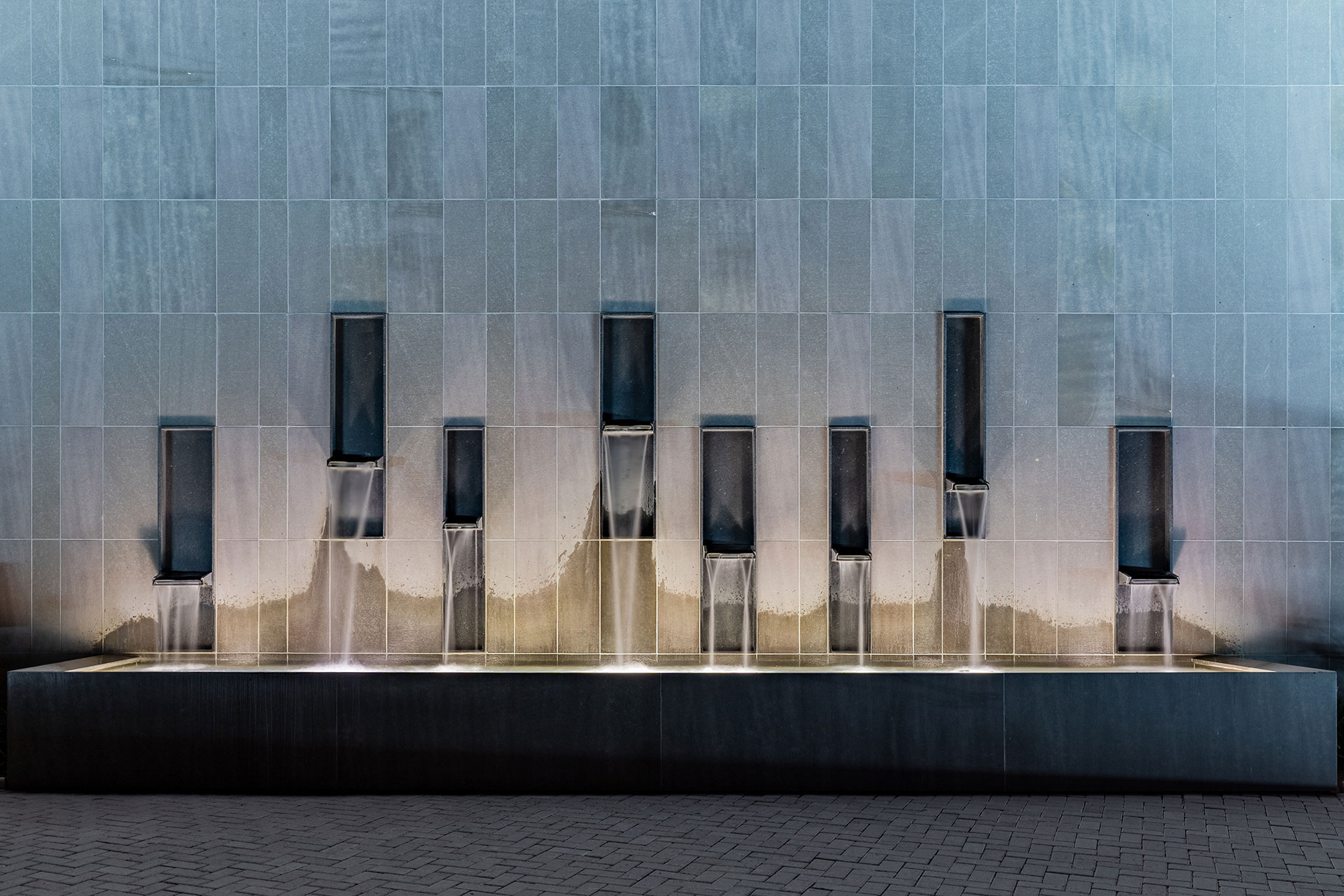
The lighting project highlights:
The final result is a work that unites the grandeur of engineering with the delicacy of religious sentiment, illuminating not only the hillside but the future of the entire region.