
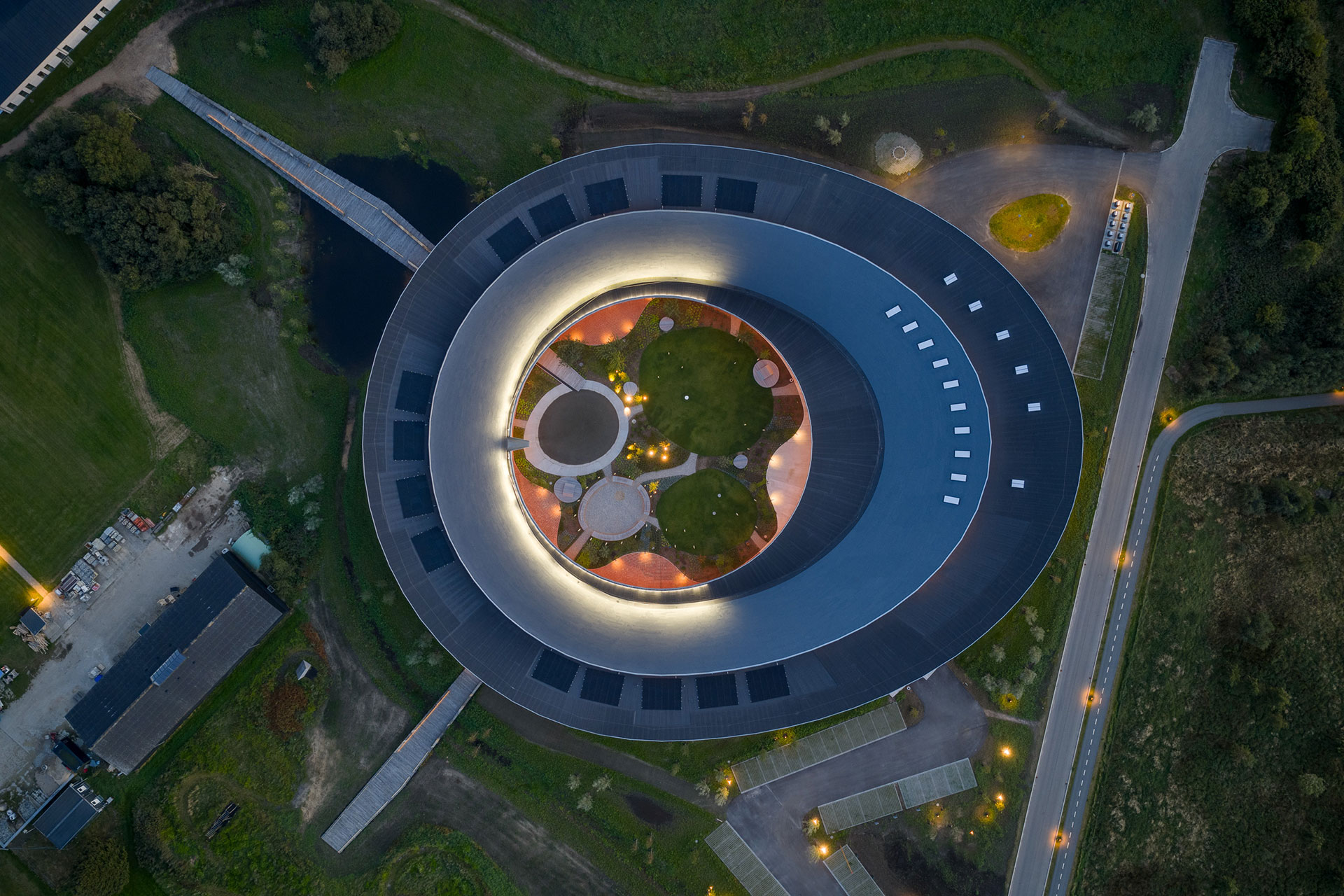
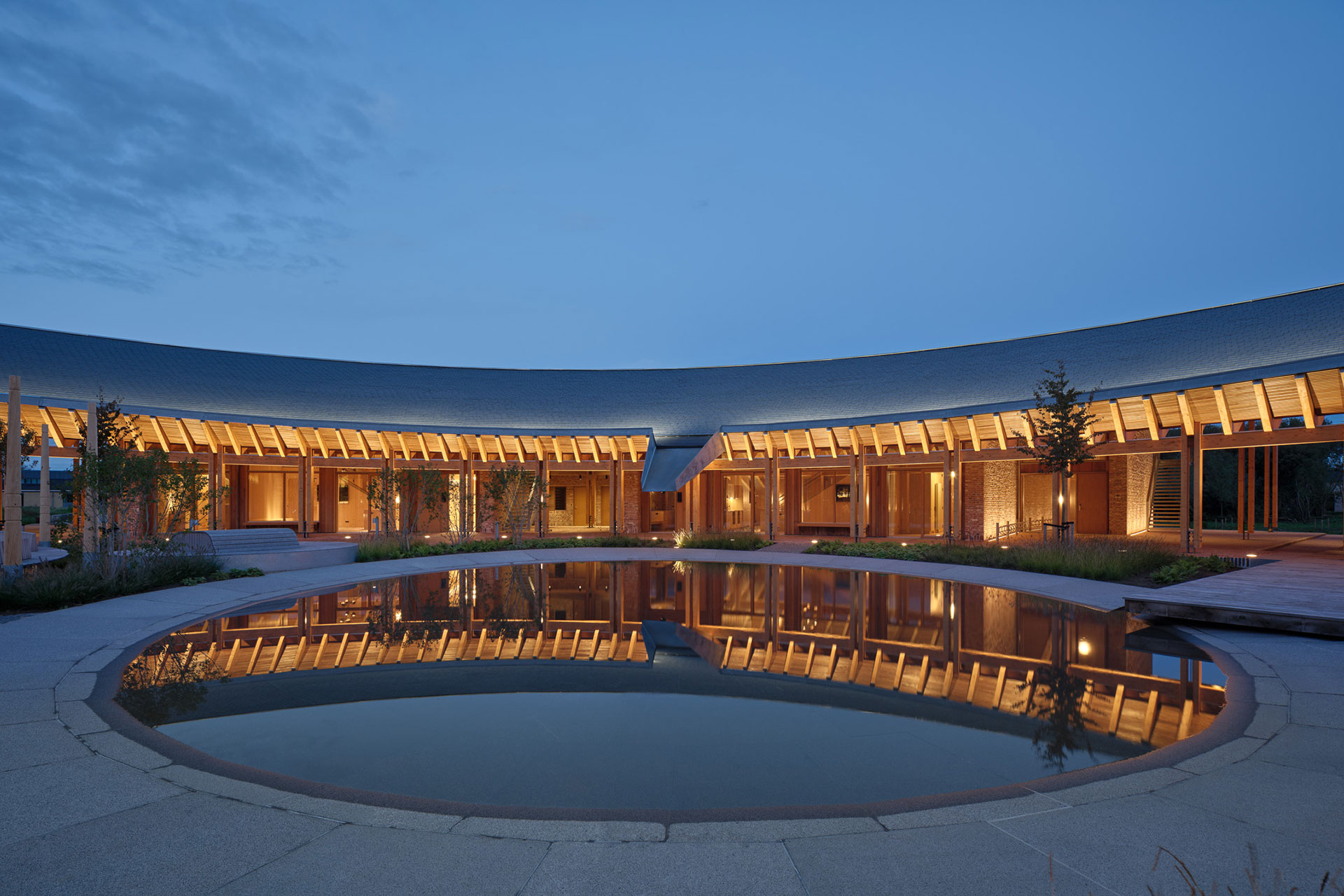

Herning Craft College is a residential community for young craftspeople and vocational students. The architecture, designed by Dorte Mandrup, is defined by robust brick volumes, pitched roofs and exposed structural elements.
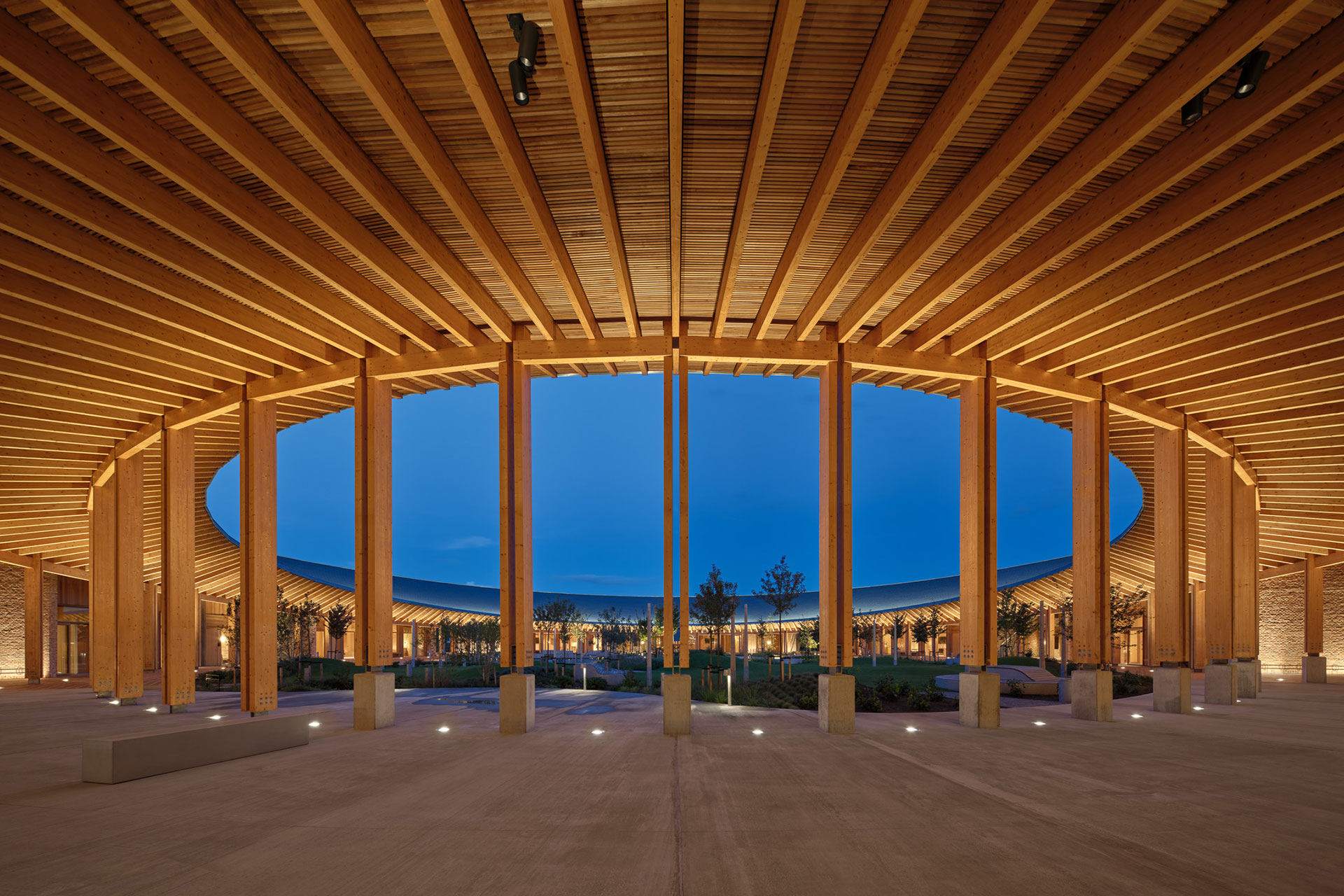
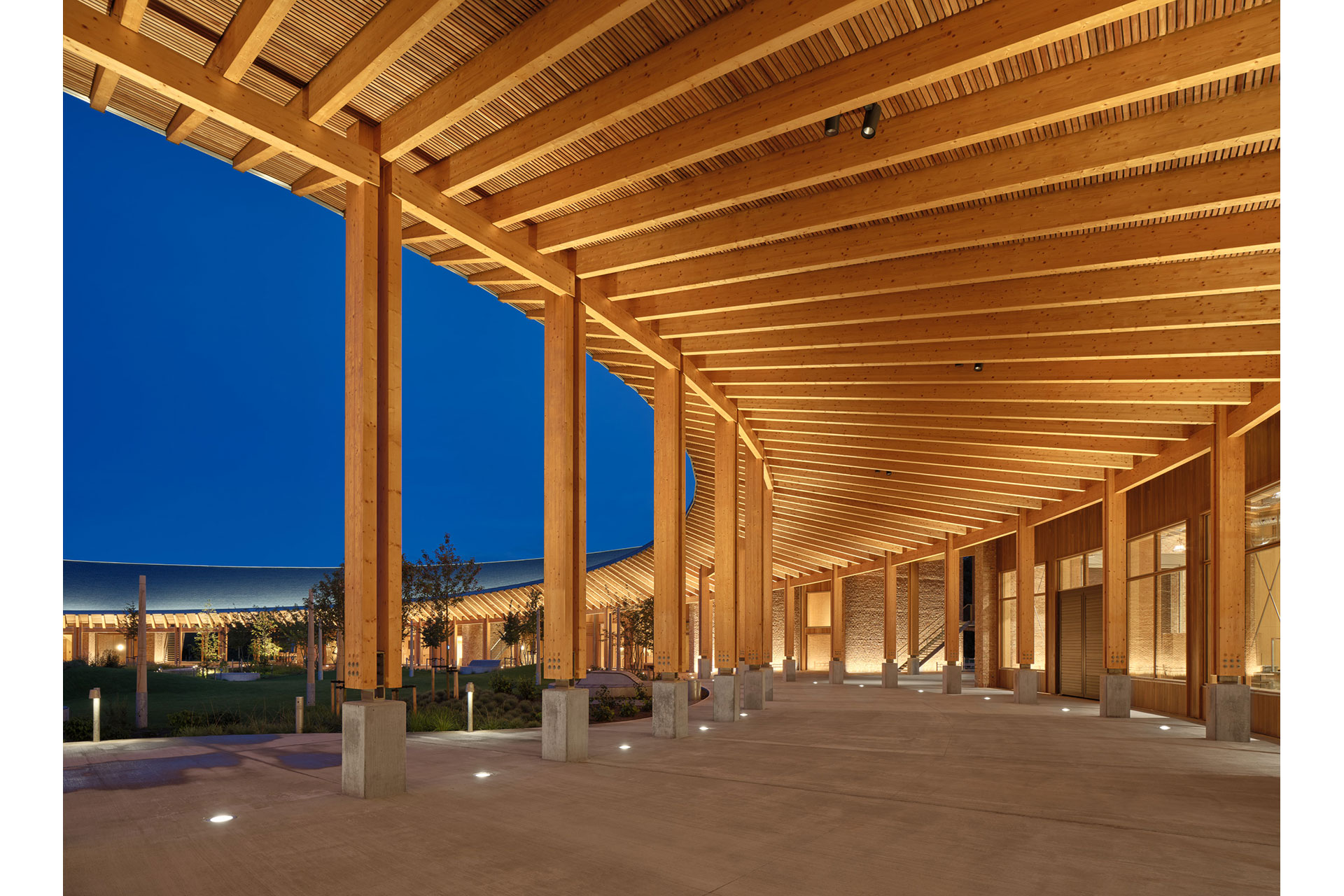
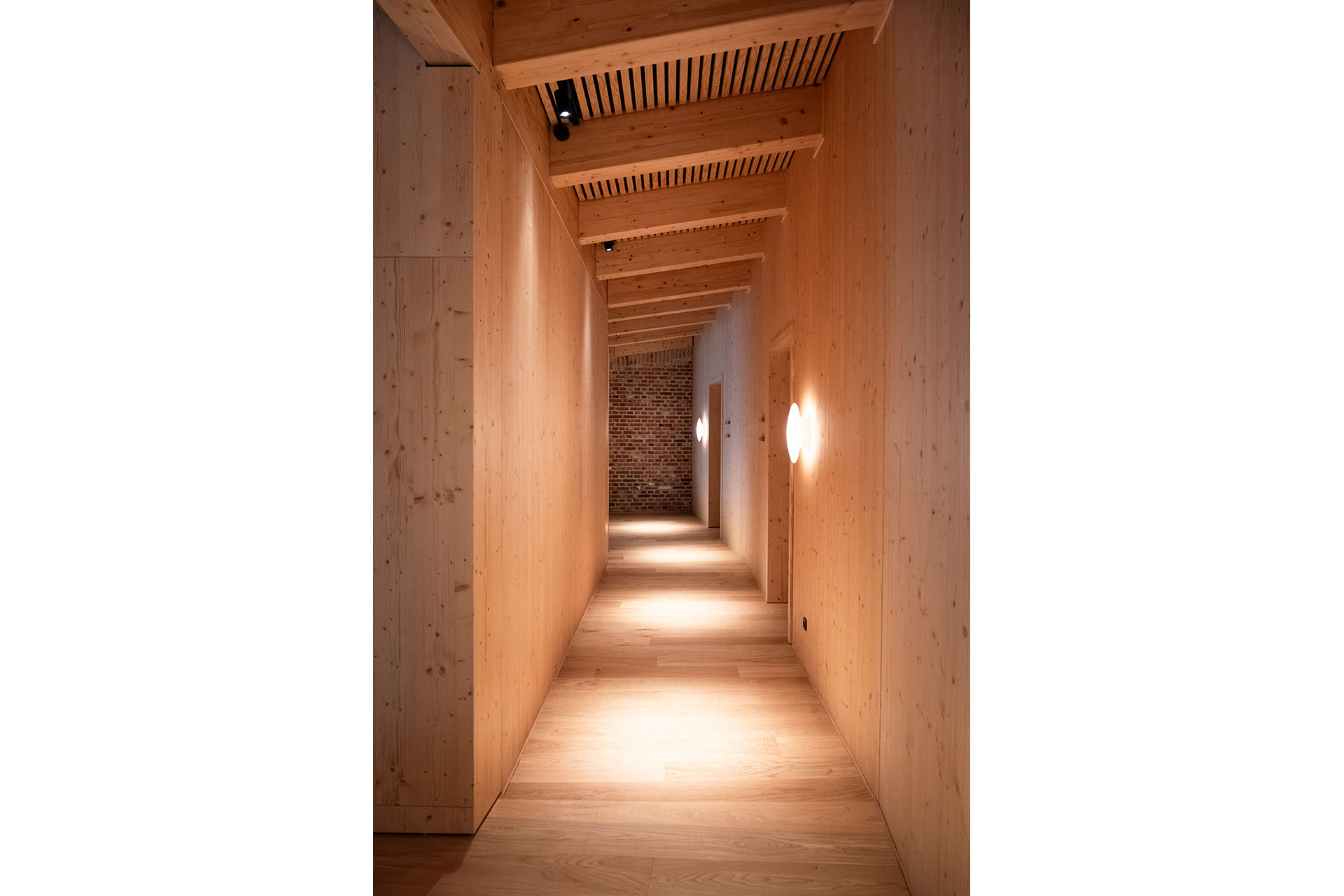
The residents are apprentices, builders and makers at the beginning of their professional journey. The lighting therefore engages the building vertically as much as horizontally. Light is directed upward along brick and timber surfaces, revealing height, structure and roof geometry. Instead of compressing movement through circulation areas, illumination expands perception — inviting residents to raise their gaze toward the volume above. In a building defined by its exposed construction and generous roof form, this upward orientation reinforces spatial awareness and draws attention to the exposed craftsmanship of the building itself.
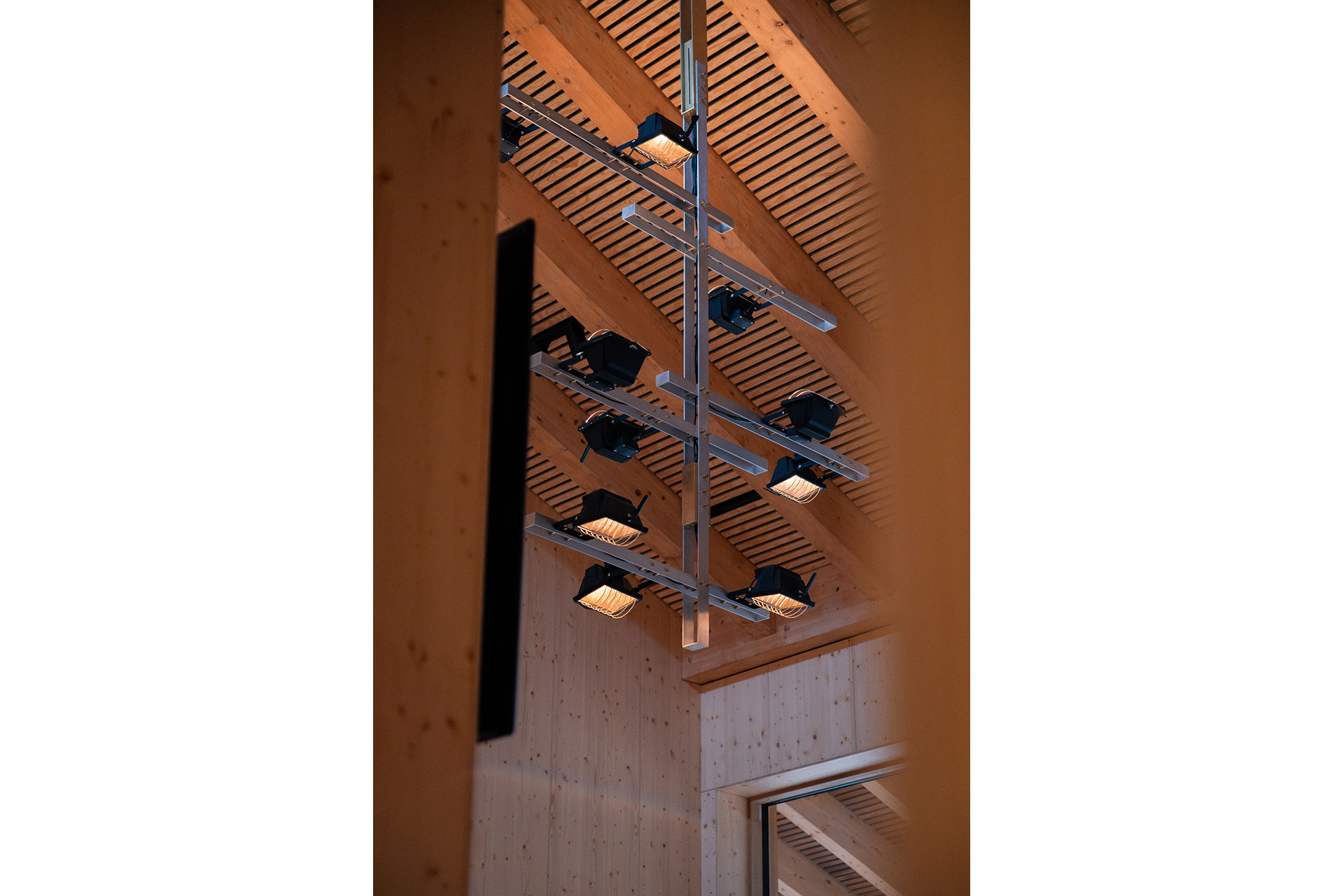
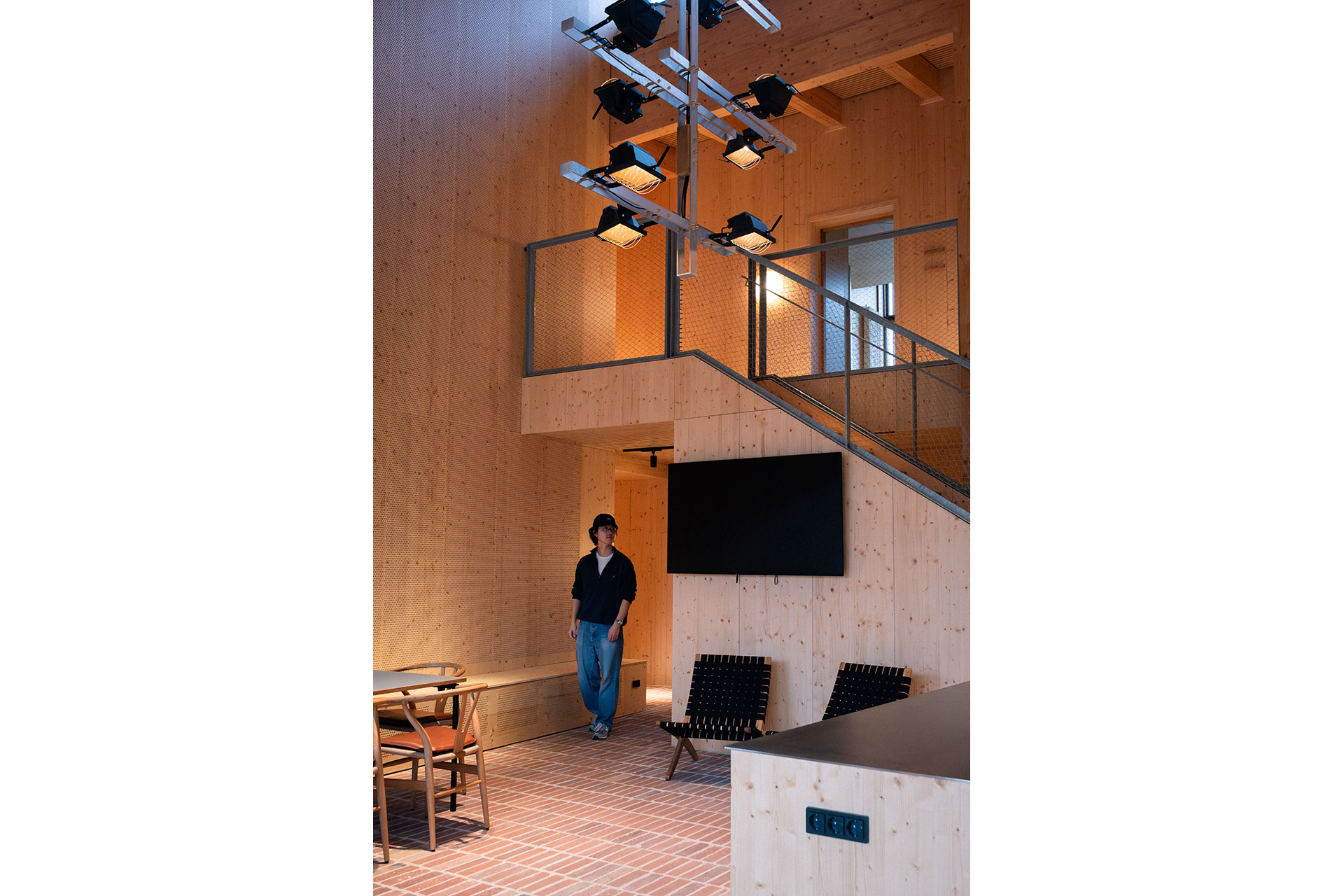
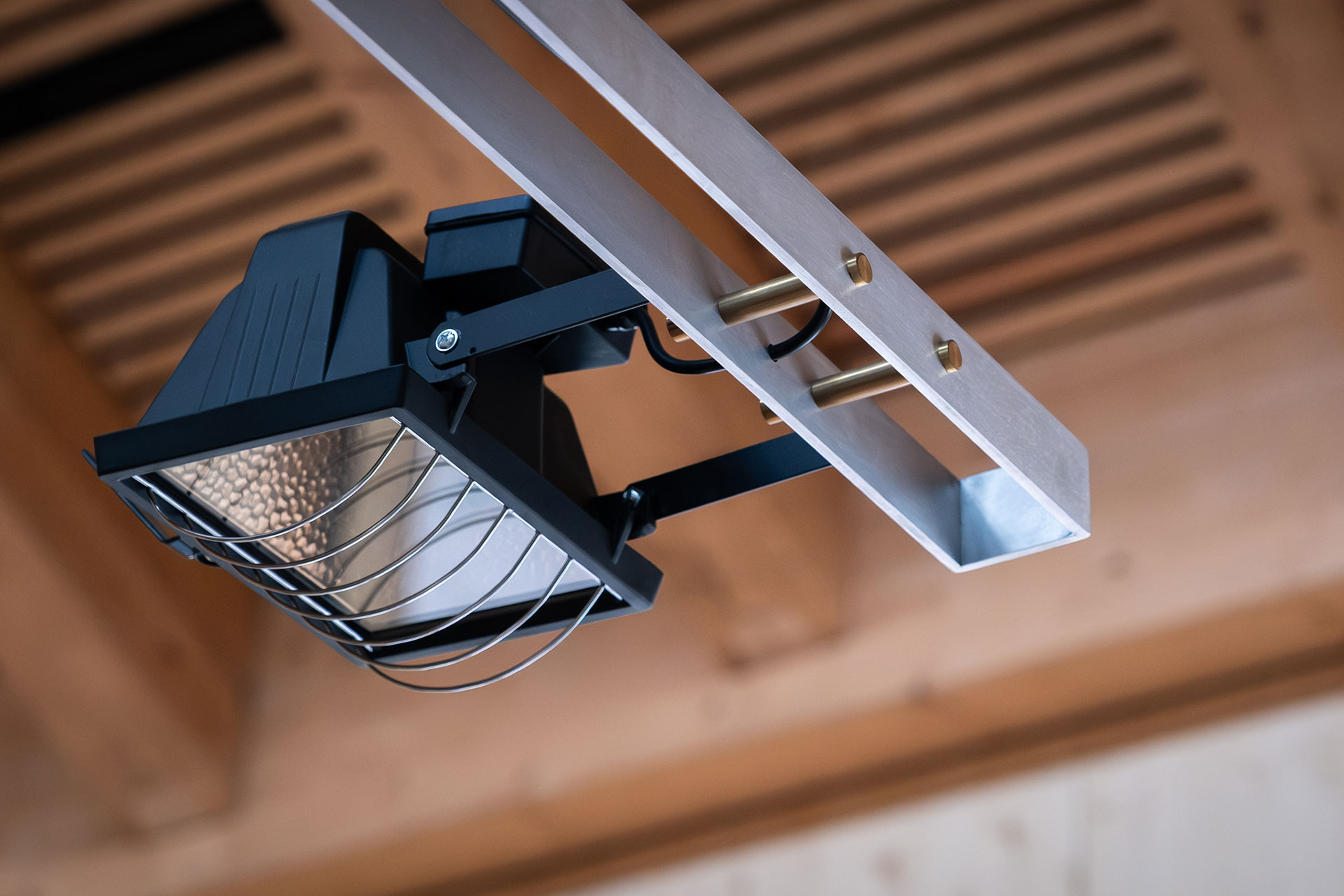
In the shared kitchens, a bespoke chandelier was developed specifically for the project. Its design draws inspiration from the utilitarian work lights commonly found on construction sites — a constant companion in the daily practice of craft. Reinterpreted in a permanent and architecturally integrated form, the fixture transforms a standard work lamp into a considered design element. It reflects the architecture of the college itself — robust, honest and purposeful — while playing with the notion of the work lamp not merely as a tool, but as a beautiful object.
This gesture mirrors the broader ambition of the project: to provide resident apprentices — the people who will build our future homes — with thoughtful, durable and well-crafted design in their own living environment. The chandelier introduces warmth and atmosphere into the communal kitchens, embedding professional identity and connectedness to the craft.
The chandelier is controlled through an open Casambi system, giving resident apprentices the opportunity to play with light and engage in the craft of light programming. Rather than fixing a single atmosphere, residents can shape the communal kitchen themselves — creating light scenes that reflect their own community.
Durability and longevity were essential parameters. The building is intended to serve generations of students; the lighting systems are selected for robustness, efficiency and ease of maintenance, aligning with both economic and social sustainability. This long-term approach reinforces the project’s ambition: to create a calm and precise lighting environment that strengthens awareness of place and community. By reinforcing material logic and spatial clarity, light supports residents in orienting themselves — physically, socially and professionally — as they step into their future craft.