
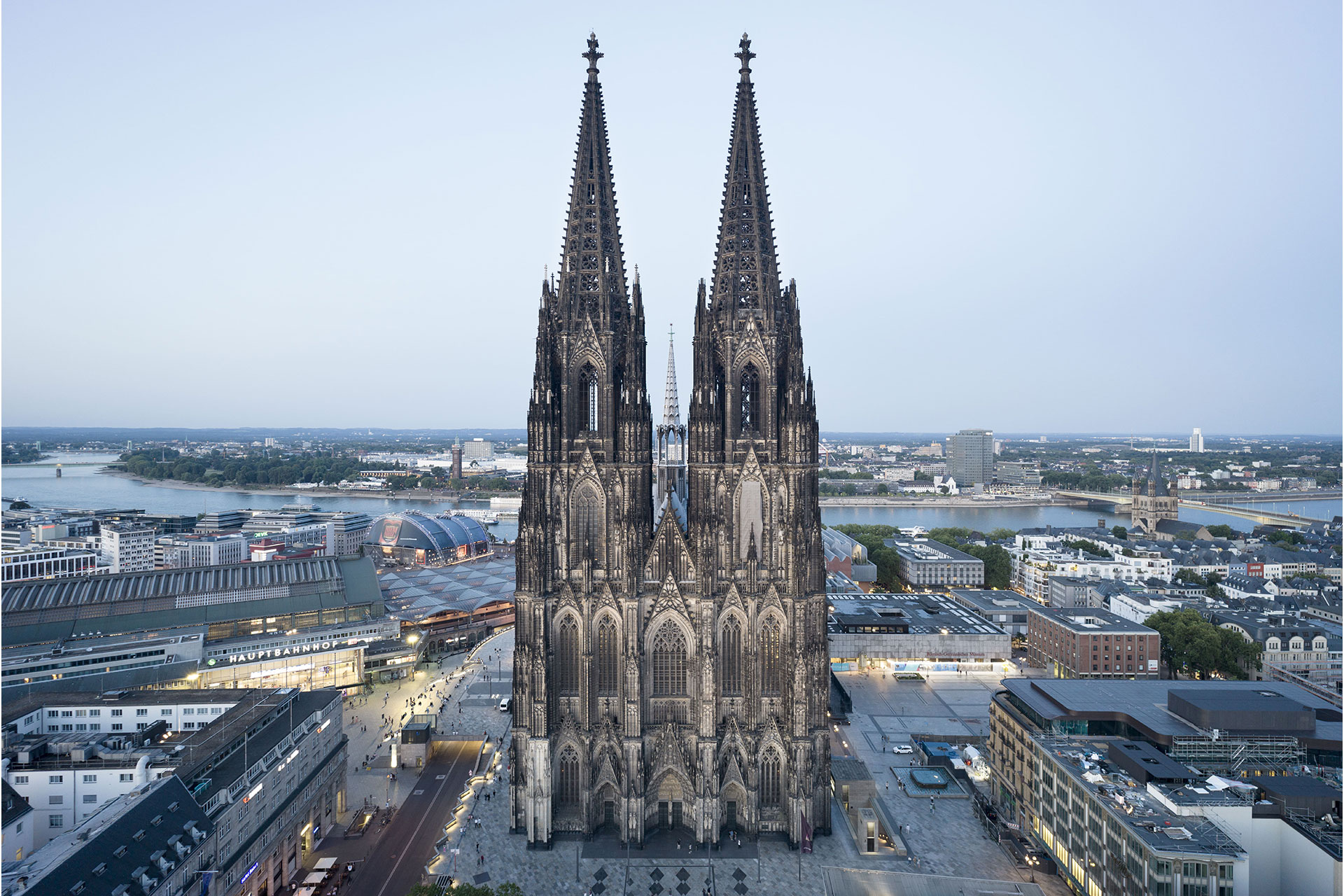
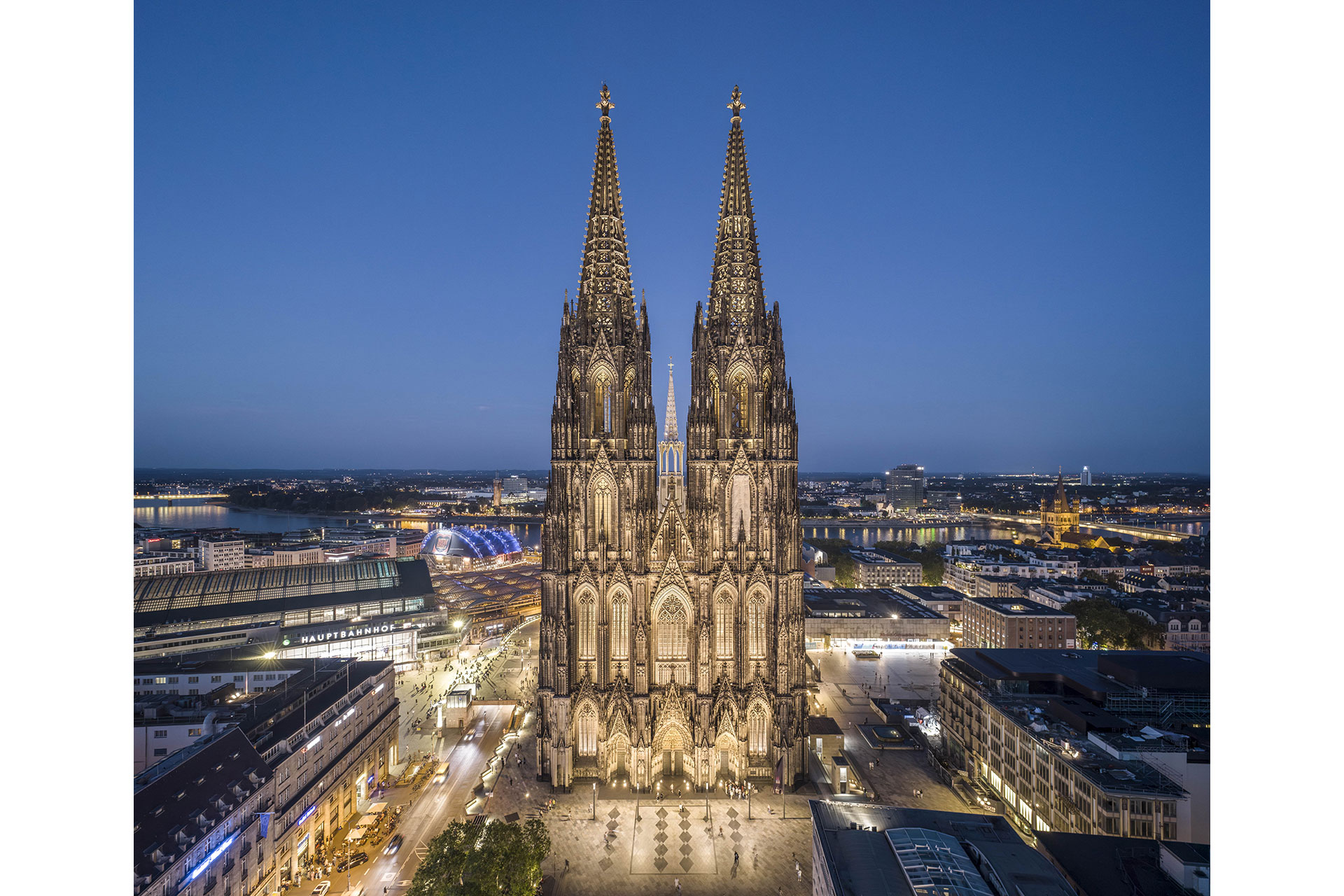
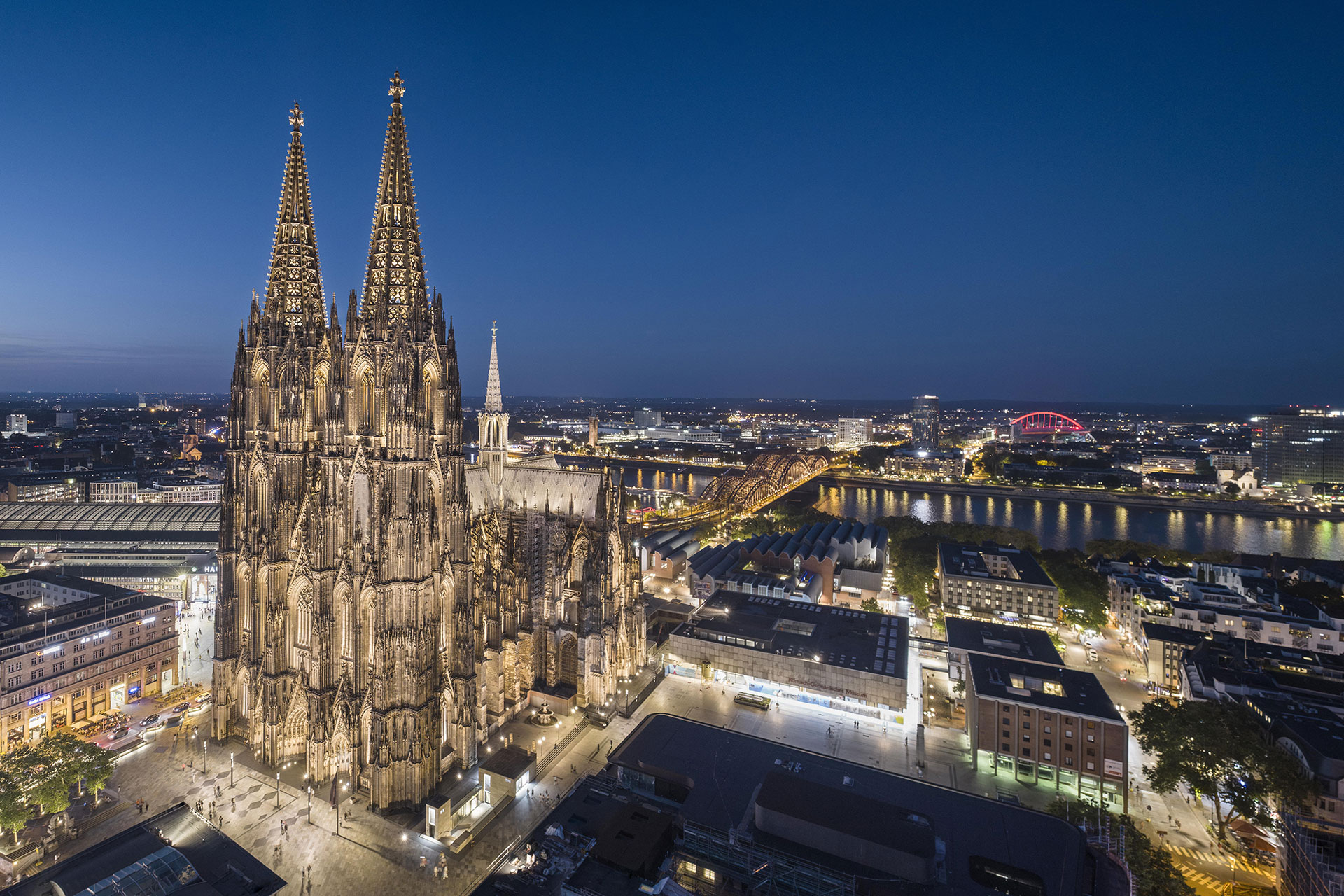
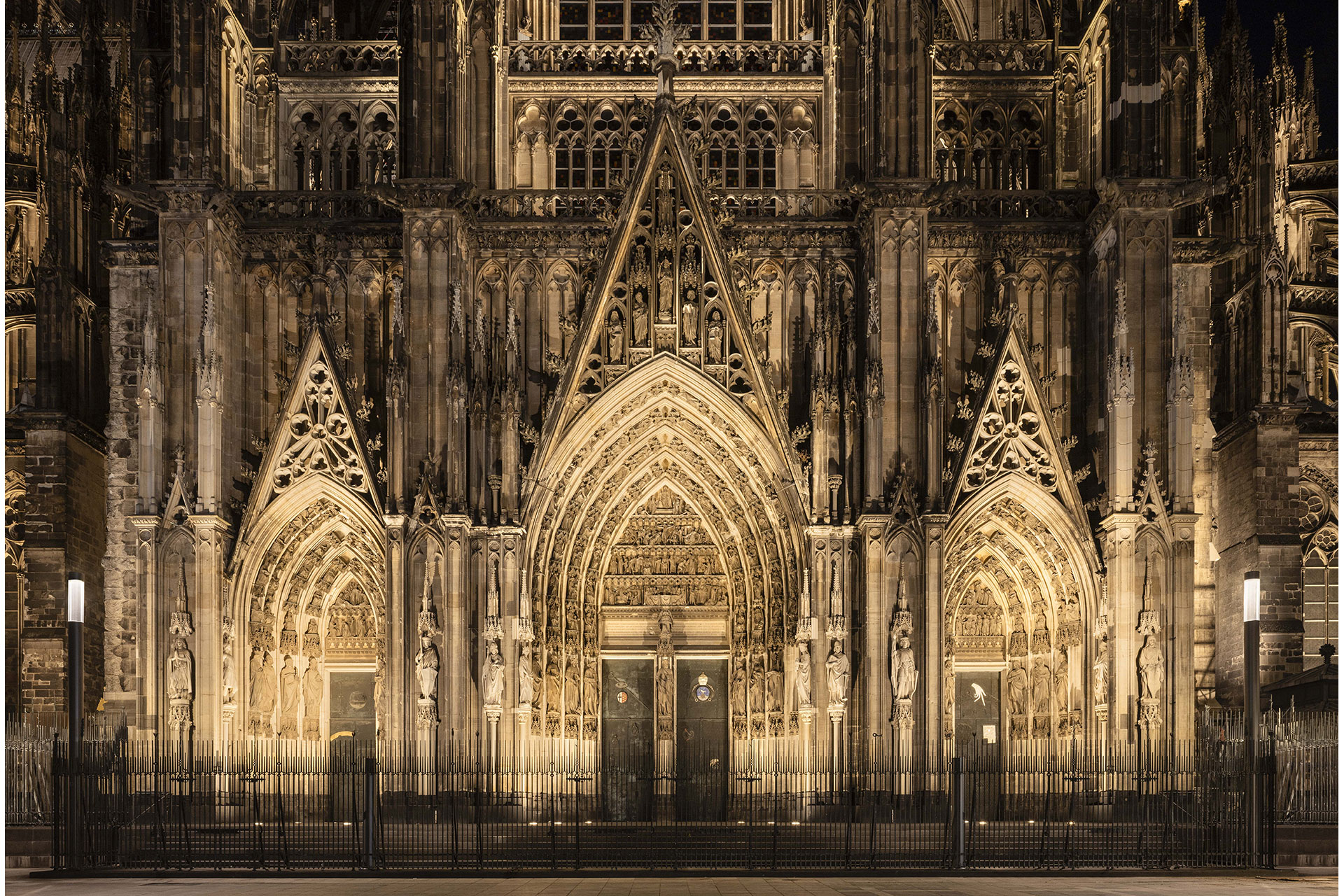
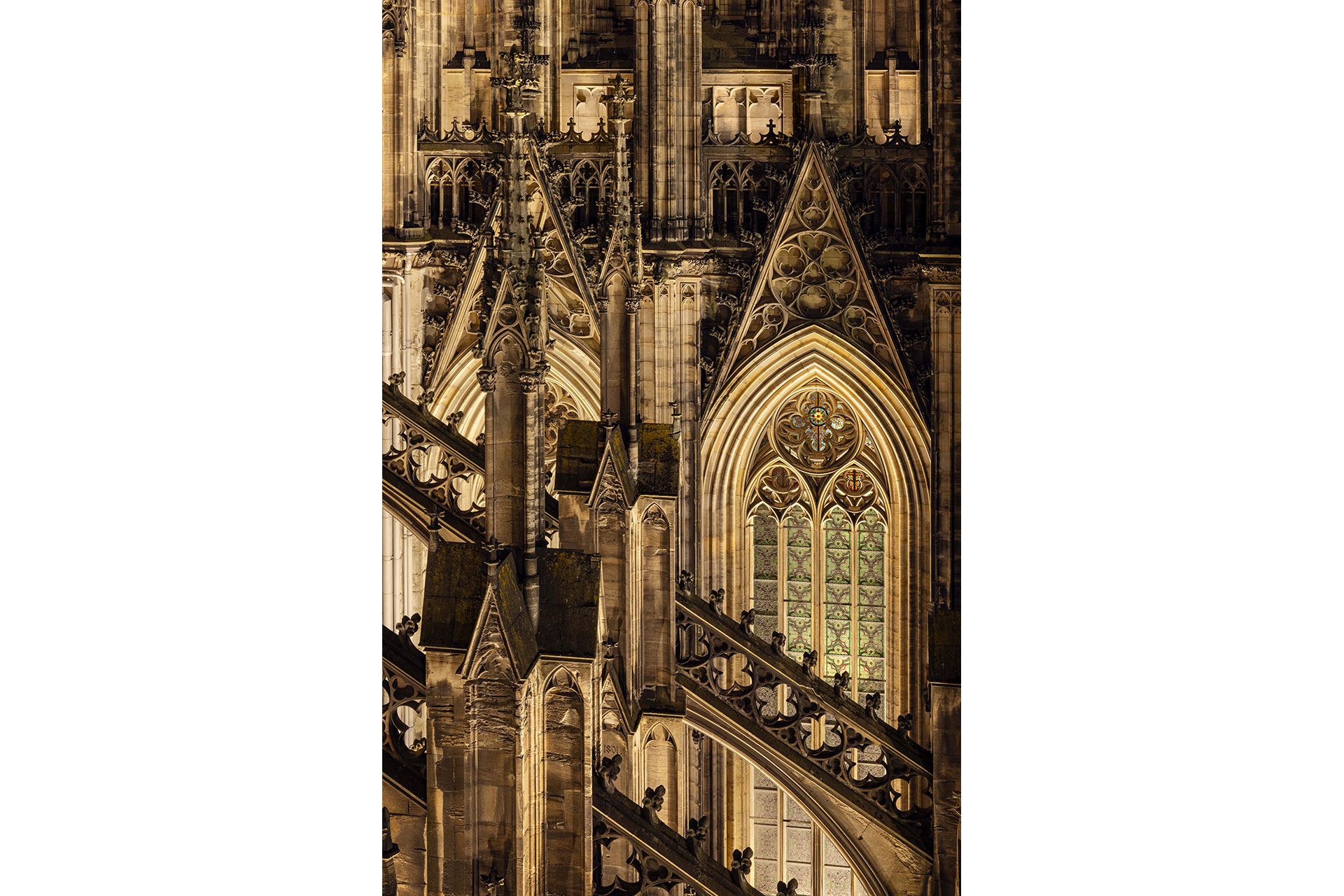
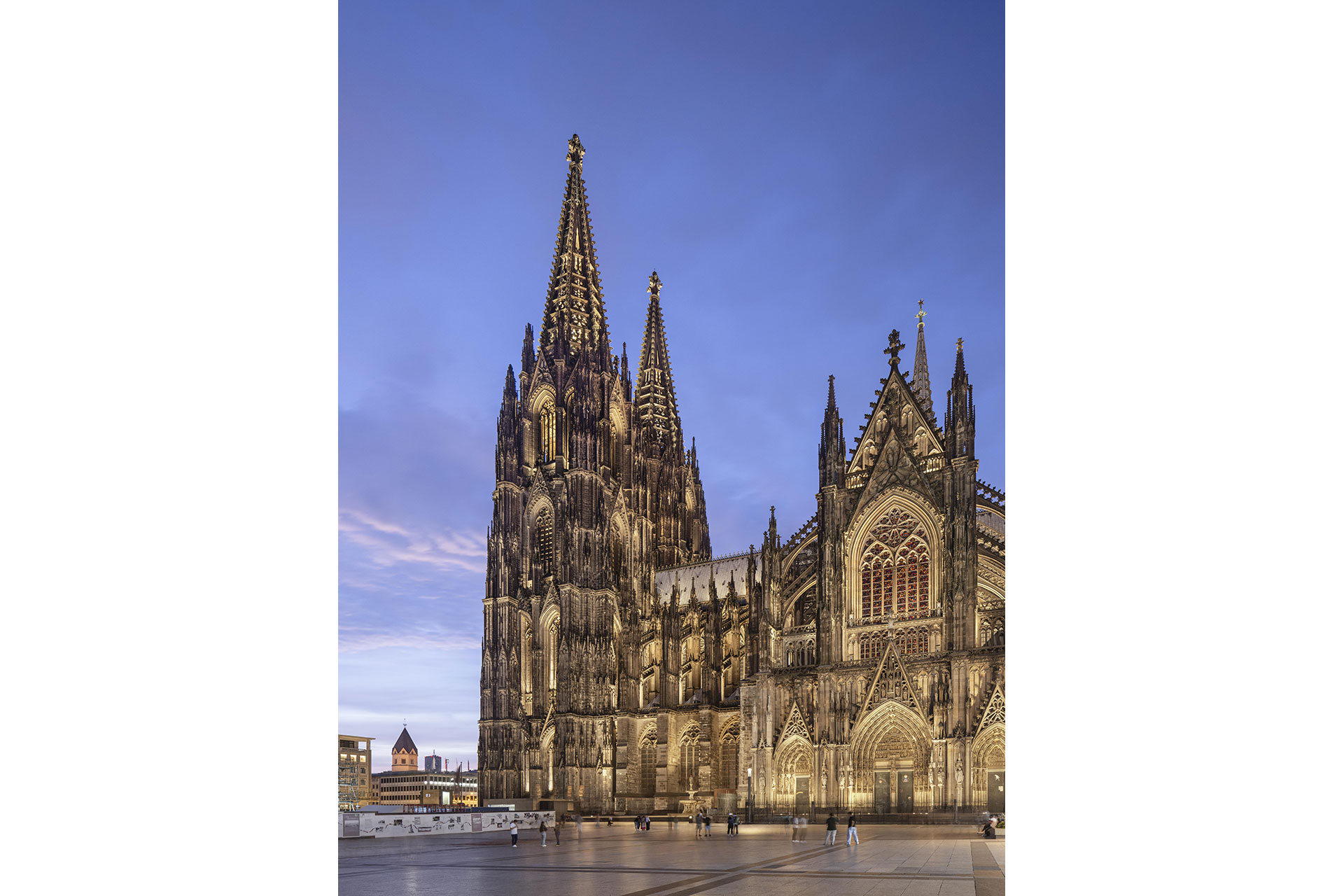
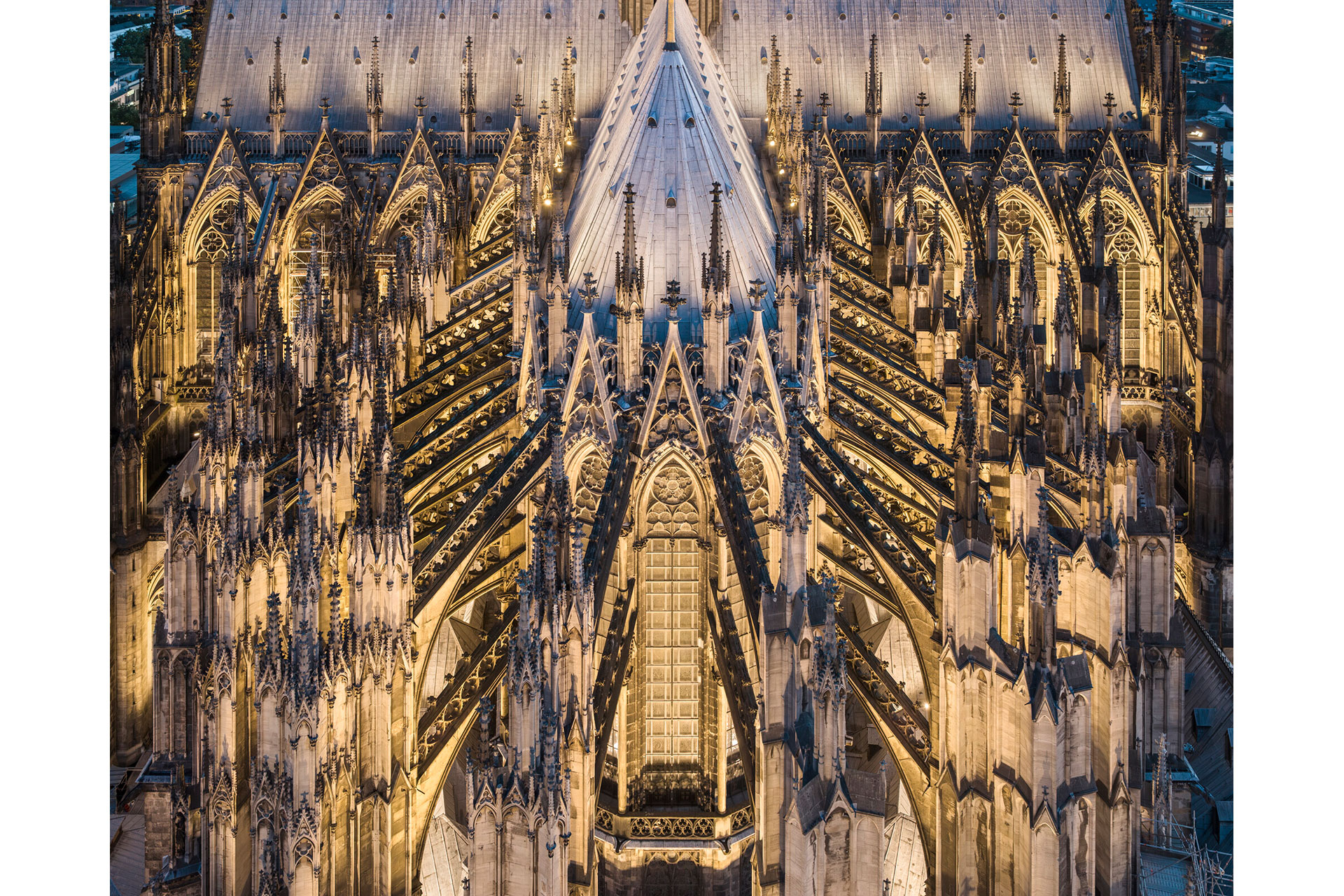
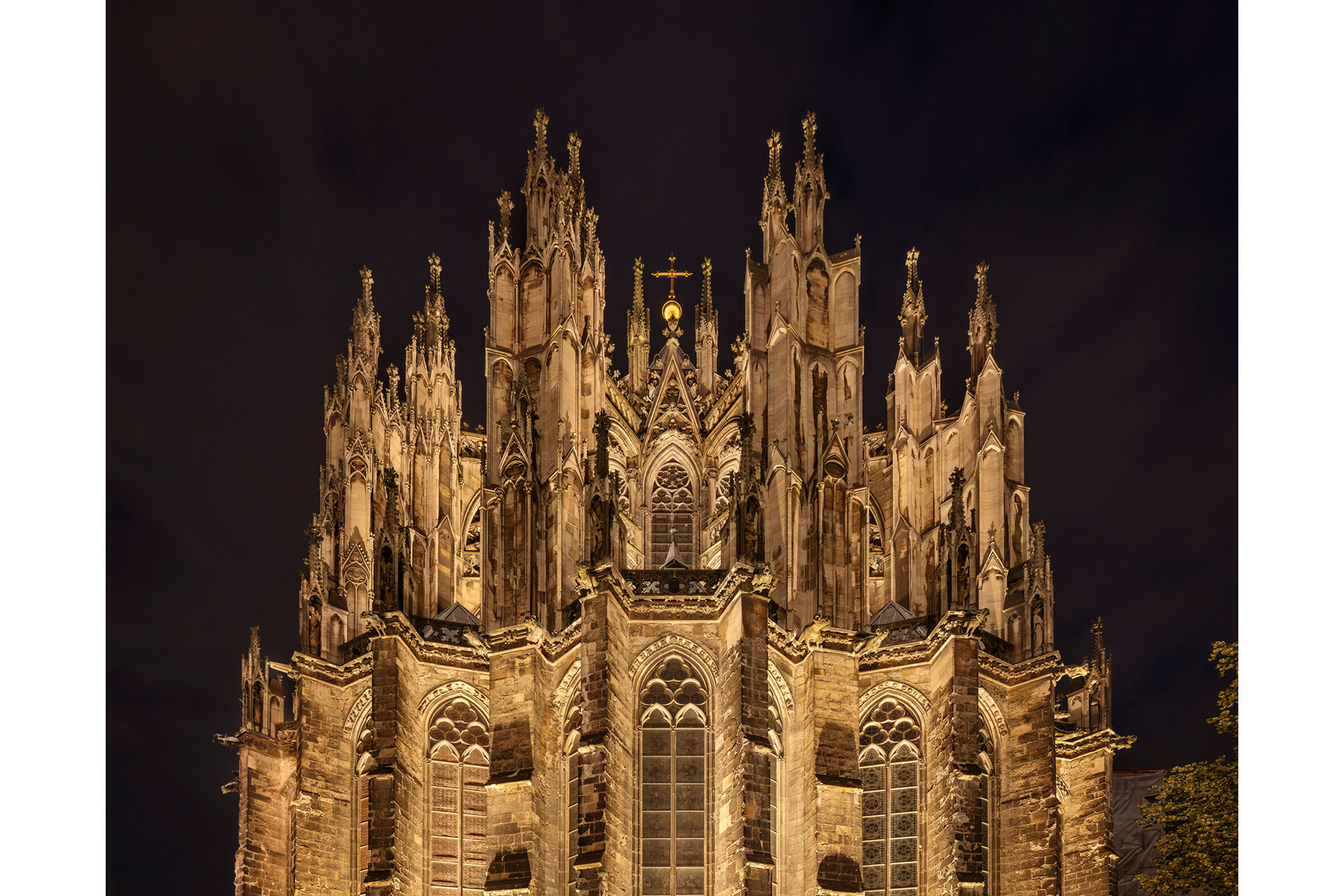
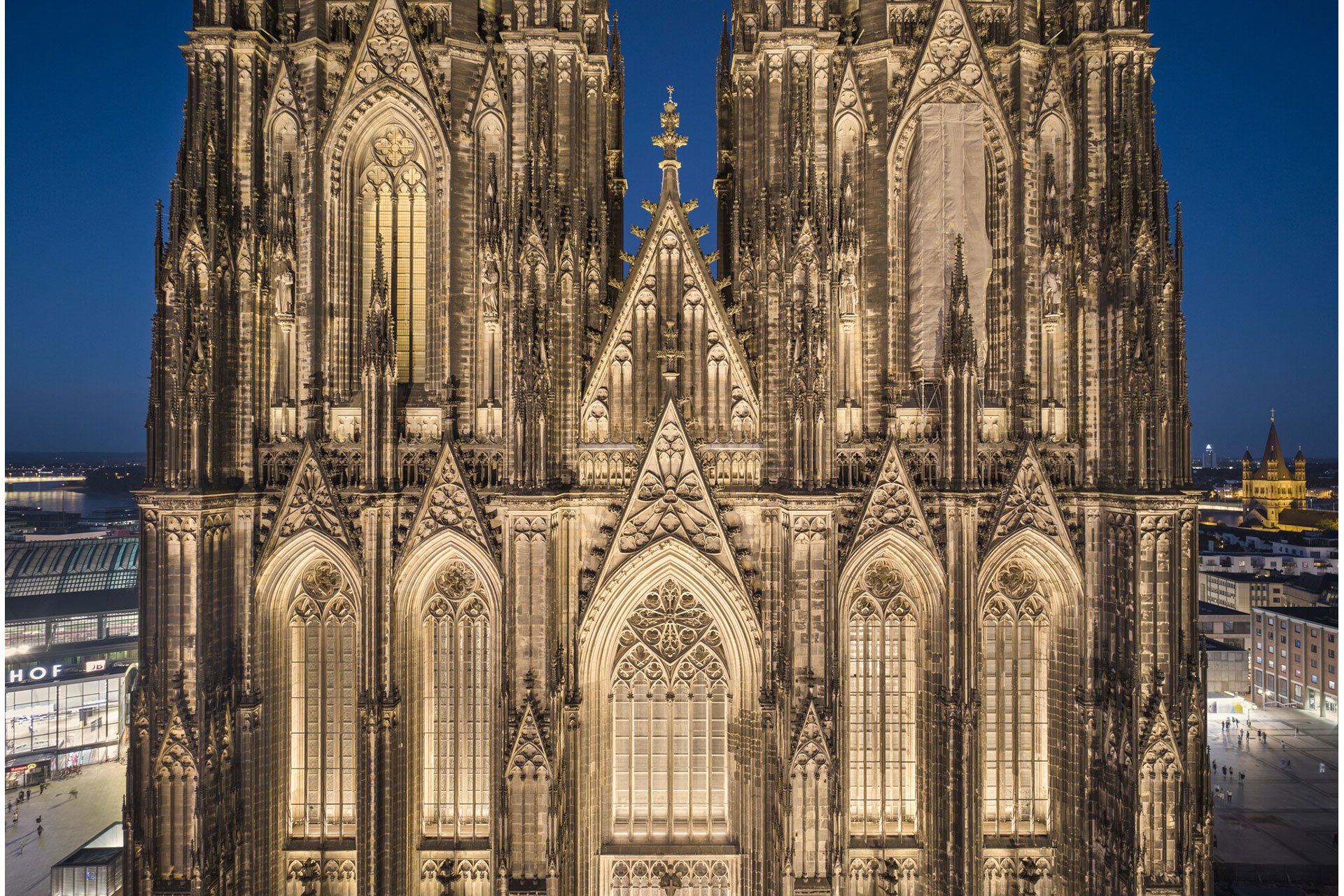
The new exterior lighting of the Cologne Cathedral is based on the approach “light follows architecture” and aims to replace indiscriminate floodlighting with targeted illumination. In cooperation with the client and construction management, a highly efficient concept has been implemented, which was presented to the public for the first time on Easter Sunday 2025. With the transition to a modern and precise LED system, the gothic cathedral now has an impressive appearance in darkness and twilight. Planned with great ecological responsibility, light pollution and energy consumption have been significantly reduced.
Before the renovation, the cathedral had been illuminated mainly by floodlights mounted on the roofs of surrounding buildings. The outdated technology of HQI lamps showed a high energy consumption and bathed the entire building in neutral white light, which provided high perceptibility, but also caused significant light pollution in the surrounding area.
As the original architecture plans were missing, empirical facade studies and extensive on-site testing of optics and positions were necessary. In addition, non-invasive mounting solutions were devised with conservation experts to avoid drilling: This kind of interdisciplinary collaboration ensured cultural and technical alignment.
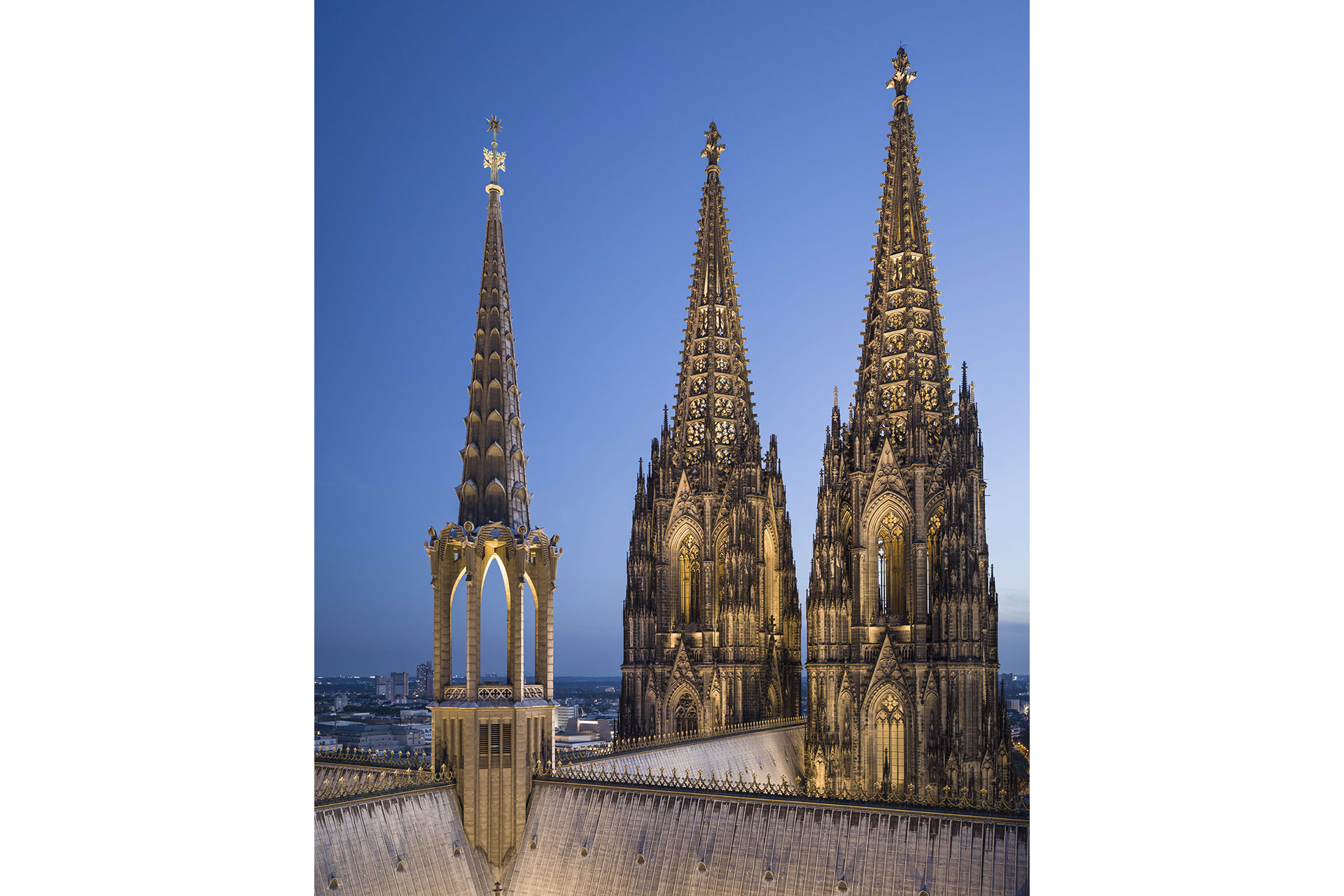
Apart from a holistic view on the building, special attention was paid to the striking 157-meter-high towers. Soft backlighting combined with vertical grazing light traces the cubature up to the tips. The lighting is installed outside as well as inside the towers, shining through the filigree Gothic tracery and shaping the Cologne cityscape with a striking presence by night.
To achieve this result, over 700 compact luminaires were tailored for minimal visibility. Custom clamp and bracket systems protect heritage stonework and bespoke poles integrate both facade and circulation lighting. Full dimming and tunability from 2,700 to 3,000 K allow adaptation to events, seasons, and ecological needs. The composition avoids theatricality, allowing the architecture itself to be the artistic medium instead of focusing on the light sources.
Besides this, energy consumption was reduced by 80% compared to the previous installation. While focused optics minimize skyglow and trespass, long-wave light reduces disruption to nocturnal species. A night curfew lowers light levels further to support ecological rhythms.
Visitors experience enhanced legibility, calmness, and reverence. From near and far, the monument now reads clearly as a sculptural icon, offering both civic identity and intimate detail. The transition from rooftop floodlighting to facade-integrated micro-optics is a significant shift, redefining how monumental heritage can be illuminated in an aesthetic, practical and environmentally friendly way.