
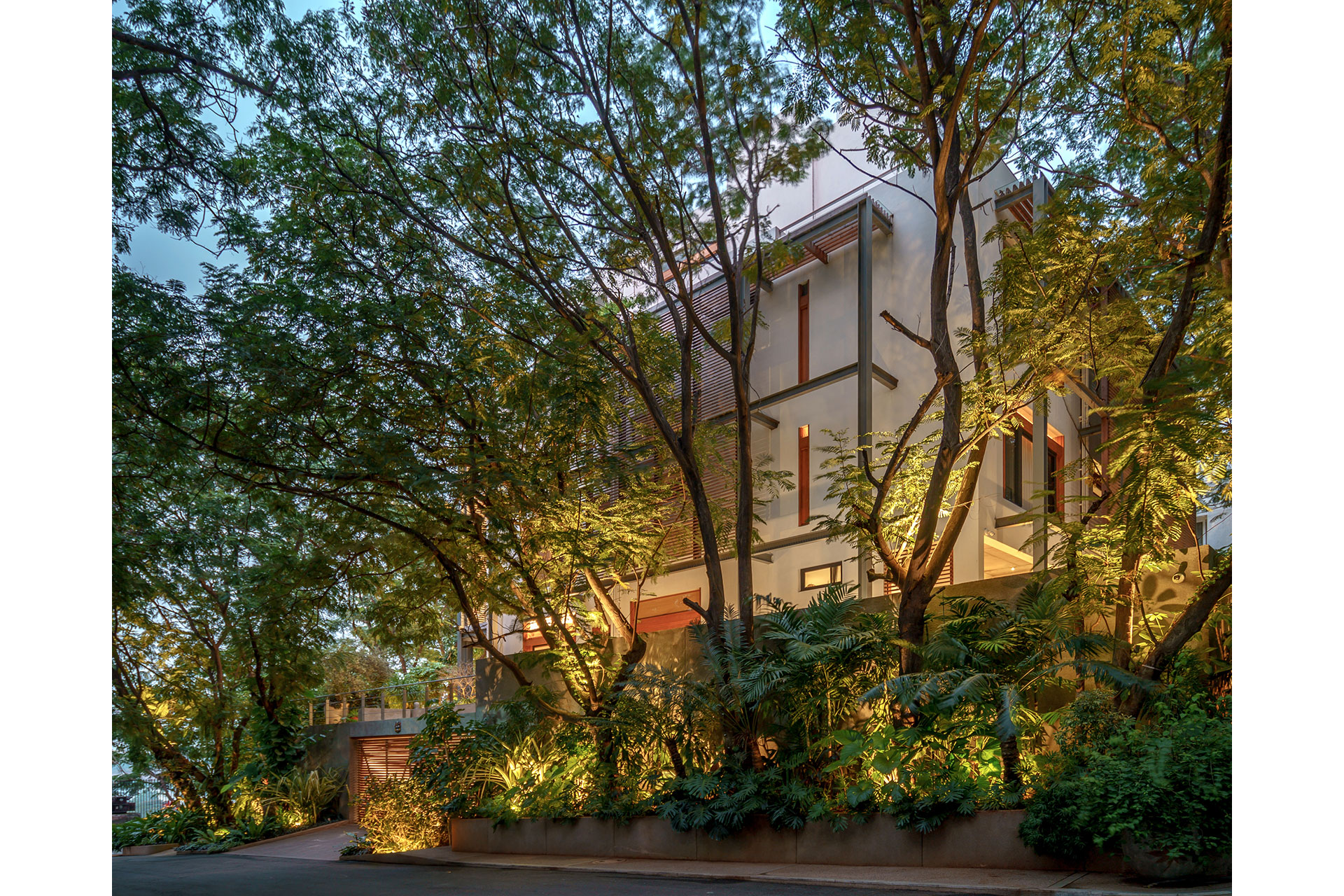
Set within a dense, tree-lined residential neighbourhood, the exterior lighting for this residence was conceived as a quiet, layered response to both architecture and landscape. Rather than presenting the building as a brightly lit object, the intent was to allow it to be discovered gradually through light, maintaining a calm presence within its surroundings.
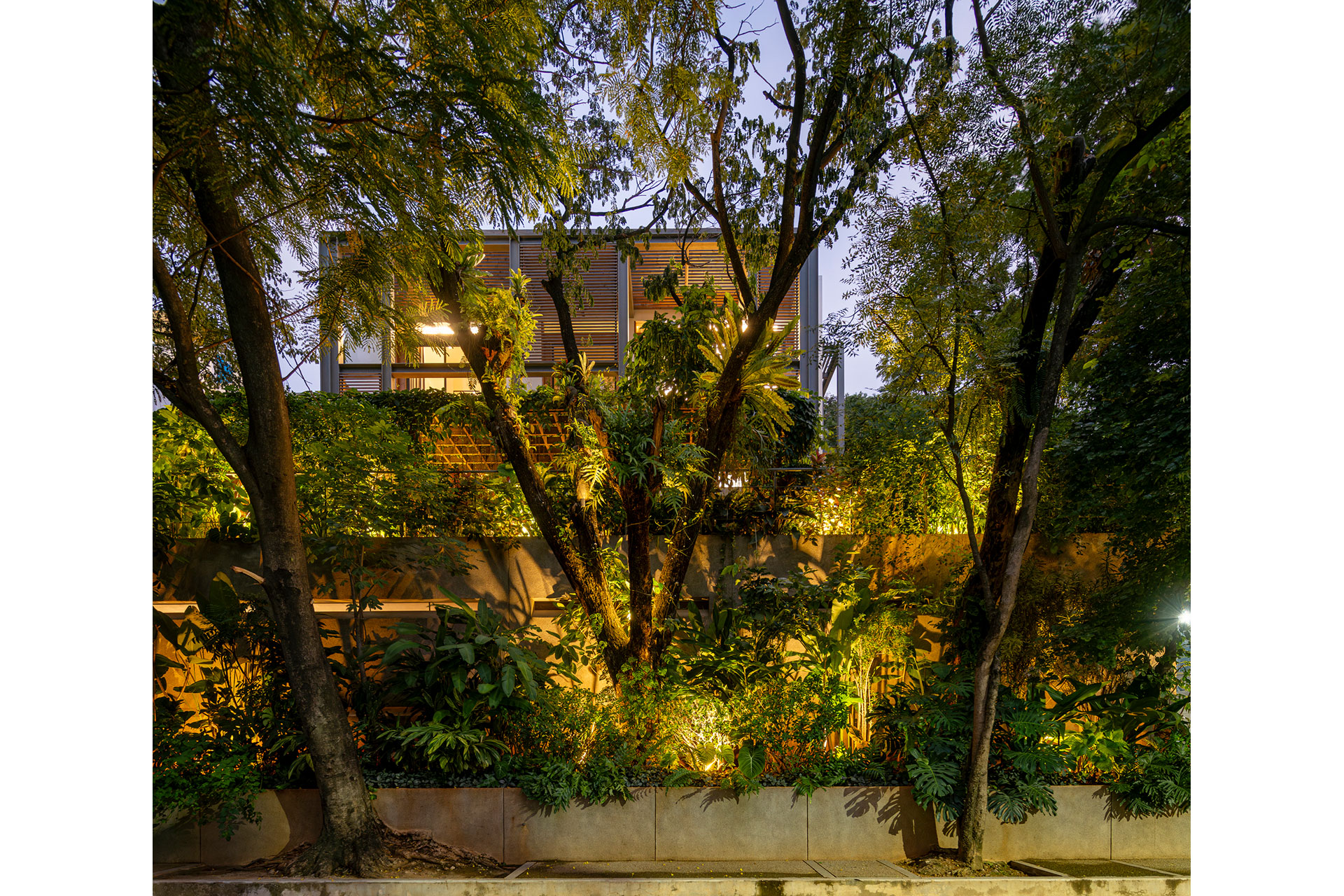
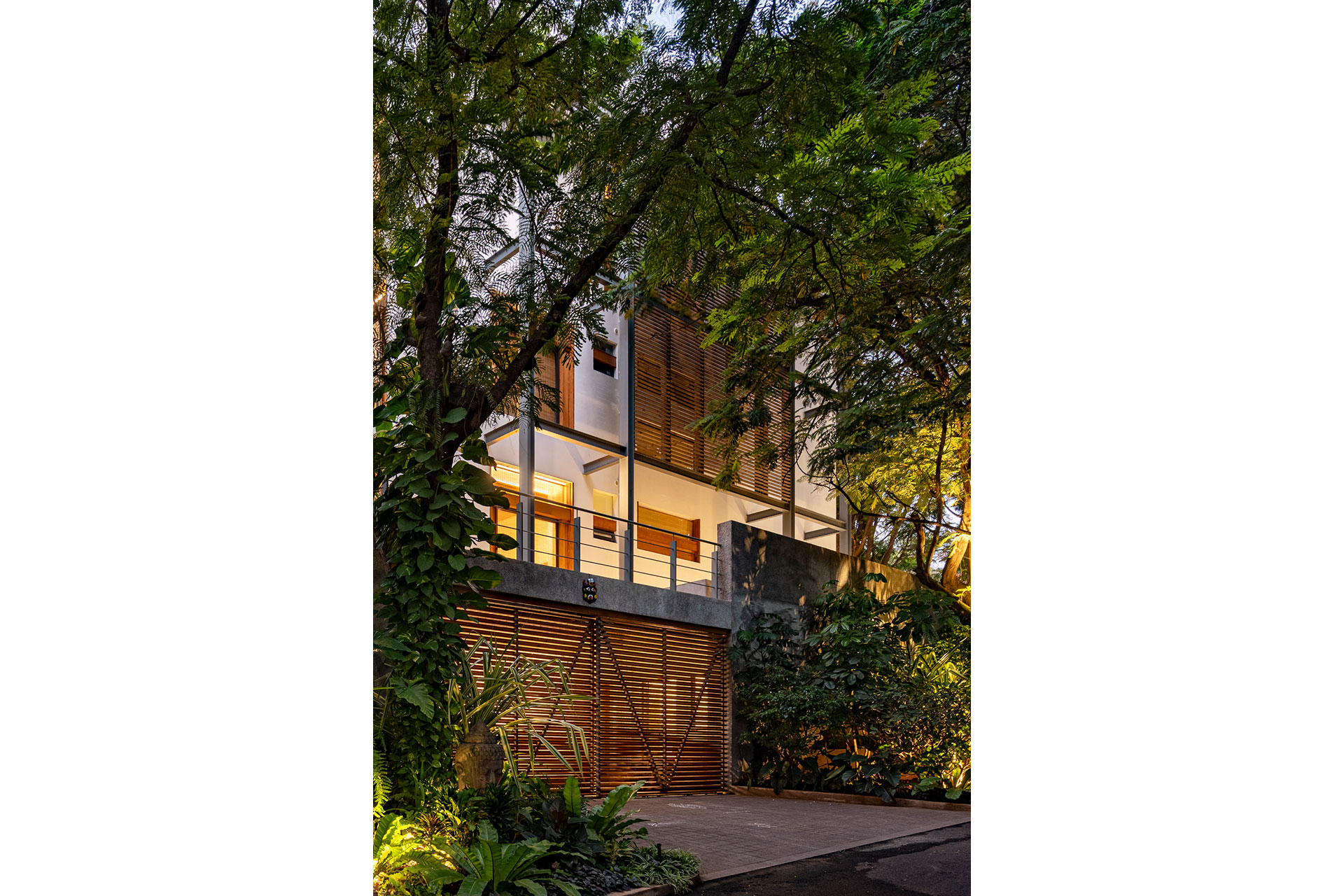
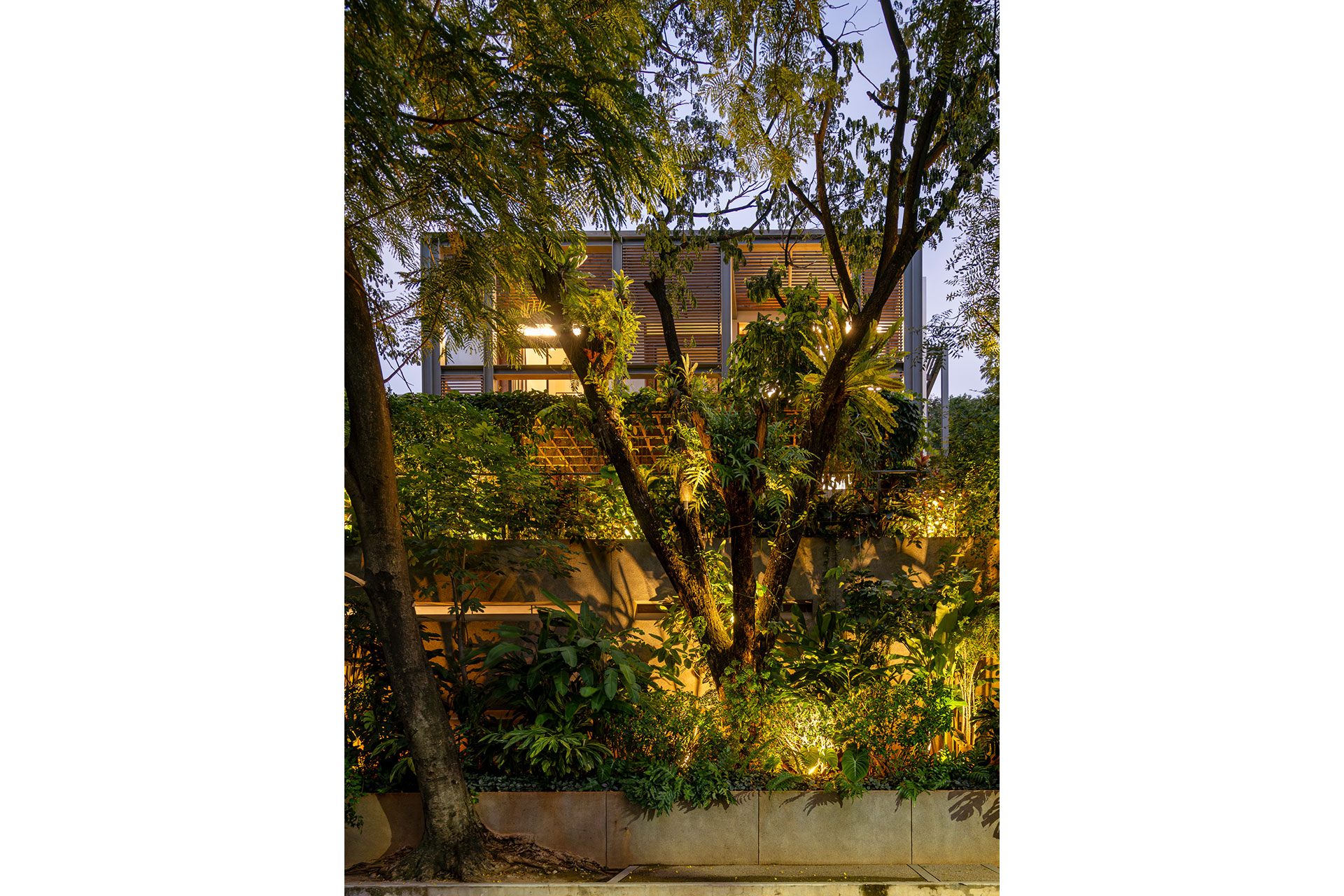
The approach begins at the street edge, where the house is largely perceived through foliage. Lighting was therefore distributed across landscape elements and boundary conditions instead of being concentrated on the façade. Trees and planting were selectively illuminated to frame views and soften the built form, allowing architecture to emerge subtly through layers of greenery.
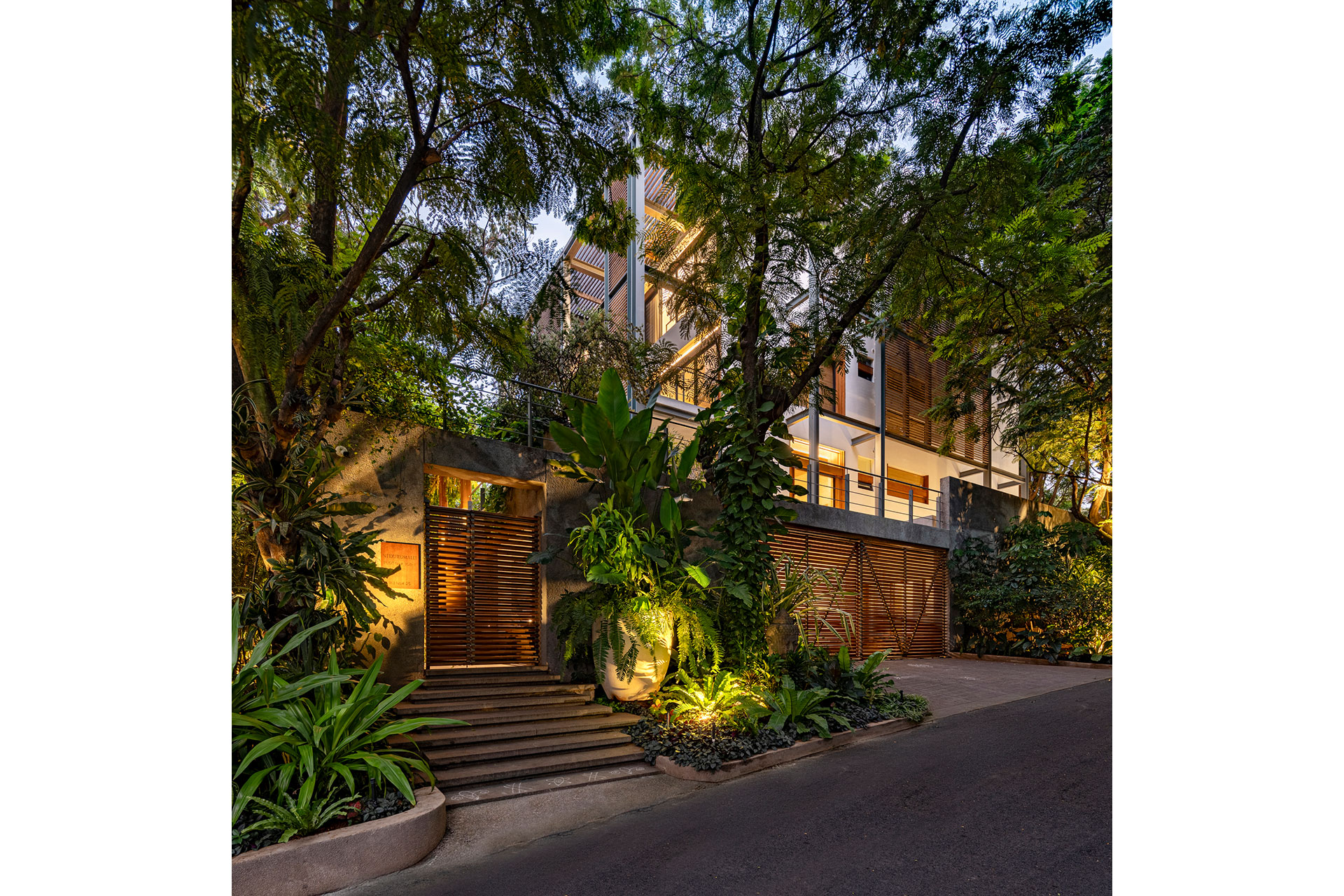
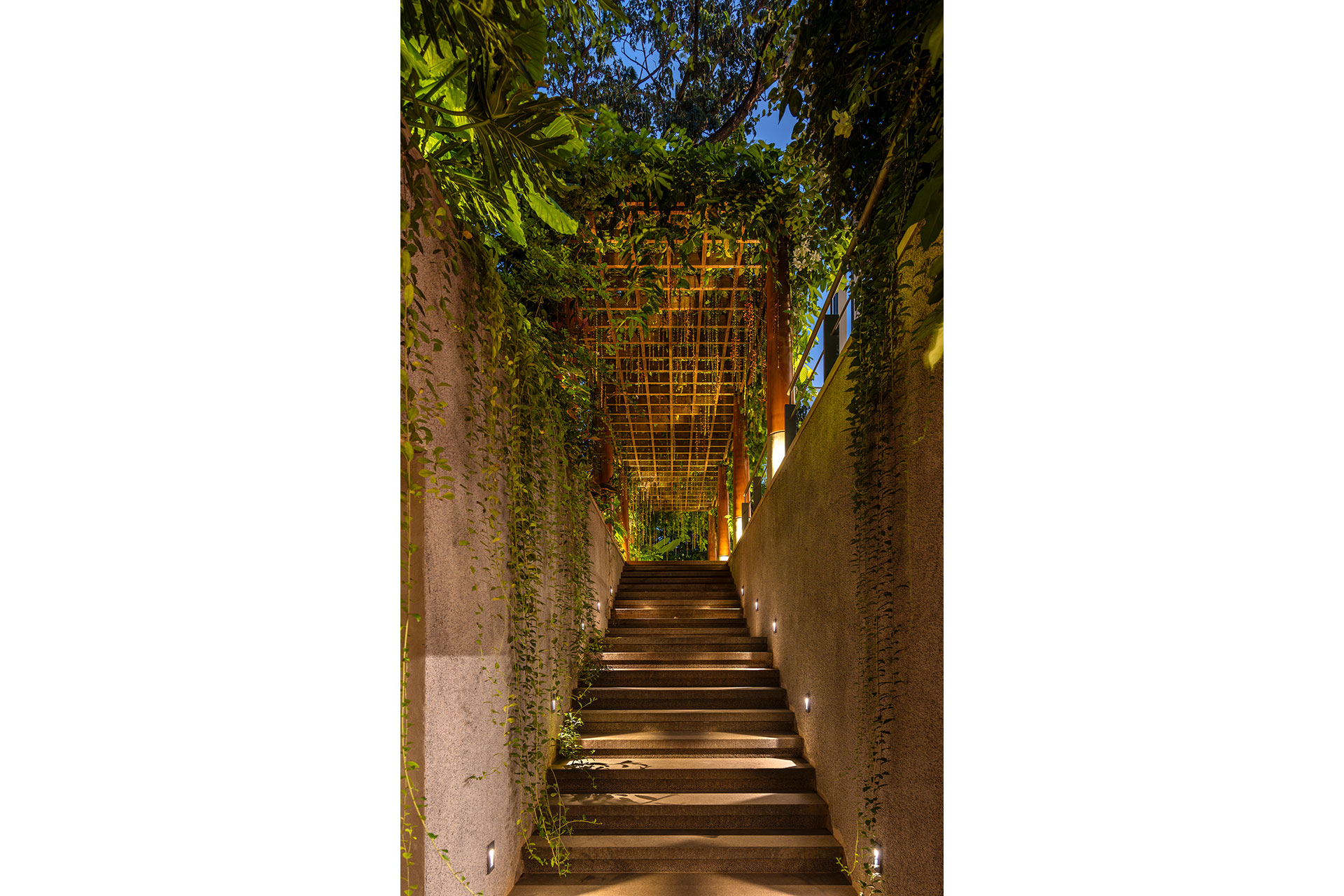
The entrance sequence was designed as a gentle transition into the residence. Recess-mounted step lights were integrated into the entrance steps to clearly define level changes while remaining visually discreet. This low-level lighting provides safe movement without overpowering the approach, ensuring the focus remains on spatial flow rather than fixtures.
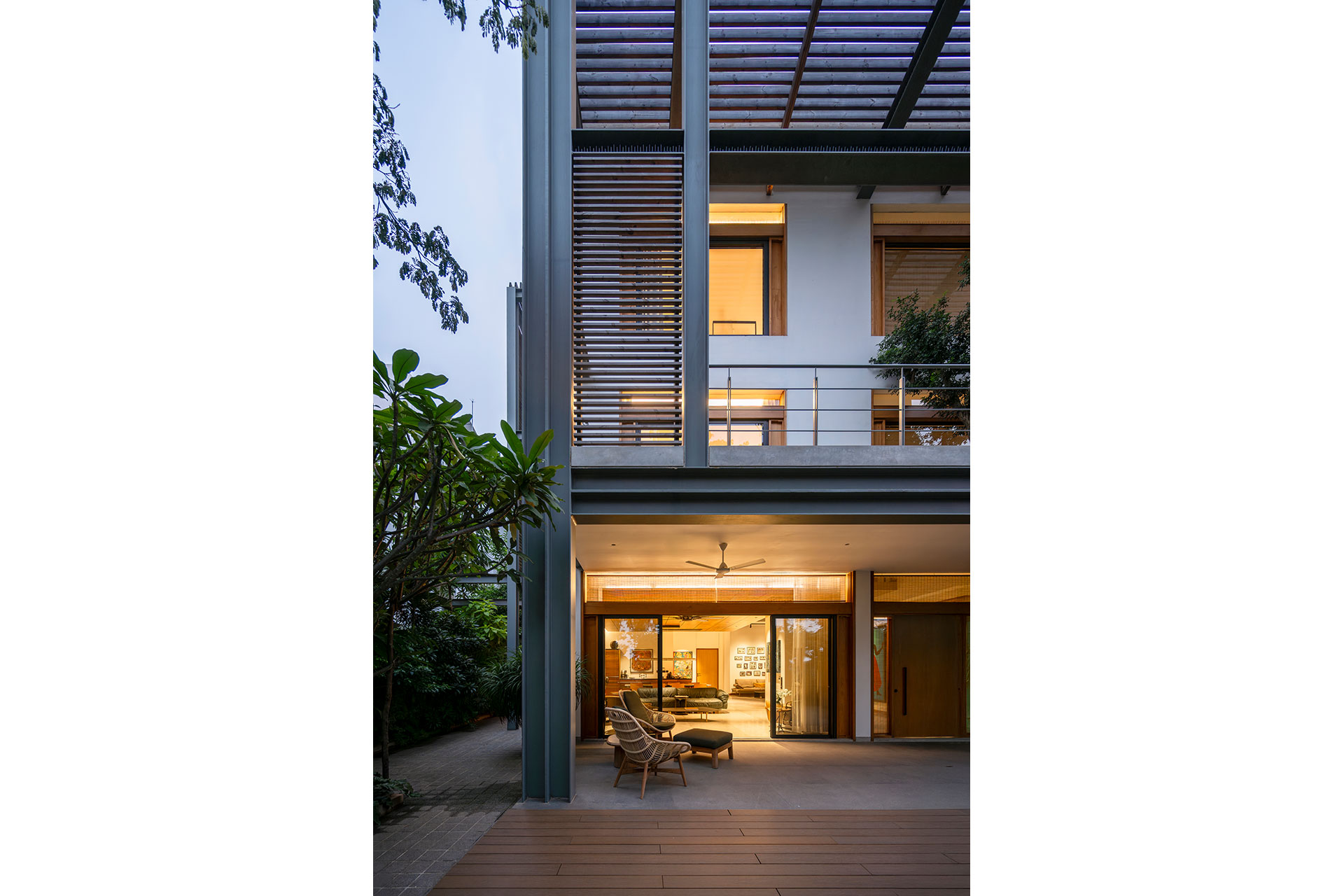
Vertical architectural elements such as columns and façade planes were treated with restraint. Subtle uplighting was introduced selectively to emphasise proportion and depth, allowing these elements to read clearly at night without flattening surfaces or creating excessive brightness. Shadow was retained intentionally, preserving contrast and material texture.
Boundary walls, screens, and pergolas were articulated using concealed lighting integrated within architectural details. By hiding the source of light and allowing it to wash gently across surfaces, these elements gain definition without becoming visually dominant. This integration required close coordination during execution to ensure fixtures remained unseen while delivering the desired effect.
Circulation paths and movement zones around the residence were supported through recessed and wall-integrated fixtures aligned carefully with walkways and edges. These lights guide movement intuitively while maintaining visual comfort and avoiding glare at eye level.
Throughout execution, fixture placement and light levels were refined on site to respond to actual material finishes, planting density, and sightlines. Rather than relying solely on drawings, adjustments were made during installation to achieve balance between visibility, comfort, and restraint.
Working within a limited luminaire budget reinforced a disciplined approach to lighting. Each fixture was positioned with a clear purpose, avoiding redundancy and ensuring that light supports architecture, landscape, and movement without excess.
The completed exterior lighting establishes a composed night-time identity for the residence; one that is shaped by landscape, guided by architecture, and defined by thoughtful placement rather than spectacle.