
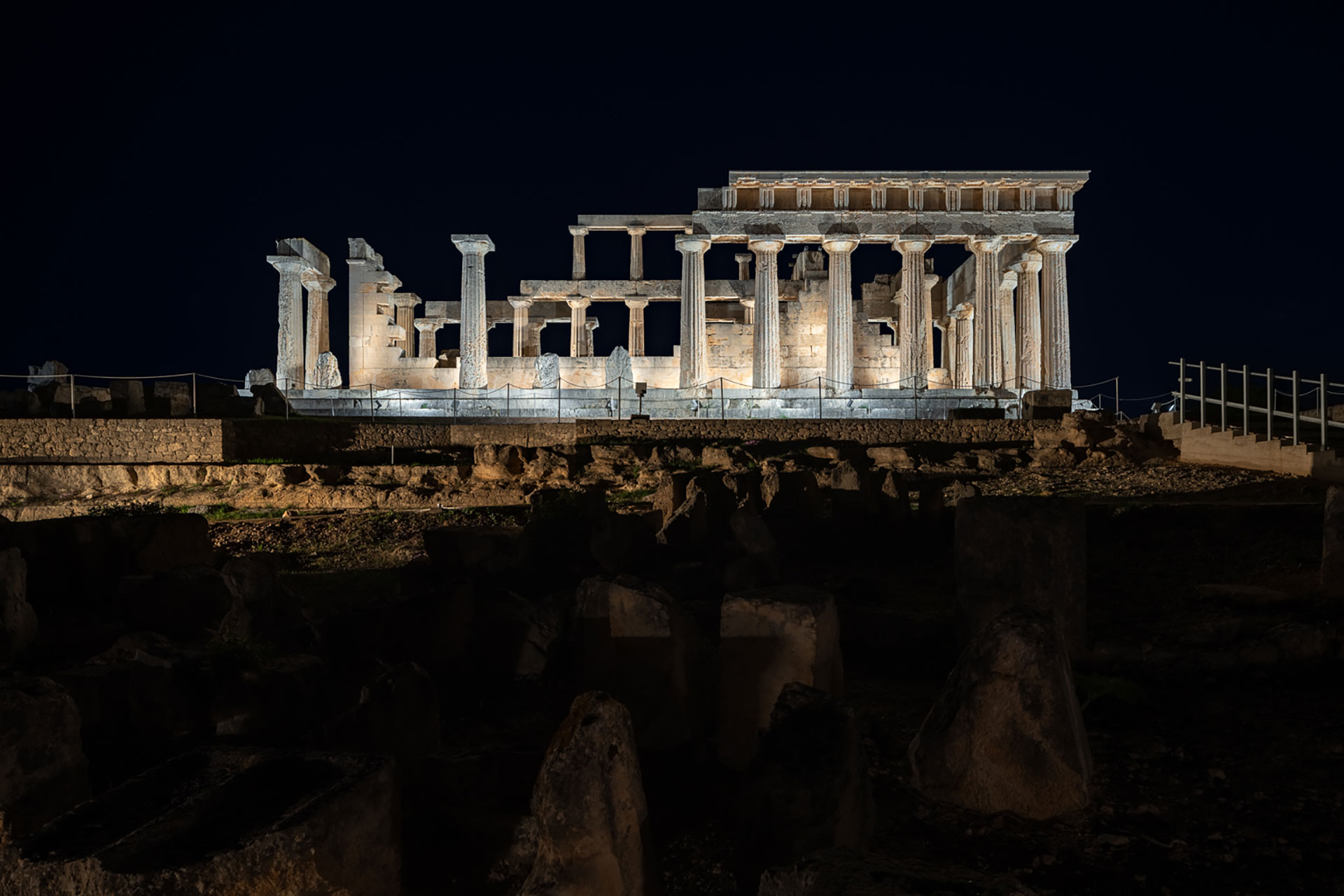
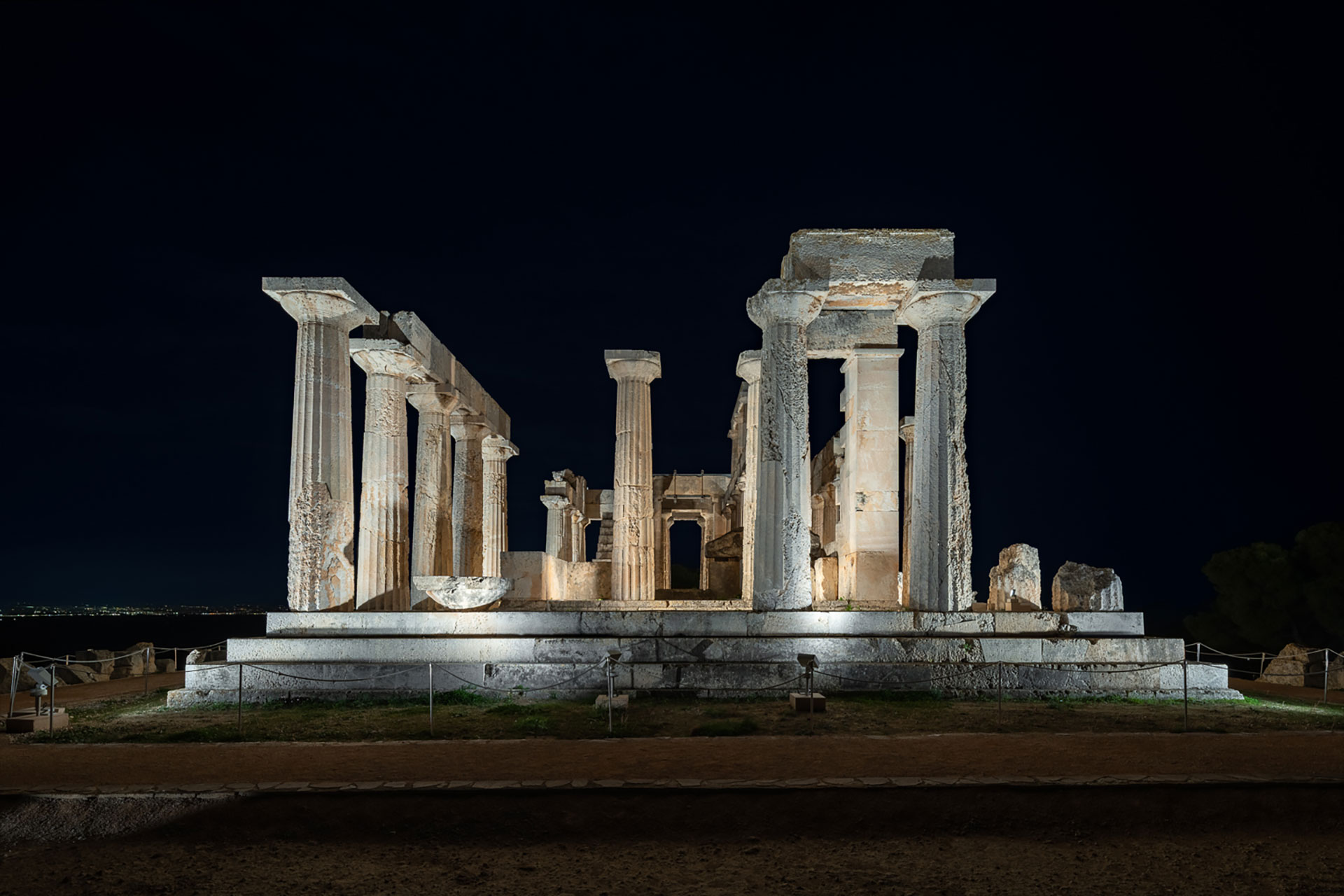
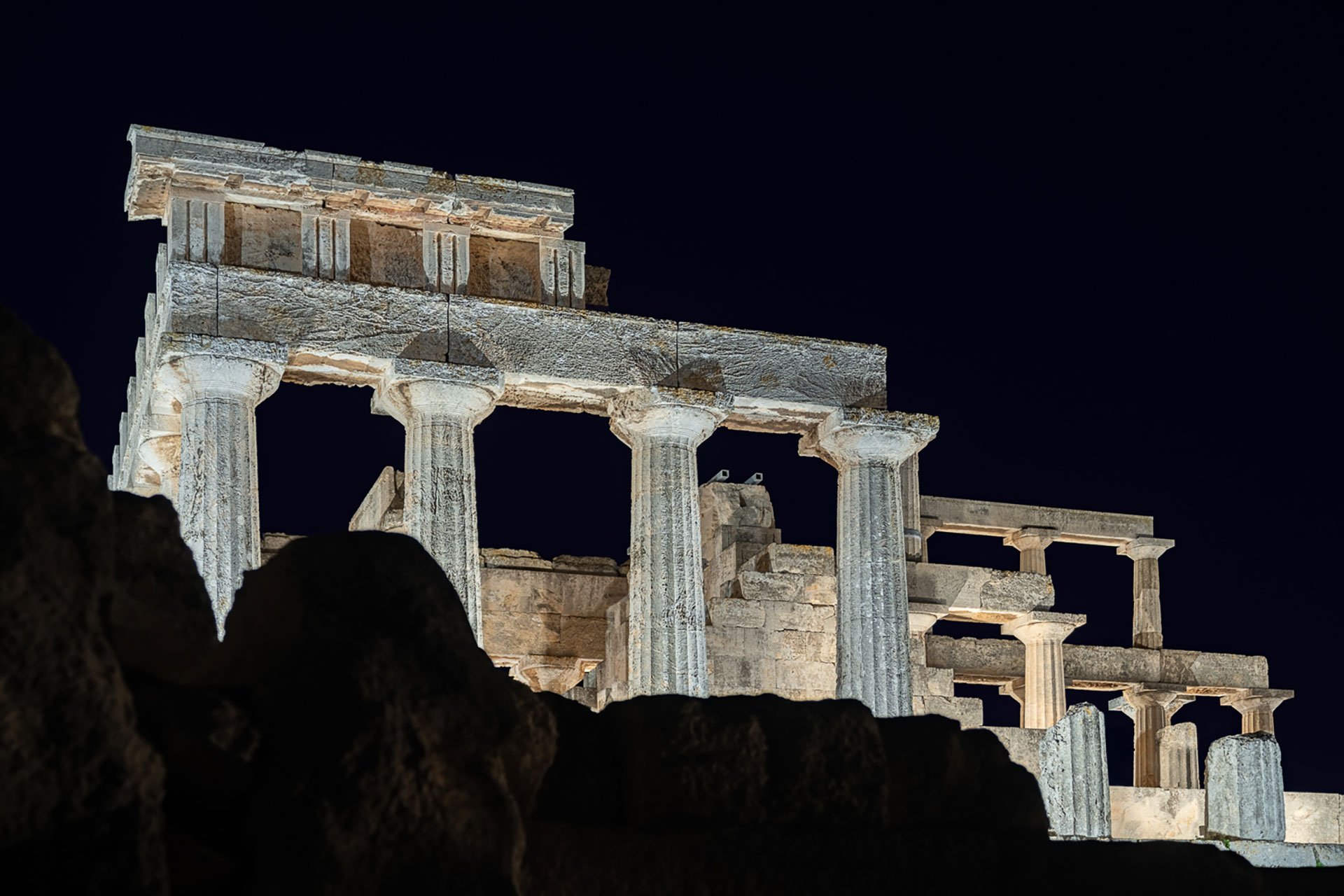
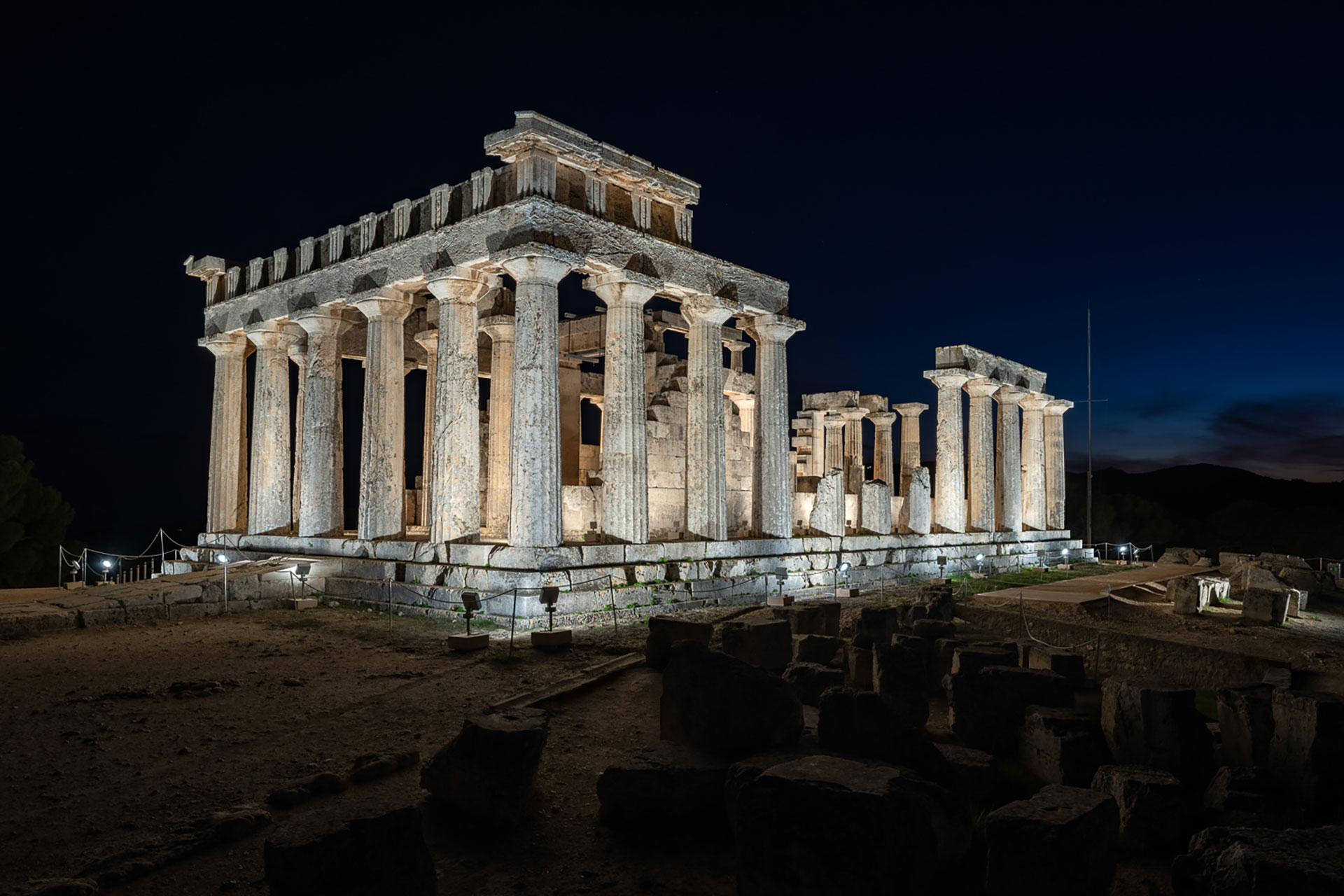
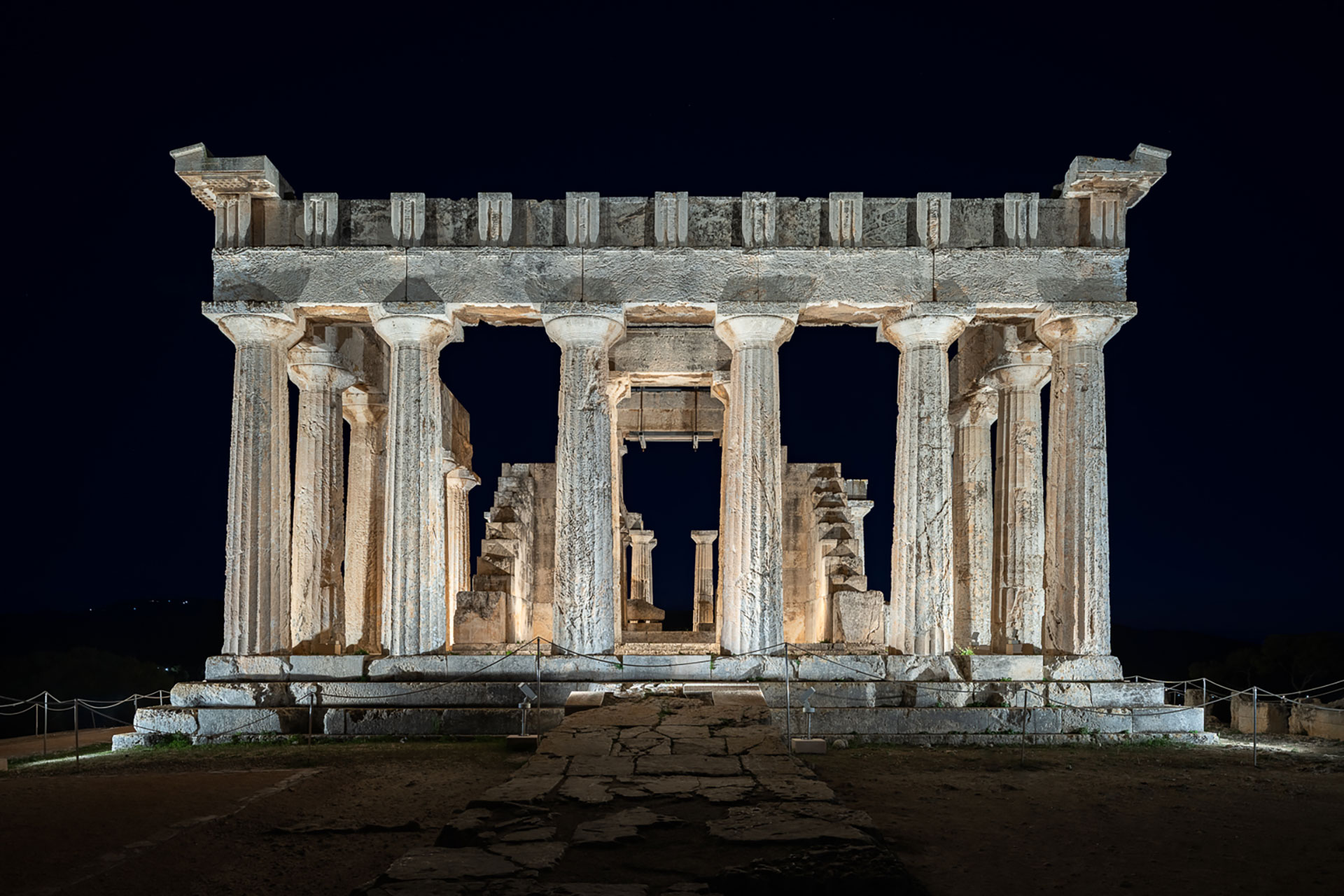
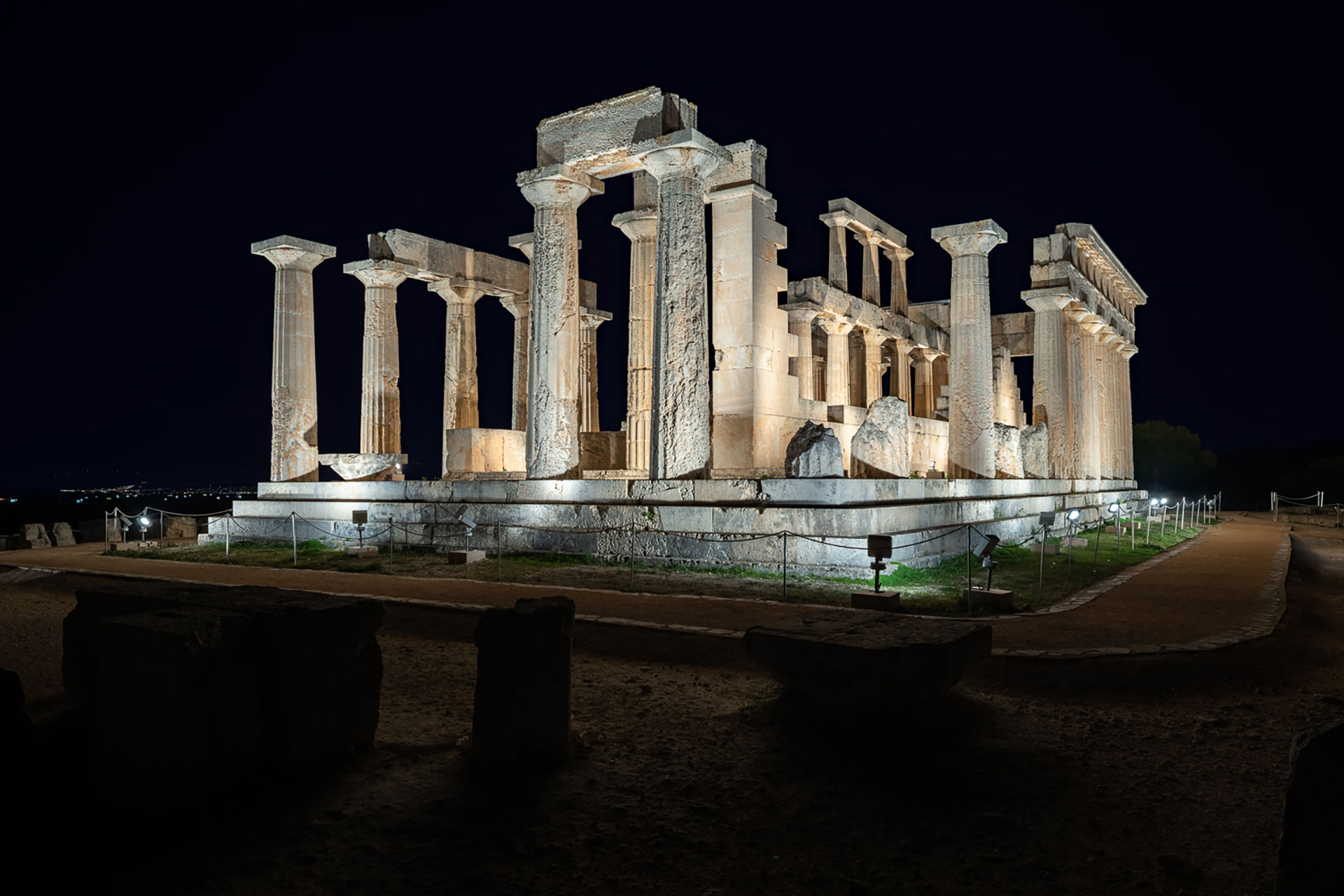
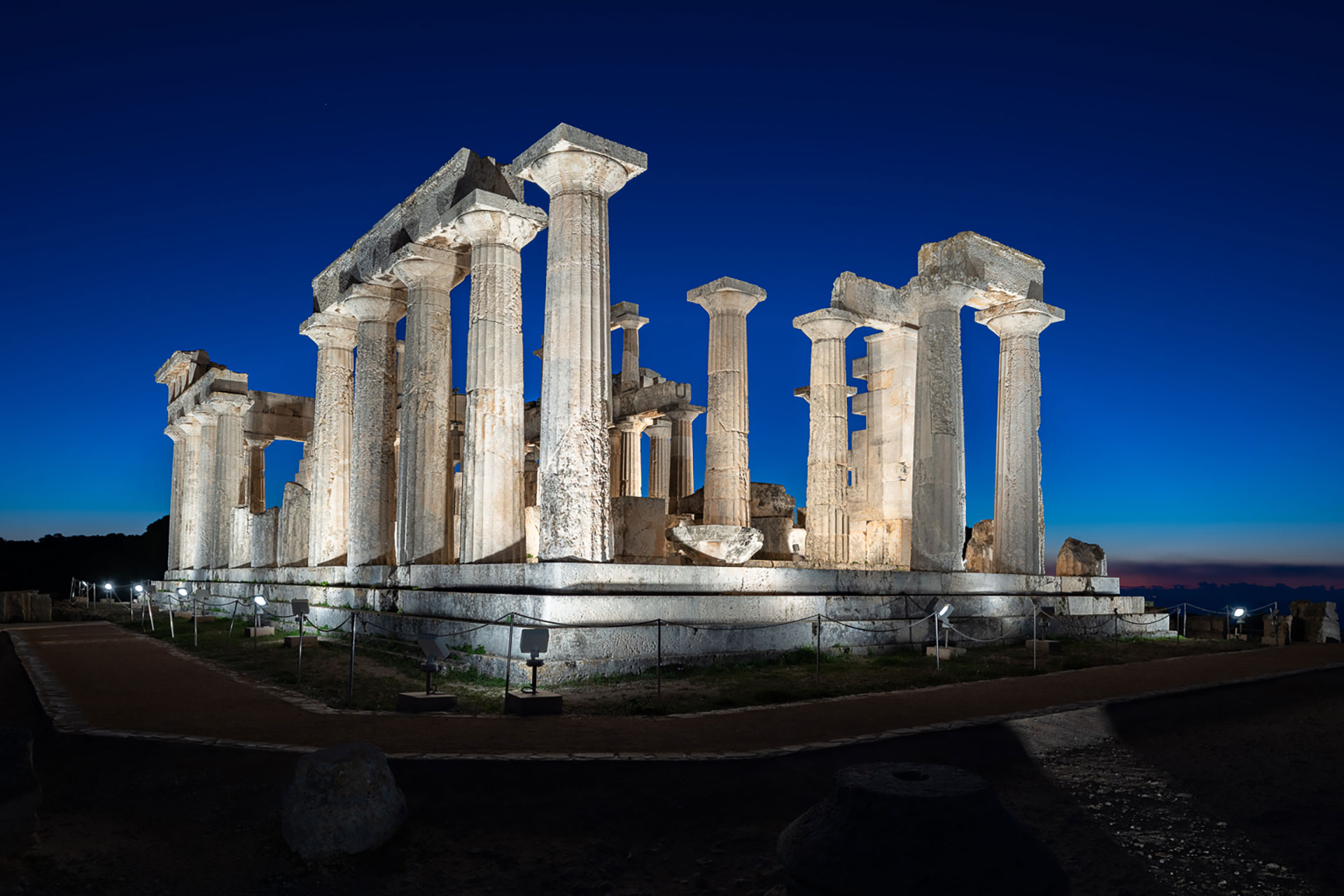
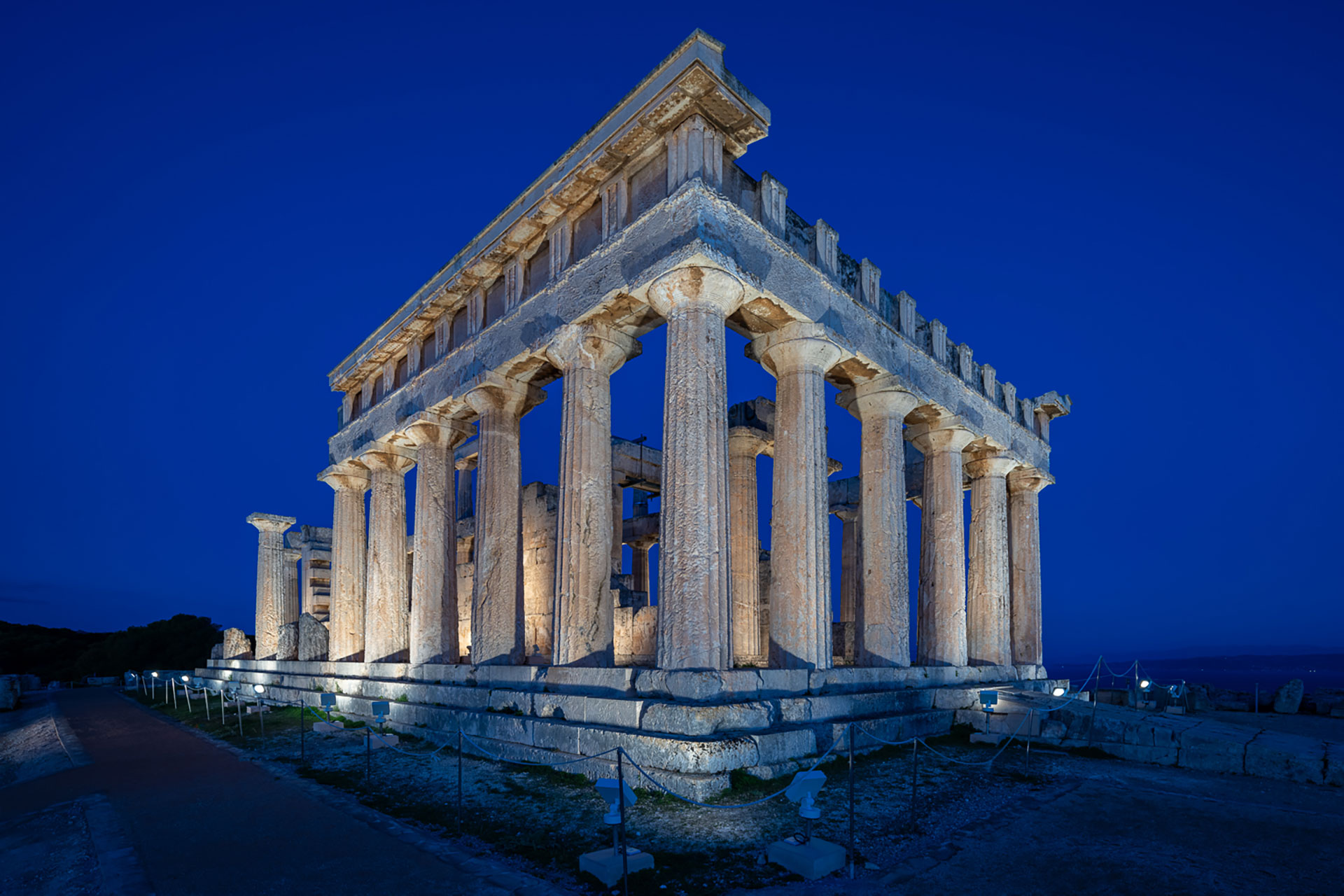
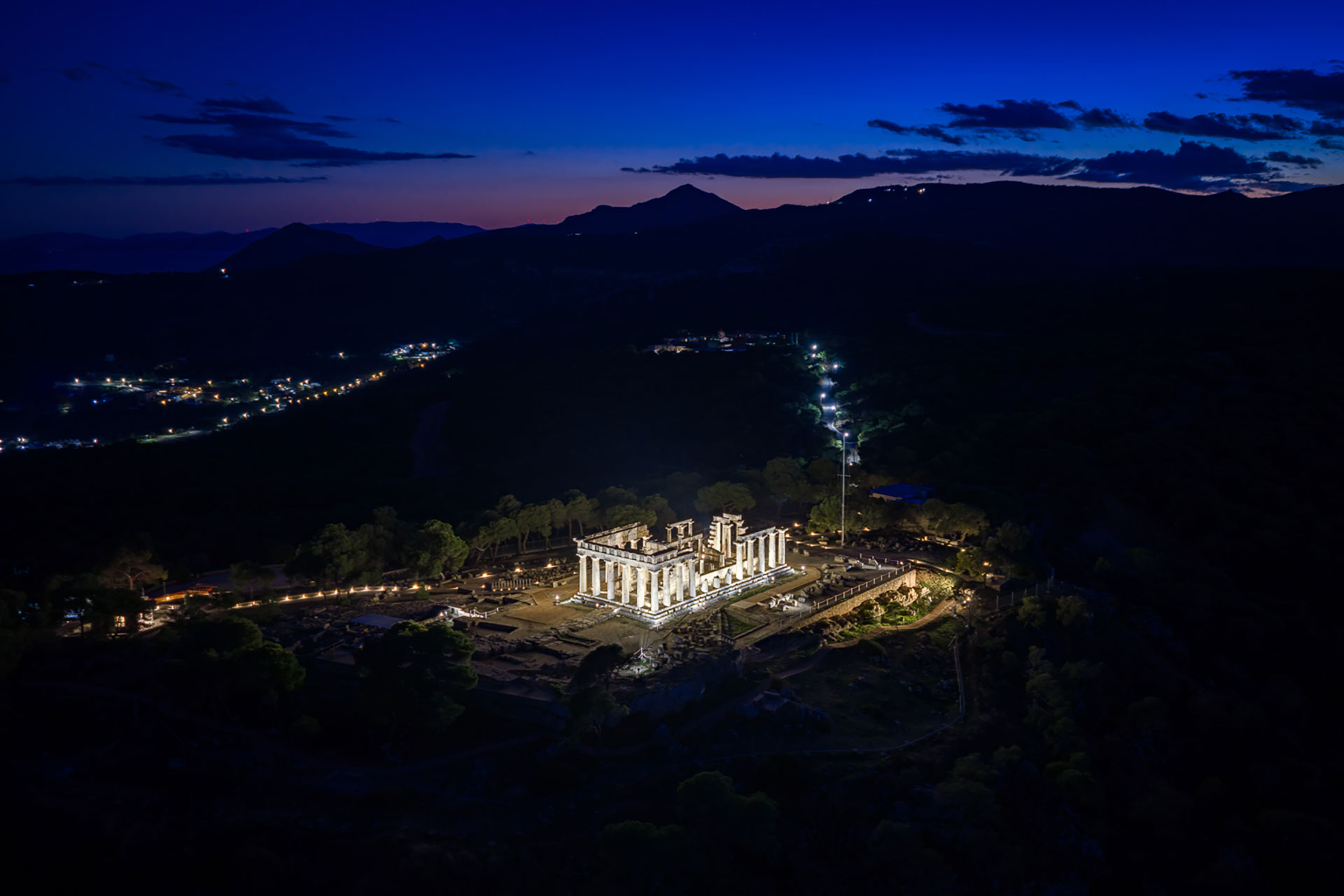
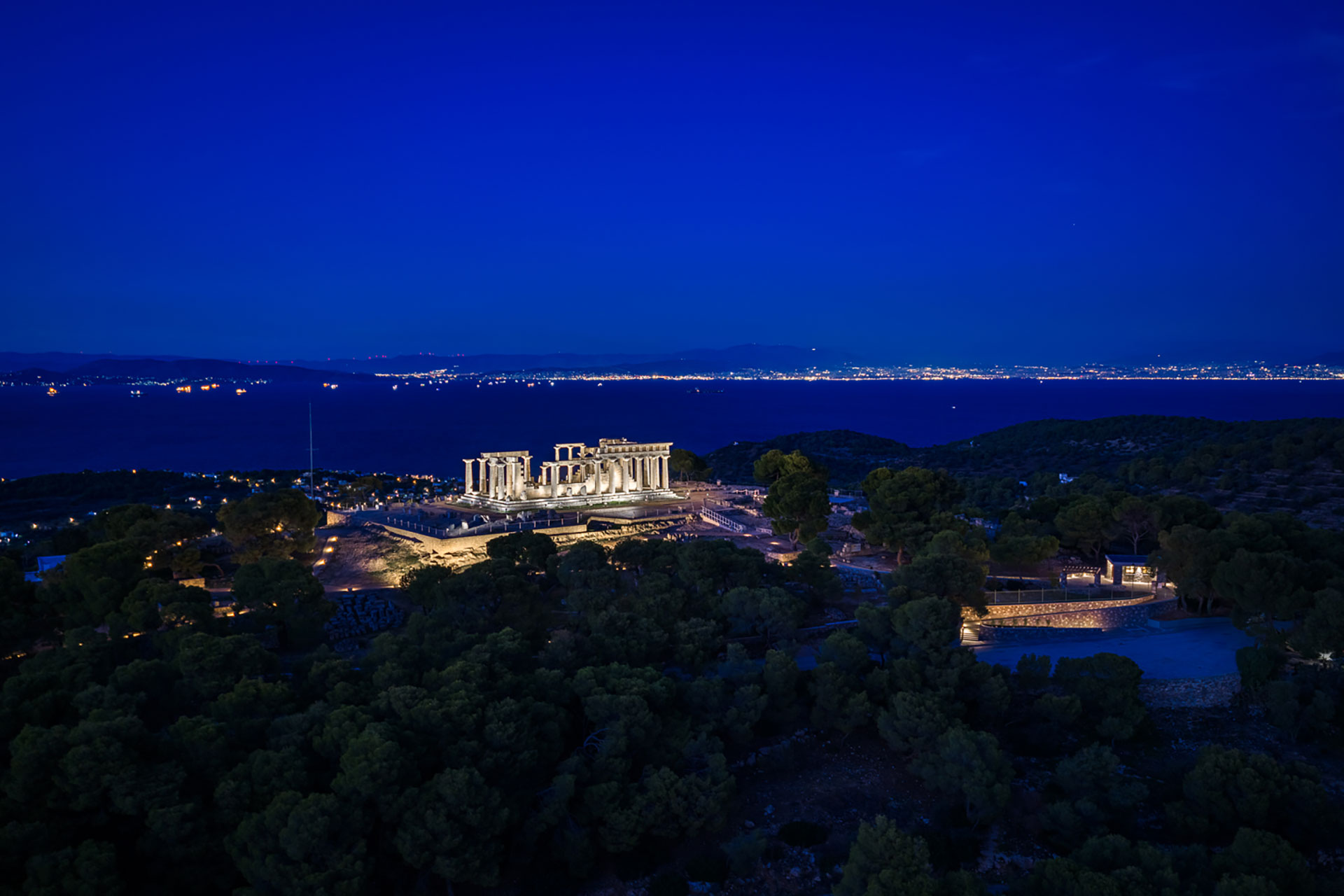
The Temple of Aphaia rises gracefully on the hill of Aegina as sacred sanctuary where earth and sky, stone and spirit meet. The lighting of the temple does not merely illuminate the marble stones and column: it seeks to evoke the subtle presence of Aphaia herself, a goddess worshiped on the island of Aegina in the Saronic Gulf, where she was revered as a local deity associated with protection, hunting, and maritime safety.
The aim of the lighting design is to highlight the monument and its immediate surroundings without interfering with or altering its character. The design should allow its volume and geometry to be clearly perceived from the surrounding areas where it is visible (Mesagros to the northwest, Vagia to the north, and Agia Marina to the south), as well as from close viewing distances during potential evening events held at the archaeological site.
From the approach along the coastal road, the temple emerges softly from the landscape. Warm temperature white light embraces the inside of the temple and base, grounding the monument in a gentle glow, while cooler tones illuminate the columns, highlighting their precise rhythm and sculptural beauty. The lighting of the inner sanctuary is creating depth allowing the temple’s layers to reveal themselves gradually as day fades to night. As dusk settles, the temple awakens under the guidance of an astronomical clock, and with the first light of dawn, it gracefully slips back into shadow allowing the natural light to take its place.
Every fixture was chosen to harmonize with the site, its presence subtle, almost invisible by day, yet intentional at night. Light does not intrude; it converses with the stone. The careful placement avoids contact with the ancient surfaces, while cabling remains hidden, preserving both the integrity of the temple and the tranquility of the landscape. The approach is sustainable and sensitive. Energy use is minimal, , and the design illuminates what is essential—the form, the structure, the poetry of the monument.
In this lighting, Aphaia is more than a ruin; it is a living silhouette under the night sky, a place where past and present meet in quiet dialogue. The approach is sustainable and sensitive. Energy use is minimal, and the design illuminates what is essential—the form, the structure, the poetry of the monument. In this lighting, Aphaia is more than a ruin; she is a living silhouette under the night sky, a place where past and present meet in quiet dialogue. Lighting a monument like Aphaia is like translating history into visual poetry while honoring timeless human values like Measure, Freedom, Democracy, Beauty, and Justice that continue to stand high across the centuries.