
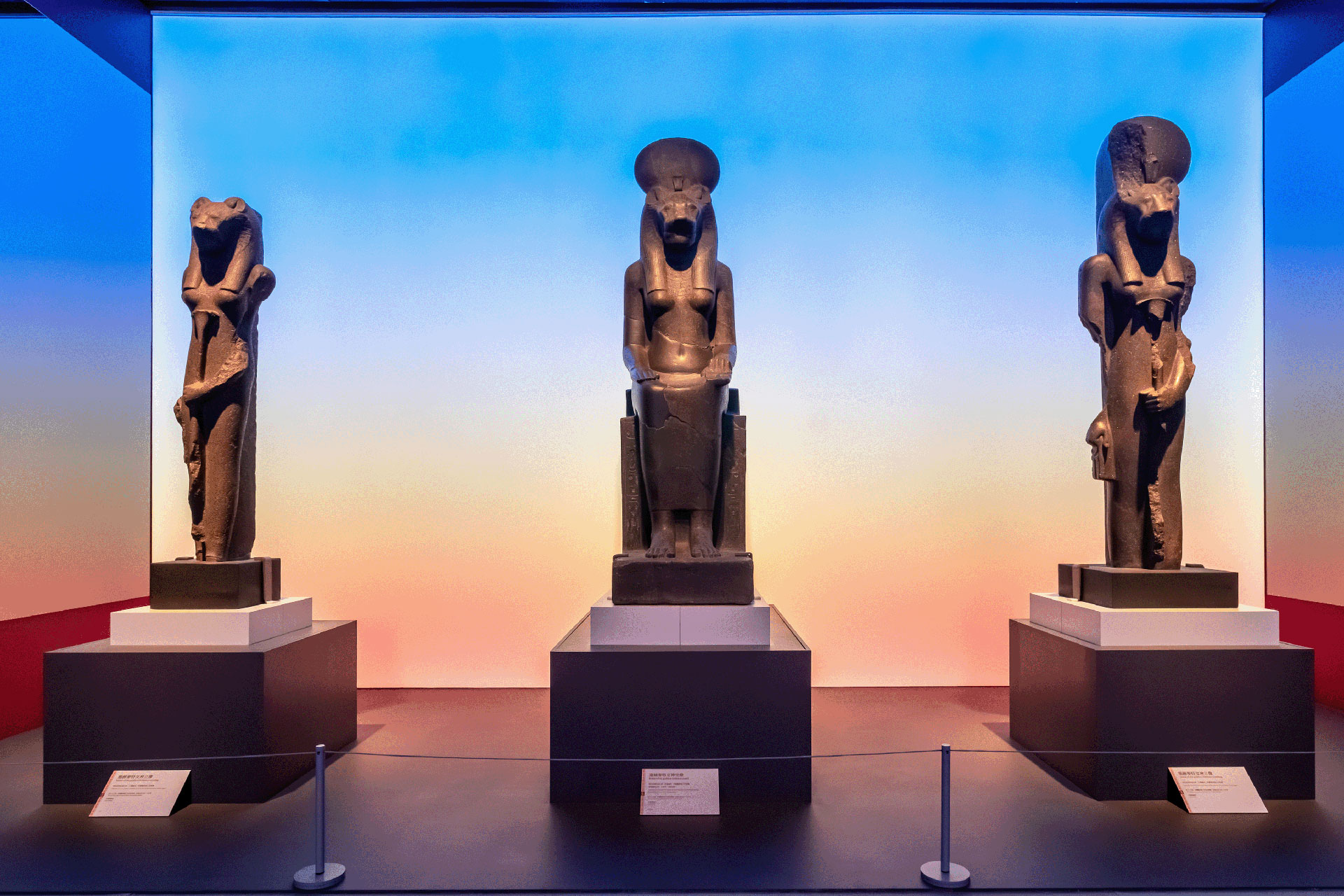
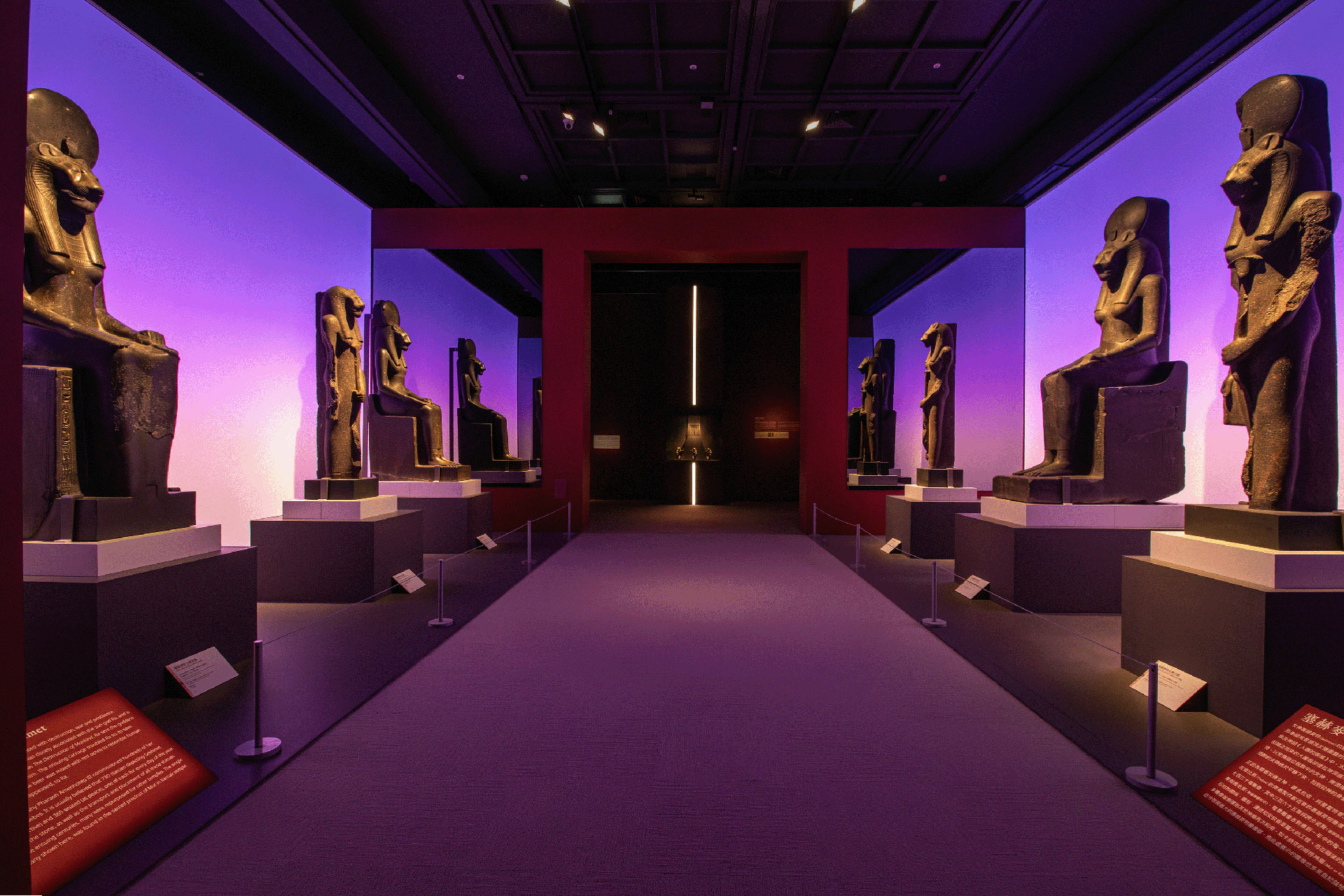
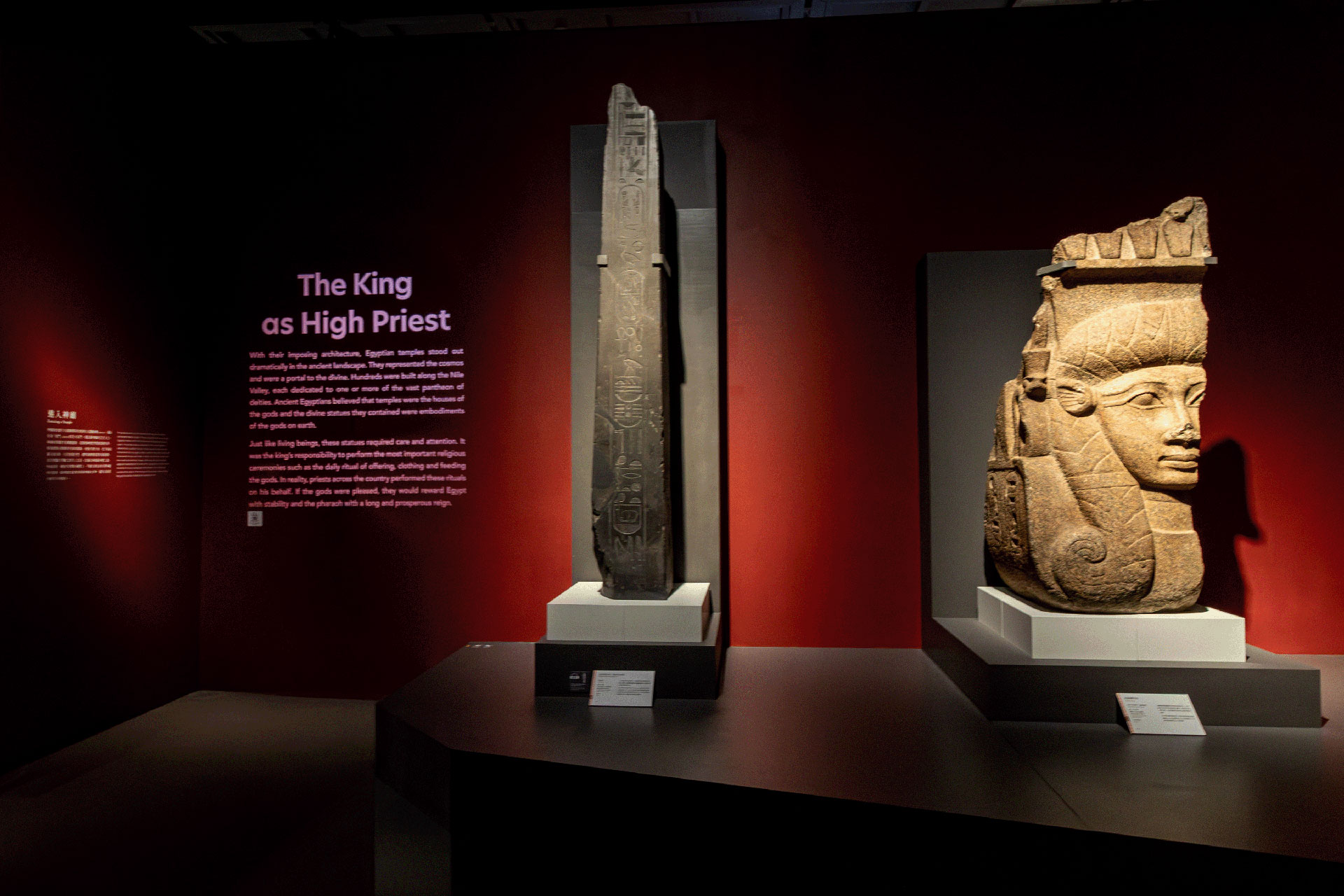
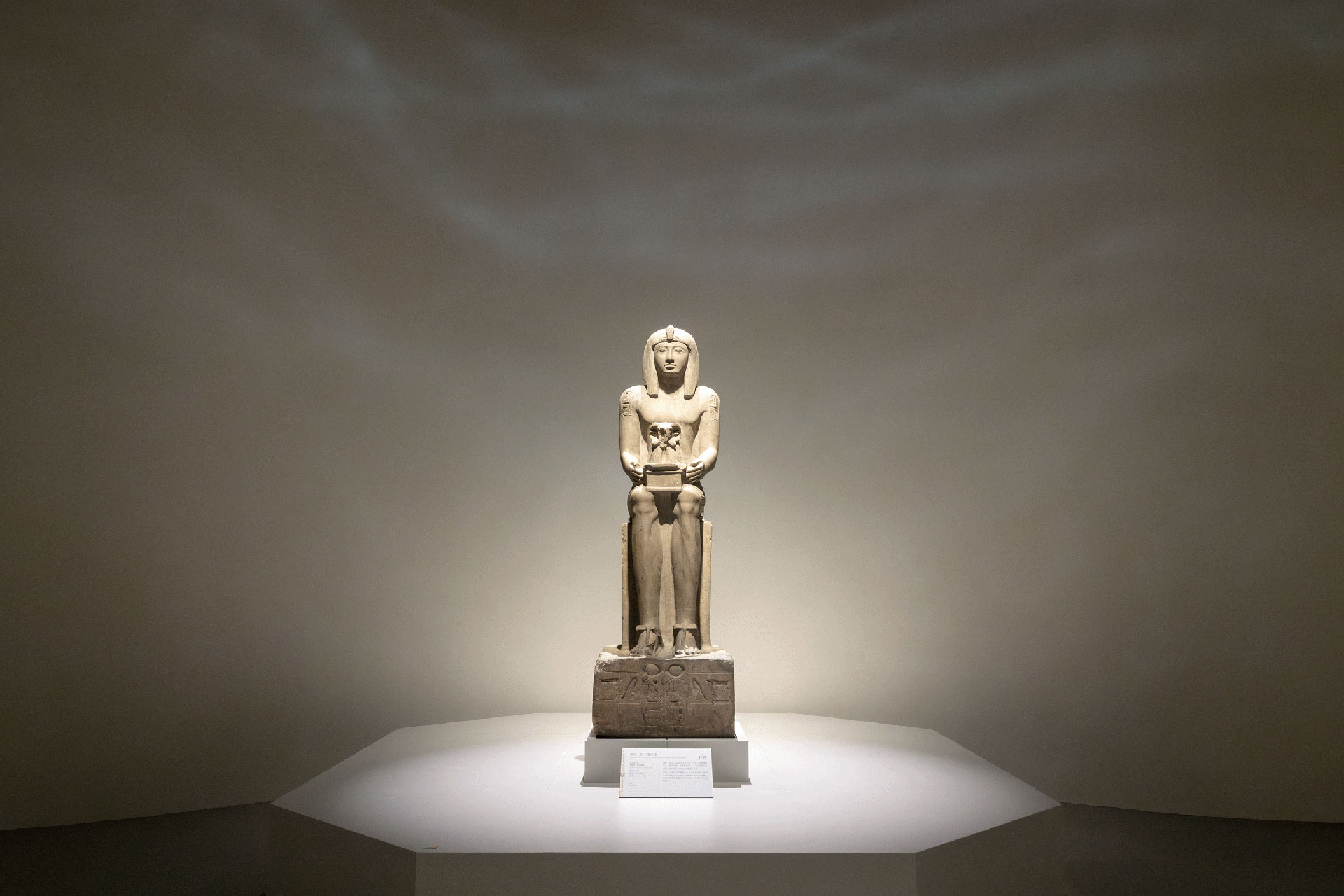
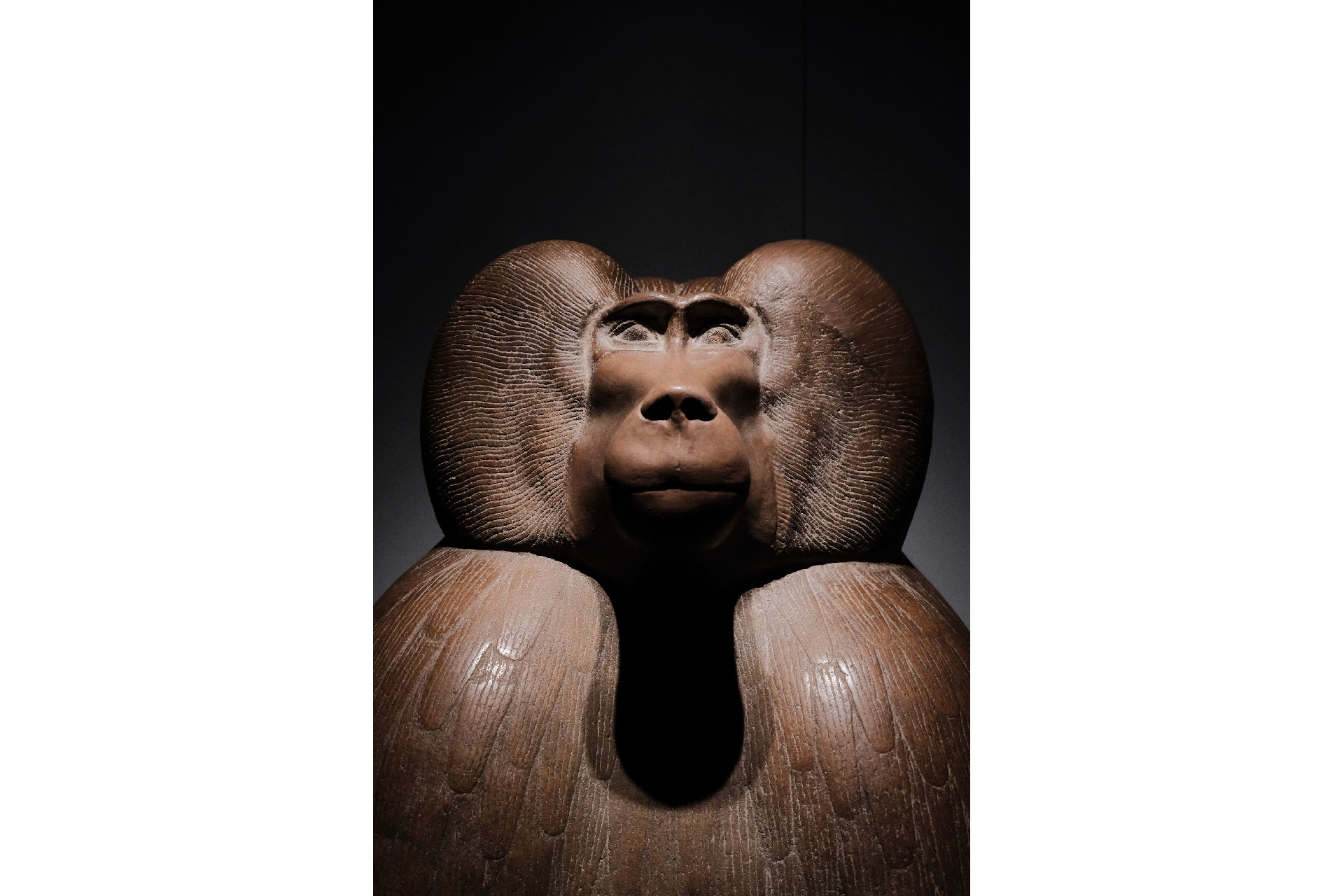
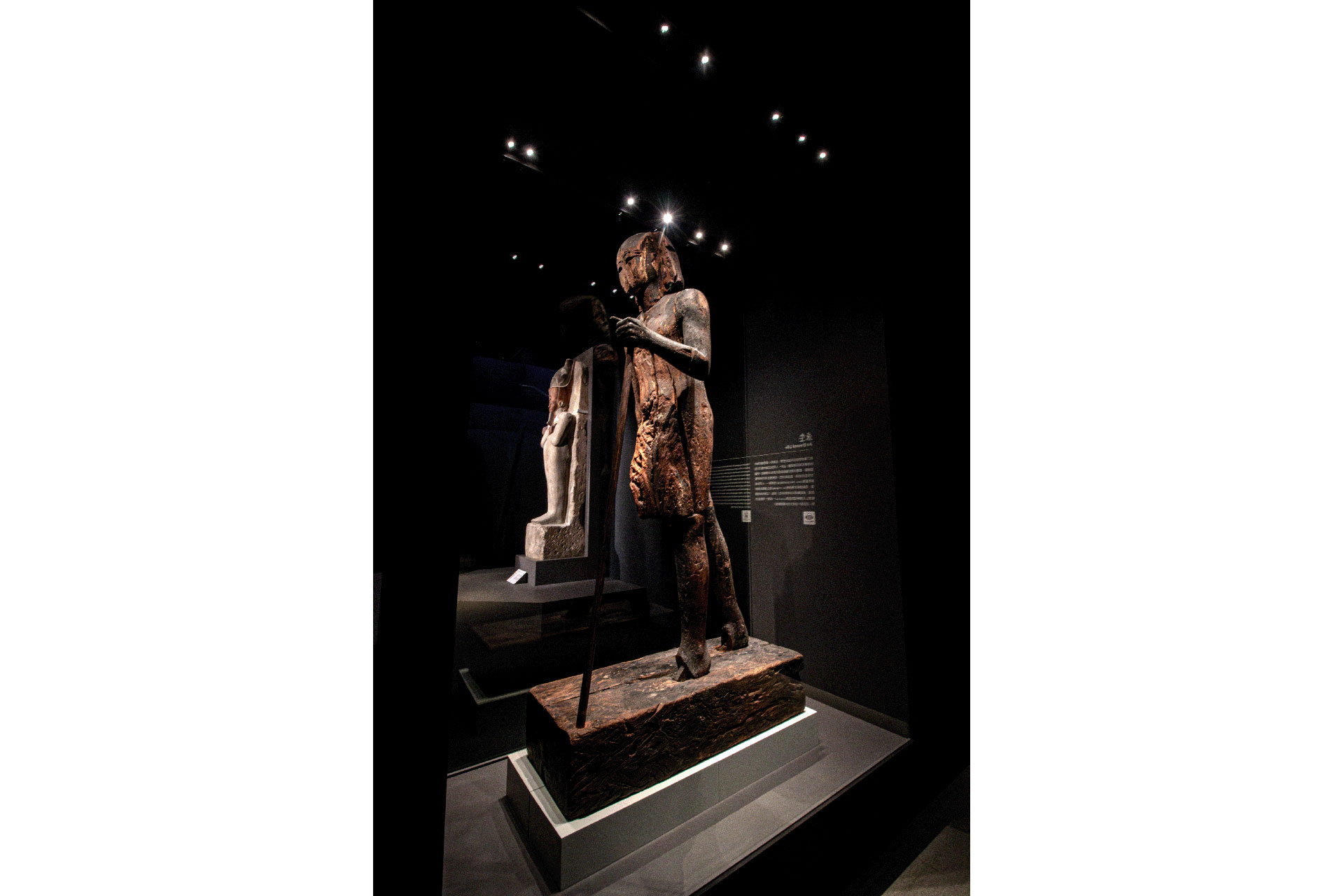
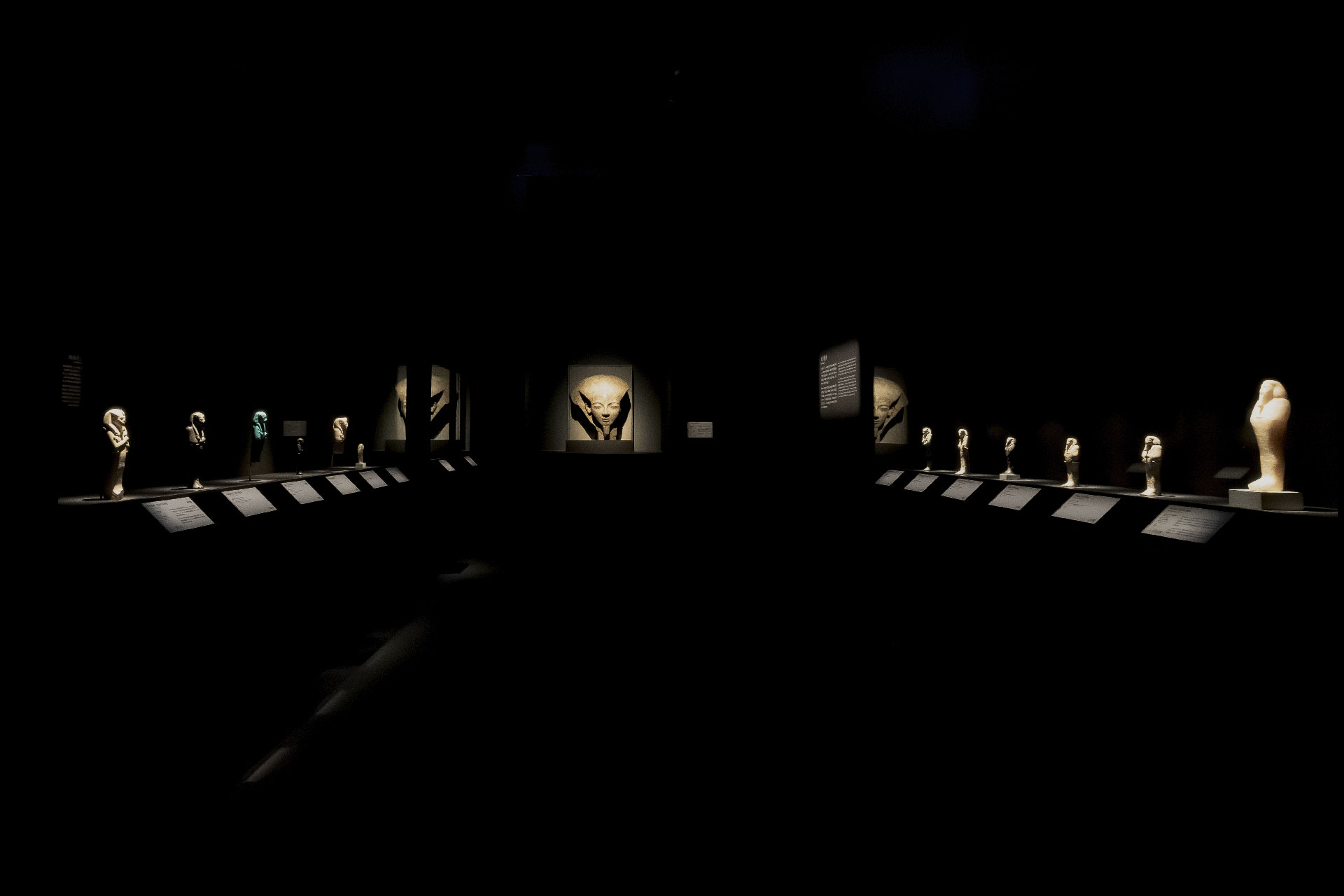
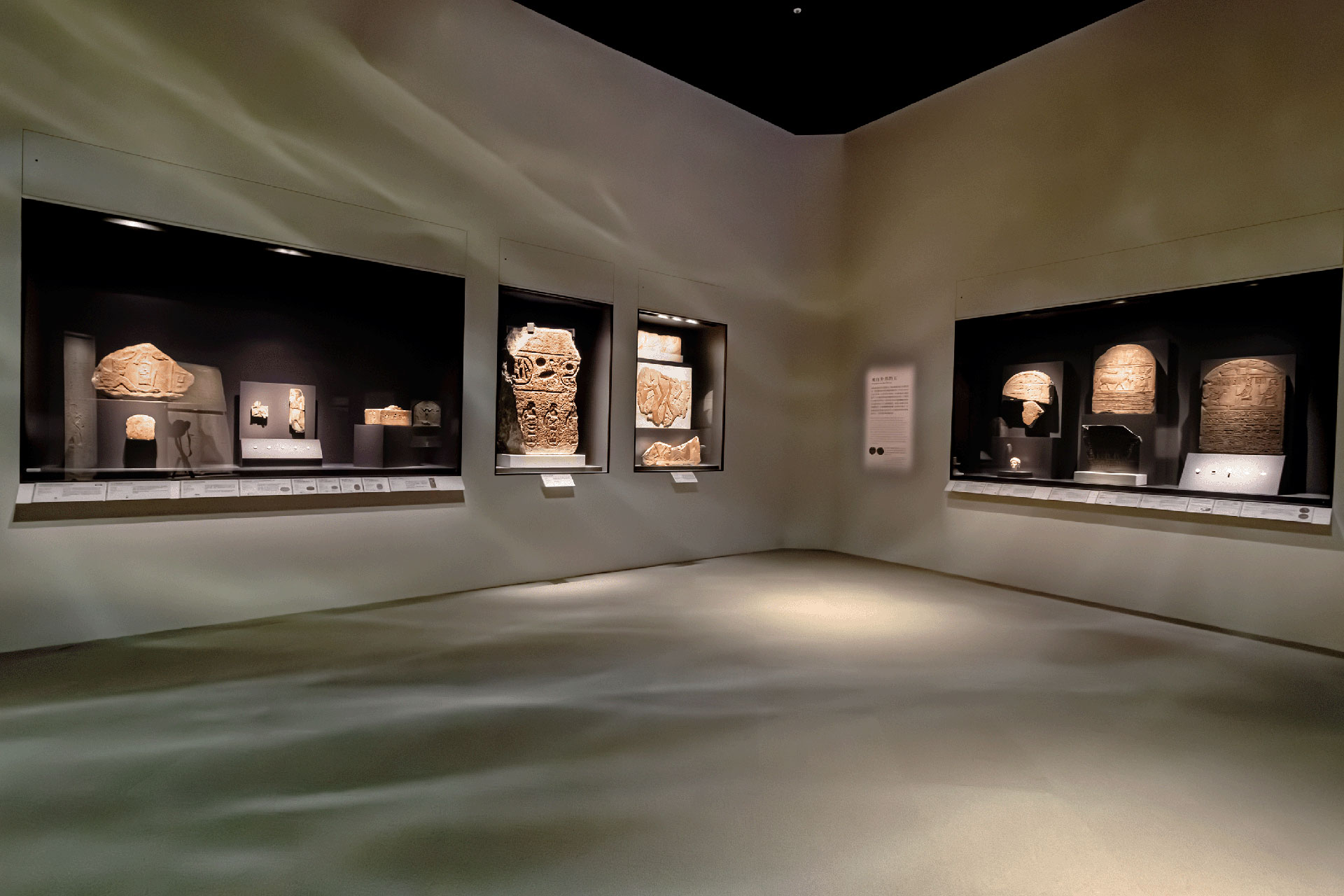
In this exhibition, the “light of power” is made tangible. Lighting is not only for illumination, but a tool to organise space, guide viewing, and direct visitor movement. Colour temperature and background light are not decorative; they are narrative devices that shift across the seven galleries, shaping perceptions of authority, divinity, and eternal life.
The approach borrows theatrical spatial language to control rhythm, sight-lines, and distance, without turning the museum into theatre. Egypt, Land of the Pharaohs opens with low-contrast, flowing light that evokes the Nile. Born of the Gods becomes more directional, separating key objects to frame the pharaoh as divinely defined.
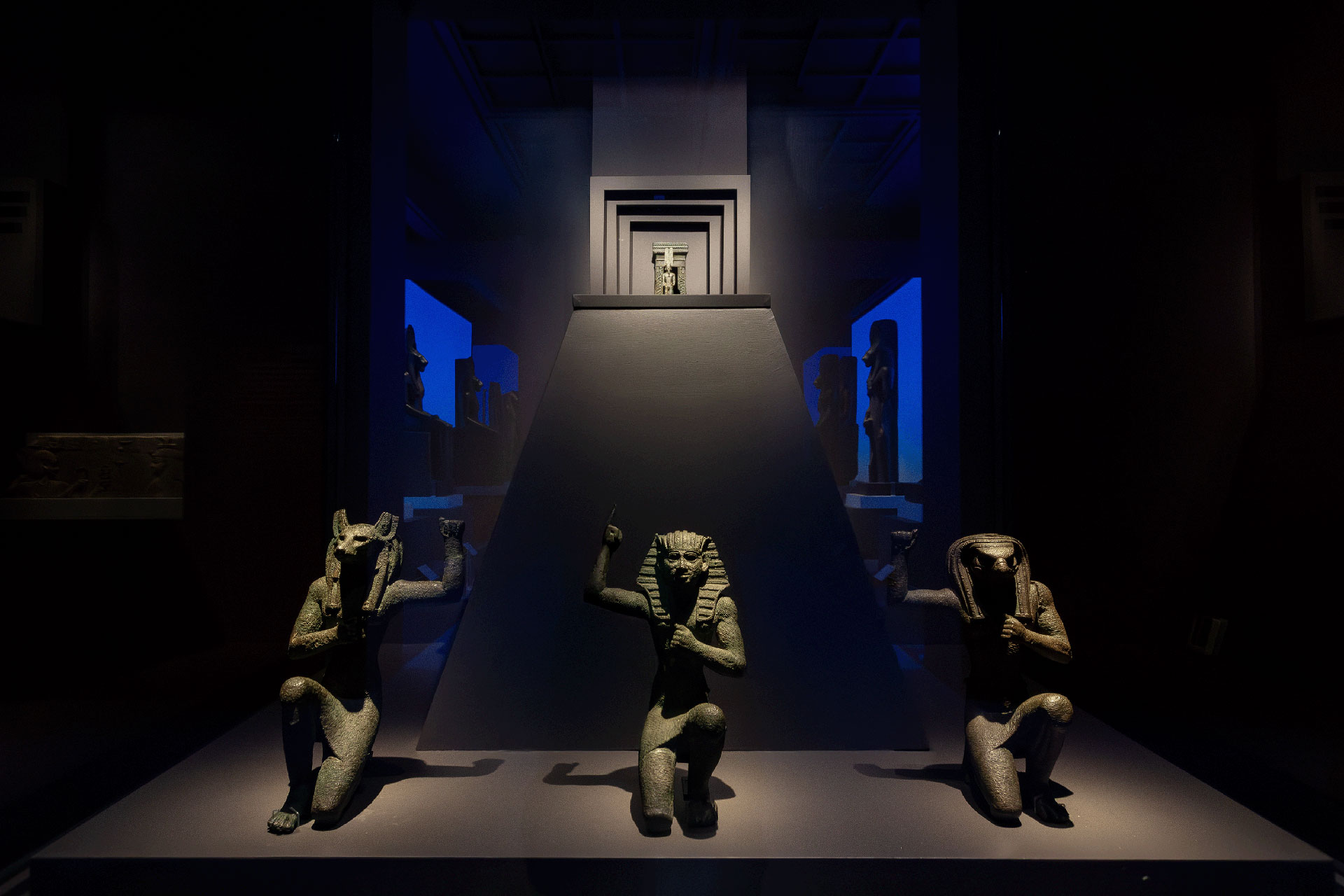
In The King as High Priest, a long, compressed corridor reduces ambient light and pulls the eye to a terminal vista: focused vertical light isolates a miniature shrine of Amun-Ra and kneeling figures from a sacred barque ensemble, forming a ritual focal point.
The Royal Family and Ruling Egypt return to a restrained museum vocabulary, using controlled brightness and shadow to express lineage and governance.
Foreign Policy restores direction as overall light levels fall.
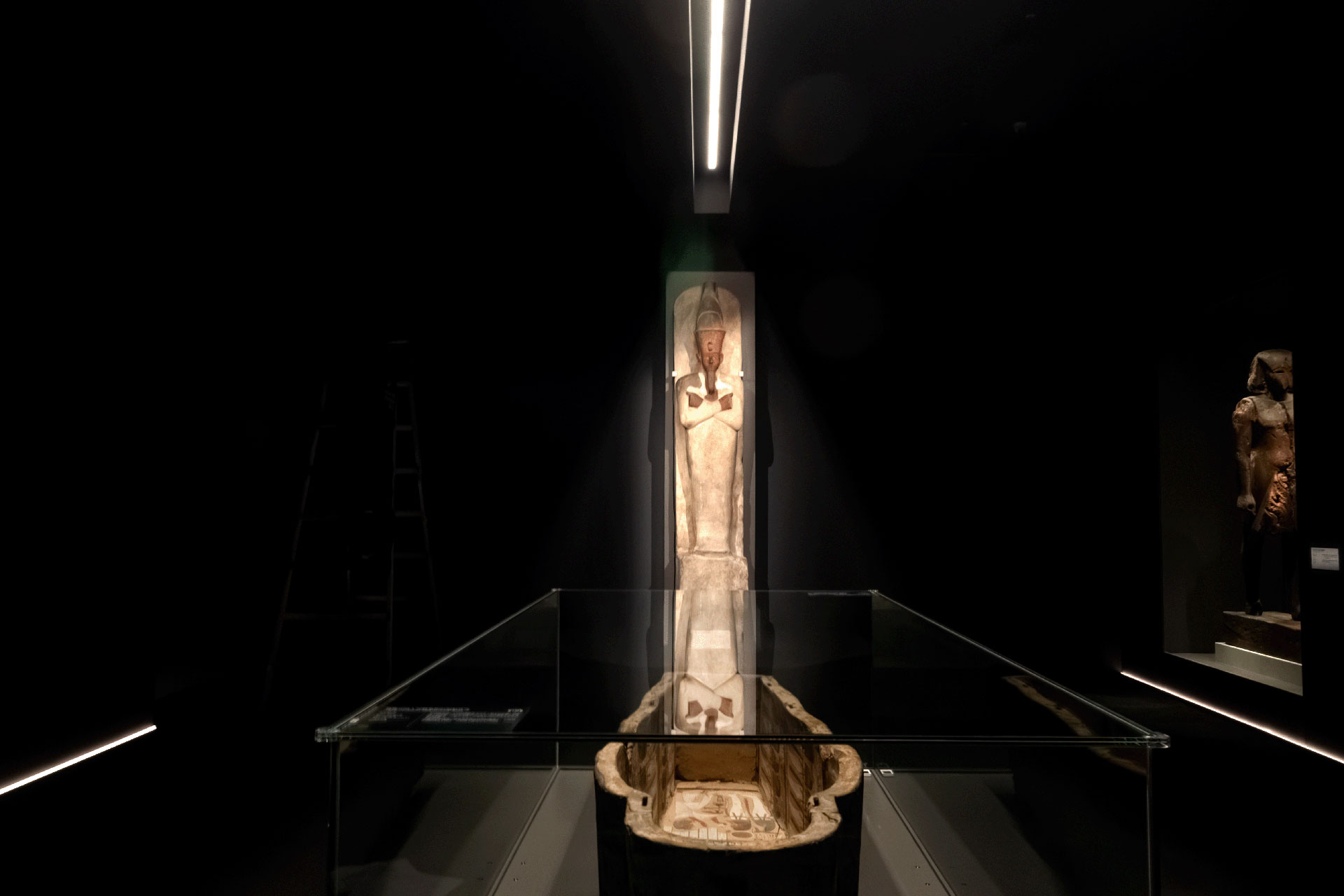
An Eternal Life ends in burial-chamber darkness, where a single vertical beam reveals the pharaoh’s image and sarcophagus—symbolic, not functional—suggesting passage from the earthly to the eternal while visitors remain in shadow.