
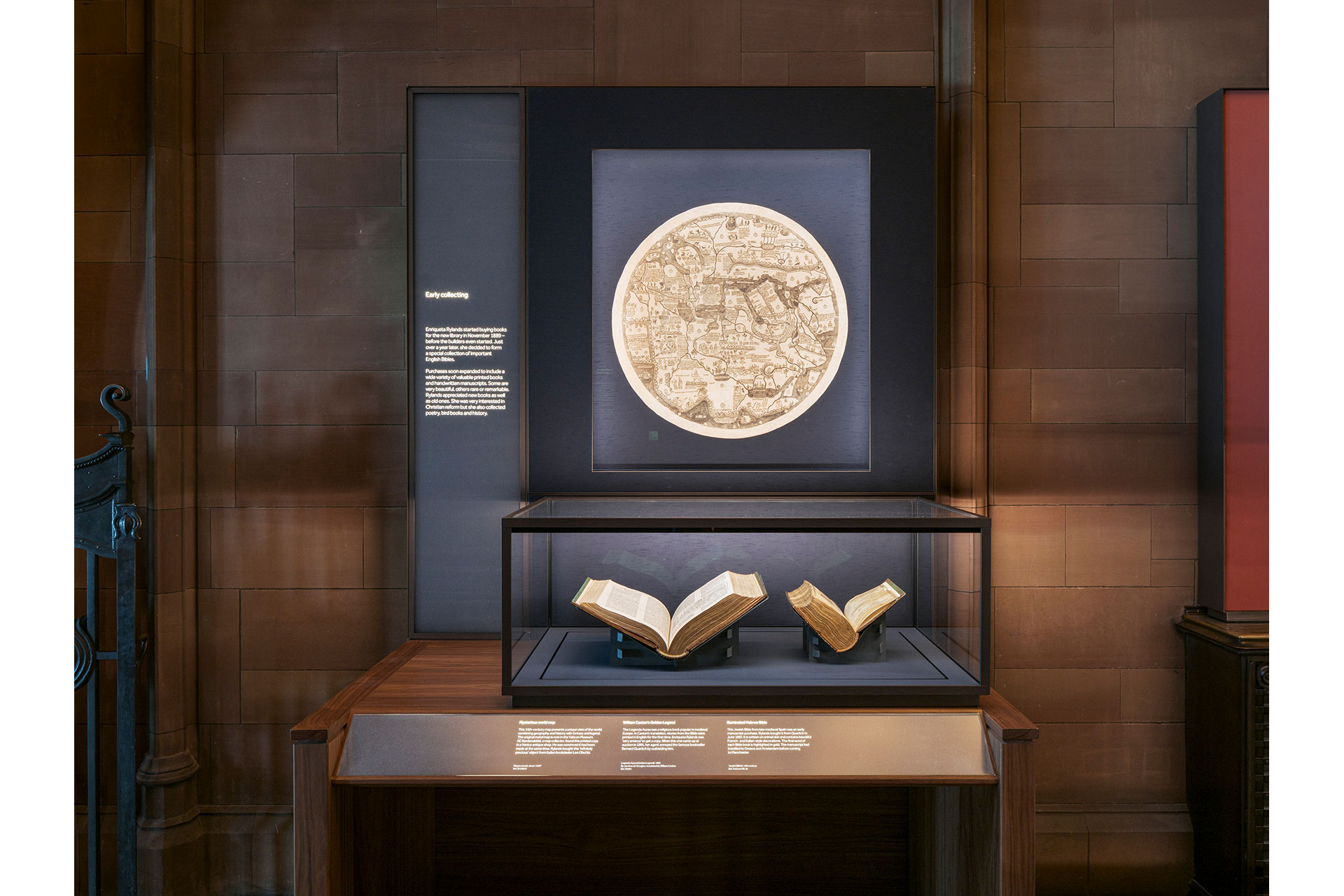
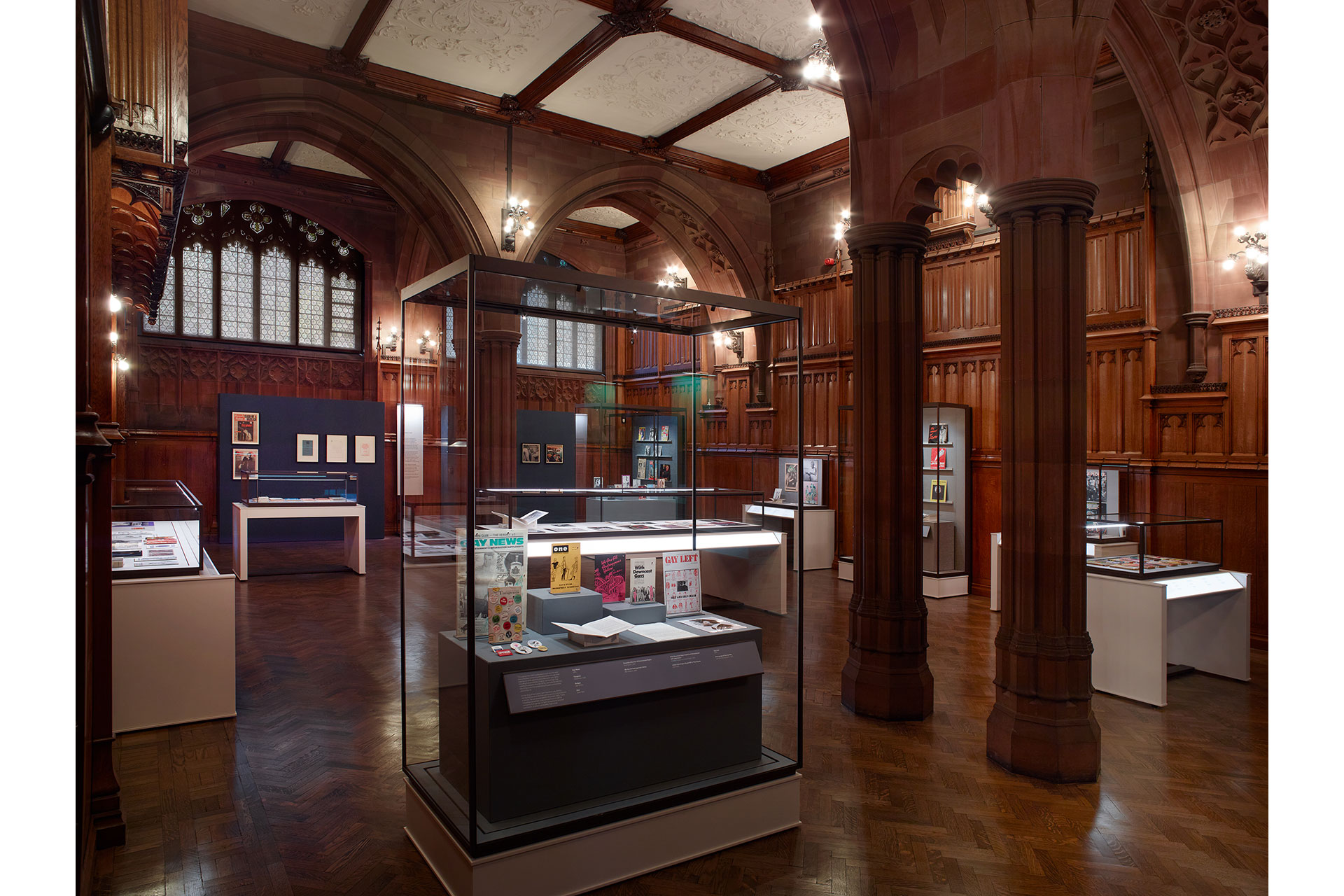
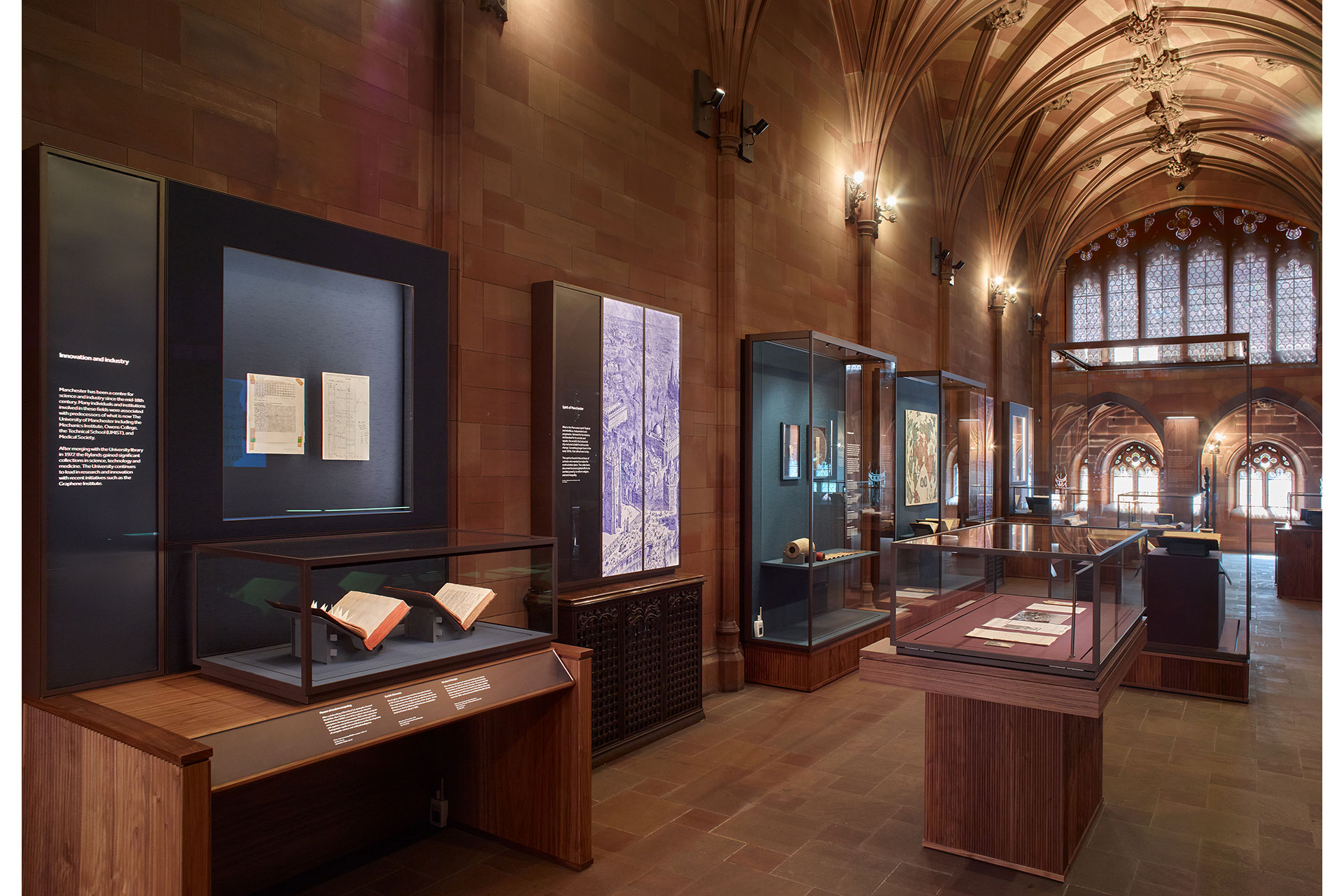
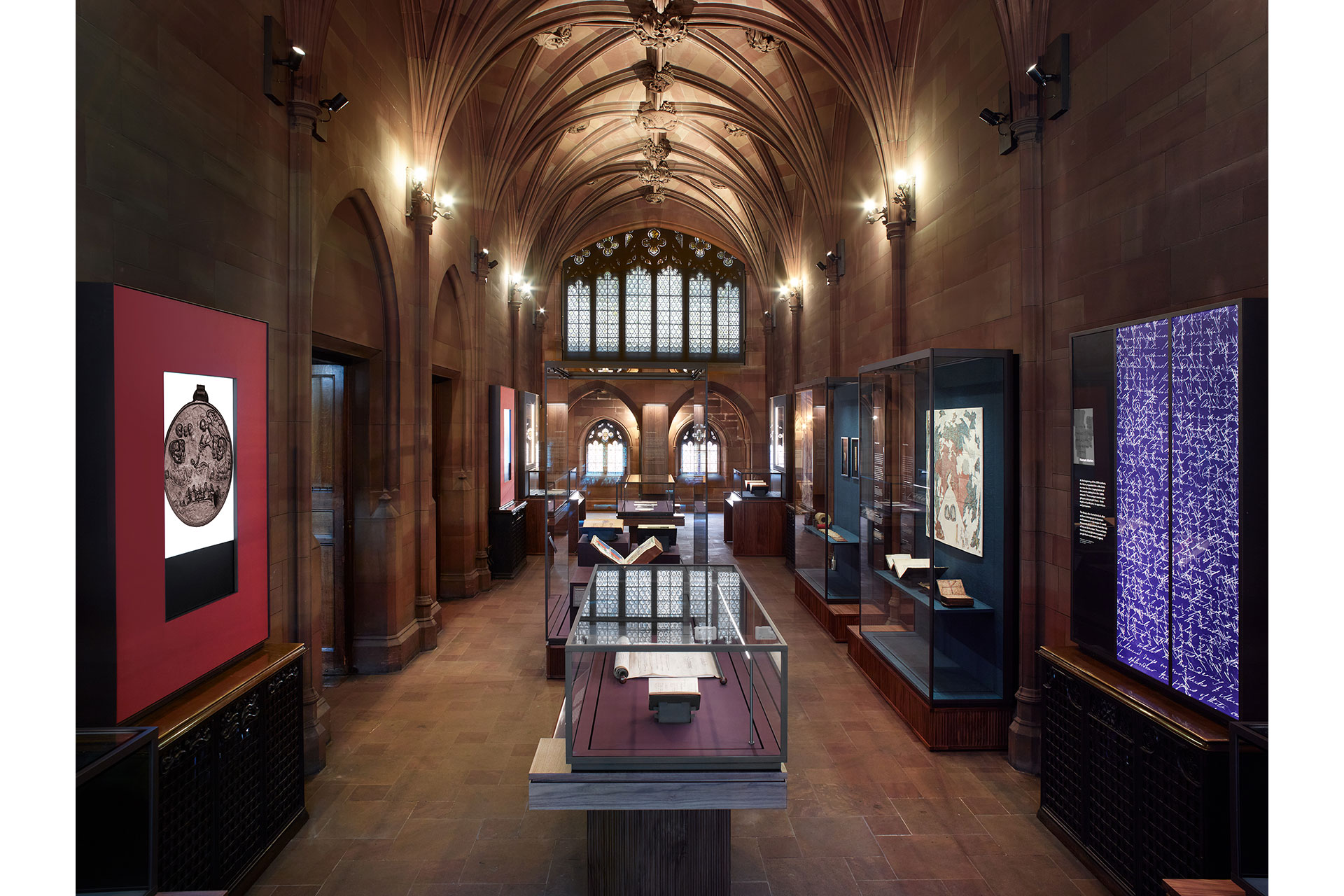
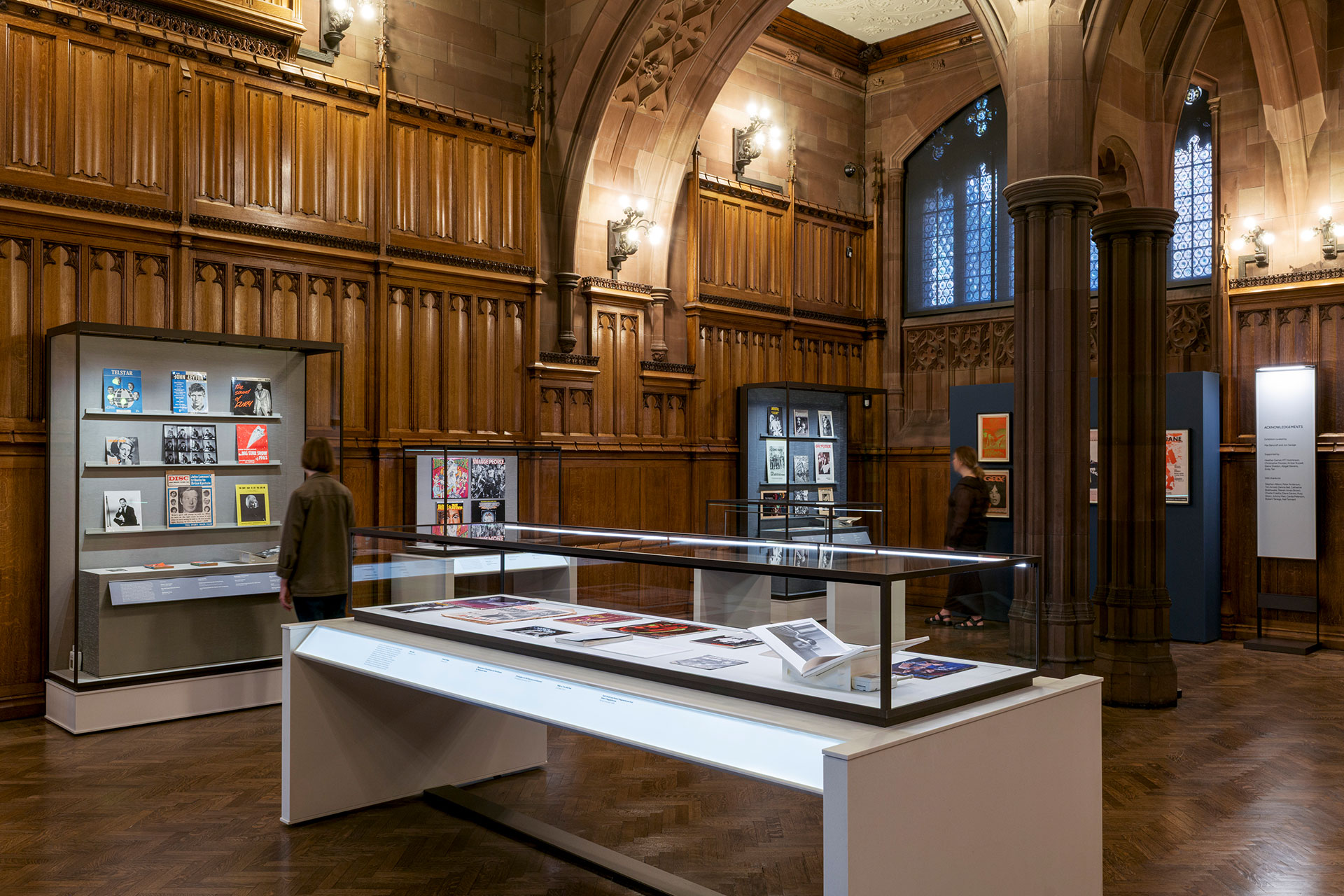
Opening on 1st January 1900, the John Rylands Library in Manchester holds a world-class collection of treasures, housed in an astonishing Grade 1-listed neo-Gothic masterpiece. One of the first Manchester buildings to have electric lighting, original lightbulbs from their fabulous decoratives are held in the Science Museum collection.
When DHA Designs were appointed as lighting consultants to the John Rylands Next Chapter project (celebrating 125 years), they wanted to introduce museum-quality lighting systems without losing the magic of the historic spaces. The project required delicate collaboration with heritage architects Donald Insall Associates, and exhibition designers Nissen Richards Studio.
The challenge of the project was to reintroduce daylight to the permanent and temporary galleries and utilise the famous decorative sconces, without overwhelming the collection. DHA also re-introduced uplighting to the vaulted ceiling, which together with the case lighting meant that 4 light sources had to be perfectly balanced to conservation standards. The extraordinary objects – including the Gutenberg Bible, Shakespeare’s First Folio and the oldest surviving fragment of the New Testament – required less than 50 lux in total.
The first move was to remove the heavy black curtains that obscured the daylight and introduce a Mermet 99% charcoal scrim which revealed views of the unique windows without harming the objects. Next, DHA tested various new LED-filament lamps to suit the lowered light levels, setting on a 2700K pearl lamp which dimmed on the existing (antiquated) KNX control system. These sources, together with the uplight were set to be only 25 lux at case level.
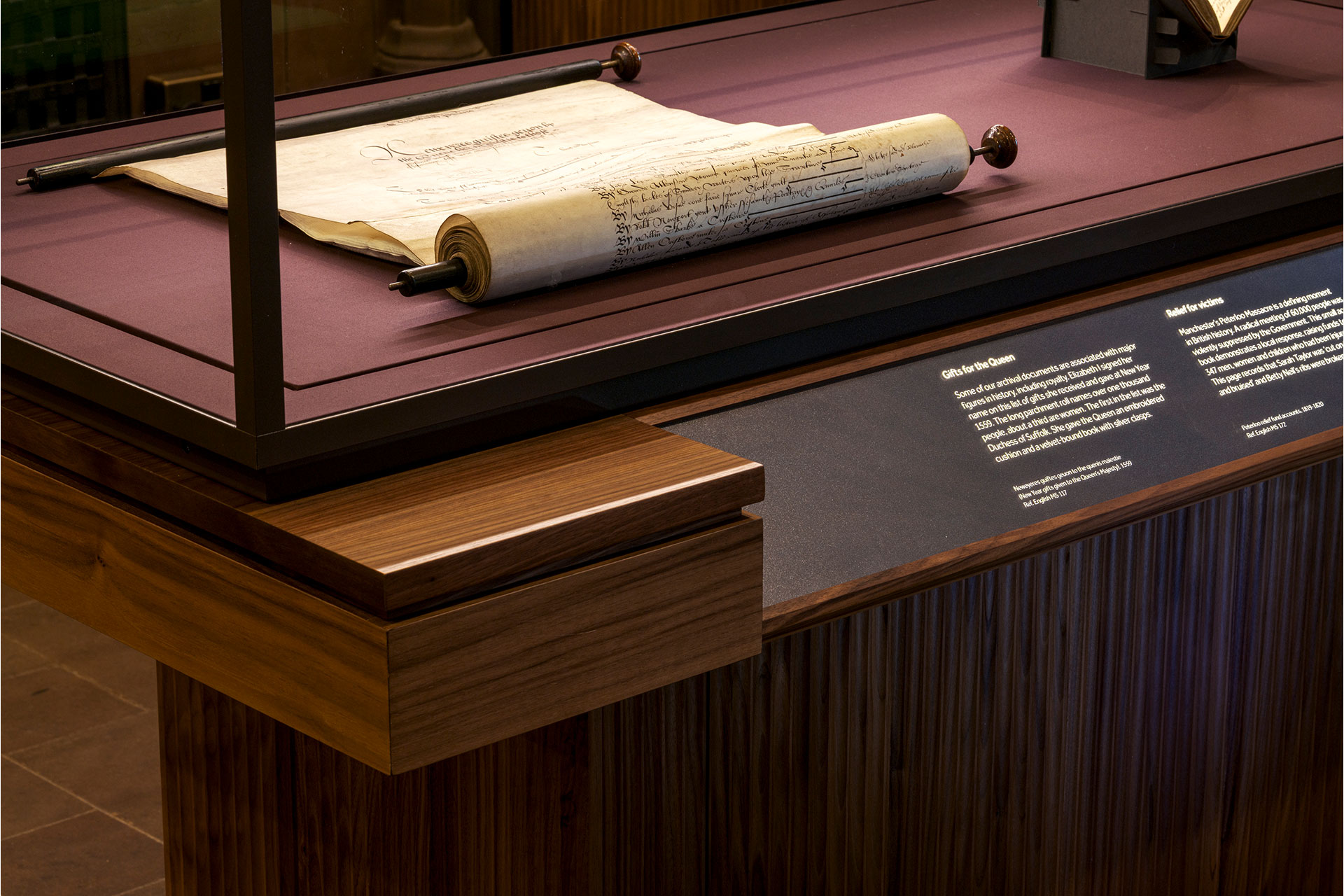
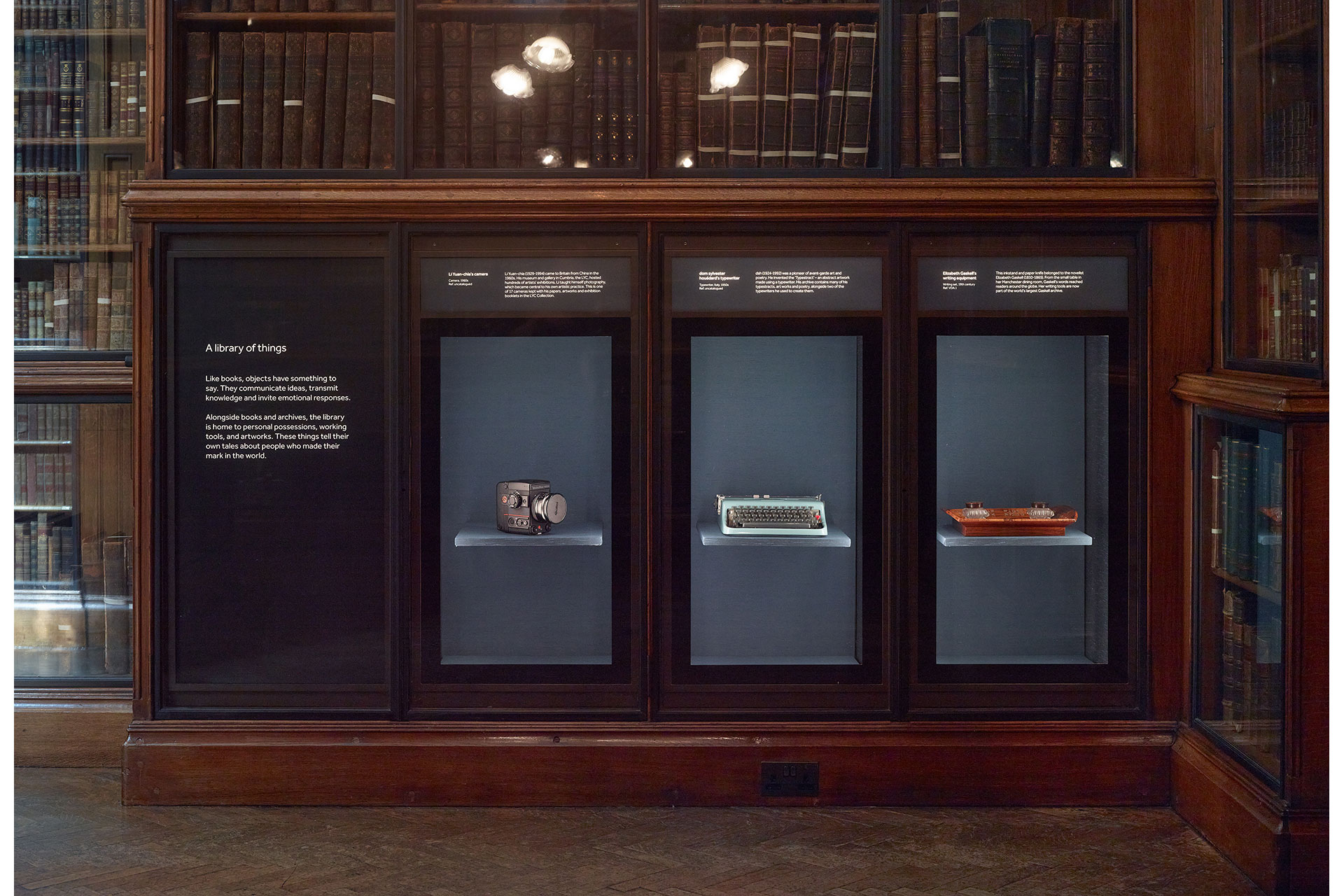
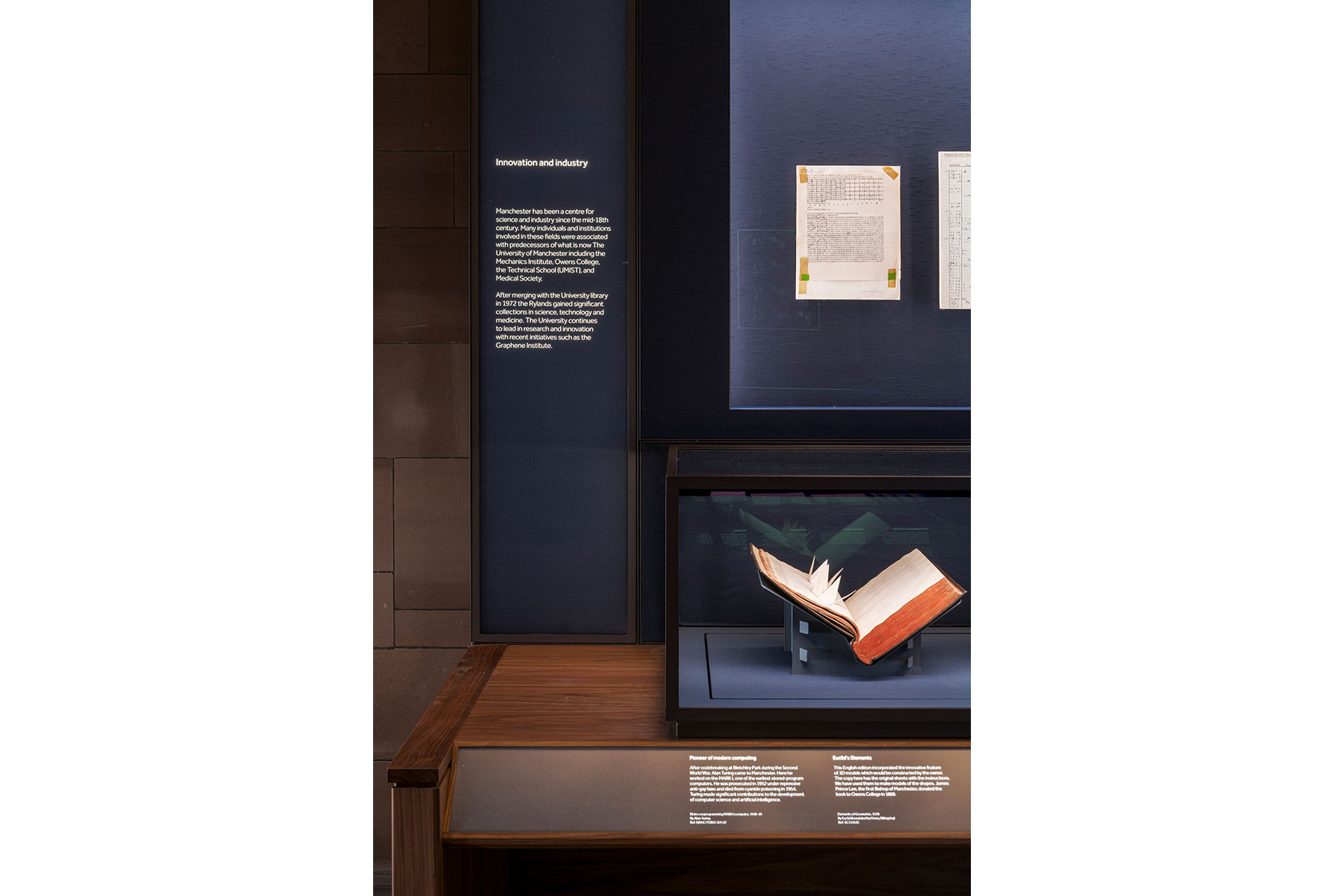
DHA worked very closely with case manufacturer Meyvaert to ensure lighting was seamlessly integrated into the bespoke cases, including concealing 10mm rotatable lightbars within the frames of desk-cases to magically light cradled manuscripts. Larger cases had a LV magnetic track system with tiny spotlights installed and focussed by DHA to conservation standards. All graphics were made with custom lightsheets so labels could glow as there were no overhead lighting positions. Every luminaire was locally dimmed and then locked away by DHA so it could not be accidentally changed, essential to conservation.
Although only two small spaces, the attention to detailing and finishing was a labour of love for the whole project team, with the total lighting load designed to around 500W.