
“When you enter the church, it feels as if nothing has changed — everything feels natural, as if it has always been like this, but with a little more sparkle.”
This reflection from the client captures the core ambition of the lighting of St. Jacob’s Church: to transform perception without drawing attention to the transformation itself.
St. Jacob’s Church, owned by the Diocese of Stockholm, is a historically and architecturally significant space used for worship, cultural events, and public gatherings. During a renovation that introduced meeting rooms within the church structure, the opportunity arose to re-evaluate the lighting of the main church interior through a holistic and sensitive approach. The challenge was not only to improve visual comfort and functionality, but to do so while respecting the church’s cultural heritage, architectural integrity, and antiquarian regulations.
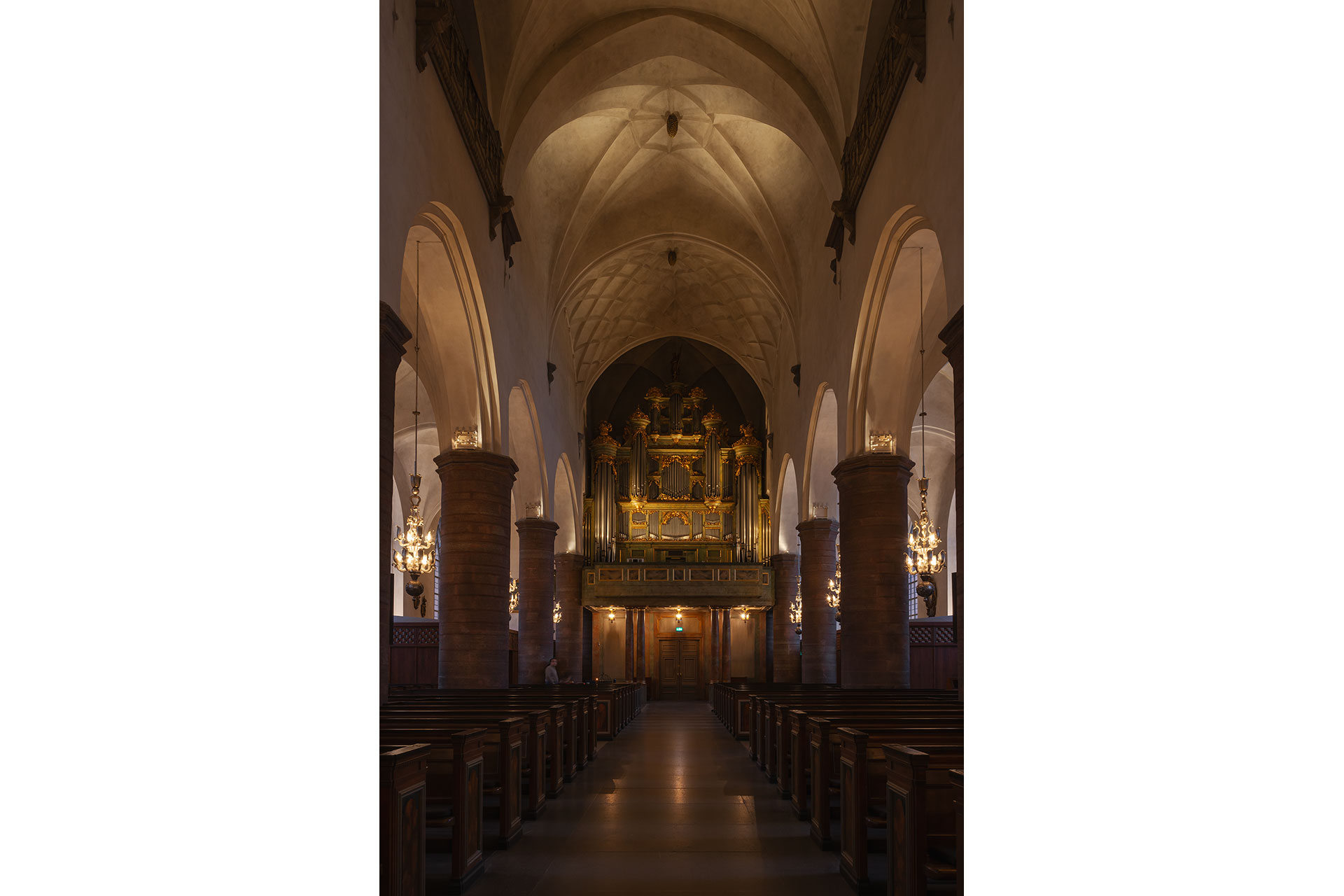
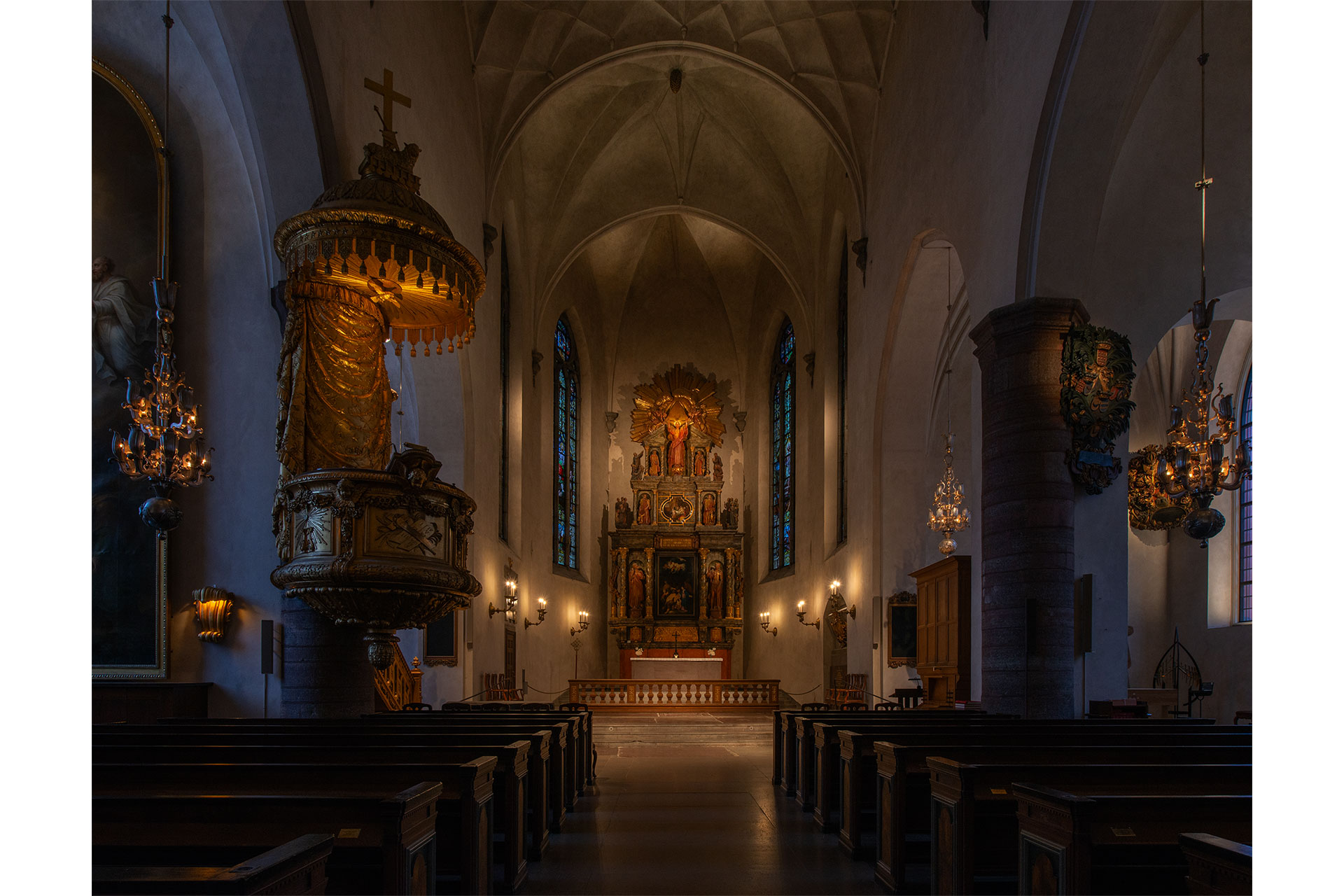
One of the project’s primary challenges lay in the placement and installation of luminaires. Every intervention needed to be discreet, reversible where possible, and minimally invasive. In close collaboration with architects, antiquarian authorities, and the County Administrative Board, bespoke luminaire rigs were developed with the fewest possible attachment points, often utilizing existing holes to avoid new damage to historic surfaces. The lighting design carefully negotiates visibility and invisibility — especially along the primary axis of perception from entrance to altar — ensuring that technical elements never compete with the sacred architecture.
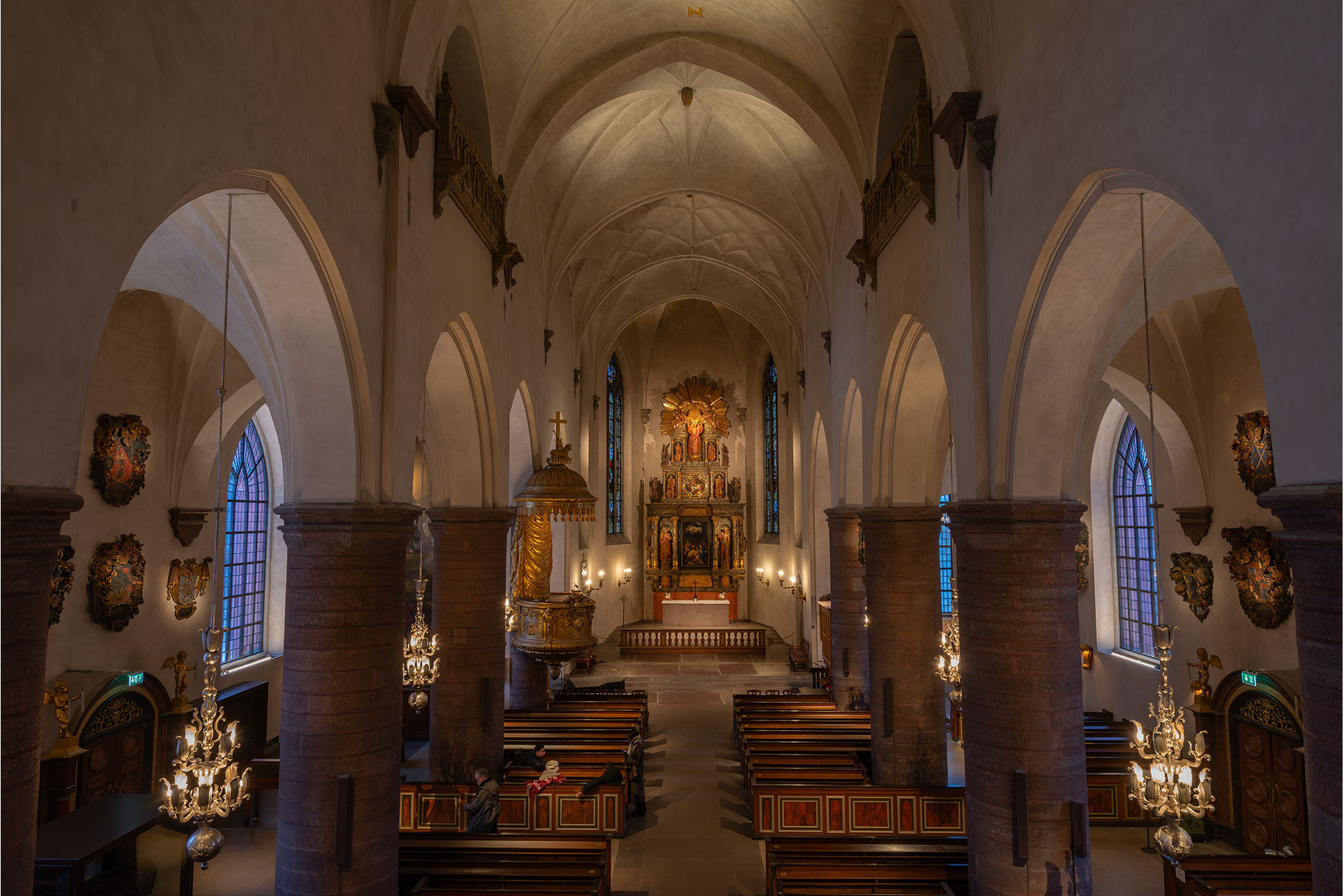
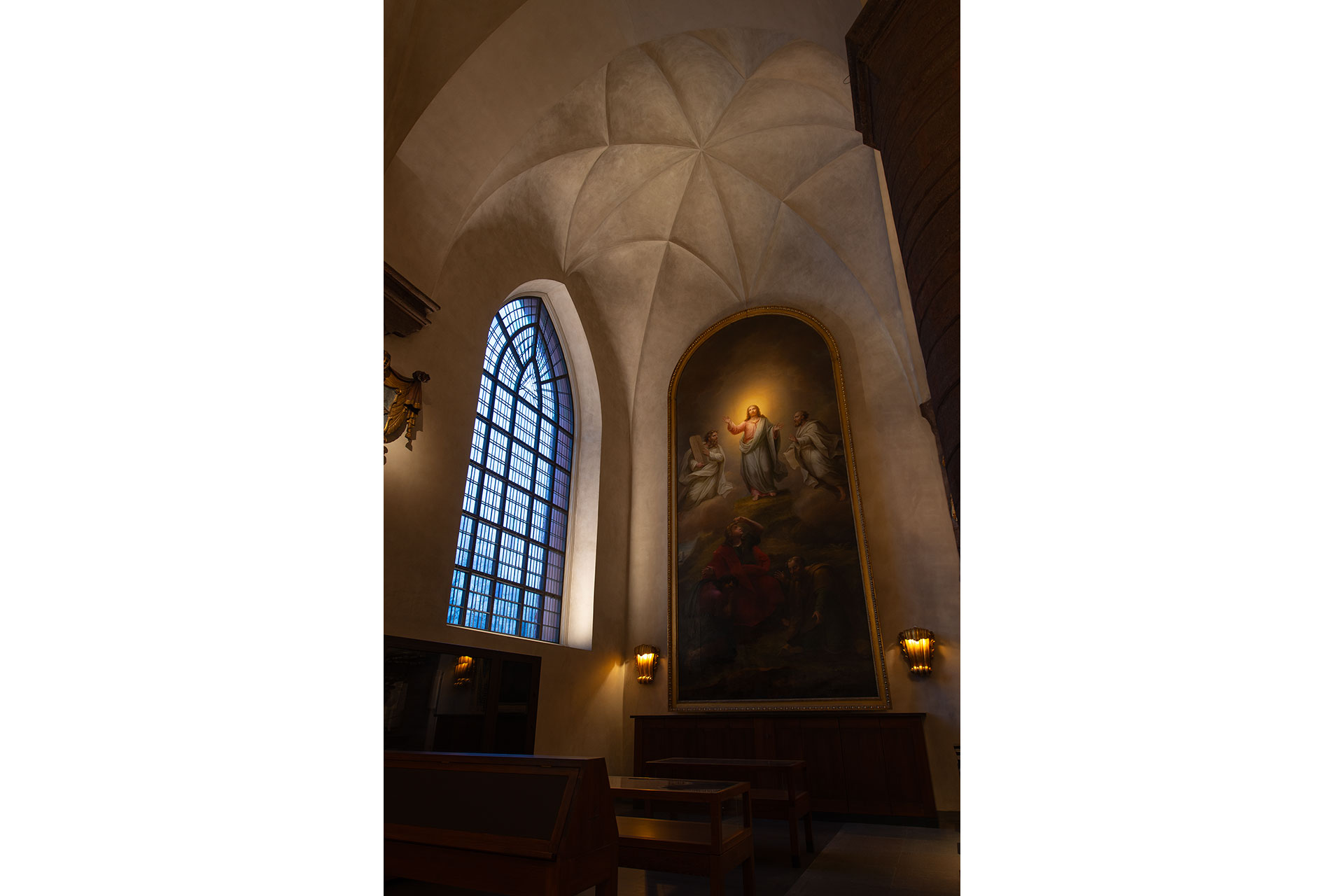
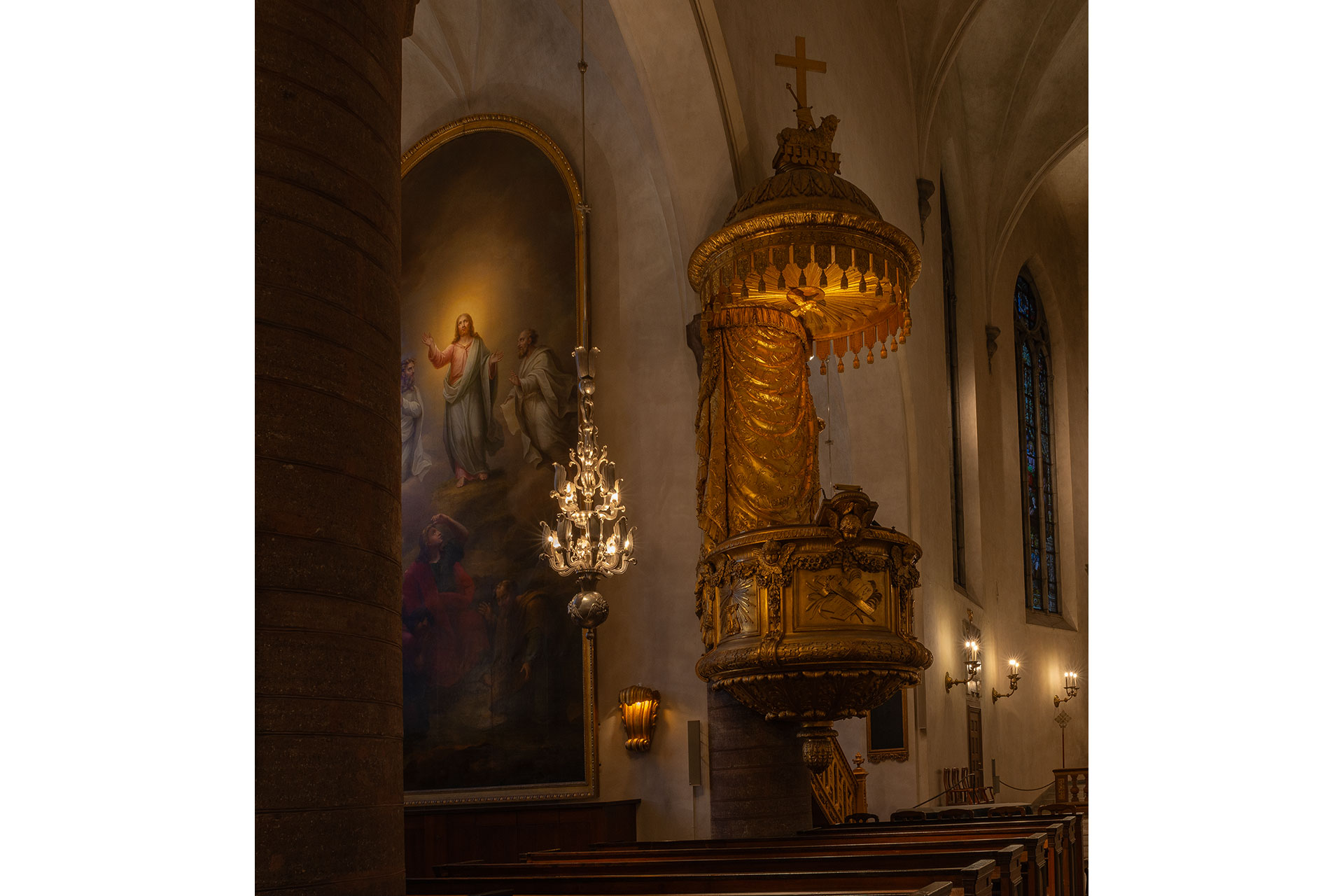
The lighting concept is grounded in subtlety. The intention is for the light to be perceived as a natural extension of daylight, enhancing spatial clarity while maintaining the church’s familiar atmosphere. Even illumination across the nave improves legibility for reading and congregation seating, while a balanced brightness level brings warmth and openness to evening use. The lighting accentuates the church’s architectural rhythm and cultural details, allowing history and craftsmanship to emerge gently rather than theatrically.
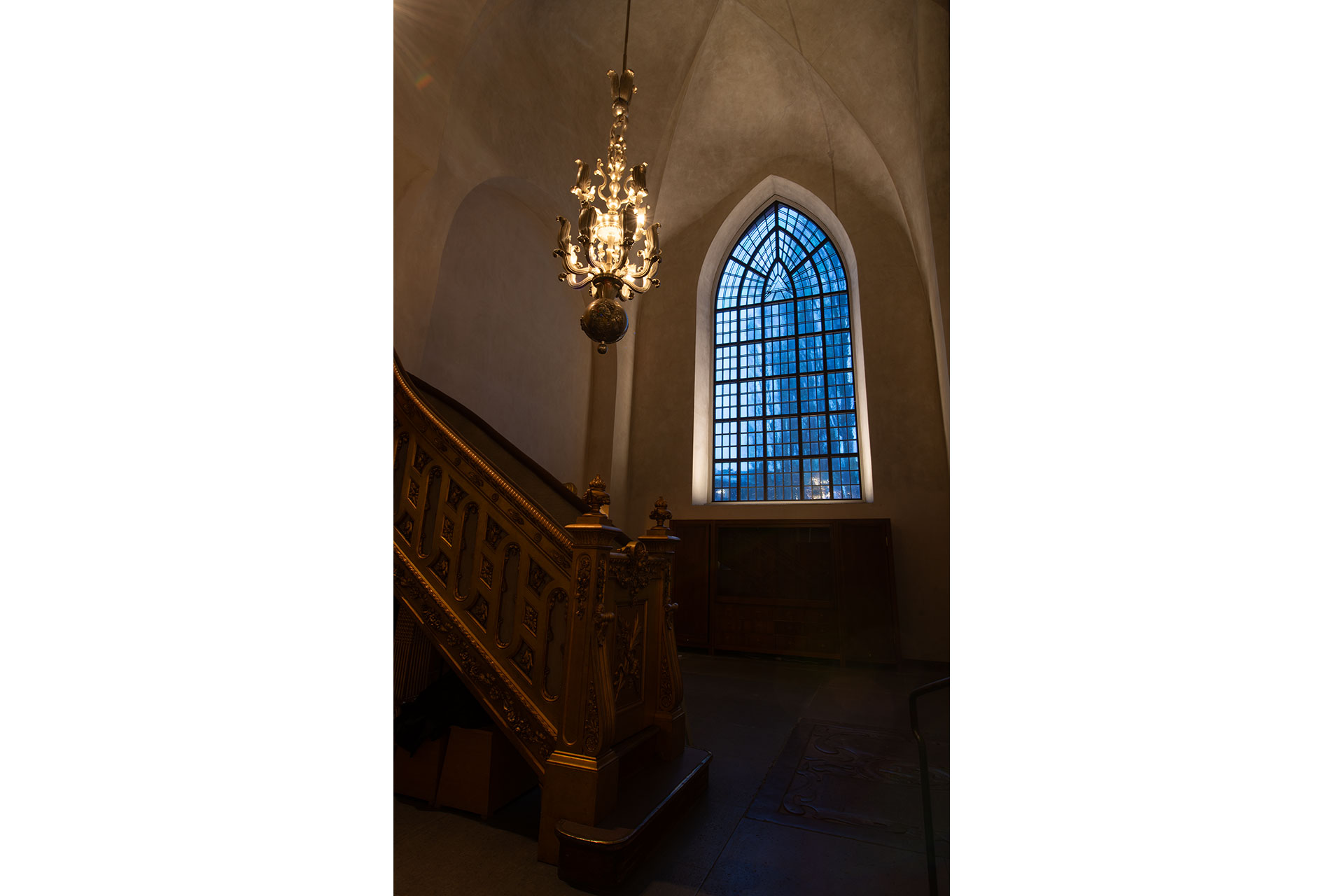
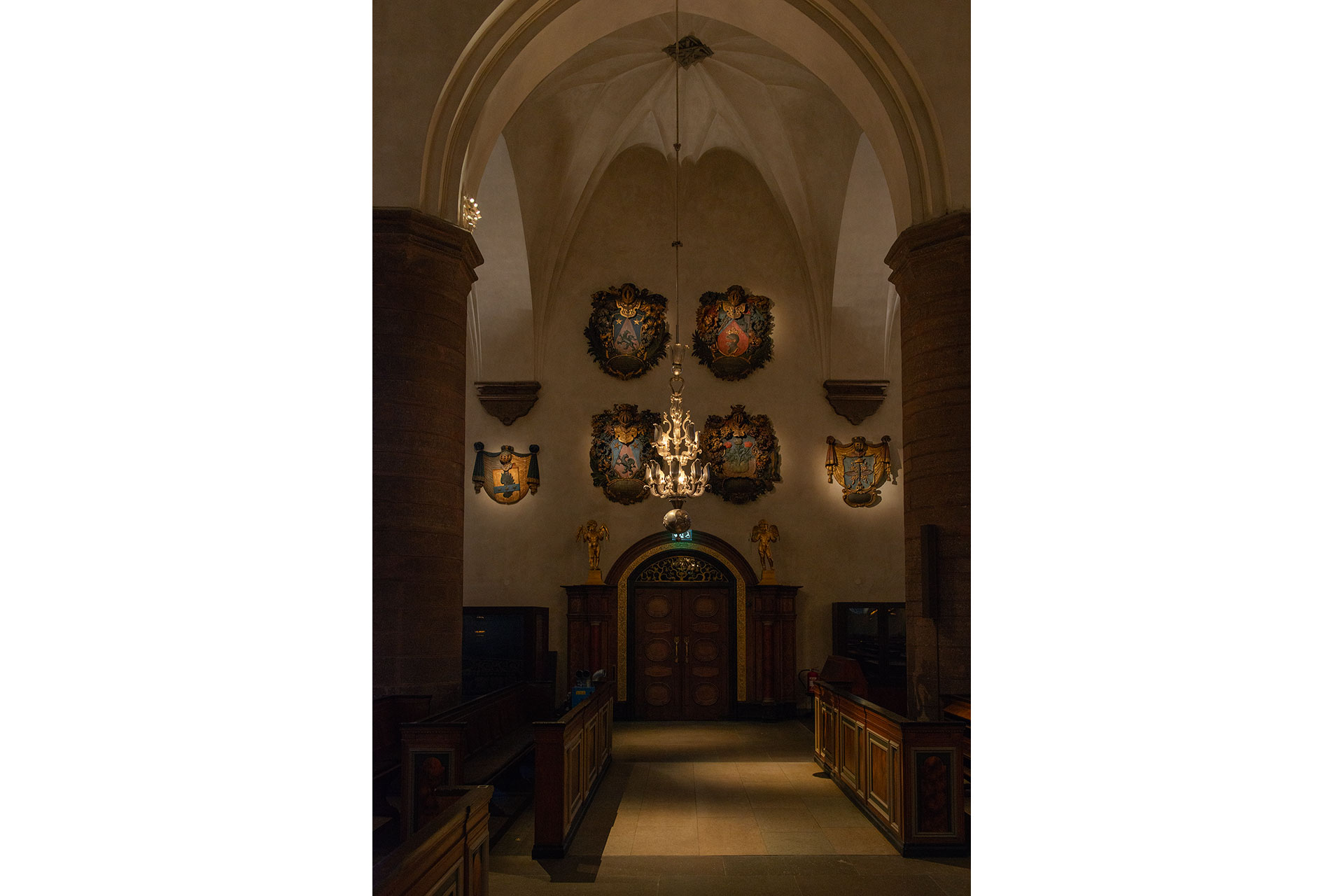
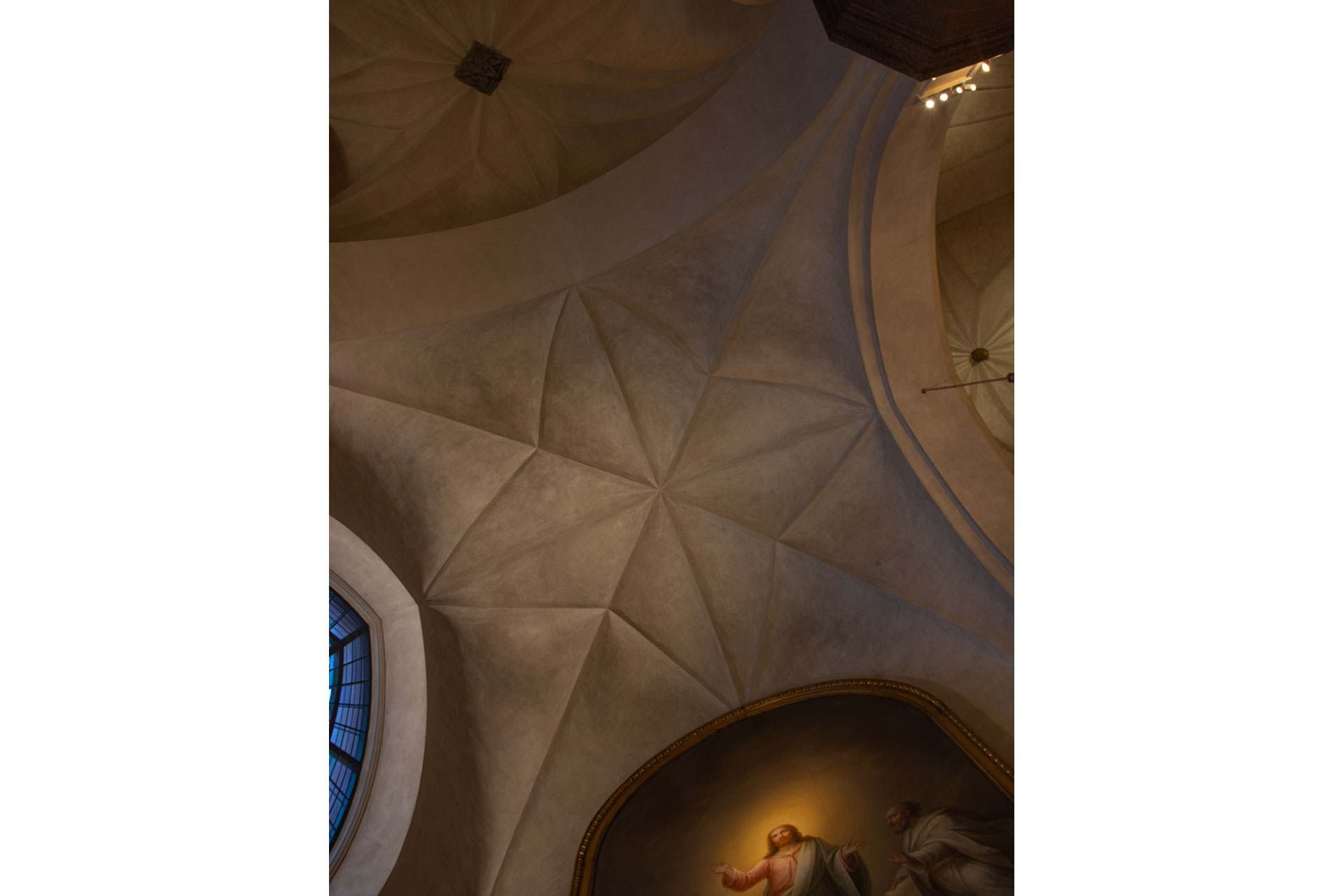
Existing chandeliers and wall sconces were retained, restored, and updated with modern light sources, preserving their historical presence while improving performance. New, discreet LED luminaires illuminate the ceiling vaults and window arches, reinforcing the verticality and daylight character of the space. Hidden fixtures within window niches create soft gradients of light, while targeted reading lights at benches enhance usability. Carefully focused lighting highlights the choir, altar, altarpiece, and organ, ensuring visual clarity for services and performances alike.
AFRY entered the project in late 2023 and has been involved throughout all stages — from concept development and test lightings to construction documentation and on-site installation. Multiple full-scale lighting tests were conducted and evaluated with stakeholders, ensuring informed decisions and regulatory approval. The final system includes programmable lighting scenes tailored to different events, supporting both flexibility and long-term adaptability.
Sustainability has been integral to the design process. Every luminaire serves a clear purpose, allowing the overall number, size, and power consumption to be minimized. Through iterative testing, both material use and installed wattage were reduced. The ability to fine-tune light levels and scenes ensures energy efficiency over time. Thoughtful, curated design, we believe, is sustainability in its most enduring form.