
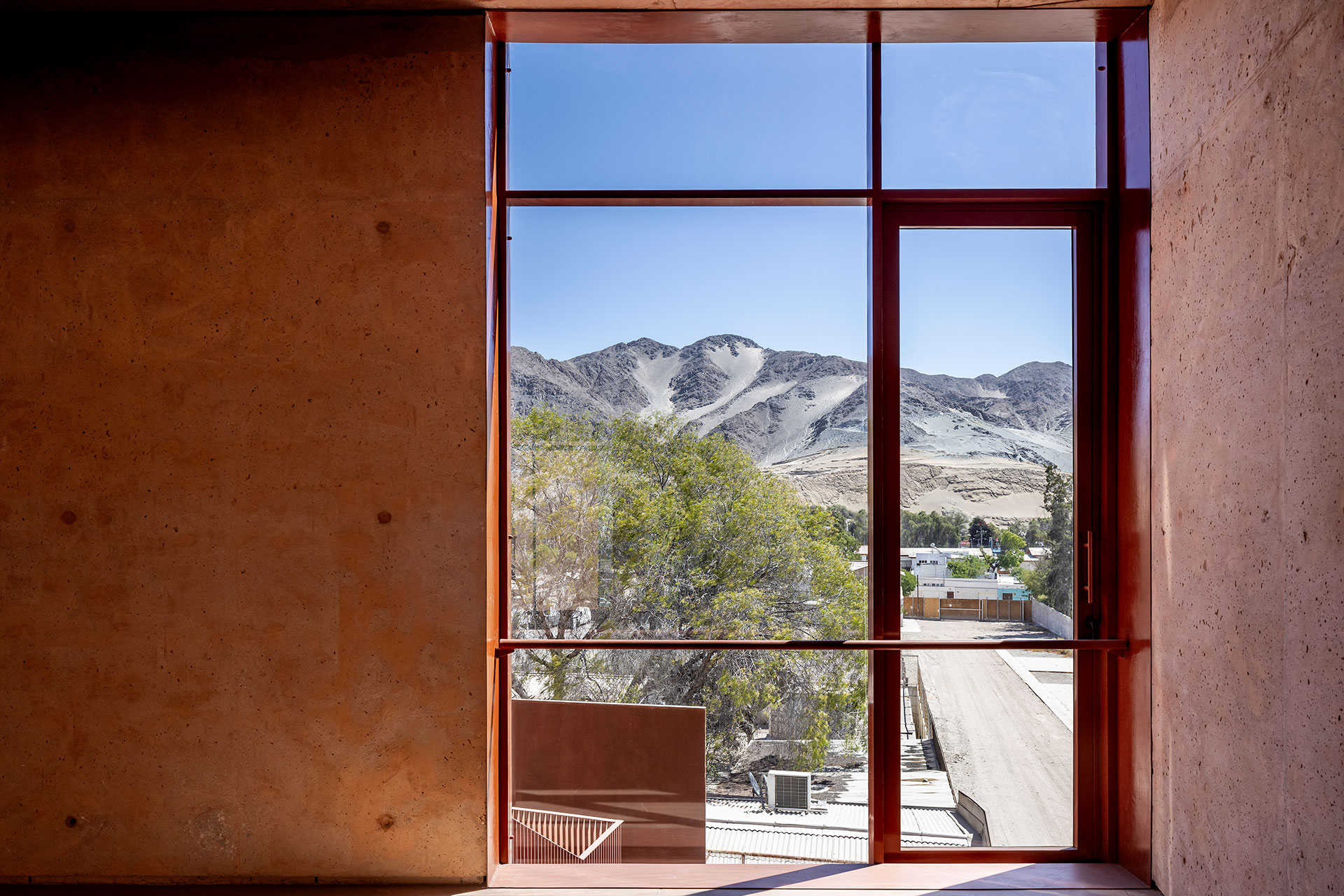
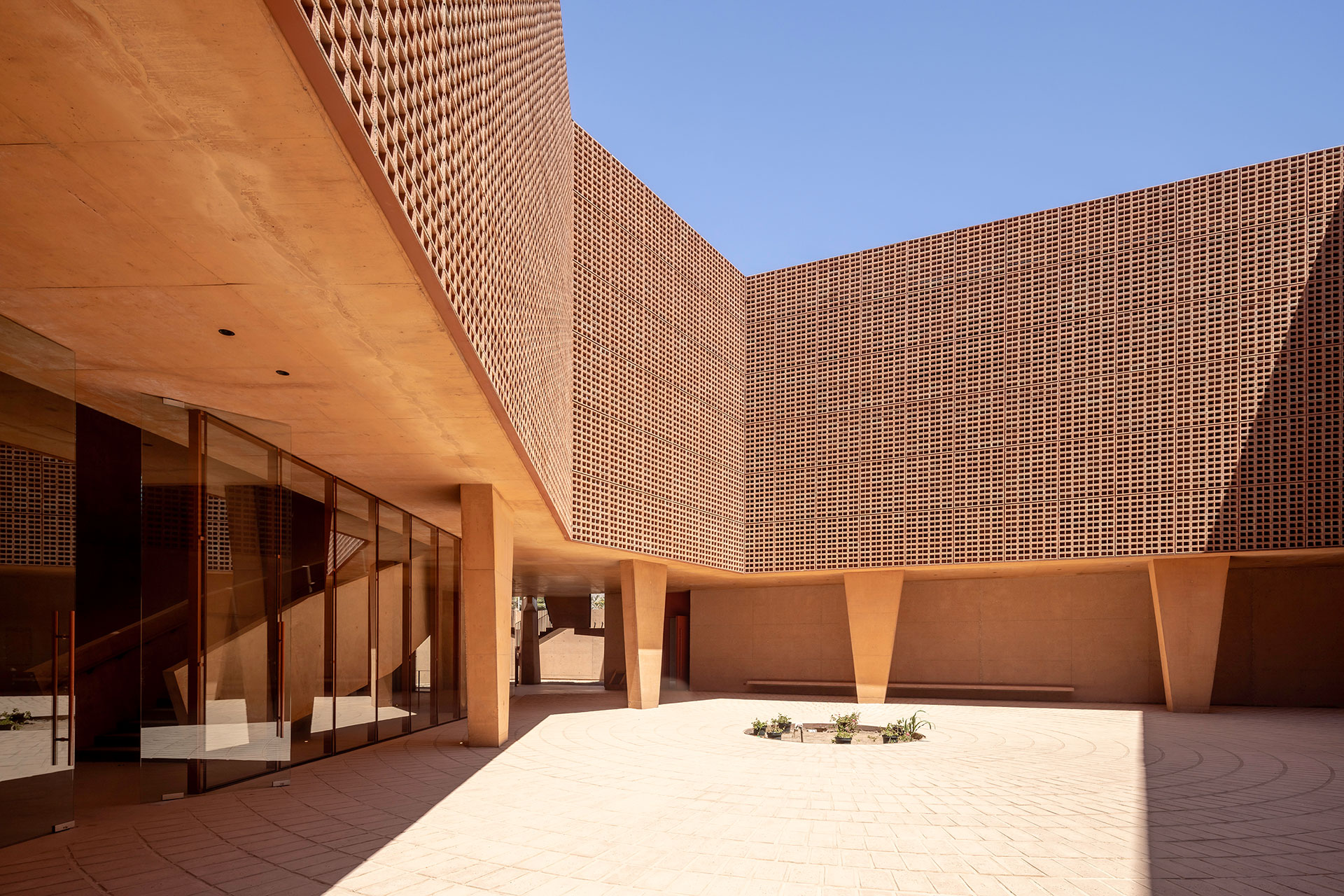
The Regional Museum of Atacama is a public project that originated from an international architectural competition launched in 2012 for the construction of its new building, a competition that was awarded to the studio Max Núñez Arquitectos.
The project is part of a policy aimed at improving public museums in Chilean regions. The city of Copiapó, capital of the Atacama Region, is located in the center of the driest desert in the world and presents a significant lack of cultural spaces.
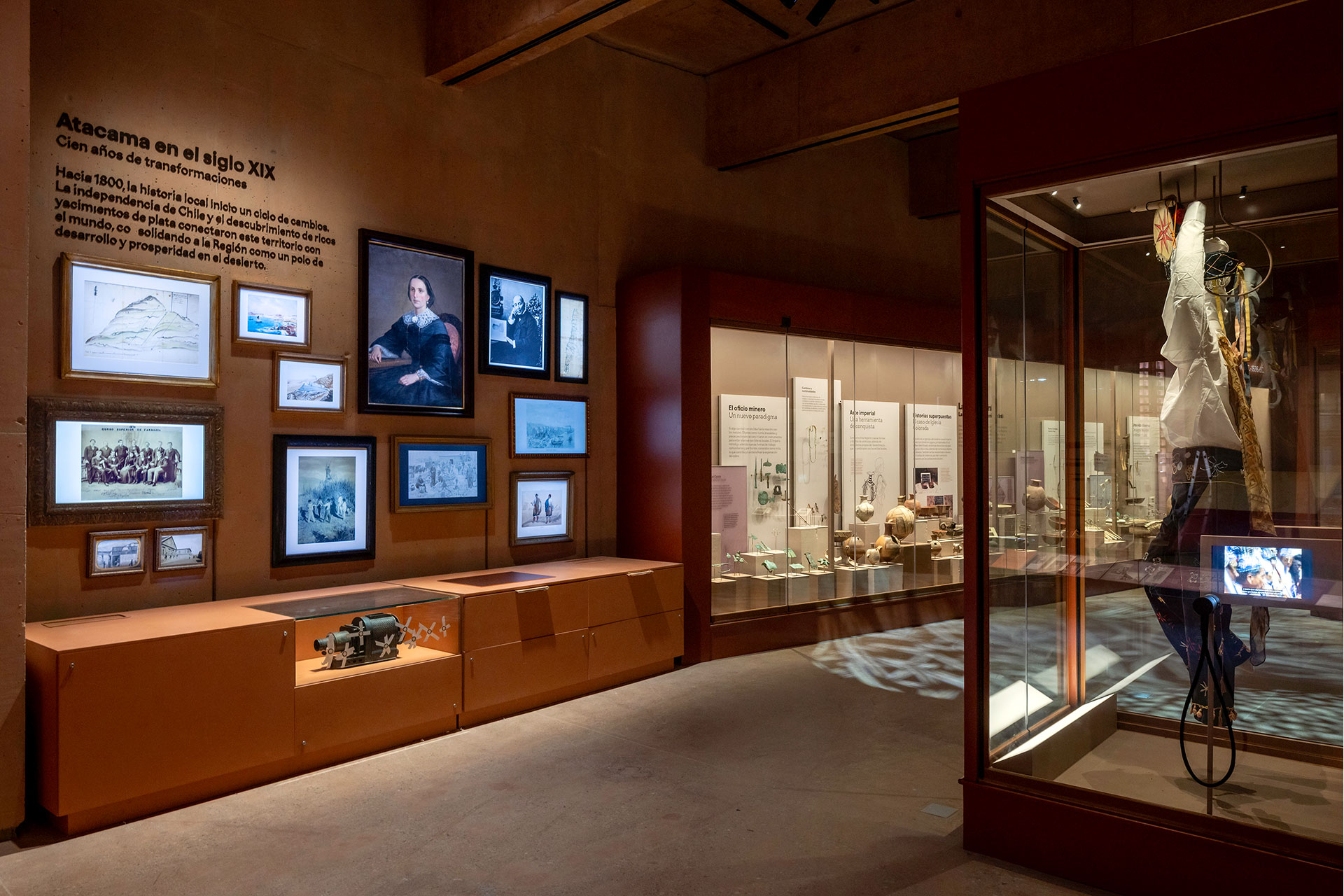
The museological script proposes a thematic journey through the Atacama Region, highlighting its main geological, paleontological, historical, cultural, and natural landmarks, which shape its territorial identity.
The museographic lighting project began in 2021 through a collaborative and multidisciplinary process, which brought together, among others, architects, museographers, exhibition designers, archaeologists, historians, graphic designers, audiovisual designers, and lighting designers. This work was developed under an open-workshop methodology, based on the study of the museological script, with the aim of generating educational, sensory, and memorable experiences for girls, boys, and the entire community of the Atacama Region.
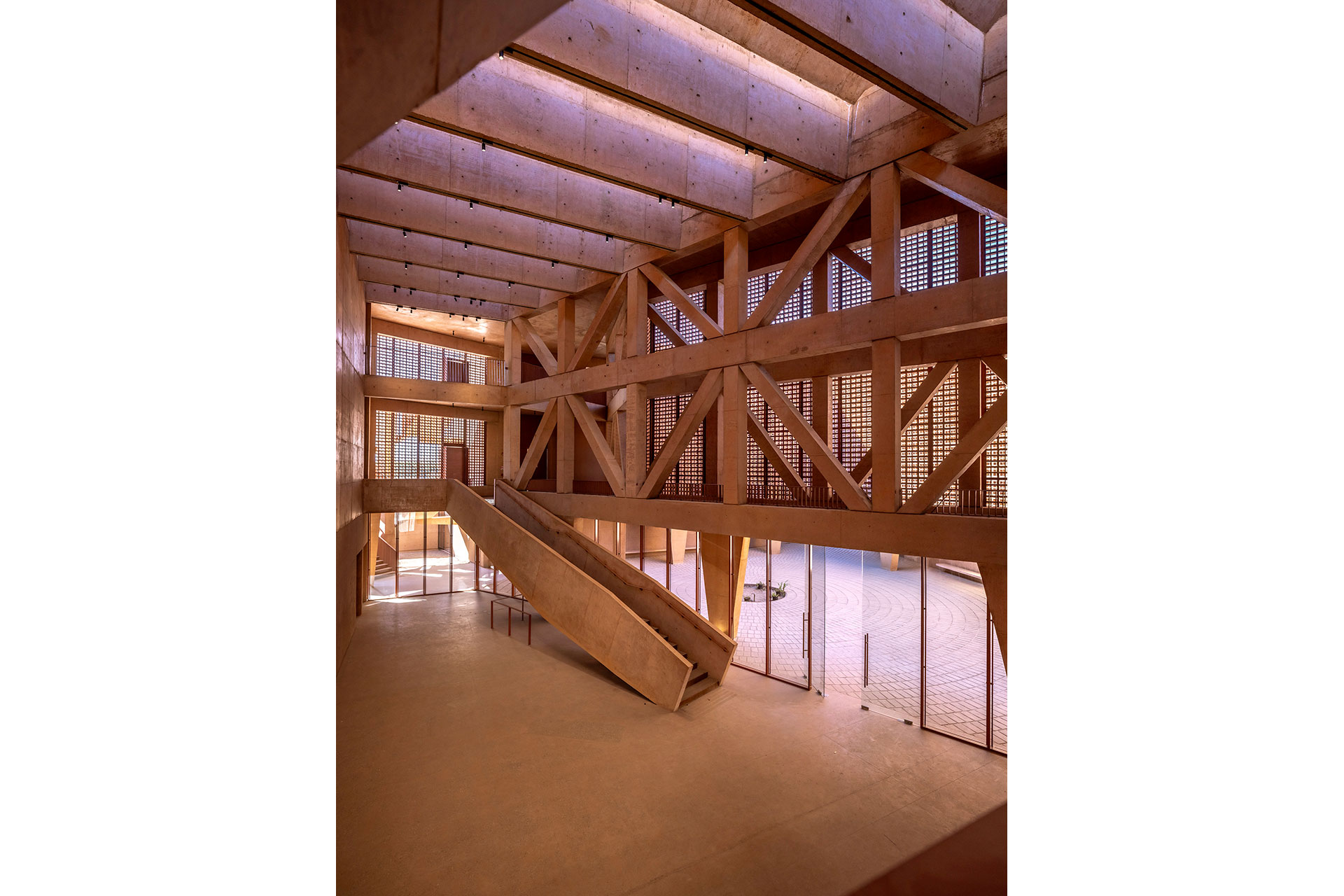
Following a detailed analysis of the museological script and the initial museographic proposals, the lighting concept was conceived not only to illuminate the collections in a sensitive manner and in compliance with conservation criteria, but also to create specific atmospheres that, through light, reinforce the museological narrative while integrating and enhancing the building’s distinguished architectural framework.
From the lighting design discipline, the following proposals related to the exhibition spaces were developed:
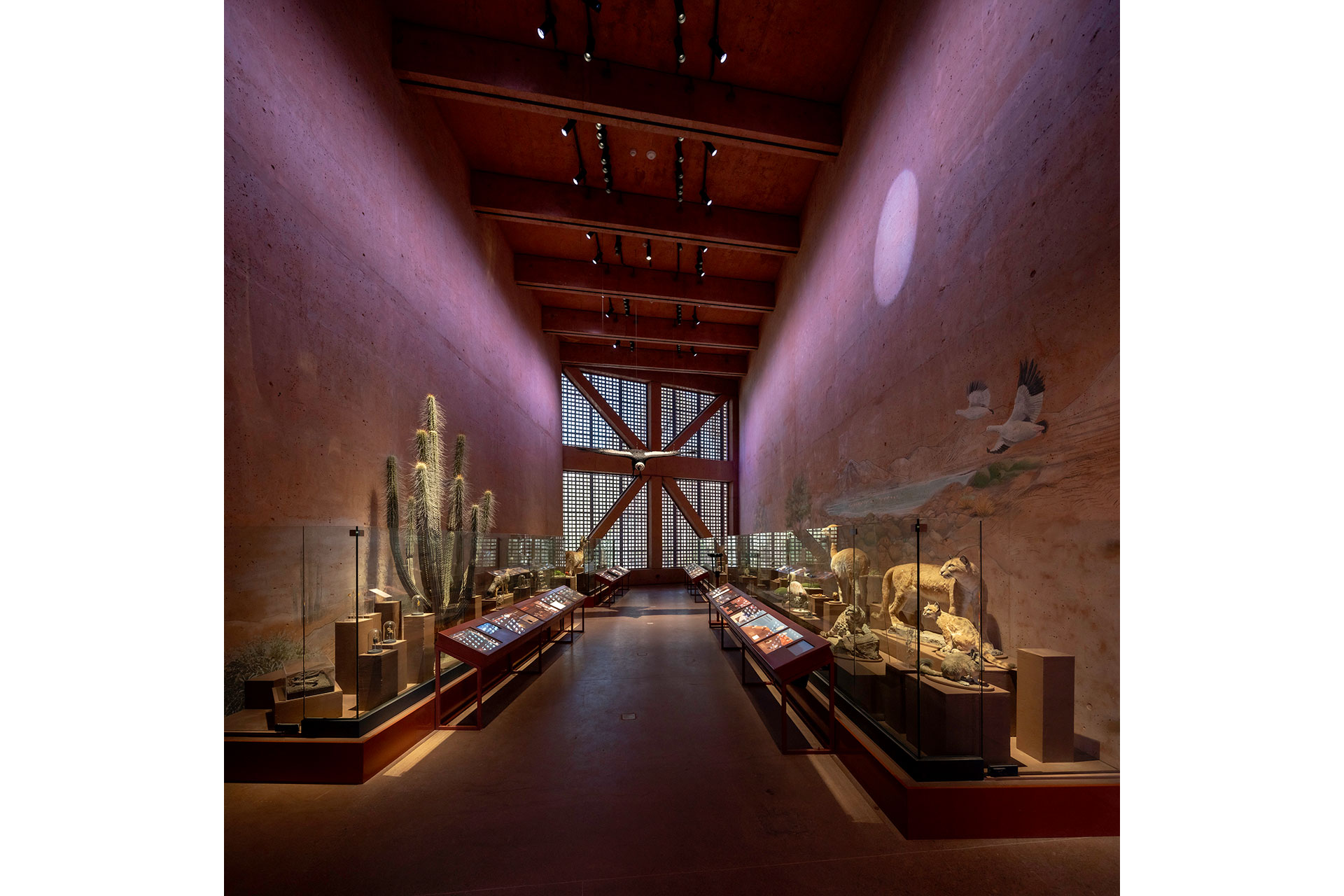
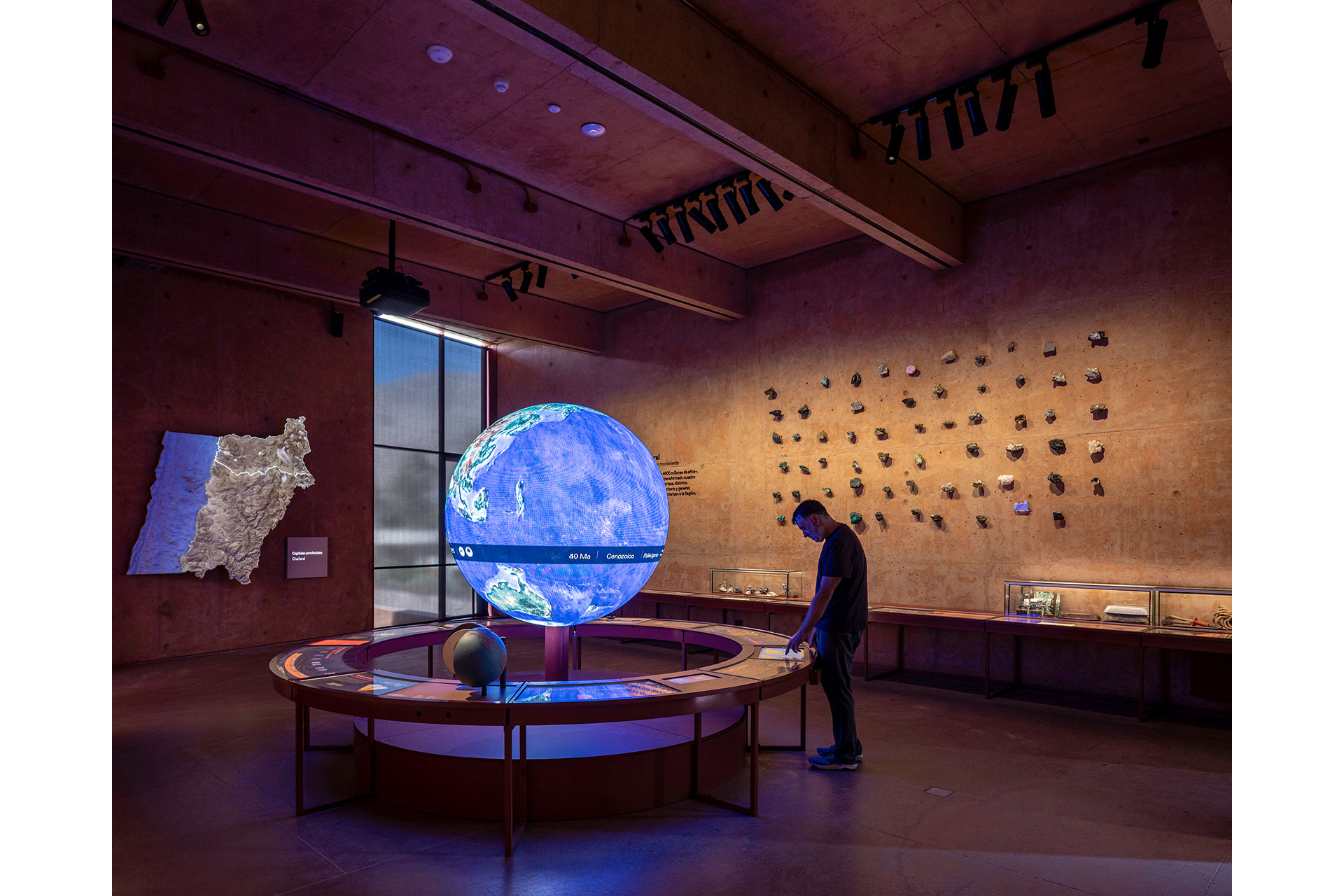
Museographic lighting outside the display cases is provided from tracks mounted on slabs, using luminaires with multiple photometries—narrow spot, spot, oval flood, flood, framers—and different light sources—3500 K, Dynamic White, RGBW—according to the required light scenes and sequences.
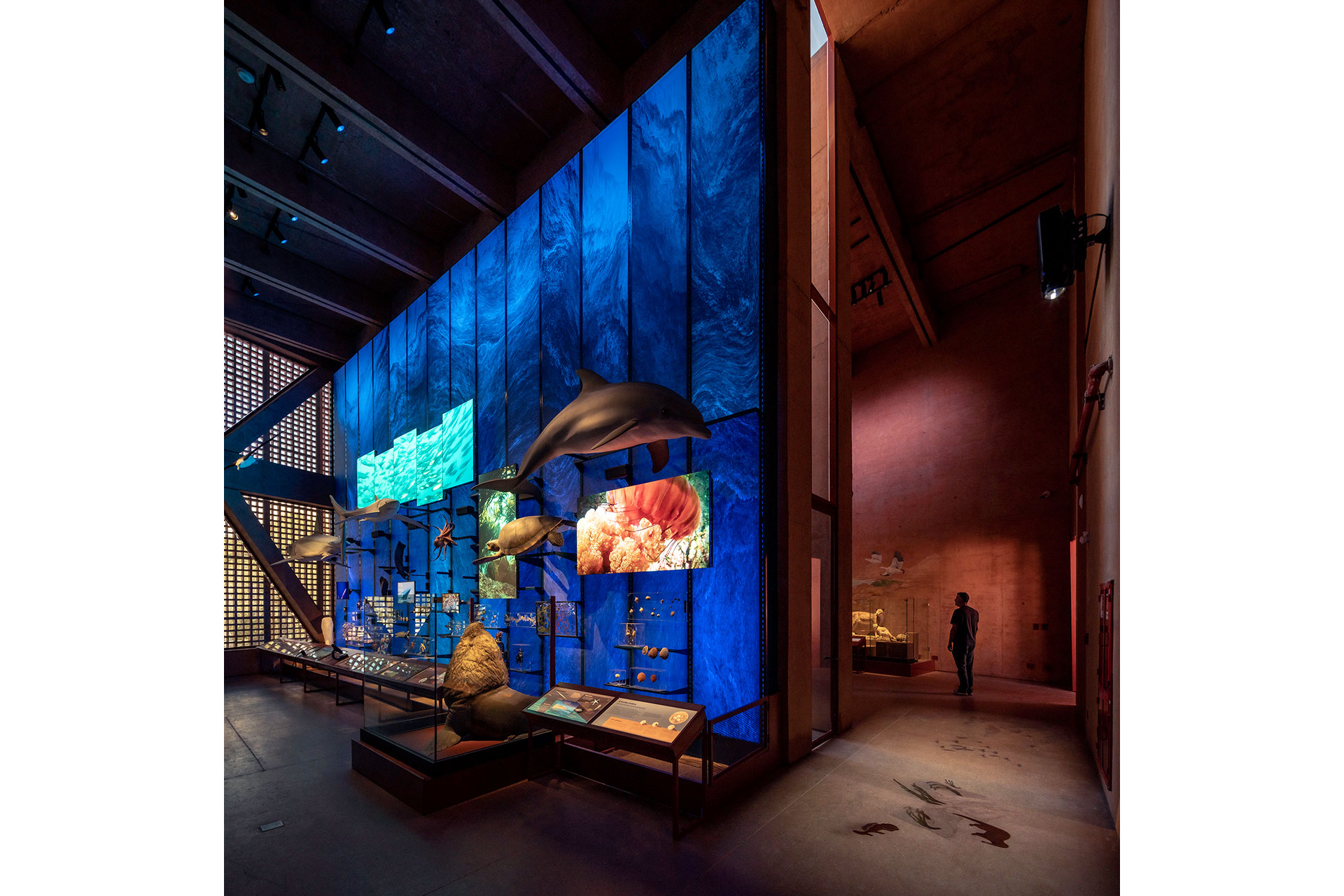
The backlit wall in the marine biodiversity gallery is illuminated with an RGBW graze system from floor level.
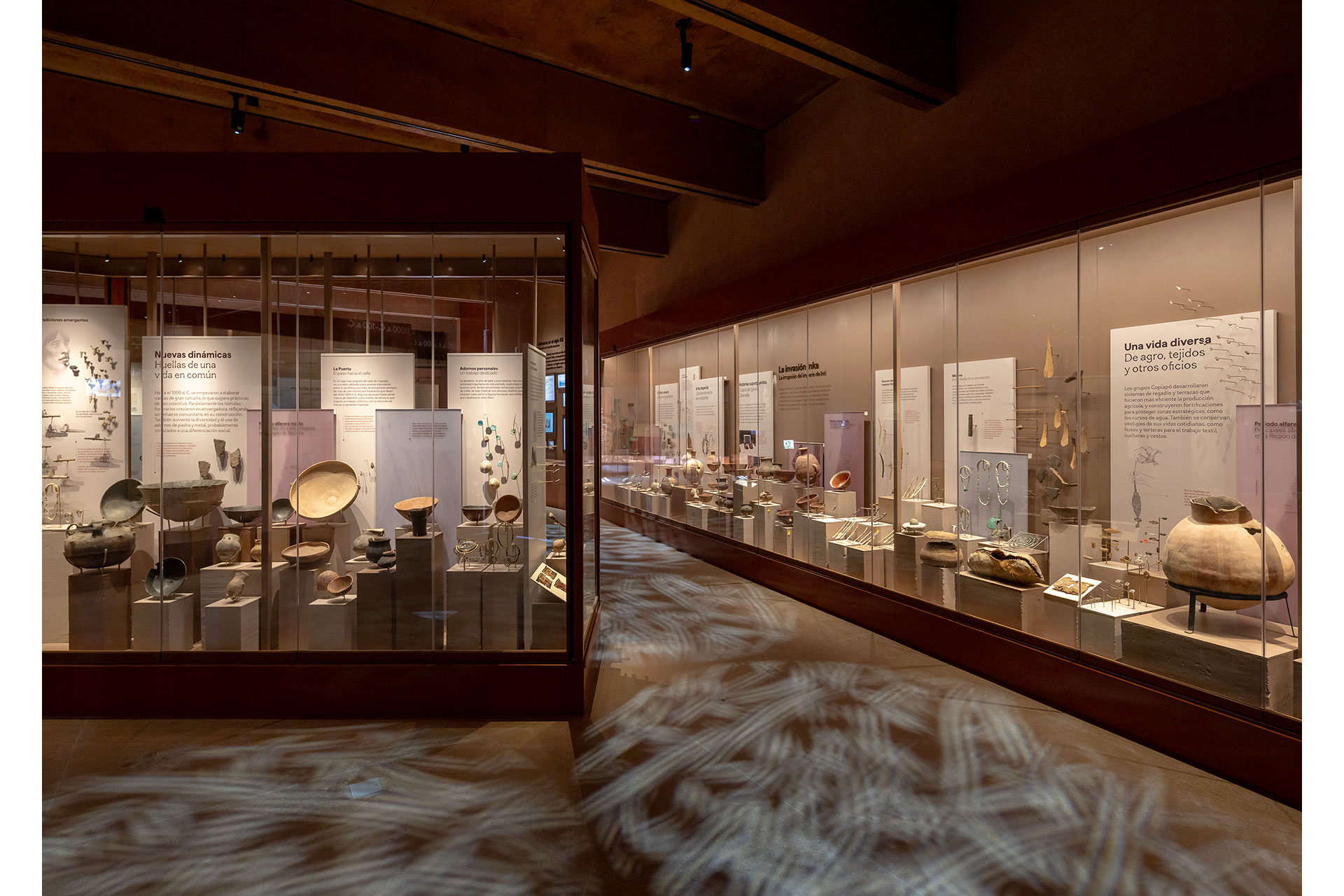
For the display cases, specific designs were developed integrating linear and point light sources with different photometries.
Complementarily, the design of an integrated control system was proposed, aimed at managing in a unified manner all museographic lighting scenes and sequences, as well as the museum’s various audiovisual devices—mappings, screens, interactives, and sound systems. To achieve this, a lighting control system was implemented based on a central processor with DALI protocol, specific processors for audiovisual integration, and DMX control processors dedicated to areas incorporating dynamic color lighting.