

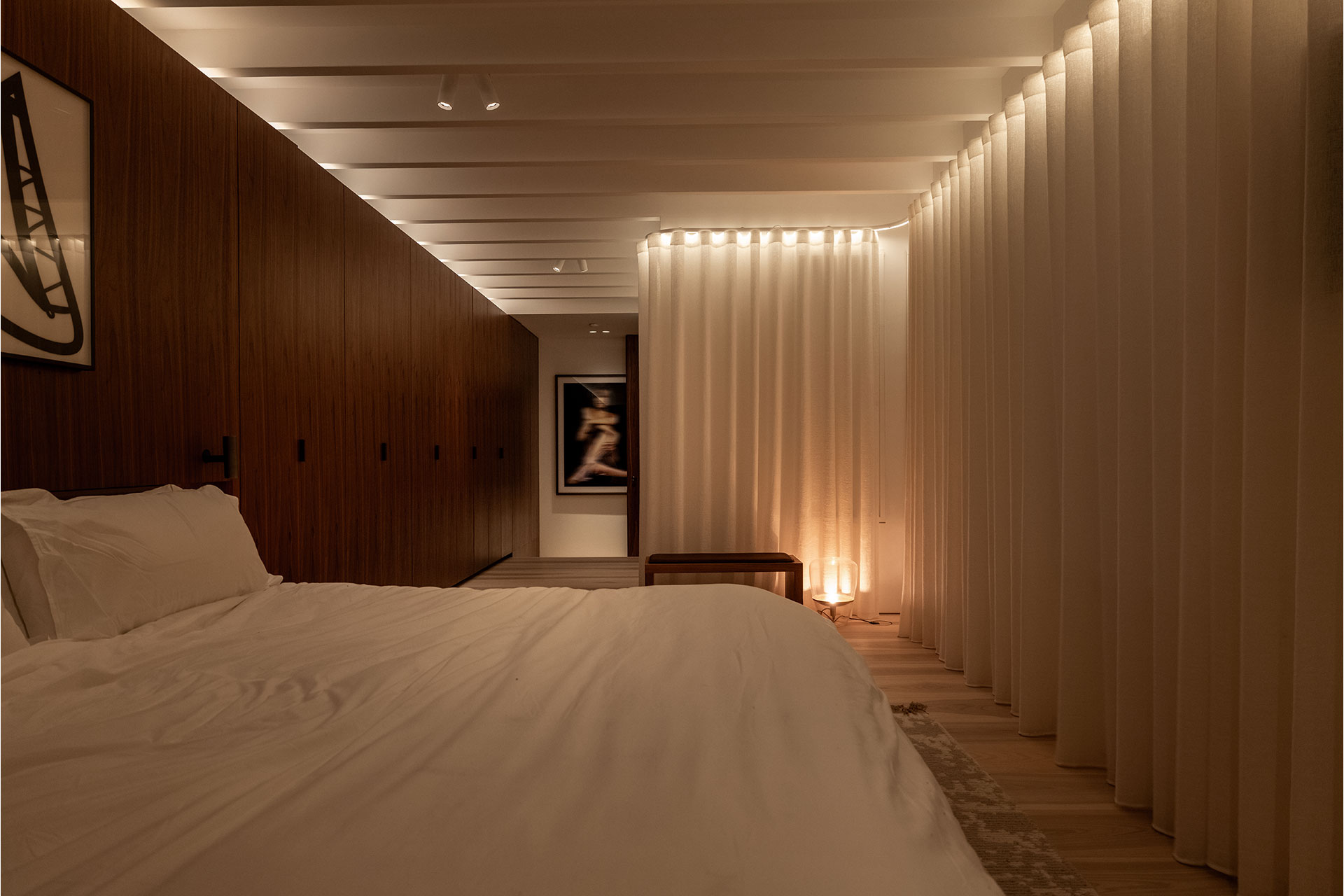
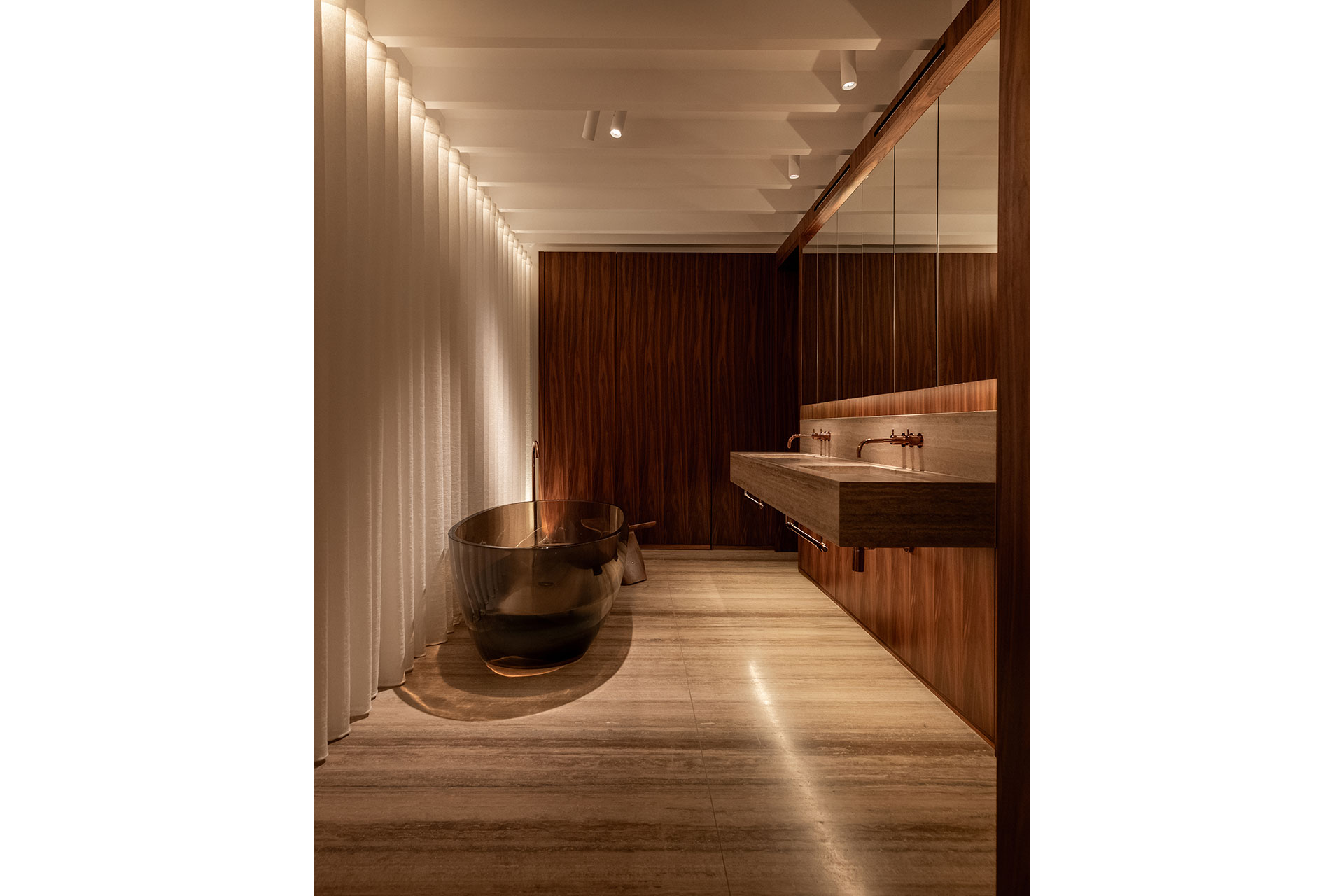
This private two-storey residence overlooking the historic Covent Garden Market was conceived as a highly personal project for the client and their family. Set within a heritage-rich urban context, the lighting design was developed to respect the architectural character of the building while creating a warm, adaptable and visually calm domestic environment.
From the outset, the client brief called for a lighting scheme that would respond to the historic, internal architecture and material palette, rather than relying on decorative fixtures as visual focal points. The design approach therefore prioritised integration, discretion and visual comfort, allowing light to support spatial experience without disrupting the overall aesthetic.
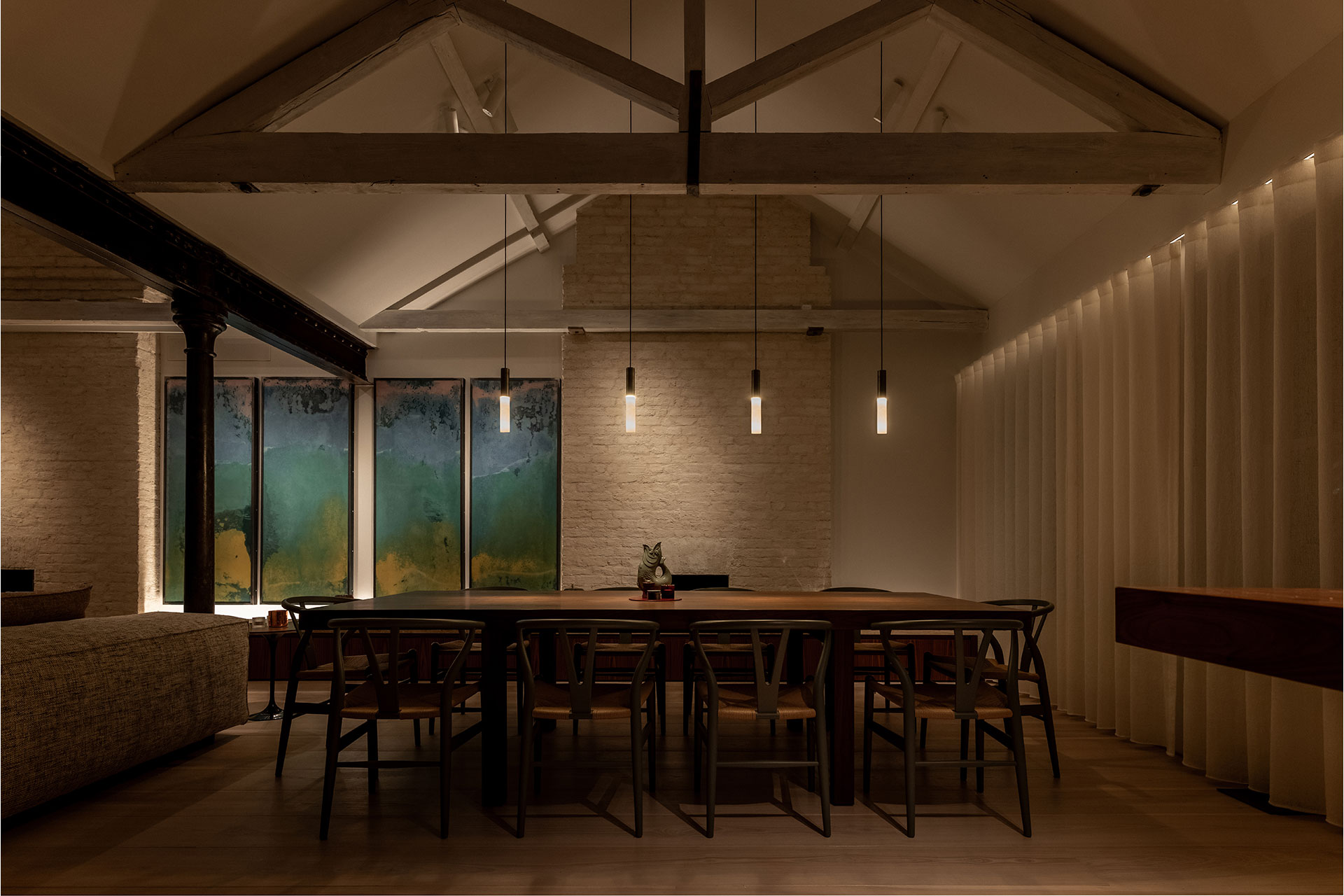
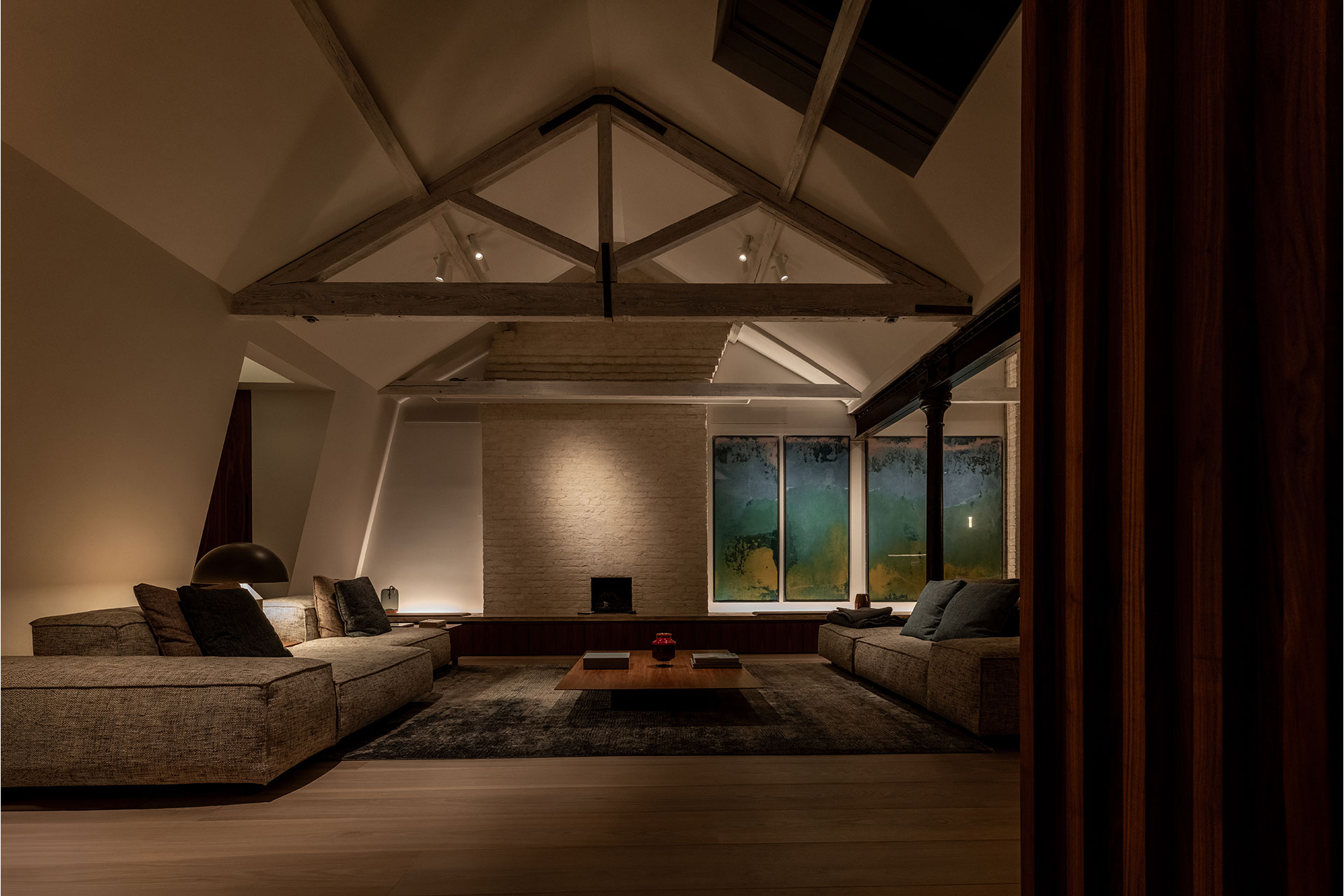
Close collaboration with the project architects was central to the process. Luminaire selection and positioning were carefully coordinated with the existing ceiling structure to ensure that fittings could be discreetly integrated, enabling effective accent lighting while maintaining clean architectural lines and avoiding visual clutter. This was particularly important in key living and dining areas, where the lighting needed to support multiple seating positions and viewing angles without introducing glare or distraction.
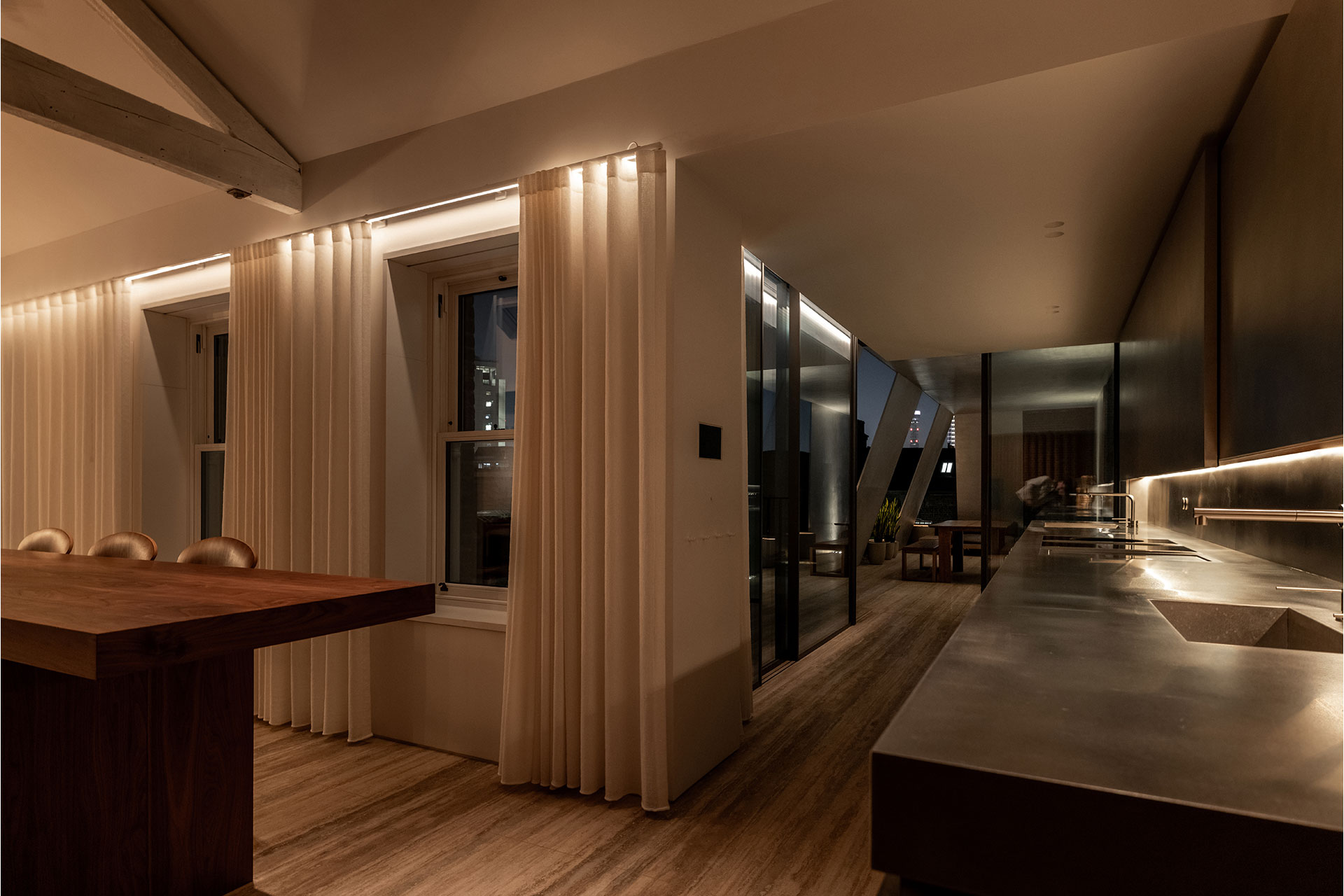
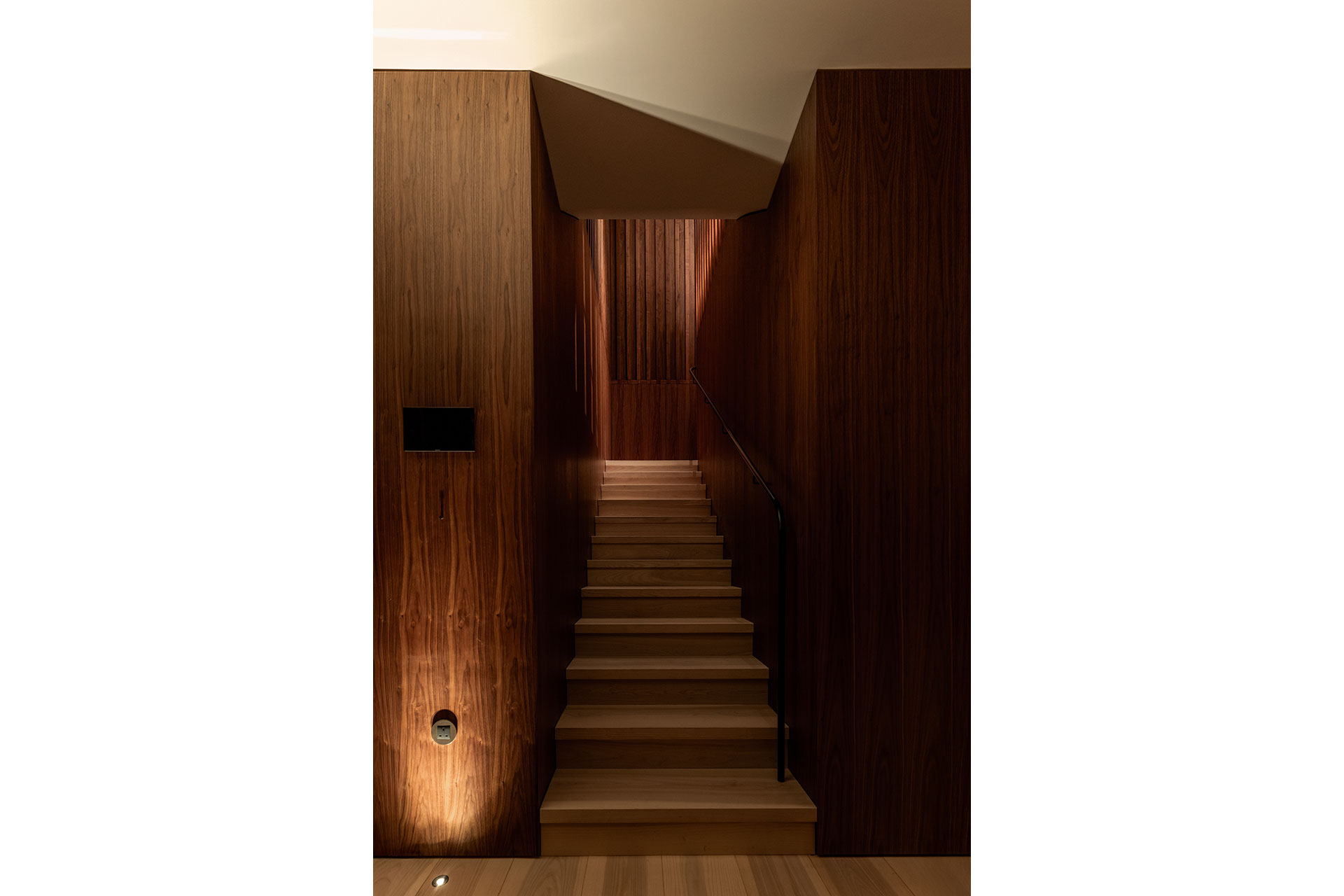
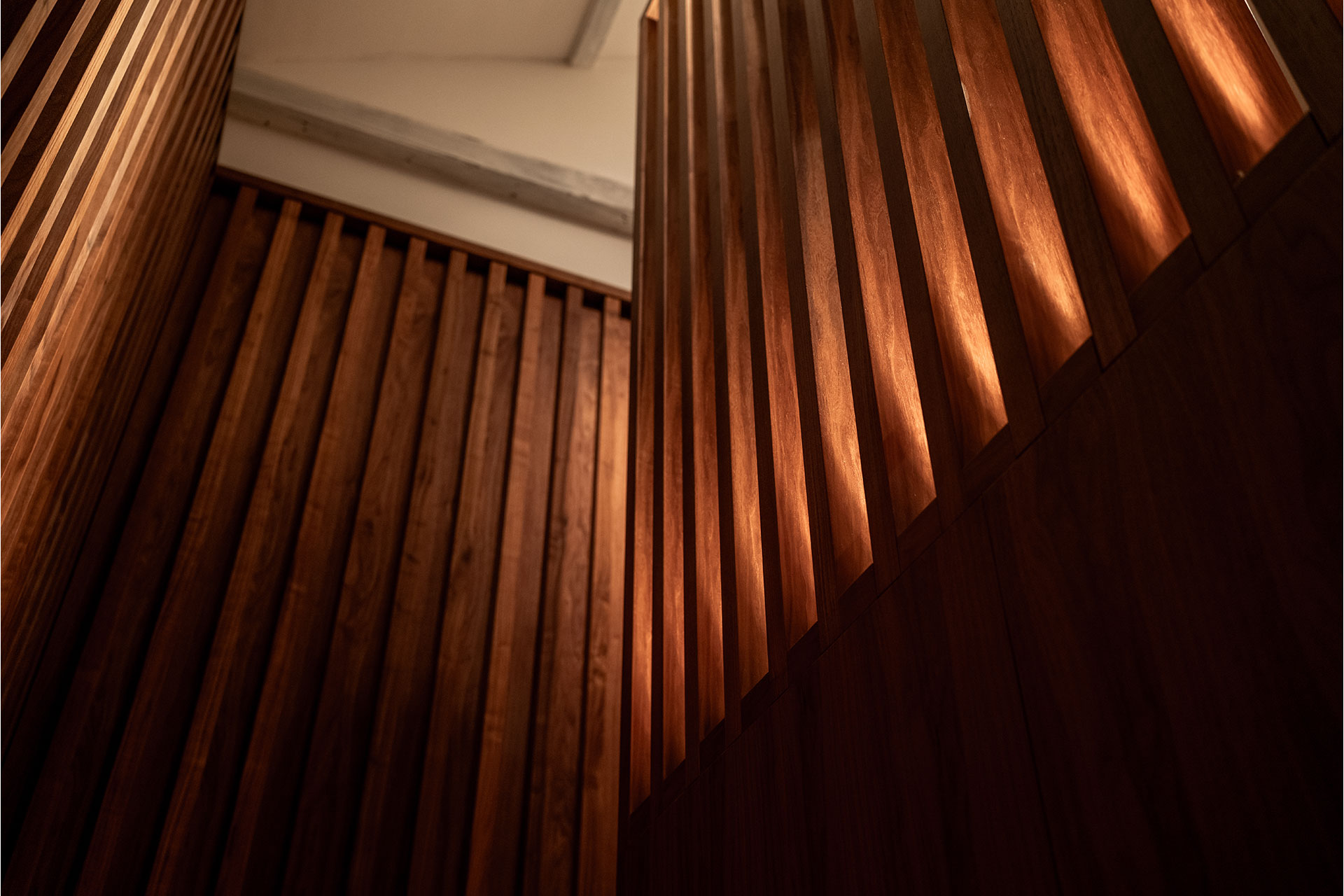
The lighting strategy employs a layered approach, using minimal detailing for the majority of the scheme while allowing selected elements to become moments of visual emphasis. Backlighting to sheer curtains introduces softness and depth to perimeter spaces, while subtle uplighting to timber slats within the main stairwell creates a strong architectural gesture on arrival. Vertical surfaces throughout the apartment are gently washed to enhance materiality and texture, reinforcing a sense of warmth and visual cohesion across the interior.
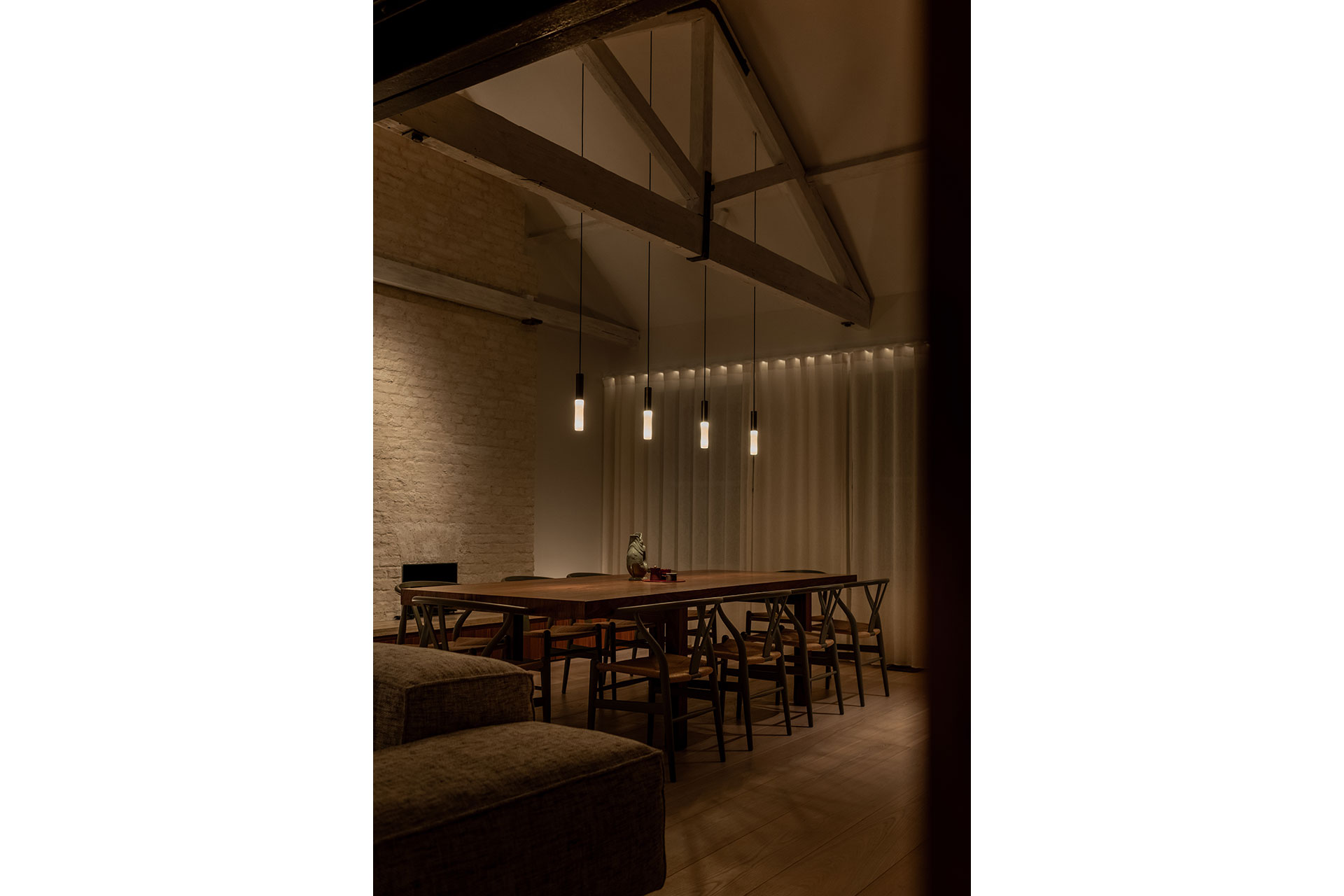
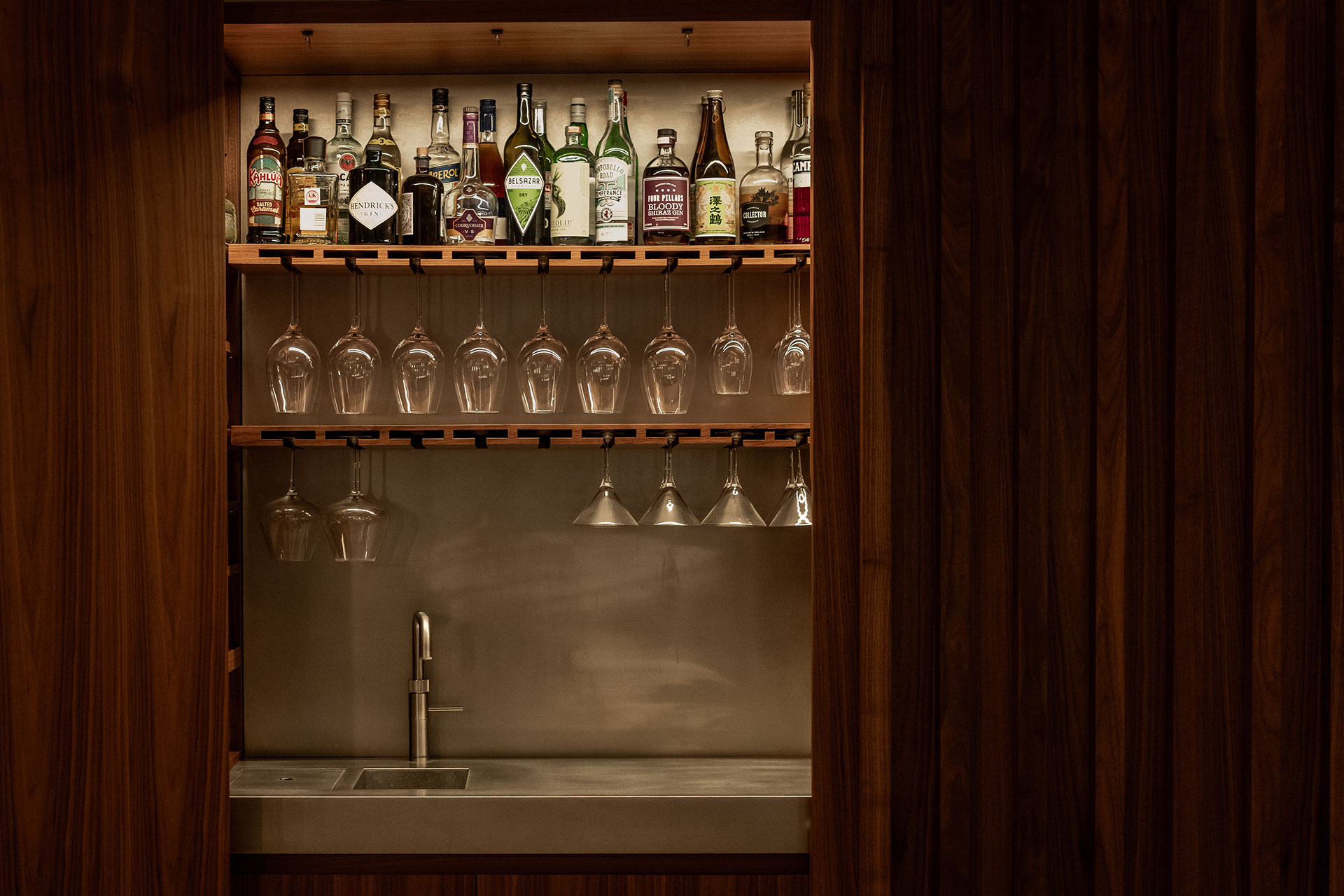
Decorative luminaires are used sparingly and with intent. Individually mounted pendants above the main dining table provide a sense of intimacy and human scale, while concealed lighting to the bespoke bar element enhances atmosphere without competing with the architectural language. These focal elements are balanced by a broader framework of concealed and low-glare lighting that supports daily living as well as entertaining.
Flexibility was a key requirement for the client. The lighting system is integrated with the AV/IT controls, allowing intuitive selection of scenes tailored to different functions such as entertaining, relaxing, cooking or cleaning. This ensures that the lighting can adapt throughout the day and across changing uses of the home, without compromising the visual consistency of the scheme.
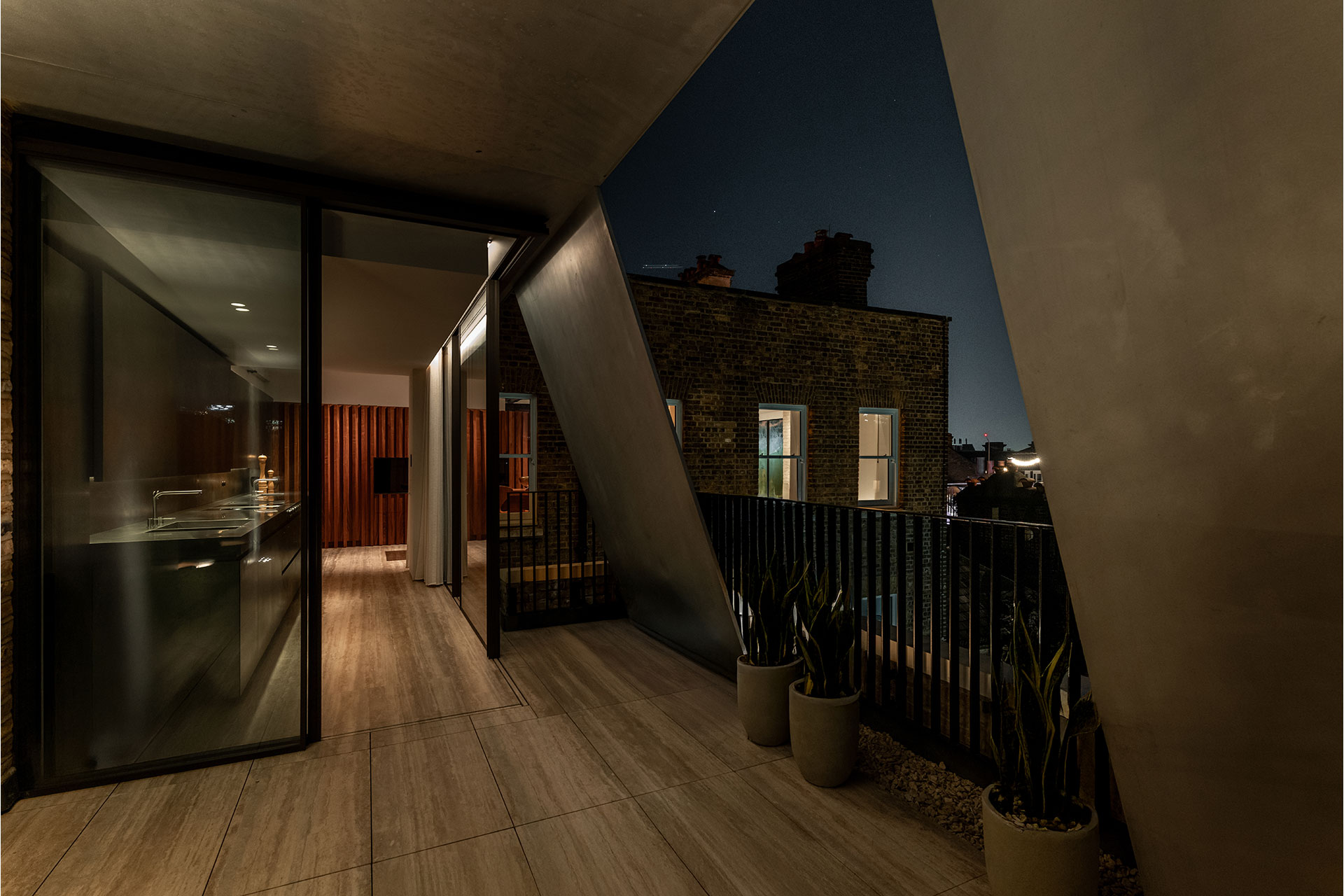
Sustainability and longevity informed both technical and product decisions. Luminaires were selected to allow on-site replacement of individual modules, reducing waste and extending the life of the installation. Careful zoning and scene-setting improve efficiency by ensuring that light is only used where and when required. In a deliberate decision to minimise environmental impact and light pollution, no permanent external lighting was installed on the terrace; instead, the client uses temporary battery-powered sources when needed, preserving night views across the city.
The completed scheme demonstrates how a restrained, architecturally integrated lighting approach can deliver both emotional warmth and technical sophistication within a highly personal residential setting.