

The KERB Berlin food hall occupies a former cinema building at Potsdamer Platz, one of Berlin’s most dynamic urban districts. The lighting design plays a central role in giving the venue a new identity as a vibrant food destination while respecting its cinematic past.
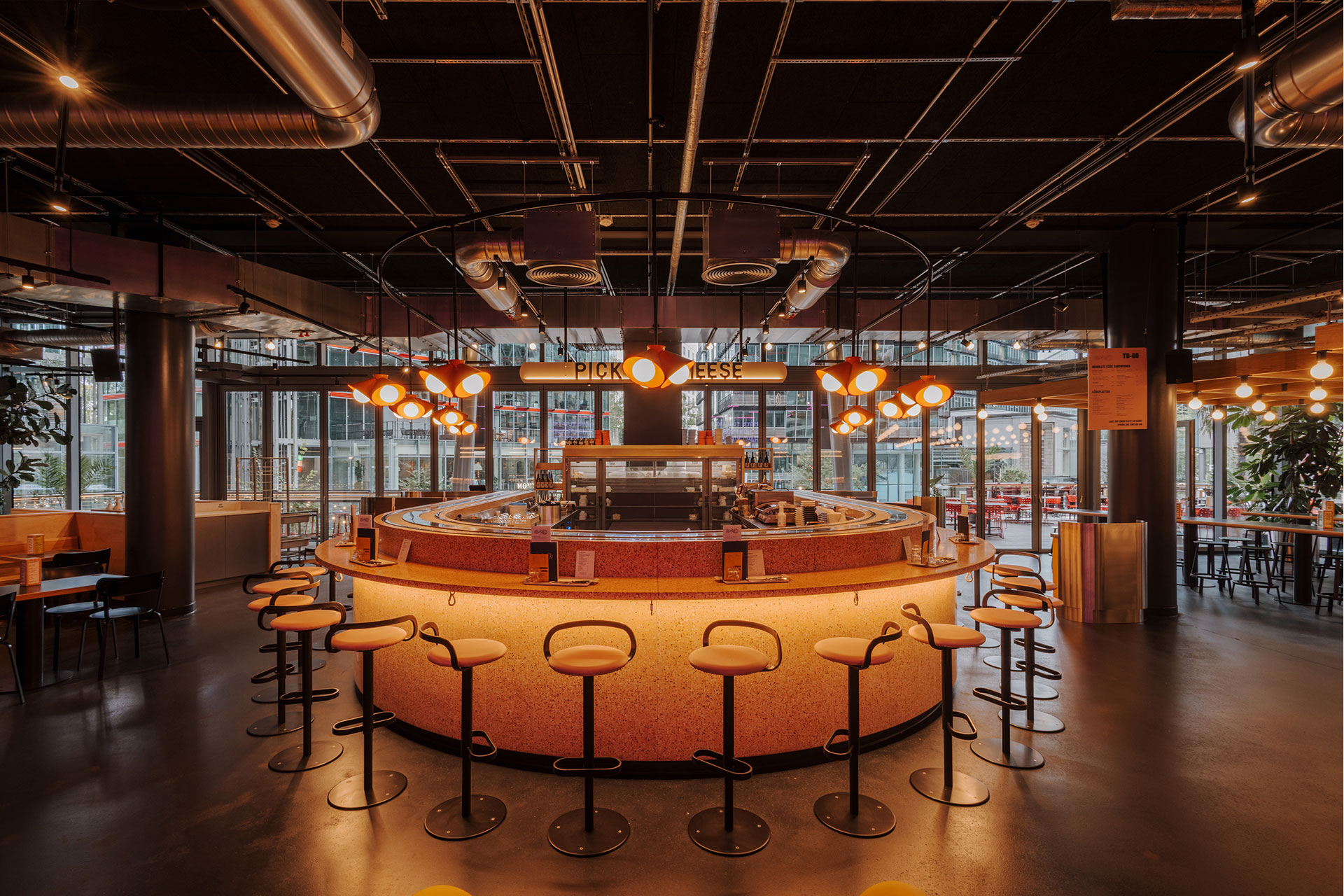
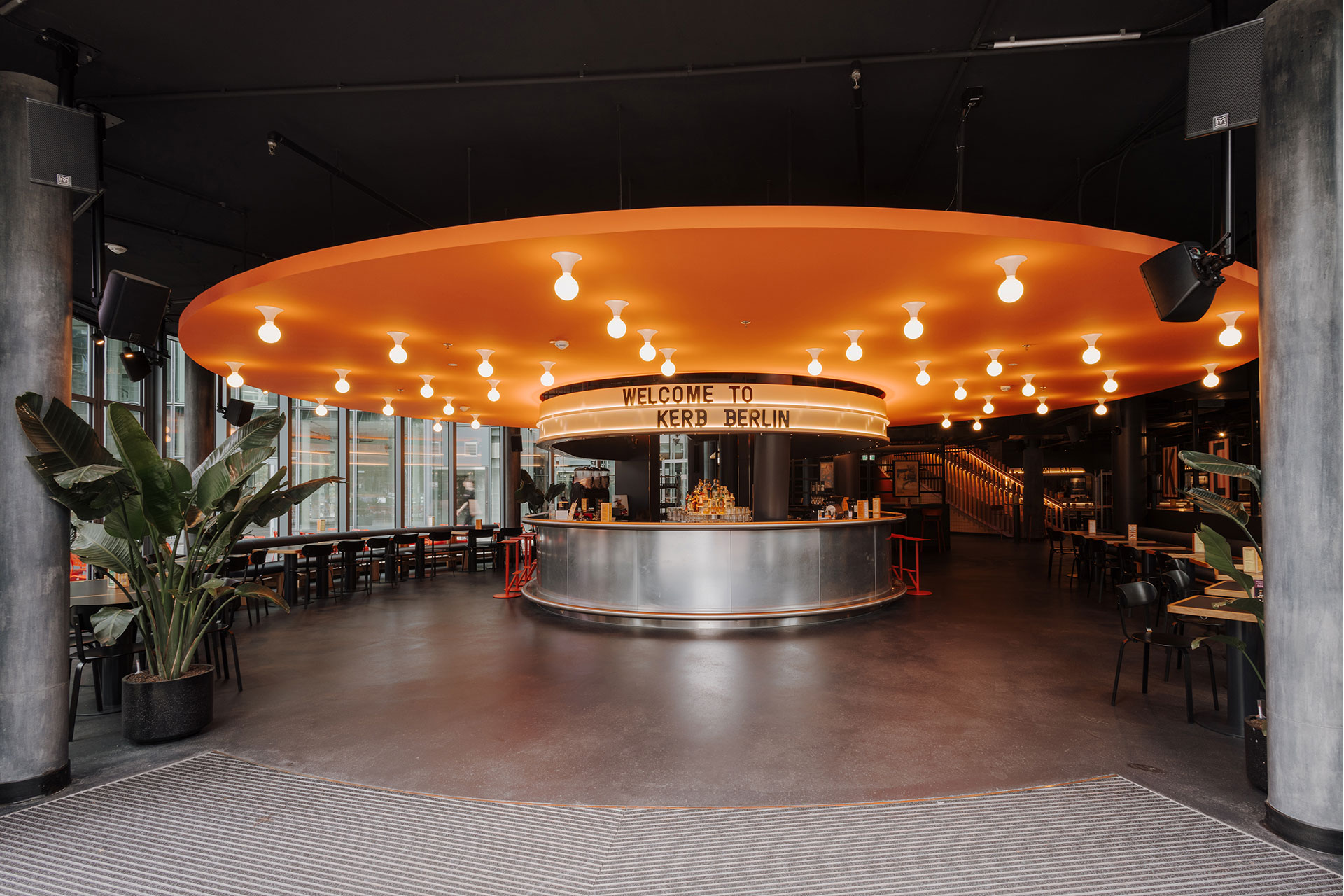
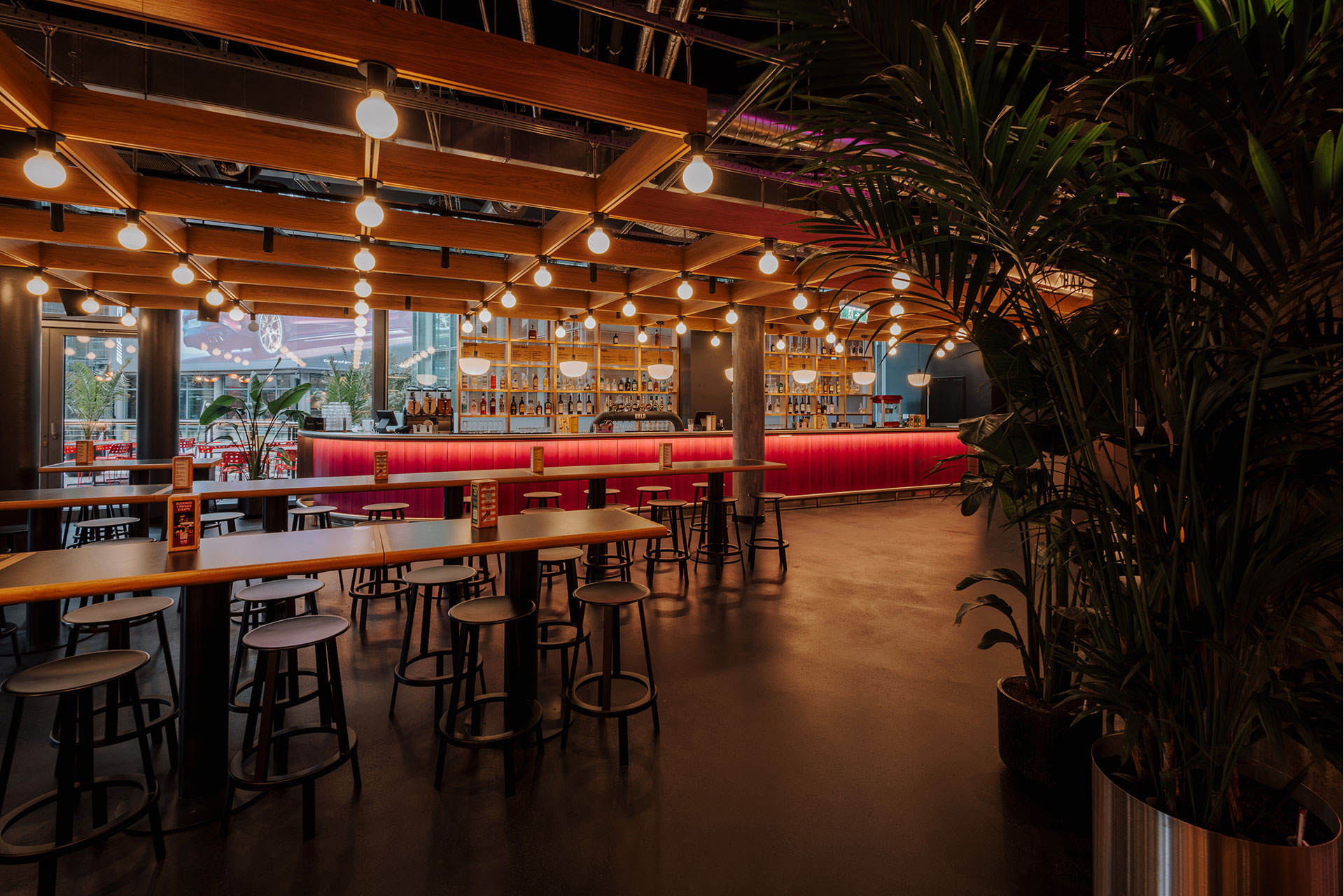
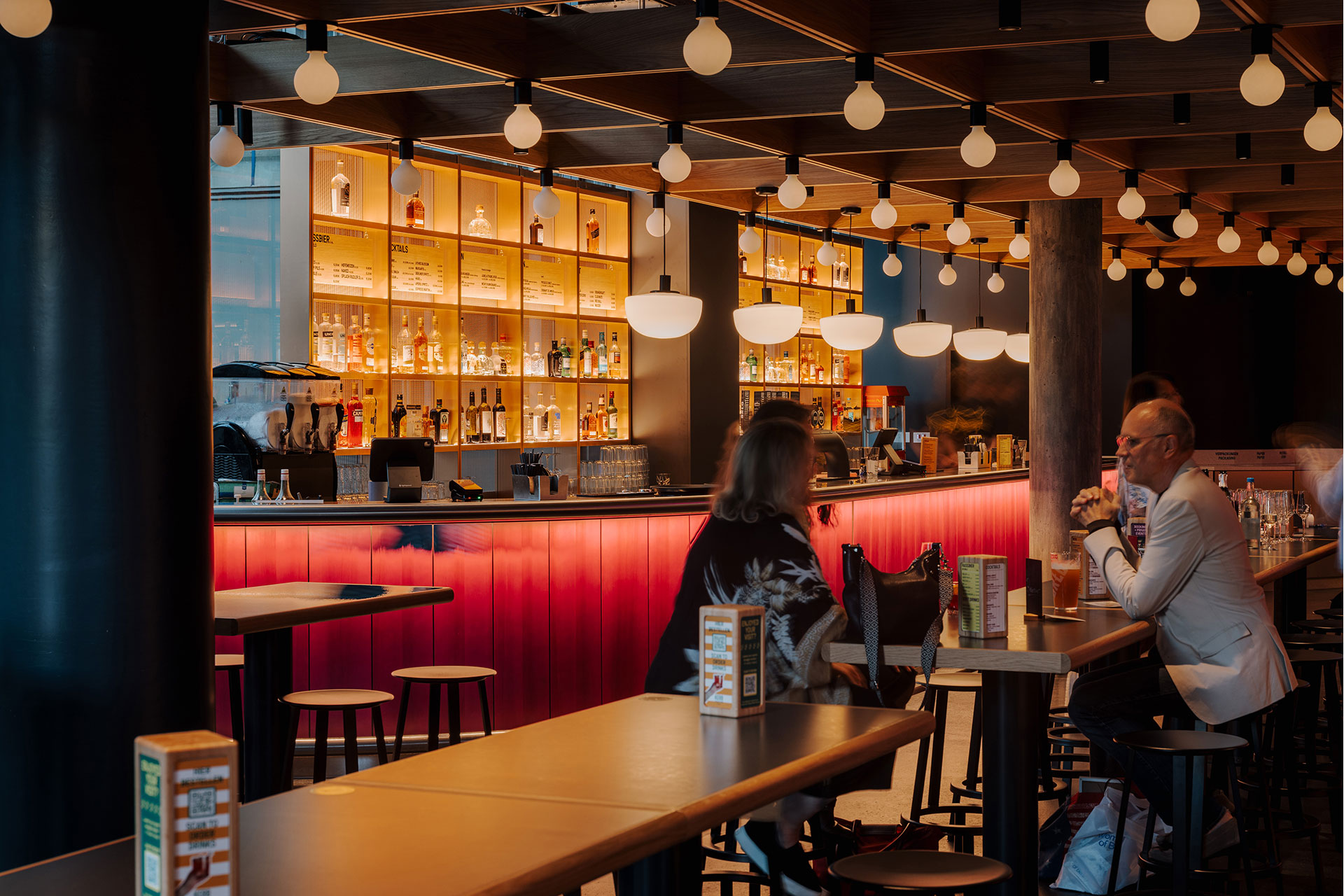
The concept draws inspiration from theatre and cinema heritage. At the entrances, glowing vintage-style bulbs recall the illuminated marquees once typical of Berlin’s cinemas, immediately linking the space’s new function with its historic context. Inside, the lighting layers are tailored to support both atmosphere and orientation across multiple levels.
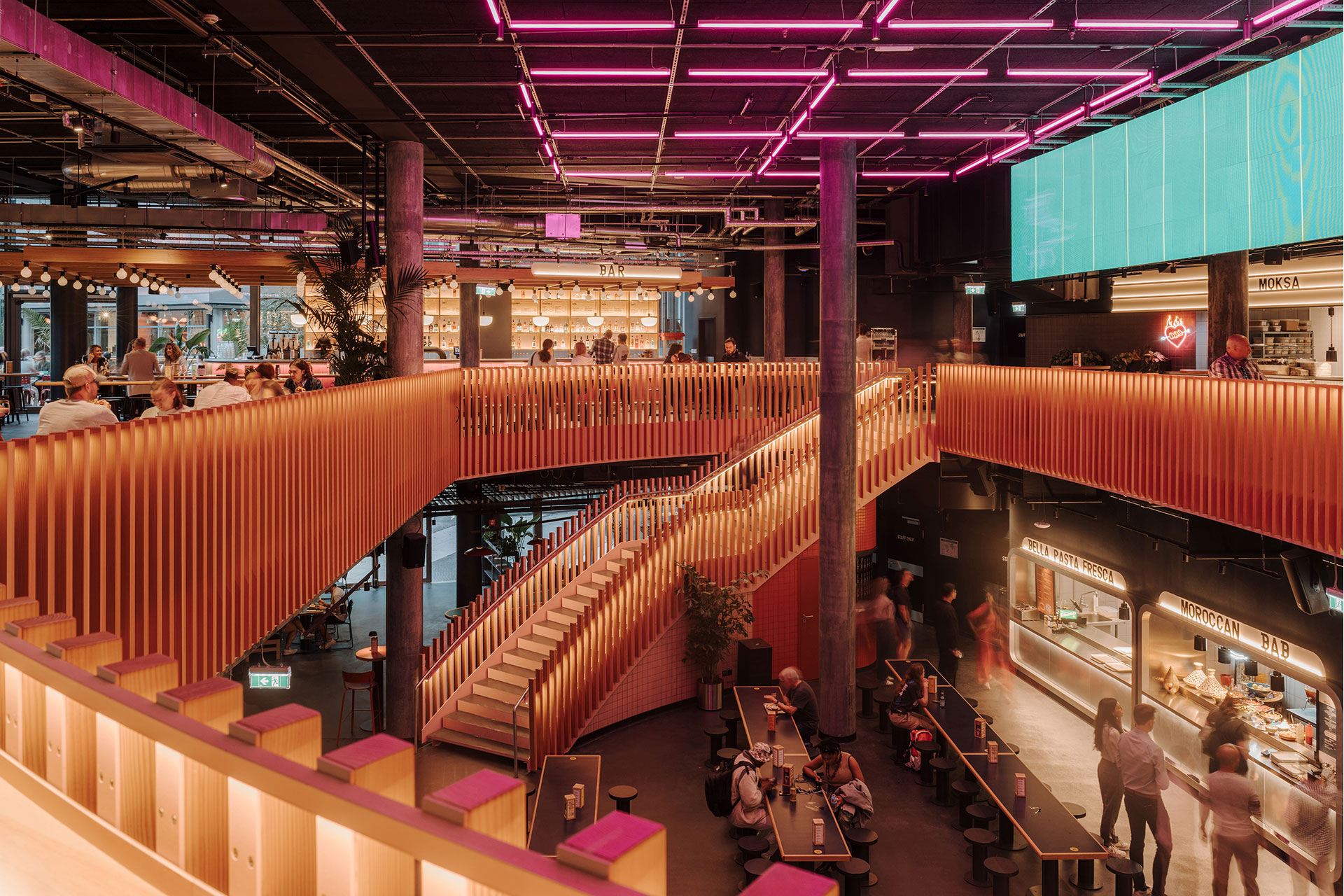
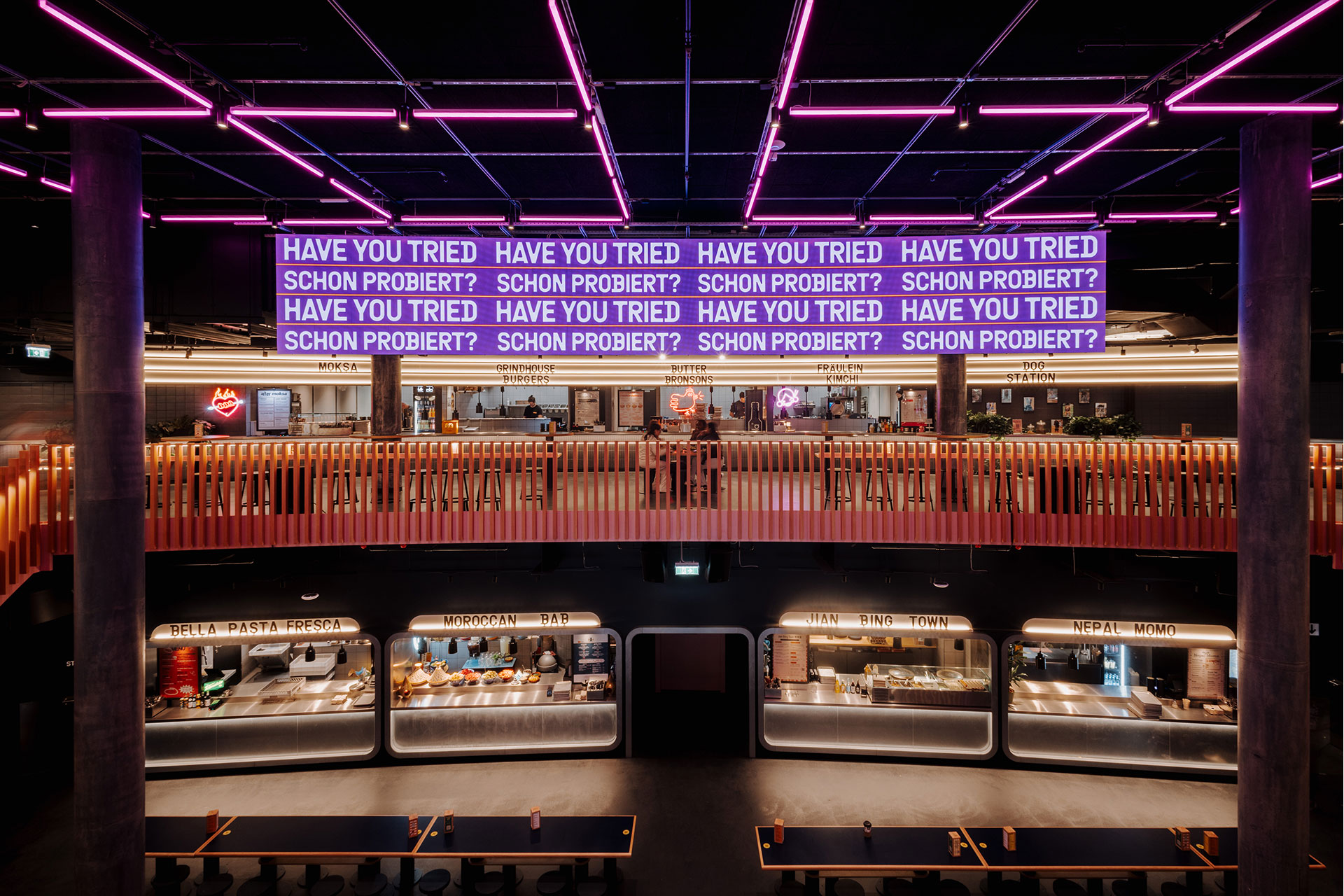
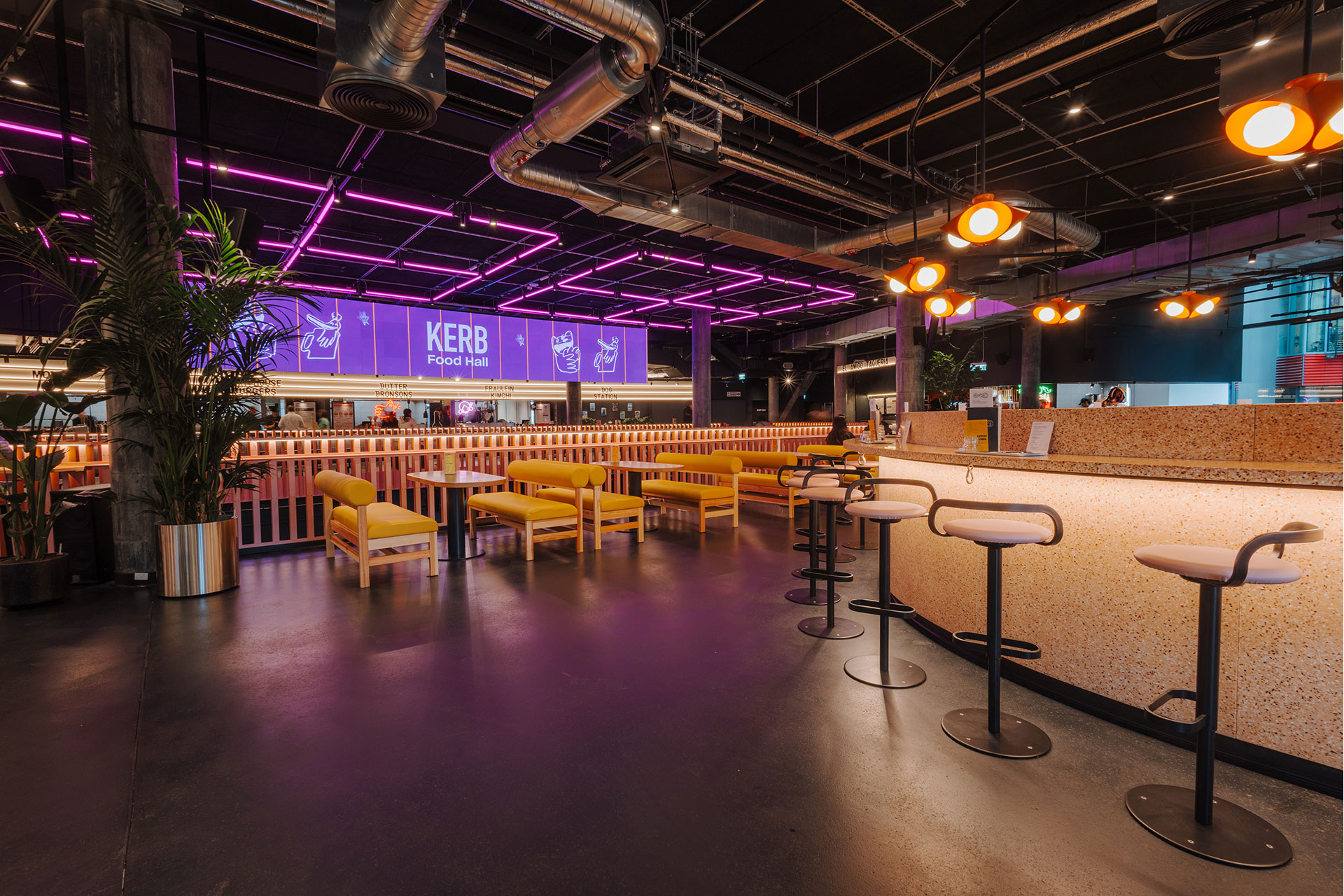
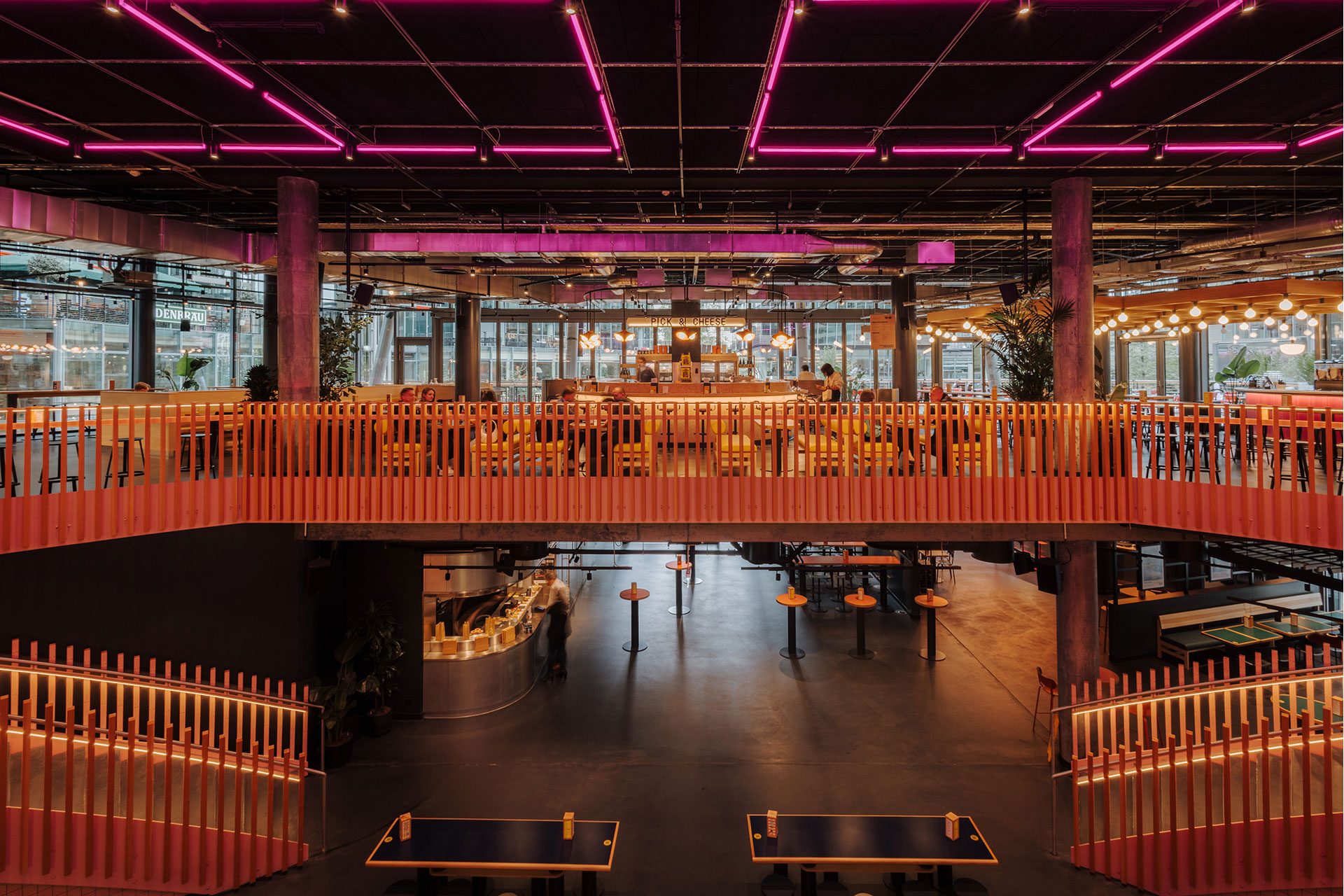
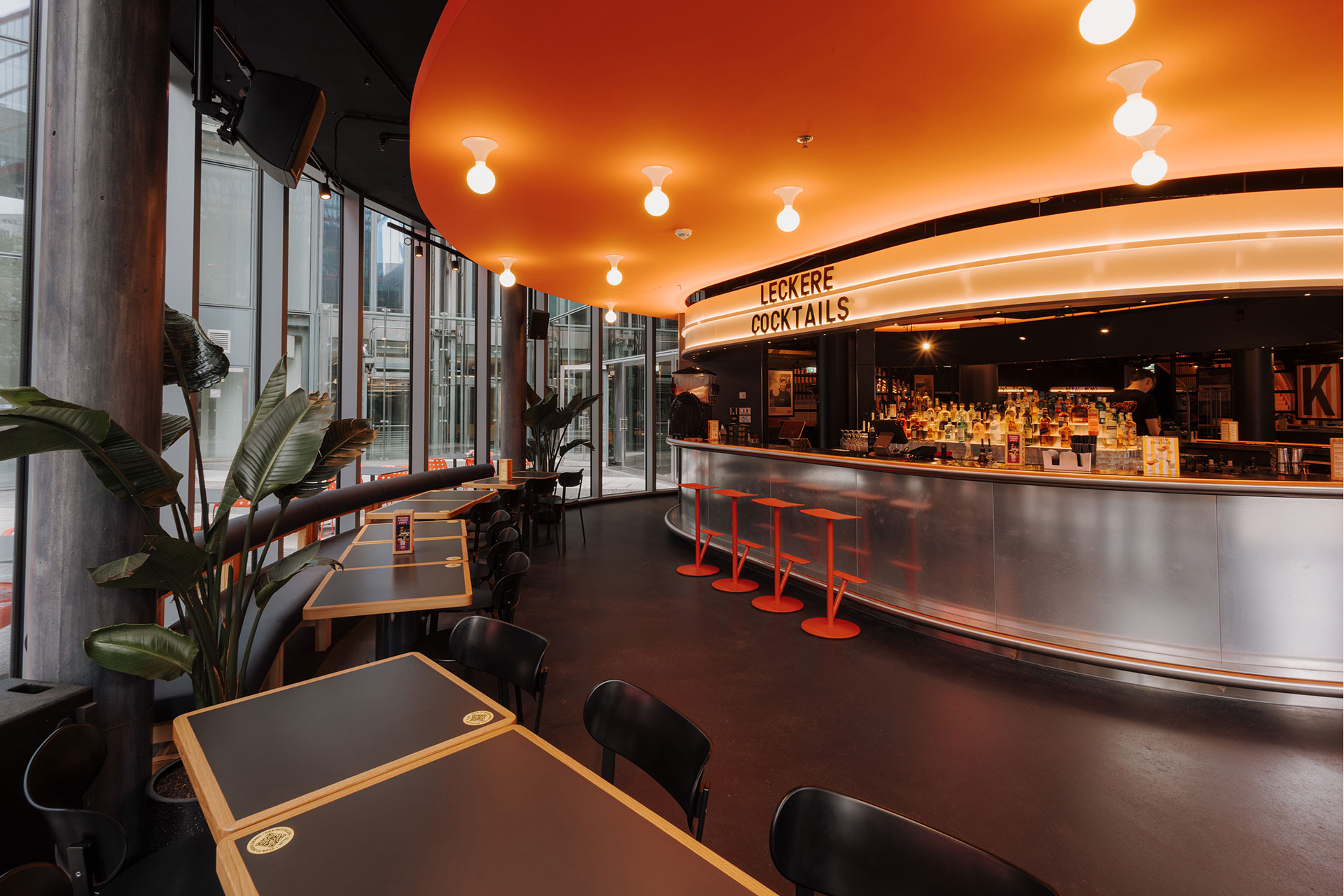
The ground floor features a double-height main hall with a ceiling structured by RGBW light lines. These lines not only provide dynamic color effects but also reference the iconic design of the Potsdamer Platz S-Bahn entrances, anchoring the project within its local urban identity.
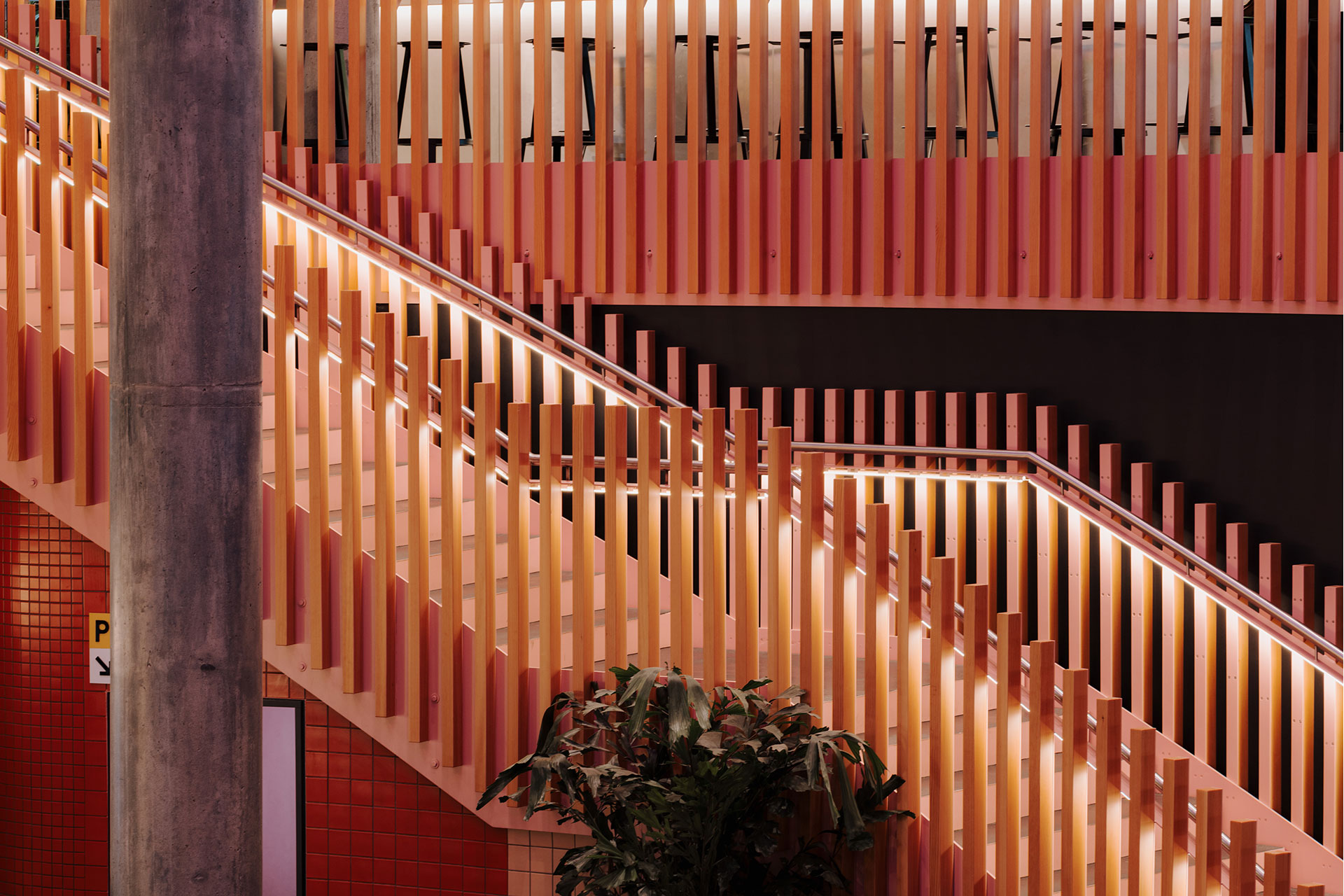
Linear LEDs are integrated into the handrails and balustrades, providing functional illumination for staircases and subtly highlighting the tables along the gallery edges and outdoor terrace. This integration ensures safety while maintaining visual clarity and a clean architectural appearance. On the terrace, the same design language continues, extending the food hall’s identity to the exterior and unifying the overall spatial experience.
Food stands are supported by carefully detailed lighting. Linear LEDs softly illuminate the signage, ensuring visibility without glare, while discreet spotlights provide accents to counters, displays, and dining tables. This approach creates a balance between overall ambient brightness and precise highlights that draw attention to the food offerings, enhancing the visitor experience without overwhelming the atmosphere.
The design process addressed challenges of layering historical reference with contemporary functionality. The use of vintage-style bulbs maintains a connection to the building’s past, while advanced RGBW and LED systems deliver flexibility, efficiency, and long life. By embedding most lighting within architectural elements, the design avoids clutter and preserves focus on the food and social activities.
KERB Berlin’s lighting design demonstrates how the careful integration of heritage references, urban identity, and modern technology can create a cohesive and adaptable environment. It transforms a former cinema into a cultural and culinary hub that feels both contemporary and rooted in place, supporting Berlin’s ongoing narrative of reinvention.