
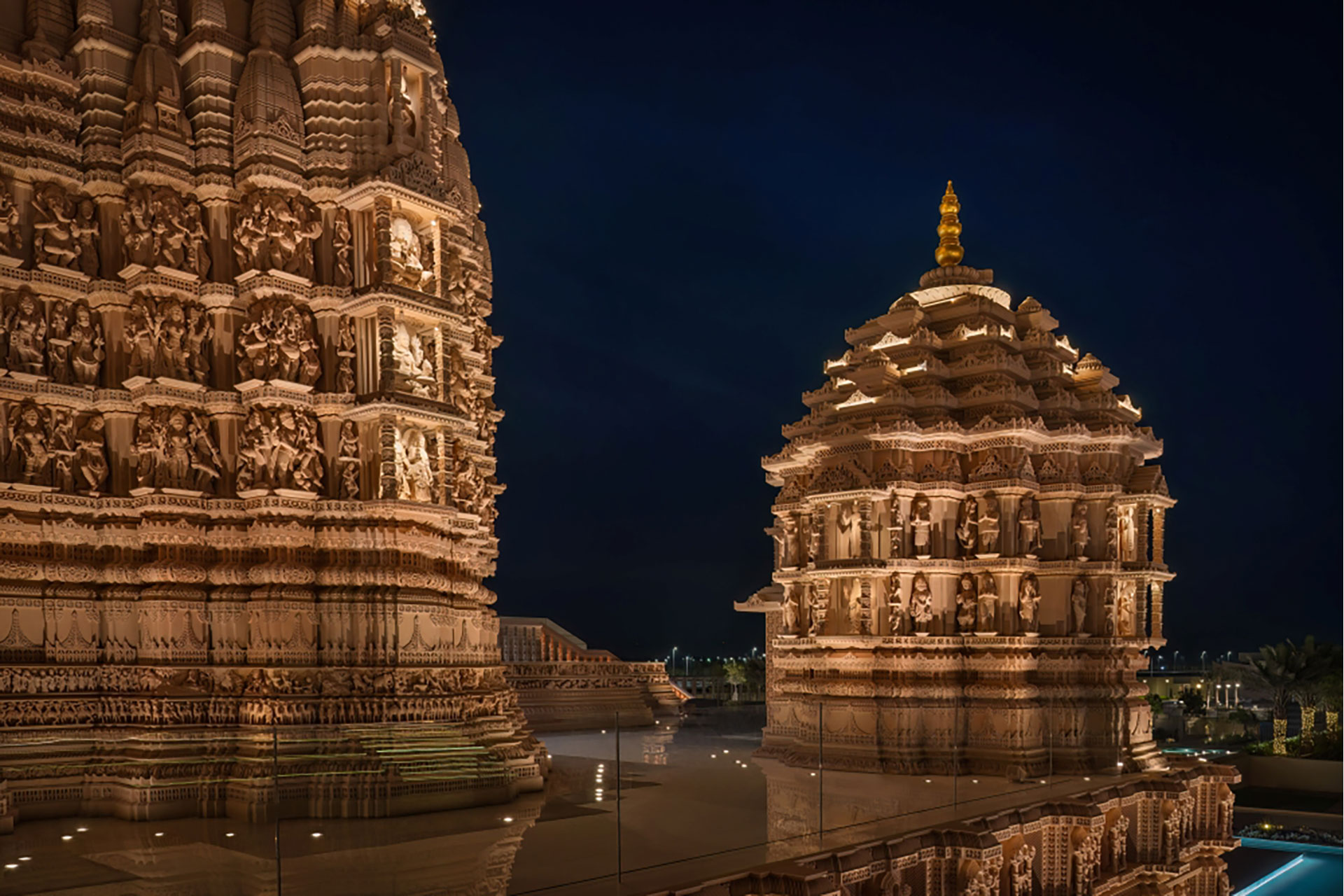
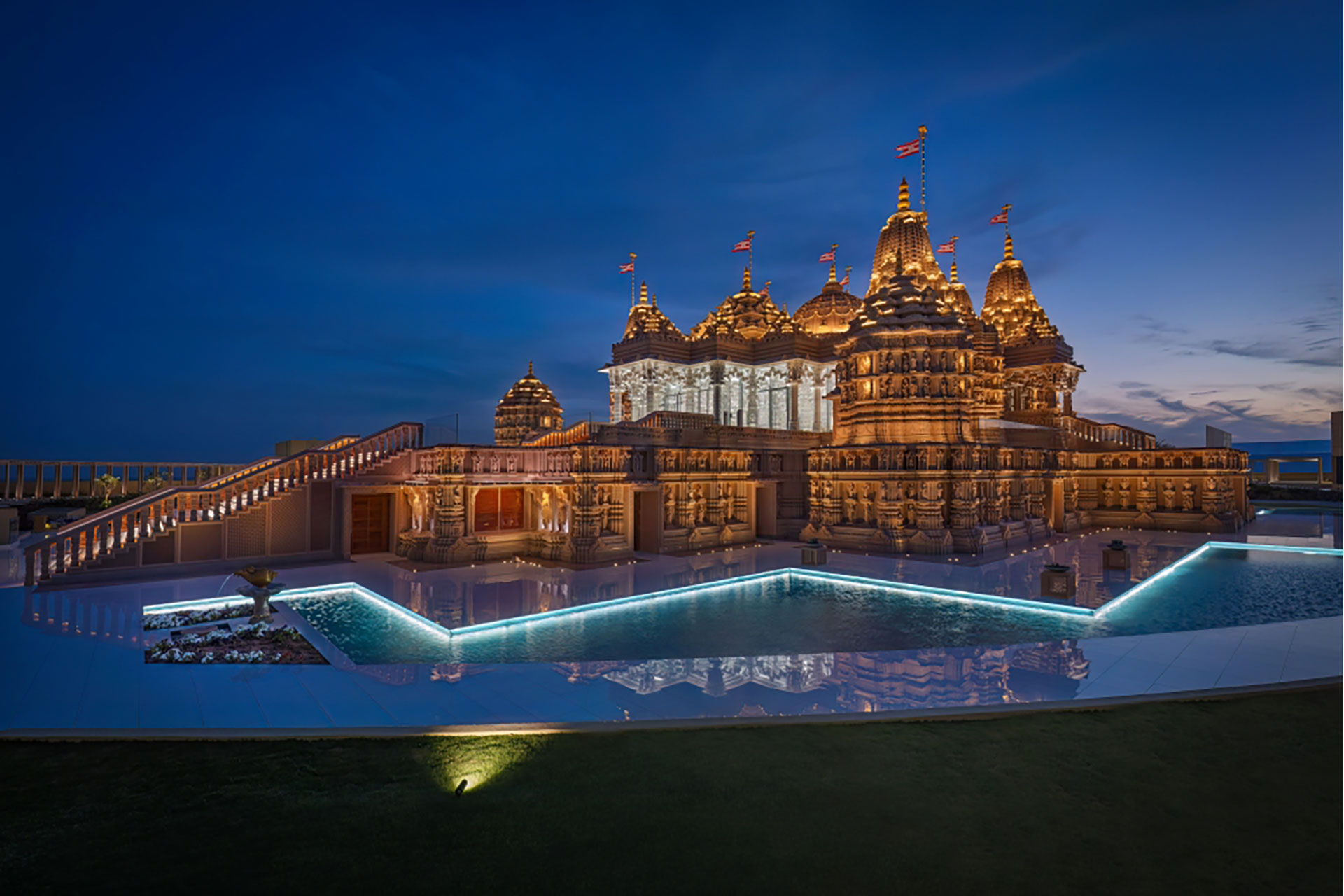
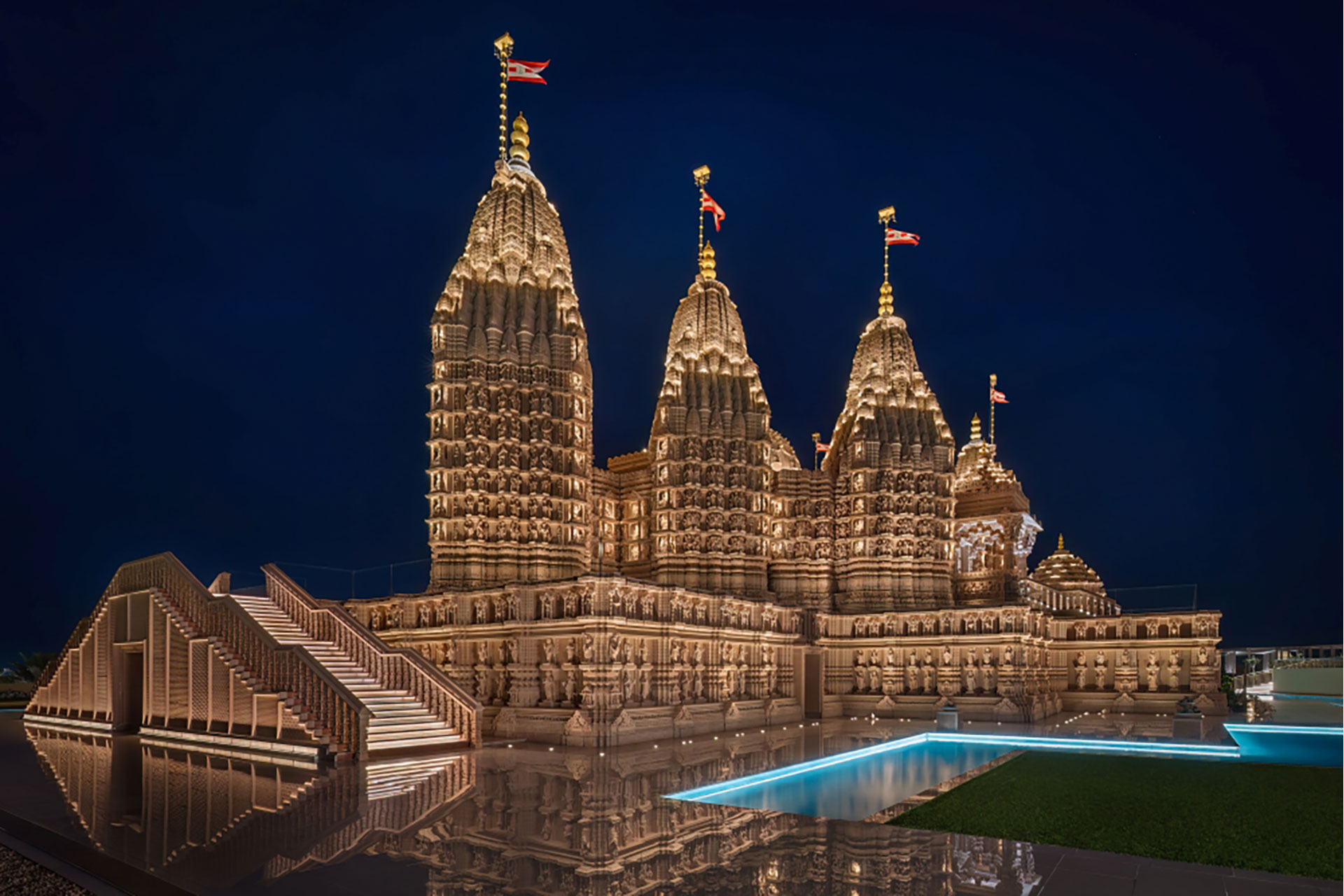
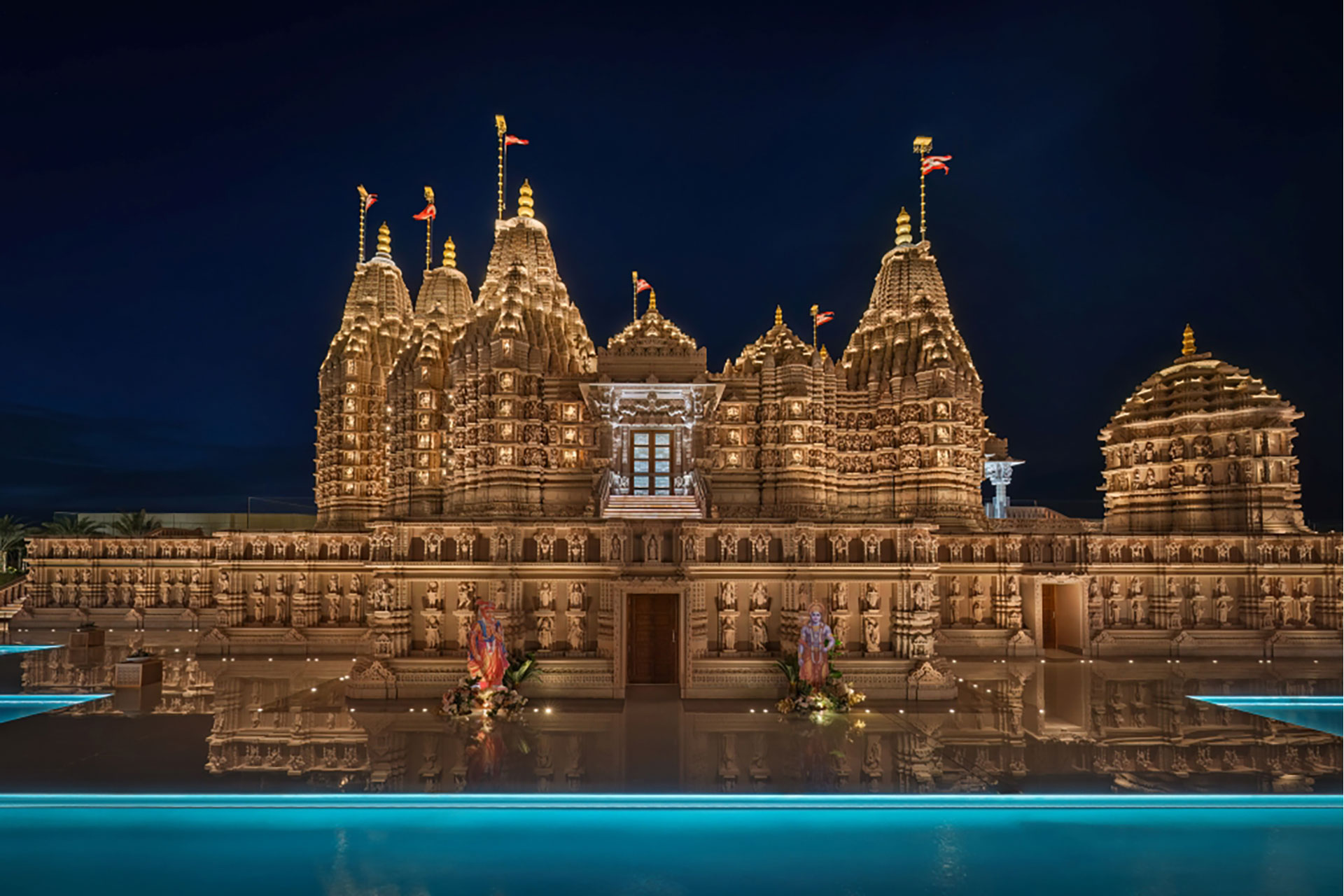
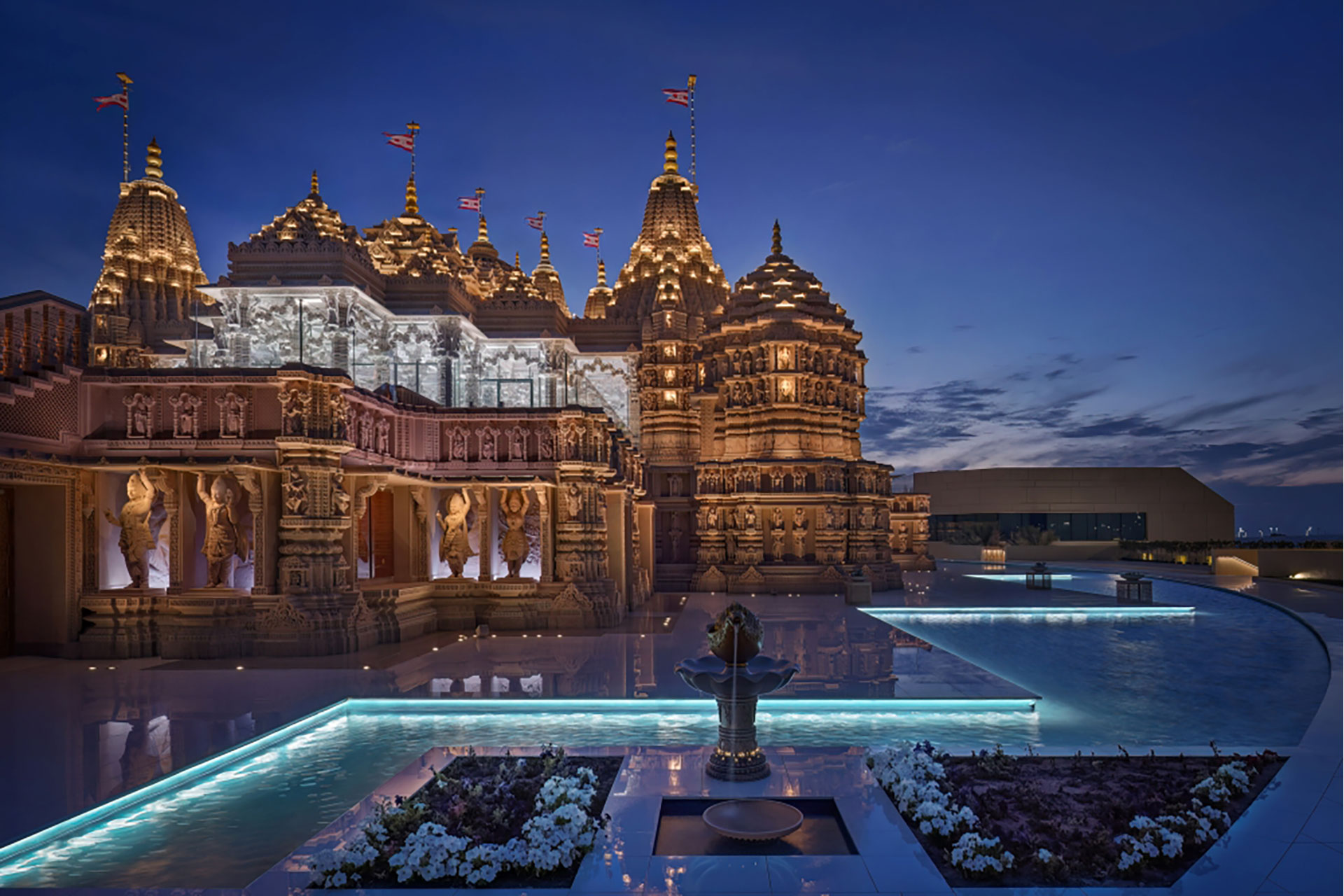
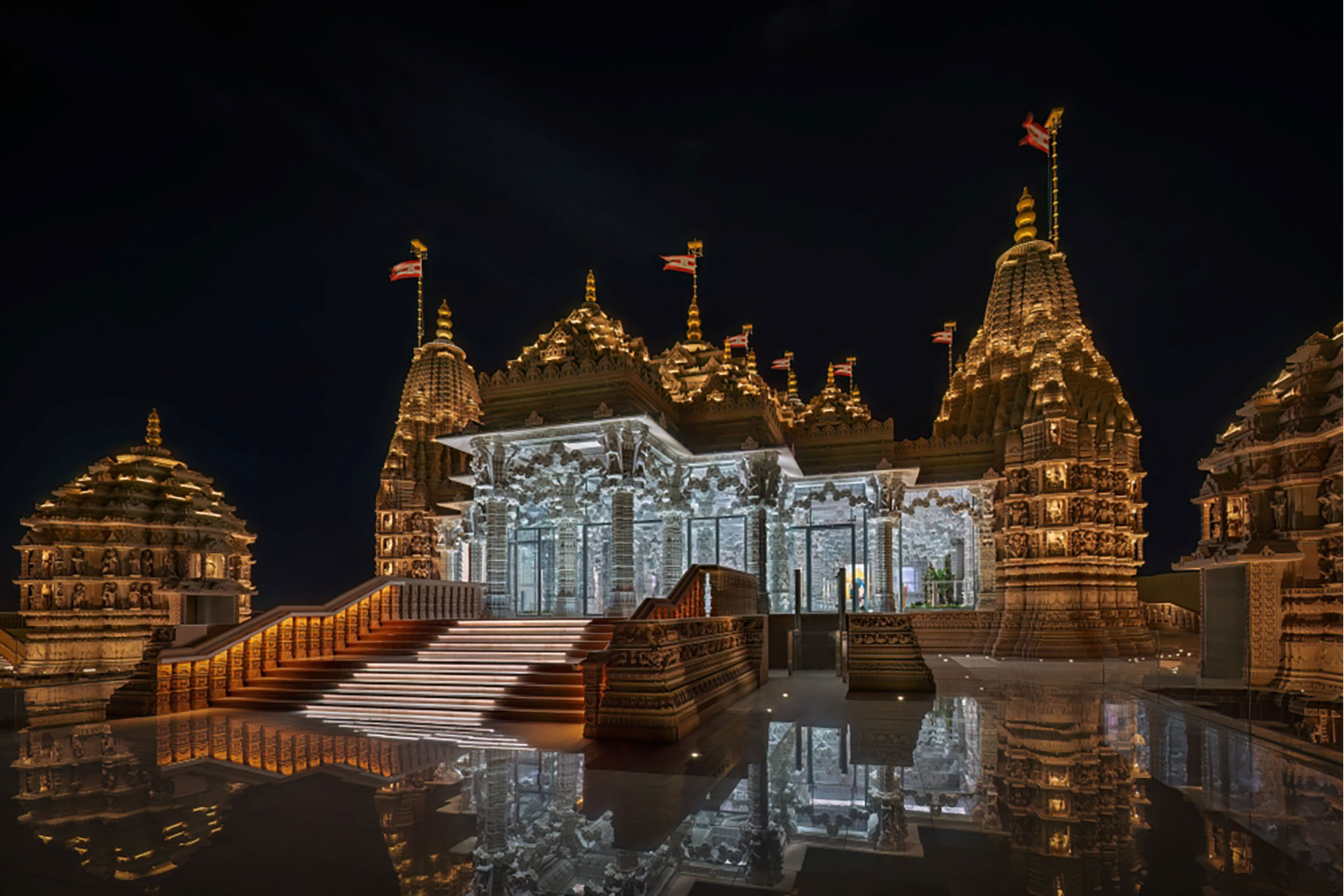
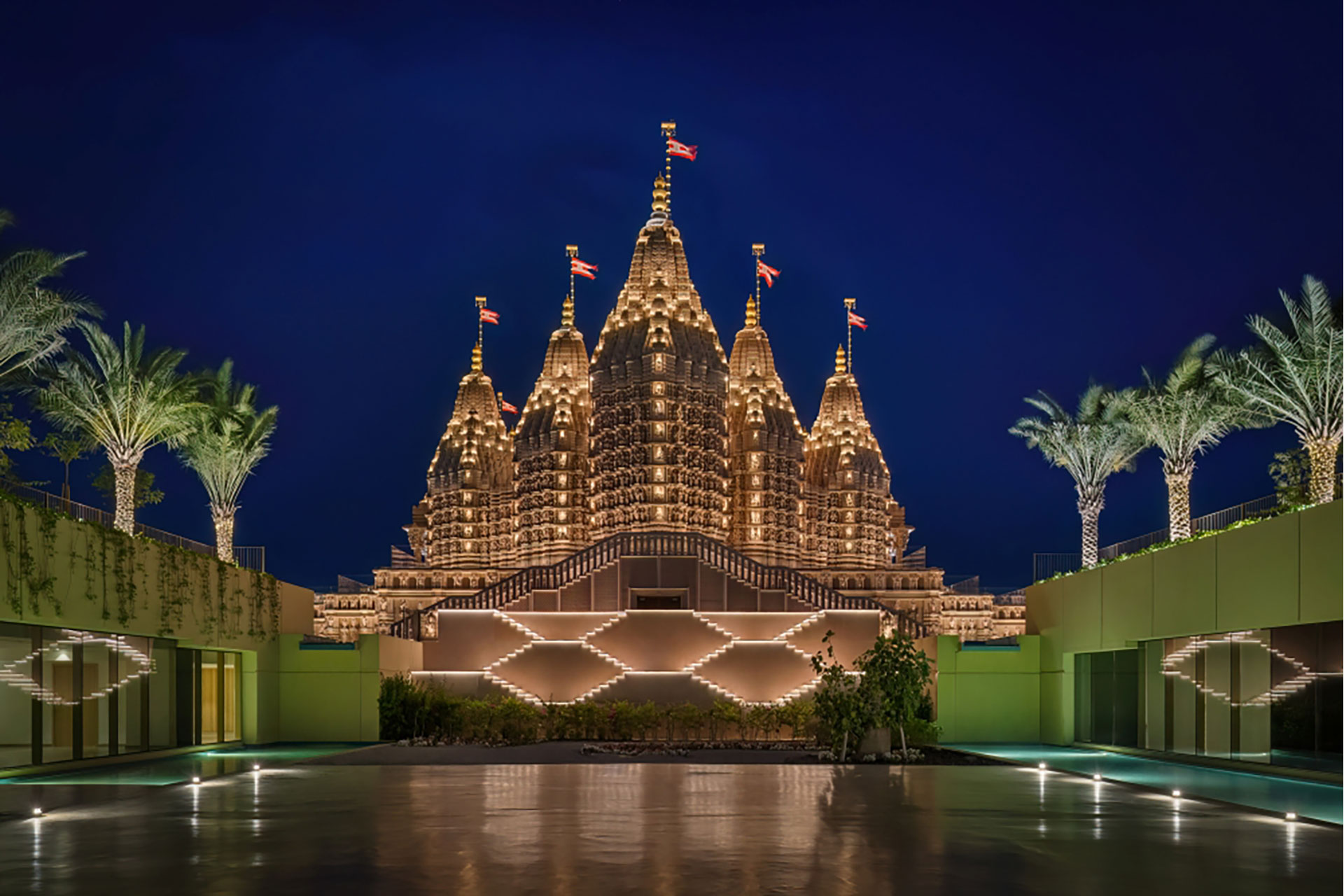
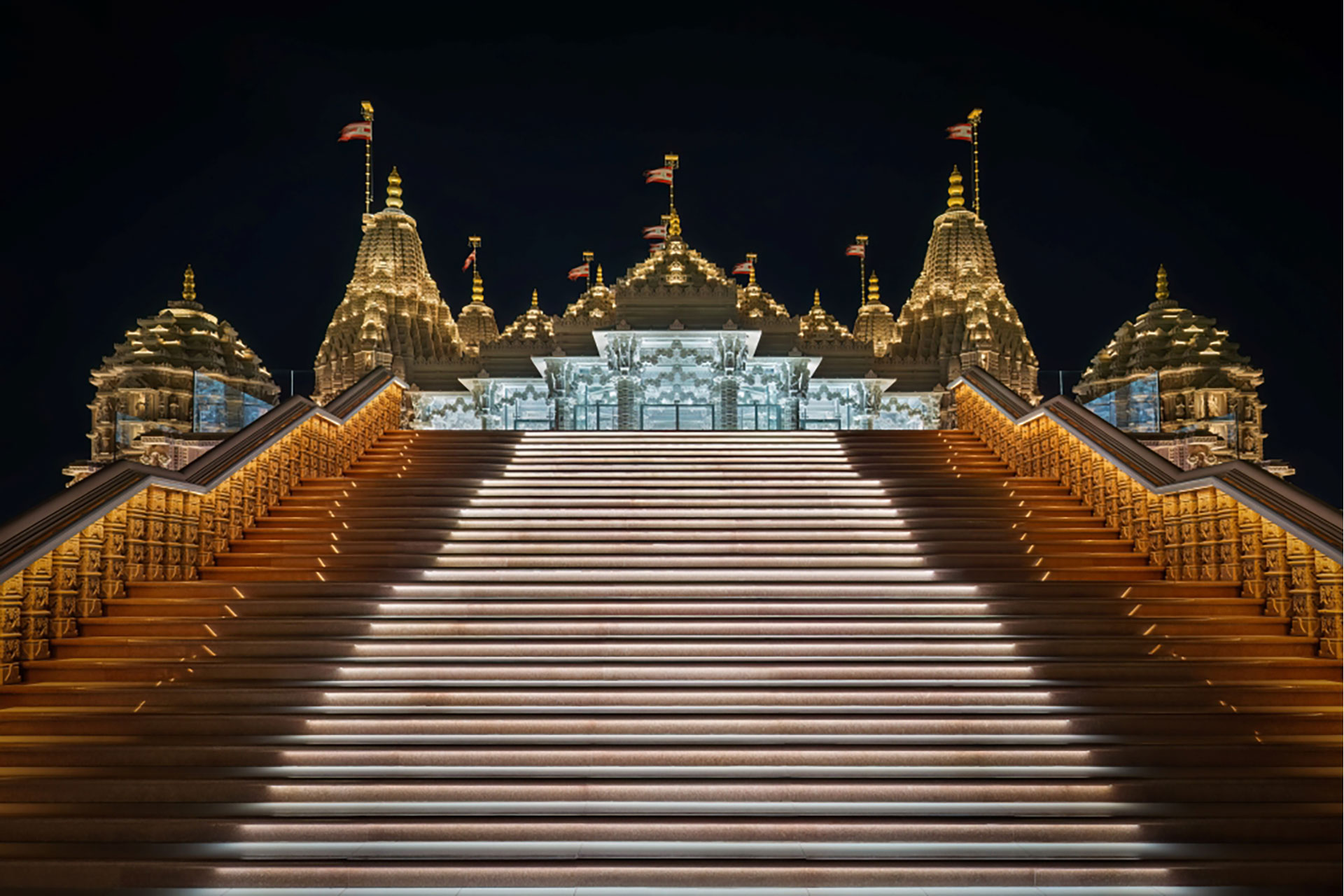
The Hindu Mandir in Abu Dhabi, the first traditional Hindu temple in the Emirates, is both a cultural landmark and a sacred space for worship. Studio Lumen’s lighting design approached this project not simply as illumination, but as storytelling. Drawing from Hindu cosmology, the design was guided by the Five Great Elements – Earth, Water, Fire, Air, and Space, each translated into a nuanced palette of light. Grounded base layers, glowing accents, soft diffusion, fluid transitions, and intentional shadow created a lighting language that honoured rituals, revealed intricate craftsmanship, and elevated the temple’s spiritual presence.
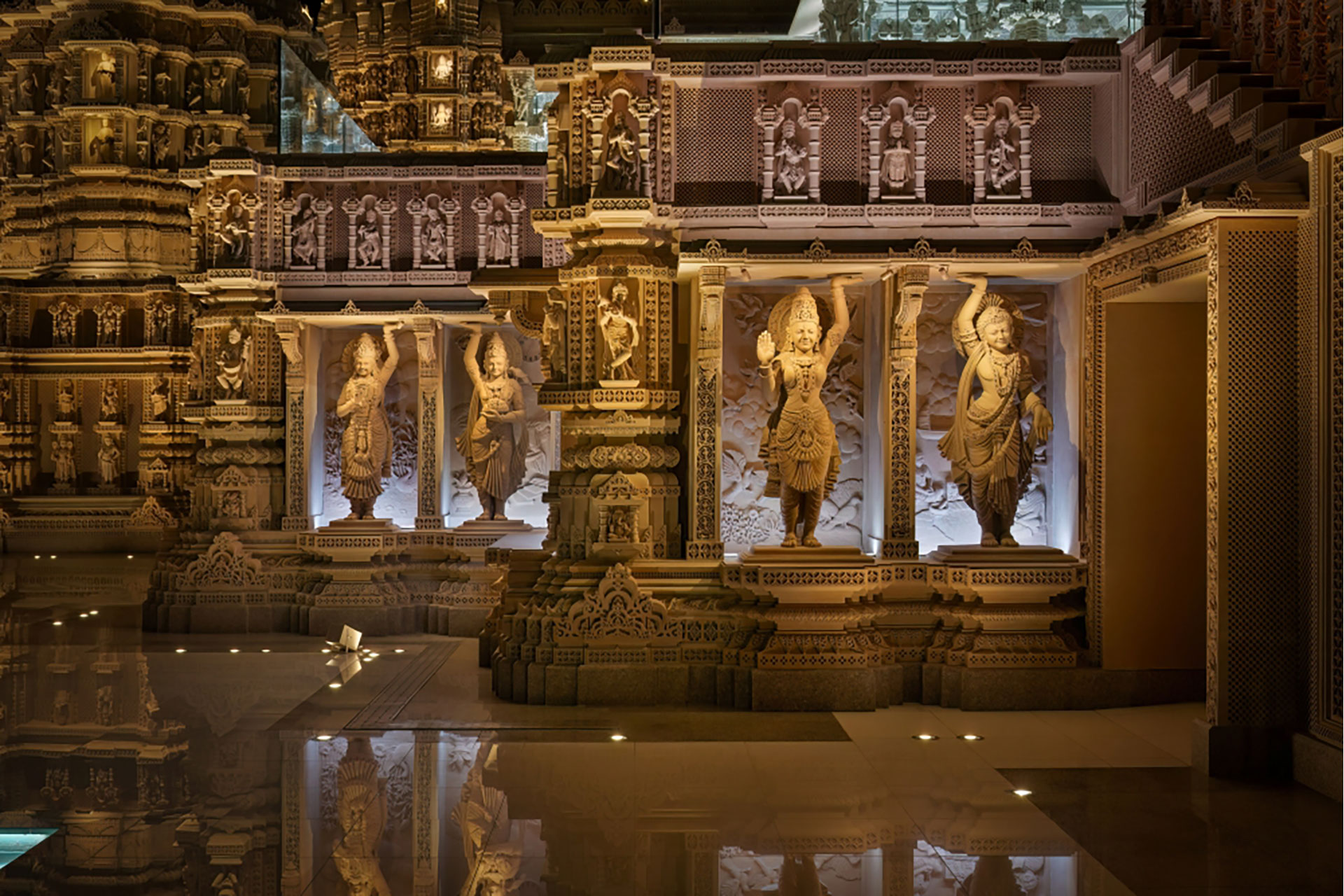
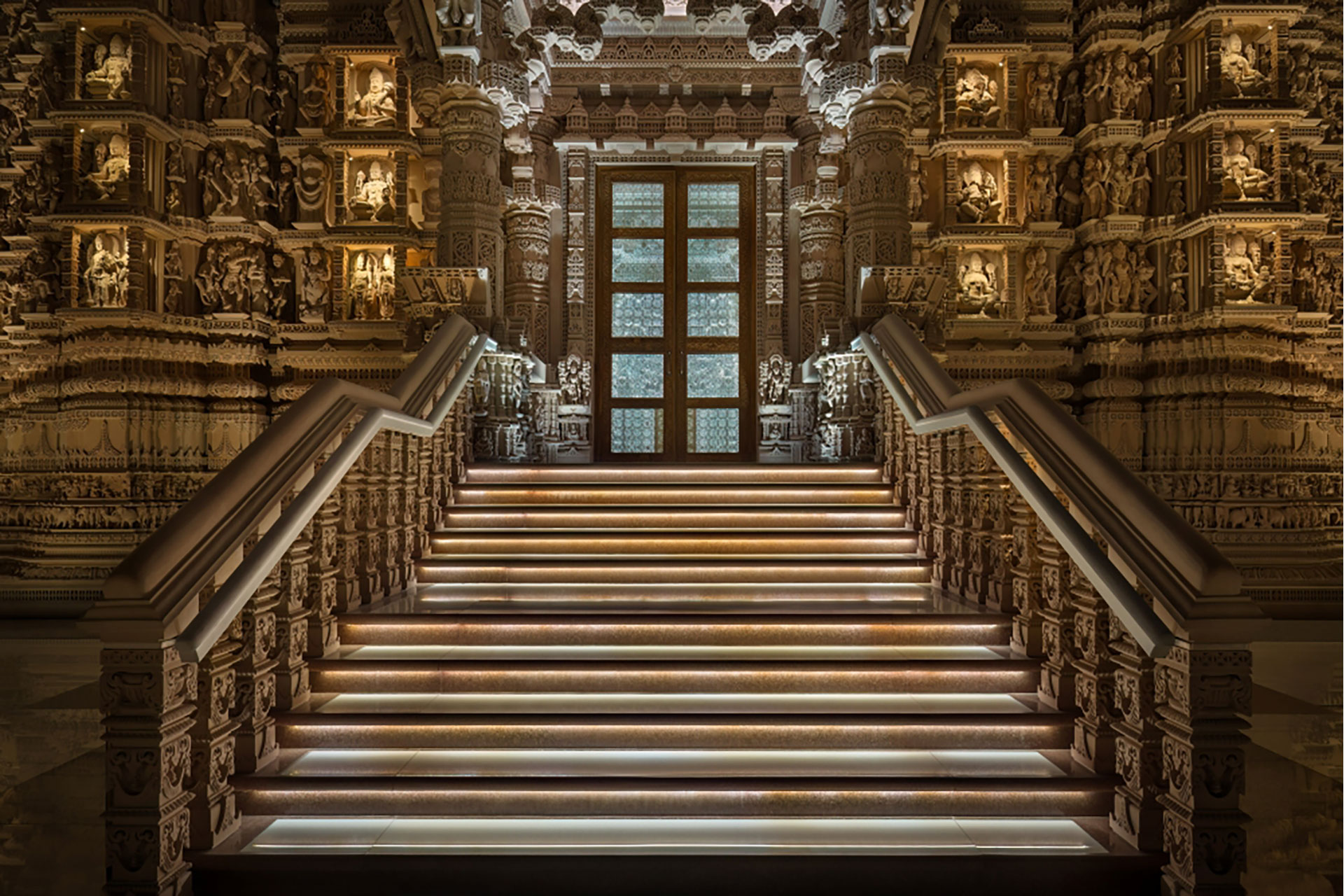
From the outset, harmony with the architecture was paramount. Over 200 hand-carved pillars and 40,000 cubic feet of sandstone and marble demanded a sensitive approach. Warm, low-intensity sources with precise optical control highlighted details without glare or distraction, while intentional use of darkness preserved reverence and contrast. The sanctum glows with a subtle warmth that evokes Agni, the eternal flame, while a poetic beam of light symbolising the Saraswati River transforms an amphitheatre into a place of spiritual metaphor.
Every design choice was integrated with precision. Luminaires were discreetly detailed within the architecture to respect authenticity, while advanced control systems allowed lighting to adapt to rituals and time of day. These strategies optimised performance, reduced consumption, and preserved atmosphere.
The project presented significant challenges, navigating complex religious symbolism, working with intricate architectural detail, and balancing varied stakeholder needs. Studio Lumen’s mastery lay in translating these demands into a coherent, respectful design language that was technically rigorous yet emotionally resonant.
Sustainability was fundamental. All luminaires were chosen for efficiency, longevity, and modularity, supporting circular design principles. Smart dimming and adaptive controls reduced energy use, while precise beam control minimised light spill and adhered to dark-sky standards, protecting the surrounding environment. These strategies ensured that the lighting design was as environmentally responsible as it was spiritually sensitive.
Innovation lay in redefining sacred lighting for a contemporary context. By embedding cosmological symbolism into a sustainable framework, Studio Lumen challenged conventional notions of temple lighting, showing that environmental stewardship and cultural authenticity can coexist without compromise.
The result is both artistic and experiential. Light is not merely functional; it guides worshippers through spaces of reverence, reflection, and ritual, transforming their journey into one of emotional depth and spiritual immersion. Innovation lies in redefining sacred lighting for a modern context, embedding cultural symbolism within a sustainable, technologically advanced framework where environmental responsibility and spiritual authenticity are inseparable. In doing so, the Hindu Mandir demonstrates how lighting design can merge artistry, sustainability, and cultural meaning to raise the standards of the profession. At the BAPS Hindu Mandir, illumination becomes more than visibility – it becomes a sacred, sustainable language, setting a new benchmark for lighting cultural and religious landmarks.