

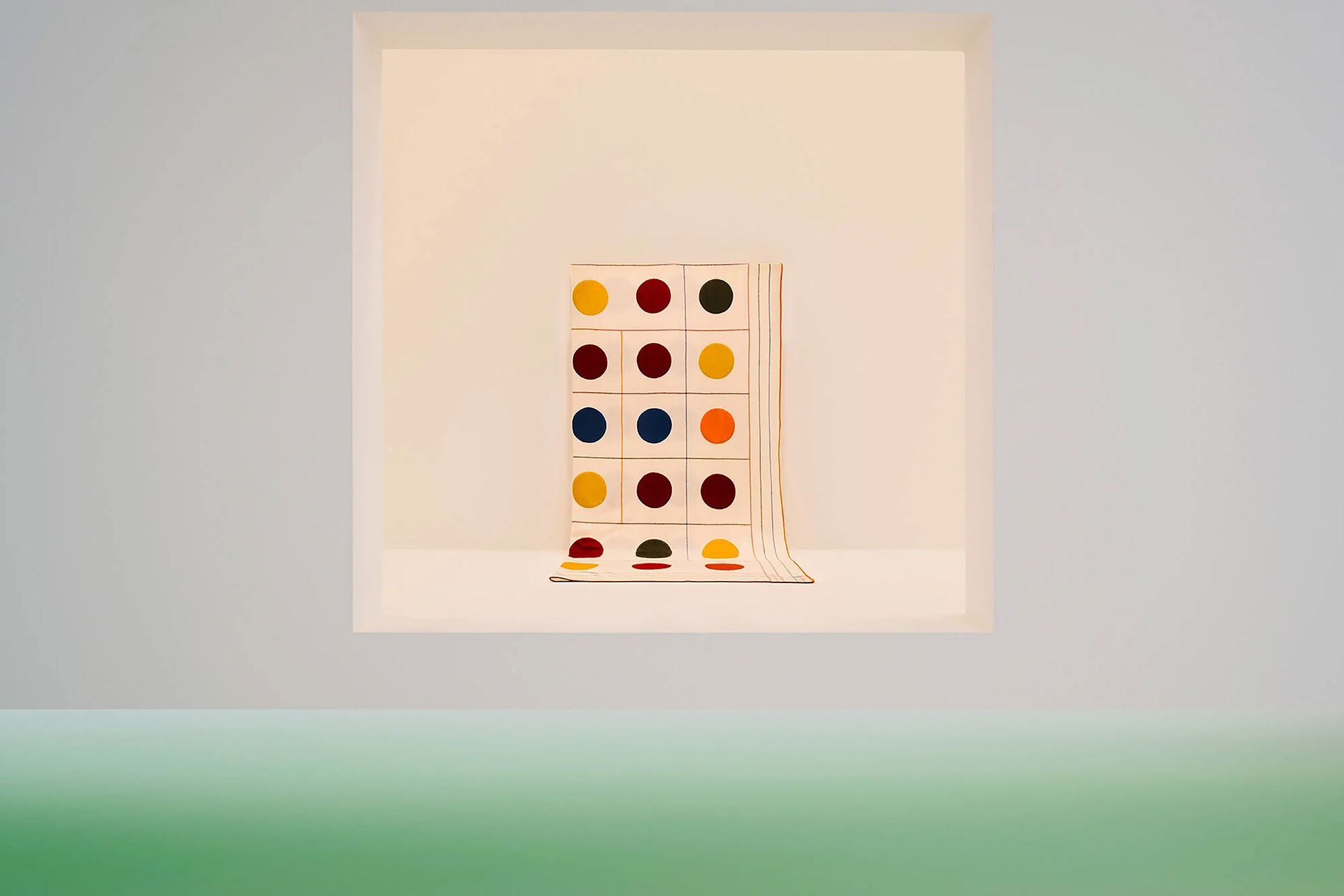
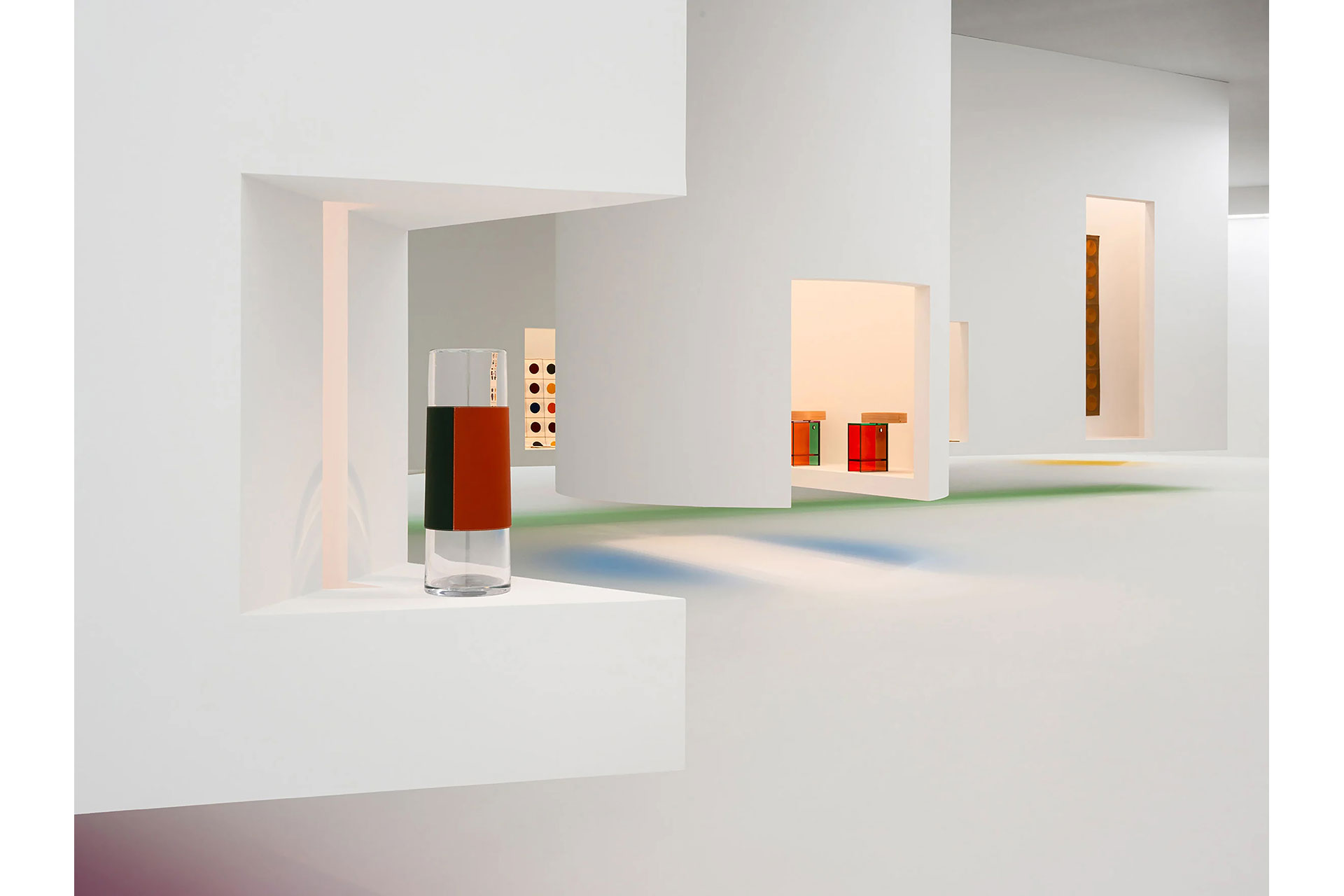
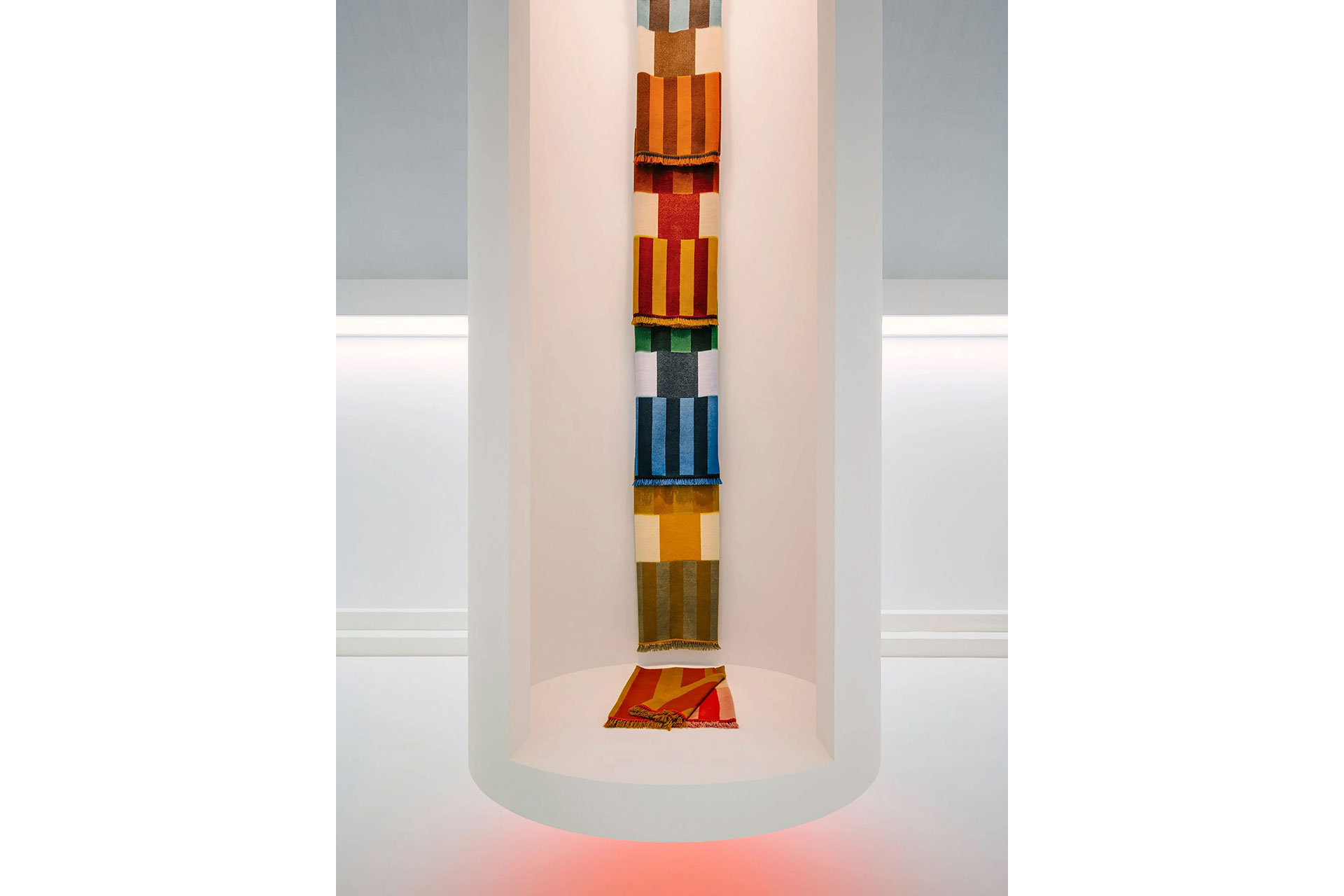
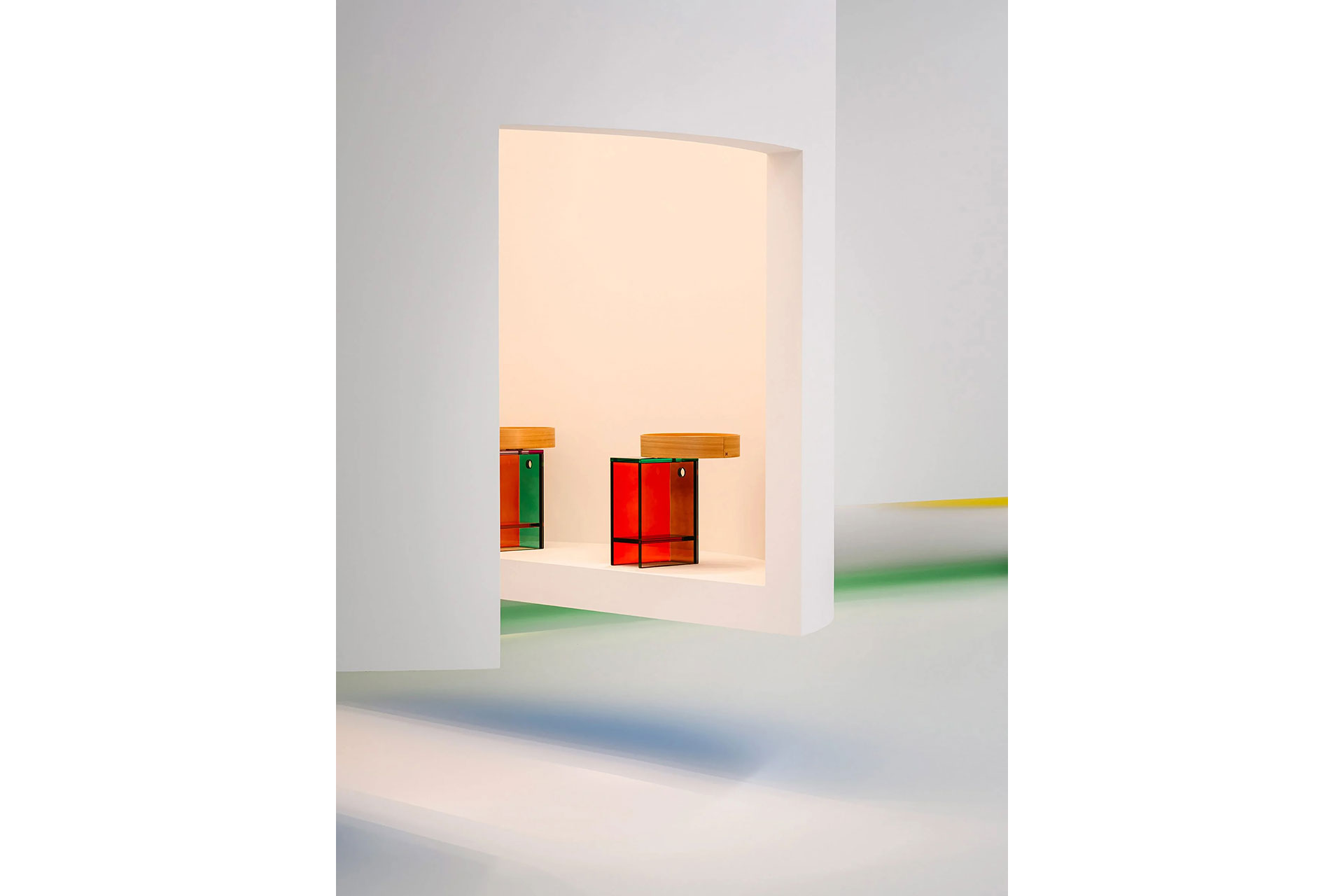
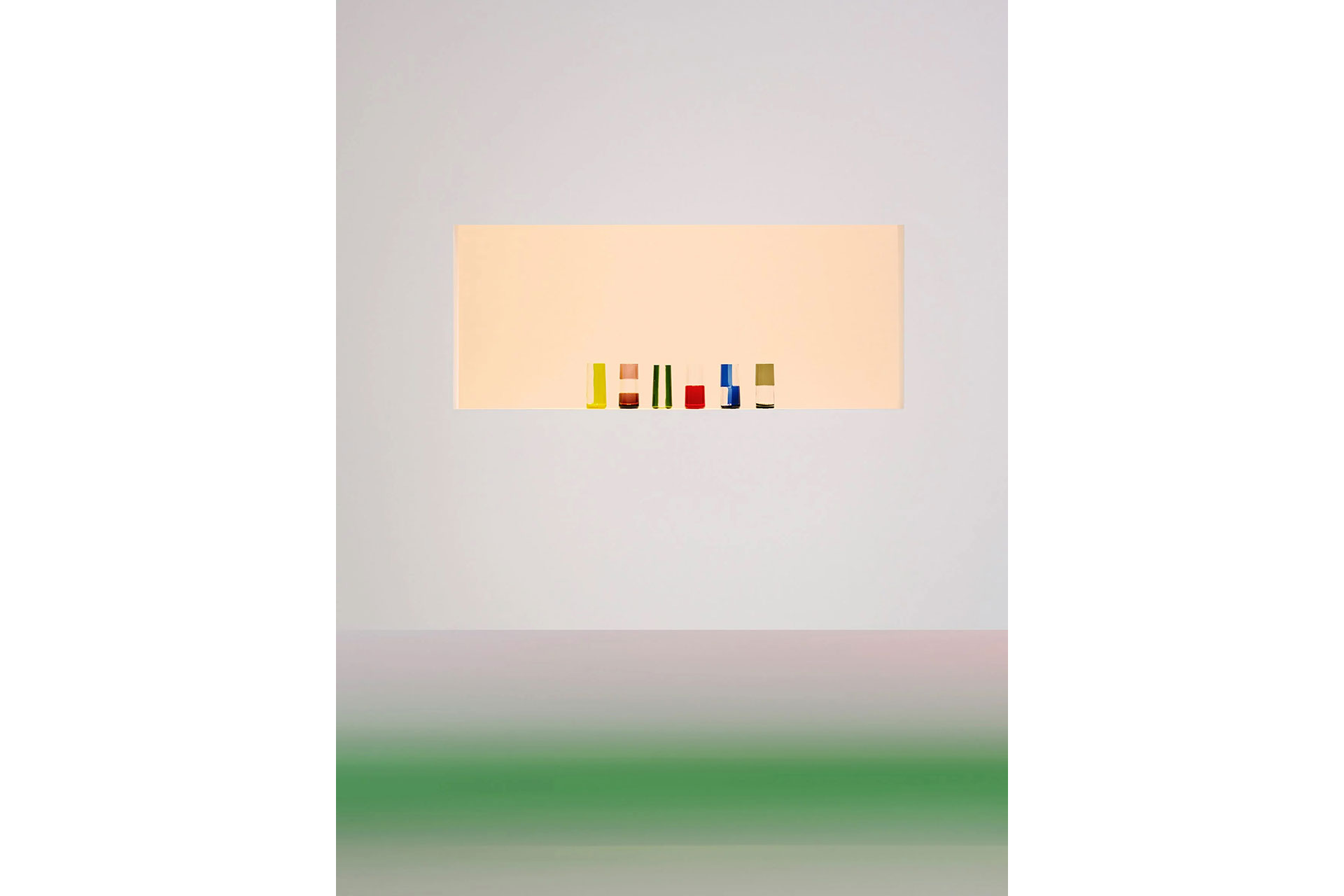
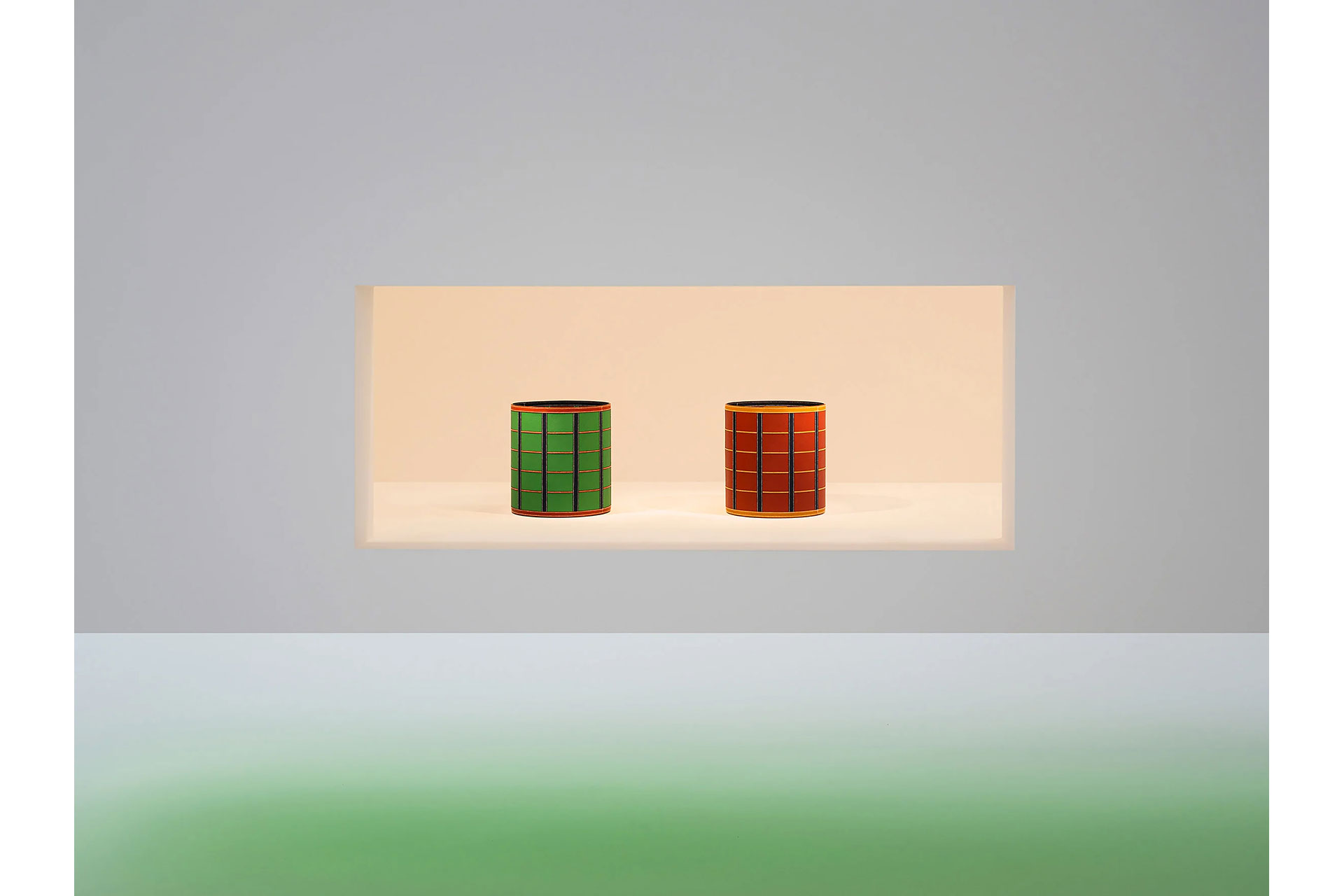
For Hermès at Milan Design Week 2025, L’Observatoire International conceived a lighting design that operated not as a backdrop but as an active, expressive component of the scenography by Charlotte Macaux Perelman and Alexis Fabry. The project transformed the former sports hall of La Pelota into an immersive, ethereal environment where light established spatial hierarchy, material perception, and emotional tone. Rather than relying on decorative effects, the lighting defined a controlled and contemplative atmosphere, focusing attention on the craftsmanship and sensory experience of the objects presented.
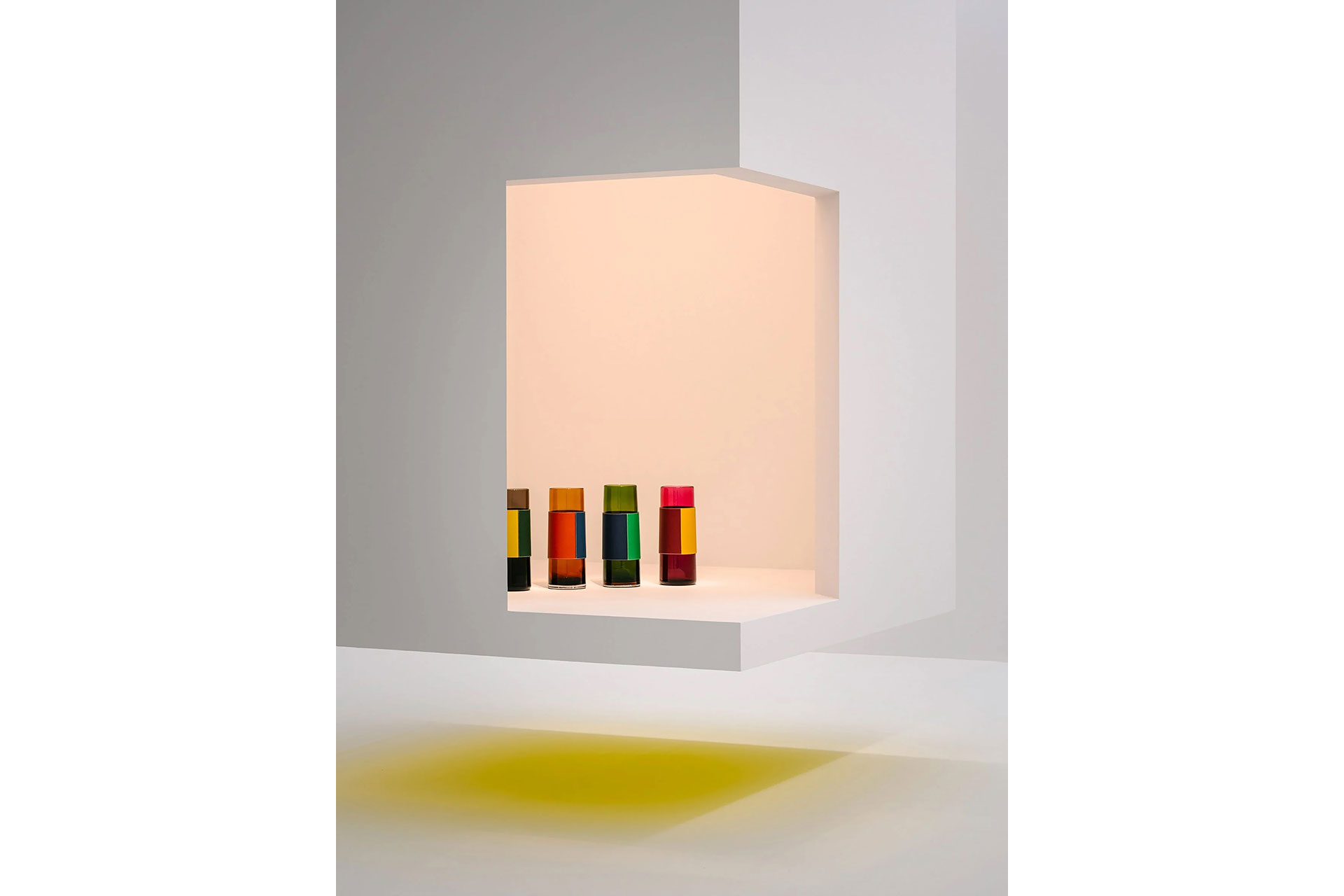
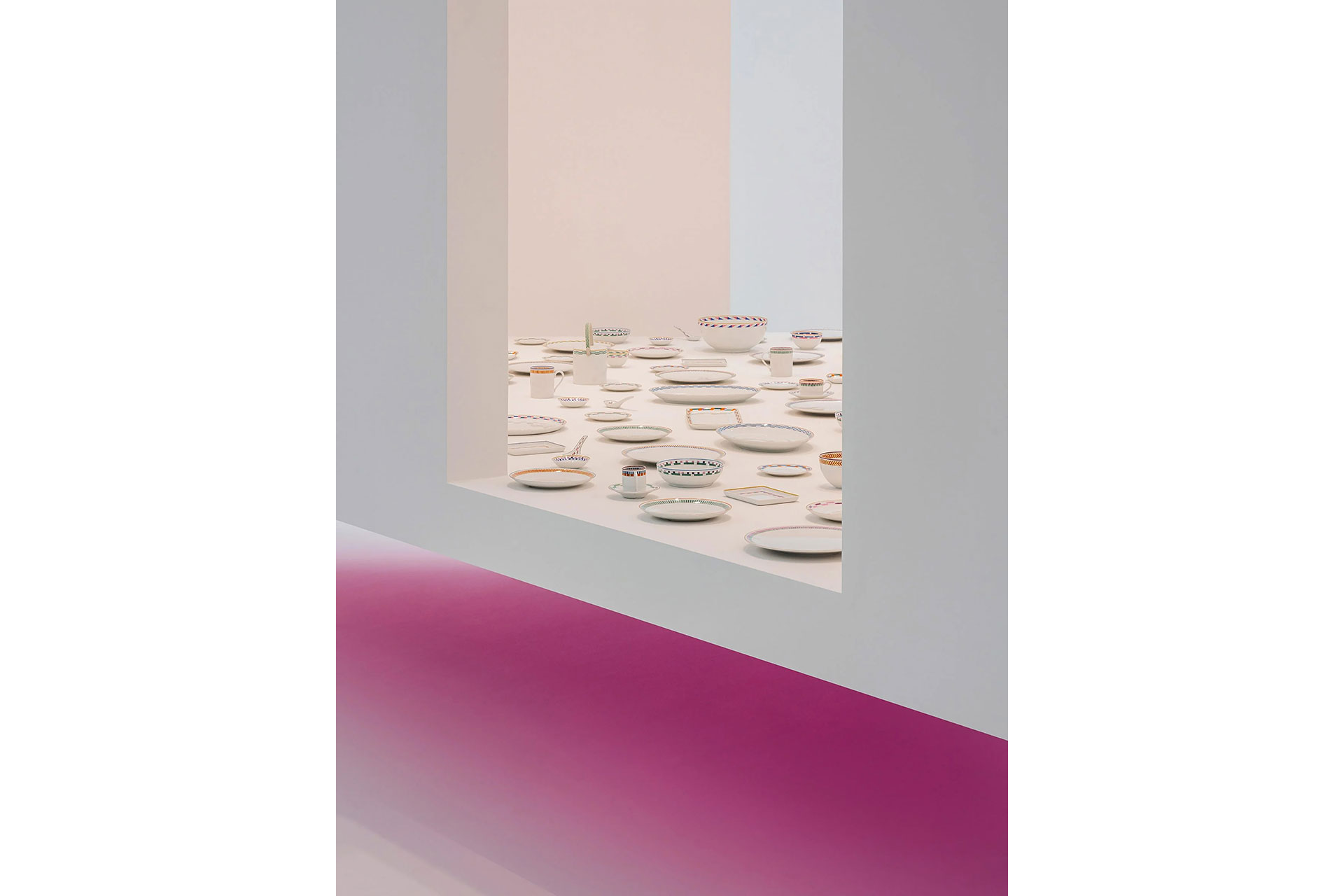
The conceptual foundation centered on suspended architectural boxes that projected vibrant halos of color onto a white, gridded floor. These minimal volumes were designed as atmospheric vessels for light—appearing weightless and ephemeral—while generating luminous fields that subtly shifted as visitors moved through the space. The resulting halos created a geometric and rhythmic structure that guided circulation intuitively, establishing a perceptual system of orientation without physical partitions. Light became both the path and the presence, offering a spatial framework that was legible yet non-invasive.
The lighting strategy relied on discreet, highly controlled LED sources, meticulously positioned to remain invisible. Fixtures were concealed within the suspended structures, enabling luminous effects and crafted objects to take precedence rather than the hardware that produced them. This approach reinforced a scenographic language rooted in clarity and restraint, elevating everyday objects into moments of luminous attention. Each lighting gesture was purposeful, adapting intensity, distribution, and chromatic attributes to create variations of clarity, intimacy, and rhythm throughout the installation.
Color played a pivotal role, yet the scenography itself used almost no chromatic materials. Translucent volumes, white flooring, and crafted objects formed a neutral architectural stage, allowing light alone to introduce vibrancy, focus, and emotional resonance. This restraint demonstrated how minimal physical intervention could yield immersive environments driven by immaterial phenomena. The project underscored light as a sculptural and compositional tool with the capacity to generate narrative, atmosphere, and perceptual depth.
The design addressed sustainability and performance through the exclusive use of energy-efficient LED technology, offering high color rendering, precise optical control, and long lifespan. The system minimized environmental impact while producing vivid chromatic effects and refined visual comfort. The lighting was calibrated to support low energy consumption without compromising spatial clarity or material expression.
In a design week context marked by visual saturation, the project offered an environment defined by clarity, calm, and sensorial richness. By focusing on immaterial strategies rather than material accumulation, the lighting established a contemplative experience within a large-scale setting. The project demonstrated how technical precision, visual restraint, and expressive control can deliver immersive, emotionally charged environments with minimal resources. Through an interplay of structure, color, and perception, the design revealed the poetry of craftsmanship and transformed the exhibition into a luminous, spatial narrative.