

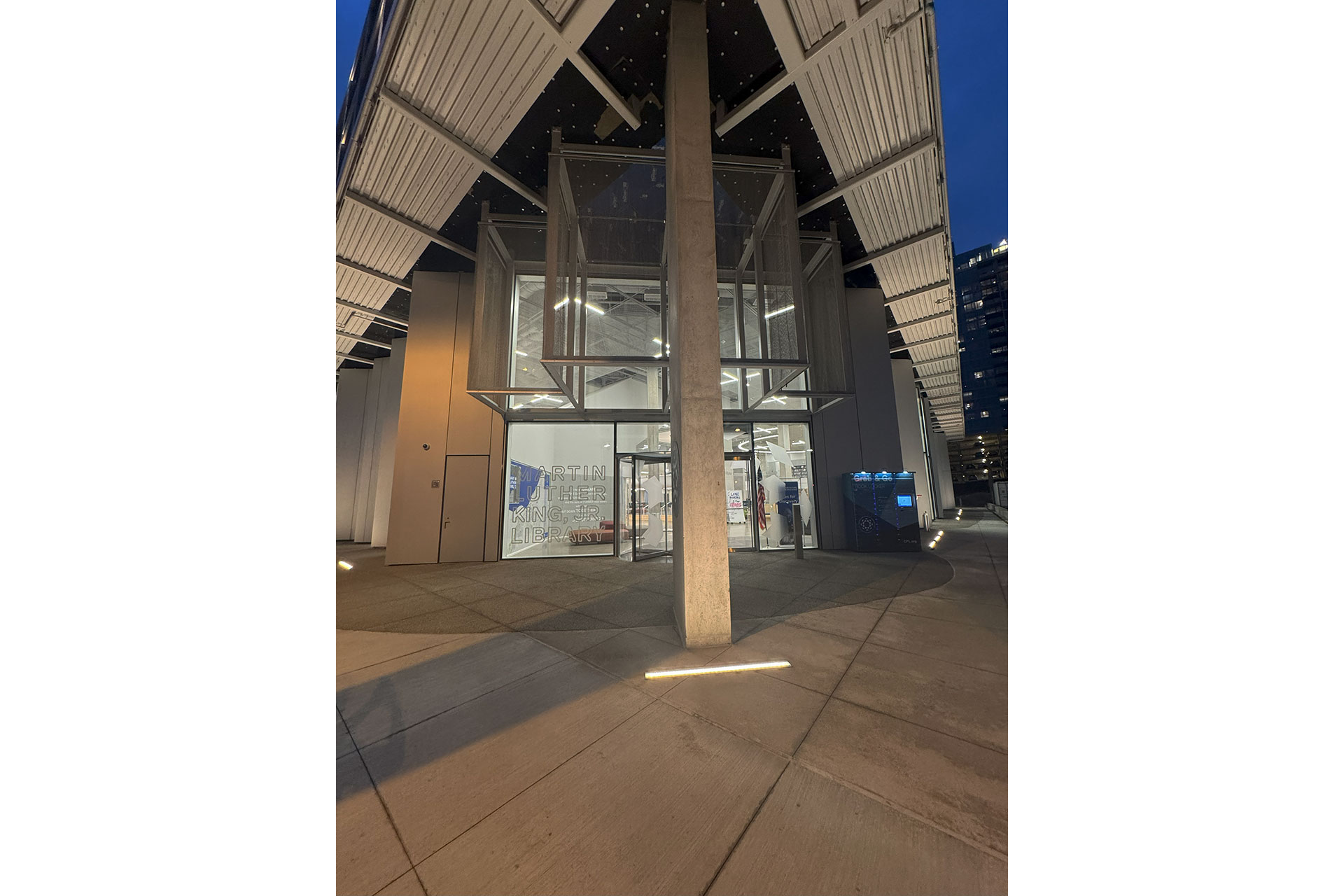
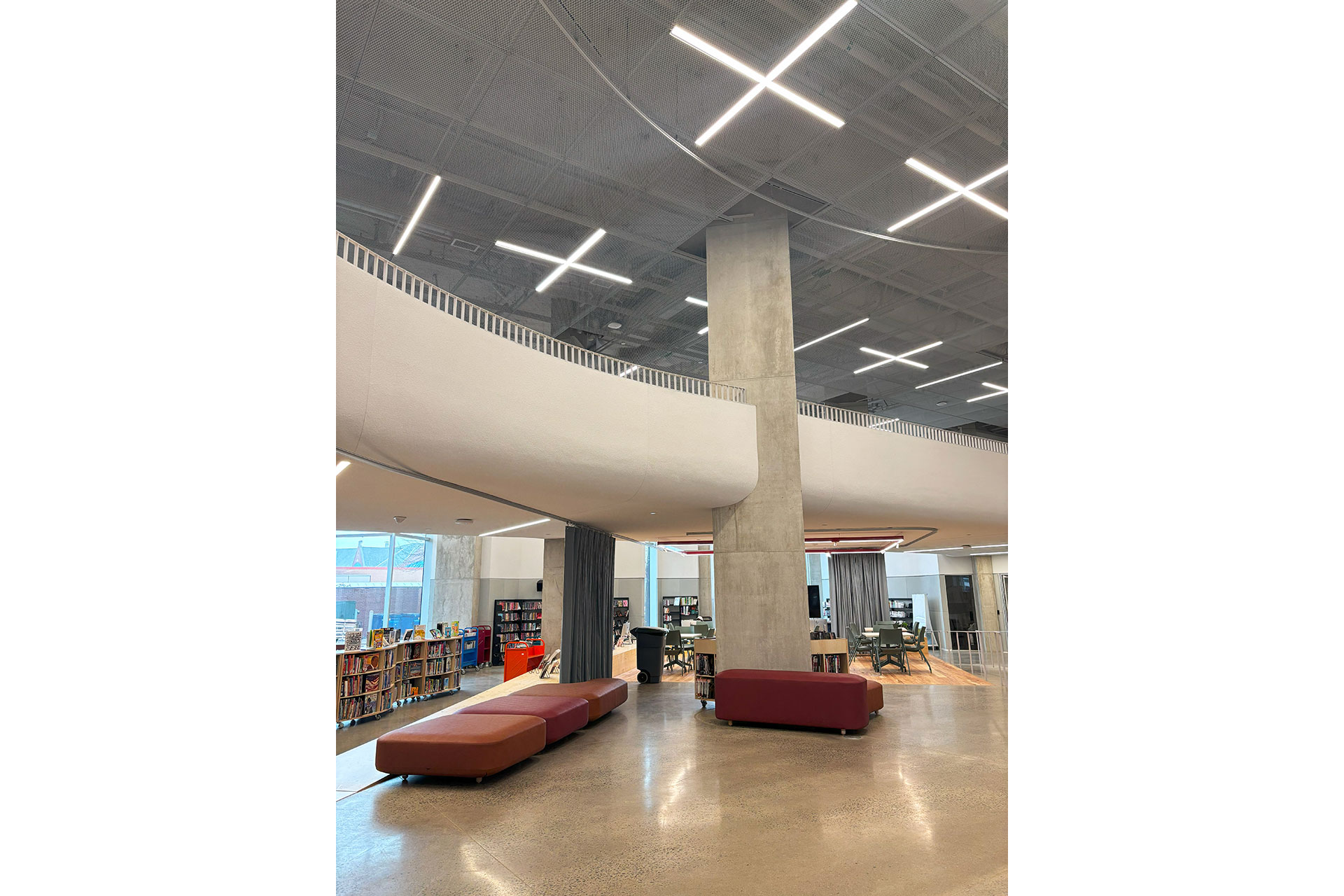
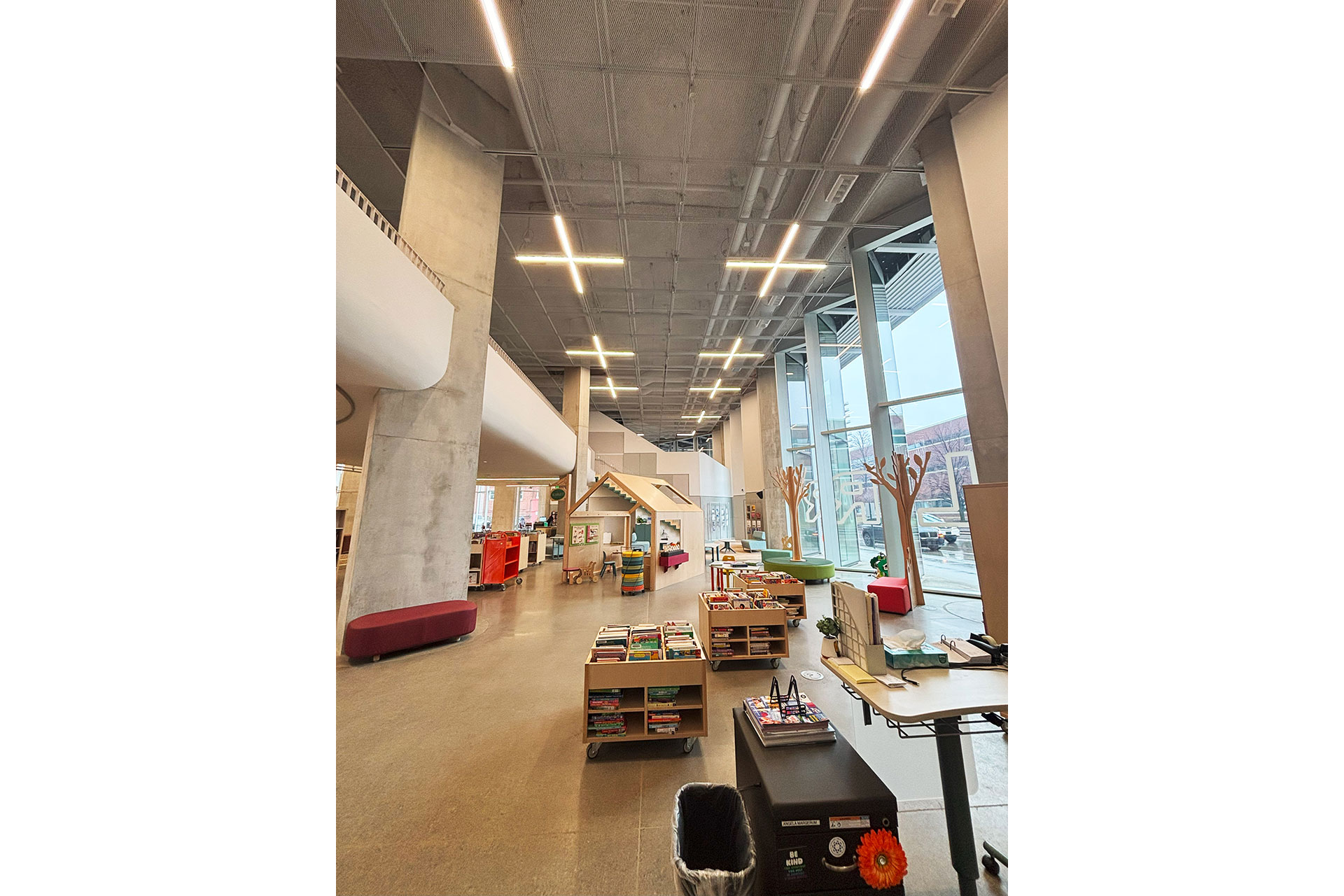
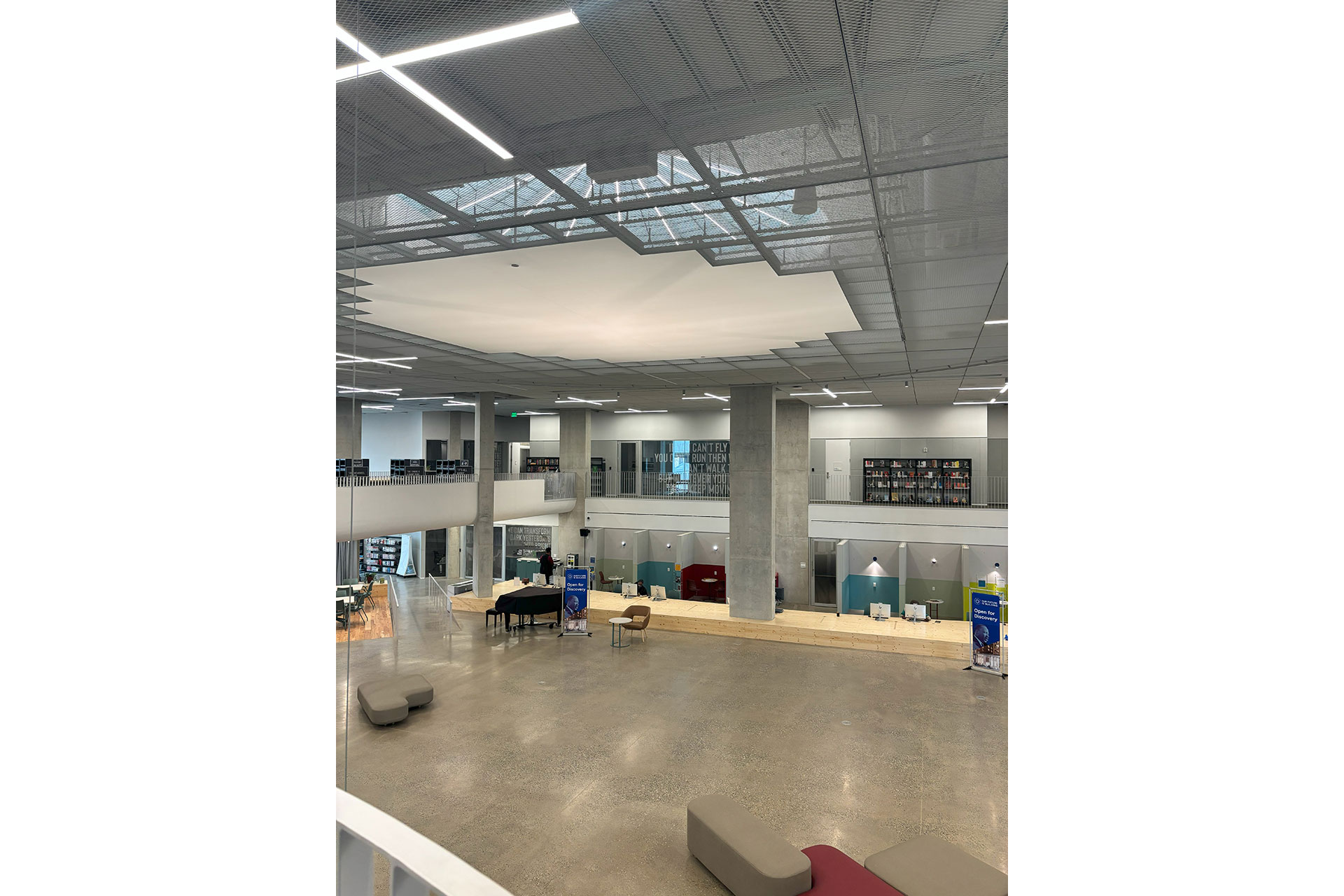
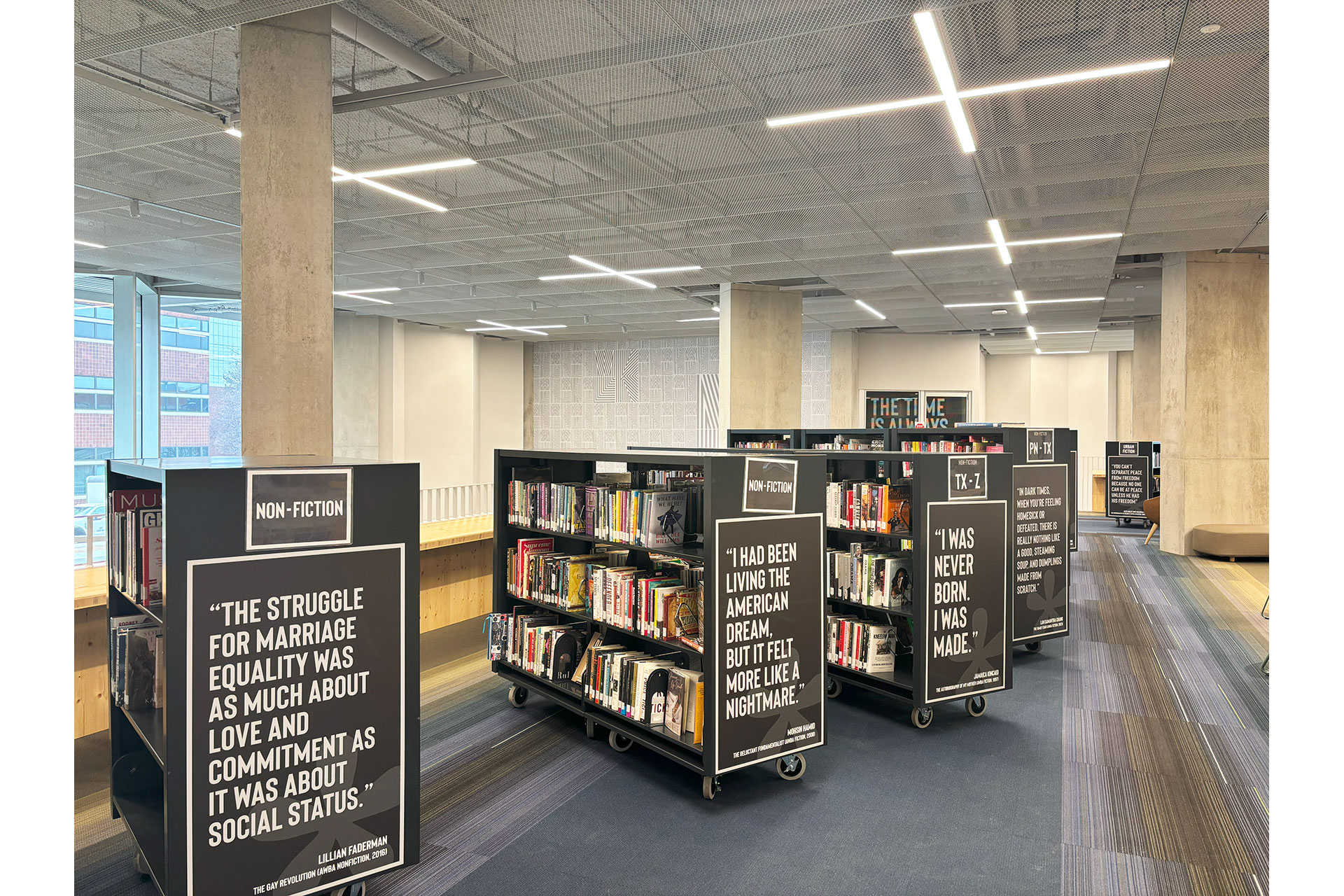
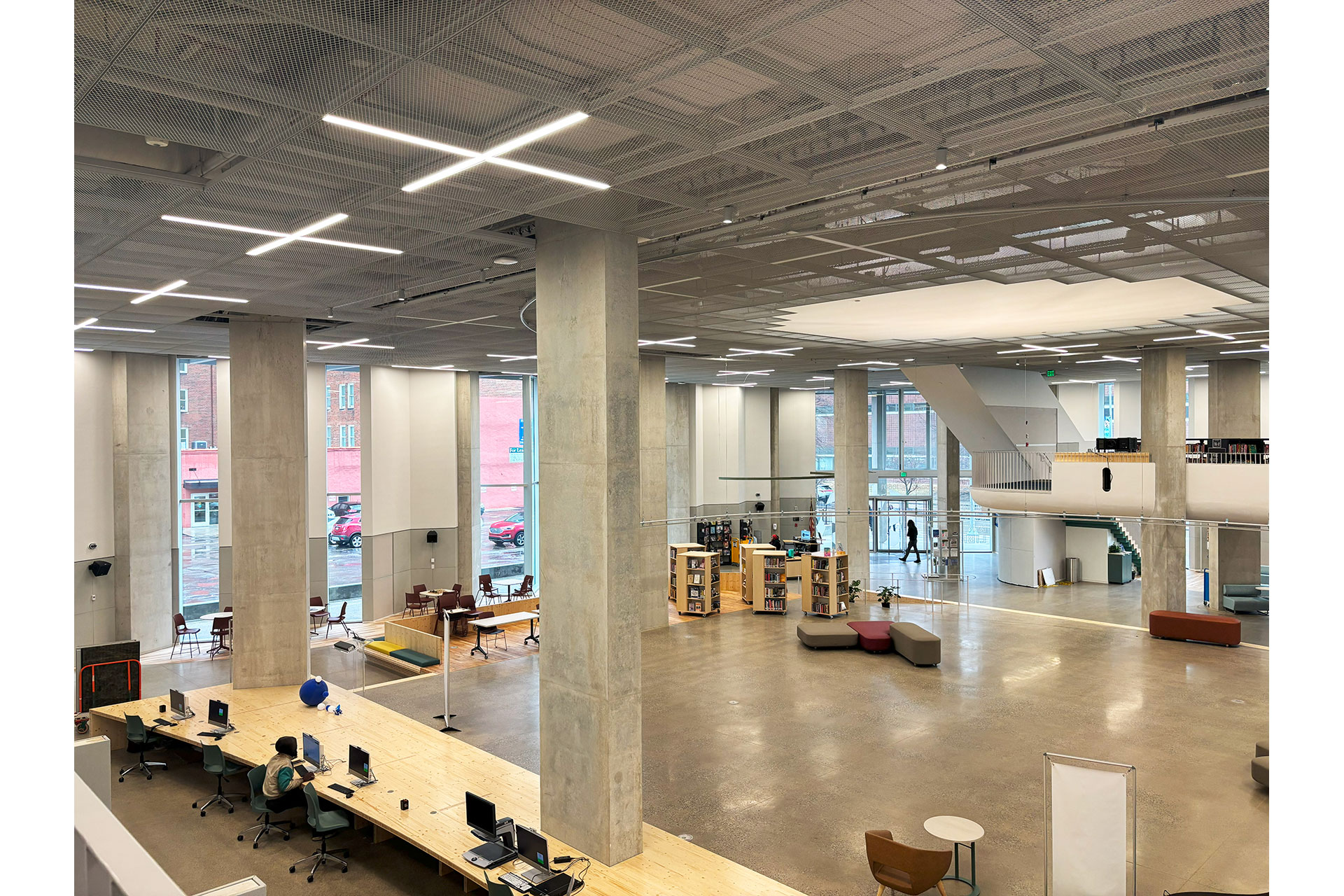
The Martin Luther King Jr. Branch of the Cleveland Public Library was conceived as a civic interior — a democratic commons where learning, gathering, and quiet coexist. The lighting strategy responds to this ambition by treating light as civic infrastructure: an essential, shaping force that supports equity, orientation, and shared use rather than visual spectacle.
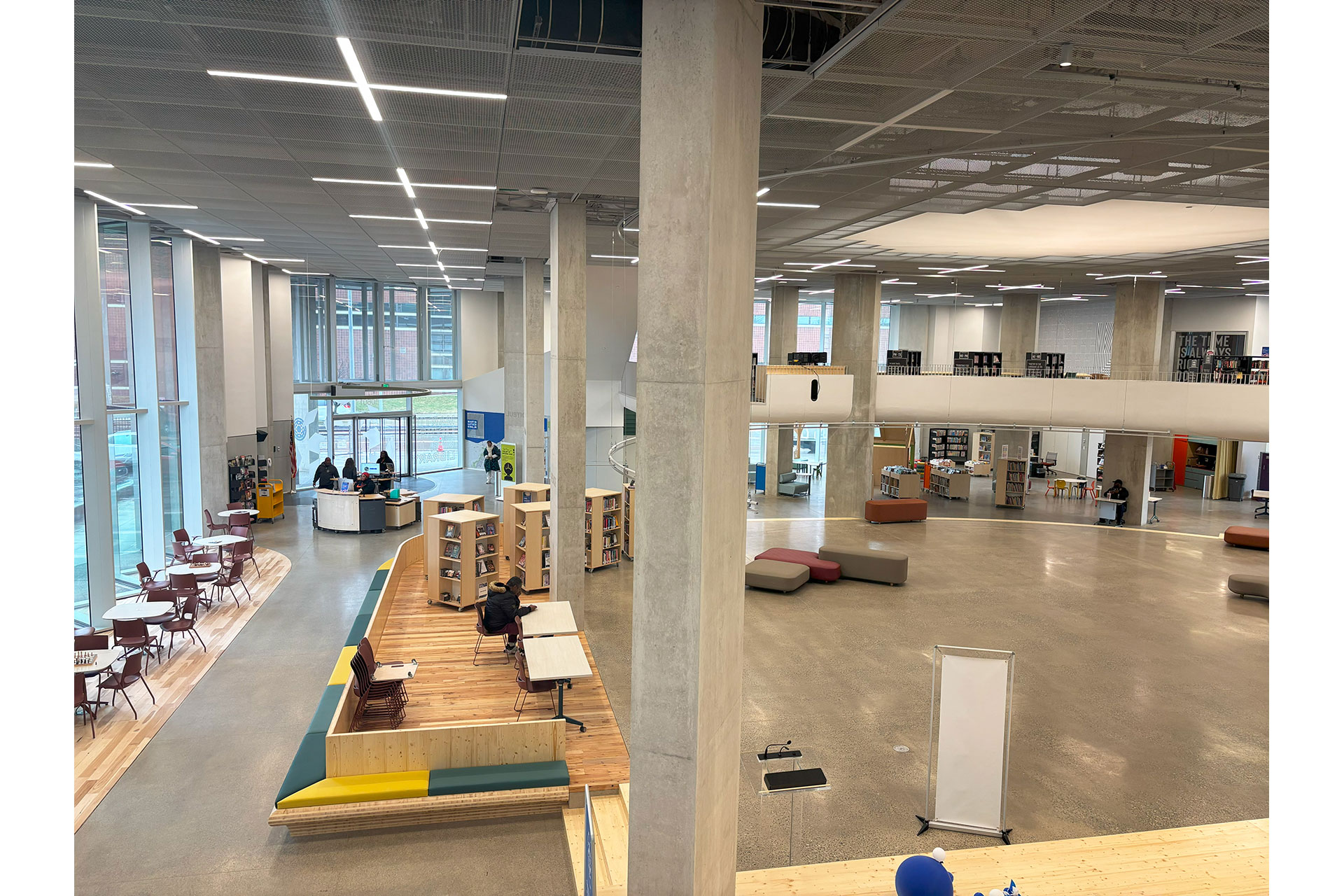
The architecture presents a large, open volume defined by exposed structure, layered floor plates, and flexible program zones. Rather than subdividing or dramatizing this space, the lighting establishes a continuous luminous field that allows the architecture and community activity to remain foregrounded. Light is used to clarify space, not compete with it — reinforcing legibility, comfort, and dignity across a wide range of users and ages.
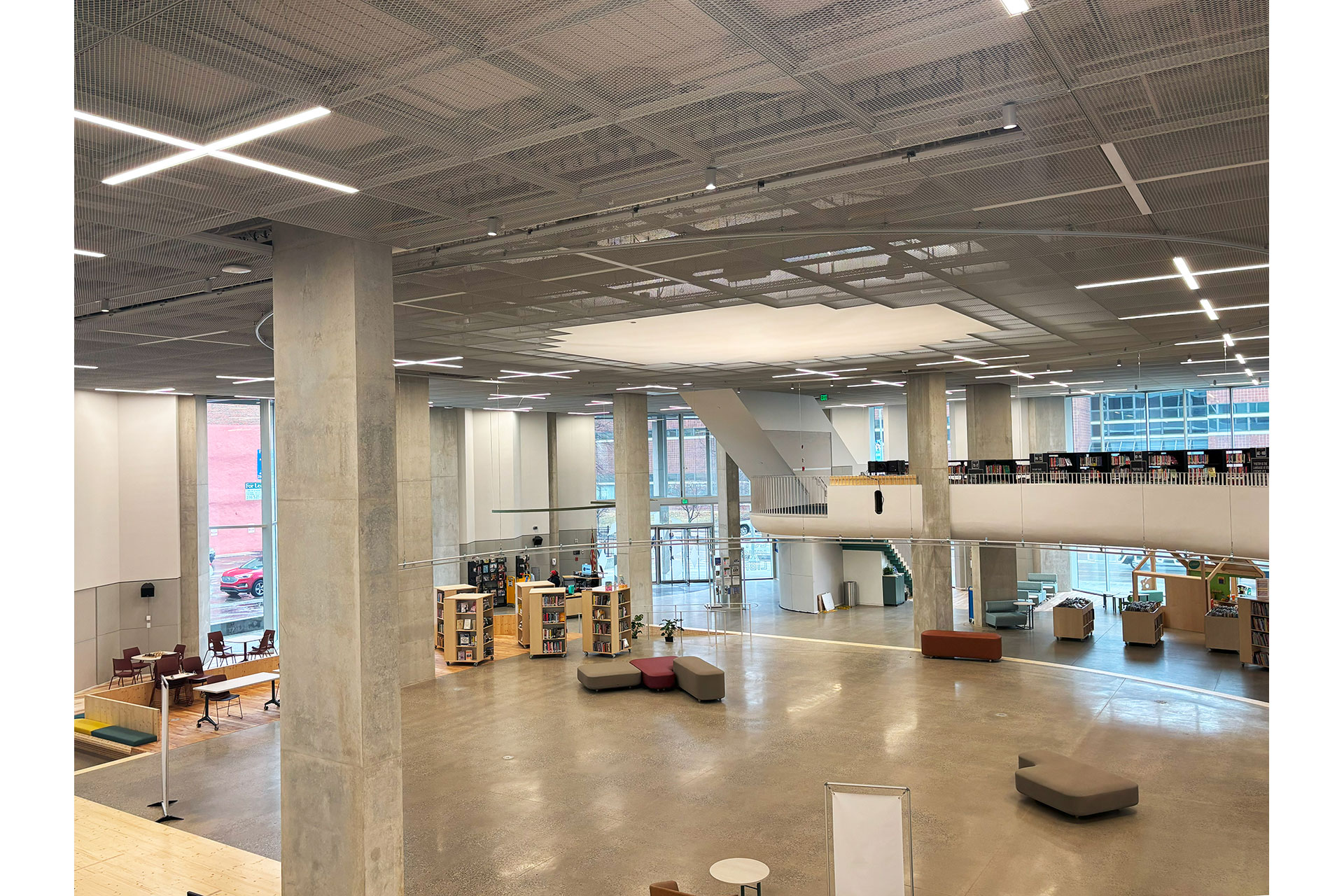
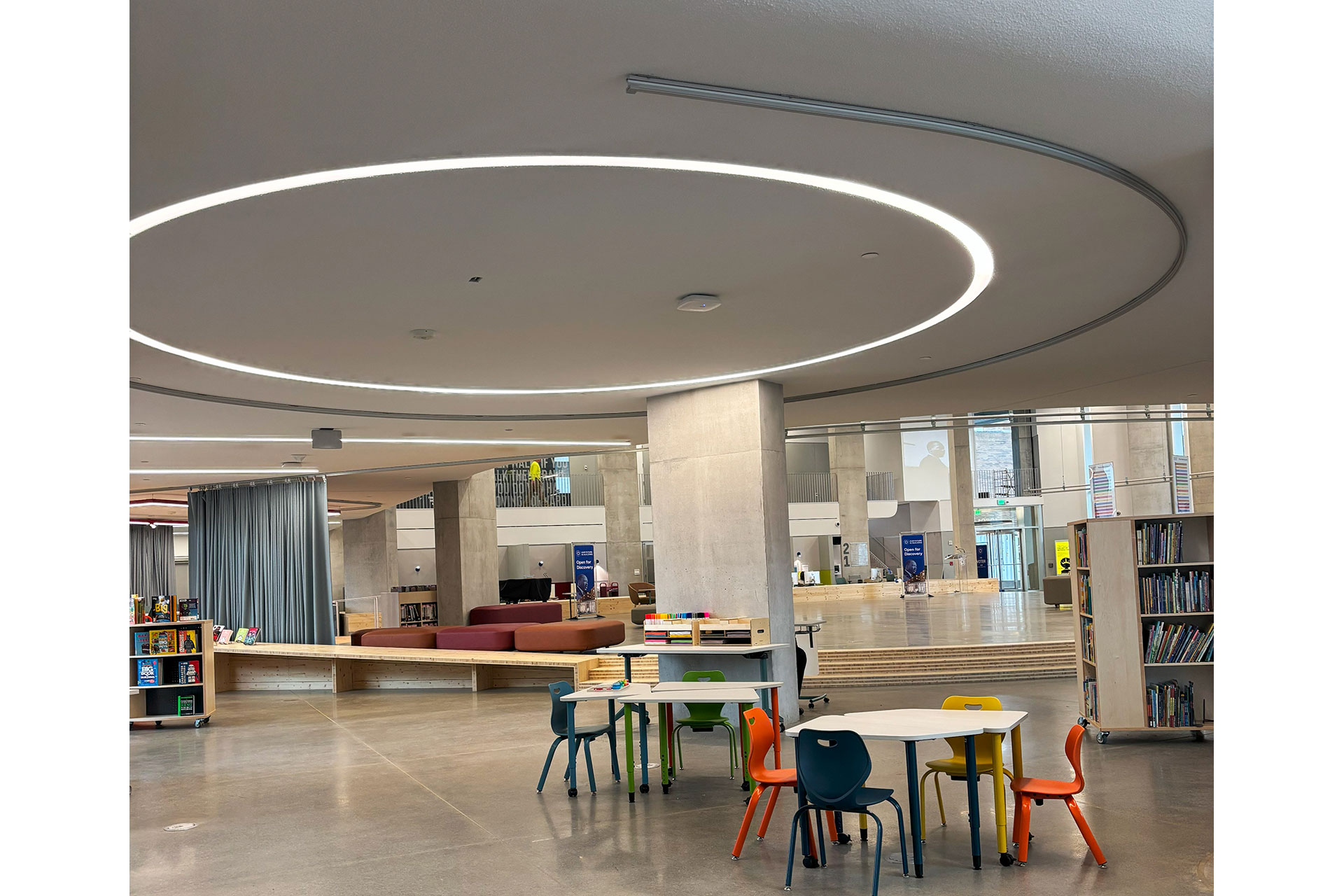
A carefully calibrated ambient layer provides visual consistency throughout the expansive floorplate, supporting reading, collaboration, circulation, and informal gathering with equal priority. Linear and geometric ceiling-integrated elements introduce rhythm and spatial order, offering intuitive wayfinding cues without reliance on signage or visual hierarchy. These luminous gestures are deliberately restrained, hovering lightly within the volume to guide movement while preserving openness and accessibility.
Materiality plays a critical role in shaping the lighting response. Exposed concrete, perforated ceiling planes, and warm wood surfaces are balanced through controlled contrast and diffuse illumination. Light grazes vertical structure and washes horizontal planes to reveal texture and depth without glare or visual fatigue. The result is an atmosphere that feels calm, legible, and human — one that supports long dwell times and evolving patterns of use throughout the day.
Moments of softness are intentionally introduced at human scale, particularly within seating, study, and children’s zones. These areas are defined not through dramatic contrast, but through subtle modulation of light and enclosure, creating places of comfort and pause within the larger civic room. Transitions between zones occur gently, reinforcing inclusivity and ensuring that no space feels privileged or marginalized by light.