
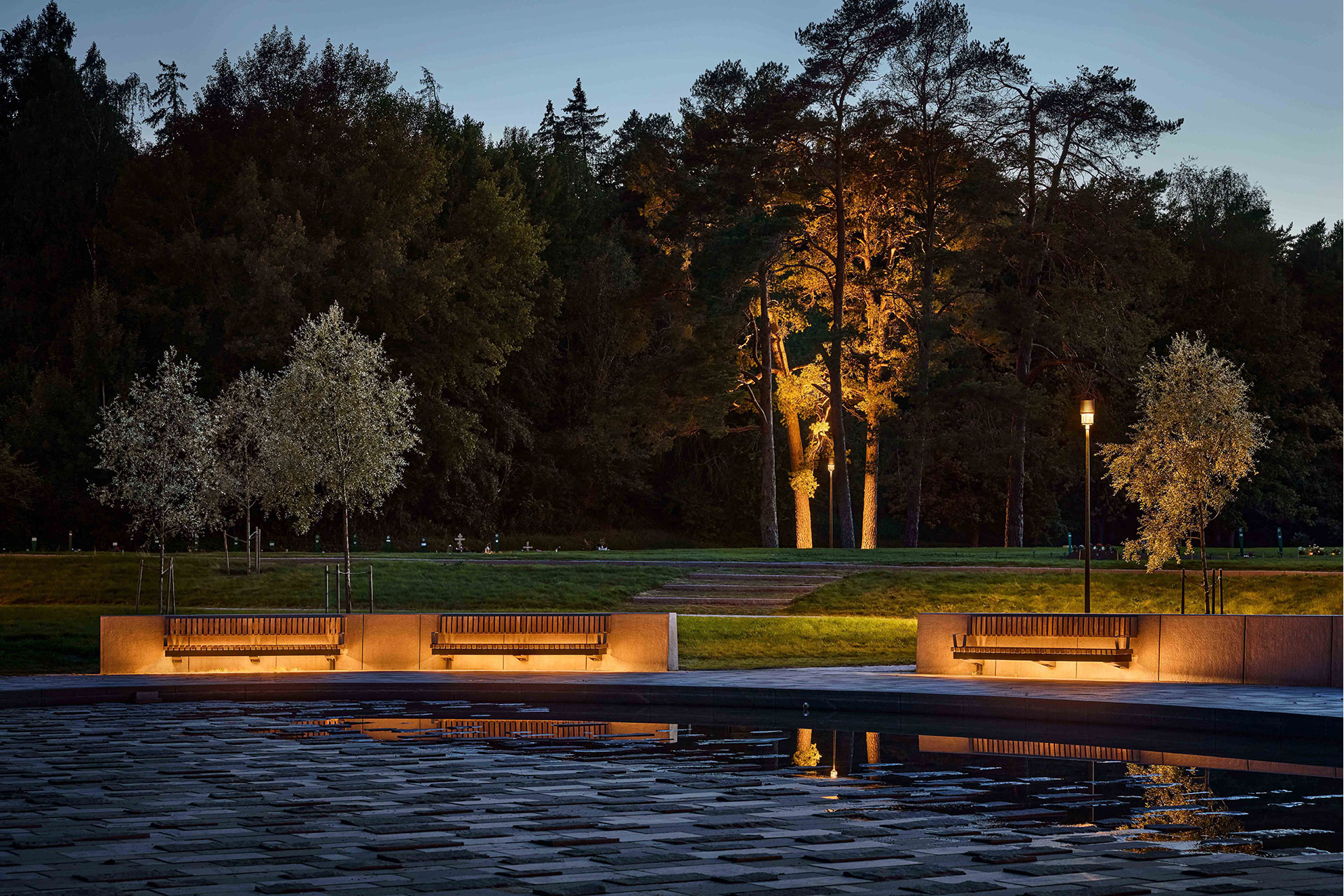
The new lighting design at Råcksta Cemetery outside Stockholm enhances the atmosphere of the historical site, where loved ones can be honoured in a tranquil natural environment. Light levels are carefully balanced throughout to adapt to the sensitive atmosphere.
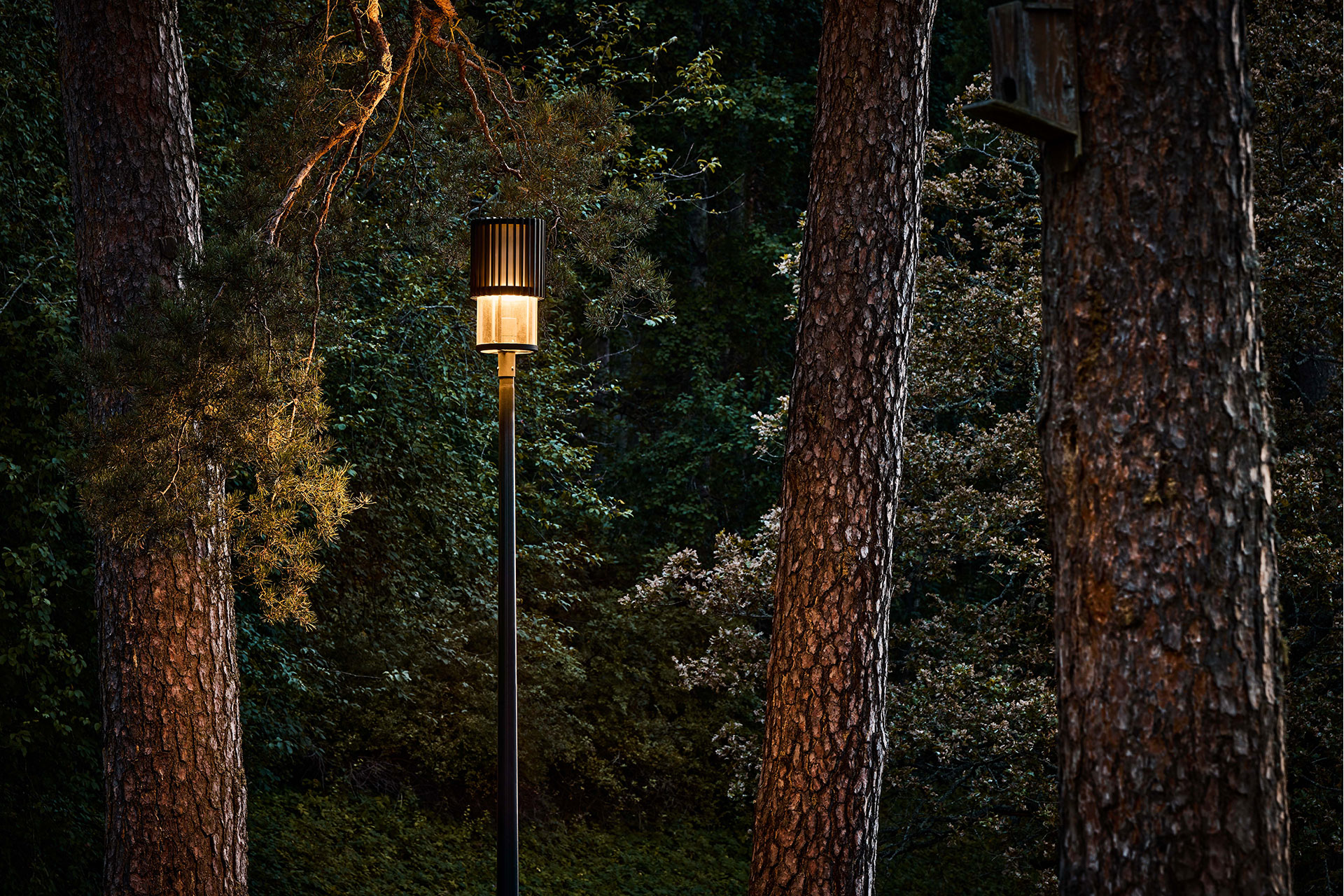
The design concept adheres to the landscape architect Gunnar Martinsson’s intentions to create spatiality through simplification of form, material, and colour. Bespoke park luminaires draw their inspiration from the original design scheme and were developed by prototype creation and extensive on-site testing to evaluate the interplay of light and surroundings.
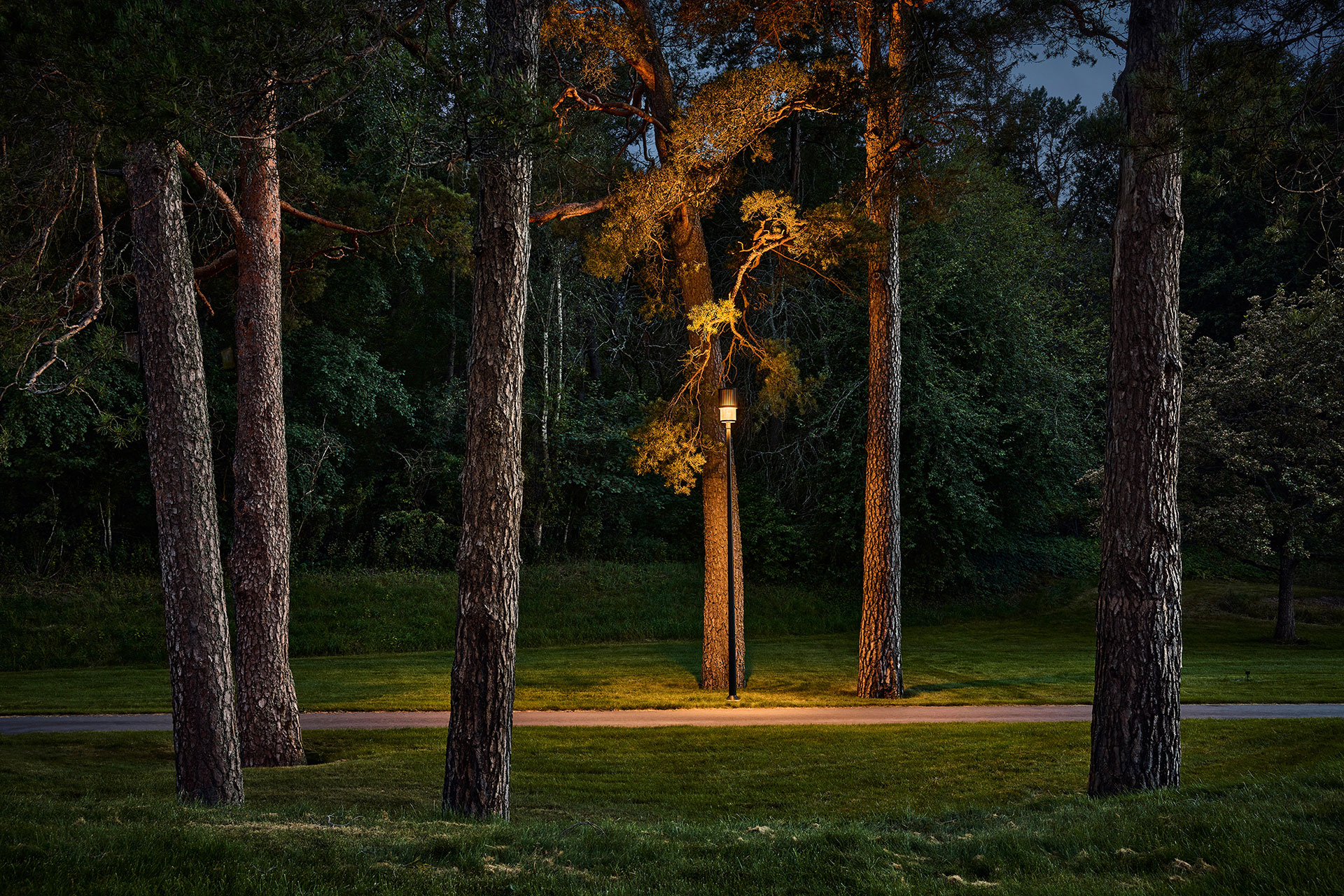
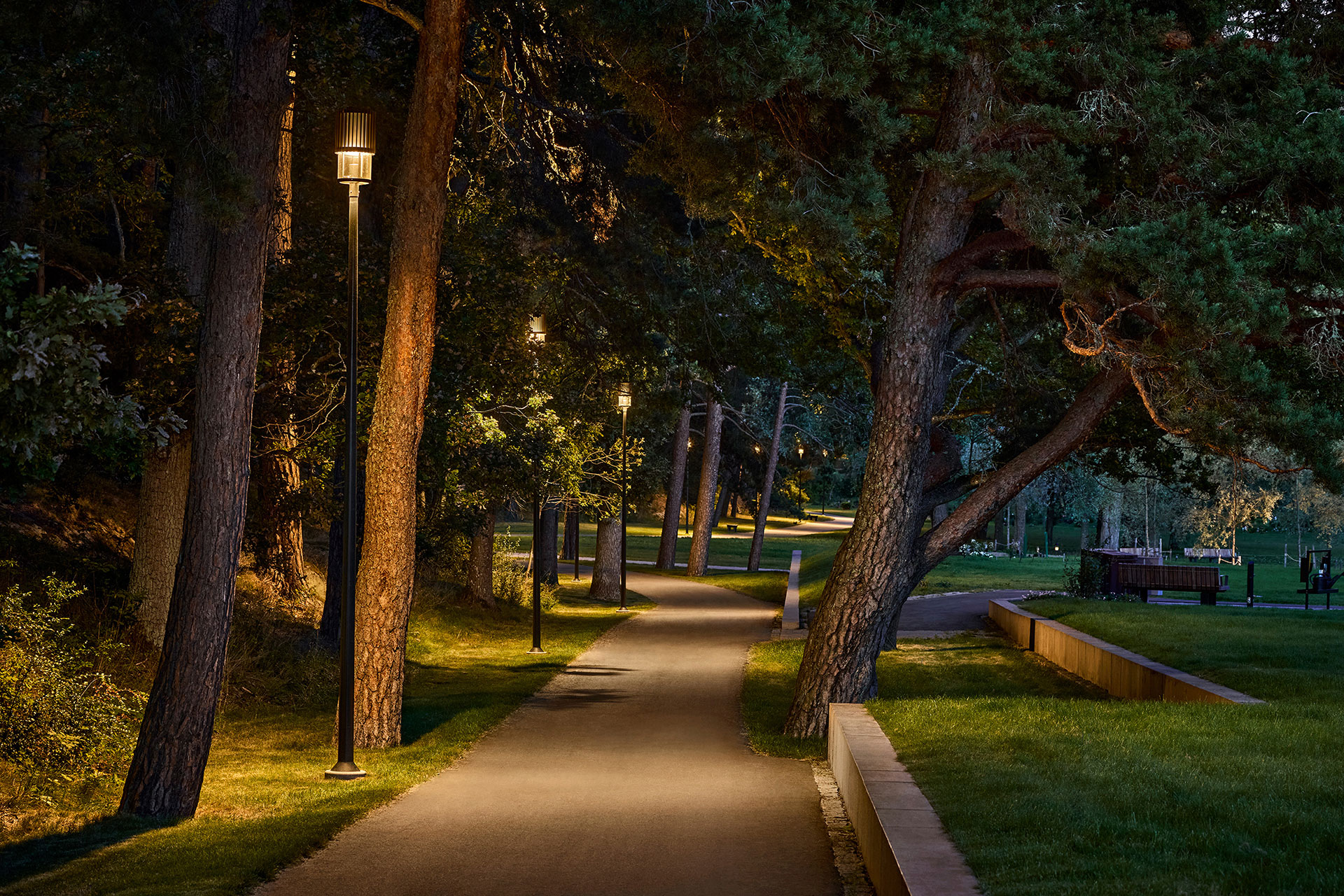
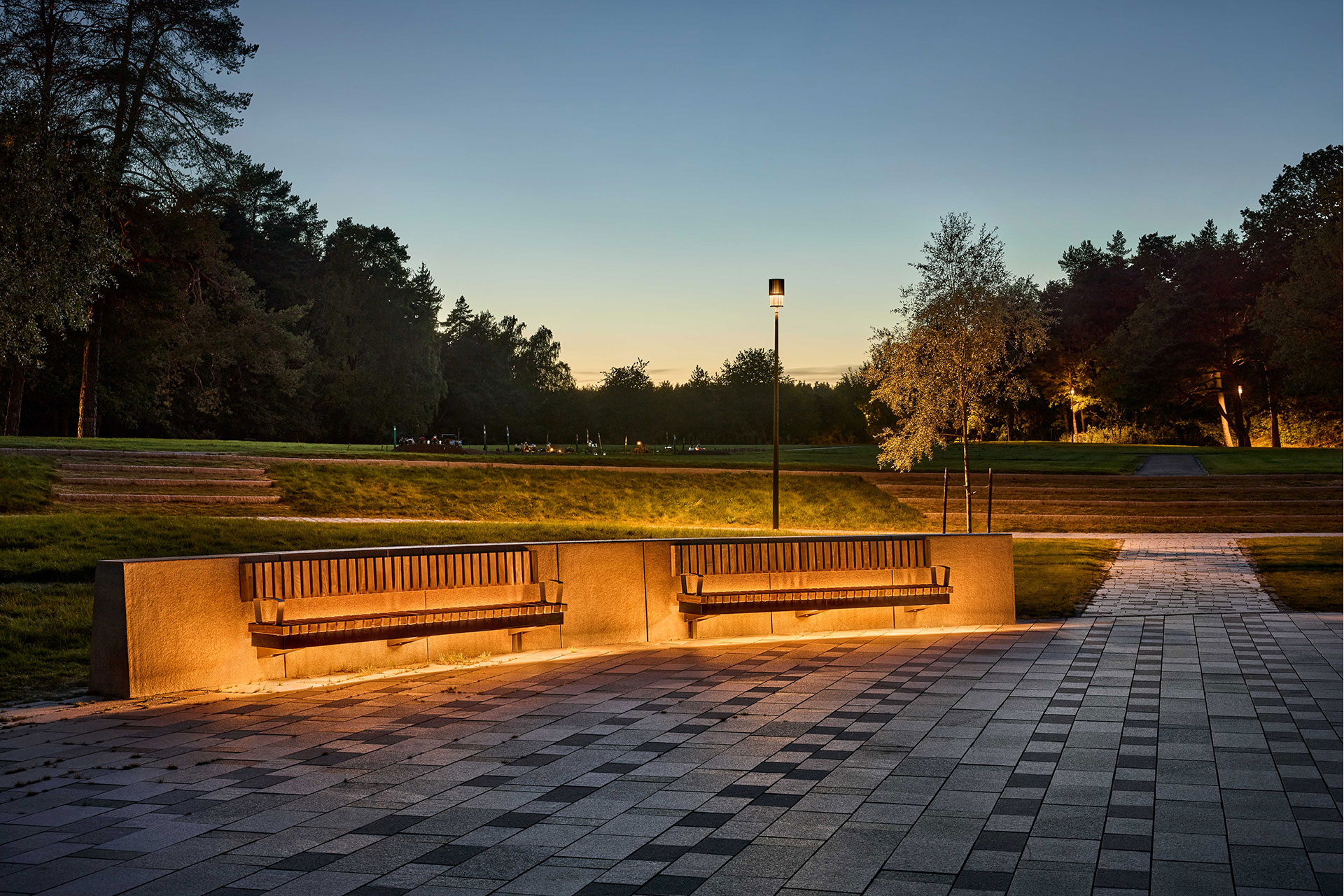
Topographical characteristics have been preserved, highlighting the valley surrounded by higher terrain, the embankment around the cemetery and important sightlines. Subtle lighting accentuates tree canopies, allowing them to stand out against the evening sky, while the new stormwater pond provides a focal point in the landscape. Soft integrated lighting in the seating area is reflected in the pond, letting visitors enjoy a place of solace and contemplation without visual disruption. Fixtures, poles, and colours unify the area visually, establishing a connection to the historical materials of the cemetery whilst also improving visual comfort of lighting in public pathways. Other areas were deliberately left unlit, making trees appear as silhouettes at dusk and dawn.
To ensure a sustainable revitalization, a heritage impact assessment was carried out in close collaboration between architects, conservationists and lighting designers. Robust and attractive materials that stand the test of time have been applied throughout. Unshielded fixtures had previously proved inefficient, disruptive of the night sky and glaring to the human eye. The new lighting plan was implemented with a carefully considered placement of luminaires in relation to the areas to be illuminated, resulting both in a significantly lower usage and improved visual comfort compared to the existing facility. To protect nocturnal animals and preserve the natural darkness, portions of the lighting is turned off during parts of the night. Some areas have been left unlit and others, such as selected pine trees, have been accentuated with low light levels for the purpose of orientation.