
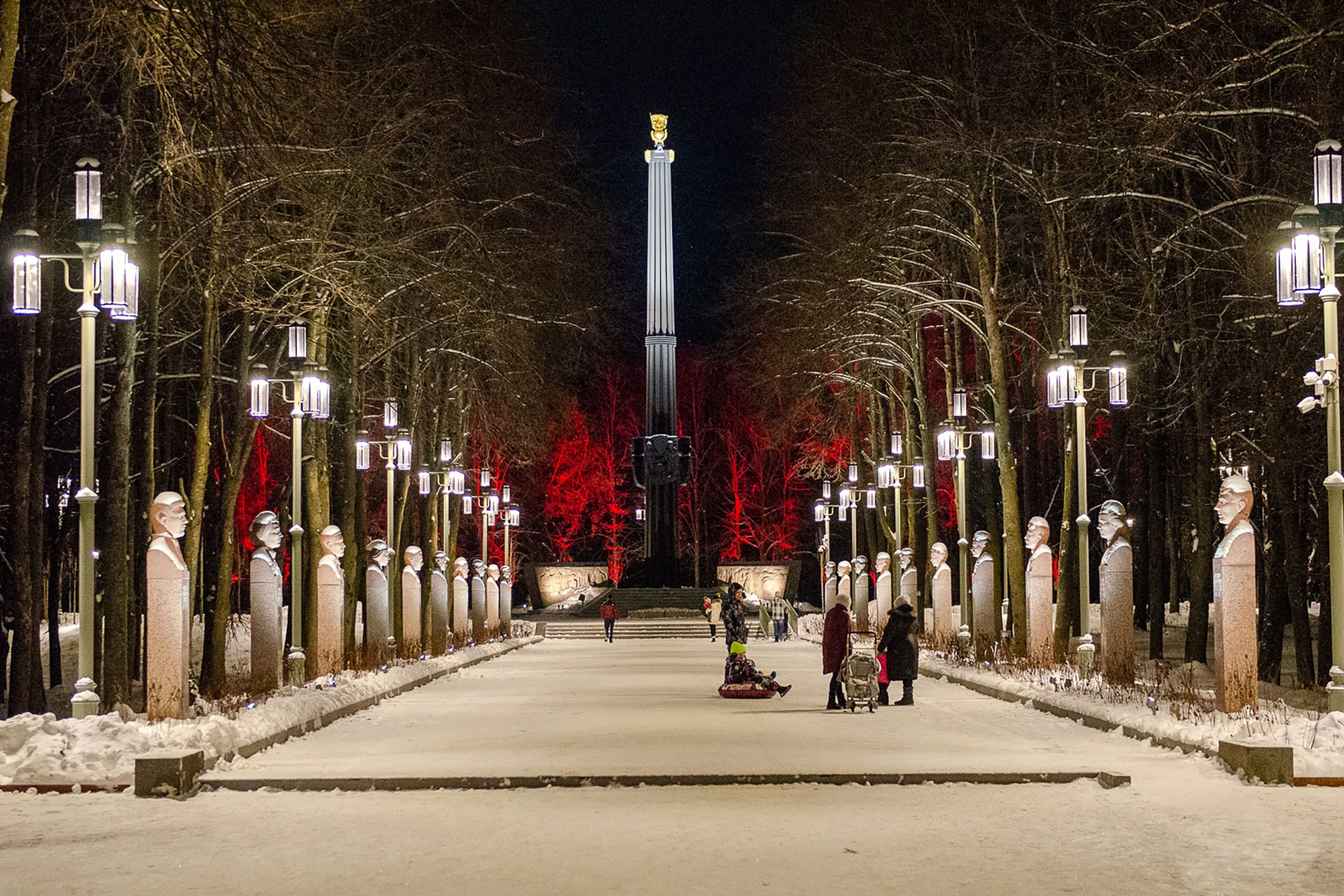
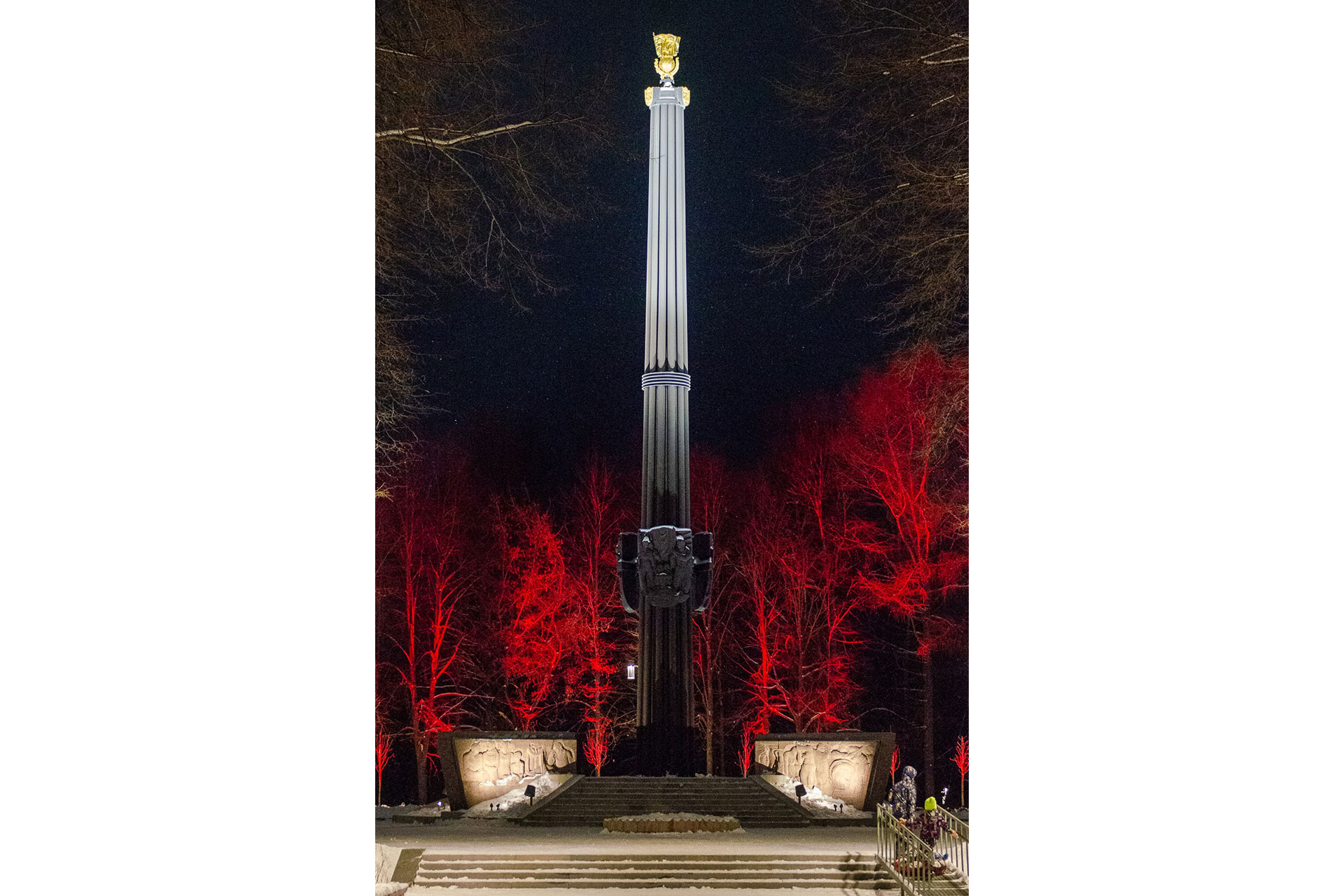
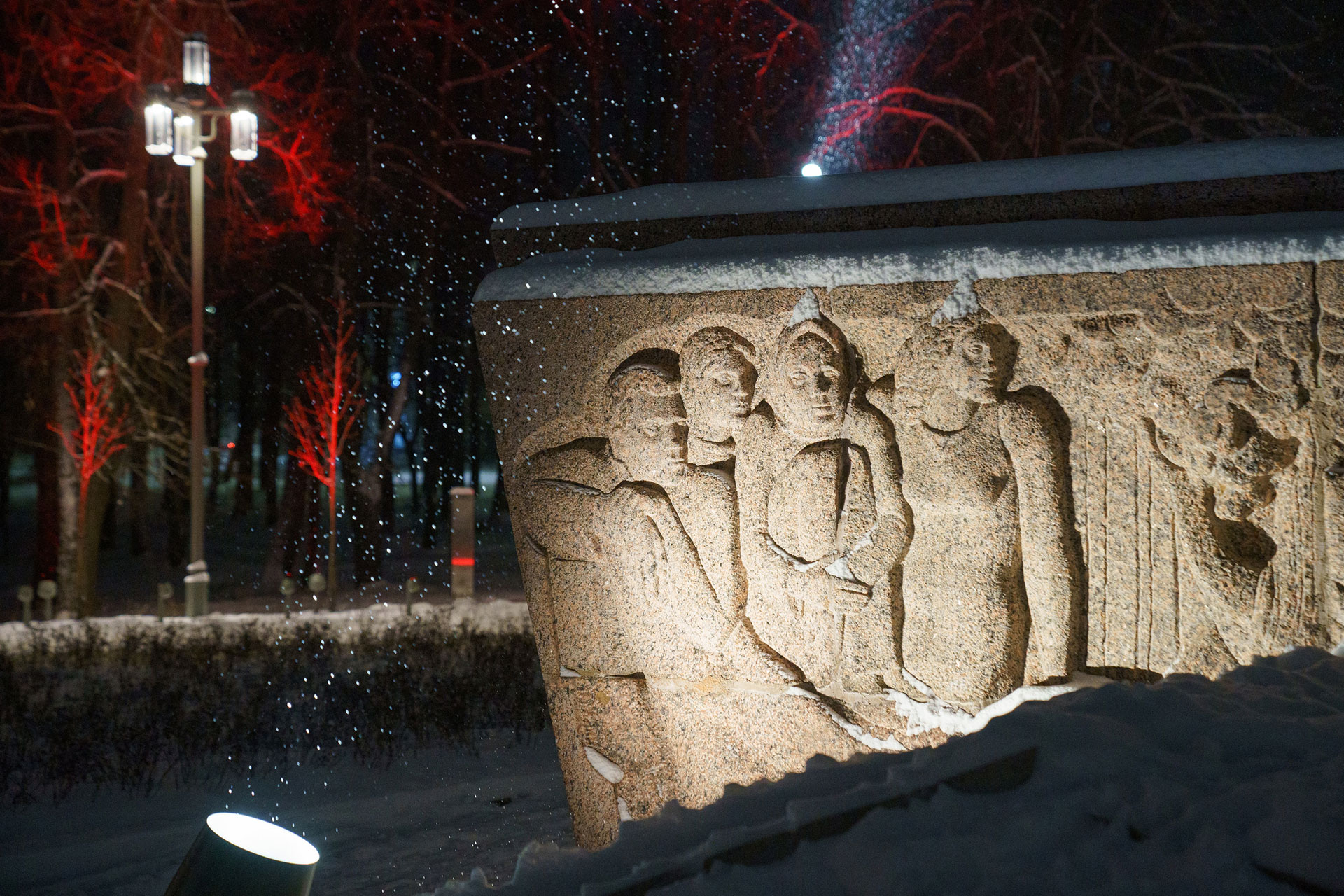

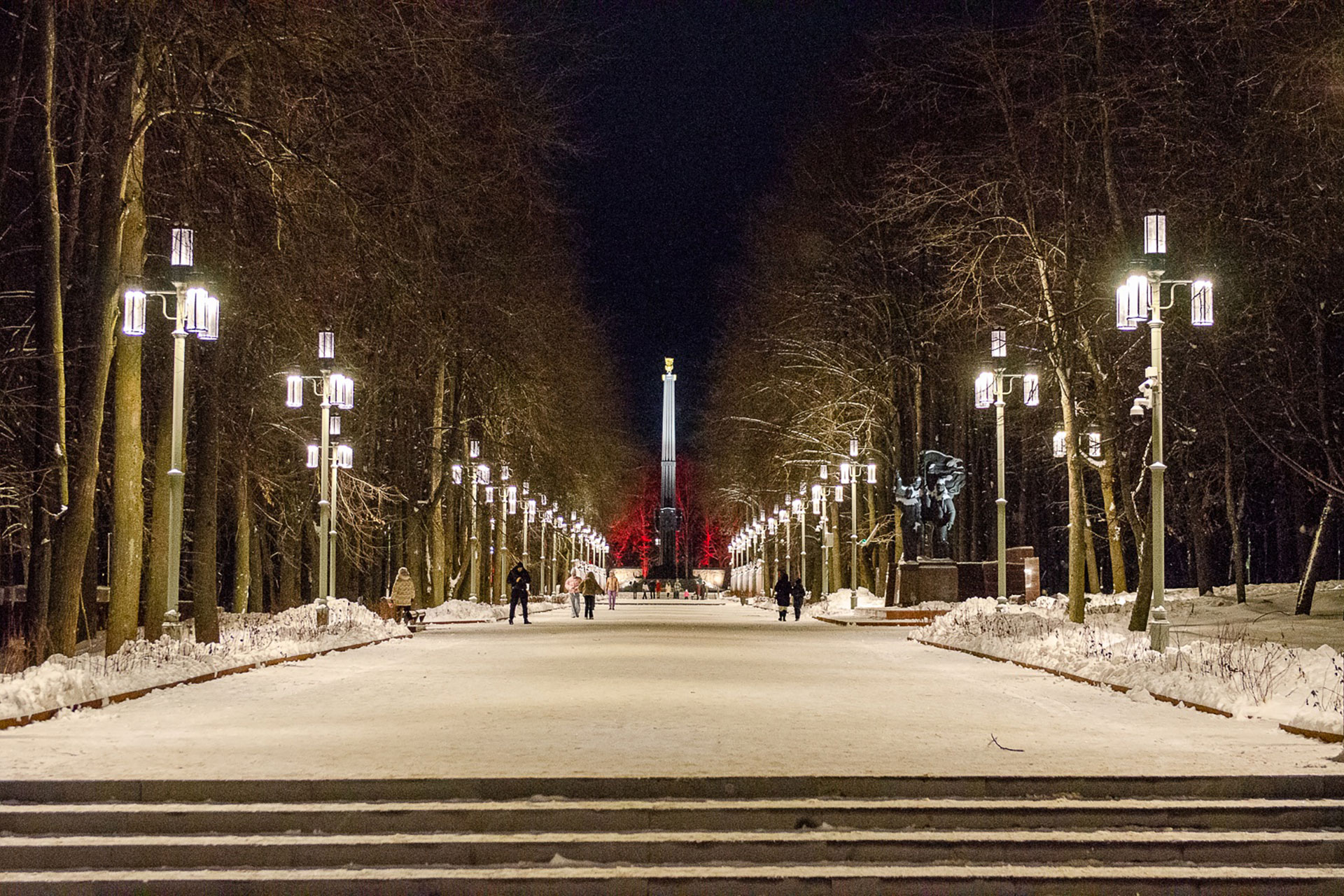
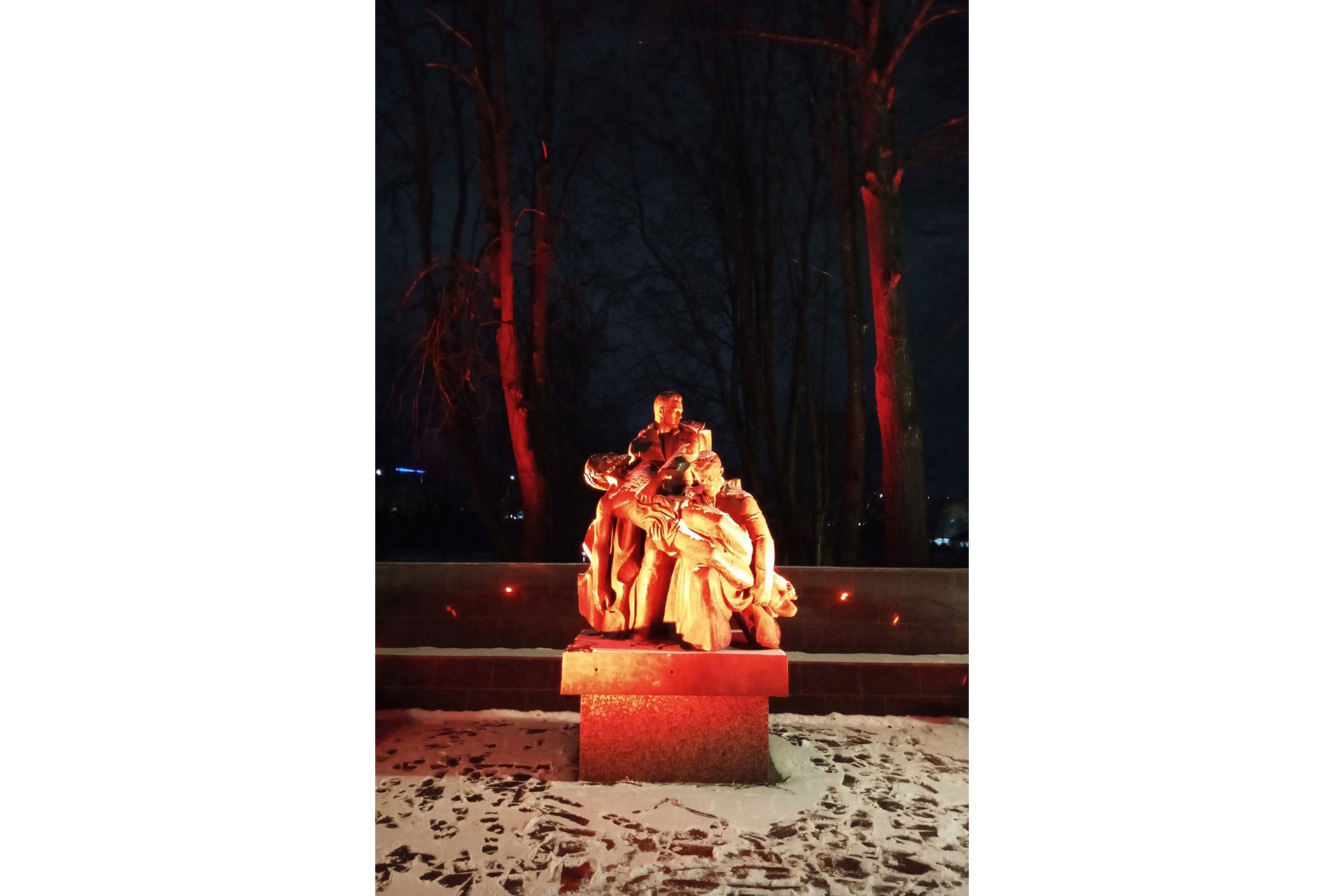
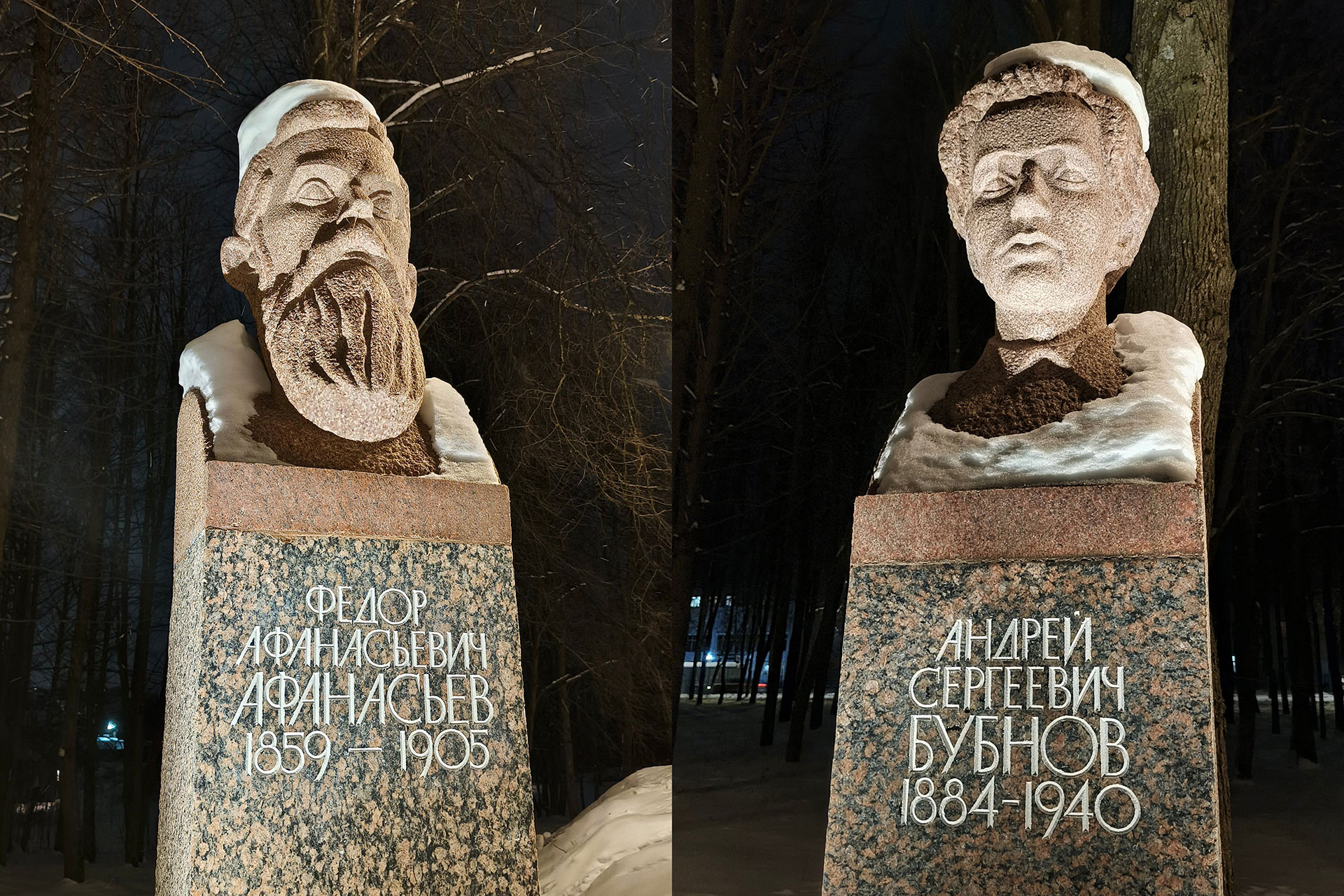
Context. Krasnaya Talka is a memorial complex and an iconic cultural heritage site. It was created in memory of the early 20th-century events — the revolutionary actions of the Ivanovo-Voznesensk workers during the First Russian Revolution. It is one of the principal artistic monuments of the city.
Architecture. The architectural concept and renovation of the park aimed at carefully preserving the spirit of the era and immersing visitors in the historical context. The reconstruction underwent public hearings the «Creating a Comfortable Urban Environment» program. One of the goals was also to revitalize the depressed «Sortirovka» district and create a new point of attraction not only for the area but also for the entire city.
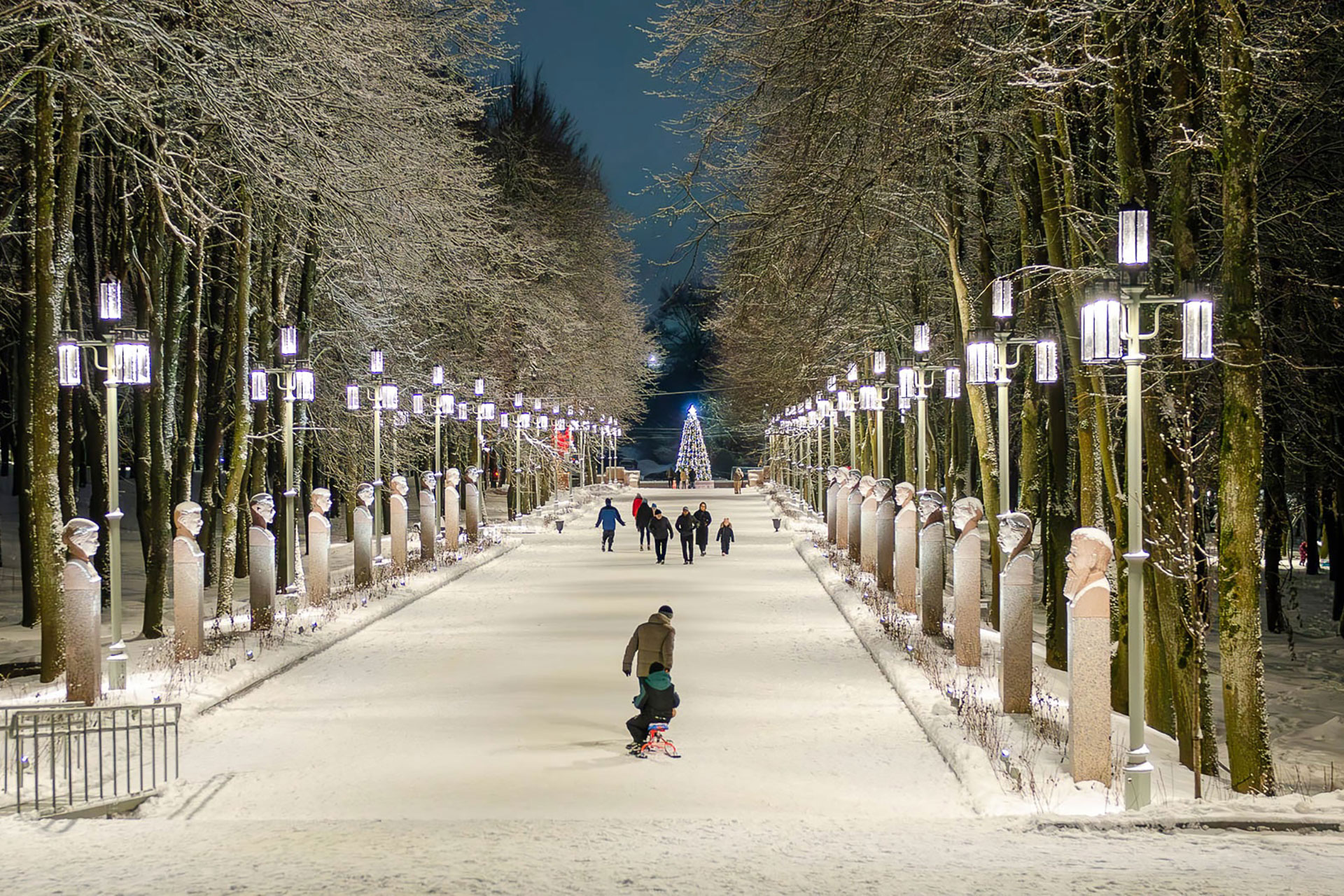
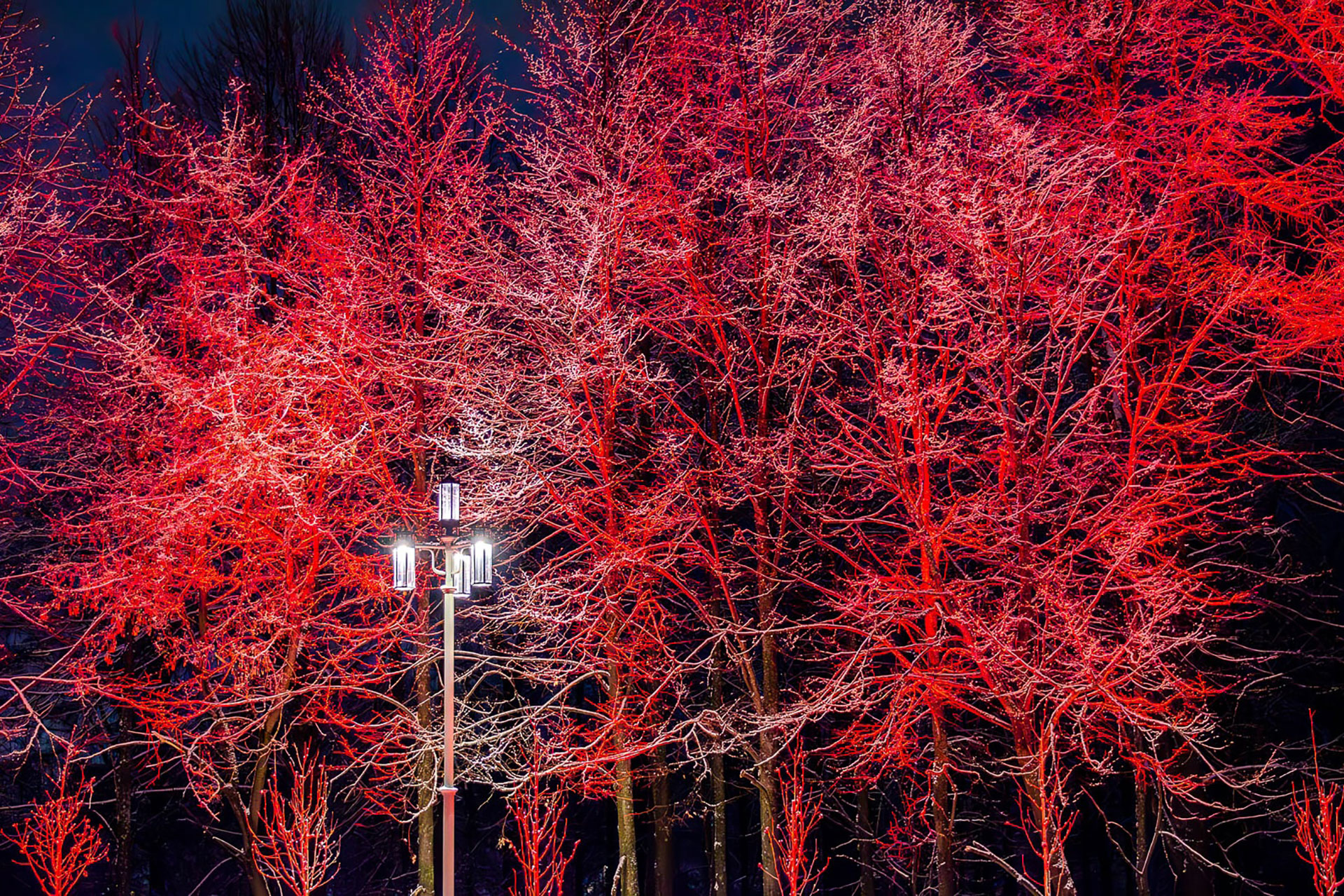
Concept. The overall lighting concept did not contradict the architectural idea of the improvement project, but rather enhanced it. Its purpose was to create a sense of safety and comfort in the park during the evening time while supporting imagery and references to the historical period and respecting the memorial character of the site. To achieve this, several simple components were applied:
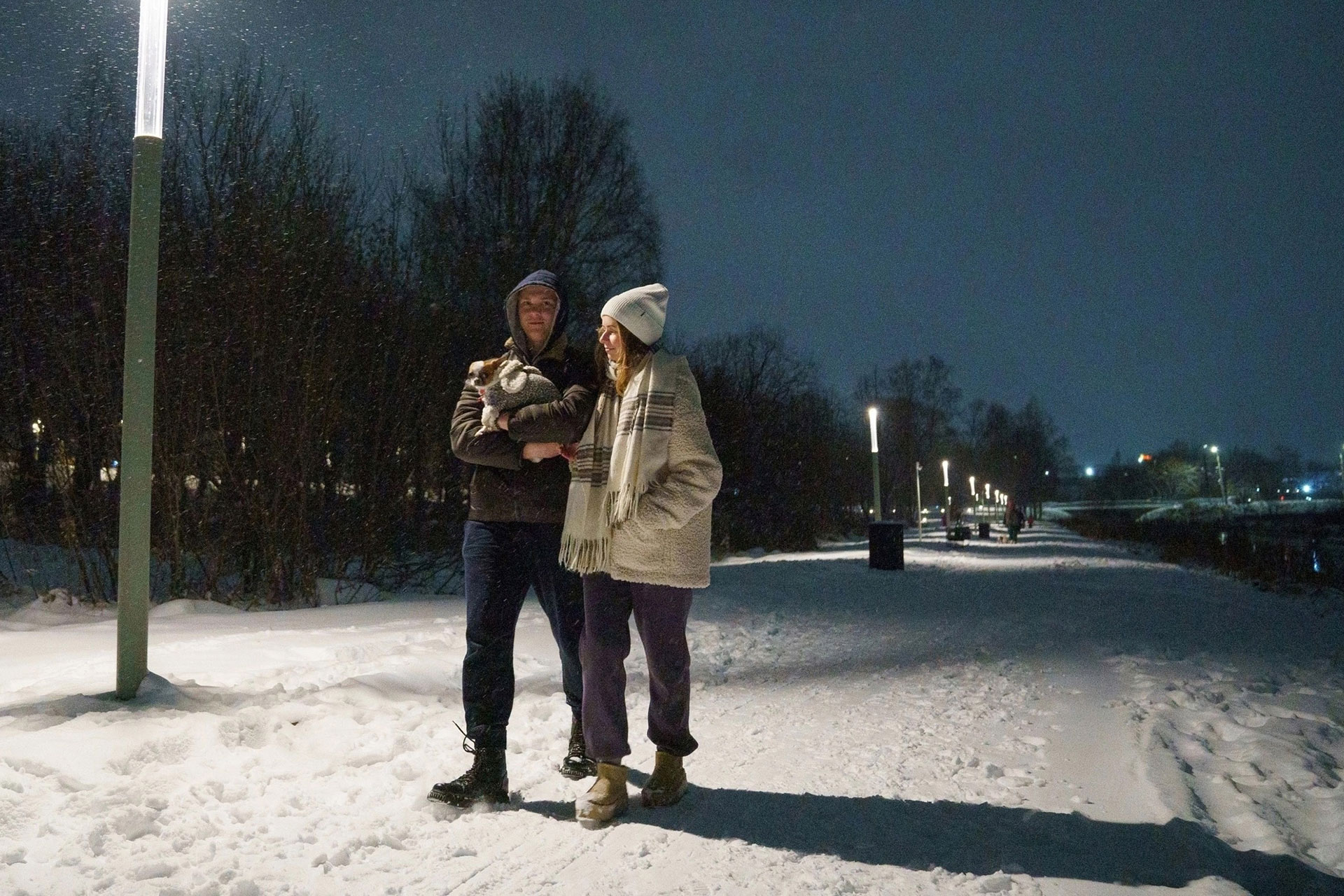
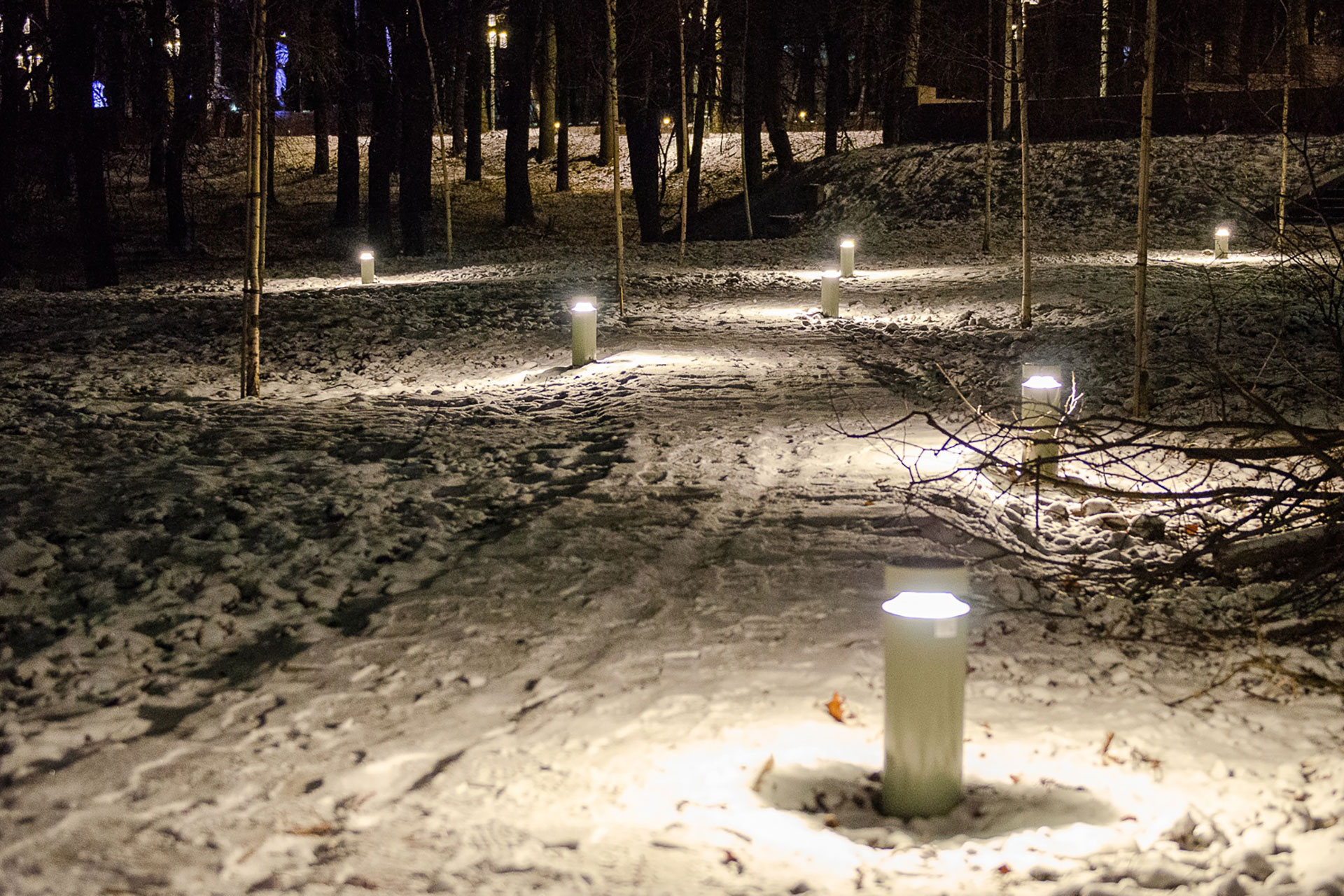
Details. Understanding the impact of light on the wooded area, it was necessary to find a balanced solution and avoid using lighting where it was not needed. For example, the historical poles use narrow-beam optics in a rear lantern, as there is no need to light the trees beyond the alley. Along the waterfront, 3-meter bollards were installed with a fairly sparse rhythm, preserving darkness along the river and directly by the water. For the forest pathways, 0.5–0.8 m bollards with concealed light sources were used. Work on the monuments and accent lighting relied on the minimum necessary amount of brightness as well as contrasts.
Result. Judging by the feedback from residents and the city administration, together with the architects, it was possible to relaunch the space without destroying its history, to amplify it, and to give it a new imagery and attention. Residents have gained a renewed sense of connection to the place, and the city has acquired a new point of attraction.