
Villa Vitali is a 19th-century historic villa located in Fermo, Italy. It was rebuilt in 1854 based on a design by architect Gaetano Manfredi for the Vitali family. Alongside the main villa, several ancillary structures were added including two additional wings, a warehouse, the caretaker’s house, and a private chapel dedicated to Saint Francis of Paola.
The expansive park surrounding the villa was laid out in 1860, likely also designed by Manfredi, transforming former agricultural land into an eclectic 19th-century garden where architecture and nature blend harmoniously. The original park featured tree-lined avenues, statues, twenty-four terracotta busts depicting Greek and Roman figures, fountains, wells, greenhouses, and various ornamental structures. Areas such as the riding track, an elliptical space framed by cypress trees, were originally intended for equestrian activities and guest entertainment; today, this area serves as an open-air performance arena.
In 2022, the Municipality of Fermo secured funding through Italy’s National Recovery and Resilience Plan (PNRR) to restore and enhance the historic park, commissioning architect Paolo Santarelli for the project. On May 3, 2025, the park officially reopens following extensive restorations that included the cold and warm greenhouses, pathways, historic plantings, and adaptations to make the space fully accessible and suitable for cultural, educational, and recreational uses. With this restoration, Villa Vitali and its park were incorporated into the regional network of “Historic Parks of the Marche,” recognized as a cultural heritage site to be preserved and celebrated.
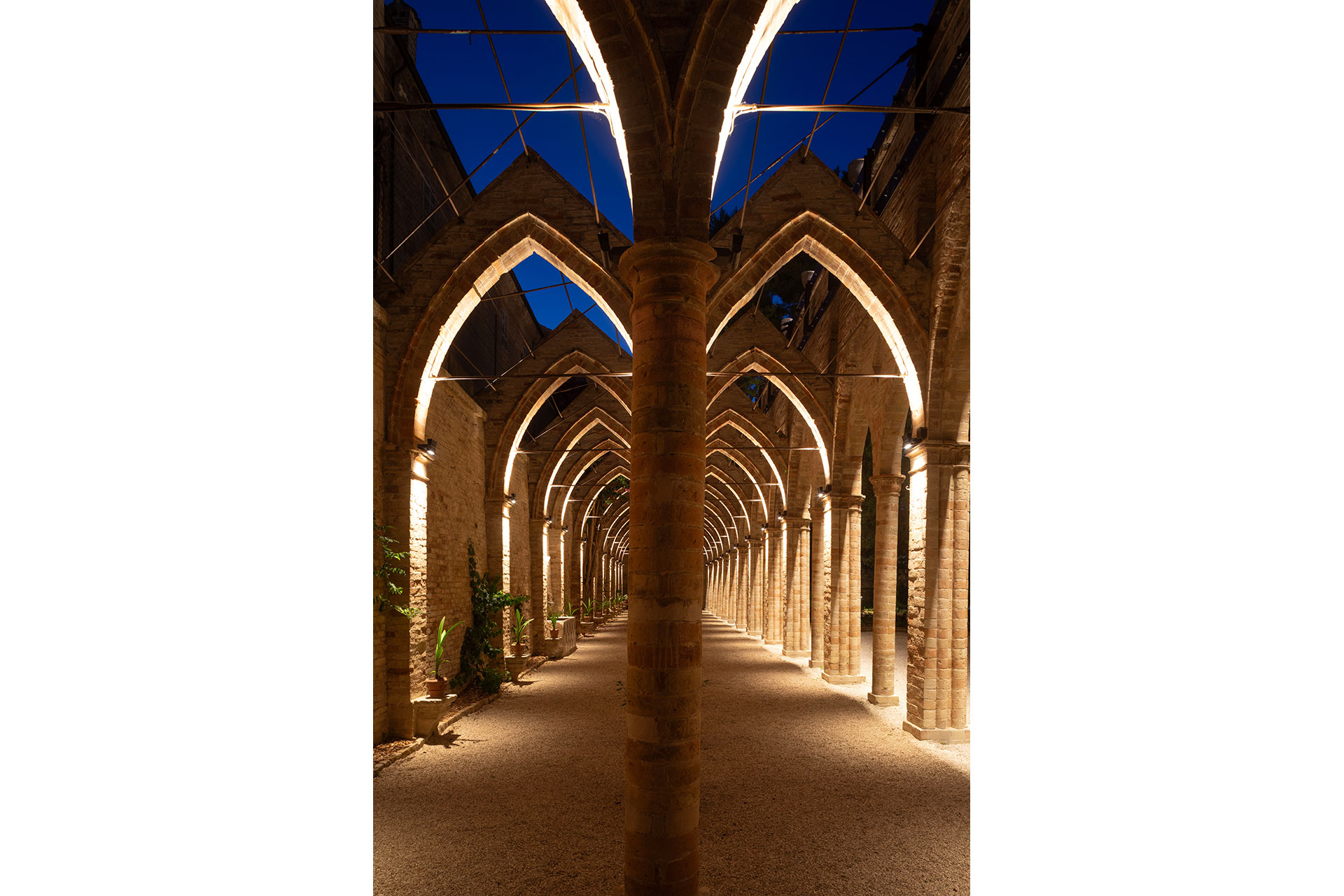
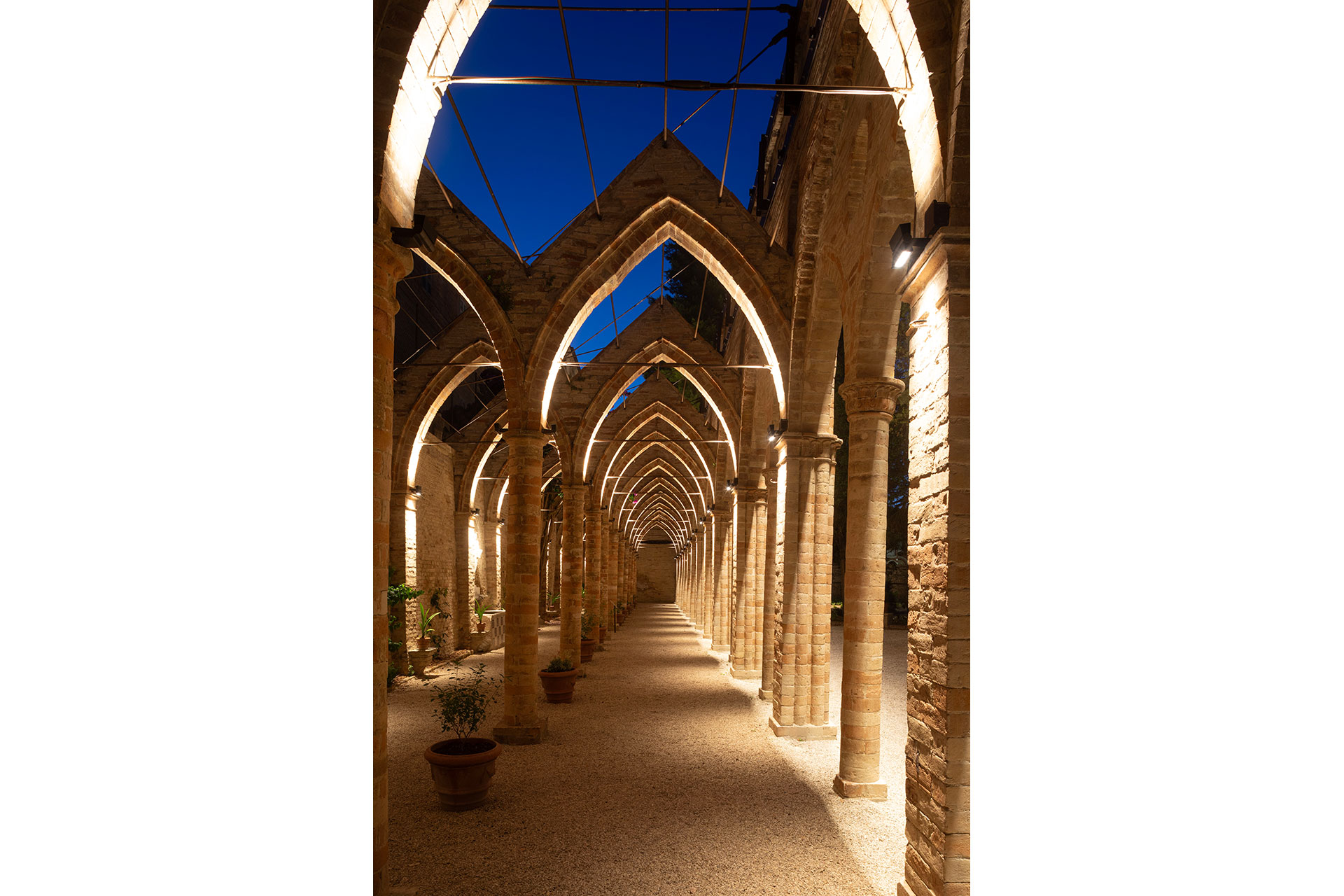
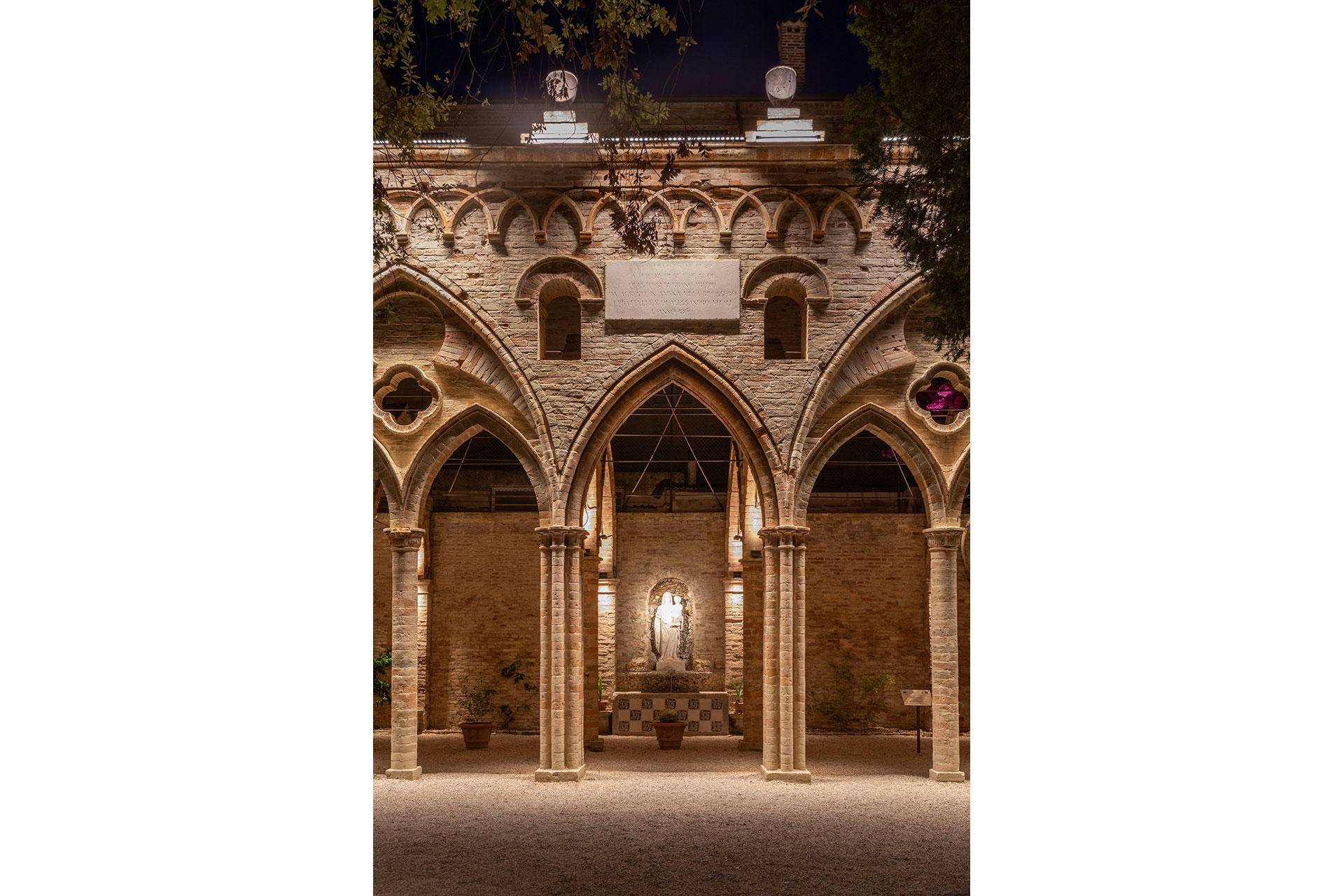
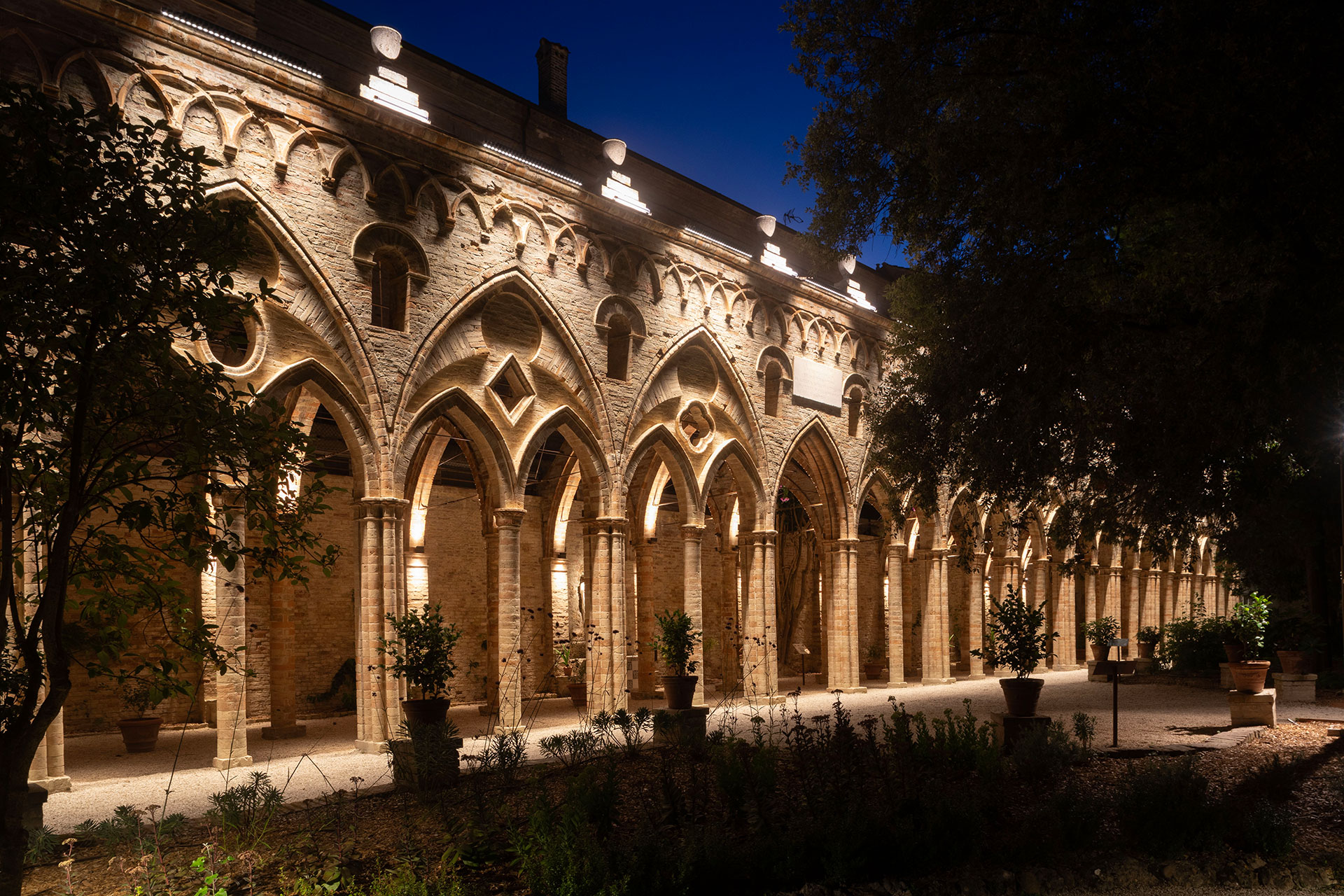
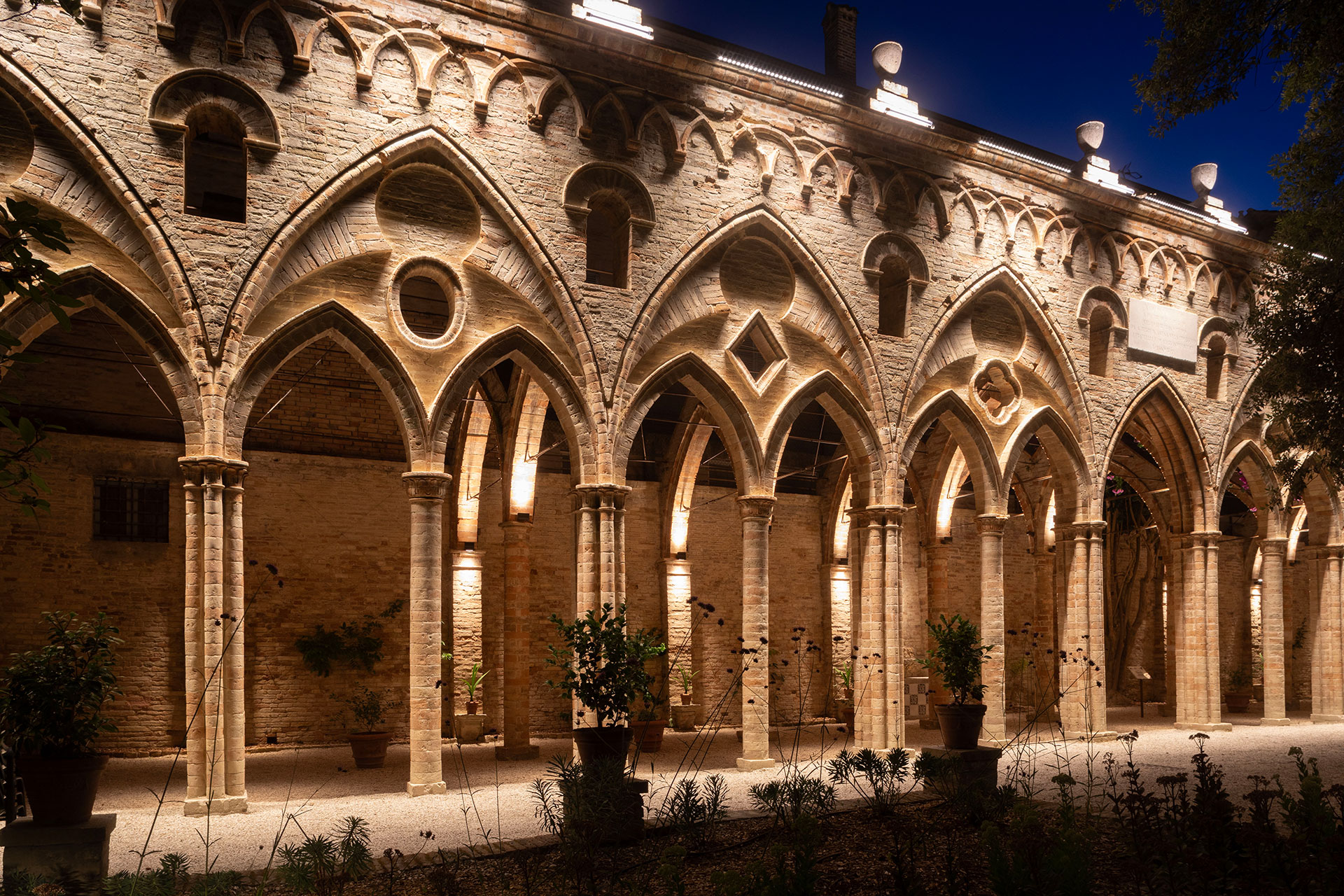
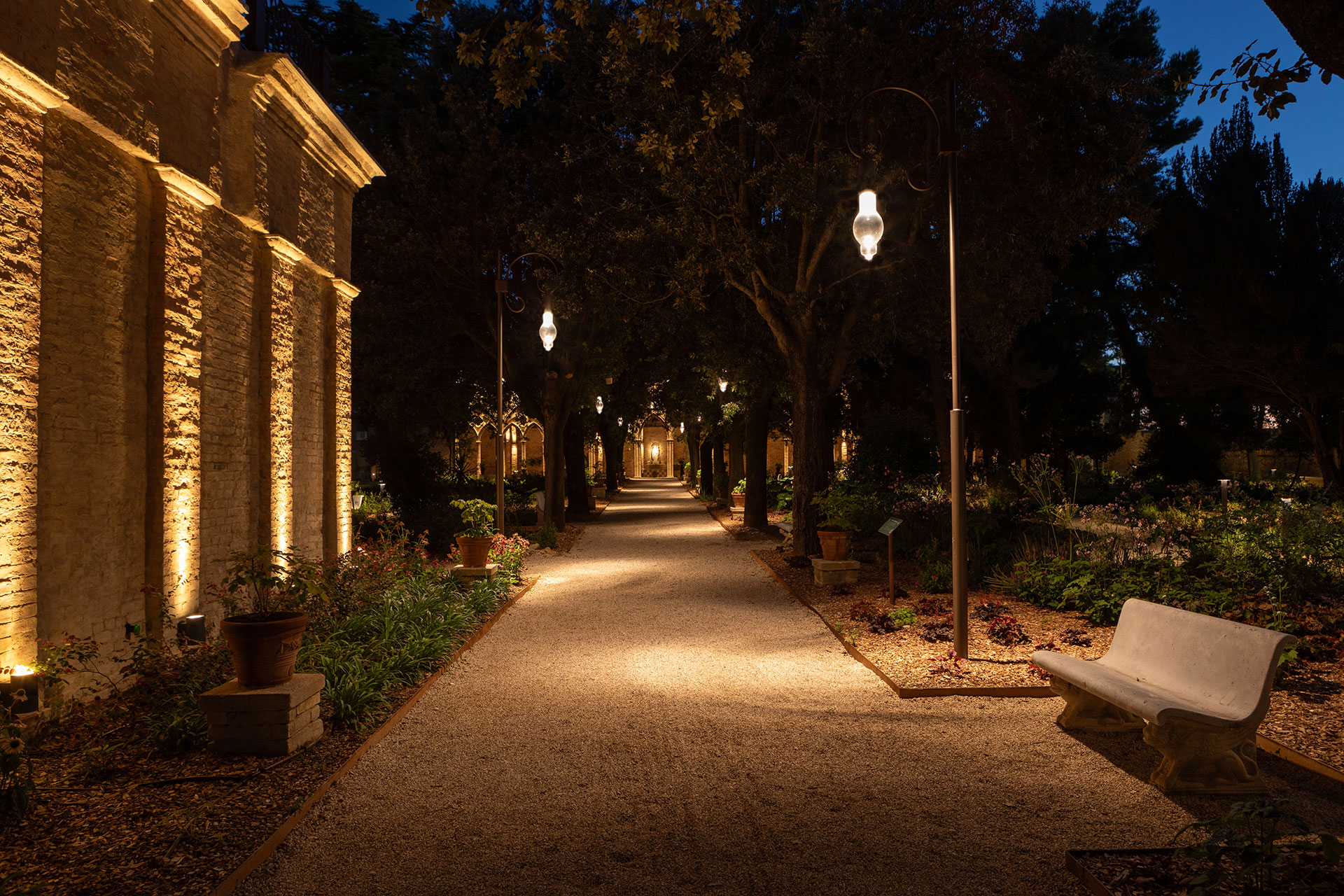
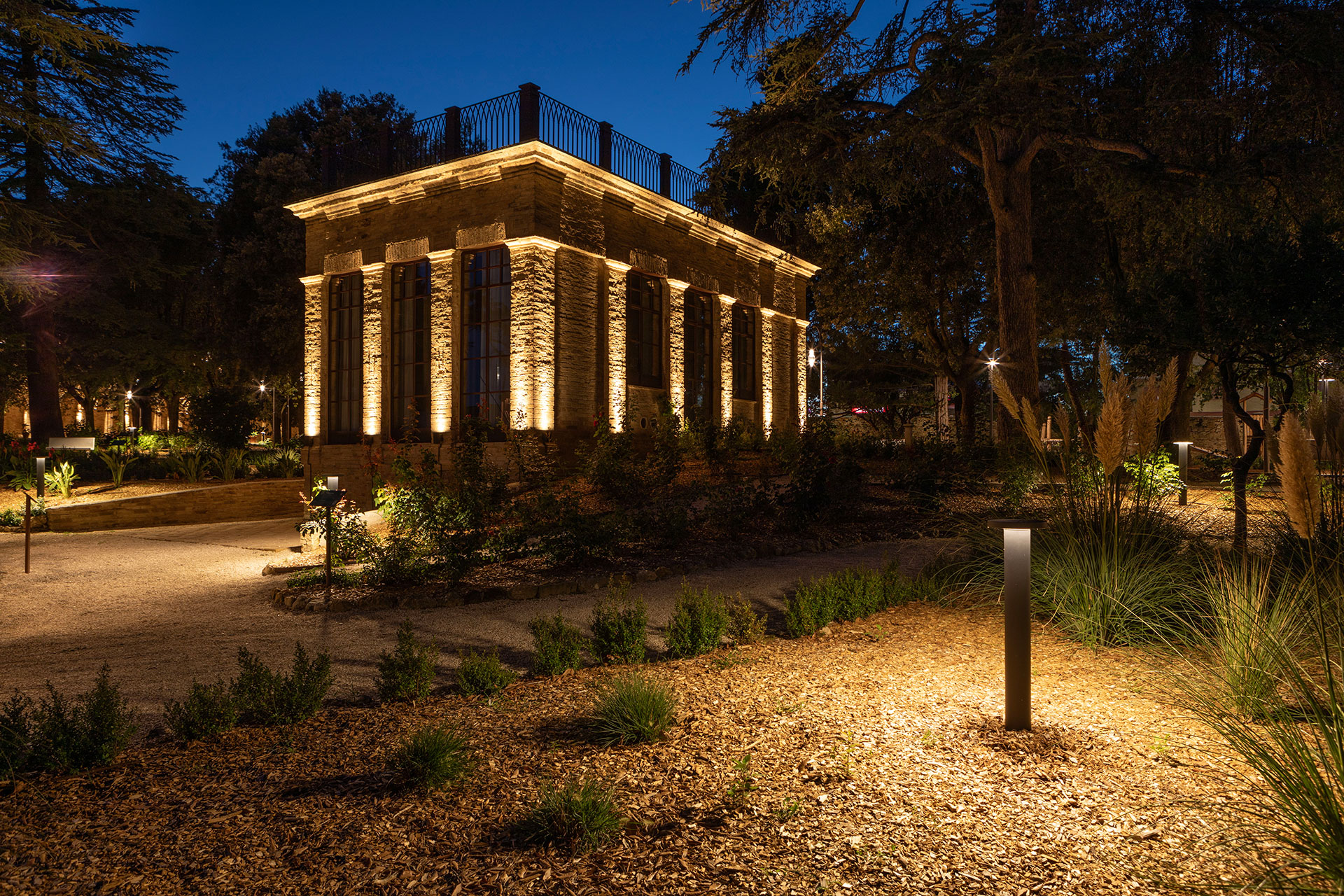
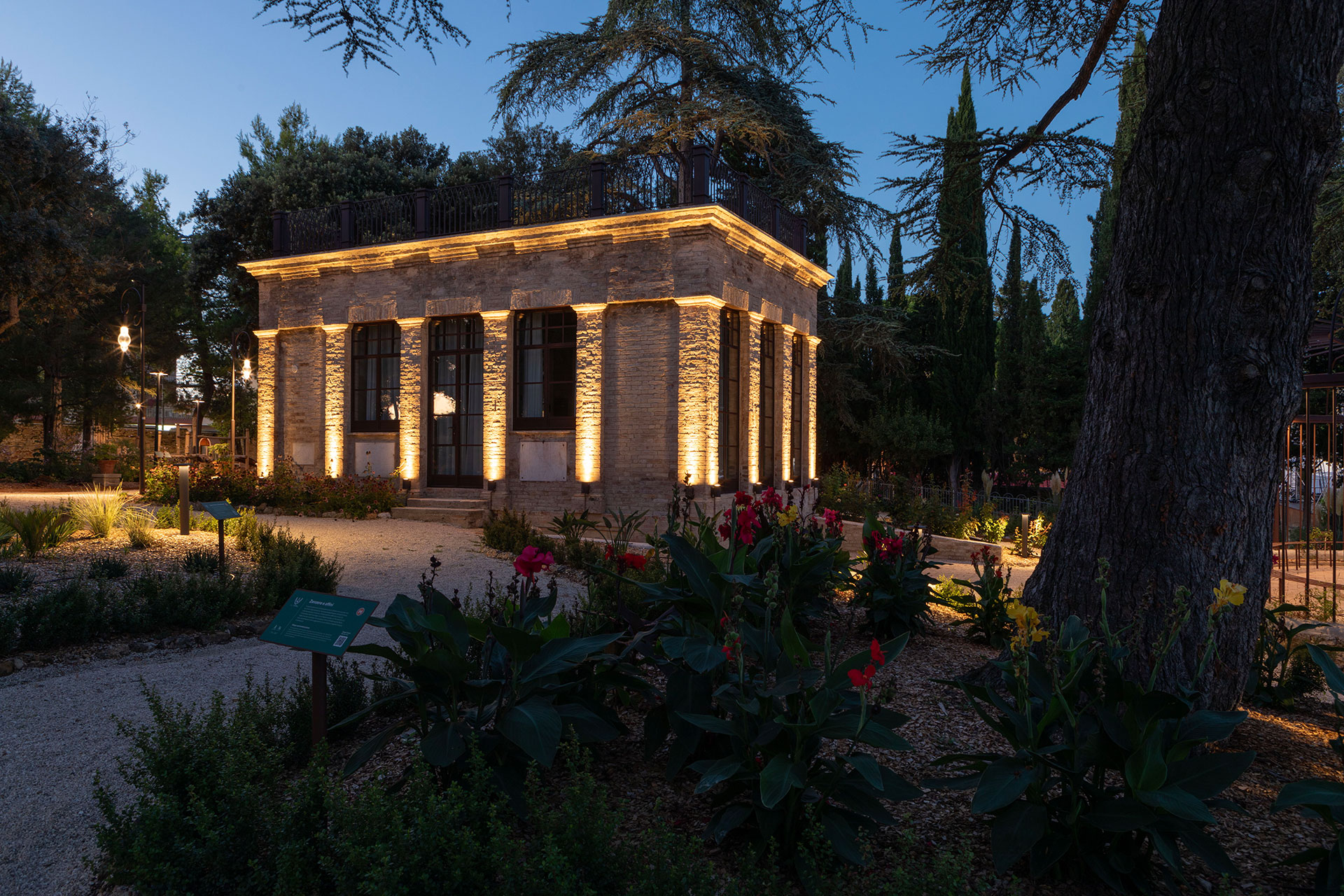
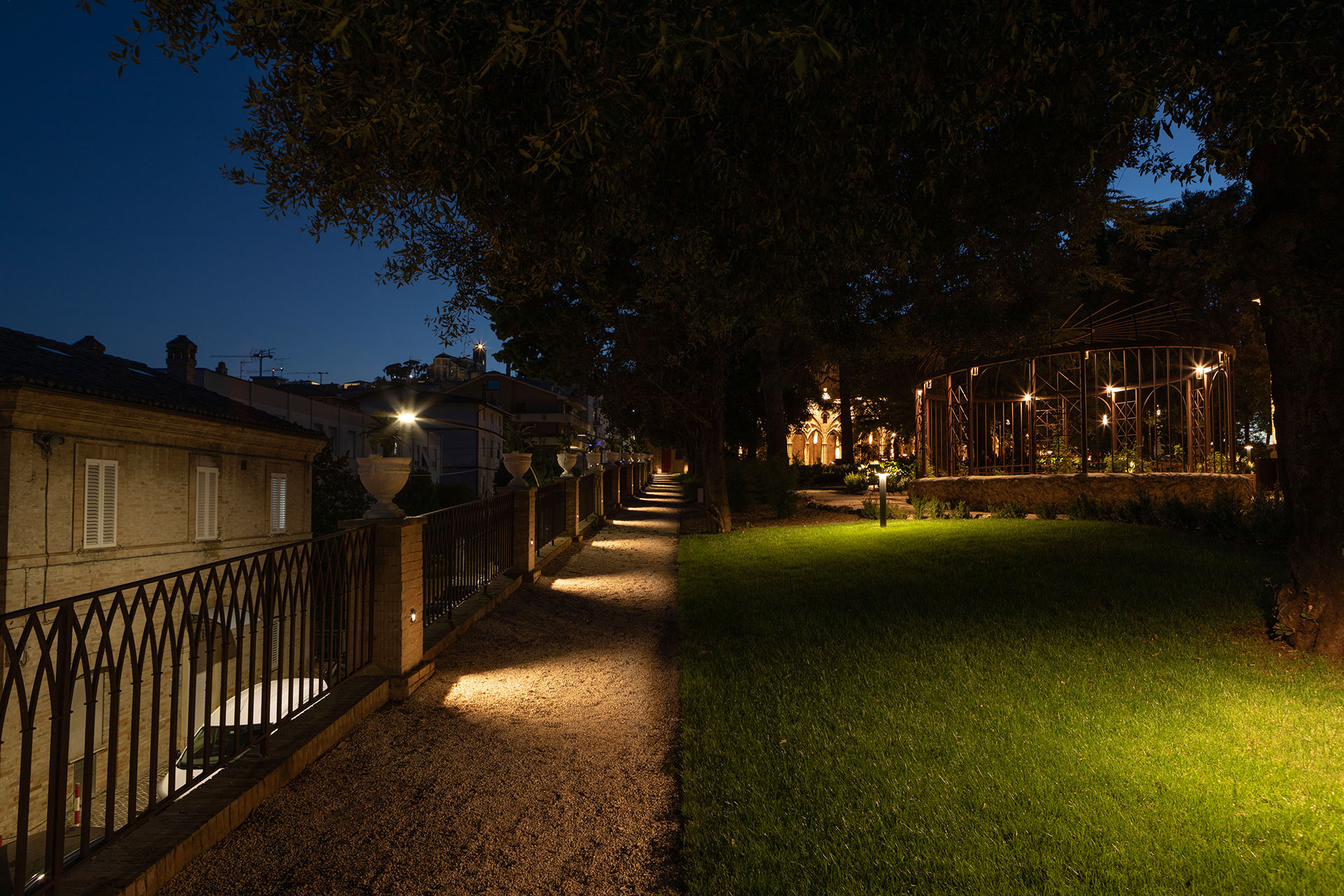
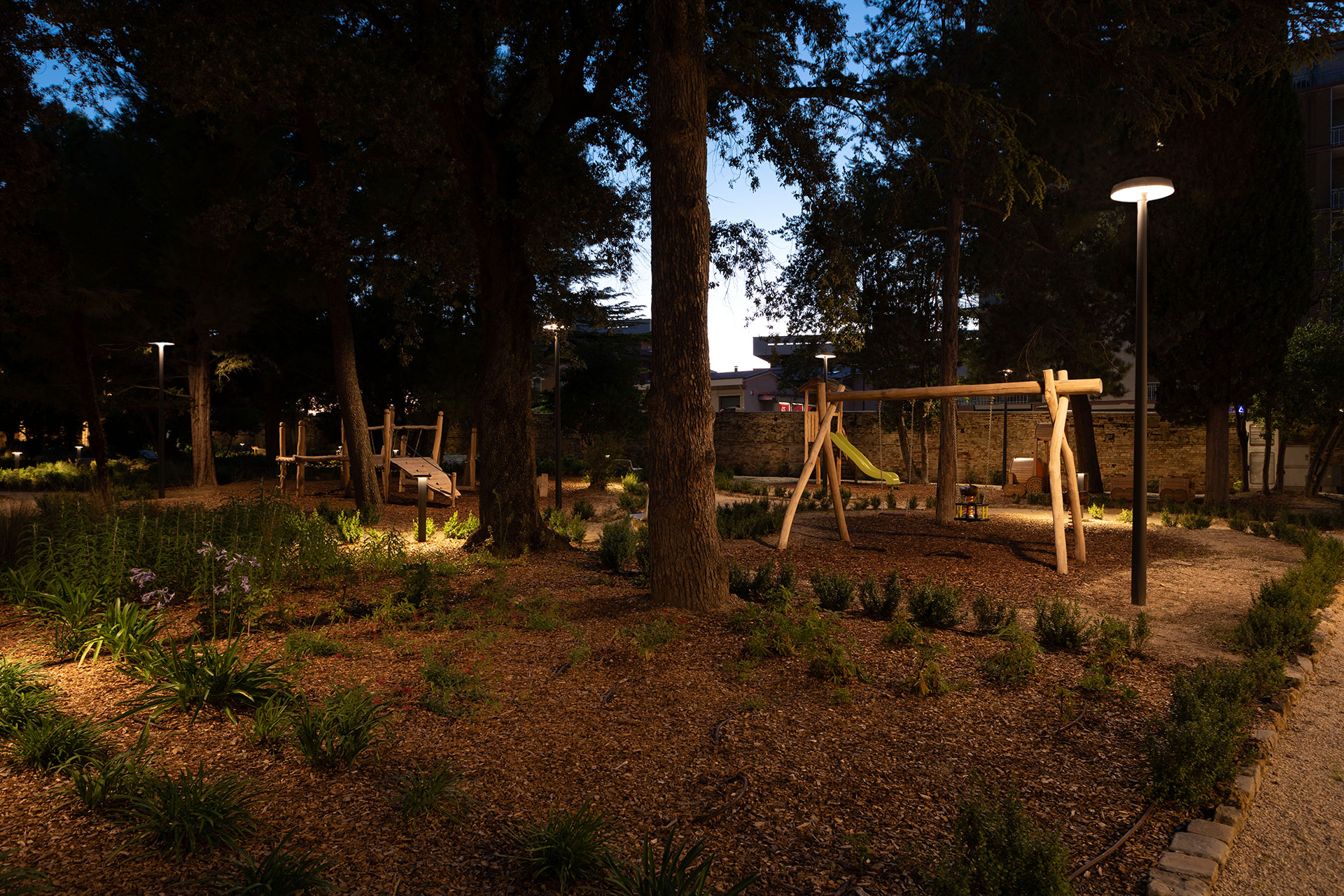
The lighting design plays a key role in the nocturnal enhancement of the villa and park, highlighting the historical and architectural features while respecting the natural environment. Special attention was given to the cold and warm greenhouses, where the new illumination emphasizes perspectives, textures, and volumes, creating a rich and evocative visual experience. The historic architectural elements become focal points within the nocturnal landscape, while the lighting along the main avenue reflects the 18th-century style, preserving the dramatic perspective with the statue of the at the visual terminus of the cold greenhouse.
A variety of LED luminaires were used with different colour temperatures: 2700K for the warm greenhouse and the Gothic arches inside the cold greenhouse, and 3000K for the pathways and the Gothic façade of the cold greenhouse. All fixtures are equipped with a DALI system for precise light output control, complemented by a management system to create dynamic lighting scenarios. These solutions ensure seamless integration with the existing architecture (cold and warm greenhouses) and landscape design (flowerbeds and pathways), enhancing both form and atmosphere.